

Sage green is more than a fleeting trend. It’s the modern answer to our urgent need for calm and nature in our urban lives. If you’re looking to turn your living room into a soothing sanctuary without sacrificing style, this color is your best ally.
This guide goes beyond just showing you pretty pictures. We will break down exactly how to use this versatile hue to correct your room’s flaws, maximize light, and create an atmosphere that reflects you. Whether you prefer minimalism or boho style, sage green adapts to everything. Get ready to rediscover your living space.
Key Takeaways
- Absolute Versatility: Sage green acts as a “new neutral,” replacing gray or beige while bringing more character.
- Light and Space: Unlike dark greens, sage reflects light and can visually enlarge small spaces.
- Easy Biophilia: This shade instantly connects your interior to the outdoors, reducing visual stress.
- Endless Pairings: It works just as well with warm woods as it does with industrial black metal or glamorous gold accents.
Table of Contents
- Sage Green Living Room: Natural Elegance
- Sage Green and Wood: A Perfect Harmony
- Modern Sage Green Living Room: Chic Minimalism
- Boho Sage Green Living Room: Relaxed Vibe
- Sage Green and White: Purity and Serenity
- Sage Green and Black: A Bold Contrast
- Sage Green and Blush Pink: Feminine Softness
- Sage Green and Blue: A Fresh Harmony
- Sage Green and Mustard Yellow: Energy and Warmth
- Sage Green and Gray: Timeless Elegance
- Sage Green and Brown Leather: Natural Luxury
- Sage Green and Gold: Modern Glamour
- Sage Green, Black, and White: Graphic Contrast
- Sage Green and Terracotta: Earthy Ambiance
- Sage Green and Pastels: Soft Color Palette
- Frequently Asked Questions
- Conclusion
Sage Green Living Room: Natural Elegance
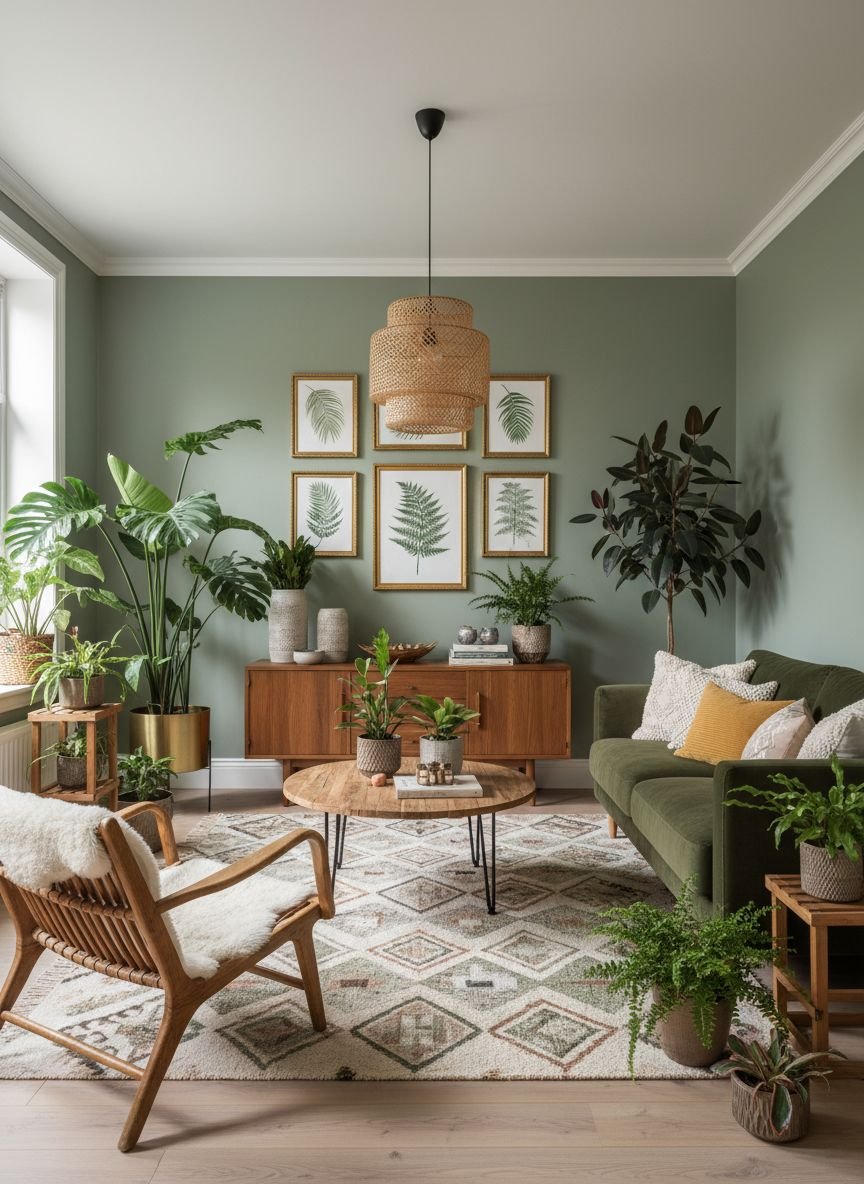
Sage green draws its strength from its subtlety. This grayish hue evokes dry foliage and aromatic herbs, bringing immediate visual texture without overwhelming the eye. To achieve natural elegance, the goal is to create a soothing backdrop that lets the other elements in the room breathe. Painting all four walls sage green creates a cozy, enveloping “jewel box” effect, ideal for living rooms meant for relaxation or reading.
The key lies in the paint finish. A matte, velvety finish will absorb light and enhance the cozy, organic feel, while a satin finish will give a more classic, luminous look. Pair this base with raw textiles like washed linen or organic cotton to accentuate the connection with nature.
Pro Tip: Use baseboards painted the same color as the wall (color drenching) to visually increase the ceiling height and create perfect unity.
Sage Green and Wood: A Perfect Harmony

The combination of sage green and wood is arguably the most organic pairing there is. It directly mimics trees and the forest. Sage green, with its gray undertones, pairs particularly well with light woods like oak, ash, or birch. These blond woods warm up the coolness of the green without creating a harsh contrast.
For a balanced living room, imagine a light oak floor, an accent wall in sage green, and furniture with clean lines. Texture plays a major role here. A solid wood buffet with visible grain against a sage wall creates a rich, warm focal point. Don’t hesitate to incorporate rattan or bamboo elements to add an artisanal touch.
Pro Tip: If you have dark wood furniture (walnut or teak), choose a slightly lighter shade of sage green to avoid darkening the room.
Modern Sage Green Living Room: Chic Minimalism
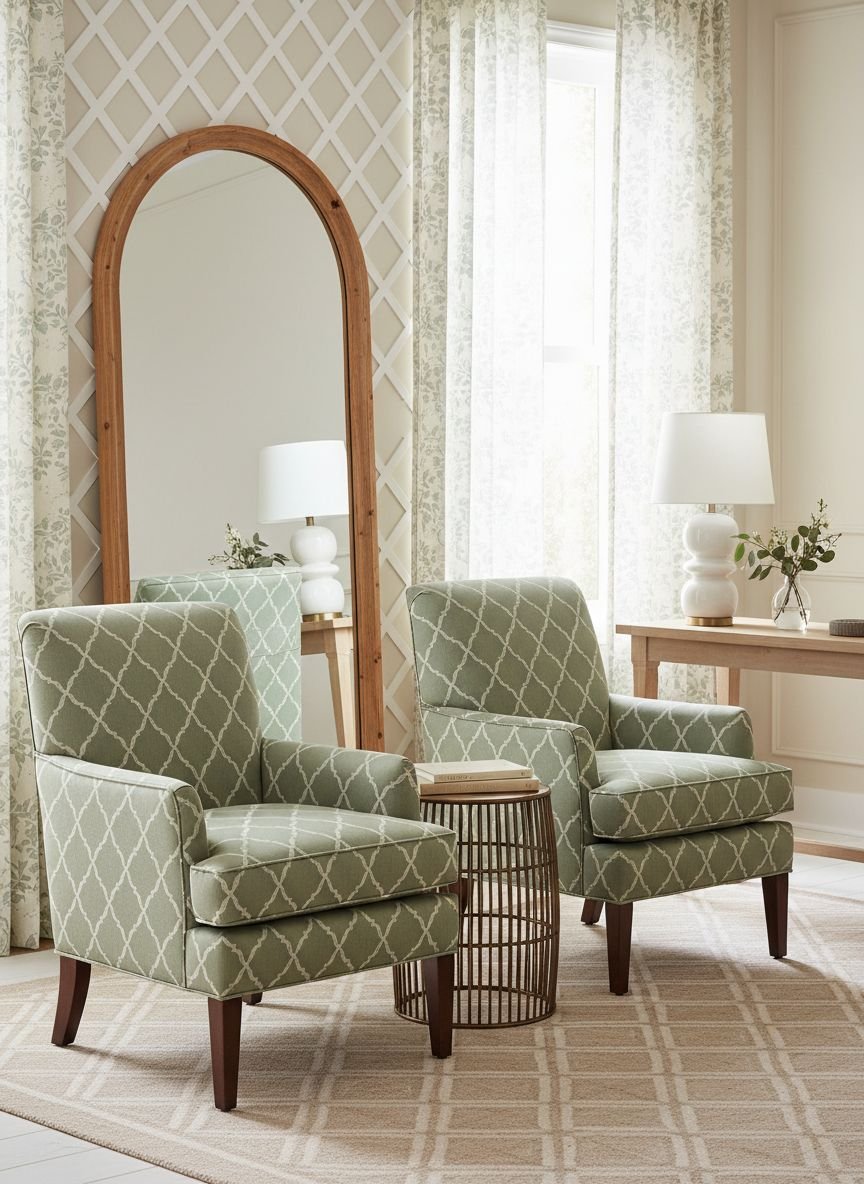
Minimalism doesn’t mean an absence of color. Sage green is the ideal hue for a modern interior that rejects the coldness of clinical white. In a modern living room, sage green is often used in blocks of color or on a single wall to structure the space. Lines should remain straight and furniture low to preserve a sense of openness.
Opt for a modular sofa in light gray or off-white that will stand out clearly against the green background. Accessories should be limited but impactful: a large abstract artwork, a designer lamp in chrome or black metal. The floor should remain neutral, like polished concrete or large-format pale gray tiles.
Pro Tip: Integrate closed storage painted exactly the same color as the wall to make them visually disappear and accentuate the minimalist effect.
Boho Sage Green Living Room: Relaxed Vibe

Boho style embraces sage green for its plant-like, laid-back quality. Here, the rules are more flexible. Sage green serves as a backdrop for a joyful accumulation of textures and patterns. Think Berber rugs, macramé cushions, fringed throws, and, of course, an abundance of real green plants.
Green-on-green (plants against a sage wall) works incredibly well because it creates depth. Mix sage with touches of terracotta, ochre, and sandy beige. Furniture can be vintage, with weathered wood or vintage rattan. Lighting should be warm and subdued, with multiple light sources like string lights and paper lamps.
Pro Tip: Hang your plants in macramé hangers at different heights in front of the sage green wall to create a controlled “urban jungle” effect.
Sage Green and White: Purity and Serenity
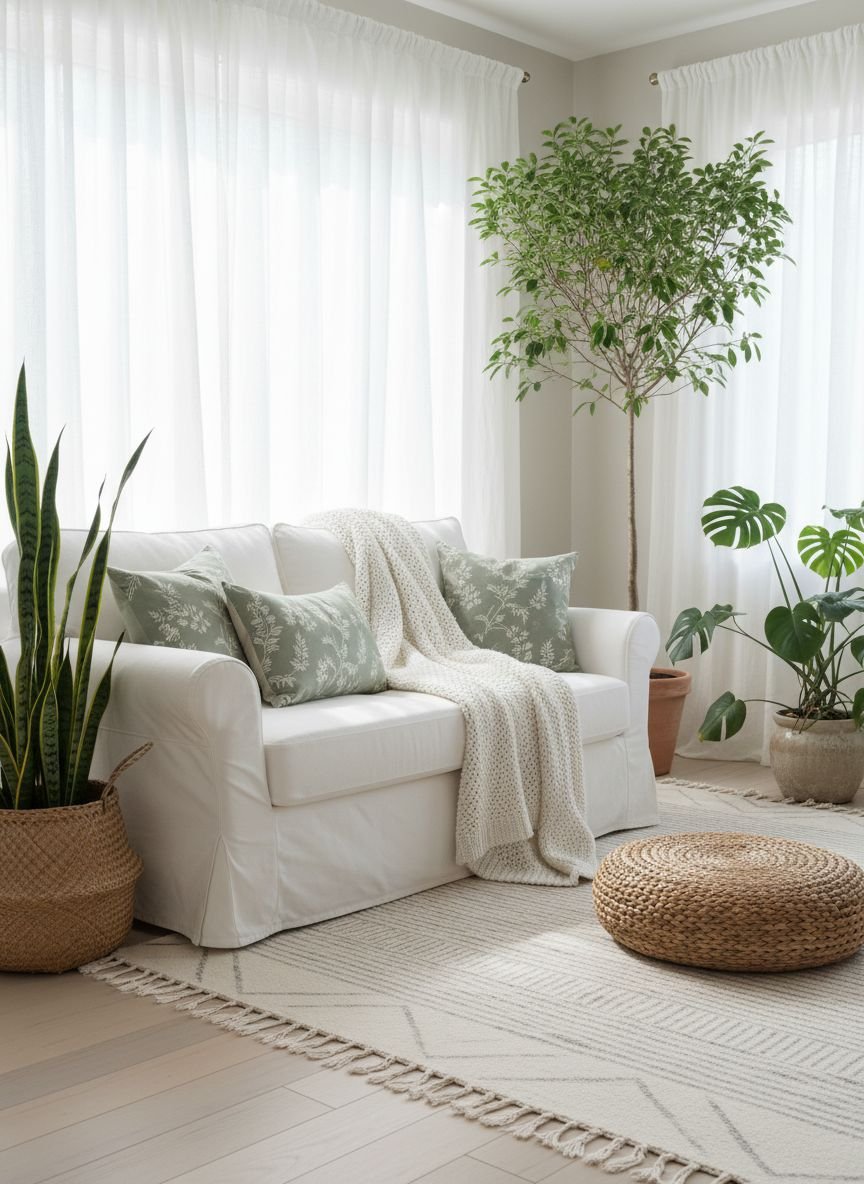
If you’re worried about tiring of the color, the sage green and white duo is the safest and brightest choice. Pure white or cream brightens sage green, making it fresh and spring-like. This palette is perfect for small living rooms or north-facing ones lacking natural light.
Use sage green on the walls and keep the ceiling, baseboards, and window frames in a brilliant white. Choose a white sofa (in a washable slipcover for easy care) and light, white curtains that filter light. The result is an airy, clean, and incredibly restful atmosphere, evoking coastal homes or country cottages.
Pro Tip: Add varied textures to the white elements (faux fur cushion, bouclé wool rug) to prevent the room from looking flat or cold.
Comparison: Sage Green vs. Other Greens
| Feature | Sage Green | Olive Green | Emerald Green | Forest Green |
|---|---|---|---|---|
| Vibe | Soothing, Fresh | Earthy, Warm | Luxurious, Intense | Deep, Dramatic |
| Lightness | Medium to High | Medium to Low | Low (absorbs) | Very Low |
| Ideal Style | Scandi, Boho | Rustic, Mediterranean | Art Deco, Glamour | Classic, Industrial |
| Risk Factor | Very Low (easy) | Medium (can yellow) | High (can overwhelm) | High (darkens) |
Sage Green and Black: A Bold Contrast
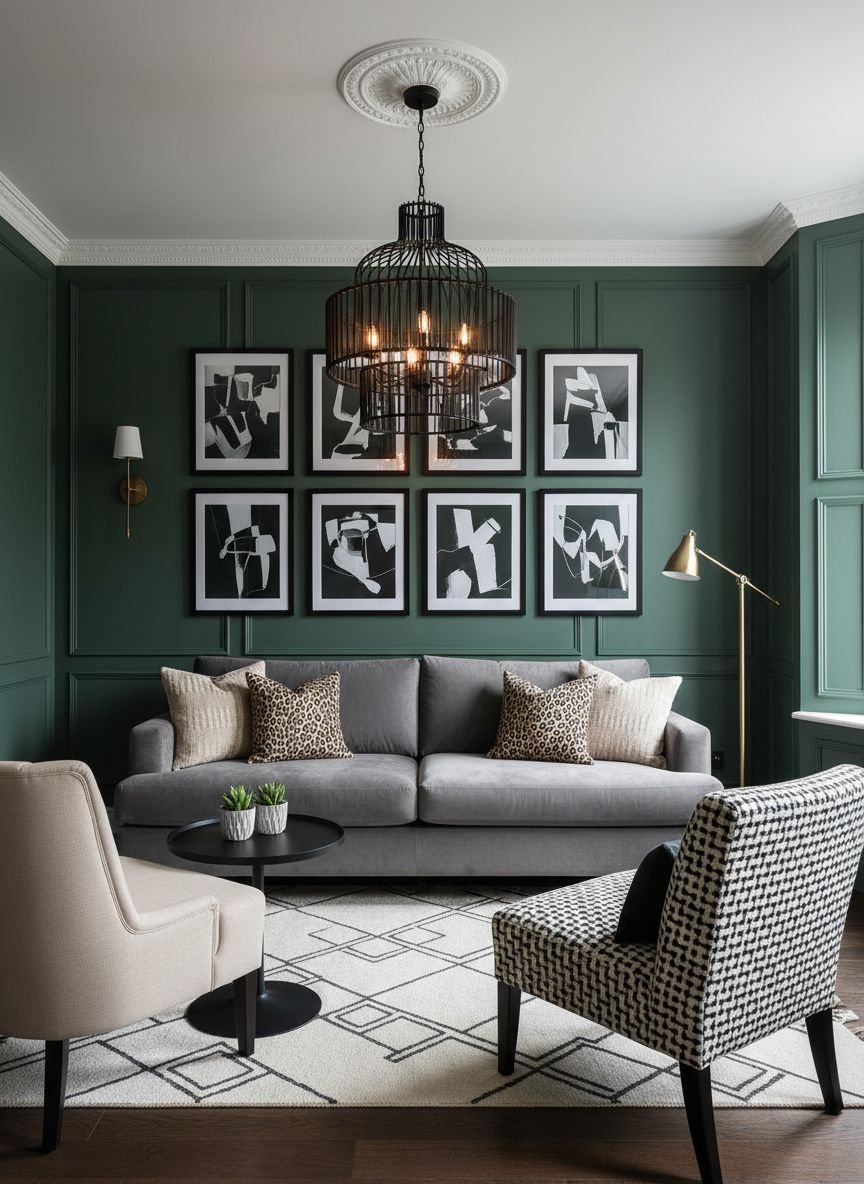
For those who want to give their living room character and a masculine touch, the combination of sage green and matte black is a winner. Black “anchors” the room and gives a graphic definition to the soft contours of sage green. This is a highly sought-after combination in industrial or sophisticated contemporary styles.
Use black in precise touches: sofa legs, picture frames, light fixtures, or a black metal coffee table. You can also dare to use black cabinetry (a door or bookshelf) against a sage wall. This contrast instantly modernizes the color and removes its sometimes too “sensible” or romantic side.
Pro Tip: Choose matte black finishes over glossy ones for a more modern and less fingerprint-prone look.
Sage Green and Blush Pink: Feminine Softness

This is the quintessential romantic pairing. Green and pink are complementary colors on the color wheel, which explains why they work so well together. However, to avoid a “little girl’s bedroom” effect, you must choose the right shades: a grayed sage green and an old rose or blush pink—never hot pink.
In the living room, this often translates to a sage green wall and pink accessories: velvet cushions, an accent chair, or patterns in a rug. Add touches of brass or copper to warm up the whole and bring a note of sophistication. This is a palette that inspires tenderness and conviviality.
Pro Tip: Introduce a dark gray or anthracite element into the room to temper the sweetness and balance the “candy-like” aspect of the pink/green mix.
Sage Green and Blue: A Fresh Harmony
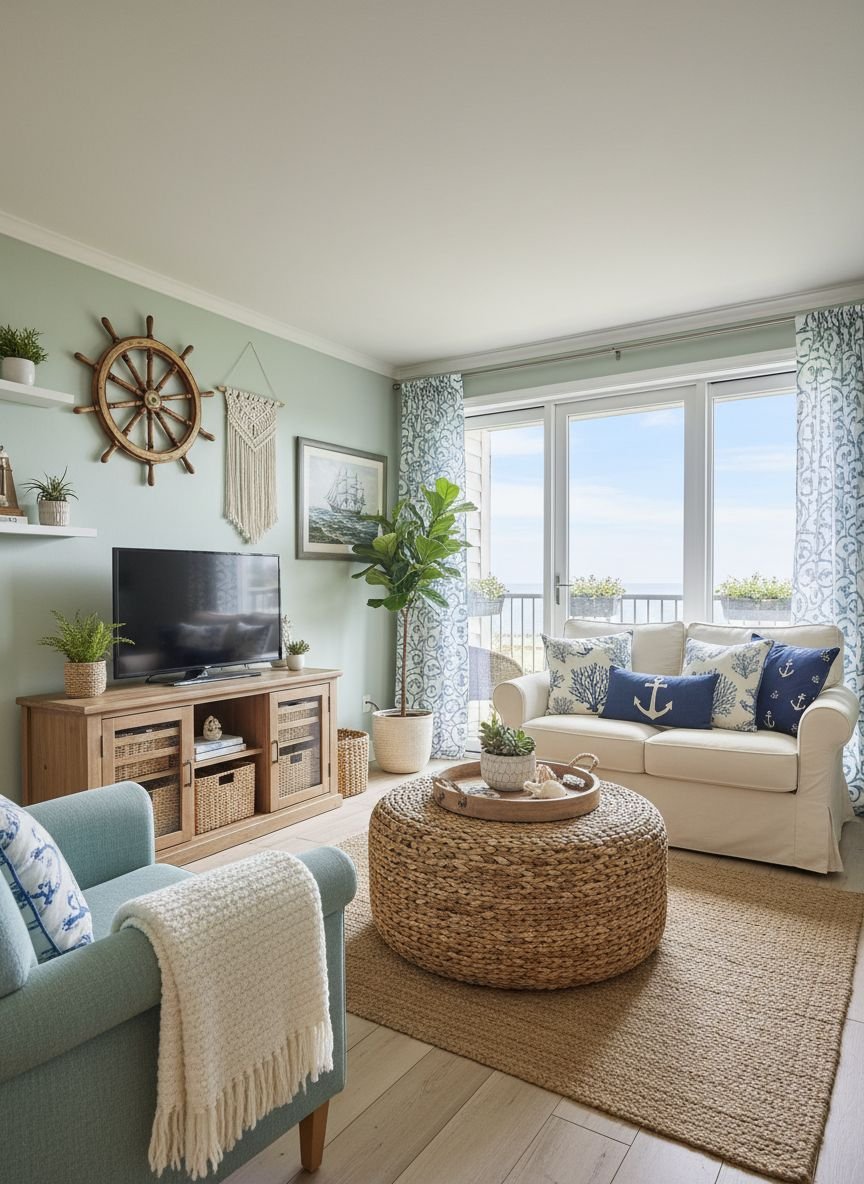
Sage green and blue are analogous colors (neighbors on the color wheel), which creates a very soft, natural visual transition, reminiscent of water and vegetation. This is an ideal palette for creating a refreshing and calm ambiance, conducive to concentration and rest.
Opt for deep blues like navy or petrol blue to create contrast with the lightness of sage. A navy blue velvet sofa against a sage green wall is exceptionally elegant. For a more coastal feel, prefer a sky blue or gray-blue. The secret is to vary the intensities to avoid a look that’s too bland.
Pro Tip: Use glass accessories (vases, lamps) in clear or blue-tinted glass to accentuate the fluidity and transparency of the decor.
Sage Green and Mustard Yellow: Energy and Warmth
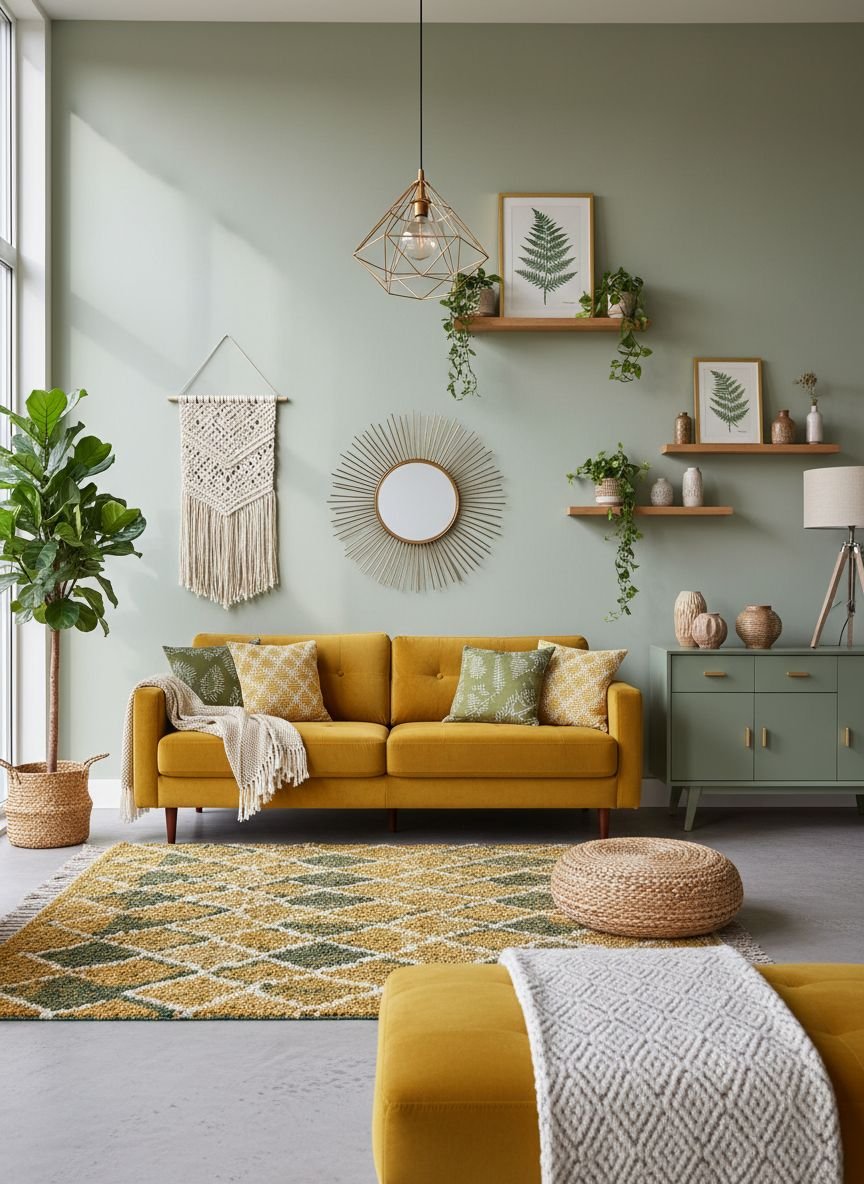
If you find sage green a little too calm, liven it up with mustard yellow. This spicy color adds an immediate dose of sunshine and retro energy. It’s a very popular combination in interiors inspired by the 50s or 70s (Mid-Century Modern).
Mustard yellow should be used as an accent color. A mustard armchair, graphic cushions, or a yellow lampshade are enough to energize the entire room. Sage green acts as a tempering agent that prevents the yellow from becoming aggressive. Add walnut wood to perfect this vintage chic look.
Pro Tip: Check your room’s lighting. Under warm, yellow artificial light, mustard can look dull. Opt for “daylight” bulbs.
Sage Green and Gray: Timeless Elegance
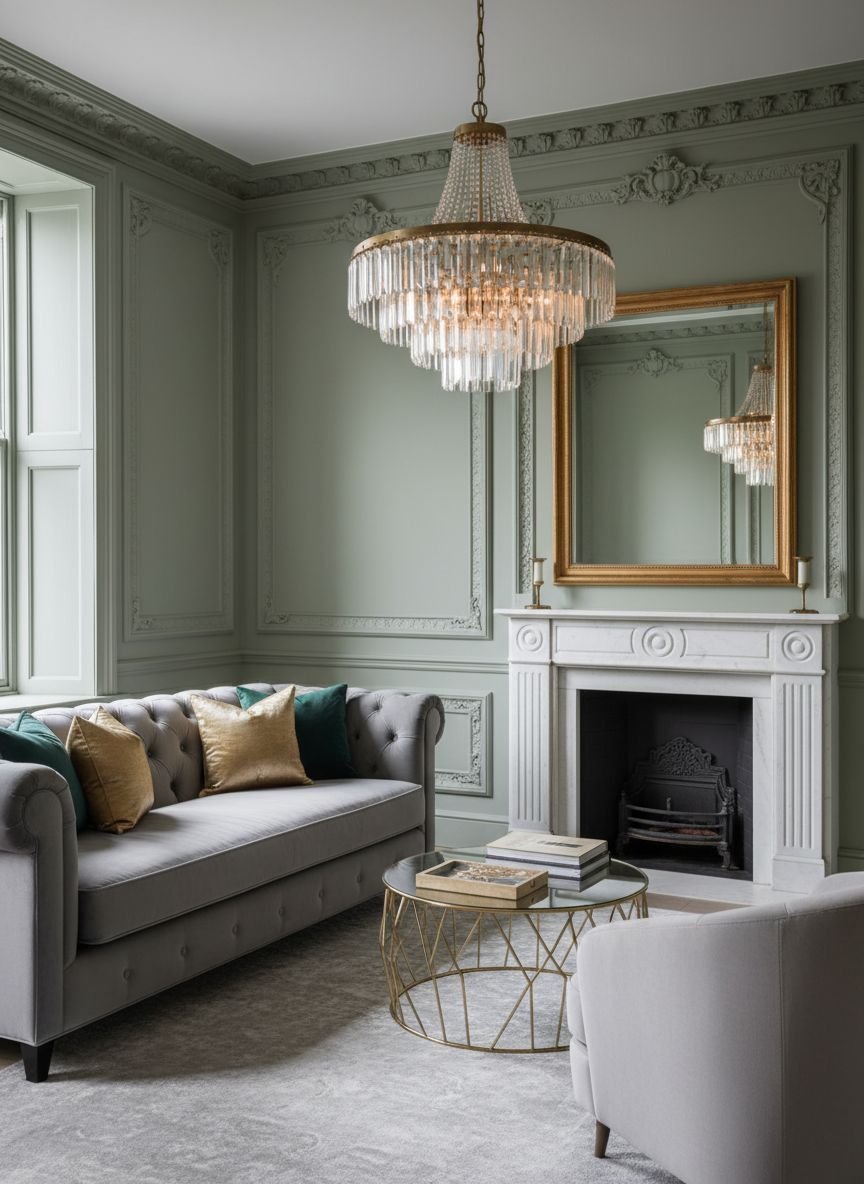
Sage green already contains gray, making this pairing foolproof. It’s the choice of safety and good taste. A sage green and gray living room is sophisticated, calm, and stands the test of time. It’s an excellent palette for large open-plan living rooms where you want to maintain a certain neutrality.
Play with shades of gray: from very light pearl gray to dark anthracite gray. A heather gray sofa is a durable investment that will integrate perfectly. To avoid monotony, rely on textures: chunky knit throw, shaggy rug, felt cushions. The mix of materials will replace color contrast.
Pro Tip: Add a few touches of pure white to bring in light and prevent the gray/sage mix from becoming too dull on gray days.
Sage Green and Brown Leather: Natural Luxury
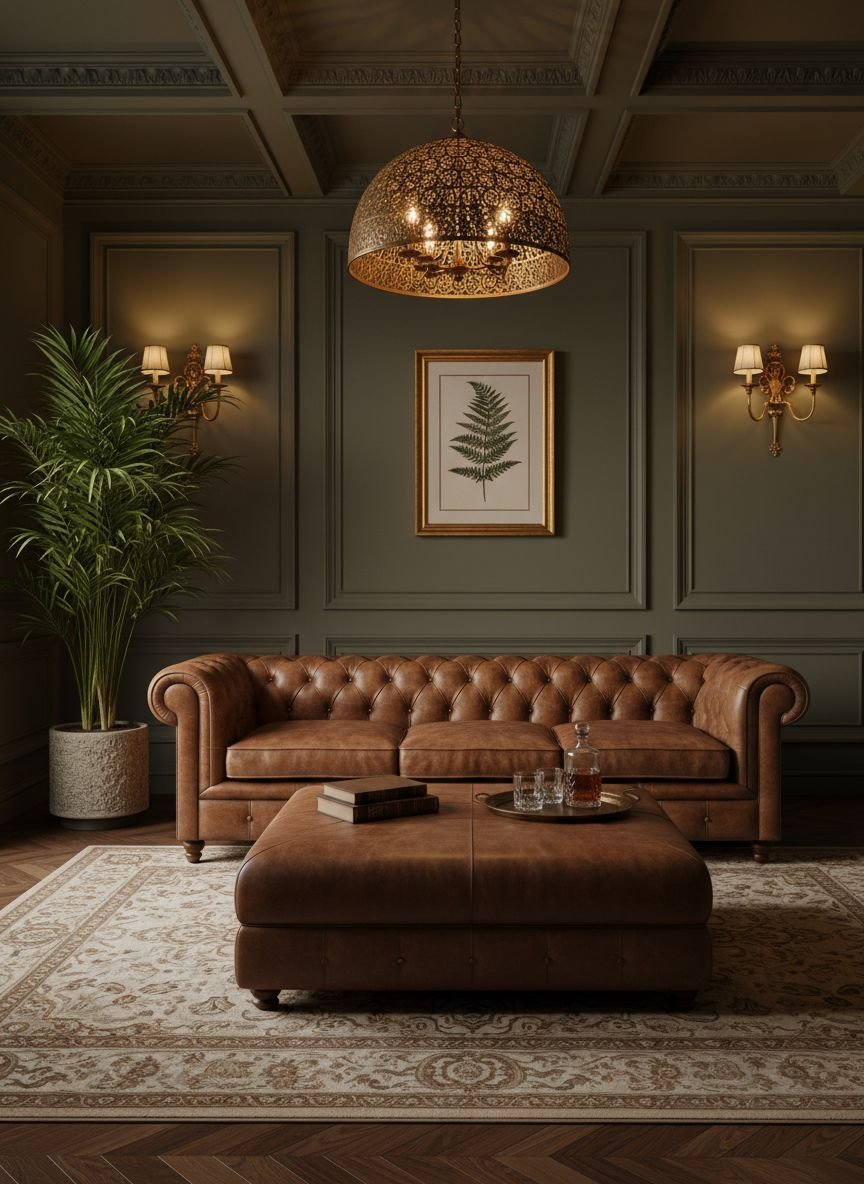
Nothing evokes masculine chic and the comfort of a revisited English club better than the mix of sage green and brown leather. Leather, in cognac, camel, or chocolate brown, brings an earthy warmth that contrasts beautifully with the coolness of the green. It’s a rich, textured, and very welcoming combination.
The centerpiece is obviously the leather sofa or armchair. The more patina the leather has, the more successful the result. The sage green background modernizes the leather and prevents it from looking too “old-fashioned.” Add elements of raw wood and wool rugs to complete this warm look.
Save this idea to your Pinterest.
Pro Tip: Avoid black leather with sage green if you’re looking for warmth; black leather will give a much colder, more industrial result.
Sage Green and Gold: Modern Glamour
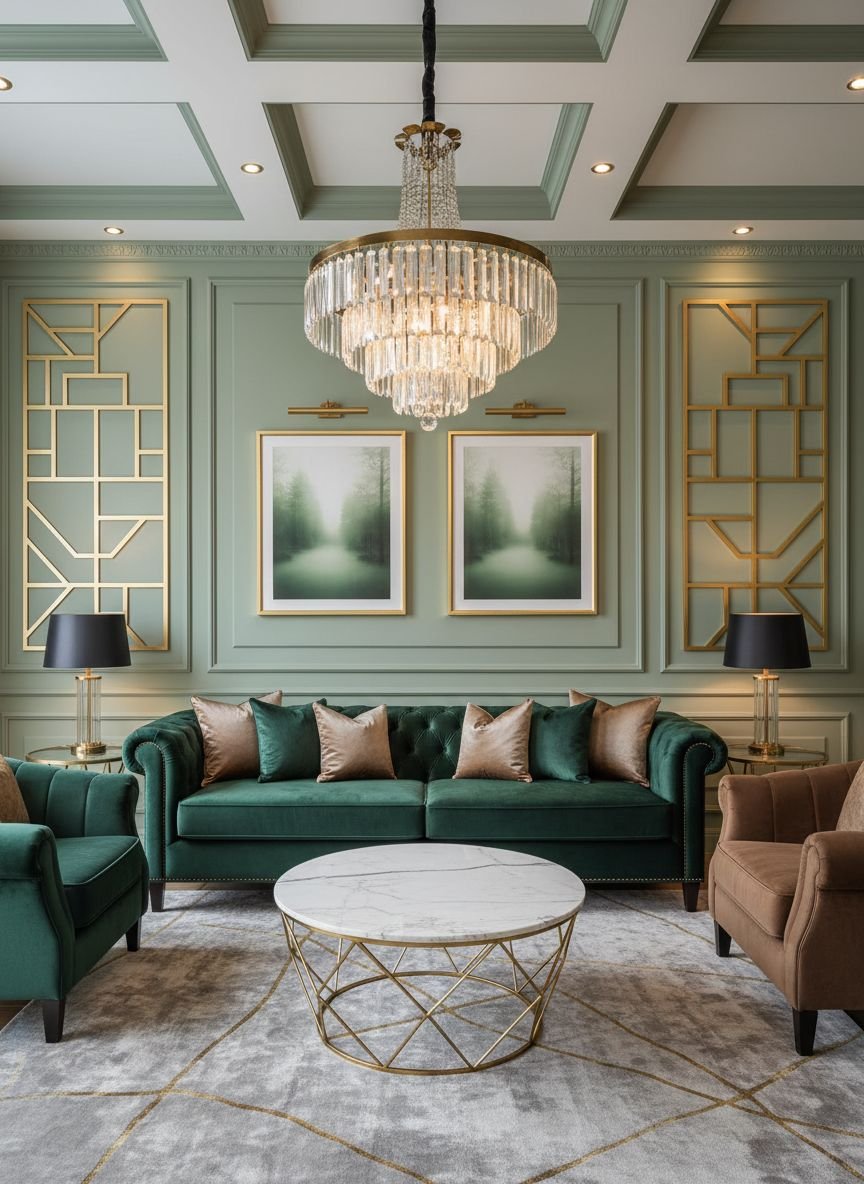
To transform a simple sage green living room into a luxurious space, integrate touches of gold or brushed brass metal. Green and gold have worked together for centuries in palaces, and it works just as well in a modern apartment. Gold illuminates the green and gives it a precious glow.
Don’t overdo it. Think “jewelry”: gold furniture handles, a mirror with a thin brass frame, the legs of a coffee table, or a pendant light. Brushed brass is often preferable to shiny gold as it is softer and less “bling.” Pair it with white marble for the height of chic.
Pro Tip: If you use gold metal, keep the other colors in the room fairly neutral (white, cream, beige) to let the metallic reflections take center stage.
Sage Green, Black, and White: Graphic Contrast
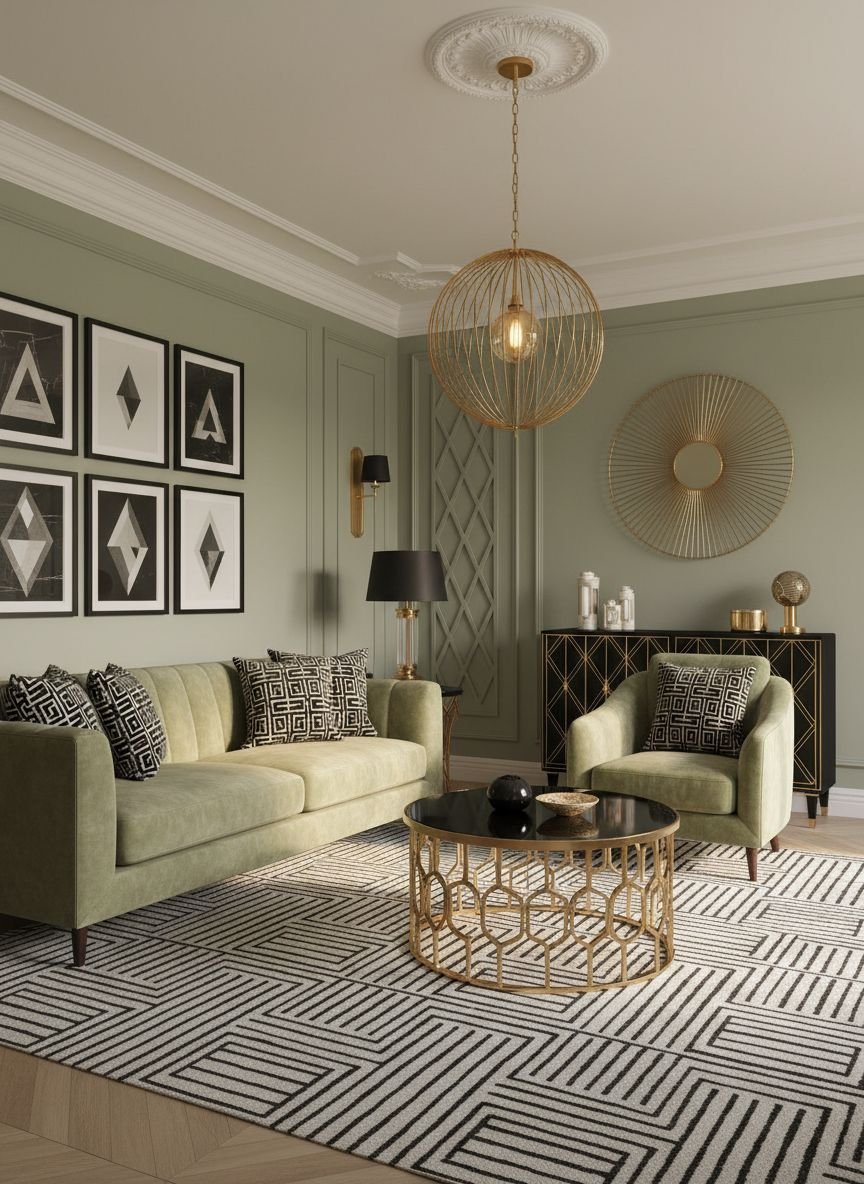
If you love Scandinavian style but sometimes find it too bland, add sage green to the classic black and white base. Sage green acts here as the linking element that softens the harsh contrast between black and white.
Imagine a checkerboard floor or a geometric black and white rug, sage green walls, and white furniture. Add thin black frames on the walls to structure the space. This is a very dynamic style, perfect for living rooms that are also thoroughfares or reception areas. Graphic patterns (stripes, chevrons) work very well in this palette.
Pro Tip: Use very wide white matting in your black frames hung on the green wall to create a very aesthetic visual breathing space.
Sage Green and Terracotta: Earthy Ambiance
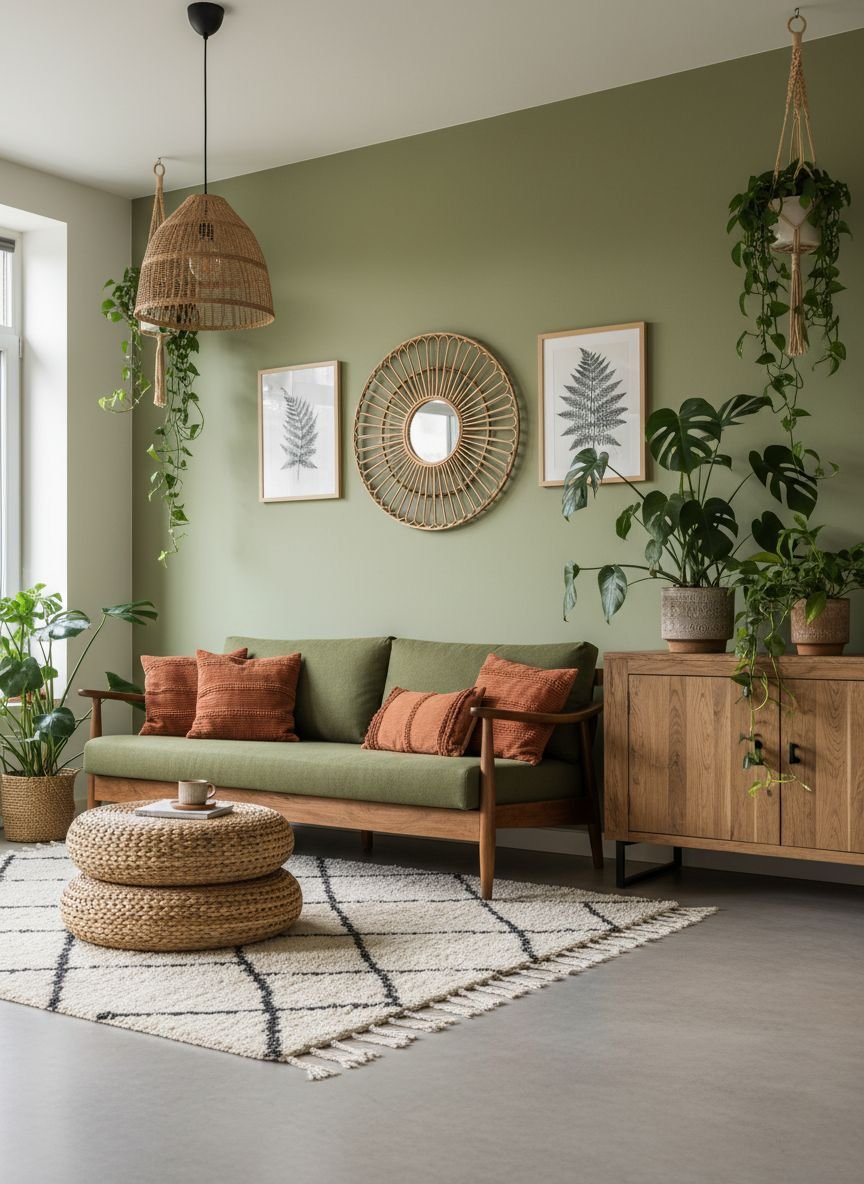
Inspired by Mediterranean and desert landscapes, the sage green and terracotta combination is one of today’s major trends. Terracotta is a warm, burnt-orange color that vibrates intensely next to calm sage green. It’s the perfect balance between warm and cool.
Use terracotta on textiles (cushions, kilim rugs) or through raw ceramic objects. Terracotta plant pots placed in front of a sage wall are the simplest way to adopt this style. This combination invites travel and creates a sunny atmosphere, even in winter.
Pro Tip: Add touches of rattan or wicker. The natural straw color is the ideal bridge between green and burnt orange.
Sage Green and Pastels: Soft Color Palette
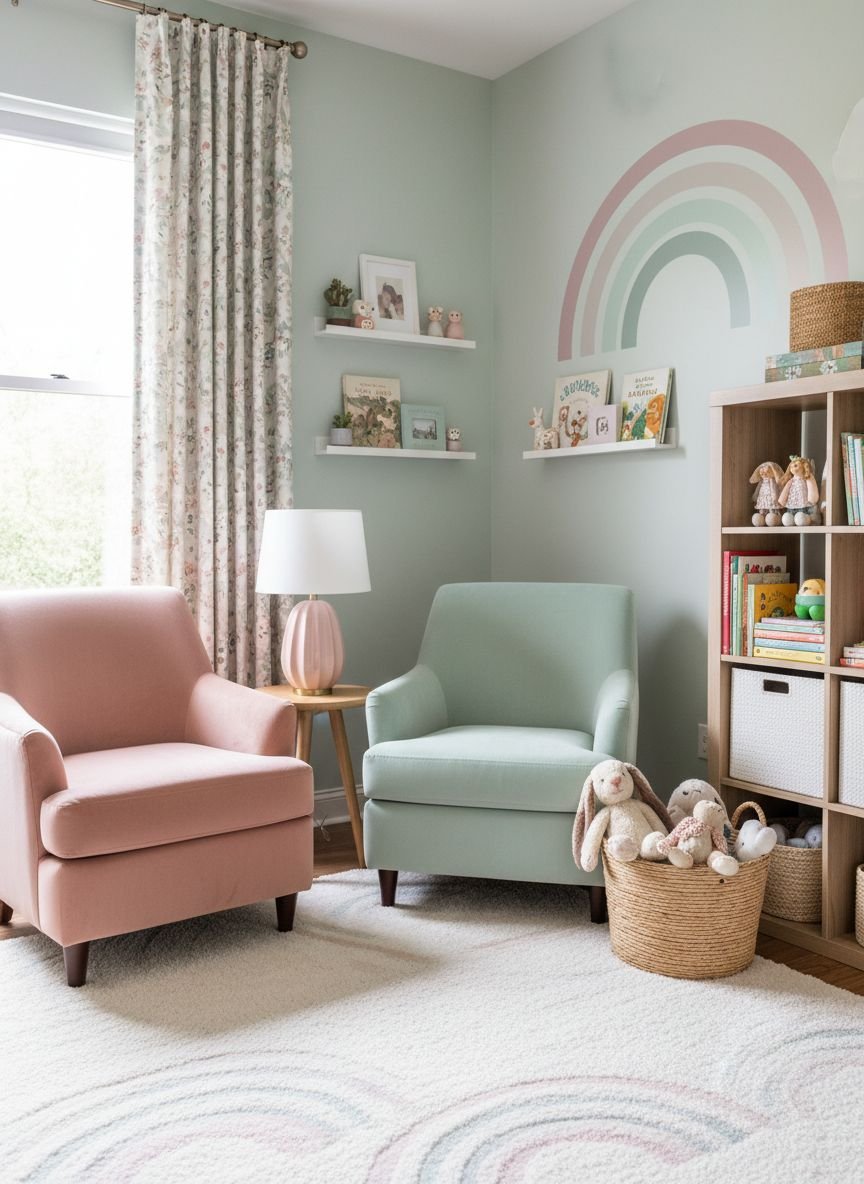
For a living room that feels like a cloud of softness, dare to mix pastels. Sage green pairs with lilac, straw yellow, sky blue, and peach. This aesthetic, sometimes called “Danish Pastel,” is very joyful, youthful, and creative.
The trick to avoiding a childish look is to keep furniture forms very modern and clean. The colors are soft, but the design is strict. Use sage green as the dominant color (the most present) and sprinkle the other pastels in small touches through candles, vases, or art prints.
Pro Tip: Keep the floor and ceiling very light (white or blond wood) so the pastel colors remain bright and don’t appear grayish.
Frequently Asked Questions
What color pairs well with sage green?
Sage green is extremely versatile. It pairs perfectly with white and beige for a natural look, blush pink for softness, mustard yellow for dynamism, and black for a modern industrial style. Light woods are also its best friends.
Which wall should I paint sage green in a living room?
Ideally, paint the wall that receives natural light (facing the window) to maximize the color’s brightness. Otherwise, the wall behind the sofa is an excellent choice to create a focal point (“accent wall”) that anchors the relaxation area without distracting the eye when you’re watching television.
Does sage green darken a room?
No, not if you choose the right shade. Sage green contains a lot of gray and white, making it a light-reflective color (medium LRV). It reflects light well, especially in a satin or velvet finish. If your room is very dark, simply avoid overly grayed versions and opt for a lighter sage.
What color sofa goes with a sage green wall?
The three best options are:
- Light gray or beige for soft, timeless harmony.
- Cognac (leather) to warm up the atmosphere and add character.
- White (or off-white) for a fresh, bright contrast.
Conclusion

Choosing a sage green living room means opting for an interior that takes care of you. This color has the unique power to soothe the mind while remaining incredibly stylish and easy to live with. Whether you paint one wall or transform the entire room, sage green won’t let you down.




Leave a Comment