
The “Utility” Hook
You have likely spent hours scrolling through Pinterest, dreaming of a backyard that serves as more than just a patch of grass. You want a culinary sanctuary. The trend for 2026 is shifting away from simple grills on patios to fully immersive covered outdoor kitchen ideas that function as complete living spaces. A covered setup is not just about aesthetics; it is the only way to protect your investment from the elements while extending your hosting season by months. Whether you are working with a compact urban terrace or a sprawling lawn, a roofed kitchen solves the problem of cancelled plans due to rain and protects high-end appliances from rust and sun damage. This guide provides 17 architectural-grade designs to help you build a durable, high-value outdoor extension of your home.
Key Takeaways
- Protection is Paramount: A covered structure increases the lifespan of appliances by shielding them from UV rays and moisture.
- Zoning is Key: Successful designs clearly separate prep, cook, and social zones to improve flow.
- Ventilation Matters: Installing a grill under a roof requires proper airflow or a vent hood to prevent smoke buildup.
- Lighting Transforms Spaces: Integrated task and ambient lighting allow your kitchen to function perfectly after sunset.
- Material Continuity: Using materials that match your indoor kitchen creates a seamless indoor-outdoor luxury feel.
Table of Contents
- 1. High Ceiling Kitchen
- 2. Poolside
- 3. Greenhouse Garden Kitchen
- 4. Cantilevered Kitchen Roof
- 5. Customizable Kitchen
- 6. Compact Kitchen
- 7. Rustic and Industrial
- 8. Rooftop Chill
- 9. Mini Clubhouse
- 10. Cocktail Bar Kitchen
- 11. Medieval Theme
- 12. Minimalist Style
- 13. Island Outer Grilling Area
- 14. Open Air Cooking Area with Entertainment
- 15. Pergola Covered
- 16. Skylight Roofing
- 17. Farmhouse Theme
- Related posts :
- Popular Asked Questions
- Conclusion
1. High Ceiling Kitchen

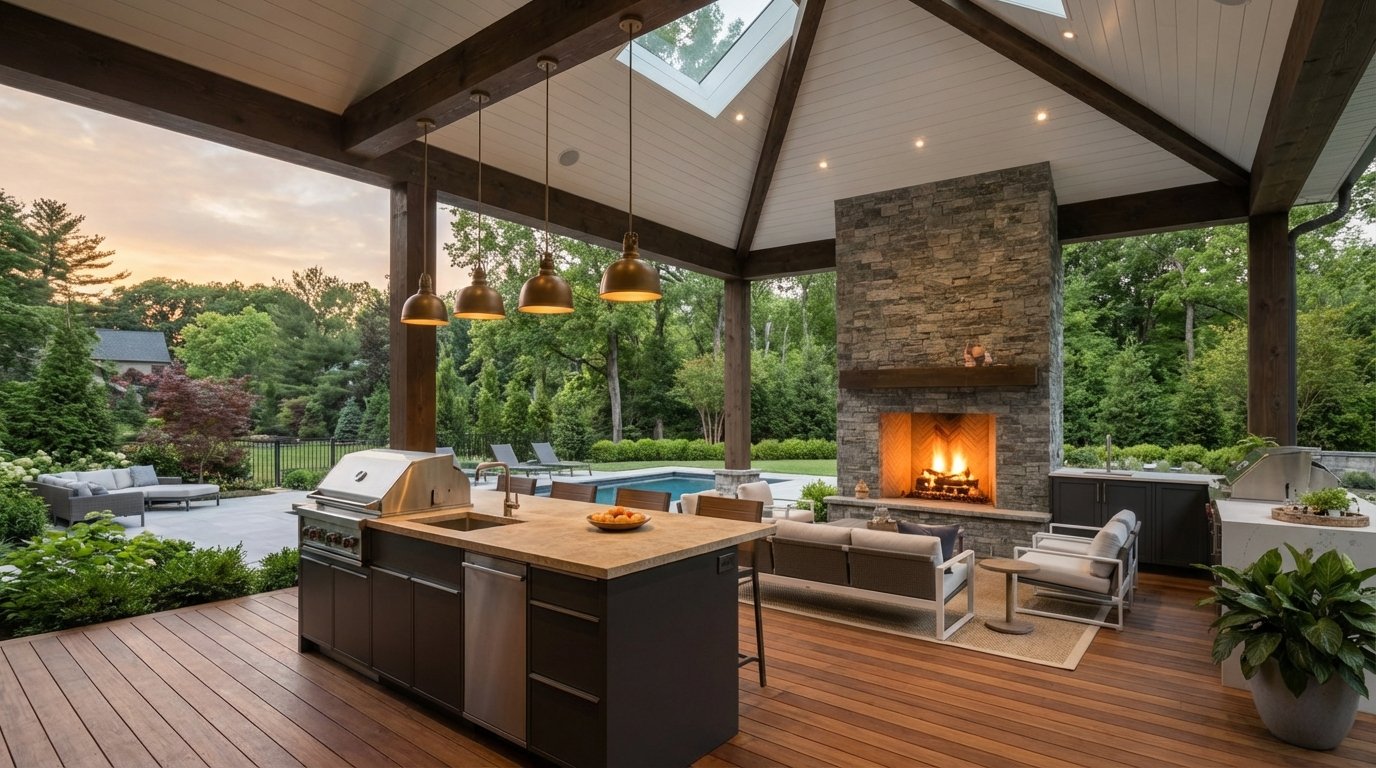
A high ceiling in an outdoor kitchen creates an immediate sense of grandeur and airiness that mimics a luxury resort. By elevating the roofline, you allow for better natural ventilation, which is crucial when grilling prevents smoke from getting trapped in the seating area. This design often utilizes exposed timber trusses or steel beams to draw the eye upward, making even a modest footprint feel expansive. The vertical space also offers the perfect opportunity to install statement lighting fixtures, such as oversized woven pendants or industrial chandeliers, which would be too imposing in a standard room.
From a practical standpoint, high ceilings reduce the radiant heat trapped under the cover, keeping the chef and guests cooler during mid-summer cookouts. To implement this, consider a gable roof extension attached to your main house or a freestanding pavilion structure. Use light-colored materials on the ceiling to reflect light and further enhance the open feel.
Pro Tip: Install ceiling fans with long down-rods to force air circulation down to the dining level on stagnant, hot days.
2. Poolside

Integrating your covered kitchen directly next to the pool blurs the line between swimming and dining, creating the ultimate entertainment hub. This “swim-up” bar concept often features a countertop that is accessible from both the dry patio side and the water, allowing swimmers to grab a drink without drying off. The design aesthetic should prioritize slip-resistant flooring like textured stone or honed concrete to ensure safety in wet zones. Materials must be highly durable against chlorinated or saltwater splashes, making marine-grade stainless steel cabinetry and non-porous quartz or granite countertops essential choices.
Visually, you want to create a resort vibe. Use a cantilevered overhang or a sleek flat roof that provides shade for the cook but leaves the pool area sunny. Color coordination is vital here; match the kitchen’s stone veneer with the pool coping to create a unified visual language.
Pro Tip: Save this idea to your Pinterest. Add a dedicated towel storage cubby and a mini-fridge stocked with hydration drinks within arm’s reach of the water.
3. Greenhouse Garden Kitchen

For the gardening enthusiast, a greenhouse-style outdoor kitchen offers a magical, light-filled cooking experience protected from the wind and rain. This structure typically uses glass or polycarbonate panels for the roof and walls, allowing sunlight to flood the space while keeping the elements at bay. It creates a “conservatory” feel where you can grow fresh herbs and vegetables in pots right next to your prep station. The abundance of natural light makes this an uplifting space for breakfast or lunch gatherings.
To manage the temperature, which is the main challenge in glass structures, incorporate automated vents or retractable shades. The flooring often features rustic brick or cobblestone to enhance the “potting shed” aesthetic. This design is perfect for cooler climates where trapping solar heat extends the outdoor living season into the spring and autumn.
Pro Tip: Plant climbing vines like jasmine or grapes along the interior structural supports to provide natural dappled shade and a fragrant aroma while you cook.
4. Cantilevered Kitchen Roof

A cantilevered roof is the epitome of modern architectural sophistication. This design features a roof that extends out from a main wall or column without visible vertical supports on the outer edge, creating a floating effect. This absence of columns keeps the sightlines completely open, offering unobstructed views of your garden or landscape. It is an ideal solution for contemporary homes where clean lines and minimalism are prioritized. The structural engineering required for this is significant, often involving steel reinforcement, but the payoff is a sleek, gravity-defying look.
The underside of the cantilever often features recessed lighting or smooth wood paneling to warm up the modern steel structure. This design works exceptionally well for linear kitchens placed against a retaining wall or the side of the house. It provides ample rain protection for the chef while maintaining a feeling of being completely outdoors.
Pro Tip: Use LED strip lighting along the edge of the cantilever to accentuate the floating architecture at night.
5. Customizable Kitchen

A modular, customizable outdoor kitchen system is the perfect solution for homeowners who want flexibility and speed of installation. These systems consist of pre-fabricated units—grill bases, sink cabinets, storage drawers, and corner units—that can be arranged to fit any patio shape. The “covered” aspect can be equally flexible, utilizing retractable awnings or louvered pergolas that adjust to the weather. This approach allows you to start small with a grilling station and expand later with a pizza oven or bar seating as your budget allows.
The aesthetic benefit of modular systems is the precision of the finish. Factory-made cabinets often come in powder-coated finishes that are incredibly durable and available in a wide range of colors. You can mix and match countertop materials, perhaps using durable granite for the hot zone and a softer wood block for the serving area.
Pro Tip: Choose a system with adjustable feet to ensure your kitchen counters are perfectly level, even if your patio pavers are uneven.
Comparison: Custom Build vs. Modular Kits
| Feature | Custom Built Kitchen | Modular/Prefab Kit |
|---|---|---|
| Cost | High ($15k – $50k+) | Moderate ($3k – $15k) |
| Installation Time | Weeks to Months | Days |
| Design Flexibility | Limitless (fits any odd angle) | Limited to unit sizes |
| Durability | High (Masonry/Stone) | High (Stainless/Aluminum) |
| Relocatable | No (Permanent structure) | Yes (Can be disassembled) |
6. Compact Kitchen

Small backyards or balconies do not have to sacrifice culinary capability. A compact covered kitchen focuses on vertical efficiency and multi-functional appliances. Instead of a sprawling island, think of a “galley” style layout tucked against a wall or fence. A simple lean-to roof or a heavy-duty shade sail can provide the necessary cover without overwhelming the small footprint. The key is to select appliances that do double duty, such as a grill that also has a smoker box, or a prep sink that has a cutting board cover to maximize counter space.
Visually, keep the palette light and monochromatic to prevent the space from feeling cramped. Mirrors placed on the back wall can reflect the garden, creating an illusion of depth. Floating shelves instead of closed upper cabinets keep the area feeling open while providing storage for spices and tools.
Pro Tip: Save this idea to your Pinterest. Use magnetic strips on the backsplash to hold knives and utensils, freeing up precious drawer and counter space.
7. Rustic and Industrial

Combining rustic warmth with industrial edge creates a timeless and durable aesthetic. This style often features a structure made of reclaimed wood beams paired with a corrugated metal roof. The kitchen base might use exposed brick or raw concrete, topped with a stainless steel countertop that patinas over time. The “covered” element is usually a sturdy timber frame pavilion with exposed hardware and black metal brackets. This look is incredibly forgiving of wear and tear, making it perfect for families or high-traffic entertaining zones.
Lighting plays a huge role here; think Edison bulb string lights draped across the rafters or galvanized metal barn lights. The contrast between the rough texture of the wood and the sleek, cold metal of the appliances creates a visually rich environment. It feels unpretentious yet intentionally designed.
Pro Tip: Seal your concrete countertops with a food-safe matte sealer to prevent oil stains while maintaining that raw, industrial look.
8. Rooftop Chill

Urban dwellers with rooftop access can transform unused sky-high space into a premier lounge and kitchen. A rooftop covered kitchen requires careful consideration of wind loads and weight restrictions. Lightweight materials like aluminum framing for the cover and aluminum cabinetry are often preferred over heavy masonry. The cover might be a pergola with a retractable canvas roof, allowing you to stargaze on clear nights or seek shade during the high noon sun.
The view is the main attraction here, so the kitchen layout should be oriented to face the skyline. Bar seating along the ledge (with safe railing height) is a must. Because rooftops can get breezy, windbreaks made of glass or slatted wood can protect the gas flame of the grill and keep guests comfortable without blocking the view.
Pro Tip: Ensure your gas line is professionally plumbed from the building, or have a dedicated, concealed storage area for propane tanks that is easy to access for swapping.
9. Mini Clubhouse

A “Mini Clubhouse” design treats the outdoor kitchen as a completely enclosed or semi-enclosed destination separate from the main house. It often features three walls and a full roof, creating a cozy, room-like atmosphere that is protected from cross-winds. This is ideal for watching sports games or hosting intimate gatherings. The design often includes a media wall with a weather-proof TV, comfortable lounge seating, and a dedicated bar area separate from the cooking zone.
To achieve the clubhouse vibe, use warmer interior finishes like cedar tongue-and-groove ceilings and stone veneer walls. Sliding barn doors or large bifold windows can be added to the open side to close the space off entirely during poor weather, effectively turning it into a four-season room.
Pro Tip: Install an infrared heater in the ceiling to keep the clubhouse warm and usable even during winter football viewing parties.
10. Cocktail Bar Kitchen

Sometimes the priority is the drink, not the steak. A cocktail bar kitchen focuses on ice makers, beverage centers, wine fridges, and ample bar seating, with a smaller grill or griddle as a secondary feature. The design centers around a high-top bar island where the host can mix drinks while chatting with guests. The roof structure is often a smaller, more intimate pergola or tiki-style thatch, depending on the theme, creating a defined “zone” for socializing.
Lighting is moody and atmospheric—think under-counter LED strips that change color and dimmable pendant lights. The materials should be resistant to spills; sealed granite or sintered stone are excellent choices for the bar top. A sink with a high-arc faucet is essential for washing glassware and prepping garnishes.
Pro Tip: Include a “speed rail” or built-in trough in the countertop to hold ice and bottles during parties, making service faster and more professional.
“Get The Look” Materials Checklist
- Flooring: Porcelain Pavers (Anti-slip, stain resistant).
- Countertops: Leathered Granite (Hides fingerprints/crumbs).
- Cabinetry: Marine Grade Polymer (Waterproof, no rot).
- Roofing: Polycarbonate Sheets (Allows light, blocks UV).
- Heating: Bromic Tungsten Heaters (Sleek, directional heat).
11. Medieval Theme

For those who want true drama and old-world charm, a Medieval or “Old World” themed kitchen makes a bold statement. This design relies heavily on natural stone—rough-cut limestone or fieldstone—for the pillars, arches, and kitchen base. The roof is typically heavy timber with slate or clay tiles. A massive wood-fired pizza oven or a large stone fireplace often serves as the focal point, anchoring the space with the primal element of fire.
Iron hardware, heavy wooden doors, and lantern-style lighting fixtures complete the look. The layout is often U-shaped, resembling a castle courtyard. While the aesthetic is ancient, the appliances can be modern, but they are often hidden behind wood-paneled doors or tucked into masonry niches to maintain the illusion of a time past.
Pro Tip: Use a rotisserie spit over an open wood fire to authentically cook meats, adding both theater and flavor to your medieval feasts.
12. Minimalist Style

Minimalism in outdoor kitchens is about clean lines, monochromatic colors, and the elimination of visual clutter. The “cover” is often a sleek, flat roof extension or a louvered aluminum pergola that matches the home’s siding perfectly. Cabinetry is handle-less with push-to-open mechanisms, and appliances are fully integrated or flush-mounted. The color palette usually revolves around whites, greys, and blacks, using texture rather than pattern to add interest.
The beauty of a minimalist kitchen is how it highlights the surrounding nature. By keeping the structure simple, the trees and sky become the decoration. Concrete waterfall countertops, where the material flows down the sides of the island, are a hallmark of this style. It feels serene, organized, and effortlessly chic.
Pro Tip: Save this idea to your Pinterest. Opt for a “hidden” induction cooktop that sits below a ceramic countertop, allowing the surface to be used as a table when not cooking.
13. Island Outer Grilling Area

This layout separates the “hot” zone from the social zone. The main kitchen island is positioned on the outer edge of the covered patio, sometimes even partially exposed, while the dining and prep areas remain fully under the roof. This strategy is excellent for smoke management; the grill smoke drifts away into the yard rather than getting trapped under the ceiling. It creates a dedicated “pitmaster” station that allows the cook to be part of the party without smoking out the guests.
The island itself is often robust and simple, housing the grill, a trash bin, and storage for charcoal or propane. The inner covered area can then be dedicated to more delicate tasks like salad prep, drink mixing, and comfortable dining.
Pro Tip: Ensure the flooring material transitions seamlessly from the covered to the uncovered area to visually connect the two zones.
14. Open Air Cooking Area with Entertainment
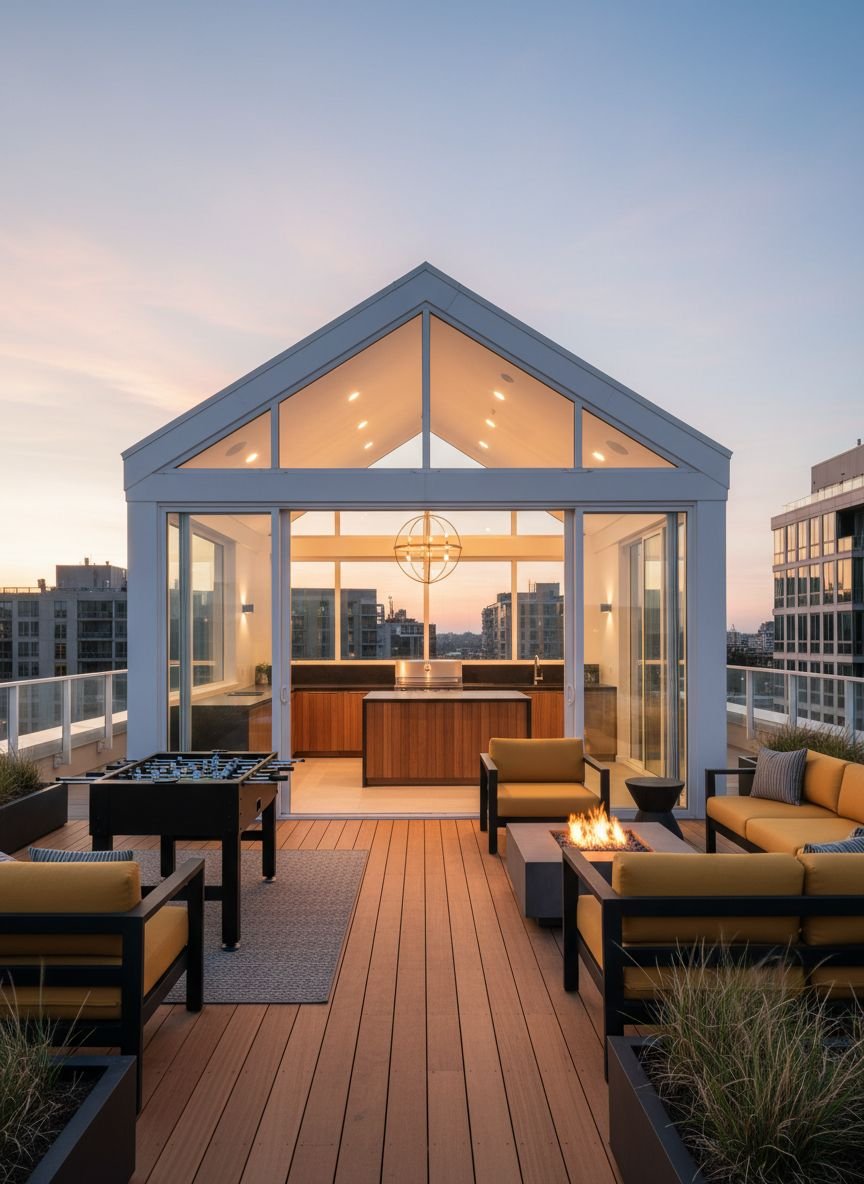
This concept merges the kitchen with a full living room setup. The “kitchen” is just one wall of a larger outdoor great room that includes a sectional sofa, a coffee table, and a television. The cover is substantial—a full roof with insulation and finished ceilings—making it feel like a true room without a fourth wall. The cooking area is designed for casual “grazing” rather than formal dining, often featuring a long buffet counter where guests can serve themselves.
Audio-visual integration is critical here. Surround sound speakers embedded in the ceiling and a weather-proof screen turn this into the ultimate game-day destination. The layout encourages guests to drift between the grill, the bar, and the sofa, keeping the energy dynamic.
Pro Tip: Use outdoor rugs to visually define the “living room” area separate from the “cooking” area to organize the large open space.
15. Pergola Covered

A pergola offers a middle ground between full shade and open sun. Traditionally made of wood with cross rafters, modern pergolas can also be aluminum or vinyl. They provide dappled shade that reduces the harshness of the sun without blocking the breeze. For a kitchen, you might want to add a clear polycarbonate sheet on top of the rafters to provide rain protection without losing the open, airy feel of the pergola structure.
Pergolas are excellent for defining the kitchen space within a larger garden. You can train vines like wisteria or grapes to grow over the top, creating a “living roof” that changes with the seasons. The dappled light creates beautiful shadows throughout the day, adding a dynamic visual element to your cooking space.
Pro Tip: Install a retractable canvas canopy under the pergola beams. This gives you the option of full shade on the hottest days or an open view of the stars at night.
16. Skylight Roofing

One common complaint about covered patios is that they can make the adjacent indoor rooms dark. A skylight roofing system solves this problem. By incorporating large skylights or using a translucent roofing material for the outdoor kitchen cover, you ensure that natural light continues to penetrate the home’s windows. This design feels bright, modern, and uplifting. It is particularly effective for north-facing backyards that already struggle with low light.
The skylights can be fixed glass or vented. Vented skylights are superior for kitchens as they act as a natural chimney, allowing hot air and smoke to escape upward, keeping the space cool. The aesthetic is clean and architectural, often pairing well with modern farmhouse or contemporary home styles.
Pro Tip: Ensure your skylights have UV-blocking tints to protect your countertop materials and guests from harmful rays while still letting in the visible light.
17. Farmhouse Theme

The modern farmhouse trend translates beautifully to the outdoors. Think white shiplap walls, black gooseneck barn lights, and warm wood accents. The covered structure often mimics a pole barn or a stable, with high vaulted ceilings and exposed wooden trusses painted white or stained dark for contrast. A large farmhouse sink (apron front) is a non-negotiable feature, practical for washing large platters and grill grates.
Cabinetry often features “X” brace details, and the countertop might be a mix of soapstone (which handles heat well) and butcher block. The vibe is cozy, welcoming, and family-oriented. It invites you to bake a pie in the outdoor oven or host a Sunday brunch with mismatched vintage chairs around a long wooden table.
Pro Tip: Save this idea to your Pinterest. Use galvanized metal buckets for ice and drinks, and mason jars for storage to complete the farmhouse aesthetic affordably.
Popular Asked Questions
Does an outdoor kitchen need to be covered?
While it is not strictly mandatory, covering your outdoor kitchen is highly recommended. A cover protects your expensive appliances (grills, fridges) from rain, snow, and direct sun, which can cause rust and fading. It also allows you to cook and entertain comfortably during unexpected showers or intense heatwaves, significantly increasing how often you use the space.
How much does a covered outdoor kitchen cost?
The cost varies widely based on size and materials. A simple DIY setup with a modular kit and a basic pergola might cost between $3,000 and $8,000. A custom-built masonry kitchen with high-end appliances and a permanent roof structure typically ranges from $15,000 to $50,000. Luxury builds with full electrical, plumbing, and audio-visual systems can exceed $80,000.
How do you vent a grill under a covered patio?
Ventilation is critical for safety and comfort. If your ceiling is high and open on multiple sides, natural airflow might be sufficient. However, for most covered structures, you should install a vent hood directly above the grill. This hood captures smoke, grease, and heat, venting them outside the structure to prevent ceiling stains and keep the air breathable for your guests.
What is the best flooring for a covered outdoor kitchen?
Safety and durability are the top priorities. Porcelain pavers are an excellent choice because they are non-porous (resist oil stains), frost-resistant, and come in slip-resistant finishes. Natural stone like bluestone or travertine is also beautiful but requires regular sealing. Concrete is a trendy, budget-friendly option that can be stamped or stained but can be slippery when wet if not textured properly.
Conclusion
Building a covered outdoor kitchen is one of the most rewarding home improvement projects you can undertake. It transforms your backyard from a seasonal lawn into a year-round living extension. Whether you prefer the sleek lines of a cantilevered roof, the cozy charm of a farmhouse theme, or the party-ready vibe of a poolside bar, there is a design here to fit your lifestyle. By focusing on durable materials, proper zoning, and smart weather protection, you create a space that brings family and friends together for decades.




Leave a Comment