
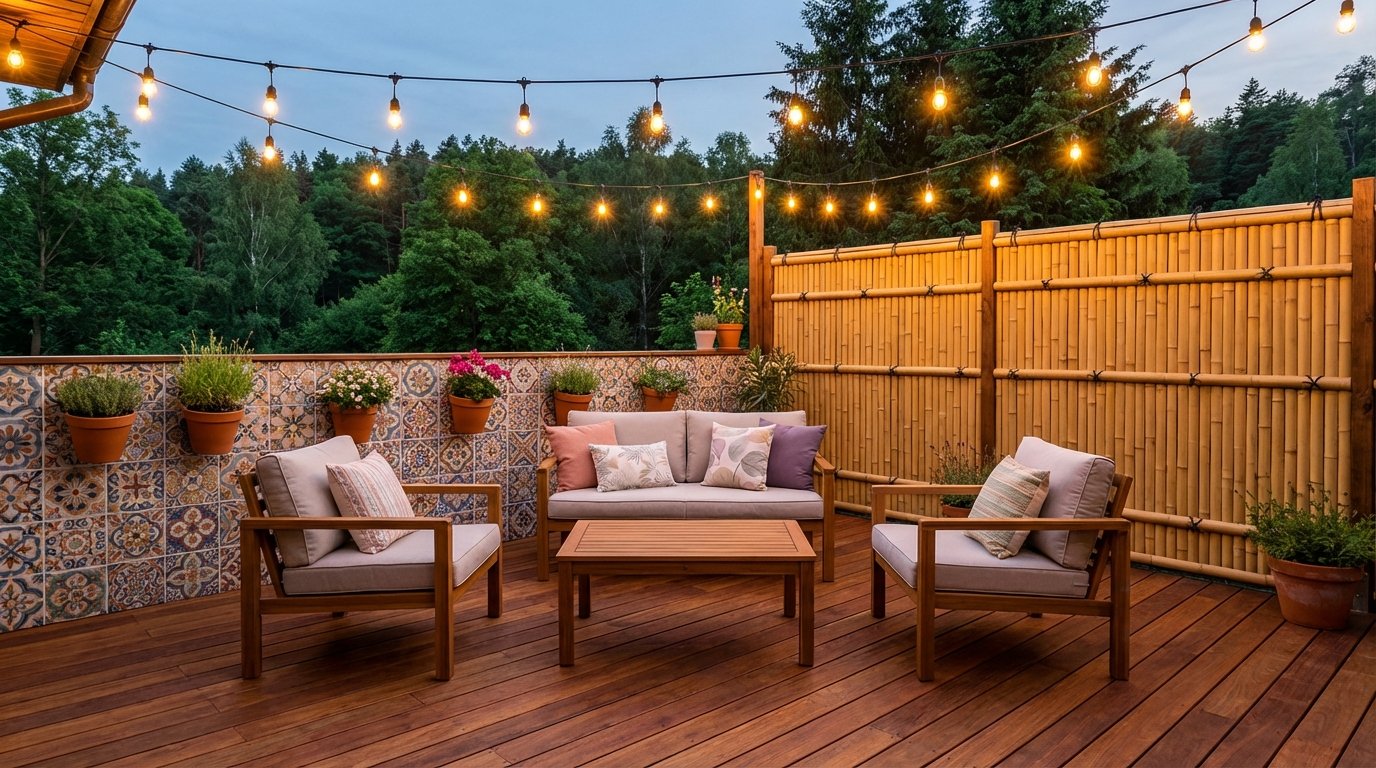
Vertical design transforms a basic platform into a true outdoor room. You likely struggle with neighbors looking in or an unsightly view that ruins your relaxation. Most homeowners ignore the perimeter of their deck, missing a massive opportunity for privacy and style.
A well-designed deck wall solves these problems. It blocks wind, reduces noise, and acts as a canvas for your personal aesthetic. This guide provides fourteen specific, high-impact designs to reclaim your outdoor sanctuary. Whether you need a renter-friendly screen or a permanent architectural feature, these solutions fit various budgets and skill levels.
Key Takeaways
- Privacy without isolation: Slat and lattice designs filter light while blocking prying eyes.
- Vertical gardening: Walls double your planting space, perfect for small footprints.
- Material mix: Combining wood, metal, and stone creates a high-end, custom look.
- Multi-functionality: The best walls incorporate storage, seating, or lighting.
Table of Contents
- Wooden Slat Privacy Screens
- Colorful Tile Accents
- Lattice Panels with Vines
- Bamboo Privacy Walls
- Interactive Chalkboard Walls
- Decorative Metal Panels
- Mirror Accents
- Living Green Walls
- Woven Screens
- Built-in Benches with Storage
- Stone Cladding
- Shade-Proof Pergolas
- Artistic Murals
- String Lights on Wall Hooks
- Popular Asked Questions
- Conclusion
Wooden Slat Privacy Screens
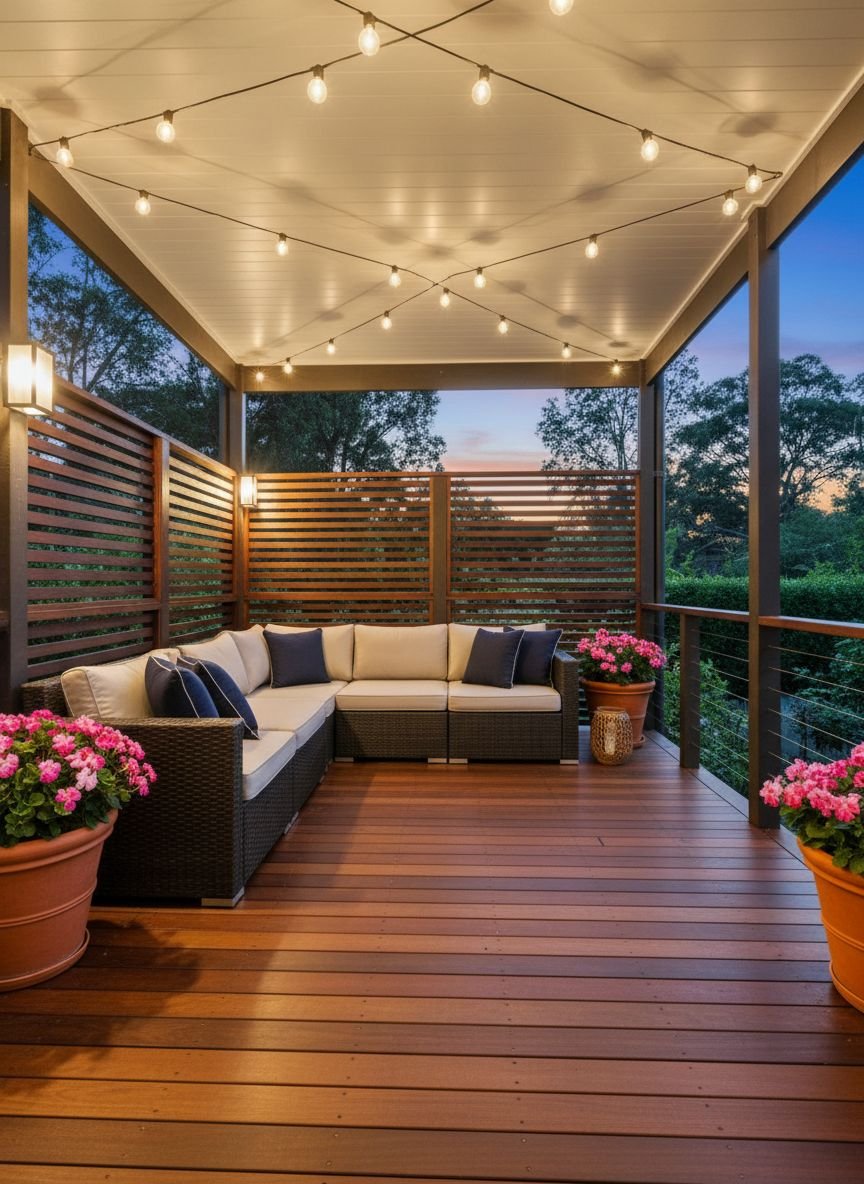
Horizontal wooden slats offer a clean, architectural look that defines modern outdoor design. This style works because it establishes a visual boundary without creating a fortress-like feeling. The gaps between the boards allow air to circulate, preventing the deck from becoming a heat trap during summer months. You get the seclusion you want while keeping the area open and breezy. Using cedar or redwood ensures natural resistance to rot and insects, though pressure-treated pine offers a budget-friendly alternative that you can stain to match your home’s exterior.
Varying the width of the slats creates a custom pattern unique to your space. Uniform spacing provides a sleek, contemporary rhythm, while random widths introduce an organic, playful texture. Installing the slats on a matte black frame makes the wood tones pop, adding depth to the structure. This approach turns a functional privacy screen into a focal point that rivals indoor feature walls.
Pro Tip: Use spacing blocks during installation to ensure perfectly consistent gaps between every board.
Colorful Tile Accents
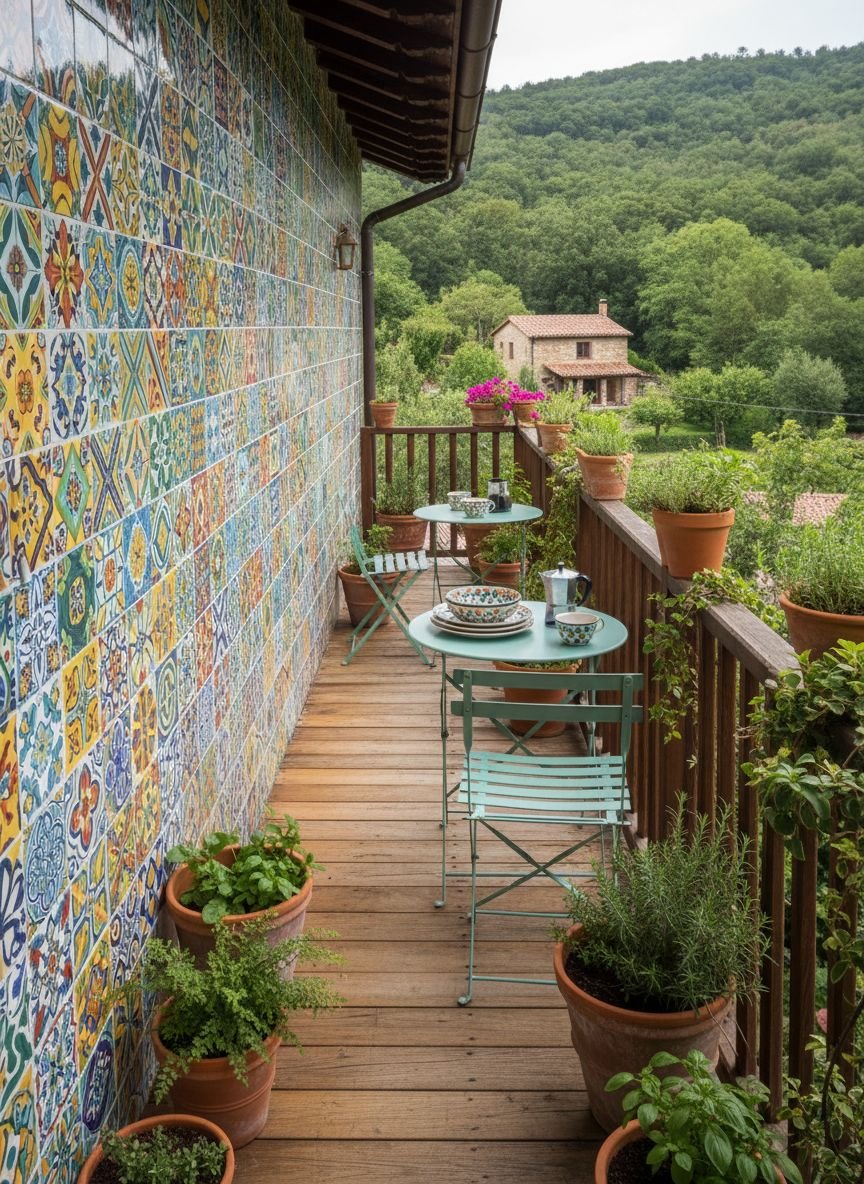
Bringing tile outdoors introduces vibrant color and permanent pattern to your deck walls. This technique draws inspiration from Mediterranean and Moroccan courtyards where walls are art, not just boundaries. Frost-proof porcelain or cement tiles withstand temperature fluctuations and resist fading from UV rays. You can tile an entire feature wall or create a framed “rug” effect on a vertical surface to anchor a dining or lounge area.
The glossy or matte finish of the tiles contrasts beautifully with the rough textures of decking boards and garden foliage. This juxtaposition adds a layer of sophistication often missing in backyard designs. If tiling a full wall feels too permanent, mount tiled backer boards onto existing railings. This allows you to change the design later without major demolition. Bold geometric patterns or intricate florals instantly elevate the perceived value of your outdoor space.
Pro Tip: Seal cement tiles annually to prevent water absorption and staining from outdoor elements.
Lattice Panels with Vines
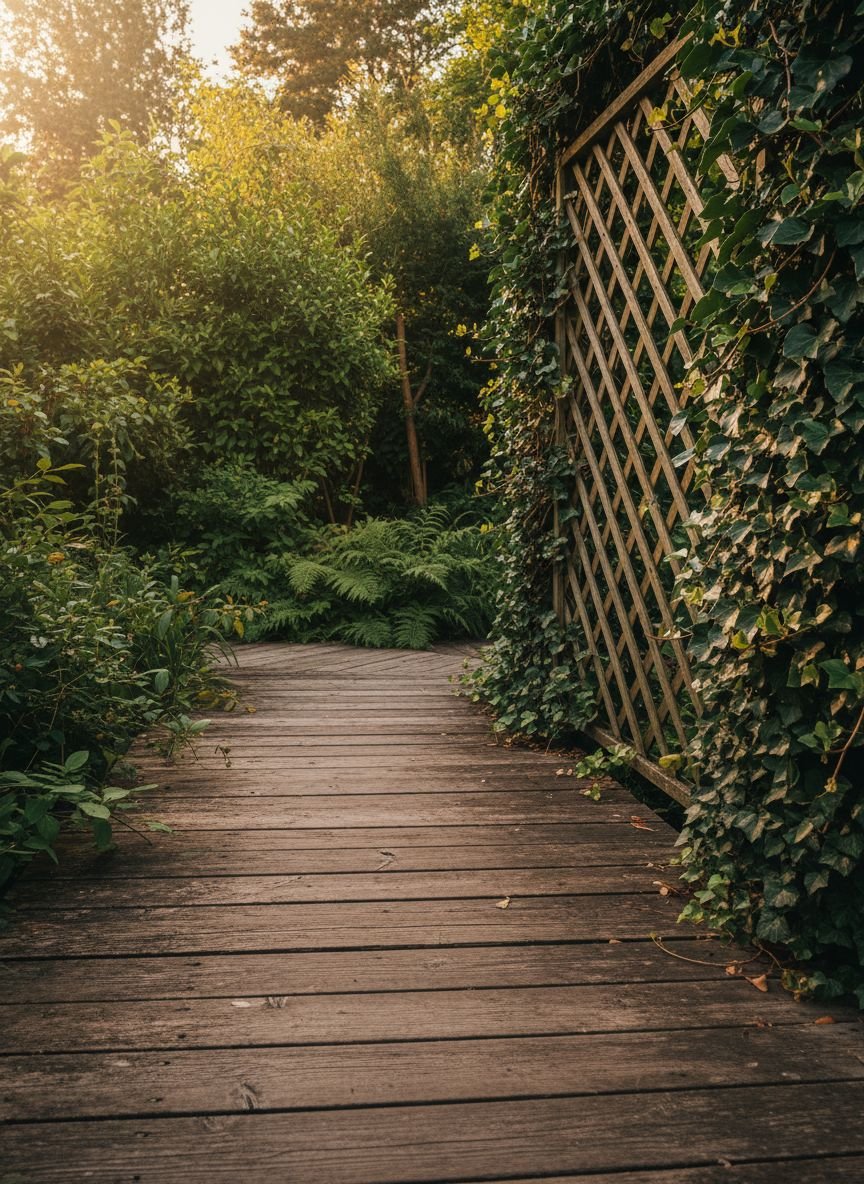
Classic lattice panels provide the most cost-effective framework for a lush, living wall. The diamond or square grid structure offers sturdy support for climbing plants like jasmine, clematis, or ivy. Over time, the foliage consumes the wood or vinyl structure, leaving you with a wall of pure greenery. This softens the hard edges of your deck and helps absorb neighborhood noise.
To keep the look modern, frame standard lattice sheets with chunky 4×4 timber posts. Painting the lattice black or dark charcoal makes it recede visually, allowing the bright green leaves and colorful blooms to take center stage. This method creates a “secret garden” atmosphere even in dense urban environments. It is a dynamic design choice that changes with the seasons, offering blooms in spring and dense privacy in summer. For more on maximizing small garden areas, read 16 Stunning Small Backyard Garden Ideas You Can Easily Create to Instantly Transform Your Outdoor Oasis.
Pro Tip: Choose a fast-growing annual vine for instant coverage while waiting for perennial climbers to mature.
Bamboo Privacy Walls
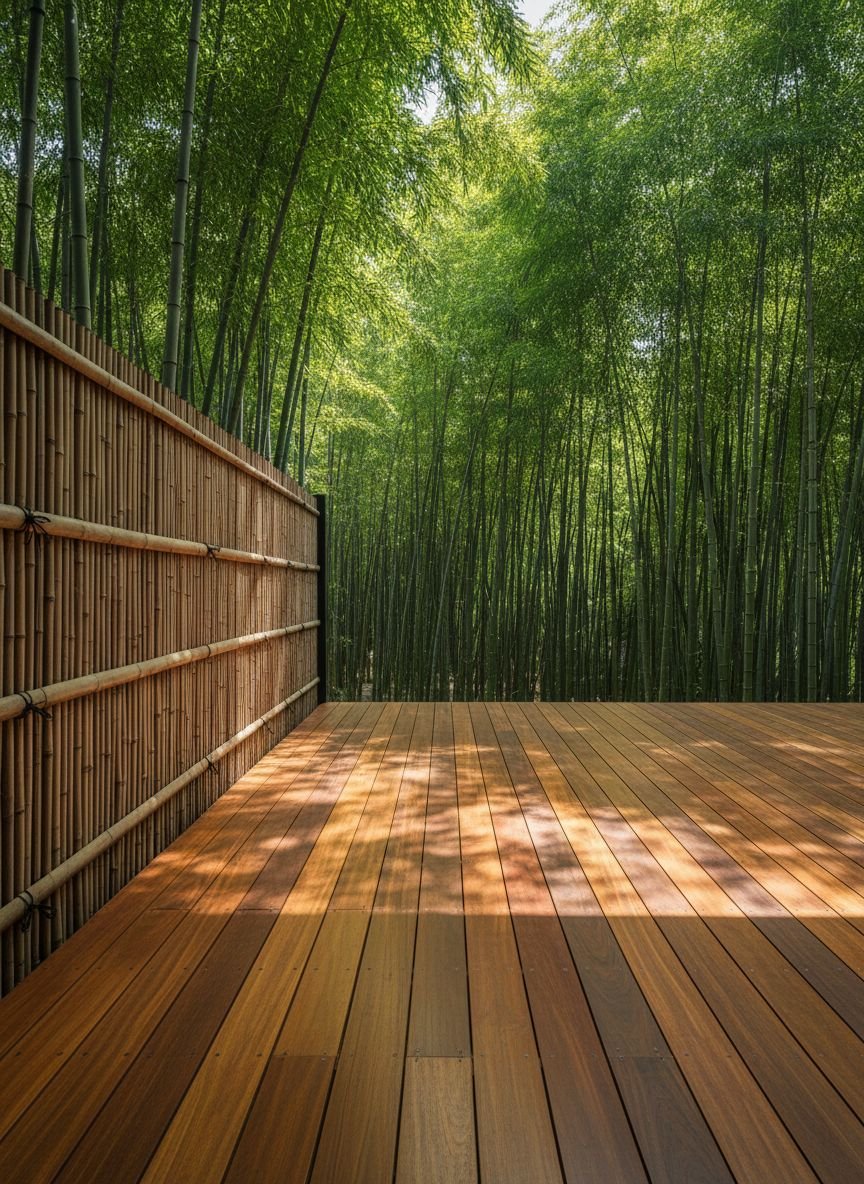
Bamboo fencing rolls offer an instant solution for covering unsightly chain-link fences or creating a Zen-inspired zone. The natural, light tan color of bamboo brightens shady corners and pairs well with dark outdoor furniture. This material brings a tropical, spa-like energy to your deck. It is lightweight, making it easy to attach to existing railings or frames without requiring heavy structural reinforcement.
Sustainability is a major benefit here, as bamboo regenerates quickly. You can choose between rolled bamboo for a textured, organic look or split bamboo for a flatter, more uniform appearance. Framing the bamboo in dark stained wood creates a polished, deliberate finish rather than a temporary fix. This material handles moisture well but benefits from a clear UV sealant to maintain its golden hue over years of sun exposure.
Pro Tip: Install bamboo slightly off the ground to prevent moisture wicking from the deck floor, which causes rot.
Interactive Chalkboard Walls
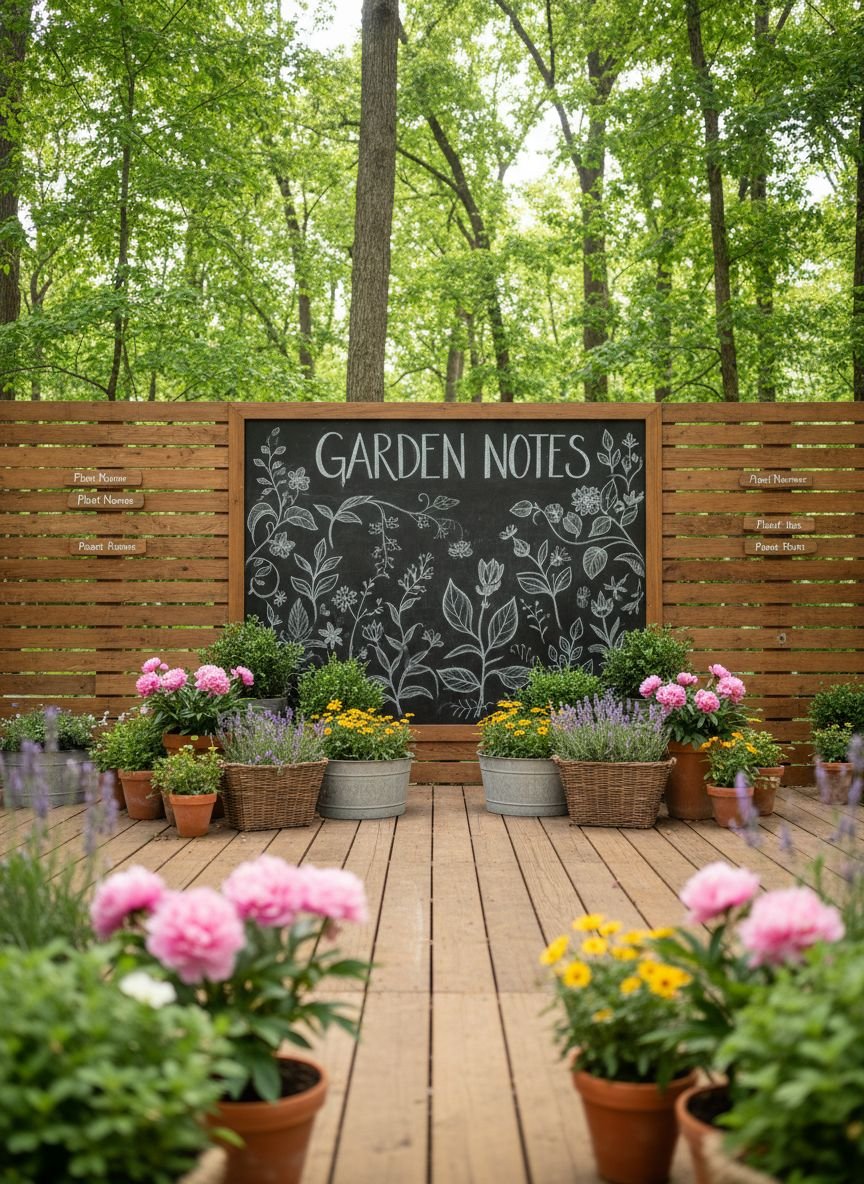
Outdoor chalkboards transform a dead wall into an activity zone for kids and a menu board for entertaining. Using exterior-grade fiber cement board painted with outdoor chalkboard paint creates a durable surface that withstands rain. This idea encourages creativity and keeps children occupied within sight while adults relax. It also serves as stylish decor for parties, allowing you to hand-letter welcome messages or drink specials.
Framing the chalkboard with rustic wood or sleek metal trim integrates it into the deck’s design so it doesn’t look like a classroom. You can add a small ledge or bucket for chalk storage. This interactive element adds personality and fun to the space, making the deck feel like a true extension of the family living area. For more kid-friendly decor inspiration, check out 15 Playful & Bright Corner Shelf Decor for Kids’ Rooms That Will Spark Joy & Imagination.
Pro Tip: Season the board by rubbing the side of a chalk piece over the entire surface before the first use to prevent ghosting.
Decorative Metal Panels
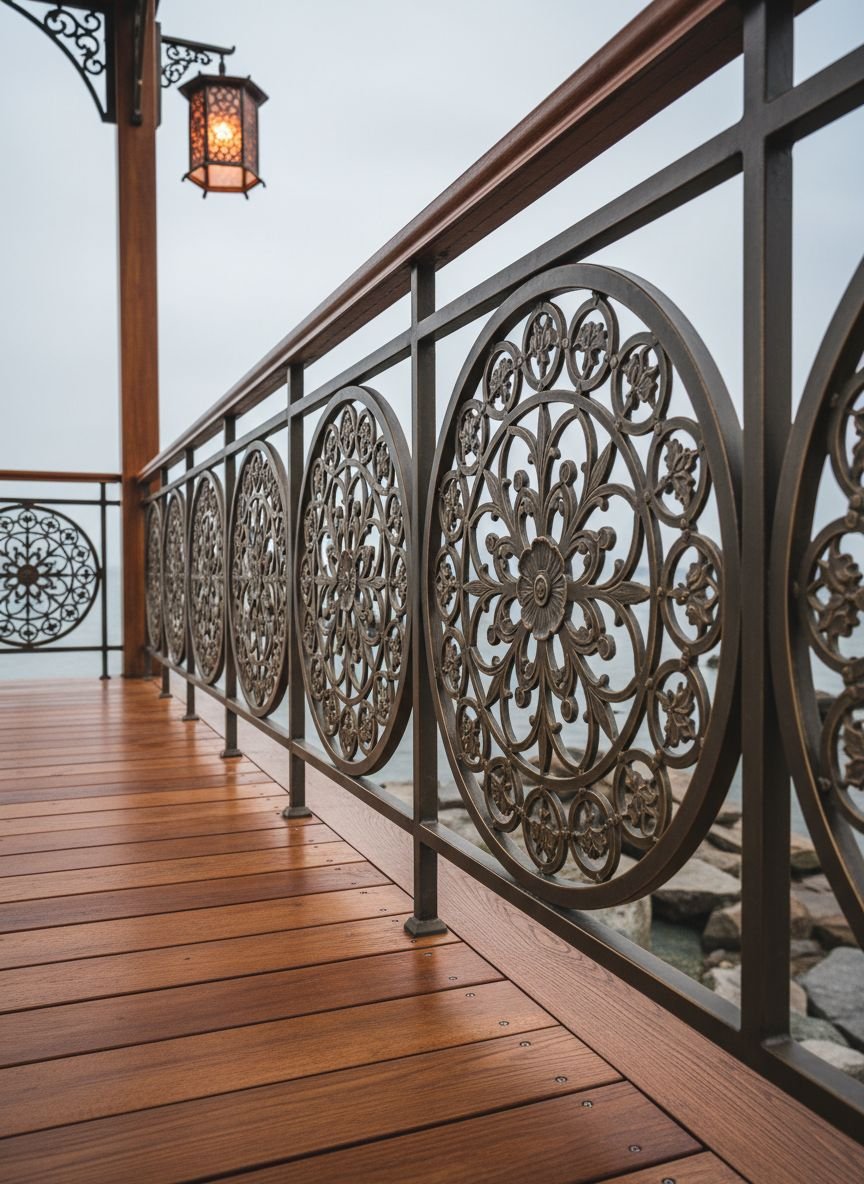
Laser-cut metal screens act as functional art, providing privacy while casting intricate shadows across your deck. Materials like Corten steel develop a protective, rusted patina that adds industrial warmth and requires zero maintenance. Aluminum panels with powder-coated finishes offer a sleeker, more modern alternative in black, white, or bronze. These panels work exceptionally well in windy areas, as the perforations allow air to pass through rather than blocking it completely.
The patterns range from organic leaf motifs to strict geometric shapes, allowing you to match the architectural style of your home. You can install these as standalone screens or mount them into wooden partition walls. Backlighting these panels with LED strips creates a dramatic evening ambiance, turning the wall into a light sculpture.
Pro Tip: Use stainless steel hardware for installation to prevent rust streaks from running down your panels.
Save this idea to your Pinterest.
Mirror Accents
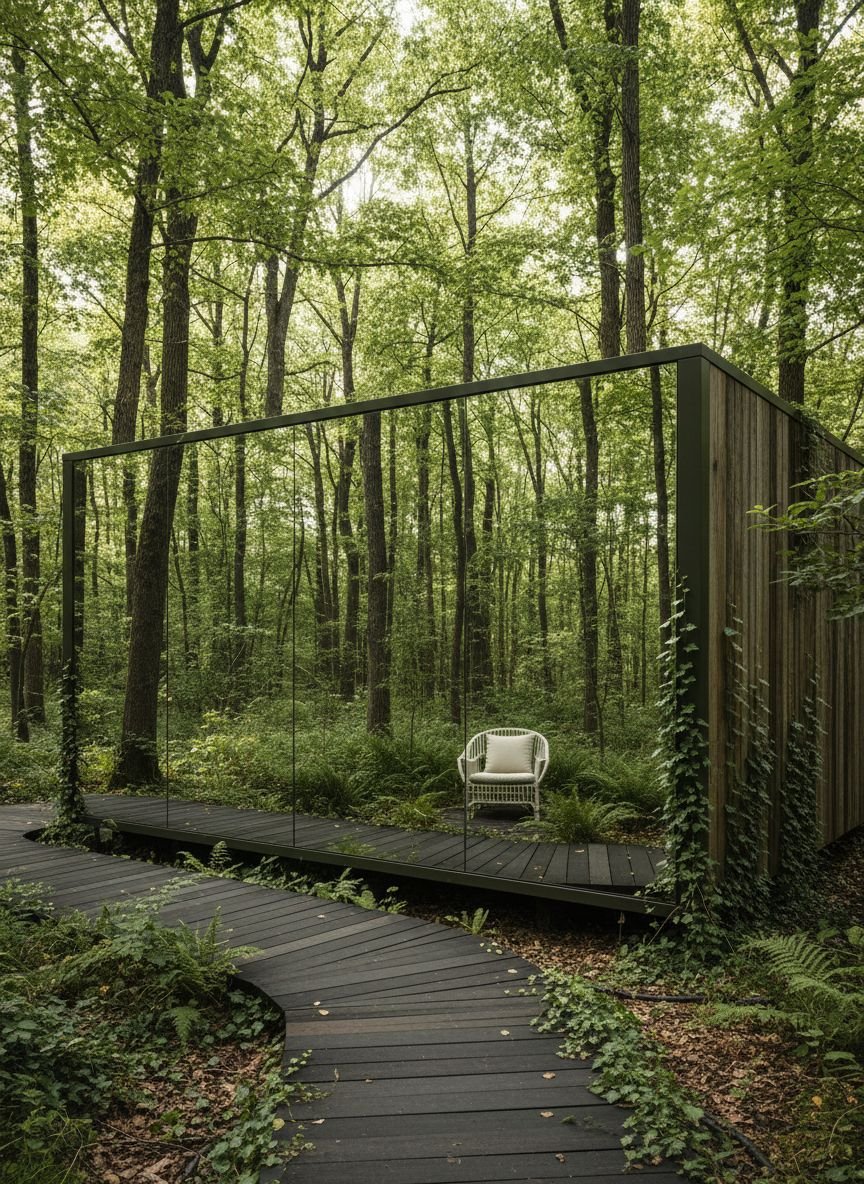
Outdoor mirrors are a magician’s trick for small decks, doubling the visual space and reflecting light into dark corners. Placing a mirror on a deck wall reflects the greenery of the garden, making the space feel surrounded by nature. You must use mirrors specifically designed for outdoor use or weatherproof standard mirrors by sealing the edges and backing to prevent de-silvering.
Styling is crucial to avoid a confusing look. Frame the mirror with weathered wood or hang it behind a trellis to soften the reflection. This positioning also protects birds, as the grid over the glass signals that it is a solid object. Mirrors shaped like windows create a charming illusion of an opening into another garden “room.” This addition brings an interior design element outside, blurring the lines between indoor and outdoor living.
Pro Tip: Position the mirror so it reflects a beautiful view, not the AC unit or trash cans.
Living Green Walls
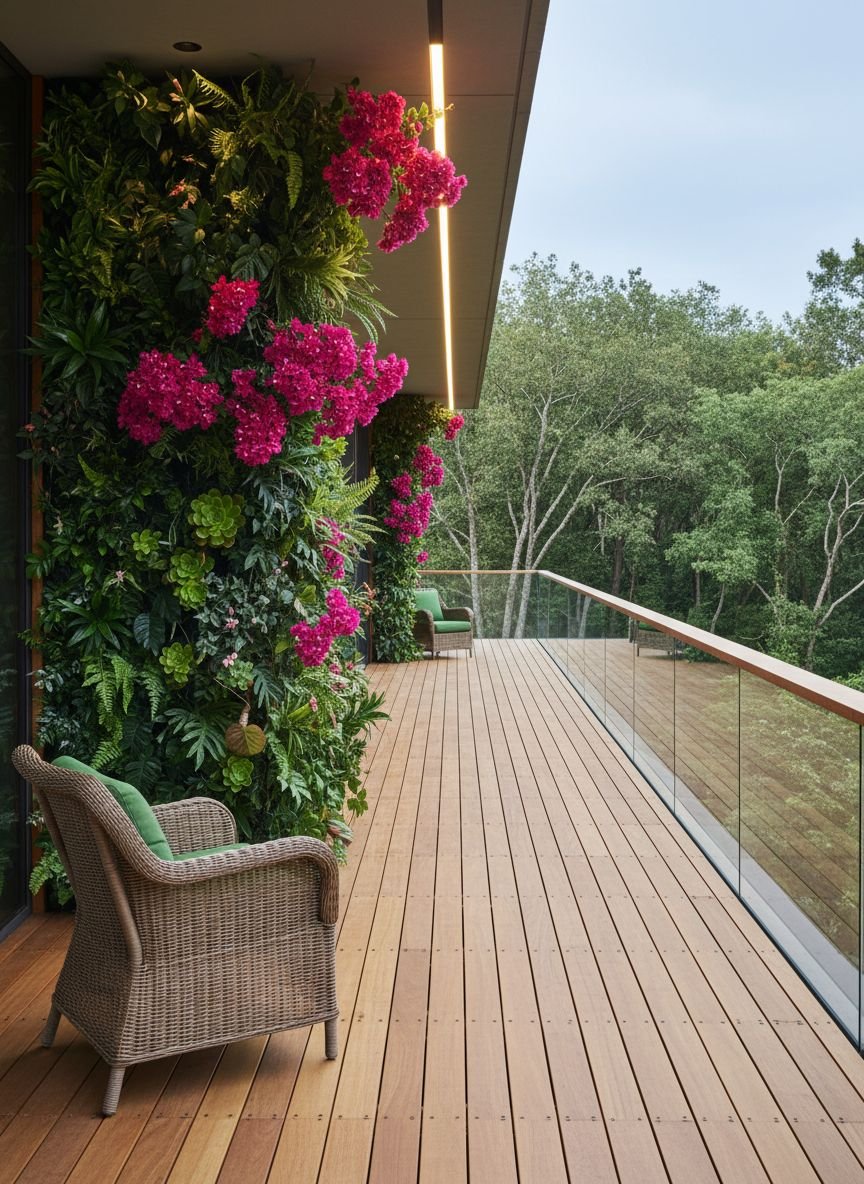
A vertical garden is the ultimate solution for nature lovers with limited square footage. Wool pockets, modular plastic planters, or simple wooden shelves mounted on the wall allow you to stack plants vertically. This creates a lush, cooling backdrop that improves air quality and biodiversity. You can grow a mix of ornamental grasses and ferns for texture, or plant a vertical herb garden for culinary use.
The density of the plants acts as a natural sound barrier, dampening traffic noise or loud neighbors. Automated drip irrigation systems make maintenance easy, ensuring plants survive hot summer days. The visual impact of a wall of living greenery is unmatched, creating a biophilic connection that instantly lowers stress levels. For more on compact planting, see 10 Creative Small Vegetable Garden Design Ideas That Instantly Double Your Harvest.
Pro Tip: Choose plants with similar water and light requirements for each section of the wall to ensure uniform growth.
Woven Screens
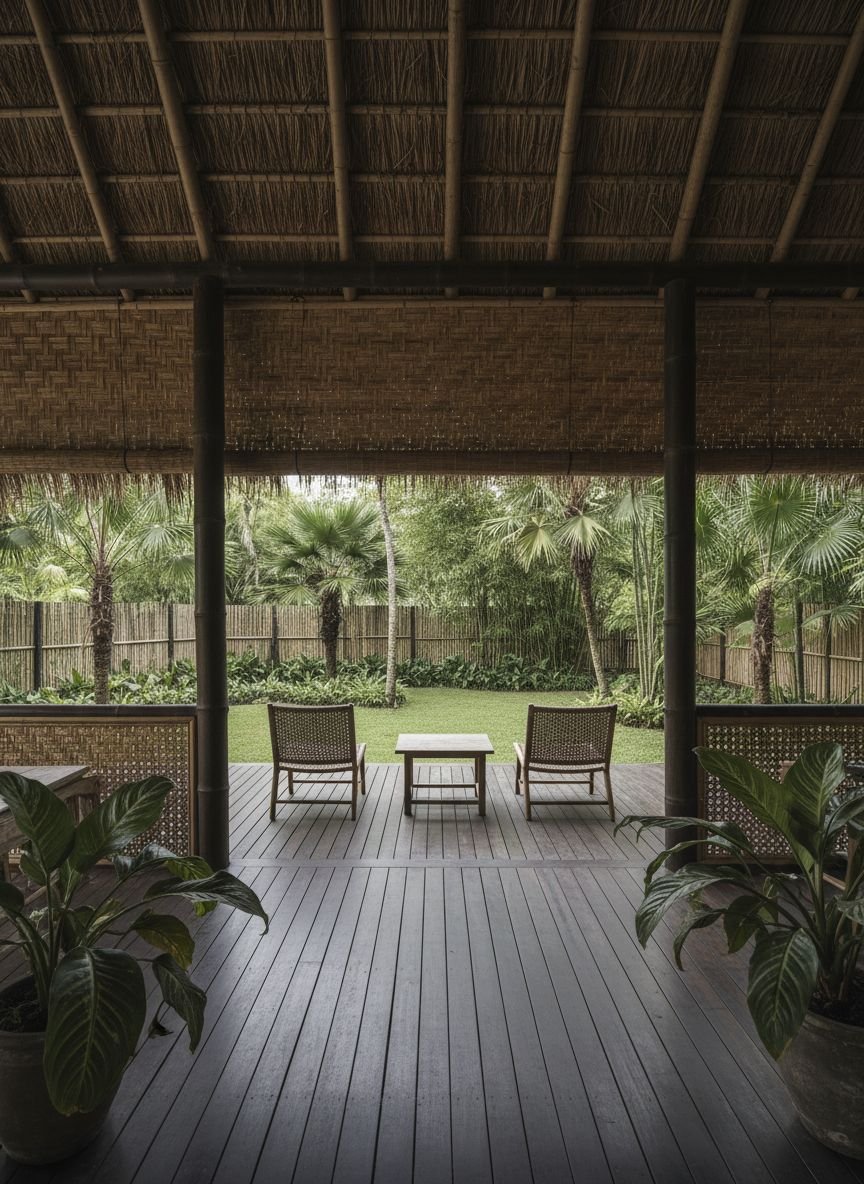
Woven textures introduce a bohemian, relaxed vibe to outdoor spaces. Synthetic wicker or rattan screens mimic the look of natural fibers but withstand rain and sun without cracking. These screens add softness and intricate detail that plain wood or metal lacks. They pair perfectly with oversized floor cushions, patterned rugs, and low-slung furniture.
The weave provides excellent privacy while still allowing filtered light to penetrate. You can find tall, freestanding woven dividers for flexibility or install fixed panels between deck posts. The texture of the weave contrasts beautifully with smooth decking boards, adding tactile interest to the design. This style brings the comfort of a living room out into the fresh air.
Pro Tip: Wash woven screens with a mild soap solution and a soft brush twice a year to prevent dirt buildup in the crevices.
Built-in Benches with Storage
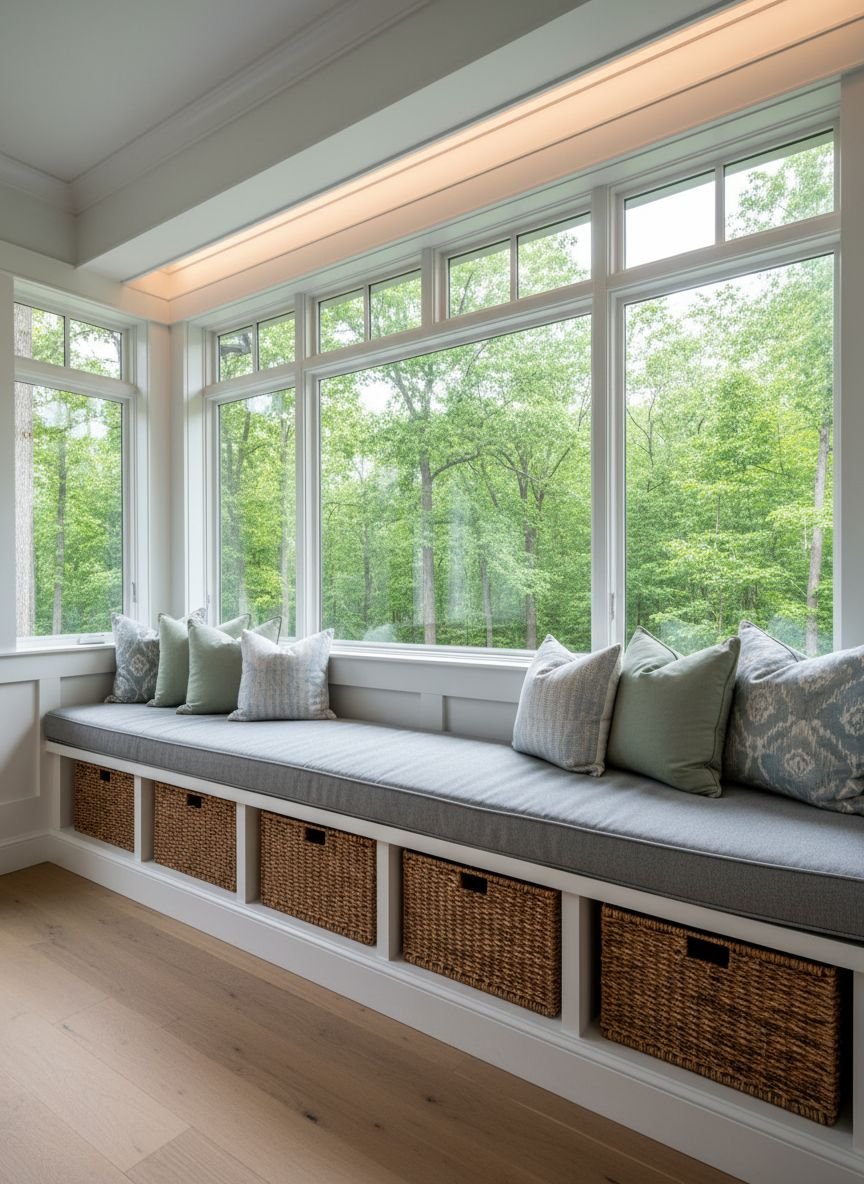
Maximizing functionality often means combining furniture with architecture. A high-backed bench built against the deck perimeter serves as both a safety railing and a privacy wall. Constructing the backrest from horizontal slats or solid paneling creates the visual barrier you need. Under the seat, a hinged lid opens to reveal waterproof storage for cushions, gardening tools, or charcoal.
This integrated approach saves floor space by eliminating the need for standalone chairs and storage boxes. Adding custom cushions in weather-resistant fabric makes the bench a cozy reading nook or dining spot. The solid structure of the bench back creates a sense of enclosure and security, making the deck feel like a proper room. For more multifunctional outdoor inspiration, read 13 Stunning Outdoor Garden Decor Ideas That Instantly Transform Your Backyard Sanctuary.
Pro Tip: Ensure the storage compartment has ventilation holes to prevent mold growth on stored items.
Comparison: Privacy Wall Materials
| Material | Privacy Level | Maintenance | Cost | Vibe |
|---|---|---|---|---|
| Wood Slats | Medium | High (Staining) | Medium | Modern / Warm |
| Metal Panels | Medium | Low | High | Industrial / Chic |
| Living Wall | High | High (Watering) | High | Lush / Organic |
| Bamboo | High | Medium | Low | Zen / Tropical |
| Lattice | Low to High | Low | Low | Classic / Cottage |
Stone Cladding
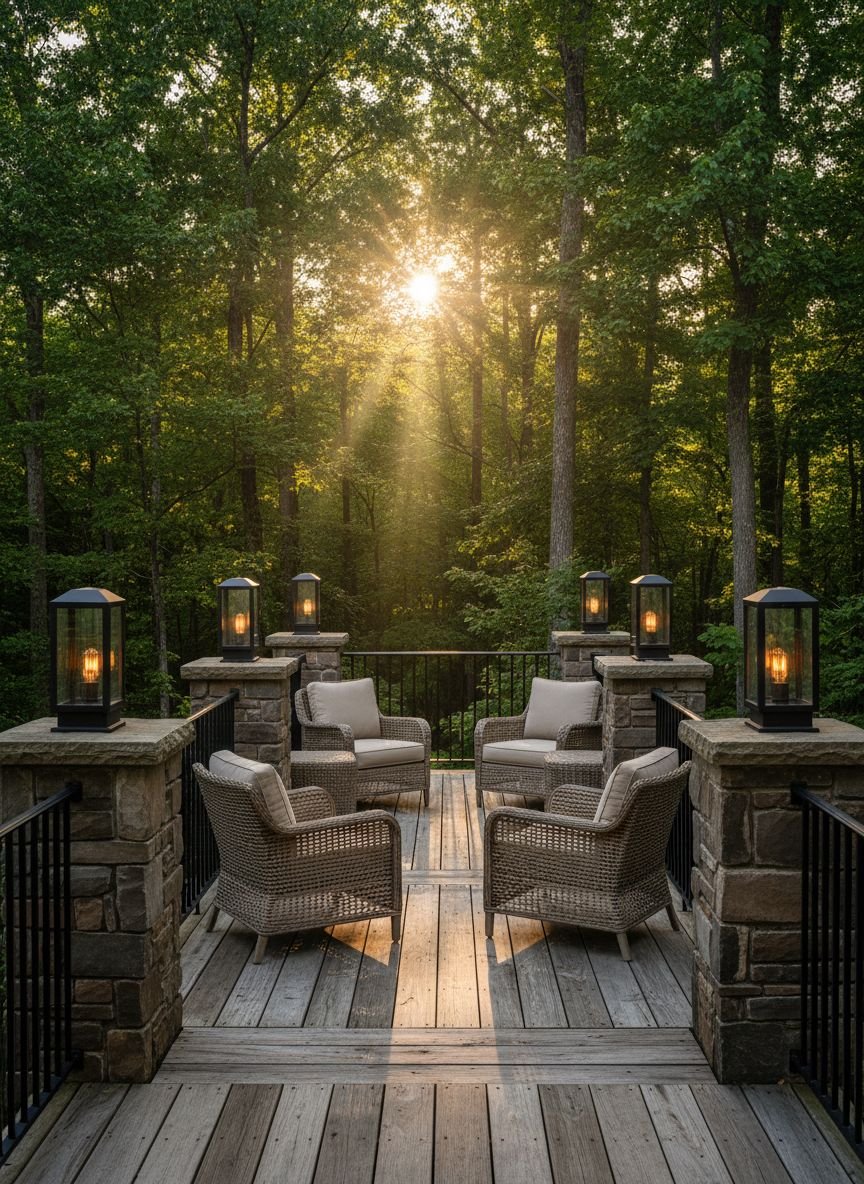
Stone veneer adds weight, permanence, and luxury to a deck wall. Applying stacked stone cladding to a retaining wall or a feature wall connected to the house anchors the outdoor space. The rough texture and natural color variations of slate, travertine, or limestone create a stunning backdrop for fire pits or water features. Unlike wood, stone does not fade or rot, making it a “one-and-done” investment.
You can use stone to cover the base of a privacy screen, combining masonry with timber for a mixed-material look. Lighting plays a huge role here; uplights placed at the base of the wall graze the stone surface, highlighting the texture and creating drama at night. This design choice mimics the feel of a high-end resort or spa.
Pro Tip: Use a polymer-modified mortar for outdoor stone installation to ensure strong adhesion during freeze-thaw cycles.
Shade-Proof Pergolas
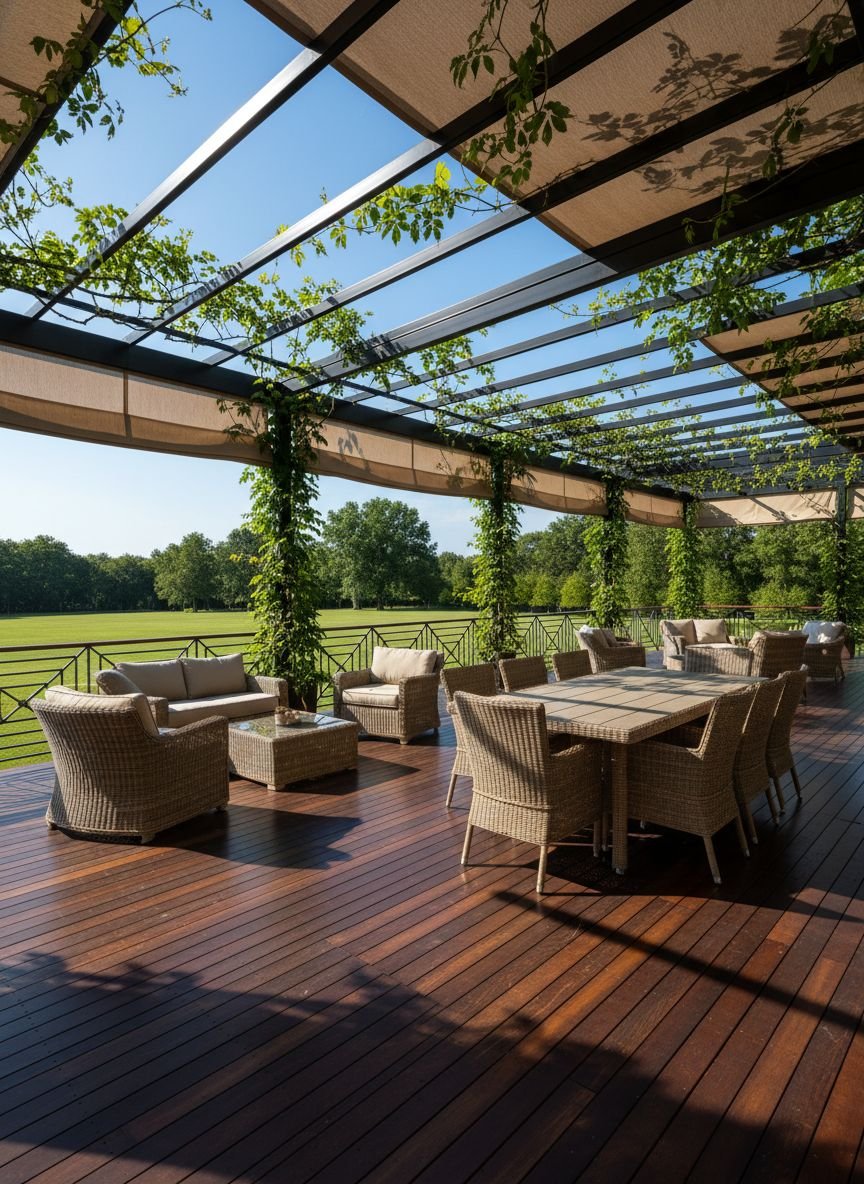
While typically a roof structure, a pergola can extend down the sides to form a wall. “Waterfall” pergolas continue the rafters vertically down one side of the deck, creating a seamless line of wood that provides privacy and shade from the low afternoon sun. This architectural approach feels intentional and structural rather than decorative.
You can install retractable canvas shades or fixed louvers between the vertical posts. This gives you control over the environment, allowing you to block the sun or wind as needed. The structure defines the “ceiling” and “wall” of the outdoor room simultaneously, creating a cozy, enclosed feeling without blocking airflow. For more patio structures, check out 15 Inspirational Modern Patio Ideas for Your Backyard Retreat That Instantly Upgrade Your Home.
Pro Tip: Orient the slats or louvers to block the specific angle of the sun during the time of day you use the deck most.
Artistic Murals

A blank wall is an invitation for color. Painting a mural on a wooden fence or siding adjacent to your deck injects massive personality into the space. You don’t need to be a professional artist; simple geometric shapes, abstract color blocks, or botanical silhouettes are easy to execute with painter’s tape and exterior paint. This turns a boring boundary into a vibrant conversation piece.
The colors you choose set the mood. Cool blues and greens create a calming oasis, while warm terracottas and yellows evoke a sunny, energetic vibe. A mural can also visually expand the space by using perspective or horizon lines. It is a high-impact, low-cost project that you can complete in a single weekend.
Pro Tip: Prime the surface with a high-quality exterior primer to ensure the colors stay true and don’t peel.
String Lights on Wall Hooks
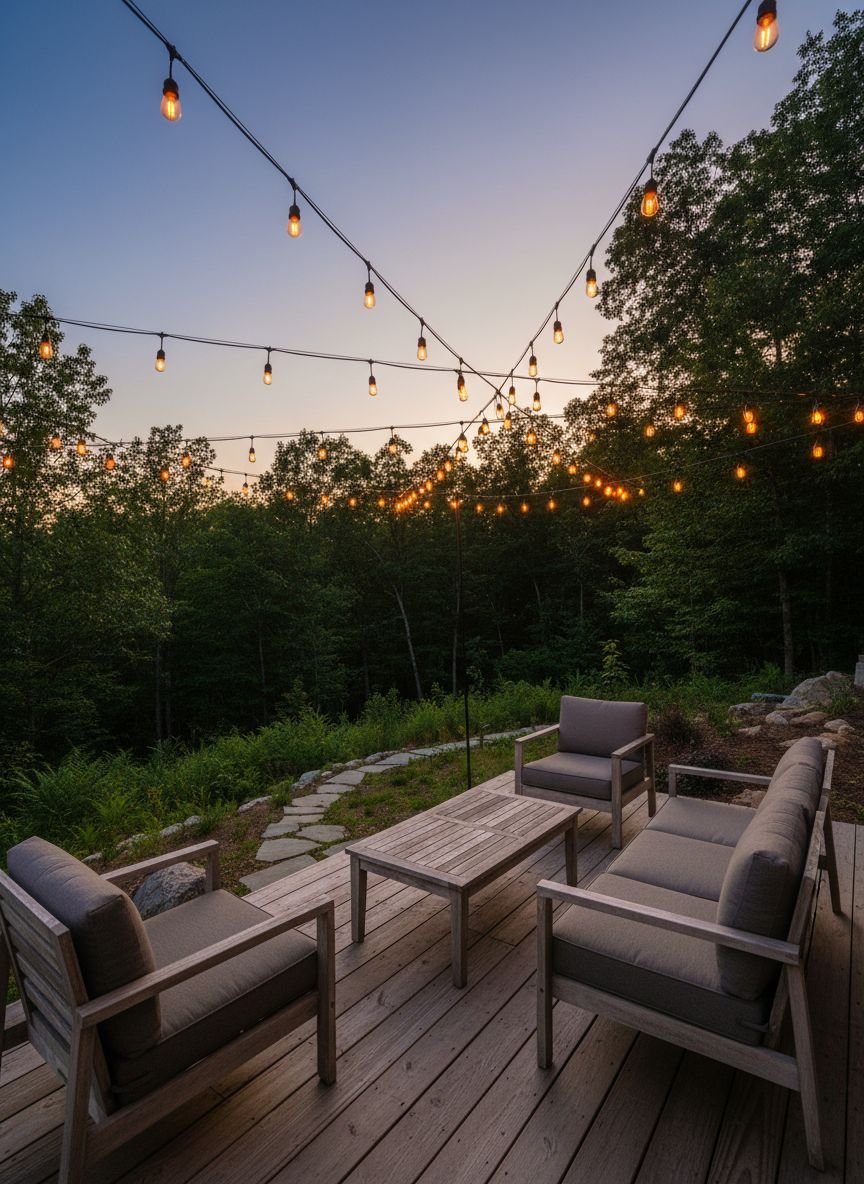
Lighting creates the wall. By stringing bistro lights in a zig-zag pattern or vertical drops against a wall, you define the perimeter with a warm glow. This “wall of light” is effective at night, creating a cozy atmosphere that draws people in. It is the perfect solution for renters who cannot build permanent structures but want to define the space.
Combine the lights with sheer outdoor curtains hung on a tension rod for a soft, romantic effect. The fabric catches the light and moves with the breeze, adding a dreamy, ethereal quality to the deck. This setup is flexible, affordable, and instantly makes the space feel festive and welcoming. For more DIY lighting projects, see 15 Gorgeous Outdoor DIY Decor Projects for Summer That Instantly Upgrade Your Backyard Sanctuary.
Pro Tip: Use warm white LED bulbs (2700K) for a cozy ambiance; cool white can feel too harsh and clinical outdoors.
Save this idea to your Pinterest.
Related posts :
- 22 Breathtaking Outdoor Ideas That Are Making Us Swoon & Will Instantly Upgrade Your Backyard
- 16 Stunning Small Backyard Garden Ideas You Can Easily Create to Instantly Transform Your Outdoor Oasis
- 15 Inspirational Modern Patio Ideas for Your Backyard Retreat That Instantly Upgrade Your Home
Popular Asked Questions
How do I build a cheap privacy wall on a deck?
The cheapest way to build a privacy wall is using lattice panels or pressure-treated pine slats. You can buy 4×8 sheets of lattice for a low cost and frame them with basic 2×4 lumber. Another budget option is to use drop cloth canvas as outdoor curtains on a simple PVC or conduit pipe rod.
What is the best height for a deck privacy screen?
A height of 6 feet is standard for privacy screens as it blocks the view of an average-height person standing up. However, if you only need privacy while seated (like in a dining area), a 4-foot wall might be sufficient and keeps the space feeling more open. Always check your local building codes and HOA rules before building.
Can I put a privacy wall on a floating deck?
Yes, you can add a wall to a floating deck, but you must ensure the deck’s foundation can handle the extra weight and wind load. You typically need to bolt the wall posts into the deck’s frame (joists), not just the surface boards. For tall walls, you might need to sink the posts into the ground adjacent to the deck for stability.
Do I need a permit for a deck privacy wall?
In many areas, structures under 6 feet tall do not require a permit, but this varies wildly by location. If the wall is attached to the house or acts as a safety railing for a high deck, it likely requires inspection. Always call your local building department to verify before starting construction.
How do I windproof a deck wall?
To windproof a wall, avoid building a solid surface that acts like a sail. Instead, use designs with gaps, such as horizontal slats, lattice, or perforated metal. These allow wind to pass through, reducing the structural strain on the wall and preventing it from being blown over in a storm.
Conclusion
Creating a stylish deck wall changes how you use your outdoor space. It shifts your backyard from a fishbowl into a private retreat where you can relax without inhibition. Whether you choose the warmth of wood slats, the greenery of a living wall, or the industrial edge of metal panels, the result is a more functional and beautiful home.





Leave a Comment