
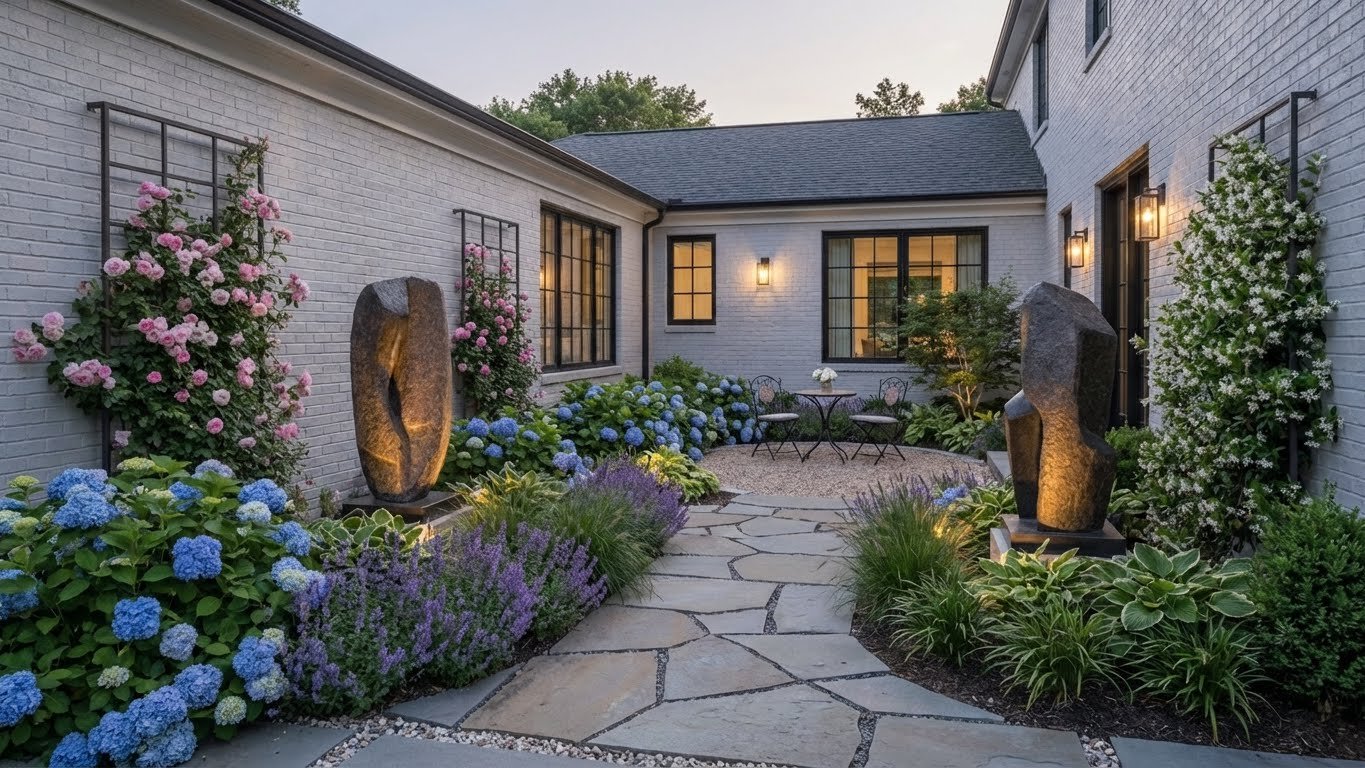
The side of your house is likely the most neglected space on your property. For most homeowners, this narrow strip of land—often shaded, damp, or awkward to navigate—becomes a “dead zone” used only for storing trash cans, tangled hoses, and forgotten ladders.
But you are missing a massive opportunity. That forgotten alleyway has the potential to become a secret garden, a functional path, or a stunning visual connector between your front and back yards.
By treating the side yard as a destination rather than a dumping ground, you increase your home’s usable square footage and significantly boost curb appeal. Whether you are dealing with deep shade, drainage issues, or a tight budget, these 23 side of house landscaping ideas will turn your exterior’s “ugly duckling” into its most charming feature.
Key Takeaways
- Embrace Verticality: In narrow spaces, growing up (trellises, vines) is more effective than growing out.
- Prioritize Drainage: Side yards often trap water; use gravel or dry creek beds to manage flow.
- Lighting is Critical: Dark alleyways feel unsafe; simple pathway lighting transforms them into welcoming walkways.
- Texture Over Color: In deep shade, rely on leaf texture (ferns, hostas) rather than flowers for visual interest.
Table of Contents
- Flower Bed Chain
- Gravel Pathway
- Raised Planter Beds
- Perennial Garden
- Bamboo Screening
- Vertical Gardens
- Water Feature
- Stone Steps
- Topiary Borders
- Outdoor Sculptures
- Hanging Baskets
- Ornamental Grasses
- Mini Herb Garden
- Rock Garden
- Creeping Groundcover
- Privacy Fence with Vines
- Simple Seating Area
- Flagstone Walkway
- Outdoor Lighting
- Decorative Mulch
- Reclaimed Wood Edging
- Modern Succulents
- Trellis Plants
- Popular Asked Questions
- Conclusion
Flower Bed Chain
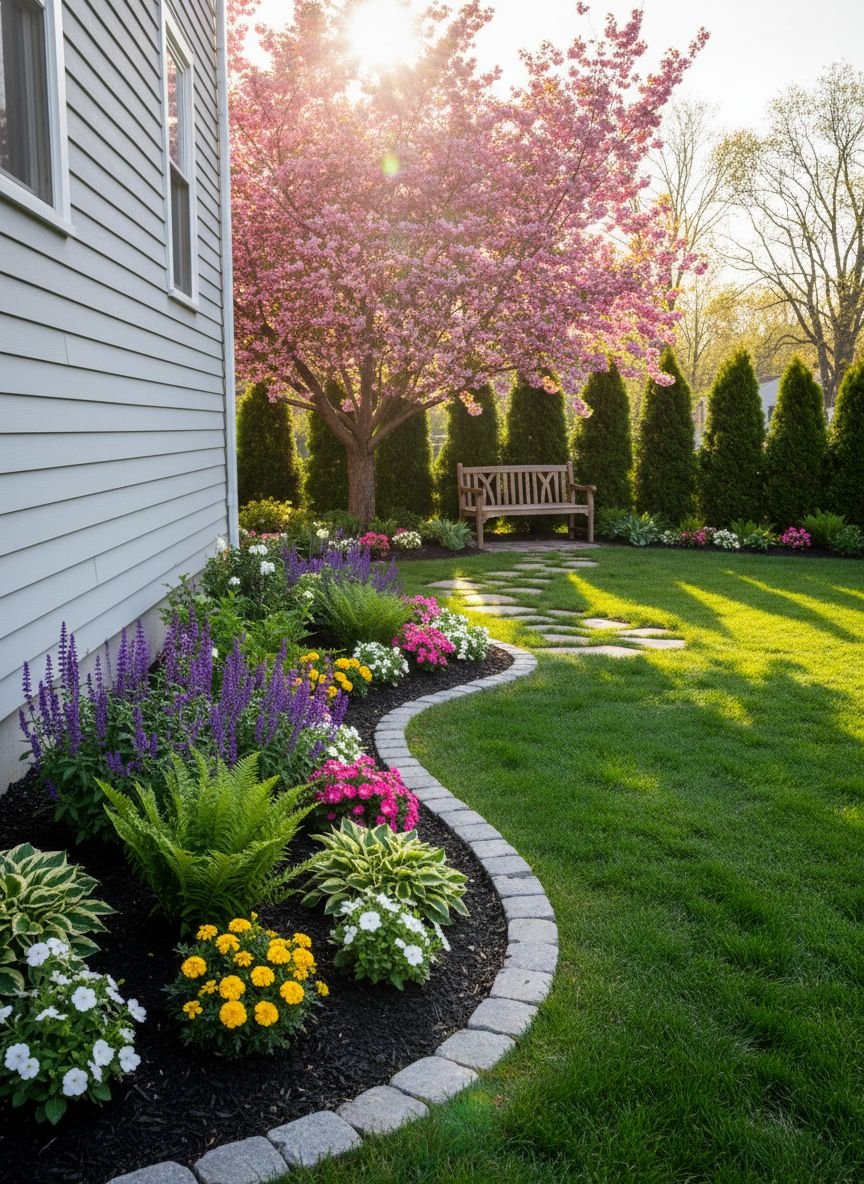
A continuous straight border can sometimes look severe in a narrow space. Instead, consider a “chain” of distinct circular or oval flower beds connected by a narrow strip of grass or pavers. This design breaks up the monotony of a long, straight alleyway and forces the eye to pause at each individual cluster of blooms.
Visually, this technique creates rhythm. You can alternate the color schemes in each “link” of the chain—white blooms in one, purple in the next—to create a sense of movement. It works exceptionally well in side yards that are visible from indoor windows, as each bed acts as a framed vignette.
For implementation, use flexible metal edging to define the curves. This prevents grass from encroaching on your beds and keeps the look crisp. Choose plants that stay relatively compact so they don’t spill over and block the walking path.
Pro Tip: Plant spring bulbs in the center of each “link” for an early season pop, followed by summer annuals to keep the chain vibrant all year.
Gravel Pathway
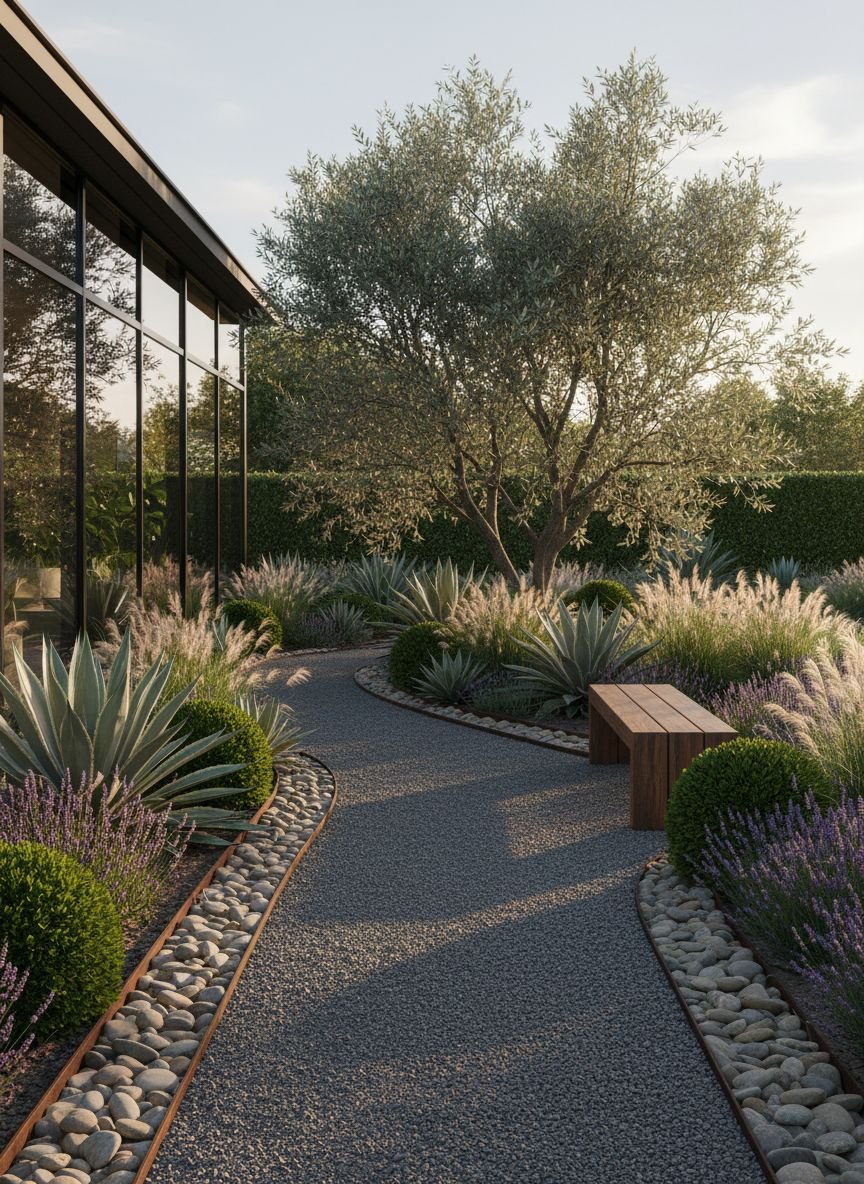
Gravel is the unsung hero of side yard landscaping. It is affordable, permeable, and aesthetically versatile. A gravel pathway solves two major problems: it covers uneven ground instantly and improves drainage by allowing rainwater to seep into the soil rather than pooling against your foundation.
The texture of crushed granite or pea gravel adds a satisfying “crunch” underfoot, which creates an auditory transition between the public front yard and the private back garden. To prevent the space from looking like a construction site, border the gravel with larger river rocks or brick pavers. This contrast makes the path look intentional and designed.
Installation is beginner-friendly. You must lay down a heavy-duty landscape fabric first to suppress weeds. Without this barrier, your beautiful path will become a maintenance nightmare within weeks.
Pro Tip: Use “angular” gravel rather than round pea gravel if you have a slope; the jagged edges lock together and prevent the stones from rolling downhill.
Save this idea to your Pinterest.
Raised Planter Beds
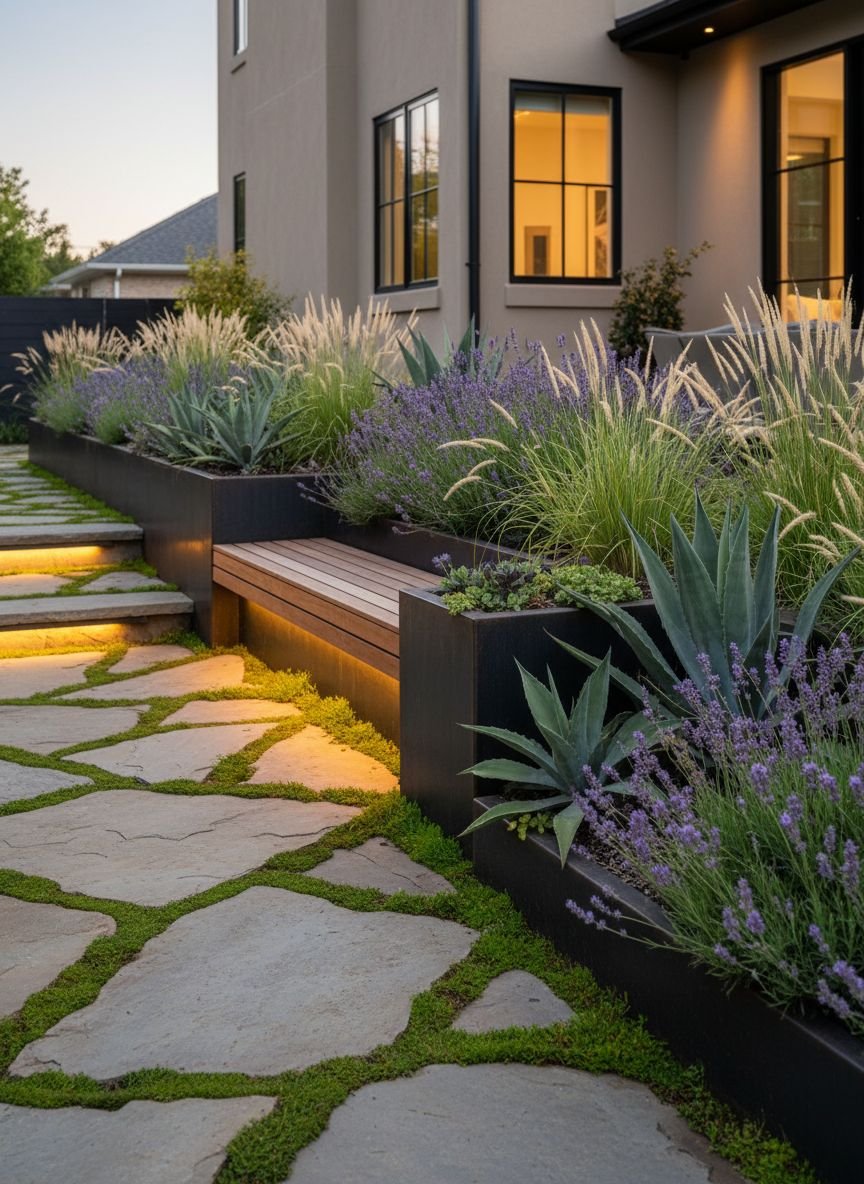
Raised beds are the ultimate solution for side yards with poor soil quality or heavy clay. By building upwards, you control the soil mix entirely, ensuring your plants thrive regardless of the ground conditions beneath them. This structure also adds much-needed architectural height to a flat, narrow space.
Wood, corten steel, or concrete blocks can act as the frame. The linear nature of a side yard makes it perfect for long, narrow trough-style planters. This setup creates a clean, modern look that guides visitors along the path.
Functionally, raised beds are easier on your back. You can weed and harvest without bending over as far. If your side yard gets decent sun, this is the perfect spot for a “kitchen garden” where you can grab herbs or veggies on your way back to the kitchen.
Pro Tip: Attach hooks to the side of your wooden planter beds to store hand trowels and gloves right where you need them.
Perennial Garden
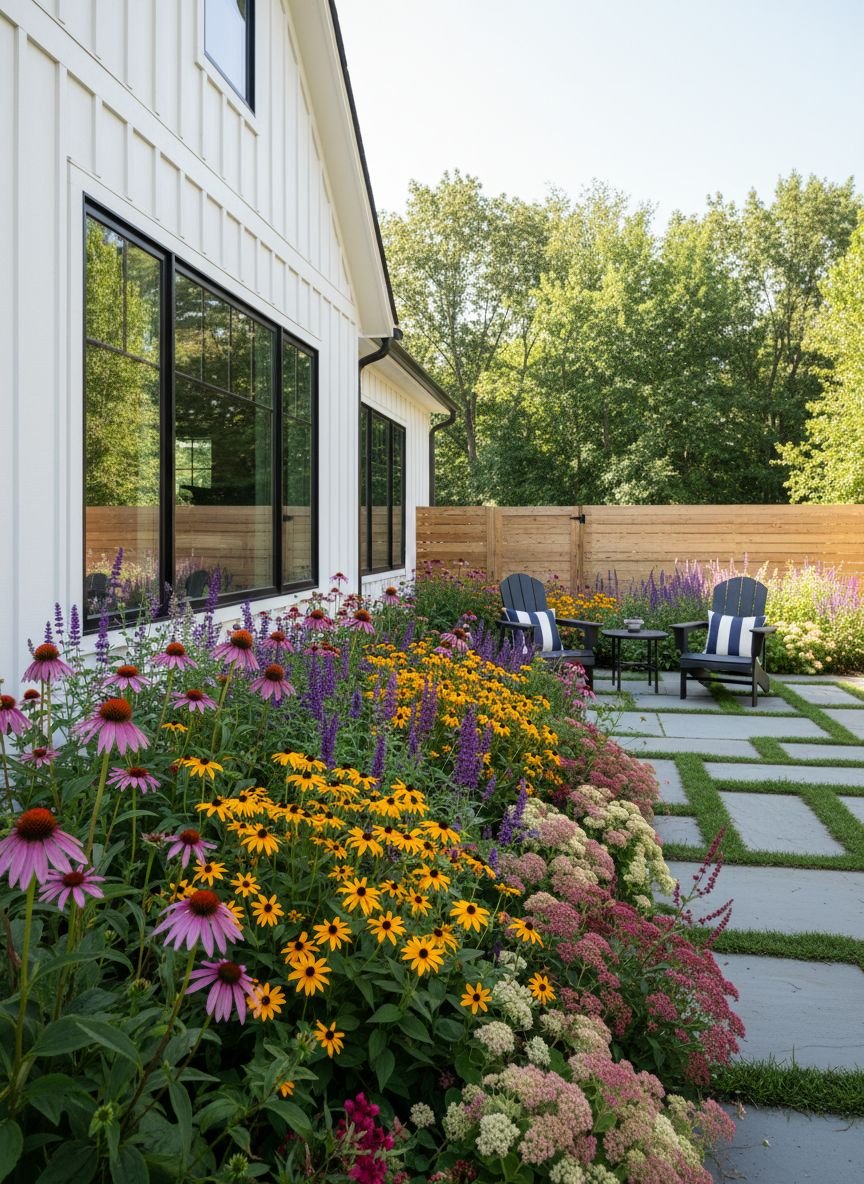
A perennial garden offers the best return on investment for a side yard. Unlike annuals that need replanting every year, perennials come back stronger each season. The key here is layering. You want taller plants in the back (against the house or fence) and shorter ones near the path.
In shady side yards, rely on powerhouses like Hostas, Astilbe, and Bleeding Hearts. These plants offer incredible foliage texture and color variation without needing direct sunlight. If you have a sunny strip, Coneflowers and Black-eyed Susans are drought-tolerant and cheerful.
The design principle here is “drift planting.” Do not plant one of everything. Plant in groups of three or five. This creates massive blocks of color that are much more impactful in a narrow space than a chaotic mix of single plants.
Pro Tip: Leave the dried seed heads of perennials like Sedum standing in the winter. They catch the snow and provide visual structure during the cold months.
Bamboo Screening
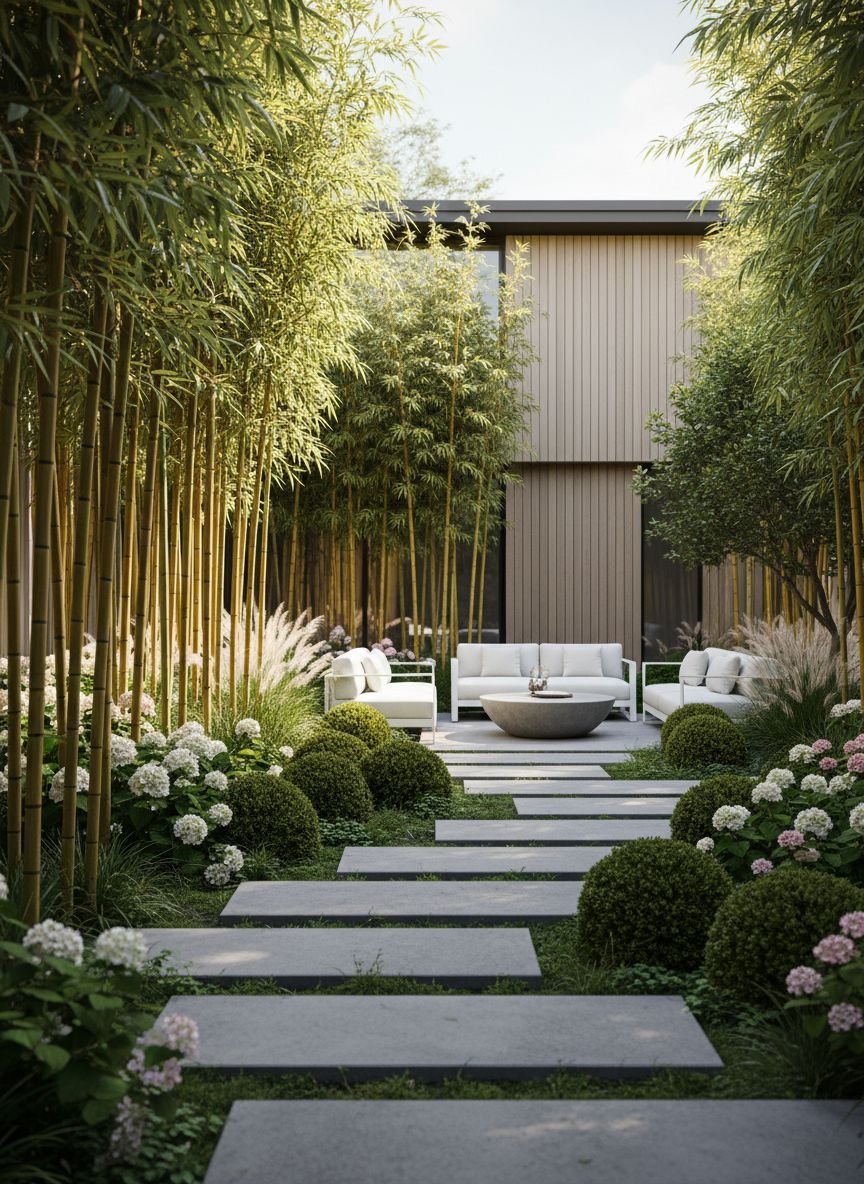
Privacy is often the biggest issue in side yards, especially if your neighbor’s windows look directly into yours. Bamboo provides a lush, fast-growing green wall that blocks sightlines more effectively than almost any other plant. Its vertical growth habit is perfect for narrow footprints where you can’t afford wide bushes.
The sound of bamboo rustling in the wind adds a zen, spa-like quality to your exterior. Visually, the segmented canes add a vertical rhythm that draws the eye upward, making the space feel less claustrophobic.
Crucial Warning: Always plant clumping bamboo (like Fargesia) rather than running bamboo. Running bamboo is invasive and can destroy foundations and neighbor relations. Even with clumping varieties, planting them in contained troughs or installing a root barrier is a wise precaution.
Pro Tip: Uplight your bamboo screen at night. The shadows cast by the leaves against the house create a dramatic, high-end look.
Save this idea to your Pinterest.
Comparison: Pathway Materials
| Material | Cost | DIY Difficulty | Drainage | Best For |
|---|---|---|---|---|
| Pea Gravel | Low | Easy | Excellent | Budget makeovers, drainage issues |
| Flagstone | High | Medium | Good (gaps) | Organic, cottage-style looks |
| Pavers | Medium | Hard | Poor (unless permeable) | Modern, clean lines, high traffic |
| Mulch | Very Low | Very Easy | Good | Rustic paths, temporary solutions |
Vertical Gardens
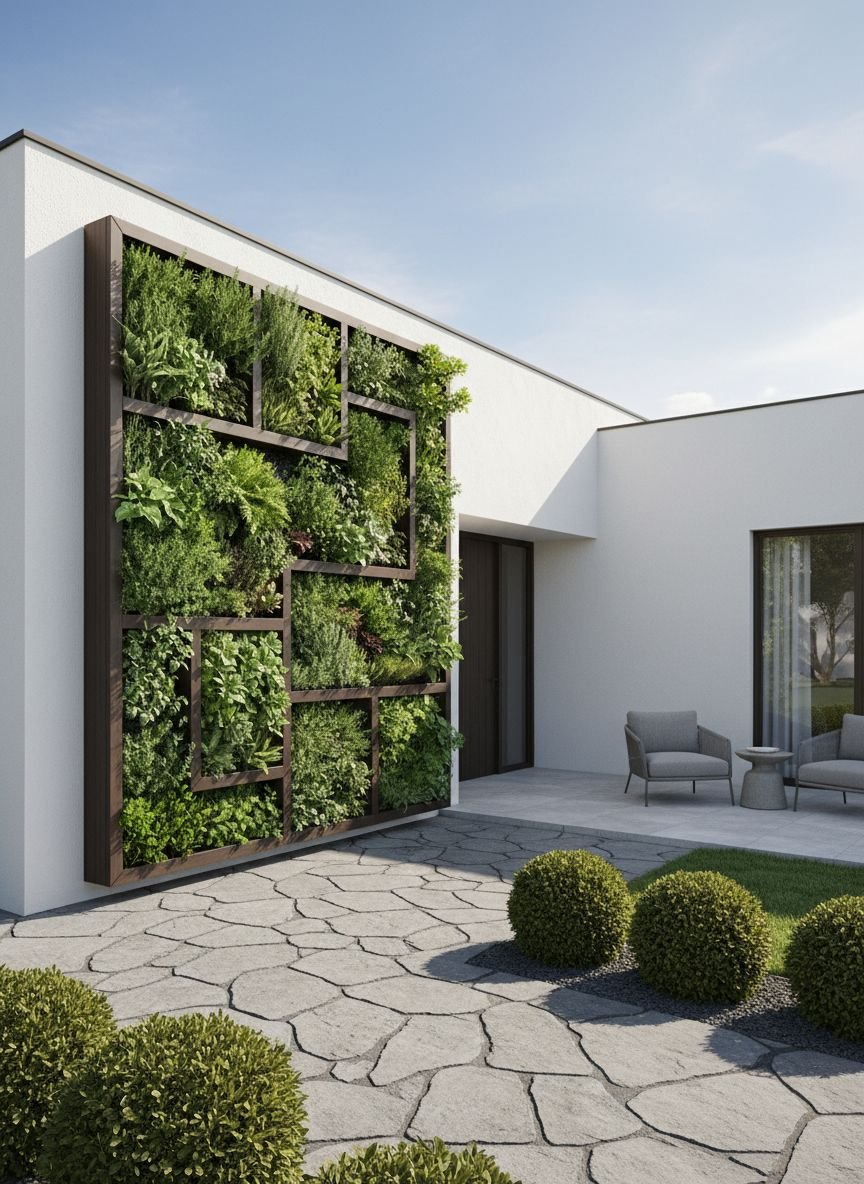
When you have zero ground space, the only way is up. Vertical gardens turn a boring fence or bare exterior wall into a living tapestry. This is ideal for side yards that are essentially just a concrete walkway between two walls.
You can use pocket planters made of felt, rigid plastic modular systems, or simple DIY wooden pallets. The goal is to cover the hard surface with softness. Succulents work well in sunny vertical spots, while ferns and bromeliads thrive in the shade.
This approach improves air quality and can actually cool down the air in the narrow corridor through transpiration. It transforms a “tunnel” effect into a lush, immersive experience.
Pro Tip: Install a drip irrigation line at the top of your vertical garden. Gravity will do the work of watering the lower plants, saving you from hand-watering daily.
Water Feature
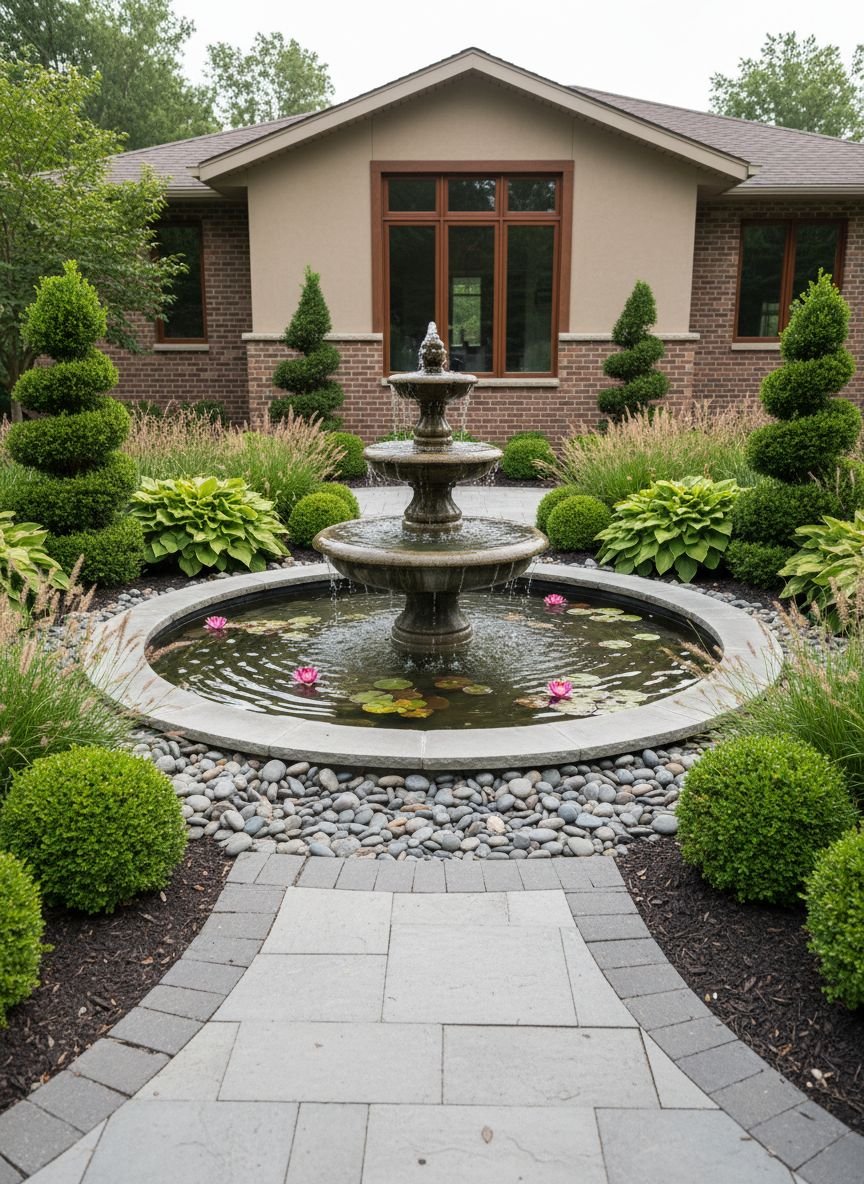
A massive fountain isn’t necessary to make an impact. In a side yard, a small, recirculating bubble rock or a wall-mounted spillway is perfect. The sound of trickling water masks traffic noise and the hum of air conditioning units, creating a serene transition zone.
Visually, water adds movement and reflects light, which helps brighten dark side passages. A narrow trough style water feature running parallel to the house is a modern, sophisticated choice that mimics the lines of the architecture.
Ensure you have access to an outdoor outlet. Solar pumps are an option, but side yards often lack the direct sunlight needed to keep them running consistently.
Pro Tip: Place smooth river stones at the base of the water feature to minimize splashing and keep the water sound gentle rather than loud.
Stone Steps
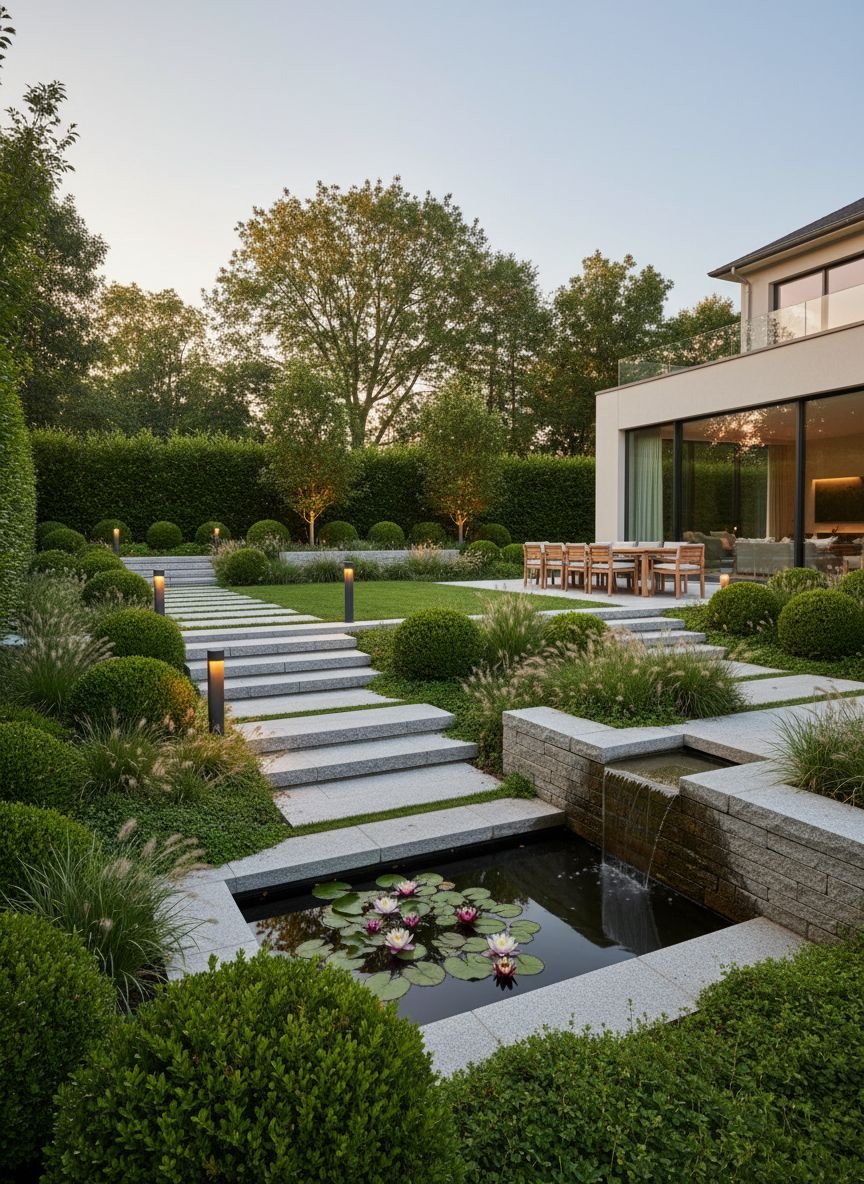
If your side yard has a slope, don’t fight it—feature it. Stone steps turn a treacherous, muddy hill into a grand entrance. Large, flat slabs of limestone or slate provide stability and a heavy, permanent aesthetic that anchors the landscape.
You can plant creeping groundcovers like Thyme or Scotch Moss in the gaps between the steps. This softens the hard stone edges and releases a pleasant fragrance when stepped on. The contrast between the rugged stone and the soft greenery is classic and timeless.
For safety, ensure the “rise” (height) of each step is consistent. Irregular step heights are a major tripping hazard, especially in low-light areas like side yards.
Pro Tip: Install low-voltage step lights into the side of the stone or on stakes nearby to illuminate the change in elevation at night.
Topiary Borders
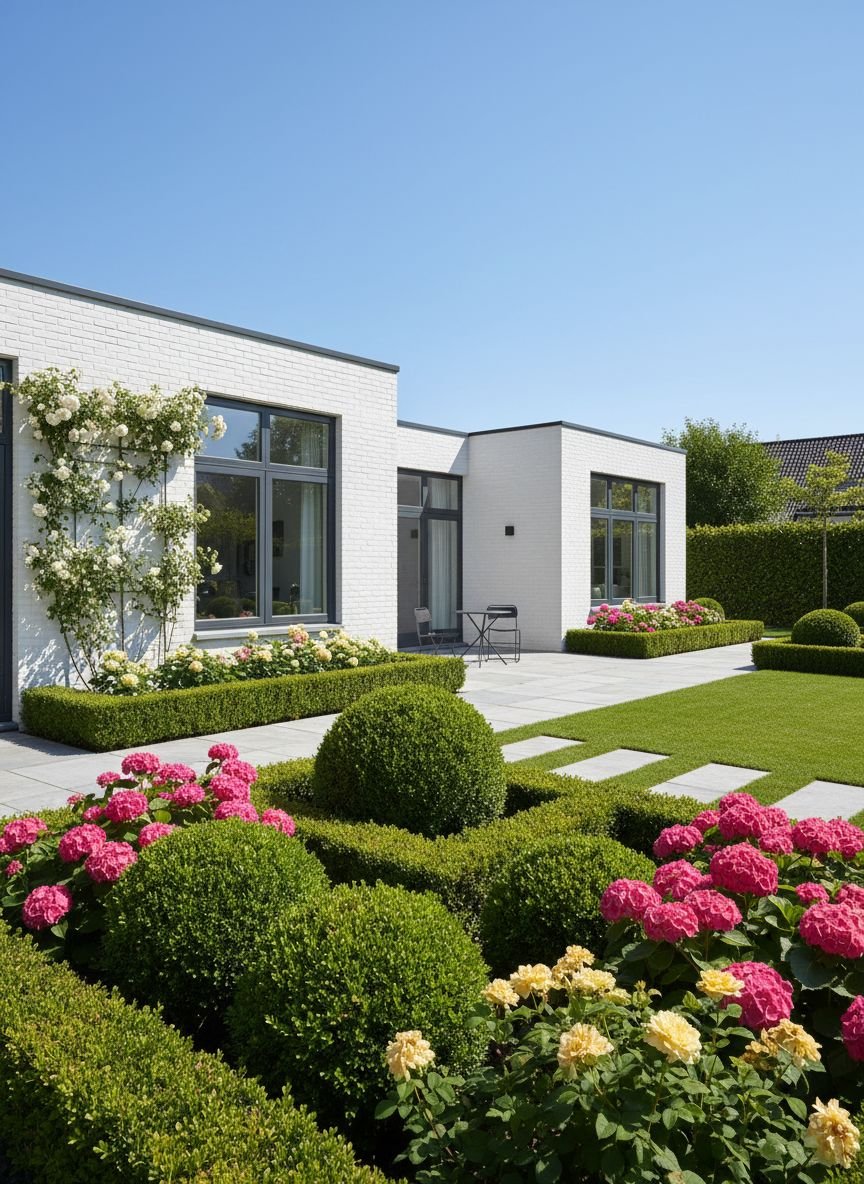
For those who love a manicured, formal look, topiary borders are the answer. Boxwood or Yew shrubs trimmed into tight spheres or hedges create a sense of order and elegance. This style works particularly well with traditional or colonial architecture.
The repetition of shapes—sphere after sphere—guides the eye down the path. It creates a strong structural backbone that looks good even in the dead of winter when other plants have died back.
Maintenance is the trade-off here. You will need to prune these shrubs 2-3 times a year to maintain their crisp shape. However, the visual payoff is a high-end, estate-like feel in a very small footprint.
Pro Tip: Use a slow-release fertilizer in the spring to keep the foliage dense and green, which is essential for the “solid” look of topiary.
Save this idea to your Pinterest.
Outdoor Sculptures
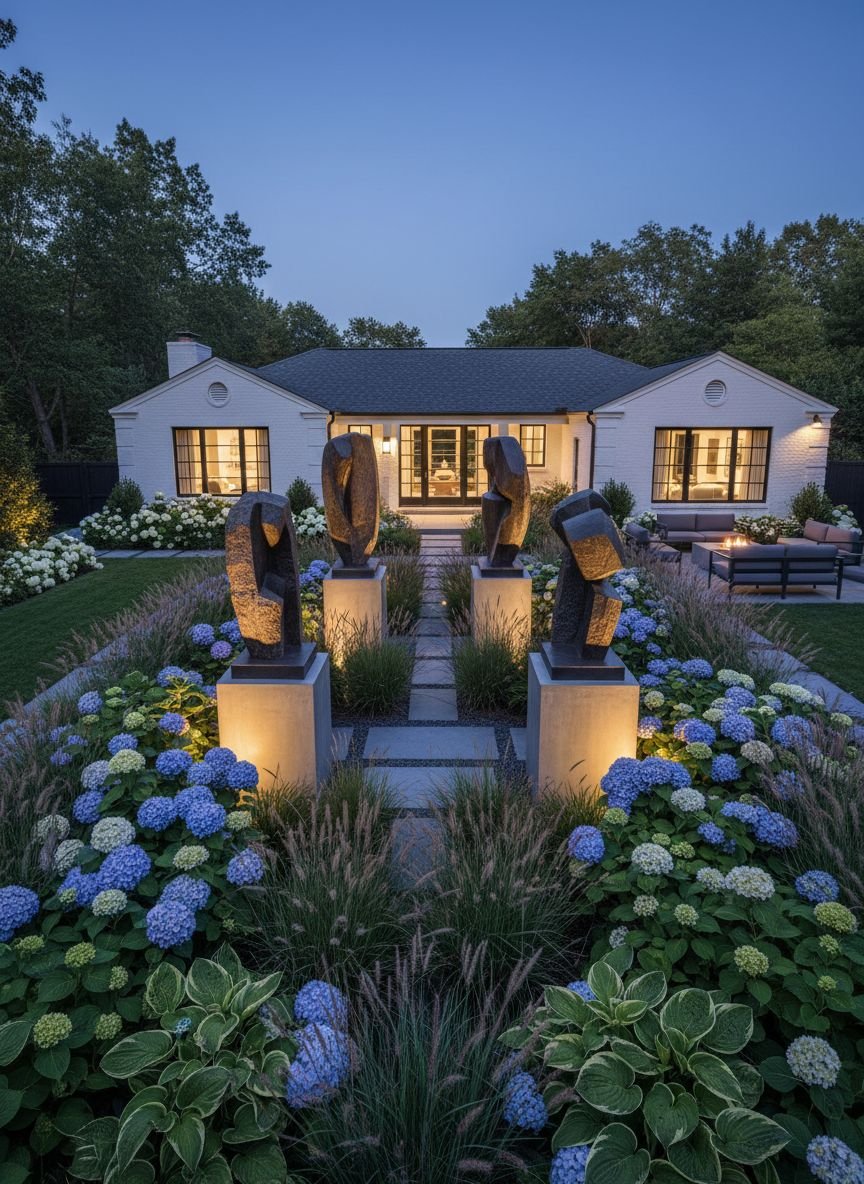
A side yard is an intimate space, making it the perfect gallery for outdoor art. Because the viewer is forced to be close to the objects, they can appreciate details that would be lost in a large backyard.
Place a sculpture at the end of the path to create a focal point that draws the visitor through the space. Alternatively, tuck smaller pieces among the ferns for a whimsical discovery. Materials like weathered steel (corten) or stone weather beautifully and feel organic.
Avoid clutter. One or two statement pieces are far more effective than a collection of small trinkets. The art should complement the plants, not compete with them.
Pro Tip: Elevate smaller sculptures on plinths or stone blocks so they aren’t swallowed by the groundcover as it grows.
Hanging Baskets
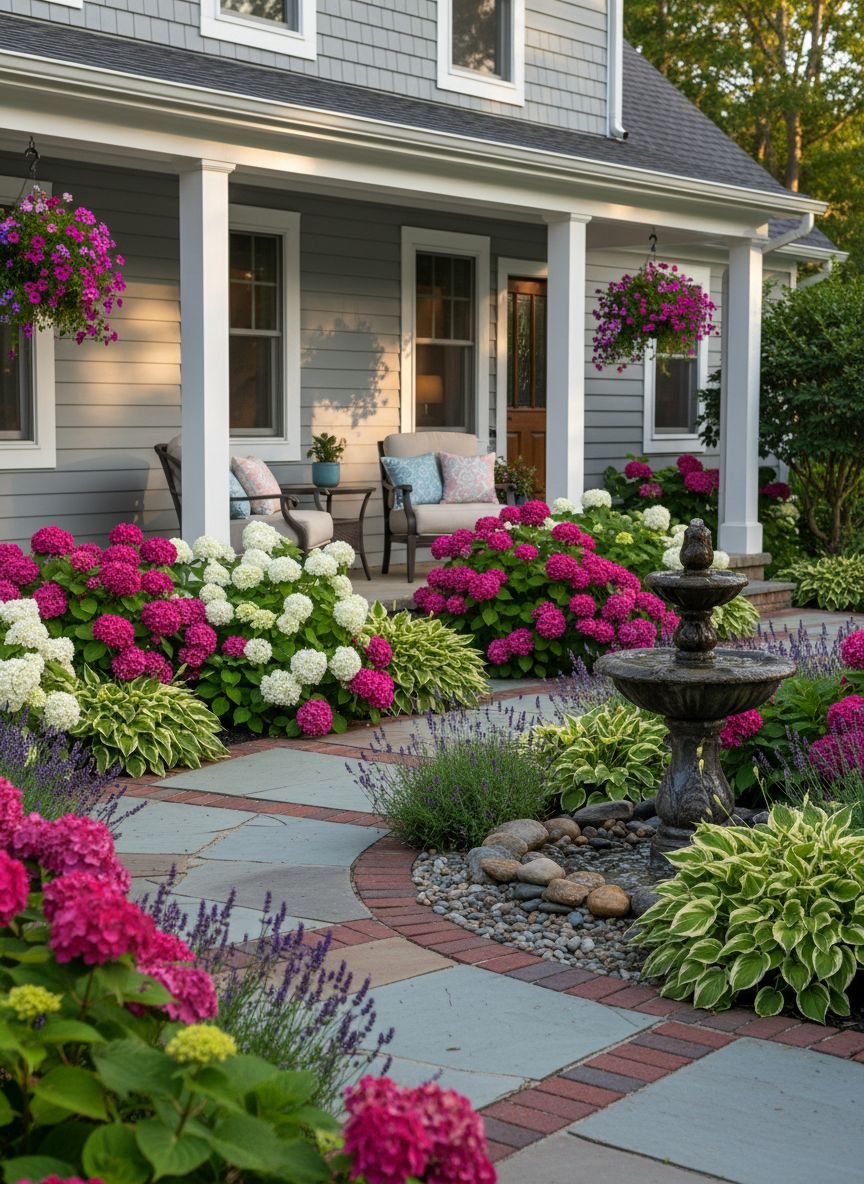
Utilize the eaves of your house or the top of a fence to hang baskets of trailing plants. This draws the eye upward and adds a ceiling of color to the narrow corridor. It is an excellent way to add seasonal color without digging into the ground.
Fuchsias and Begonias are spectacular choices for shady side yards, offering drooping, jewel-like flowers. For sunny spots, Petunias and Calibrachoa provide massive clouds of color.
Ensure your hooks are sturdy and screwed into structural wood, as wet soil is heavy. Stagger the heights of the baskets to create a layered, cascading effect rather than a straight line.
Pro Tip: Use self-watering baskets. Hanging plants dry out faster than ground plants due to wind exposure, and self-watering reservoirs reduce the maintenance burden.
Ornamental Grasses
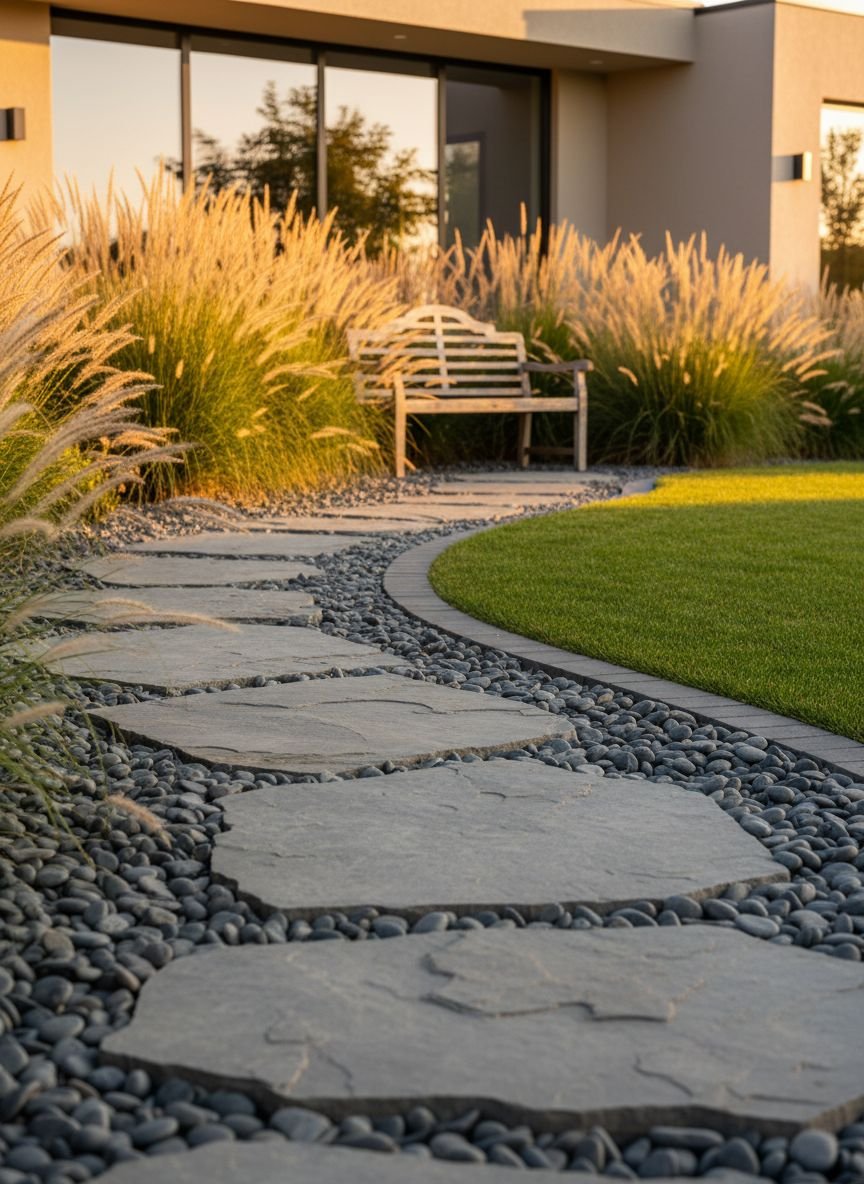
Ornamental grasses are the solution for modern, low-maintenance side yards. Varieties like Feather Reed Grass or Japanese Forest Grass (Hakonechloa) add softness and movement. They sway in the breeze, breaking up the rigid lines of fences and walls.
Japanese Forest Grass is particularly stunning in the shade, with its waterfall-like habit and bright chartreuse color that illuminates dark corners. Grasses also provide texture contrast against brick or siding.
Most grasses are drought-tolerant once established and require only one annual cut-back in late winter. They are the perfect “plant it and forget it” option for busy homeowners.
Pro Tip: Plant grasses in a zigzag pattern rather than a straight row to make the path feel wider and more organic.
Mini Herb Garden
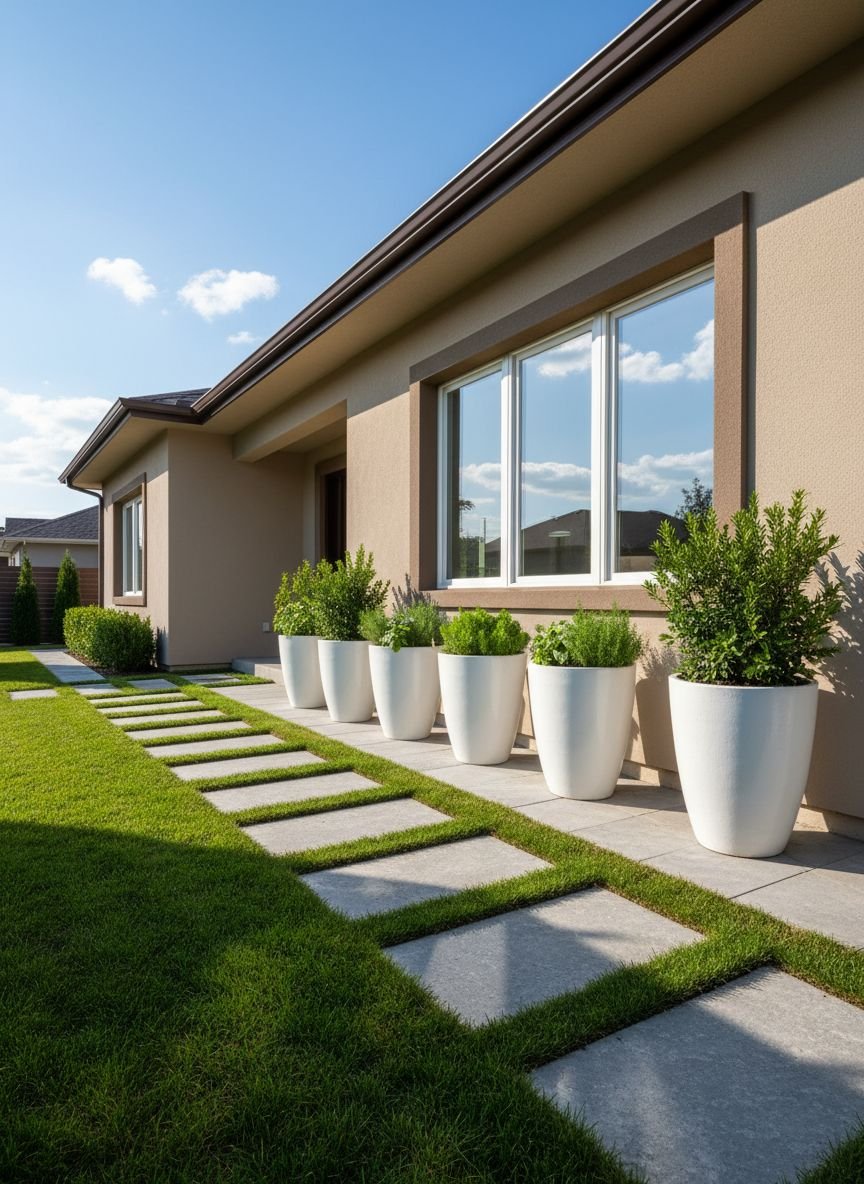
Transform your side yard into a functional grocery store. Many herbs, like mint, lemon balm, and chives, are actually quite shade-tolerant and aggressive growers. Containing them in a side yard planter or defined bed prevents them from taking over your main garden.
The fragrance is the main benefit here. Brushing against rosemary or lavender as you walk along the side of the house releases a burst of scent. It turns a mundane walk to the trash can into a sensory experience.
Group herbs with similar water needs. Basil and parsley need moisture, while thyme and oregano prefer to dry out.
Pro Tip: Plant invasive herbs like Mint in submerged pots within the ground to keep their roots contained while maintaining the “in-ground” look.
Rock Garden
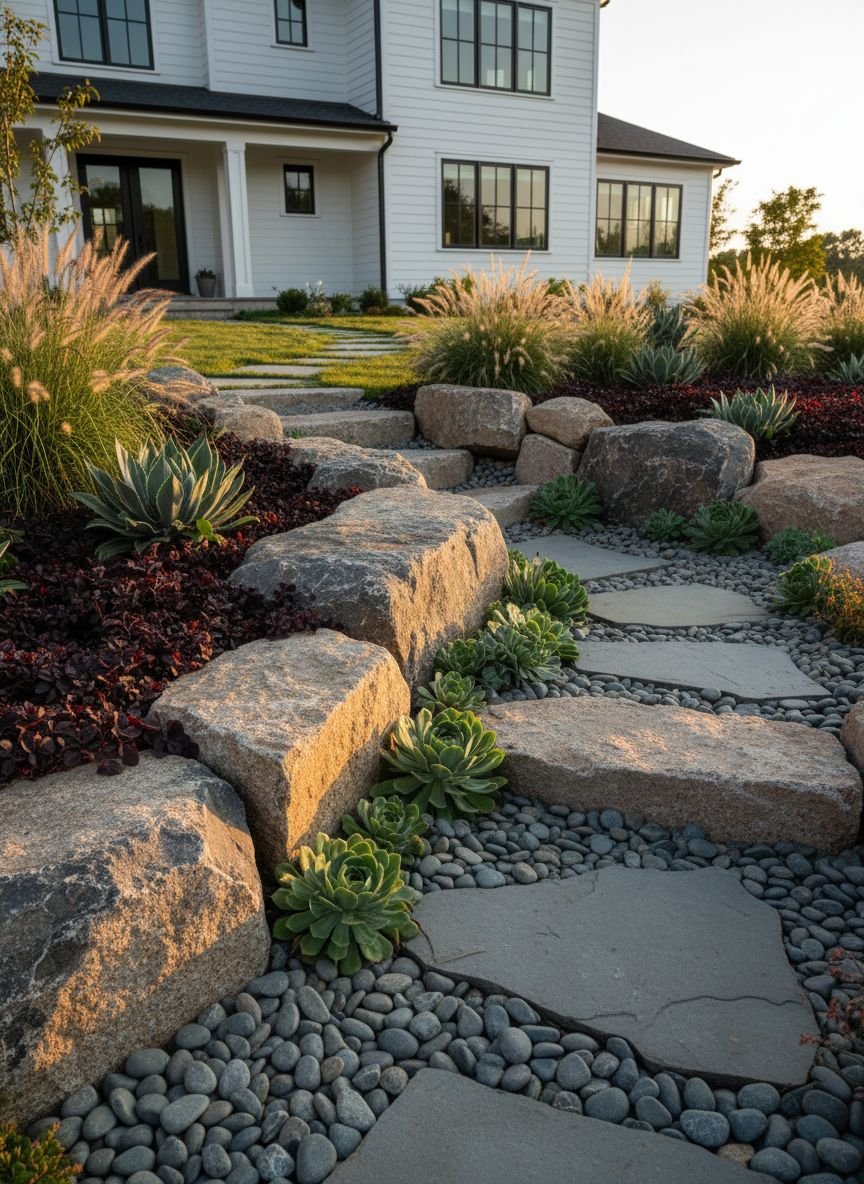
A rock garden is ideal for side yards with difficult terrain or intense sun where delicate plants fry. By combining various sizes of boulders, river rocks, and gravel, you create a rugged, naturalistic landscape that requires zero water.
Tuck alpine plants, sedums, and succulents into the crevices between the rocks. These plants love the sharp drainage that a rock garden provides. The aesthetic is clean, Zen, and permanent.
Visually, the weight of the rocks grounds the house to the site. Use rocks that match the color palette of your home’s foundation for a cohesive look.
Pro Tip: Bury the bottom third of large boulders. A rock sitting on top of the soil looks like it was dropped there; a buried rock looks like it emerged from the earth naturally.
Save this idea to your Pinterest.
Creeping Groundcover
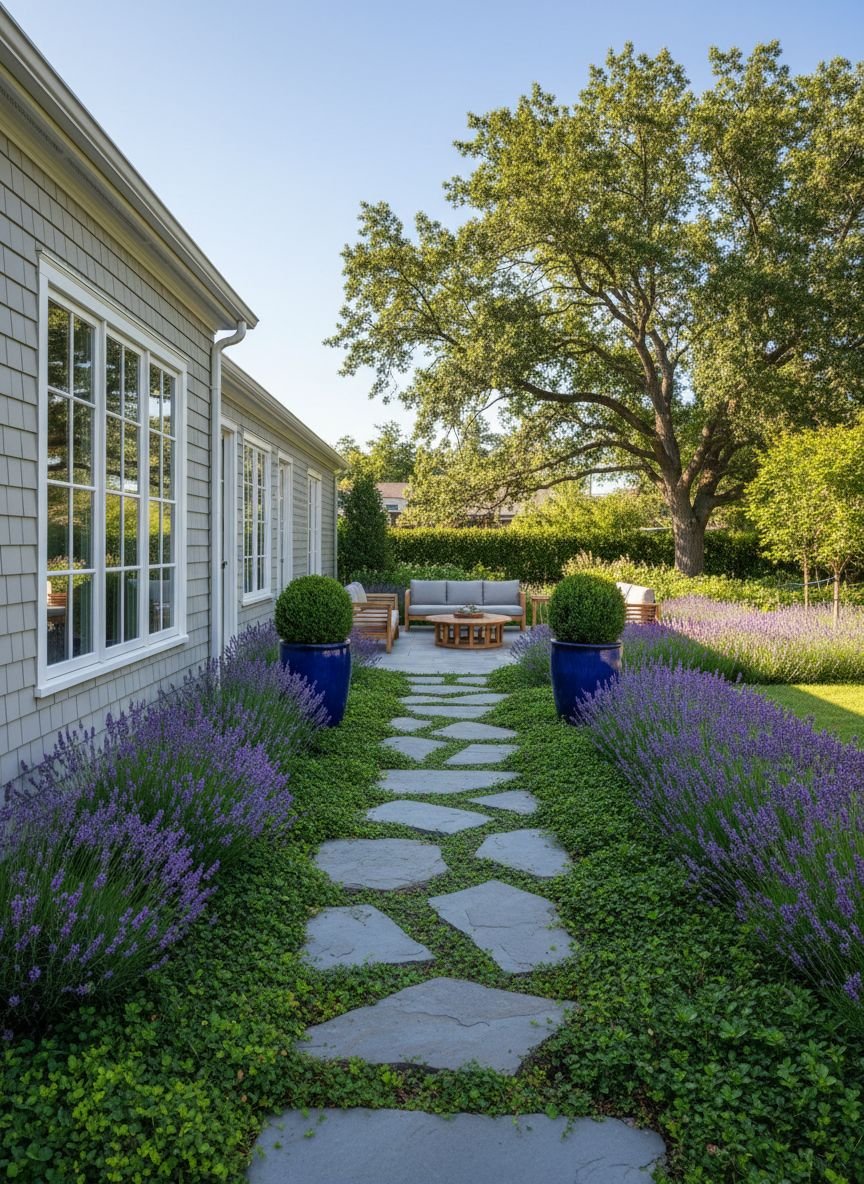
Forget grass. In a narrow, shaded side yard, turf is a losing battle. Replace it with creeping groundcovers like Pachysandra, Vinca Minor, or Creeping Jenny. These plants form a dense, weed-suppressing mat that stays green almost all year.
Creeping Jenny (Lysimachia) is a standout with its neon yellow-green leaves. It brightens up dark alleyways instantly. However, be aware of your local invasive species list; some groundcovers can escape into wild areas.
This “living mulch” keeps the soil cool and moist, benefitting the shrubs and trees growing above it. It creates a lush, carpeted look that is far more interesting than patchy lawn.
Pro Tip: Plant spring-blooming bulbs like Daffodils under the groundcover. They will poke through the green mat in spring for a surprise show of color.
Get The Look: Side Yard Essentials
- Edging: Corten Steel strips for a modern look, or cobble setts for a traditional vibe.
- Lighting: Solar path lights (if sunny) or low-voltage hardwired stake lights.
- Tools: A narrow rake (shrub rake) is essential for cleaning leaves out of tight spaces.
- Surface: Decomposed granite (gold or gray) creates a permeable, firm surface.
Privacy Fence with Vines
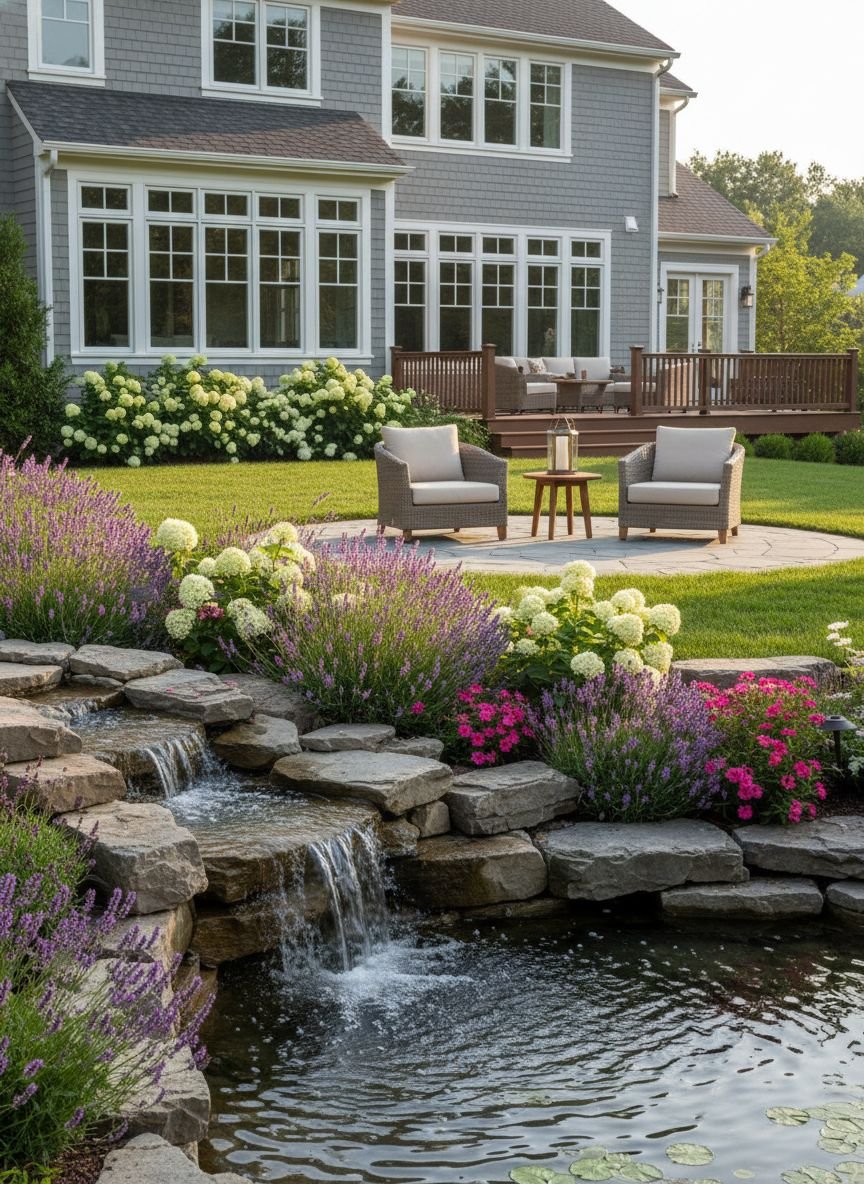
A bare wooden fence can feel imposing in a narrow space. Soften it by training climbing vines across the surface. Clematis, Climbing Hydrangea, or Star Jasmine turn a security barrier into a vertical garden.
Climbing Hydrangea is the king of shady walls. It clings to the wood and produces massive lacy white flowers. It takes a few years to establish, but the payoff is spectacular.
This technique blurs the boundaries of your property. When the fence is covered in green, the yard feels larger because the hard limit of the fence line is visually dissolved.
Pro Tip: Install a wire trellis system or eye hooks before you plant. Vines need guidance, and it’s much harder to install support once the plant is a tangled mess.
Simple Seating Area
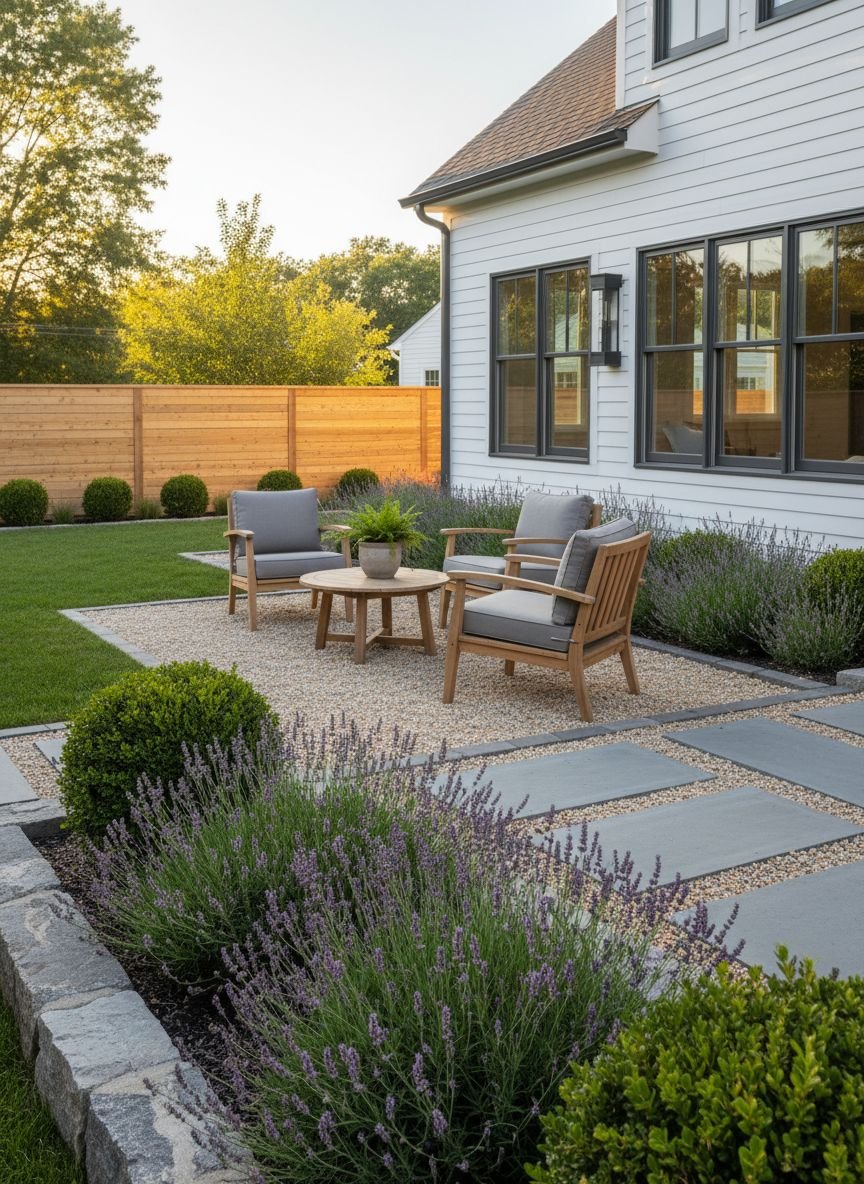
If your side yard has a slightly wider pocket, add a small bistro table and two chairs. Even if you rarely sit there, the suggestion of leisure makes the space feel inviting rather than utilitarian.
It creates a destination. It implies that this space is pleasant enough to linger in. A small bench tucked against the wall can also serve as a resting spot for potting plants or placing grocery bags while you unlock the side door.
Choose collapsible furniture if the space is tight, so you can fold it away when you need to move large equipment through.
Pro Tip: Place the seating area near a fragrant plant like Jasmine or Gardenia to create a sensory retreat.
Flagstone Walkway
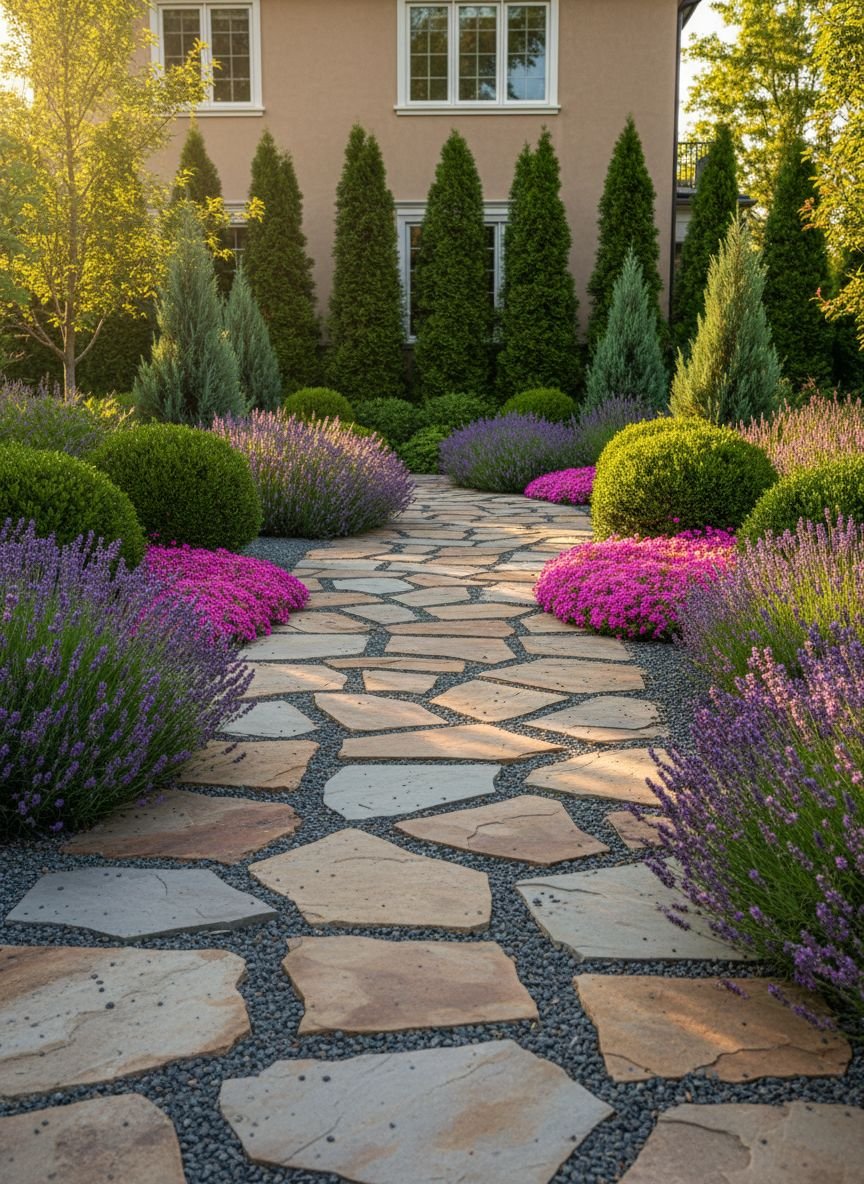
Flagstone offers a more organic, random look than rectangular pavers. The irregular shapes fit together like a puzzle, creating a rustic, cottage-style path.
You can lay flagstone directly in soil (“wet lay”) or on a bed of sand. Planting moss or creeping thyme in the wide joints between the stones adds color and softness. This permeability is excellent for drainage.
Use large, heavy slabs for the main walking stones so they don’t wobble. The natural color variations in flagstone—rust, blue, grey—can tie together the colors of your roof and siding.
Pro Tip: Sweep stone dust into the cracks if you don’t want plants. It packs down hard and prevents weeds better than regular soil.
Outdoor Lighting
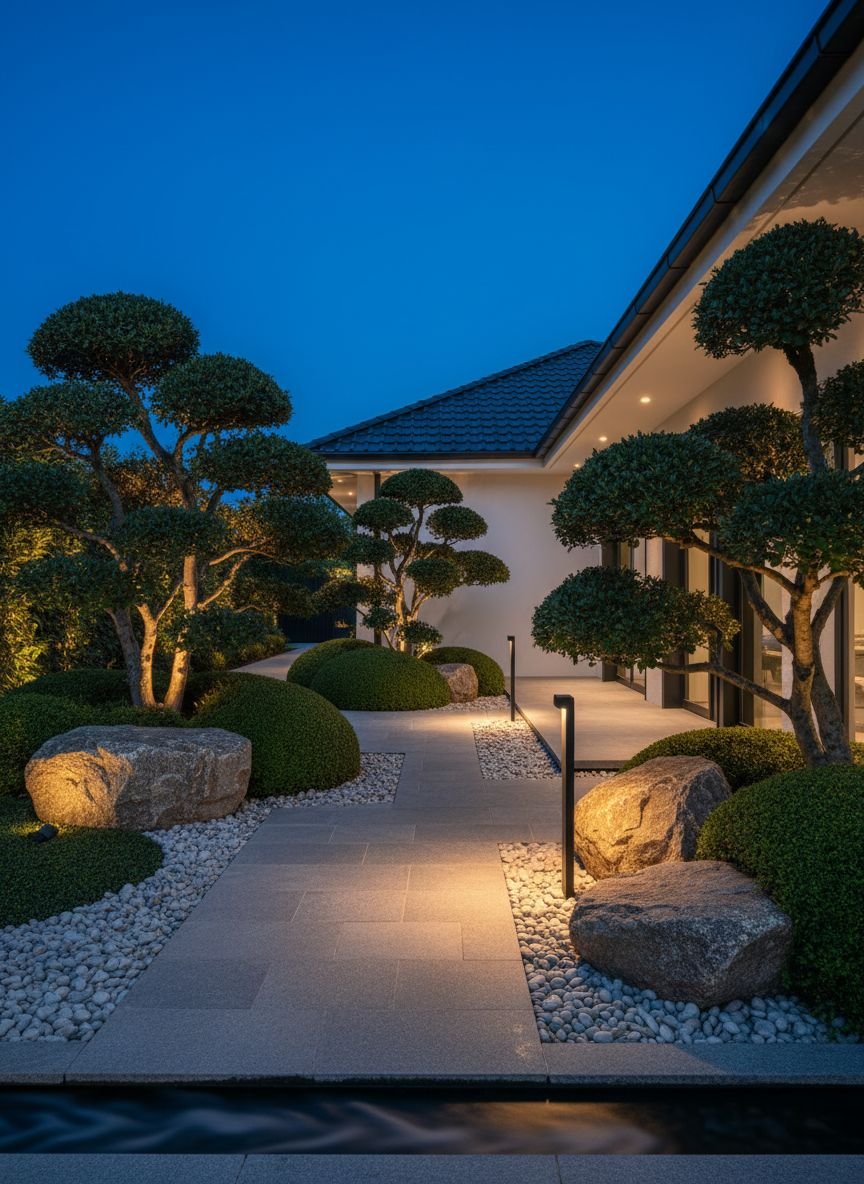
Lighting is not optional in a side yard; it is a safety necessity. However, it can also be a design feature. String lights zigzagged overhead create a festive, tunnel-like atmosphere that feels magical at night.
Path lights should be directed downward to illuminate the footing, not upward into your eyes. Wall sconces mounted on the side of the house can wash the wall with light, highlighting the texture of the siding or brick.
Proper lighting expands your home’s visual footprint at night. Instead of looking out the window into a black void, you see a warm, illuminated garden.
Pro Tip: Use warm white LEDs (2700K). Cool white light looks clinical and harsh in a garden setting.
Save this idea to your Pinterest.
Decorative Mulch
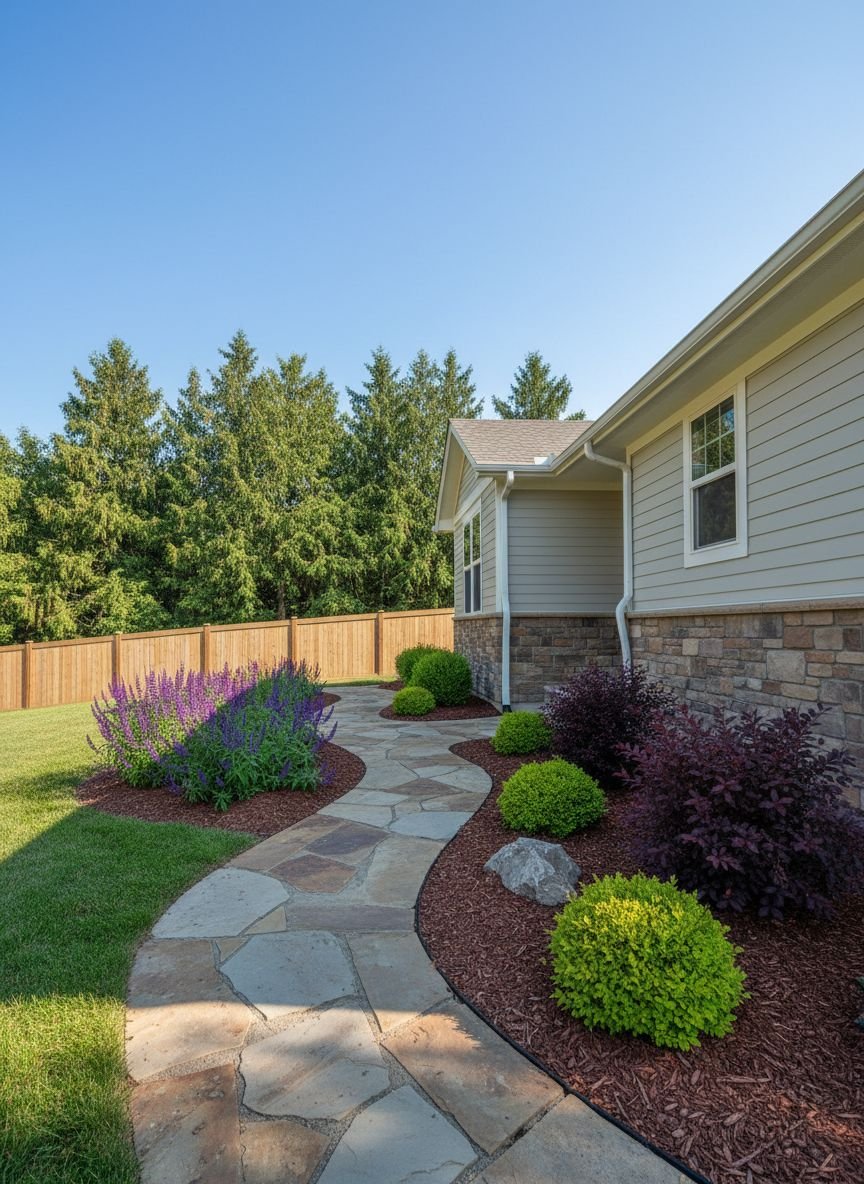
Mulch is the workhorse of the garden, but it can also be a design element. Black dyed mulch provides a high-contrast background that makes green foliage pop. Pine bark nuggets offer a softer, more natural texture.
In a side yard, mulch retains essential moisture for plants that might be competing with the house’s foundation for water. It also suppresses weeds in the hard-to-reach areas behind AC units.
Refresh your mulch layer annually. A fresh 2-inch layer instantly makes the entire landscape look well-maintained and crisp.
Pro Tip: Avoid “volcano mulching” (piling mulch up against tree trunks). Keep the mulch a few inches away from the base of plants to prevent rot.
Reclaimed Wood Edging

For a rustic, eco-friendly look, use reclaimed railway sleepers or old timber beams to edge your side yard beds. The chunky, weathered wood adds weight and history to the garden.
This is particularly effective for raised beds or retaining walls in a sloping side yard. The thick wood creates a comfortable spot to perch while weeding.
Ensure the wood is treated or naturally rot-resistant (like cedar or redwood), as it will be in constant contact with damp soil.
Pro Tip: Drill holes in the timber for drainage if you are using them to build a fully enclosed box.
Modern Succulents
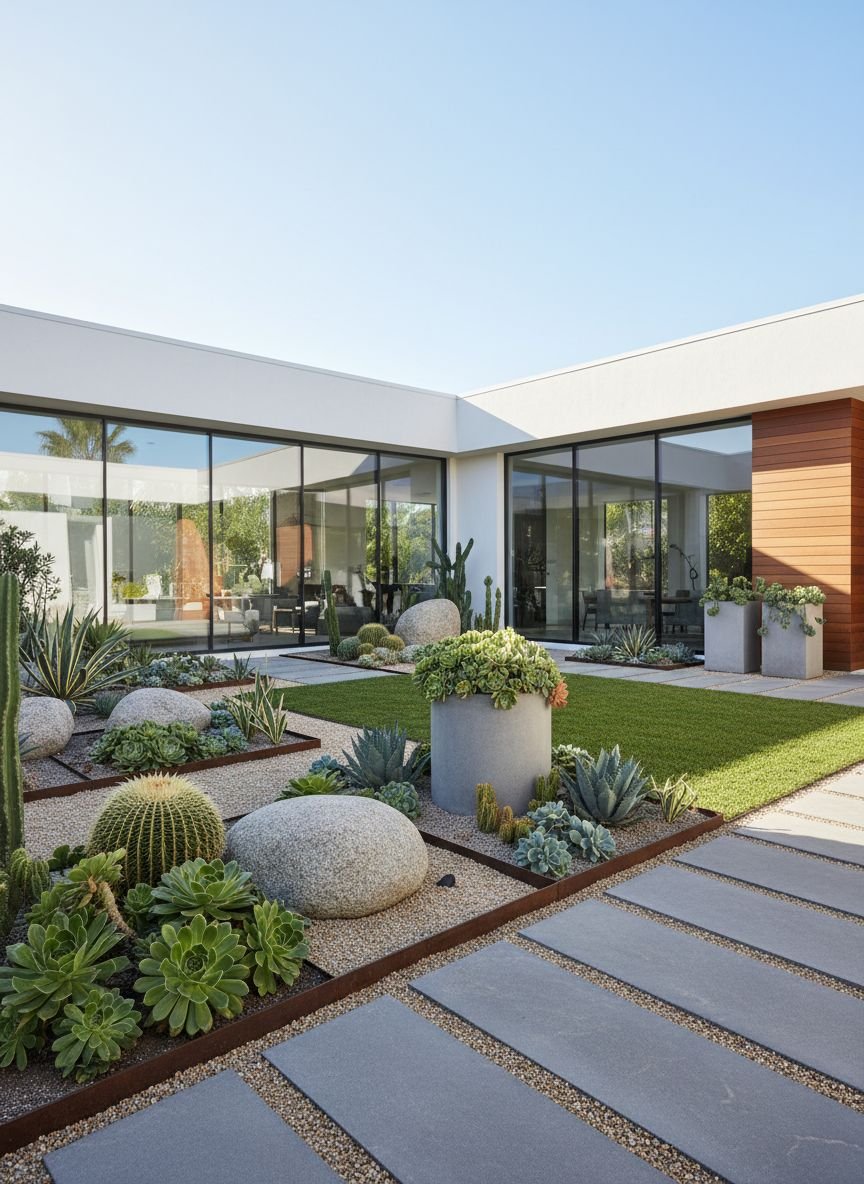
If your side yard gets blasted by the afternoon sun (a “western exposure”), delicate leafy plants will scorch. Enter the succulent garden. Agave, Yucca, and Sedum thrive in baking heat and poor soil.
The architectural shapes of succulents—spiky, rosette, spherical—look incredible against modern architecture. They are sculptural and clean.
Pair them with gravel mulch rather than wood bark. The stone mulch reflects heat and keeps the crowns of the succulents dry, preventing rot.
Pro Tip: Bring tender succulents indoors in the winter if you live in a freeze zone, or treat them as annuals.
Trellis Plants

A trellis is a freestanding structure that allows you to grow vines without attaching them to your house. This is crucial if you have vinyl siding or stucco that could be damaged by clinging roots.
Place trellises in a staggered pattern to create “rooms” within the long hallway of the side yard. This blocks the view of the utility area from the street while allowing airflow.
You can grow edibles like beans or ornamental vines like Morning Glory. The trellis itself adds architectural interest even when the vines are dormant in winter.
Pro Tip: Paint the trellis a dark color (charcoal or black). It will disappear visually, making the green vines appear to float.
Popular Asked Questions
What can I put on the side of my house where grass won’t grow?
If grass is failing due to shade or foot traffic, stop fighting it. The best alternatives are gravel or river rock (for excellent drainage and zero maintenance), shade-loving groundcovers like Pachysandra or Moss, or hardscaping like pavers or flagstone. These options look cleaner and require no mowing.
How do you landscape a narrow side yard?
The key to a narrow yard is verticality and curves. Use trellises and vines to draw the eye up, making the space feel less cramped. Avoid straight path lines; a slightly curved path creates the illusion of width. Use “dwarf” or “columnar” plant varieties that grow tall but skinny (like Sky Pencil Holly) to save horizontal space.
What is the cheapest way to landscape a side of a house?
The most budget-friendly method is mulch and stepping stones. A thick layer of wood chips is very cheap (sometimes free from arborists) and instantly covers weeds and mud. Add simple concrete pavers for a walkway. For plants, use perennials that you can divide from other parts of your garden, like Hostas or Daylilies, so you don’t have to buy new ones.
What plants grow in full shade on the side of a house?
For deep shade (less than 3 hours of sun), your best friends are Hostas, Ferns (like Japanese Painted Fern), Astilbe, Bleeding Hearts, and Coral Bells (Heuchera). For shrubs, look at Hydrangeas (specifically Oakleaf or Climbing varieties) and Yews. These plants thrive without direct sunlight and offer beautiful foliage.
Conclusion
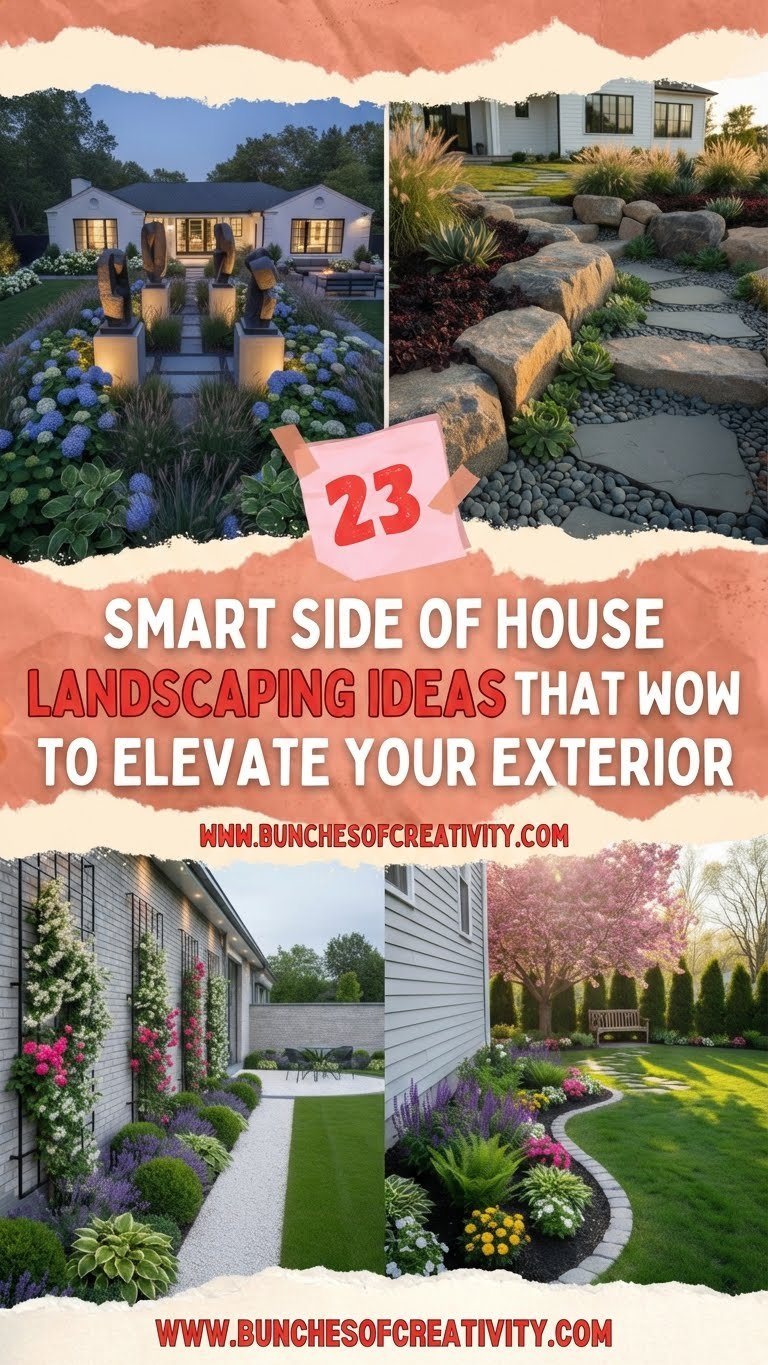
Your side yard does not have to be a forgotten wasteland. Whether you choose to install a crunching gravel path, a lush vertical garden, or a simple chain of flower beds, elevating this space changes the entire flow of your home. It connects the front and back, improves drainage, and adds valuable square footage to your outdoor living area.
Start small—perhaps with just a cleanup and some string lights—and watch how this “dead zone” comes to life.






Leave a Comment