

Imagine stepping out your back door and being transported straight to the manicured grounds of a Parisian chateau. You do not need acres of land or a royal budget to achieve this. The secret to the French formal garden lies in the art of illusion, precise geometry, and the mastery of control over nature. Whether you have a sprawling estate or a modest urban courtyard, the principles of symmetry and order can instantly elevate your outdoor space from chaotic to commanding.
In 2026, the trend is shifting toward “accessible luxury.” Homeowners are moving away from wild, overgrown cottage styles and returning to the calming structure of boxwood hedges, gravel pathways, and elegant stone focal points. This shift is not just about aesthetics; it is about creating a sense of calm and order in a busy world.
This guide will walk you through 18 transformative ideas to bring the grandeur of Versailles to your doorstep. We will explore how to manipulate perspective, select the perfect low-maintenance greenery, and use hardscaping to define your space.
Key Takeaways
- Symmetry is Non-Negotiable: The foundation of French design is mirroring one side of the garden with the other to create visual harmony.
- Green is the Primary Color: Unlike English gardens that rely on colorful blooms, French gardens prioritize the texture and structure of evergreen foliage.
- Hardscaping Defines the Space: Gravel paths, stone borders, and architectural elements are just as important as the plants themselves.
- Scale Matters: You can replicate grand ideas in miniature forms using container gardening and dwarf plant varieties.
Table of Contents
- Elegant French Gazebo Amidst Pristine Hedges
- Idyllic Pavilion Symphony With Roses
- Trimmed Topiary Paradise with Majestic Fountain
- Charming Archway and Vibrant Topiary Avenue
- Whimsical Doorway in a Parisian Green Maze
- Labyrinth of Lush Geometry and Verdant Wonders
- Dreamy Hedge Haven with Elegant Bench
- Grand Greenery Maze With Floral Epicenter
- Sophisticated Symmetry of Celebrated Hedge Design
- Majestic Rose-Laden Retreat
- Tranquil Hideaway with Rose-Lined Pathway
- Pathway of Pinnacle Perfection
- Geometry Fiesta in Greenery Land
- Majestic Corridor of Green Marvels
- Lush Oasis: A Throne Between Blossoms
- Resplendent Oasis of Verdant Splendor
- Exquisitely Curved Hedges in a Secret Garden
- Verdant Retreat With Sculpted Elegance
- Related posts :
- Popular Asked Questions
- Conclusion
Elegant French Gazebo Amidst Pristine Hedges
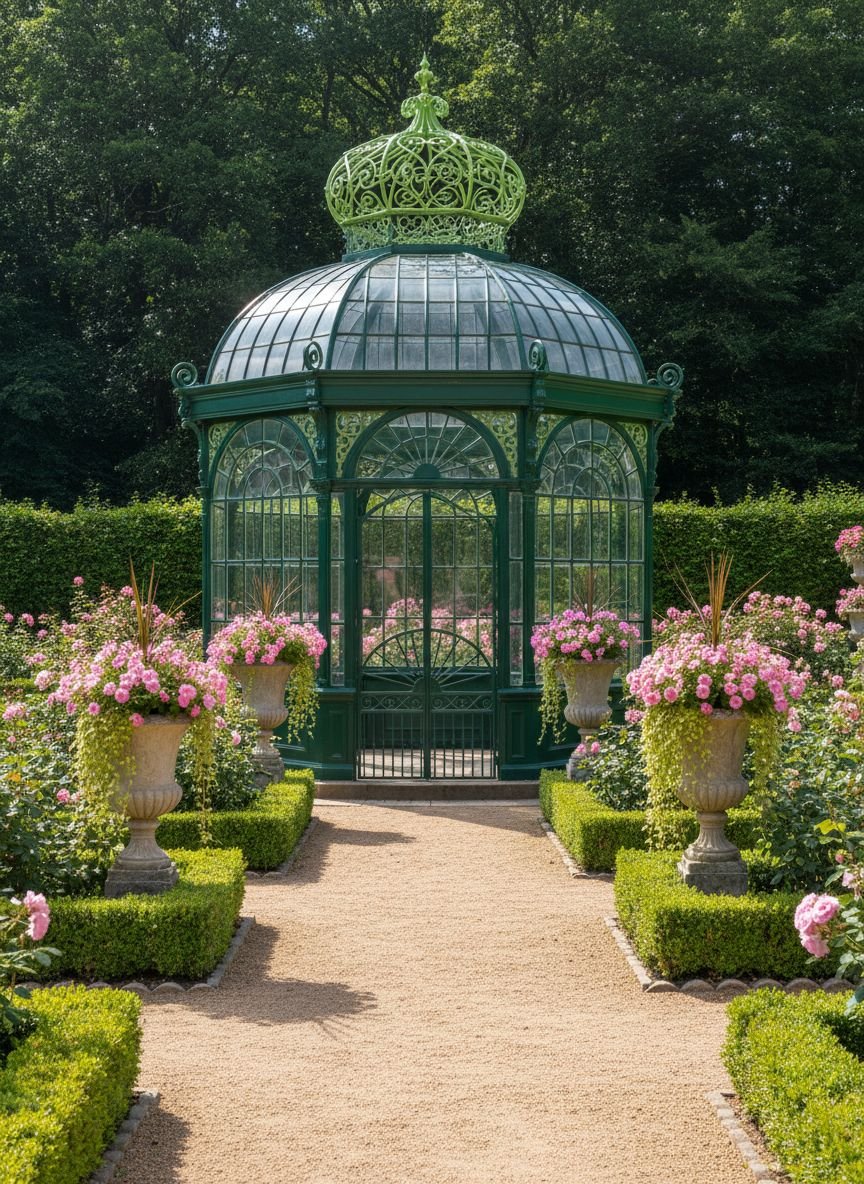
A wrought iron gazebo serves as the ultimate focal point in a French formal garden. It acts as a destination that draws the eye and invites movement through the landscape. To truly capture the Versailles vibe, the gazebo should not stand alone in a field of grass. Instead, it must be anchored by pristine hedges that frame the structure. The contrast between the dark, organic green of the boxwood or yew and the intricate, possibly white or black metalwork of the gazebo creates a stunning visual tension.
When implementing this, consider the approach. The pathway leading to the gazebo should be straight and lined with low-growing hedges to guide the visitor. Inside the gazebo, keep furniture minimal. A simple bistro set or a stone bench is sufficient. The goal is to create a viewing platform where one can sit and admire the symmetry of the surrounding garden.
Pro Tip: If a full-sized gazebo is out of budget or scale for your yard, use a metal pergola or a birdcage arbor. Plant climbing ivy or jasmine at the base to soften the metal legs while maintaining that structural elegance.
Idyllic Pavilion Symphony With Roses
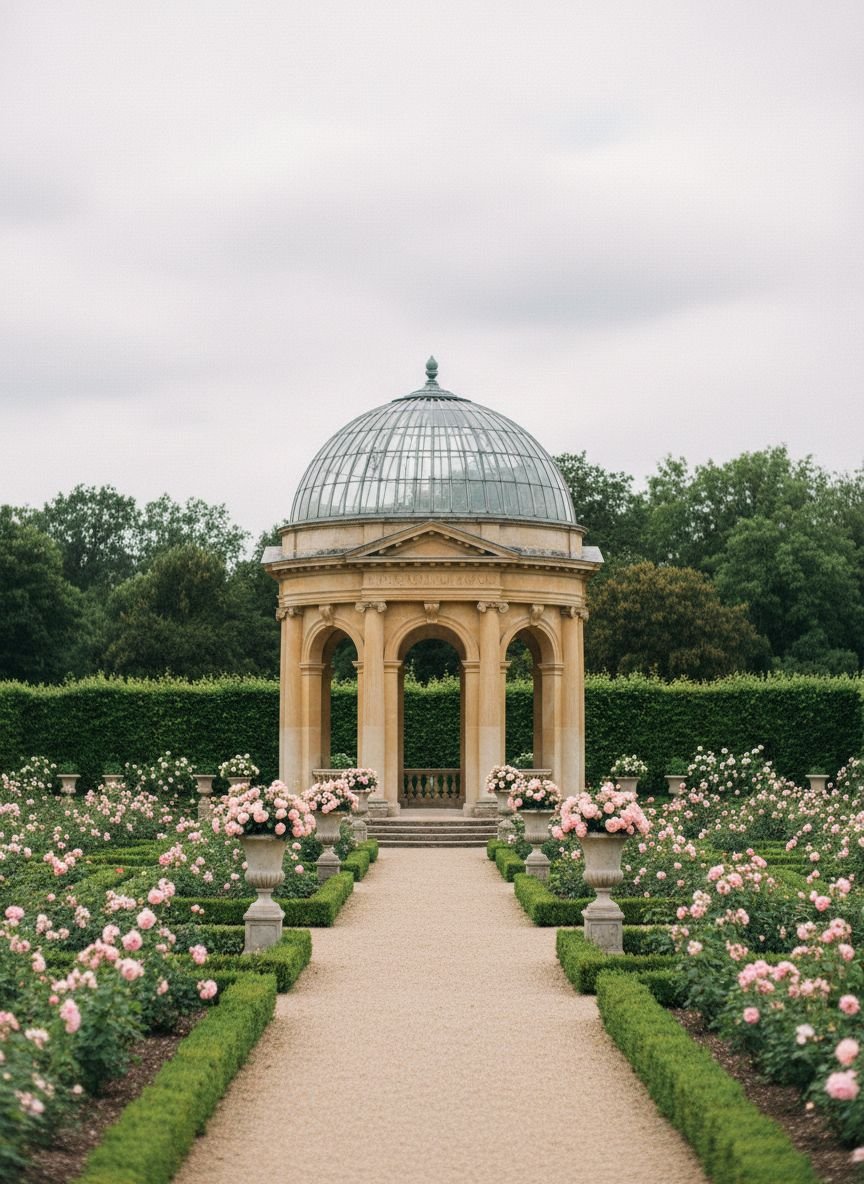
While French gardens are famous for their greenery, they are not devoid of flowers. However, flowers are used with restraint and purpose. An open-air pavilion draped in climbing roses offers a romantic counterpoint to the rigid geometry of the rest of the garden. The key here is to choose roses that bloom in soft pastels—creamy whites, pale pinks, or soft peaches. These colors complement the limestone and gravel often found in French hardscaping without overwhelming the visual senses.
To achieve this look, ensure your pavilion has a strong architectural form. Wooden structures painted in “Versailles Green” (a deep, grey-green) or classic white work best. Train the roses to climb the pillars and drape over the roofline. This softens the hard edges of the structure and adds a layer of vertical interest.
Styling Tip: Underneath the pavilion, use crushed pea gravel instead of paving stones. The crunch of gravel underfoot is a quintessential auditory experience in a French garden.
Trimmed Topiary Paradise with Majestic Fountain
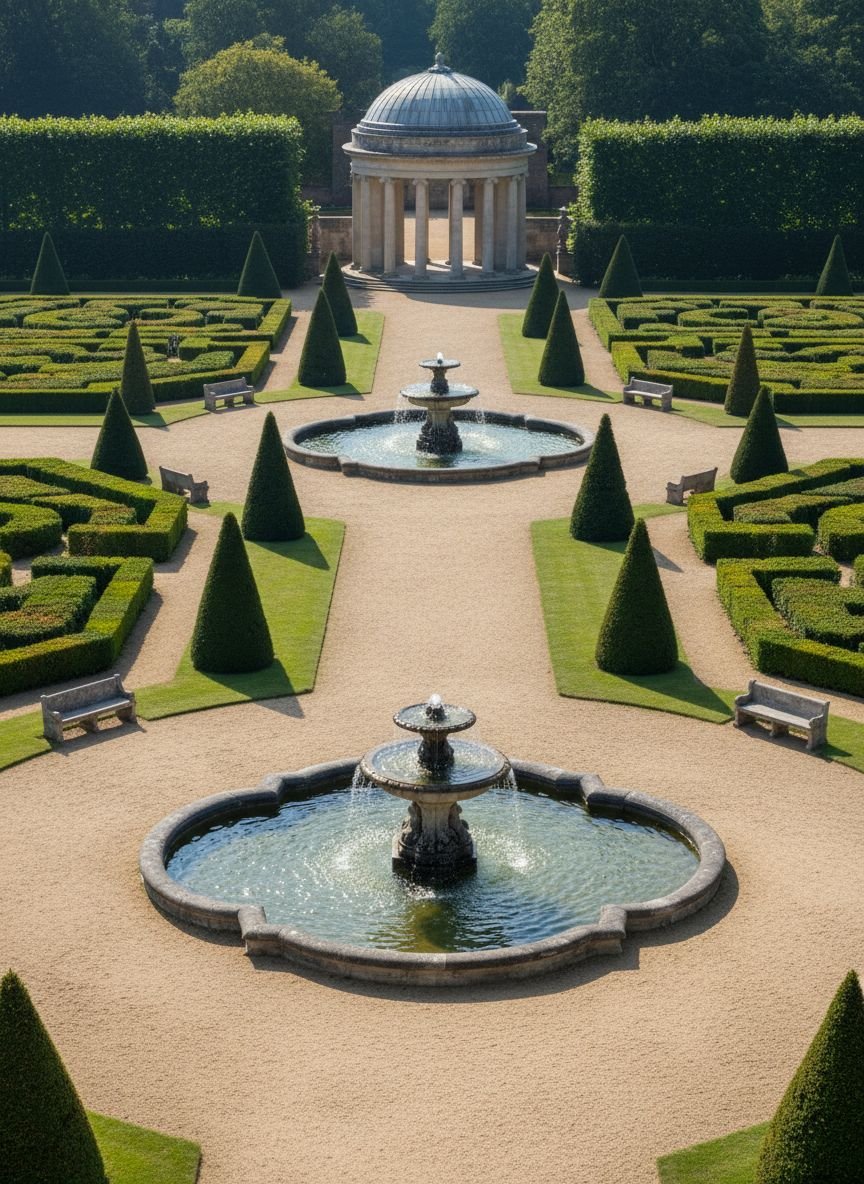
Nothing screams “French Formal” quite like the combination of sculpted topiary and moving water. This design relies on the repetition of shapes. Imagine a central, tiered stone fountain surrounded by four symmetrical quadrants. Each quadrant contains a cone or spiral topiary, standing like a sentry guarding the water. The sound of the water provides a soothing background noise that enhances the sense of tranquility.
For the topiaries, Boxwood (Buxus sempervirens) is the traditional choice, but Yew (Taxus baccata) is a faster-growing alternative that handles pruning well. The fountain does not need to be massive; even a small, two-tiered solar fountain can work if the proportions are right. The magic is in the placement. The fountain must be the absolute center of the design, with the topiaries radiating outward in a perfect square or circle.
Maintenance Note: Sharp shears are your best friend here. To keep topiaries looking crisp, they require trimming at least twice a year—once in late spring and again in late summer.
Charming Archway and Vibrant Topiary Avenue
Create a sense of journey and discovery with a topiary avenue. This design feature uses a series of metal arches to create a tunnel effect. Between each arch, place a potted topiary or a planted standard tree (like a lollipop-shaped bay tree). This rhythm of “Arch, Tree, Arch, Tree” creates a strong perspective line that makes even a short path feel longer and grander.
The arches can be covered in climbing hydrangea or clematis for a lush, leafy tunnel, or left bare to show off their architectural lines. If you choose to cover them, keep the pruning tight. You want the shape of the arch to remain visible, not lost under a mountain of unkempt vines. The ground beneath should be uniform—either a manicured lawn strip or a clean gravel path.
Save this idea to your Pinterest. This is one of the most effective ways to add depth to a small, narrow backyard.
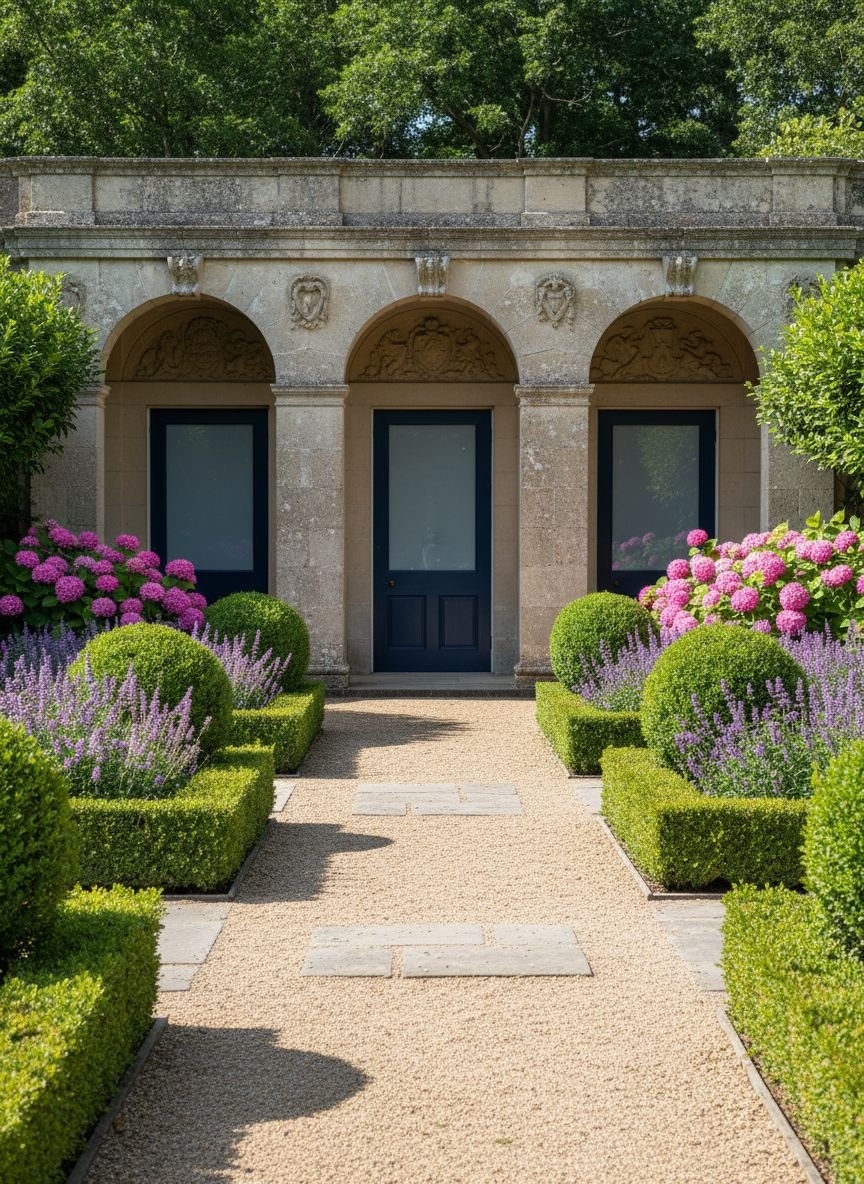
Whimsical Doorway in a Parisian Green Maze

A “doorway to nowhere” is a whimsical element often found in historic French gardens. It suggests that there is more to explore, adding an air of mystery. You can create this by installing a vintage wooden door or an iron gate within a tall hedge. It doesn’t need to lead to another garden; it can simply be mounted against a fence or a wall.
To make this convincing, the hedge needs to be tall and dense, effectively acting as a “living wall.” Use fast-growing privet or arborvitae if you are starting from scratch. Frame the doorway with stone pilasters or a climbing rose to integrate it into the greenery. A mirror placed behind the iron gate can create the illusion that the garden continues endlessly beyond the barrier.
Design Principle: This utilizes the concept of “trompe-l’œil” (deceive the eye), a common technique in French art and design to expand perceived space.
Labyrinth of Lush Geometry and Verdant Wonders
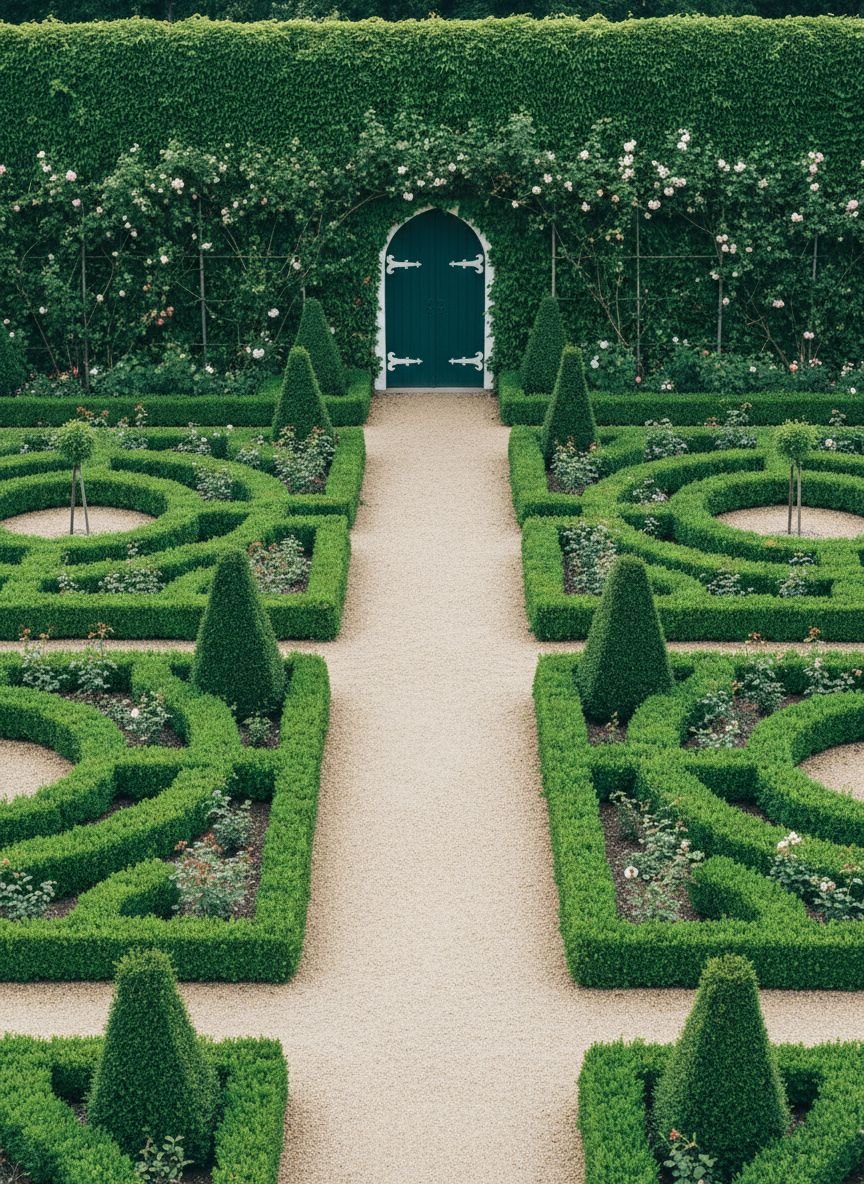
A labyrinth or maze is the ultimate expression of control over nature. While you might not have space for a full-scale maze, you can create a “knot garden” or a low parterre that mimics the look. This involves planting low boxwood hedges in intricate, interlocking geometric patterns—diamonds, scrolls, or distinct squares.
The spaces between the hedges are just as important as the hedges themselves. Fill these negative spaces with colored gravel, slate chips, or even low-growing bedding plants like begonias or dusty miller to create contrast. The height of these hedges should be kept low, around 12 to 18 inches, so the pattern can be admired from a standing position or a second-story window.
Pro Tip: Map out your design on the ground with spray paint and string before you dig a single hole. Precision is critical for this look to succeed.
Comparison: Boxwood vs. Yew for Formal Hedges
| Feature | Boxwood (Buxus) | Yew (Taxus) |
|---|---|---|
| Growth Rate | Slow (1-3 inches/year) | Medium (6-10 inches/year) |
| Shade Tolerance | High | Very High |
| Pruning Needs | Twice a year | Once a year |
| Pest Issues | Prone to Box Tree Moth/Blight | Generally pest-free |
| Best For | Low parterres, intricate shapes | Tall privacy hedges, cones |
Dreamy Hedge Haven with Elegant Bench
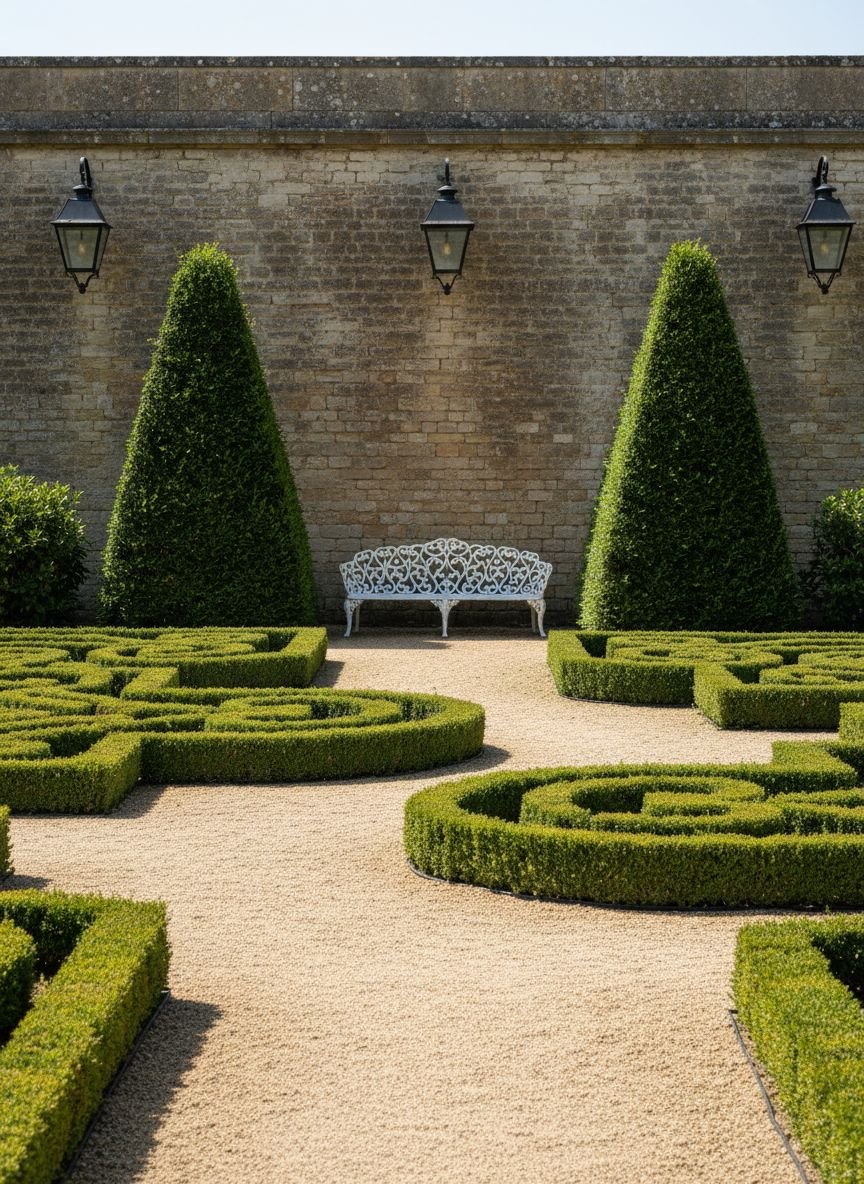
Every formal garden needs a place to pause. A “Hedge Haven” is a semi-enclosed niche carved out of tall greenery, specifically designed to house a garden bench. This creates a cozy, private “room” within the garden. The back and sides are protected by the hedge, offering a sense of security and solitude.
Select a bench that complements the style. A classic Lutyens bench in teak or a curved stone bench works beautifully. Place the bench on a small pad of flagstone or brick to keep it level and dry. Flank the entrance to this niche with two identical planters containing standard roses or clipped balls of holly to mark the transition from the main path to the seating area.
Styling Tip: Add two outdoor-safe bolster pillows in a toile print to the bench for an immediate injection of French country chic.
Grand Greenery Maze With Floral Epicenter
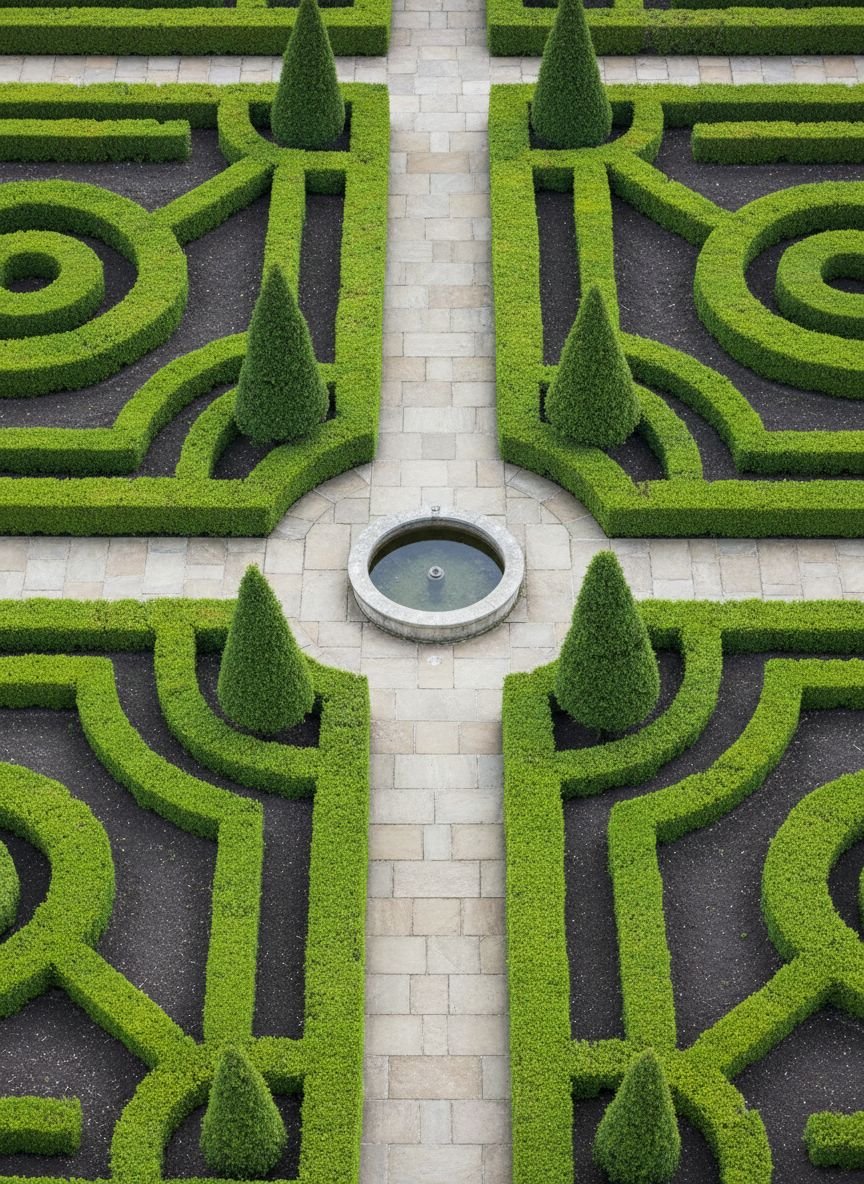
This idea combines the structure of the maze with the softness of a flower garden. Instead of a statue or fountain at the center of your geometric paths, plant a mass of a single floral variety. Lavender is the most authentic choice for a French feel. A dense square or circle of lavender in the center of a boxwood parterre brings color, texture, and an incredible scent.
The grey-green foliage of the lavender pairs perfectly with the dark glossy green of the boxwood. When the lavender is in bloom, the purple haze creates a stunning focal point. This design requires full sun, as lavender struggles in the shade. Ensure the soil in the center bed is well-draining, perhaps by adding sand or gravel to the planting mix.
Pro Tip: Harvest the lavender in late summer to dry for indoor arrangements, keeping the French theme alive inside your home.
Sophisticated Symmetry of Celebrated Hedge Design
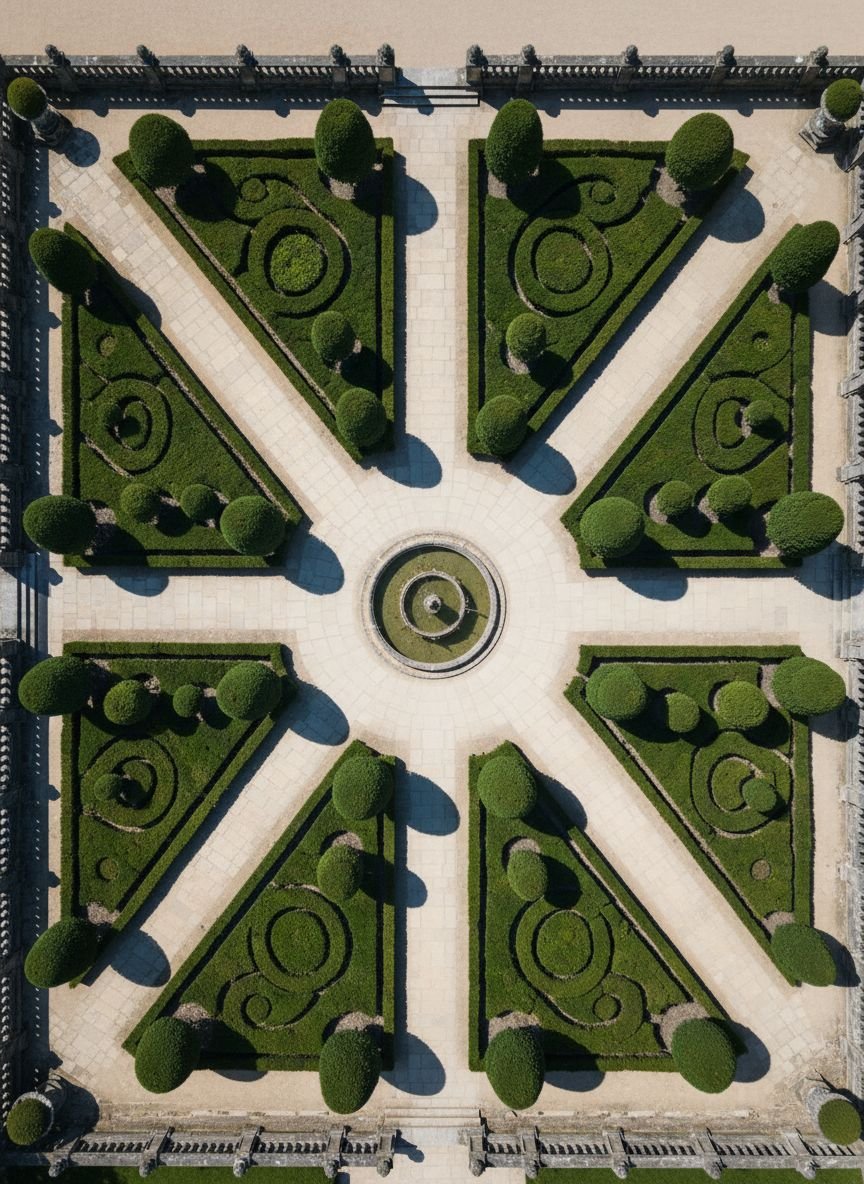
This concept focuses on the “Allée”—a straight path lined with tall, symmetrical trees or hedges. In Versailles, these are often hornbeam or linden trees pleached (trimmed) into flat, aerial hedges. For a residential scale, you can achieve this look with “Fastigiata” varieties of trees, which naturally grow in narrow, upright columns.
Plant these trees along a driveway or a main garden path, spaced evenly. The repetition creates a powerful visual rhythm. Underplant the trees with a continuous strip of low boxwood or liriope to hide the trunks and provide a clean line at ground level. This design is perfect for side yards or long, narrow spaces that are often neglected.
Micro-CTA: Save this idea to your Pinterest board for “Side Yard Makeovers.”
Majestic Rose-Laden Retreat
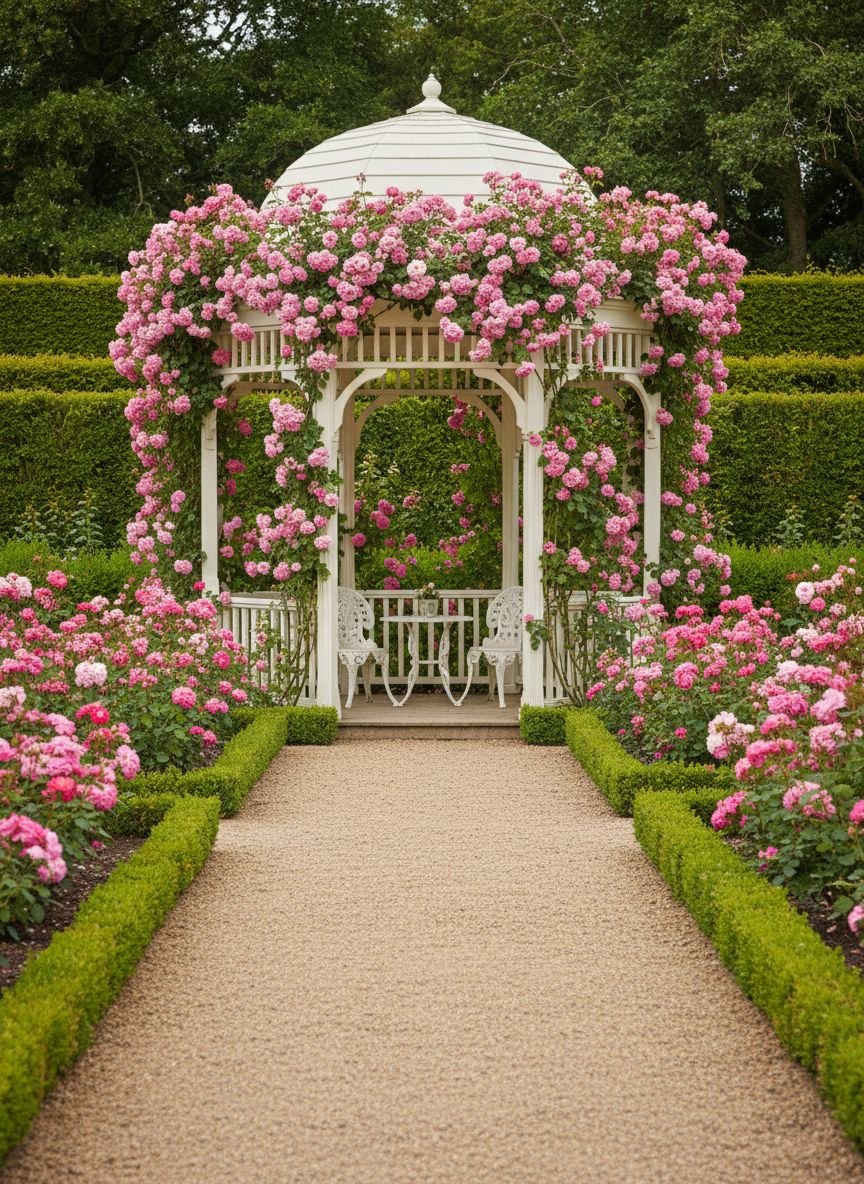
A “retreat” implies a destination that feels separate from the house. Create a secluded corner using trellis panels arranged in a U-shape. Cover these panels entirely with climbing roses. ‘New Dawn’ (pale pink) or ‘Iceberg’ (pure white) are vigorous climbers that will cover a trellis quickly and offer repeat blooms.
Inside this three-walled rose room, place a small bistro table and two chairs. The floor should be gravel or brick. This becomes a secret breakfast nook. The fragrance of the roses combined with the enclosure creates an immersive sensory experience.
Maintenance: To keep the roses healthy and blooming, deadhead spent flowers regularly and fertilize with a rose-specific food in early spring and mid-summer.
Tranquil Hideaway with Rose-Lined Pathway
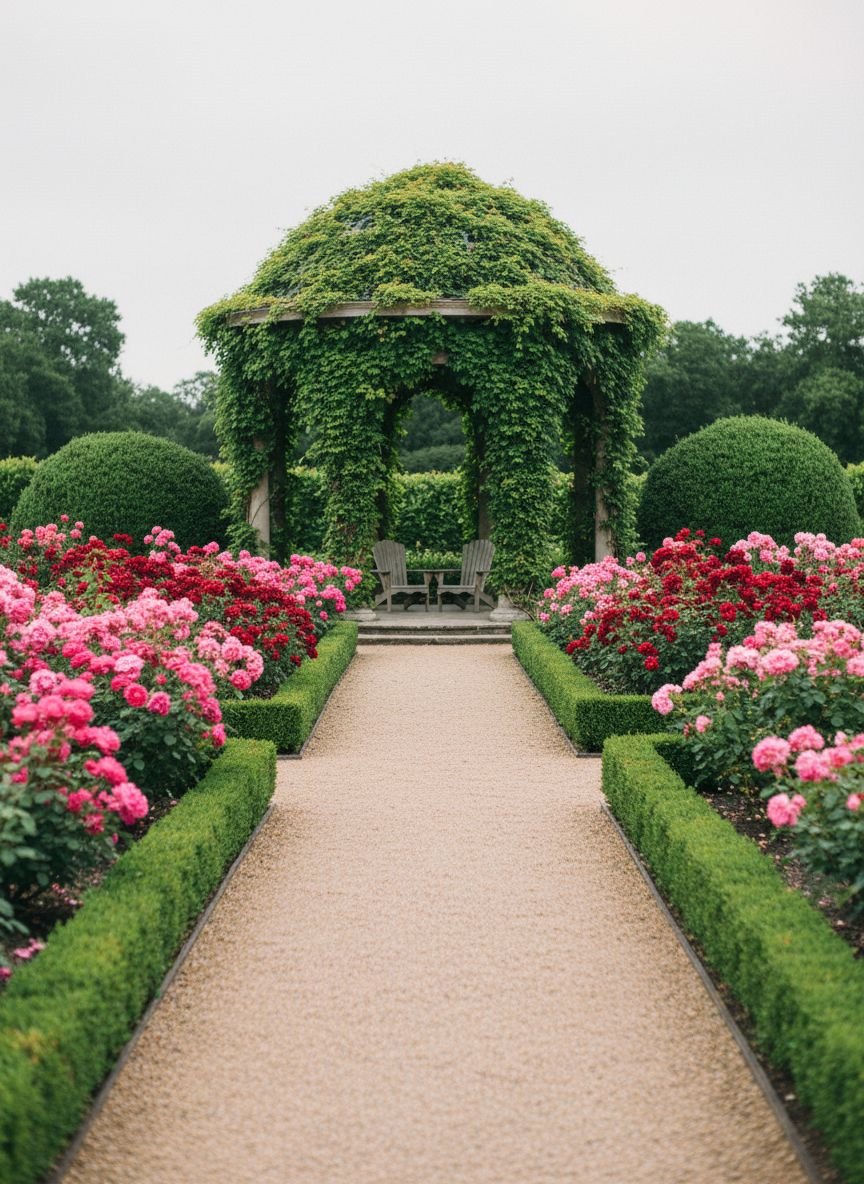
Transition spaces are opportunities for beauty. Instead of a simple concrete walk from the patio to the lawn, create a rose-lined pathway. However, unlike the English cottage style where roses spill over the path, the French style keeps them contained. Use metal edging or low clipped boxwood to define the bed, and plant standard (tree-form) roses in a straight line.
Standard roses look like lollipops—a straight trunk with a ball of flowers on top. This allows you to underplant them with lavender or catmint. The result is layers of color and texture that remain orderly. The clear stems of the roses allow visibility through the garden, maintaining an open, airy feel while still providing color.
Design Principle: Vertical layering maximizes planting space in small footprints.
Pathway of Pinnacle Perfection
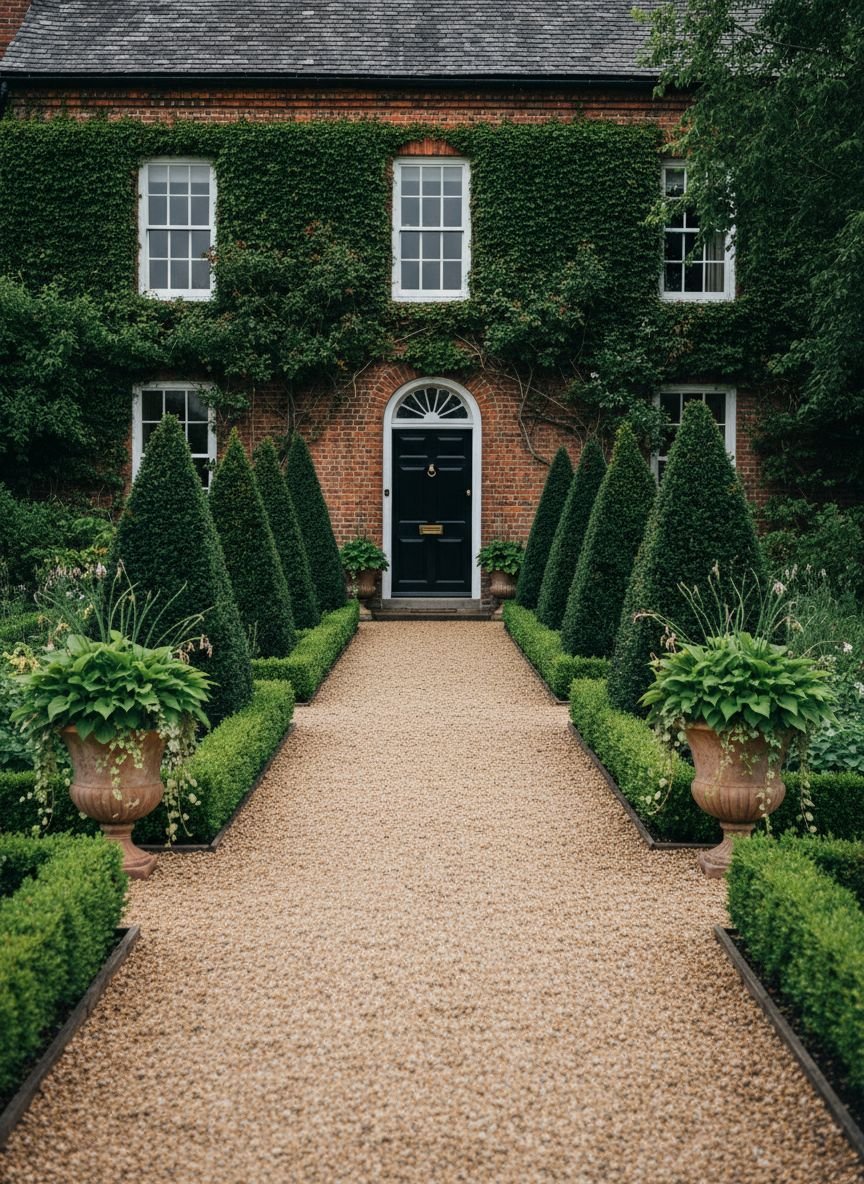
The material you choose for your pathway dictates the mood of the garden. For a true French formal look, nothing beats crushed limestone or beige pea gravel. It is permeable, prevents runoff, and has a satisfying crunch.
To achieve “Pinnacle Perfection,” the edges must be razor-sharp. Use steel landscape edging to separate the gravel from the adjoining lawn or beds. The contrast between the pale stone and the deep green grass is a hallmark of the style. Ensure the path is wide enough for two people to walk side-by-side (typically 4-5 feet). If the path is too narrow, it loses its grandeur.
Pro Tip: Lay down a heavy-duty weed barrier fabric before spreading the gravel to minimize maintenance.
“Get The Look” Essentials
- The Stone: Crushed Limestone or “Jersey Gold” Gravel.
- The Plant: American Boxwood or Japanese Holly.
- The Container: Anduze Urns (glazed terracotta) or Cast Iron Urns.
- The Furniture: Fermob Bistro Chairs in “Cedar Green” or “Cotton White.”
Geometry Fiesta in Greenery Land

Don’t let the word “Fiesta” fool you; we are talking about a celebration of shapes. This design idea plays with contrasting geometric forms. Picture a square lawn, bordered by a rectangular path, with spherical boxwood balls placed at the four corners. In the center, a pyramidal topiary adds height.
This interplay of squares, circles, and triangles engages the brain and creates a visually stimulating environment that still feels orderly. You can execute this on a micro-scale in a courtyard using raised planters. Use square planters for the corners and a tall, tapered planter for the center.
Styling Tip: Keep the color palette strictly green and stone-colored to let the shapes be the star of the show.
Majestic Corridor of Green Marvels
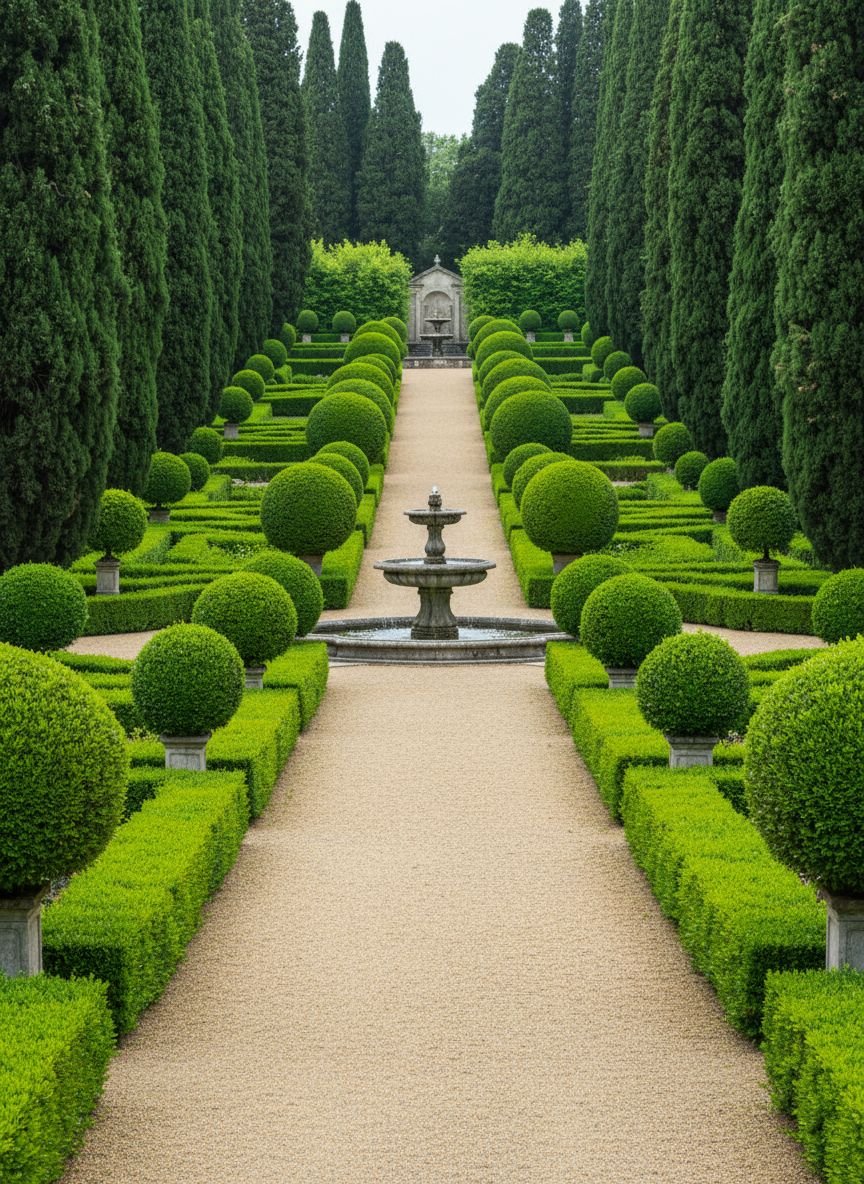
A “Green Corridor” creates a tunnel of foliage that connects two areas of the garden. This can be achieved with a pergola structure or by pleaching trees (training their branches to knit together overhead).
For a faster, budget-friendly version, install a series of simple metal arches spaced 3 feet apart. Plant fast-growing vines like Virginia Creeper or Boston Ivy. These vines provide lush green coverage in summer and turn brilliant red in autumn, offering seasonal interest. The floor of the corridor should be distinct—perhaps a herringbone brick pattern to add texture and history.
Save this idea to your Pinterest. It’s the perfect solution for blocking out neighbors or unsightly views.
Lush Oasis: A Throne Between Blossoms
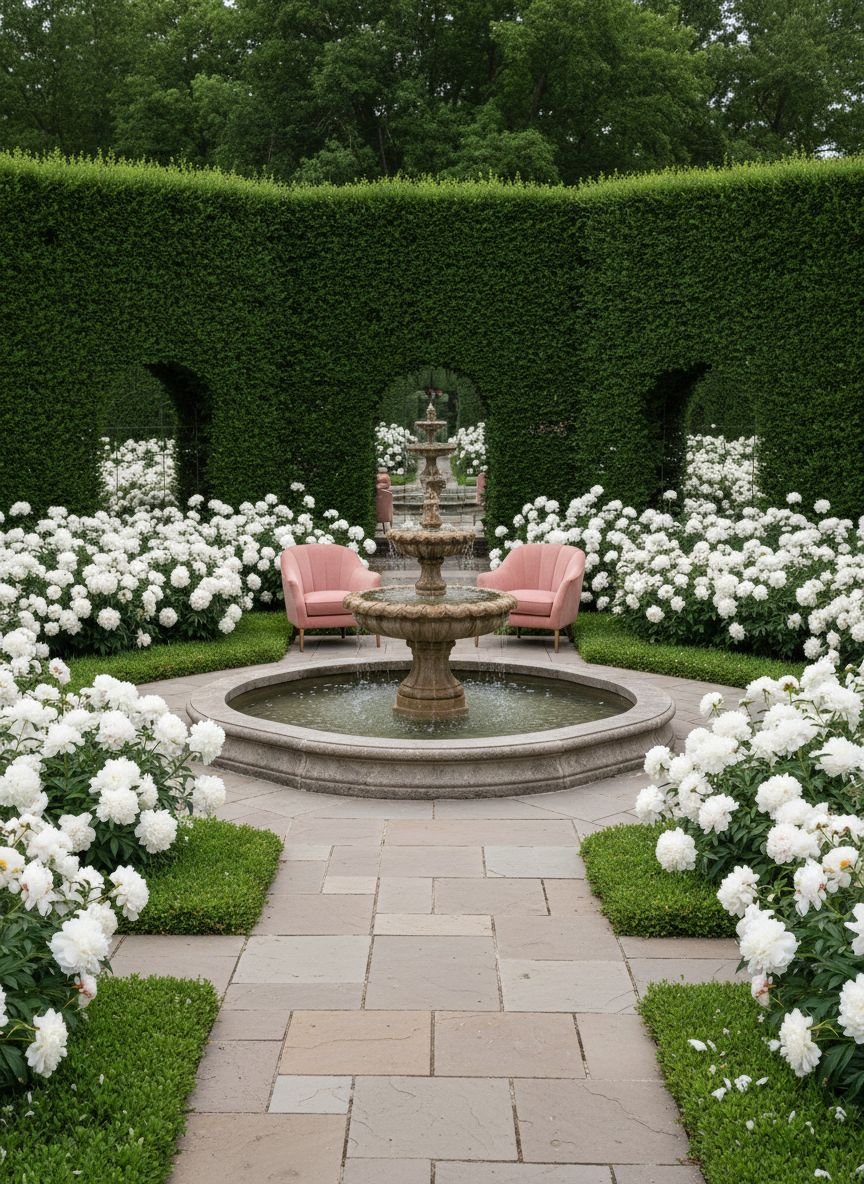
Elevate a simple garden bench to a “Throne” by manipulating the planting around it. Place a high-backed stone or iron bench at the end of a sightline. Flank it immediately with two large, urn-style planters overflowing with white hydrangeas or white geraniums.
Behind the bench, plant a semi-circle of tall hedging (like Yew) to frame the seat. The combination of the rigid hedge background, the ornate bench, and the spilling white flowers creates a regal vignette. It signals that this is the “best seat in the house.”
Pro Tip: Choose “Annabelle” hydrangeas for massive white flower heads that dry beautifully on the plant, providing winter interest.
Resplendent Oasis of Verdant Splendor
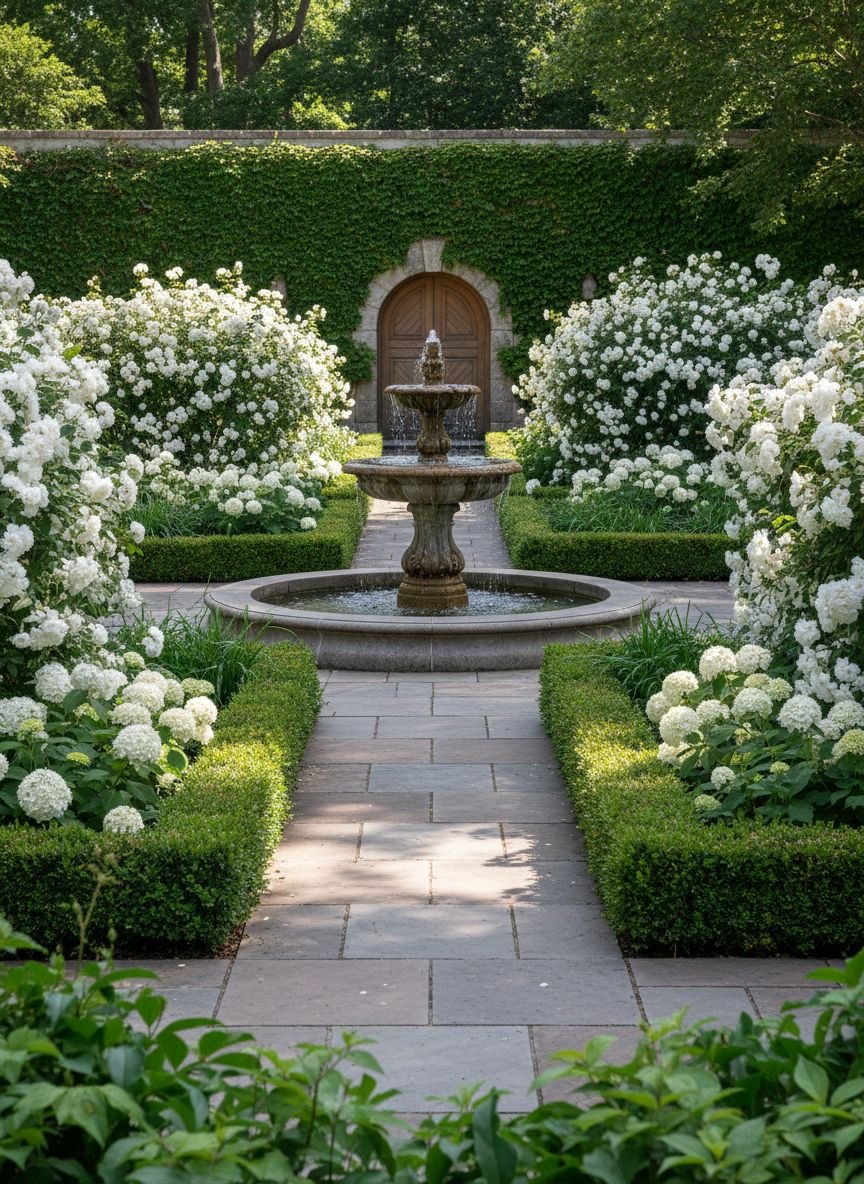
This concept focuses on the Monochromatic Garden. A “Verdant Oasis” relies entirely on shades of green. You mix chartreuse, emerald, olive, and blue-green foliage to create depth without a single flower.
Combine the feathery texture of ferns with the glossy leaves of holly and the matte finish of hostas. Use variegated plants (green leaves with white or yellow edges) to add “light” to shady corners. This type of garden is incredibly calming and actually requires less deadheading and maintenance than a flower-heavy border. It looks lush and expensive year-round.
Design Principle: Texture is just as important as color. When color is removed, texture becomes the defining feature.
Exquisitely Curved Hedges in a Secret Garden
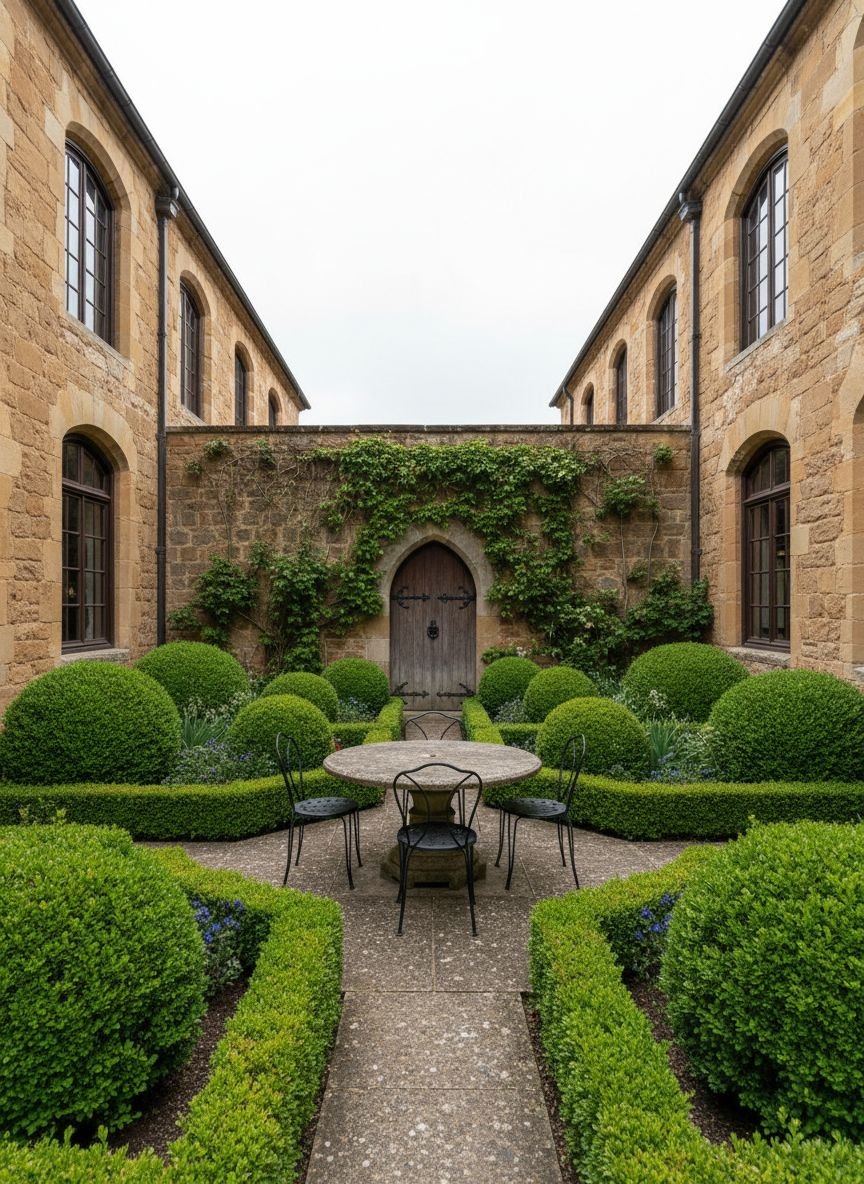
While straight lines are typical, curves add softness and flow. “Broderie” (embroidery) parterres often feature swirling, curved hedges that look like patterns on a rug. You can incorporate this by creating a scalloped edge to your borders rather than a straight line.
Use dwarf boxwood varieties like ‘Wee Willie’ or ‘Suffruticosa’ which stay small and tight. Layout a serpentine curve along the edge of your walkway. In the “coves” created by the curves, plant single specimen plants like a standard rose or a cone-shaped topiary. This adds a playful yet sophisticated rhythm to the garden border.
Maintenance: Curved hedges require a steady hand to trim. Use a template made of cardboard or plywood to ensure the curve remains consistent year after year.
Verdant Retreat With Sculpted Elegance
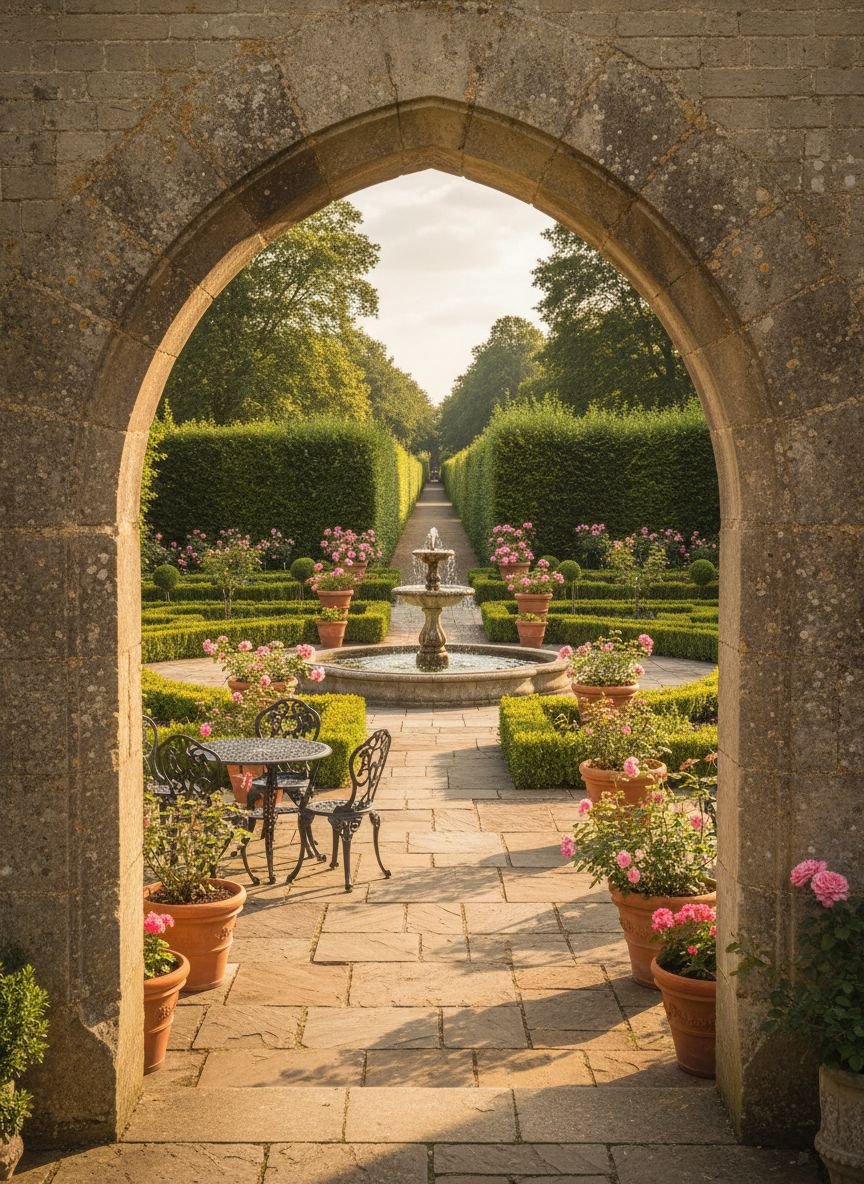
The final touch to bring Versailles home is the inclusion of Statuary. A “Verdant Retreat” is a quiet corner where a piece of art is nestled among the greenery. It doesn’t have to be a massive marble figure. A concrete greyhound, a stone pinecone, or a classic bust on a pedestal works perfectly.
The statue should be “discovered.” Place it in a niche of a hedge, or at the end of a small path, partially obscured by a fern or a branch. This makes the garden feel established and curated. Ensure the scale of the statue matches the surroundings—too small and it looks like a toy; too big and it looks out of place.
Styling Tip: Encourage moss growth on concrete statues by brushing them with yogurt or buttermilk to give them an instant “aged” antique look.
Related posts :
- 17 Inspiring Courtyard Garden Designs That Instantly Elevate Your Space And Create A Private Oasis
- 16 Stunning Small Backyard Garden Ideas You Can Easily Create To Instantly Transform Your Outdoor Oasis
- 22 Breathtaking Outdoor Ideas That Are Making Us Swoon & Will Instantly Upgrade Your Backyard
Popular Asked Questions
How can I make a French garden on a budget?
You do not need expensive stone to get the look. Use pea gravel for pathways, which is very affordable. Instead of buying large, expensive boxwoods, buy small “starter” plants and let them grow in. You can also propagate boxwood from cuttings easily. Finally, use concrete pavers instead of limestone; once they weather, they look very similar.
What is the difference between French Country and French Formal gardens?
French Formal gardens (like Versailles) are all about symmetry, straight lines, clipped hedges, and control. They are very structured. French Country gardens (like in Provence) are more relaxed. They mix vegetables with flowers, use more terracotta, and allow plants to spill over paths. This guide focuses on the Formal style, but you can mix elements of both!
Do French gardens require a lot of maintenance?
Yes and no. The initial setup requires precision. Keeping hedges perfectly straight and topiaries shaped does require regular trimming (2-3 times a year). However, because these gardens rely on evergreens and shrubs rather than annual flowers, you spend less time watering, deadheading, and replanting every spring.
What are the best plants for a small French garden?
For small spaces, stick to dwarf varieties. Dwarf Boxwood (or Japanese Holly as a substitute), Lavender, Standard Roses (roses grafted onto a straight stem), and climbing Star Jasmine are excellent. They provide the structure and scent without taking up too much ground space.
Can I have a French garden without full sun?
Absolutely. While lavender and roses need sun, the “bones” of a French garden—boxwood, yew, hydrangeas, and ferns—love partial shade. A shady French garden can be incredibly chic and lush, focusing on the “Verdant Oasis” concept mentioned above.
Conclusion
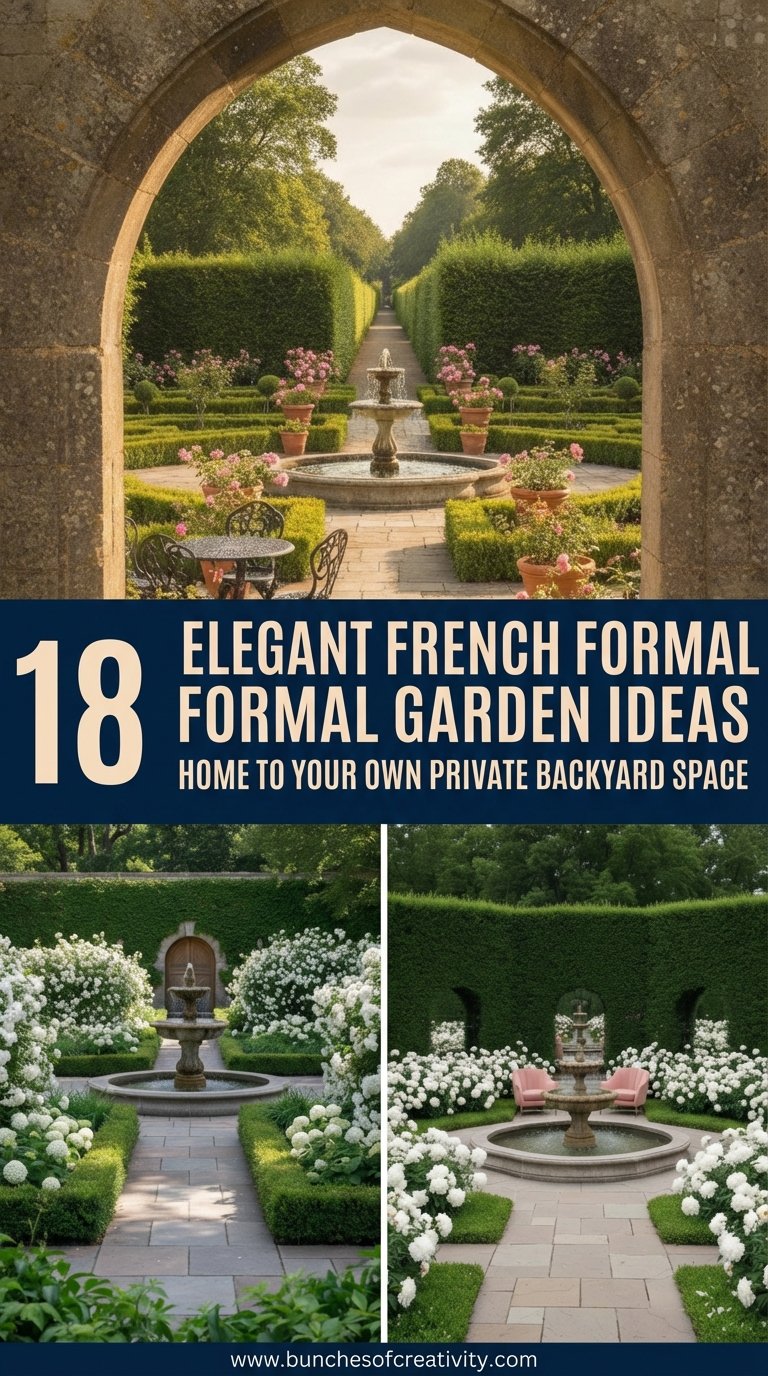
Creating a French formal garden is about more than just planting bushes; it is about creating a feeling of serenity through order. By incorporating symmetry, structural greenery, and elegant hardscaping, you can transform even the most chaotic backyard into a slice of Versailles.
Whether you start with a single pair of potted topiaries by your back door or renovate your entire lawn into a gravel and boxwood parterre, the result will be a timeless outdoor space that looks good in every season.


Leave a Comment