
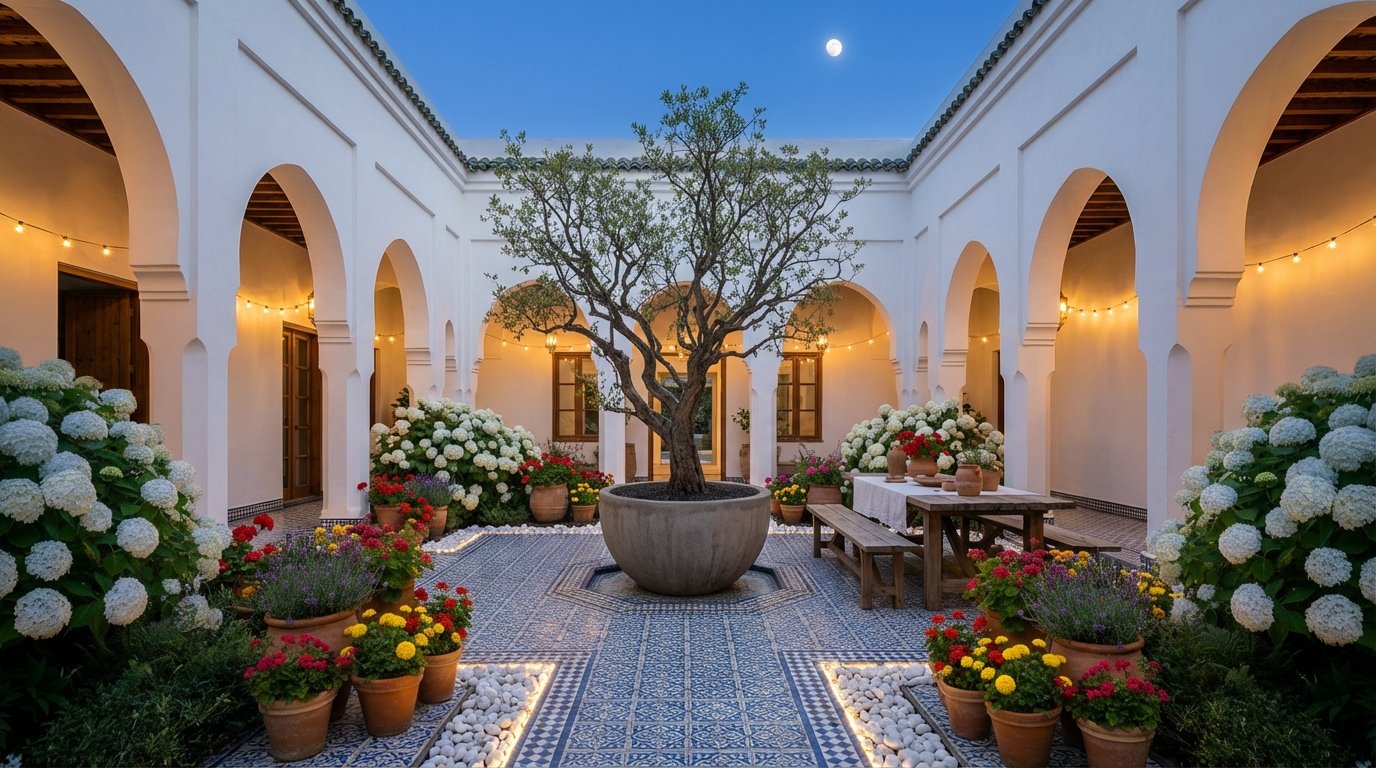
In 2026, the courtyard garden is no longer just a pass-through space; it is the ultimate extension of the home. As urban density increases and privacy becomes a luxury, homeowners are turning these small, enclosed pockets into high-functioning sanctuaries. Whether you are working with a tiny light well in a city apartment or a walled side yard in the suburbs, the right design transforms a neglected concrete slab into a lush, breathable retreat.
This guide provides 17 specific, actionable courtyard garden designs that solve common problems like limited light, lack of privacy, and tight square footage. You will find layouts that prioritize vertical growing, smart lighting, and multi-sensory elements to make even the smallest footprint feel expansive.
Key Takeaways
- Verticality is Non-Negotiable: In small courtyards, the only way to grow is up. Use walls for living art and privacy screens.
- Lighting Creates Volume: Strategic uplighting on trees and shadow play on walls can visually double the size of a courtyard at night.
- Zoning is Critical: Even in a 10×10 space, distinct zones for sitting and planting create a sense of journey and depth.
- Texture Over Color: Rely on leaf shapes (ferns vs. palms) and hardscape textures (gravel vs. sleek tile) for year-round interest.
- Sound Masks Noise: A bubbling water feature is essential for blocking out city noise and creating a true sanctuary.
Table of Contents
- Moonlit Courtyard Garden
- Japanese-Inspired Courtyard
- Vertical Succulent Wall
- Miniature Zen Oasis
- Sculptural Cactus Courtyard
- Secret Fairy-Tale Courtyard
- Mediterranean Courtyard
- Modern Geometric Garden
- Lush Tropical Courtyard
- Circular Herb Spiral
- Vintage-Inspired Courtyard
- Enclosed Wildflower Meadow
- Artistic Pebble Mosaic
- Courtyard Pond
- Minimalist Stone Courtyard
- Cottage-Style Courtyard
- Moroccan Courtyard
- Popular Asked Questions
- Conclusion
Moonlit courtyard garden with silvery foliage and glow-in-the-dark pebbles
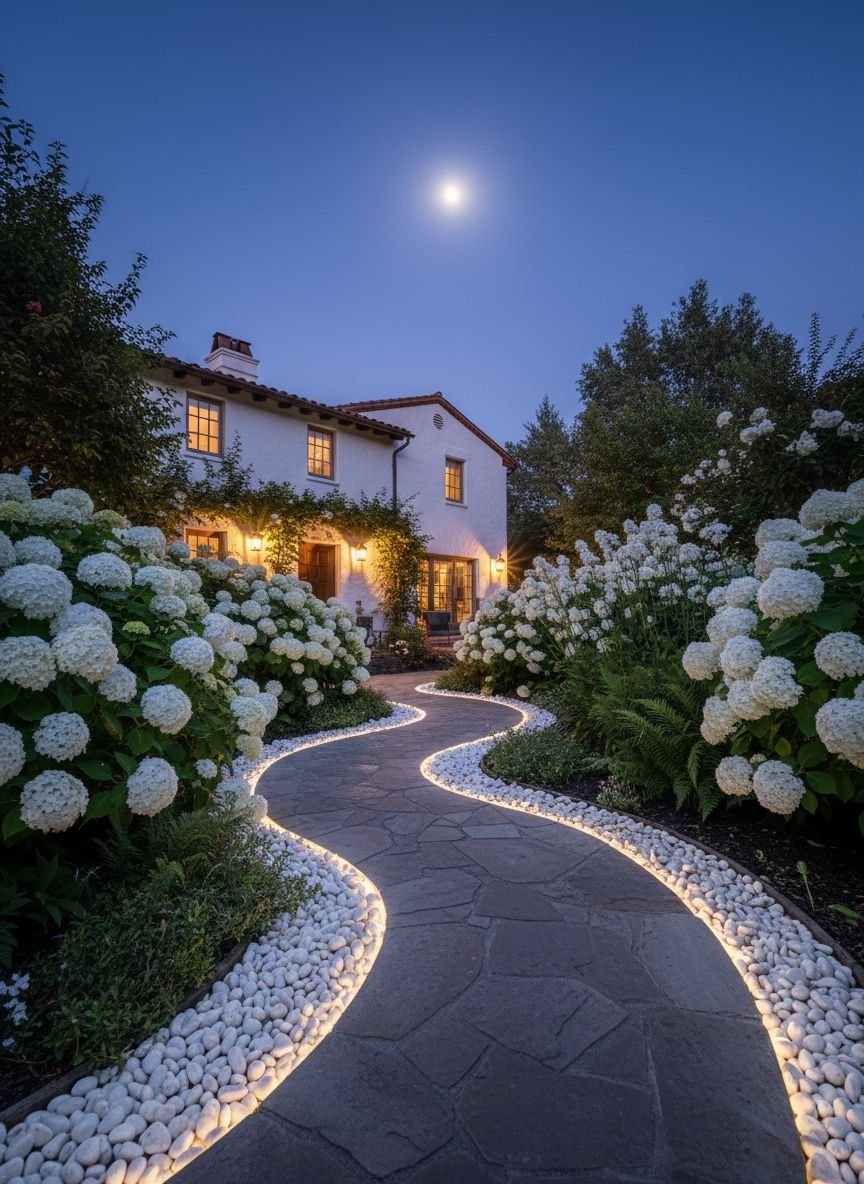
A moonlit courtyard focuses on enjoying the space after the sun goes down, perfect for professionals who only see their garden in the evening. This design relies on a strict palette of white blooms, silver foliage, and reflective surfaces that catch the moonlight or ambient city glow. The visual texture here is soft and ethereal. Plants like Artemisia (Wormwood), Stachys byzantina (Lamb’s Ear), and white Hydrangeas act as natural reflectors.
To implement this, avoid dark paving which absorbs light. Instead, use pale limestone or white gravel. The “glow-in-the-dark” element comes from photoluminescent pebbles scattered among the gravel or set into resin pathways. These absorb solar energy during the day and emit a soft, ambient blue-green glow at night, eliminating the need for harsh floodlights. Pair this with night-blooming jasmine to add a sensory layer of fragrance that peaks around midnight.
Pro Tip: Install a large mirror on the shadiest wall. It reflects light into the dark corners during the day and doubles the “glow” effect of your pebbles at night.
Japanese-inspired courtyard with raked gravel, moss islands, and stone lanterns
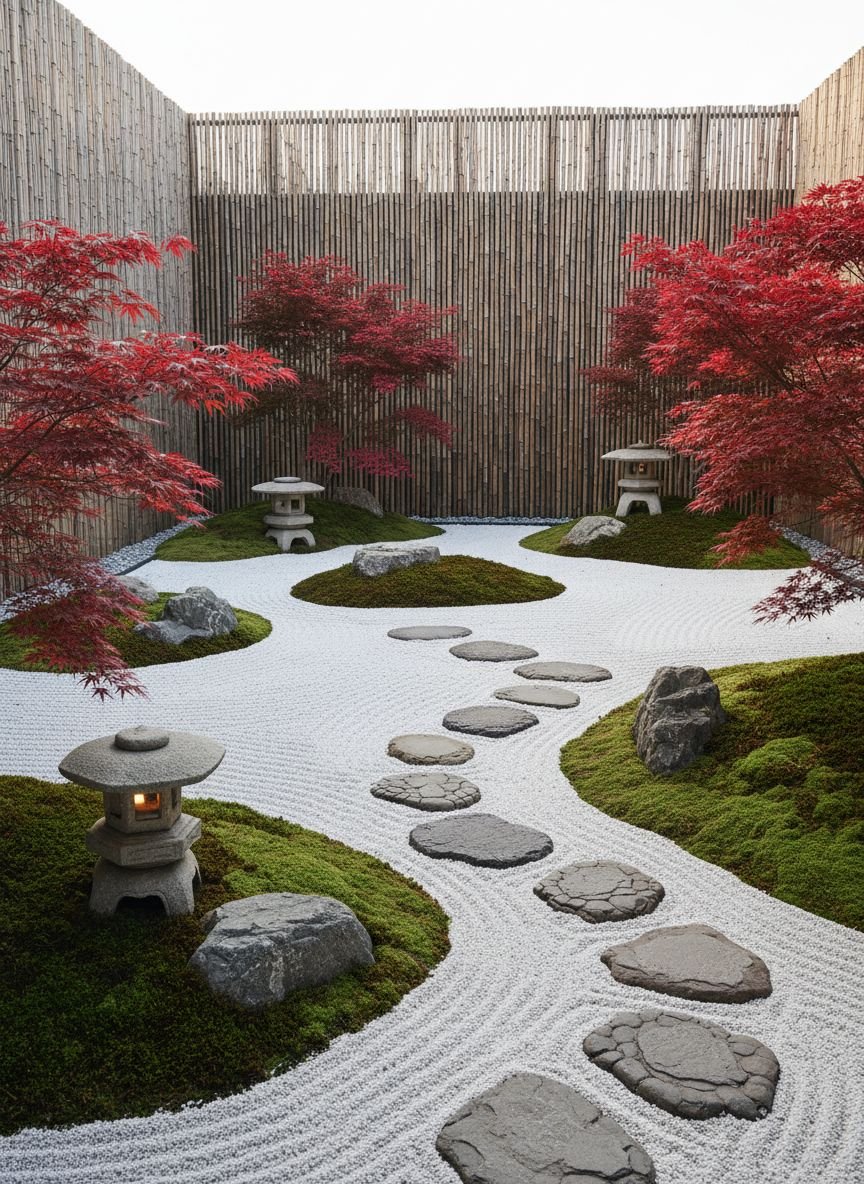
The Japanese tsubo-niwa (courtyard garden) is the masterclass in small-space efficiency. This design centers on symbolism and negative space rather than abundance. The ground plane is the canvas, typically covered in fine, crushed granite or gravel that is raked into concentric circles (ripples) around rocks. This act of raking creates a sense of water and movement without a drop of liquid, instantly calming the mind.
Select shade-loving mosses like Scotch moss or Irish moss to create soft, green “islands” at the base of a single, architectural Japanese Maple (Acer palmatum). Place a stone lantern (toro) partially obscured by fern fronds to suggest depth and mystery. The key here is restraint; do not overcrowd the space. Every stone should have a deliberate position. Use bamboo fencing to screen off modern siding or ugly brickwork, creating a seamless, organic enclosure.
Pro Tip: If true moss struggles in your climate, use Scleranthus biflorus (Cushion Bush) or low-growing sedums to mimic the look with higher drought tolerance.
Vertical succulent wall art for a vibrant, space-saving green statement
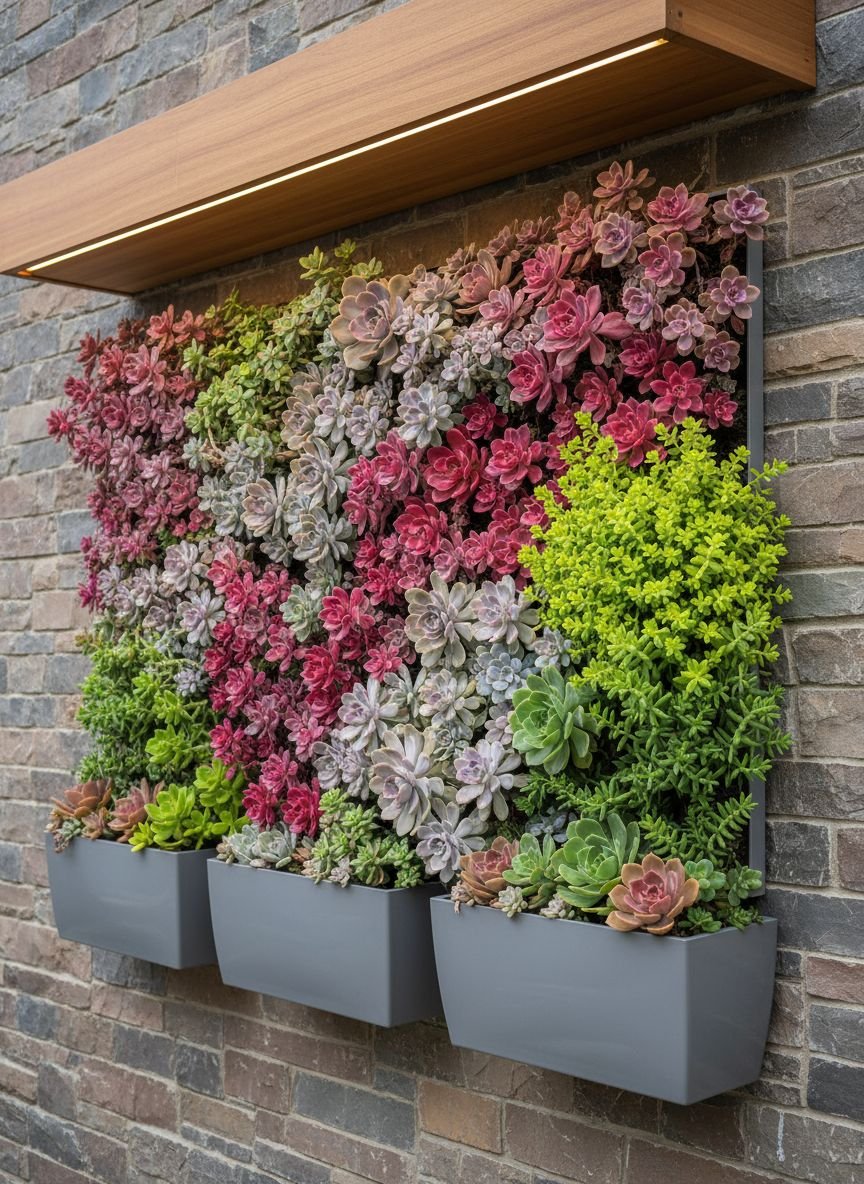
When floor space is at a premium, the walls become your garden beds. A vertical succulent wall acts as a living tapestry, bringing high-impact color and texture without occupying a single square foot of the patio. Succulents are ideal for this because of their shallow root systems and ability to retain moisture. Design the wall with a mix of rosettes (Echeveria), trailing varieties (String of Pearls), and vertical spikes (Aloe) to create a dynamic composition.
Construct this using modular felt pocket systems or framed wooden shadow boxes lined with landscaping fabric. Ensure the soil mix is gritty and fast-draining to prevent root rot. Position the wall on the sunniest side of the courtyard, as most succulents crave bright, direct light. The geometric patterns of the plants contrast beautifully against a simple concrete or stucco backdrop, turning a blank wall into the focal point of the entire home.
Pro Tip: Install a drip irrigation line at the top of the frame hidden behind the bezel. Gravity will water the entire wall for you, reducing maintenance to almost zero.
Miniature Zen oasis with a bubbling bamboo water feature
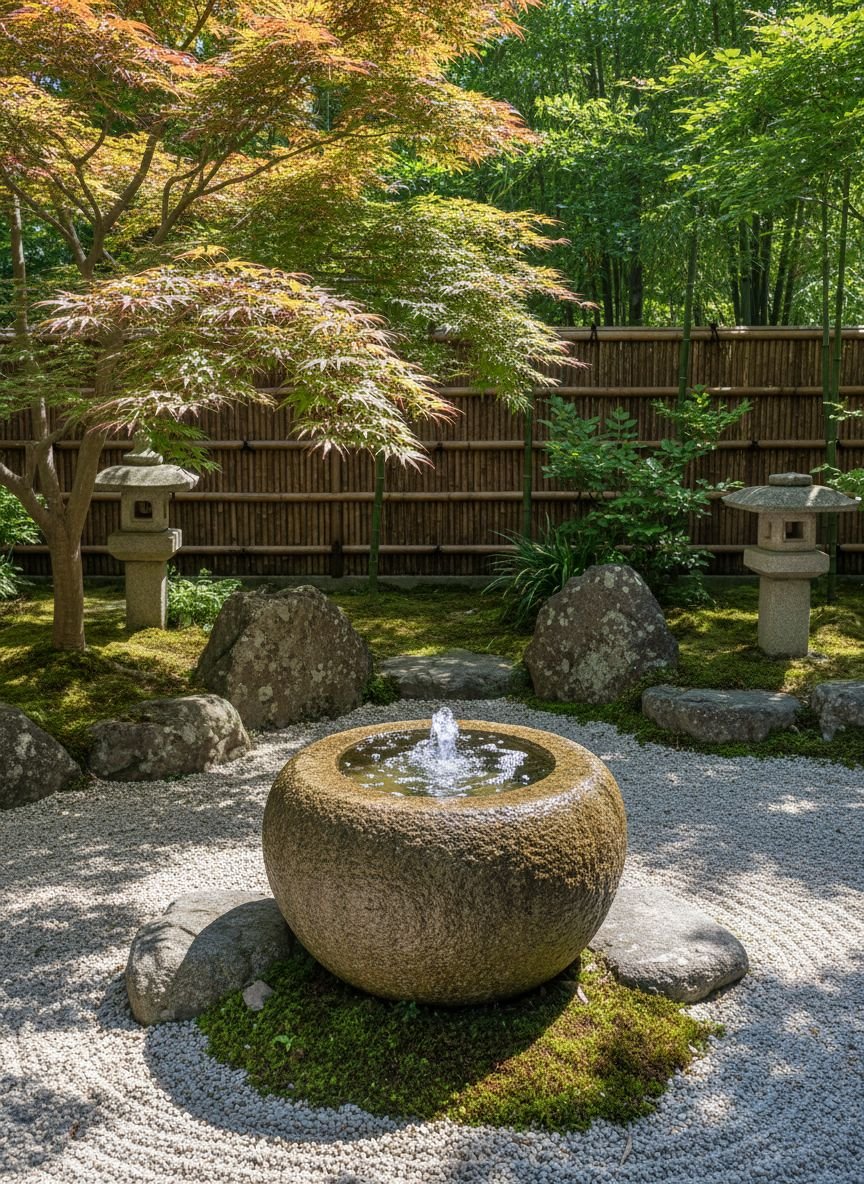
Sound is a powerful tool in courtyard design, especially in noisy urban environments. A miniature Zen oasis uses a shishi-odoshi (deer scarer) or a simple bamboo spout pouring into a stone basin to create a rhythmic, white-noise backdrop. This sound masks traffic and neighbors, psychologically transporting you to a remote spa. The visual aesthetic is clean and organic, utilizing bamboo poles, river stones, and dark water.
Keep the planting palette predominantly green to reduce visual noise. Ferns, Hostas, and dwarf Mondo grass work well to soften the edges of the water feature. The water basin itself should be dark (slate or granite) to create a mirror-like surface that reflects the sky and overhanging branches. This reflection adds a sense of spaciousness to the tight quarters.
Pro Tip: Save this idea to your Pinterest. Add a small submersible pump with an adjustable flow rate. You want a gentle trickle, not a splashing torrent, to maintain the meditative vibe.
Sculptural cactus courtyard paired with patterned terracotta tile flooring
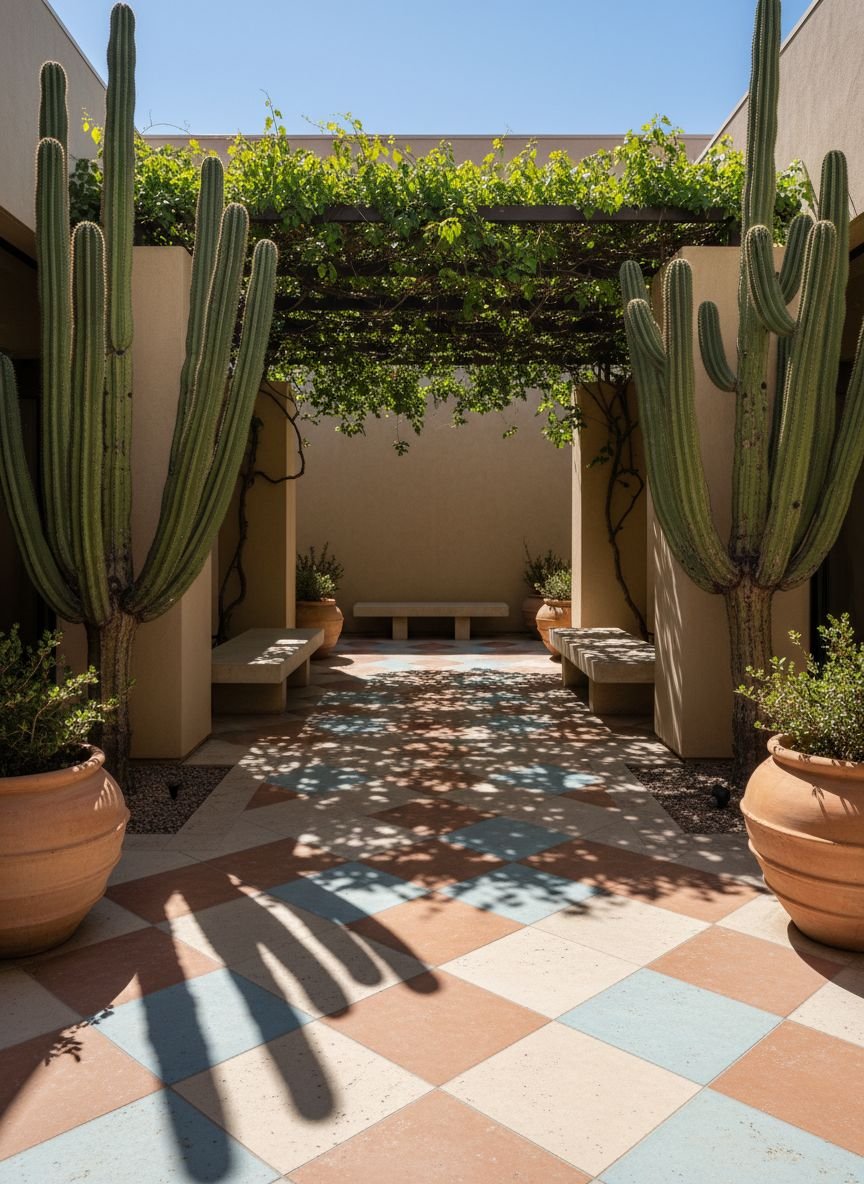
This design embraces the heat, making it perfect for sun-drenched, enclosed spaces that trap warmth. The look creates a high-contrast interplay between the organic, architectural shapes of cacti and the geometric precision of patterned tiles. Think large, column-like Euphorbia or Prickly Pear cactus planted in simple, unglazed pots against a backdrop of warm terracotta.
The flooring is the star here. Use hand-painted cement tiles or terracotta with a bold, repeating motif. The warm earth tones of the floor ground the space, while the cool greens and blue-greys of the cacti provide relief. Because cacti have small footprints, you can group several large specimens without cluttering the walking path. Finish the look with a rough-hewn wooden bench and a woven kilim rug for a touch of desert bohemia.
Pro Tip: Top dress your cactus pots with sand or beige gravel. This reflects light back up onto the plant and keeps the base dry, preventing rot.
Comparison: Gravel vs. Tiles for Courtyards
| Feature | Crushed Gravel | Patterned Tile |
|---|---|---|
| Cost | Low ($) | High ($$$) |
| Installation | DIY-friendly, quick | Requires professional laying |
| Drainage | Excellent, permeable | Needs sloped grading/drains |
| Heat | Stays cooler | Retains heat (good for evenings) |
| Vibe | Rustic, Zen, Casual | Polished, Mediterranean, Modern |
Secret fairy-tale courtyard with climbing roses and hidden reading nook
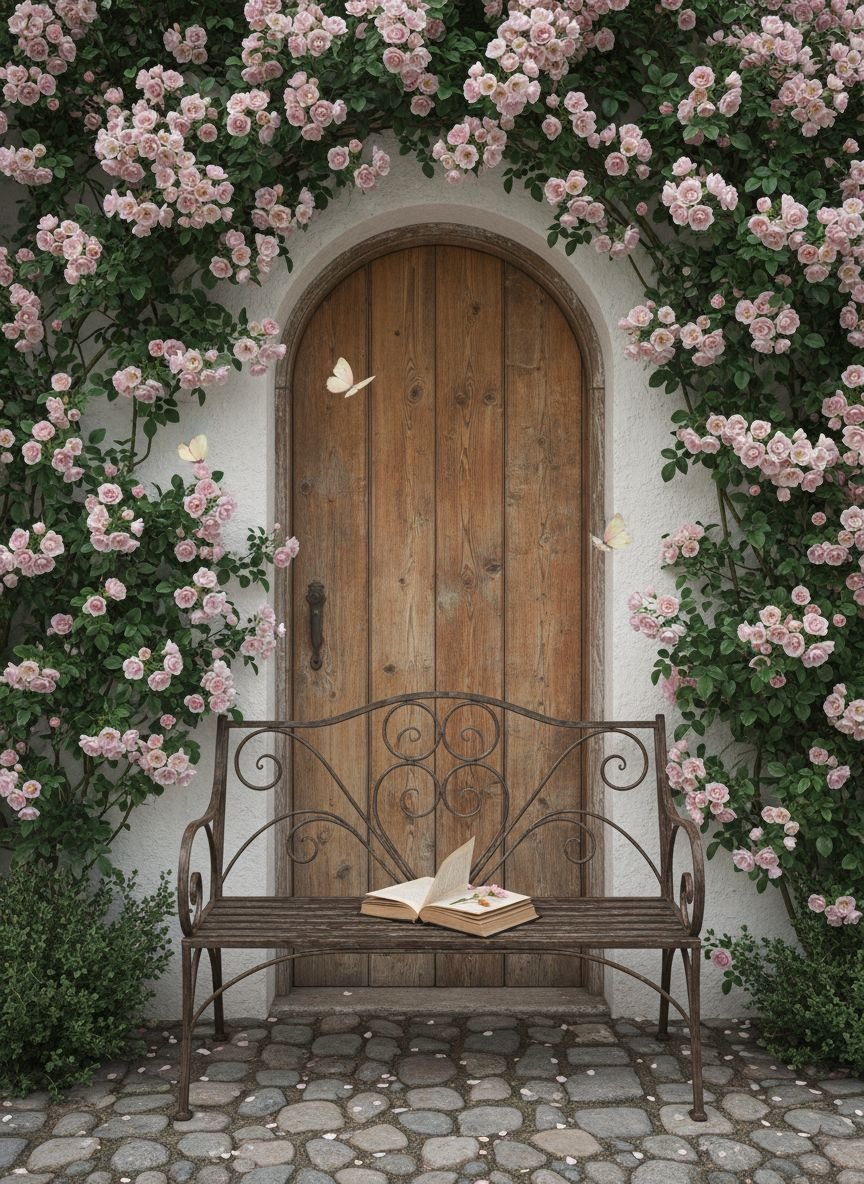
This design leans into the enclosed nature of a courtyard to create a “secret garden” atmosphere. The goal is to obscure the boundaries of the walls with aggressive, romantic climbers like climbing roses (Rosa ‘New Dawn’ or ‘Iceberg’) or Clematis. The dense foliage creates a green cocoon, softening hard architectural lines and muffling echoes.
Tuck a small bistro set or a comfortable wicker chair into a corner, partially hidden by a trellis or a large potted shrub. This “reveal” invites exploration. Use antique brick pavers for the flooring, allowing moss or creeping thyme to grow between the cracks for an aged, timeless look. Soft, warm fairy lights strung overhead in a loose canopy complete the magical aesthetic, making the space feel like a room without a roof.
Pro Tip: Choose thornless climbing roses if your courtyard is narrow, so you don’t snag your sweater every time you walk by.
Mediterranean courtyard with lemon trees, lavender borders, and mosaic benches
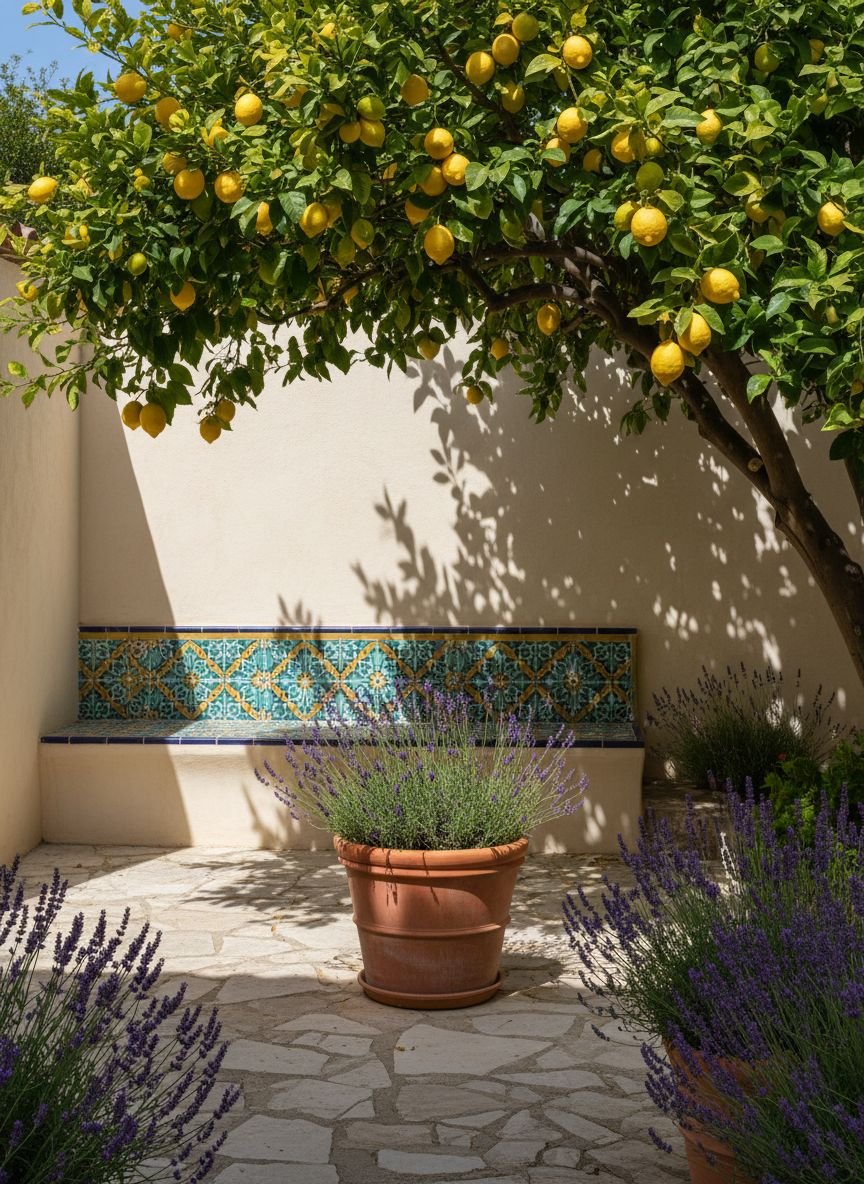
Bring the Amalfi Coast to your home with a courtyard that engages all the senses. The scent of lavender and citrus is the hallmark of this style. Plant a Meyer lemon tree in a large terracotta urn as the central feature; the yellow fruit pops against the glossy green leaves. Surround the perimeter with borders of English Lavender and Rosemary, which release fragrance when brushed against.
Hardscaping should feature warm, sandy tones. A built-in bench surfaced with broken tile mosaic (trencadís style) adds a splash of artistic color—think cobalt blues and sunny yellows. This built-in seating saves space and eliminates the need for bulky furniture storage during winter. The overall effect is sunny, vibrant, and incredibly inviting for morning coffee.
Pro Tip: If you live in a colder climate, keep the citrus trees in pots on wheeled caddies so they can be easily moved indoors during frost.
Modern geometric garden beds with crisp white gravel and boxwood spheres
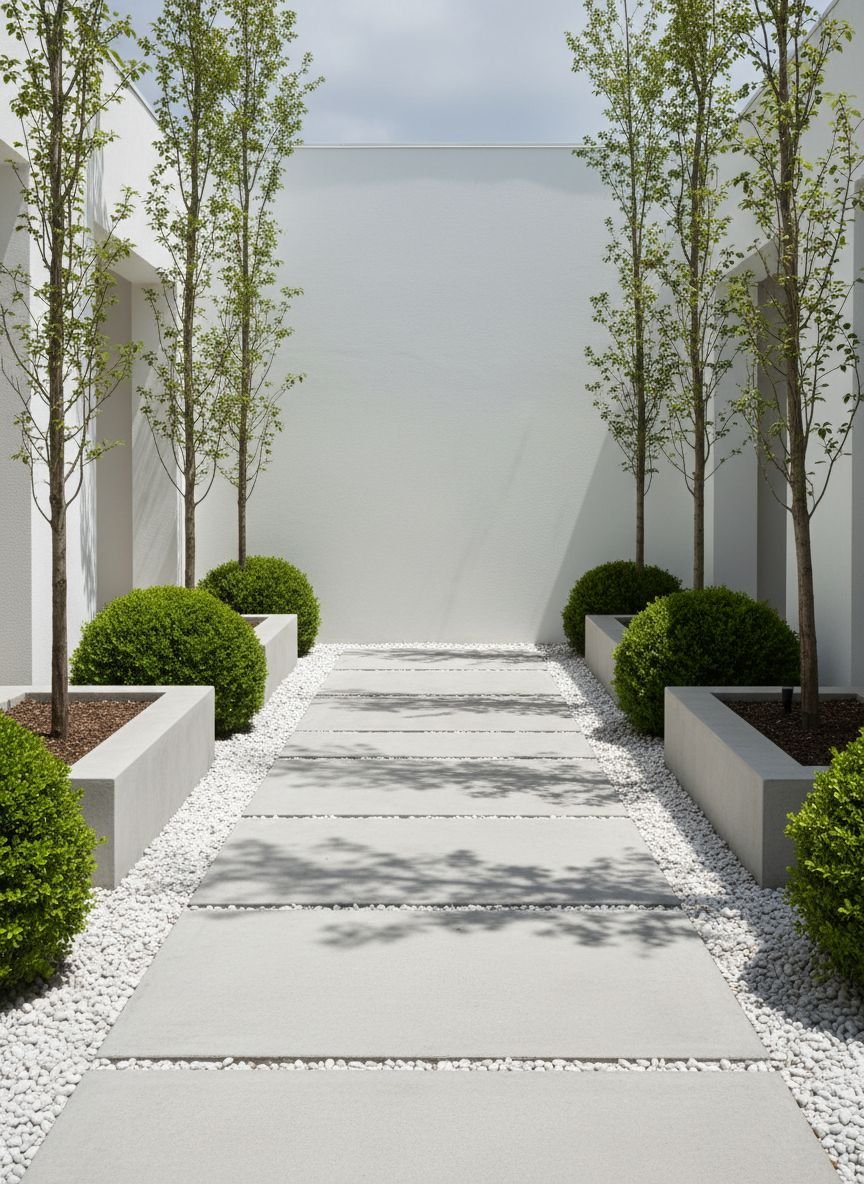
For the minimalist who craves order, this design utilizes strong lines and repetition. The layout is based on a grid system. raised beds made of corten steel or smooth concrete are arranged in a precise pattern. Inside these beds, plant clipped Boxwood spheres (Buxus) or Japanese Holly in varying sizes. The round organic shapes provide a striking contrast to the sharp corners of the planters.
The ground cover between the beds should be crisp white gravel or slate chippings. This negative space is just as important as the plants. It reflects light, making the courtyard feel brighter and larger. Keep the color palette strictly green, white, and grey to maintain visual calm. This is a low-maintenance option that looks impeccable year-round with minimal effort.
Pro Tip: Use metal edging to keep the gravel strictly contained. If a single stone is out of place in this design, it shows.
Lush tropical courtyard featuring banana palms and dramatic shadow play
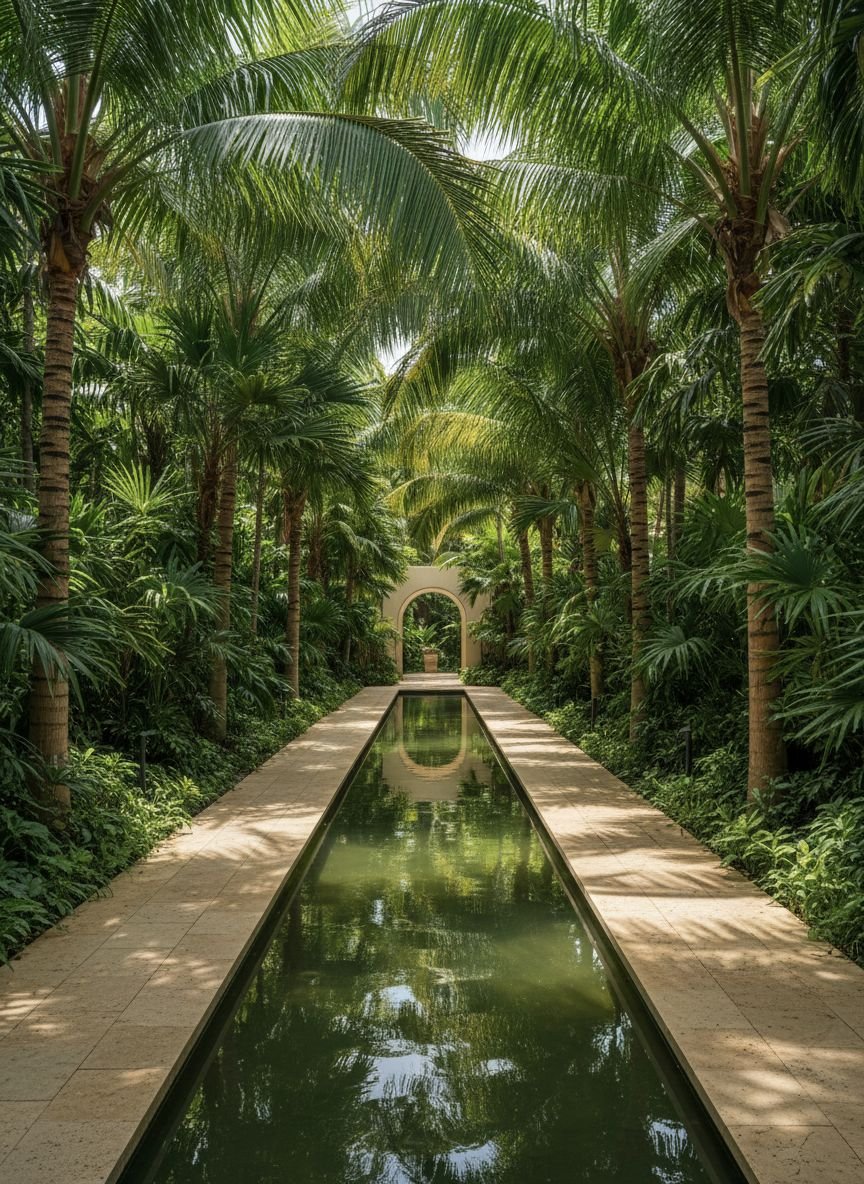
Turn a humid, enclosed courtyard into a jungle retreat. This style works well in courtyards with high walls that trap moisture and protect plants from wind. Use large-leafed plants like Banana Palms (Musa), Elephant Ears (Colocasia), and Bird of Paradise. The sheer scale of these leaves plays with perspective, blurring the boundaries of the small space.
Lighting is crucial here. Position spotlights at the base of the palms, pointing upward. The large leaves will cast dramatic, oversized shadows on the courtyard walls, creating living art that moves with the breeze. Use dark wood decking or dark grey pavers to ground the vibrant greens. A hammock strung between two sturdy posts invites you to lie back and look up at the canopy.
Pro Tip: Tropical plants are hungry feeders. Incorporate a slow-release fertilizer into the soil at the start of the growing season to keep those giant leaves glossy.
Circular herb spiral in the center of a sun-dappled courtyard
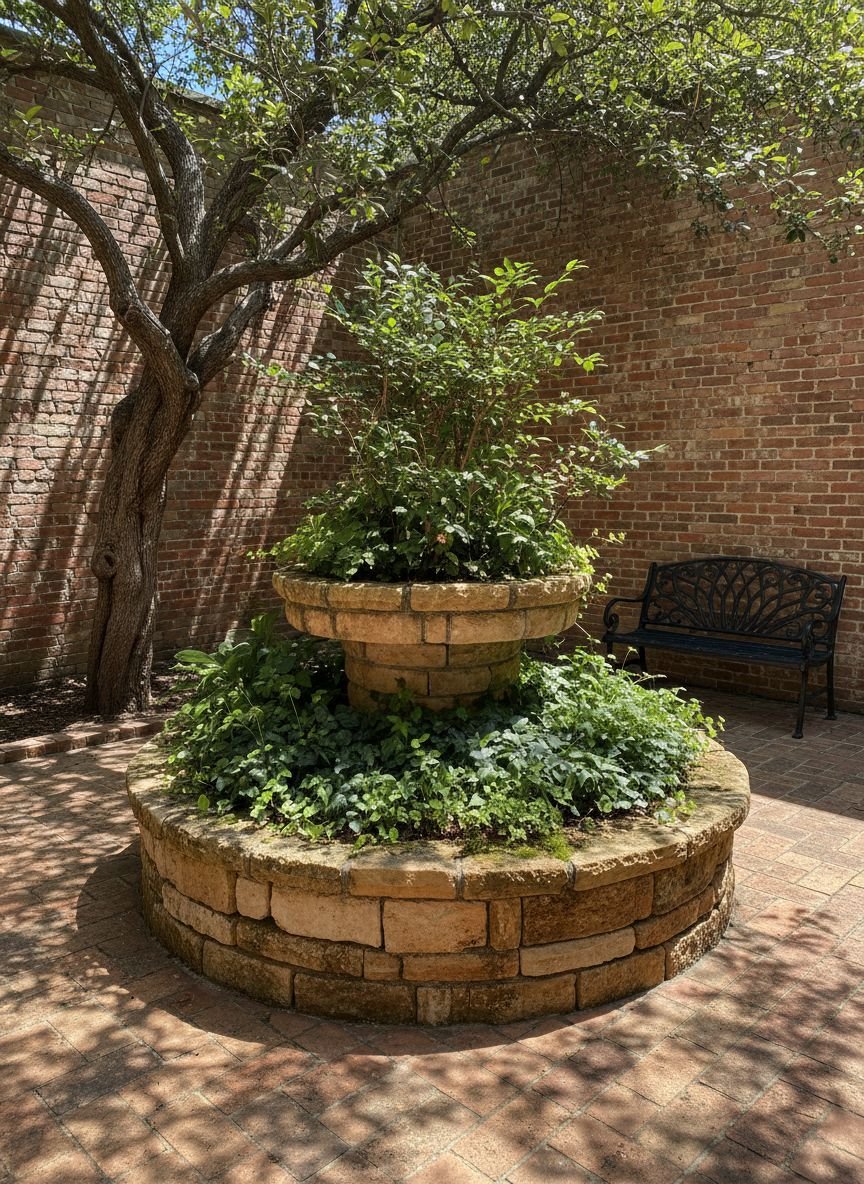
Function meets form in this permaculture-inspired design. A herb spiral is a coiled, raised bed that creates different microclimates in a tiny footprint. The top is dry and sunny (perfect for rosemary and thyme), while the bottom is moister and shadier (ideal for mint and parsley). Placing this sculptural element in the center of the courtyard makes it a focal point and allows for 360-degree access.
Construct the spiral from reclaimed brick, stone, or even vertical wooden stakes. Surround the spiral with permeable paving like decomposed granite. This design transforms the courtyard into a productive kitchen garden without it looking like a farm patch. It’s interactive, beautiful, and provides fresh ingredients for every meal.
Pro Tip: Plant marigolds or nasturtiums in the gaps of the spiral walls. They add pops of edible color and help deter pests from your herbs.
Get The Look: Courtyard Essentials
- Lighting: Solar-powered path lights with warm LEDs (2700K) to mimic candlelight.
- Flooring: Interlocking deck tiles for a rental-friendly upgrade over concrete.
- Planters: Lightweight fiberglass pots in matte black or white for a modern silhouette.
- Furniture: Foldable bistro sets that can be hung on the wall when not in use.
Related posts :
- 22 Breathtaking Outdoor Ideas That Are Making Us Swoon & Will Instantly Upgrade Your Backyard
- 16 Genius Small-Space Landscaping Ideas to Make the Most of Your Plot and Instantly Expand Your Outdoor Living Area
- 13 Stunning Outdoor Garden Decor Ideas That Instantly Transform Your Backyard Sanctuary
Vintage-inspired courtyard with antique urns, weathered brick, and ferns
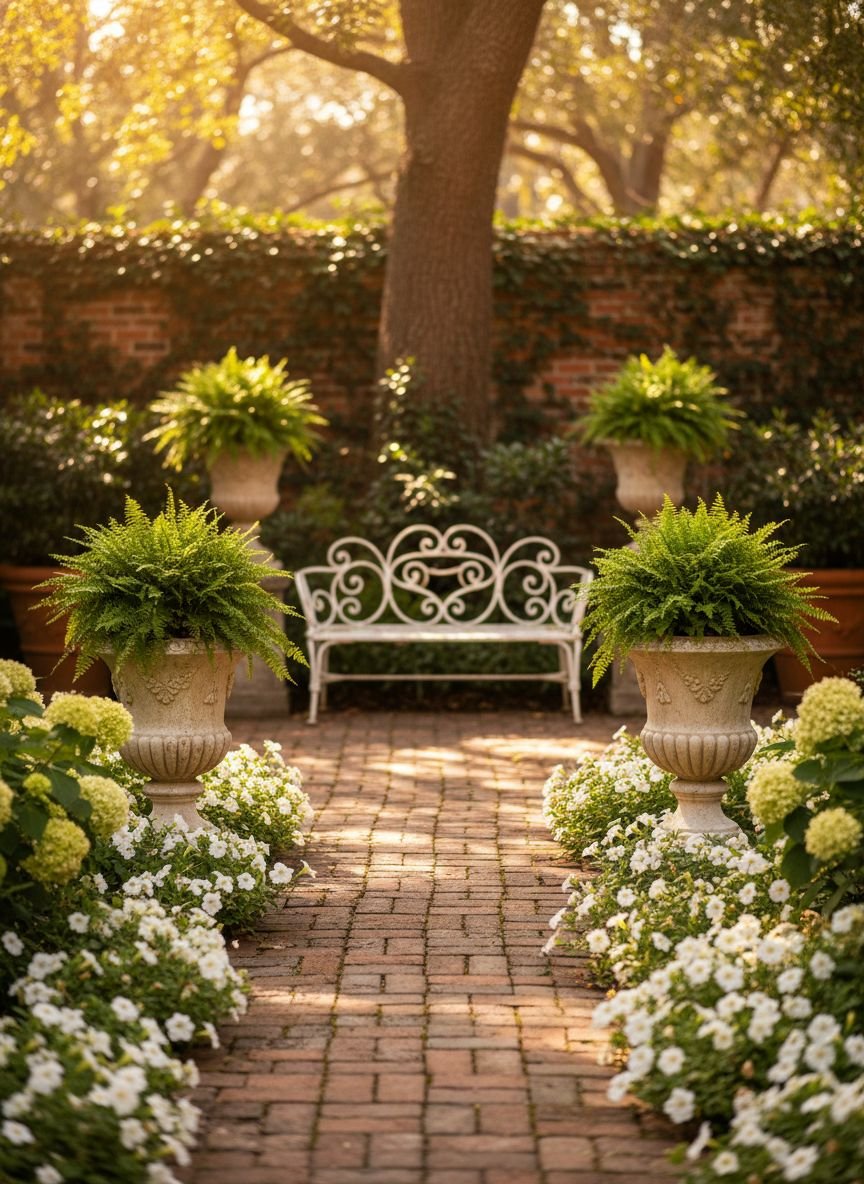
This style celebrates the beauty of age and imperfection. It suits older homes or shaded courtyards where moss grows naturally. The foundation is weathered brick flooring, laid in a herringbone or basketweave pattern. Don’t worry if the bricks are uneven; that’s part of the charm.
Furnish the space with cast-iron urns, rusted metal obelisks, and stone troughs. Fill these containers with shade-tolerant ferns like the Autumn Fern or Maidenhair Fern. The feathery texture of the ferns softens the heavy, industrial materials. A vintage wrought-iron table with a patina of rust or peeling paint serves as the centerpiece. This design feels established and grounded, as if it has been there for a century.
Pro Tip: Scour flea markets for old galvanized washtubs. Drill holes in the bottom, and they make affordable, stylish planters for this aesthetic.
Enclosed wildflower meadow, perfect for pollinators and colorful photography
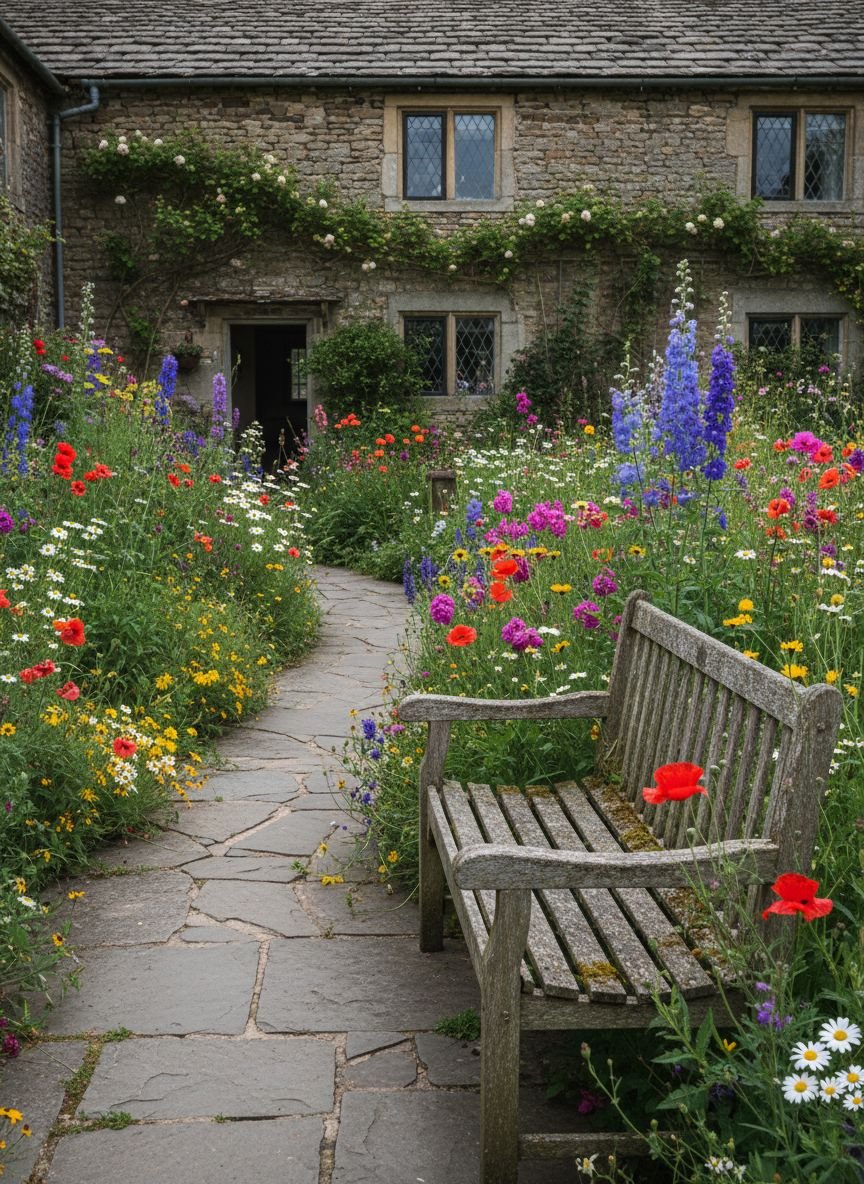
Who says a meadow requires acres of land? You can create a micro-meadow in a courtyard by removing paving and sowing a wildflower mix directly into the soil. This design is a riot of color and a haven for bees and butterflies. Choose a seed mix native to your region for the best results and lowest maintenance.
To keep it from looking messy, maintain a crisp, mowed edge or a paved perimeter path. This “frame” signals that the wildness in the center is intentional. Include a few taller perennials like Coneflowers or Cosmos to add height and structure. This living ecosystem changes daily, offering endless photo opportunities and a dynamic connection to the seasons.
Pro Tip: Mix sand with your wildflower seeds before scattering them. It helps you see where you’ve sown and ensures more even distribution.
Artistic pebble mosaic walkways weaving through aromatic planting
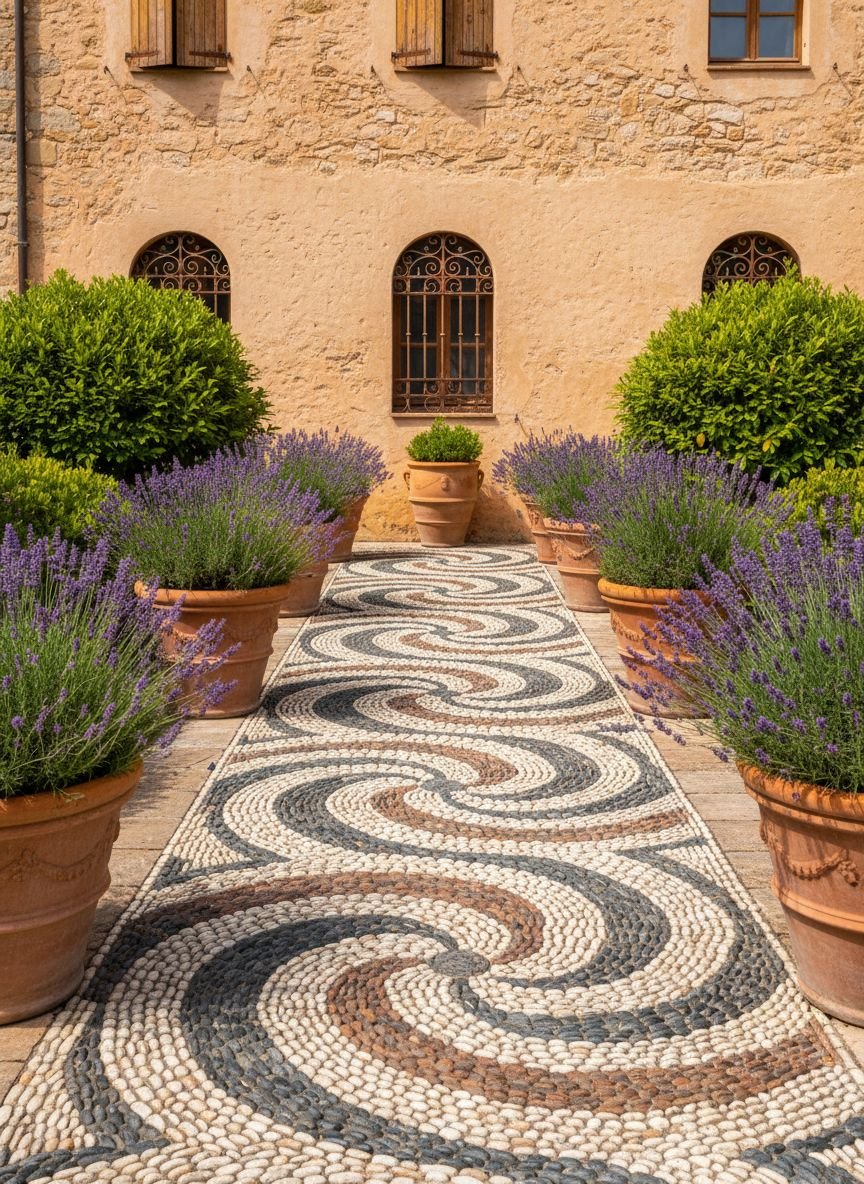
Turn the floor into a masterpiece. Pebble mosaics are created by setting smooth river stones of different colors (black, white, grey, red) into a dry mortar mix to create intricate patterns—spirals, waves, or geometric flowers. These textured walkways massage the feet and add a high-end, bespoke craft element to the garden.
Let the path weave through mounds of aromatic, low-growing plants like creeping thyme, chamomile, or corsican mint. When you step off the path onto the plants, they release their scent. This design creates a journey within a small space, forcing you to slow down and look at the ground beneath your feet.
Pro Tip: Sort your pebbles by size and color before you start mixing mortar. Preparation is 90% of the work in mosaic creation.
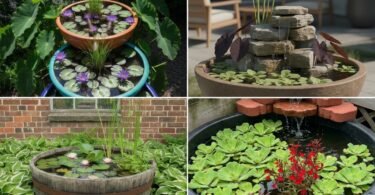
Courtyard pond with floating lilies and sculptural stepping stones
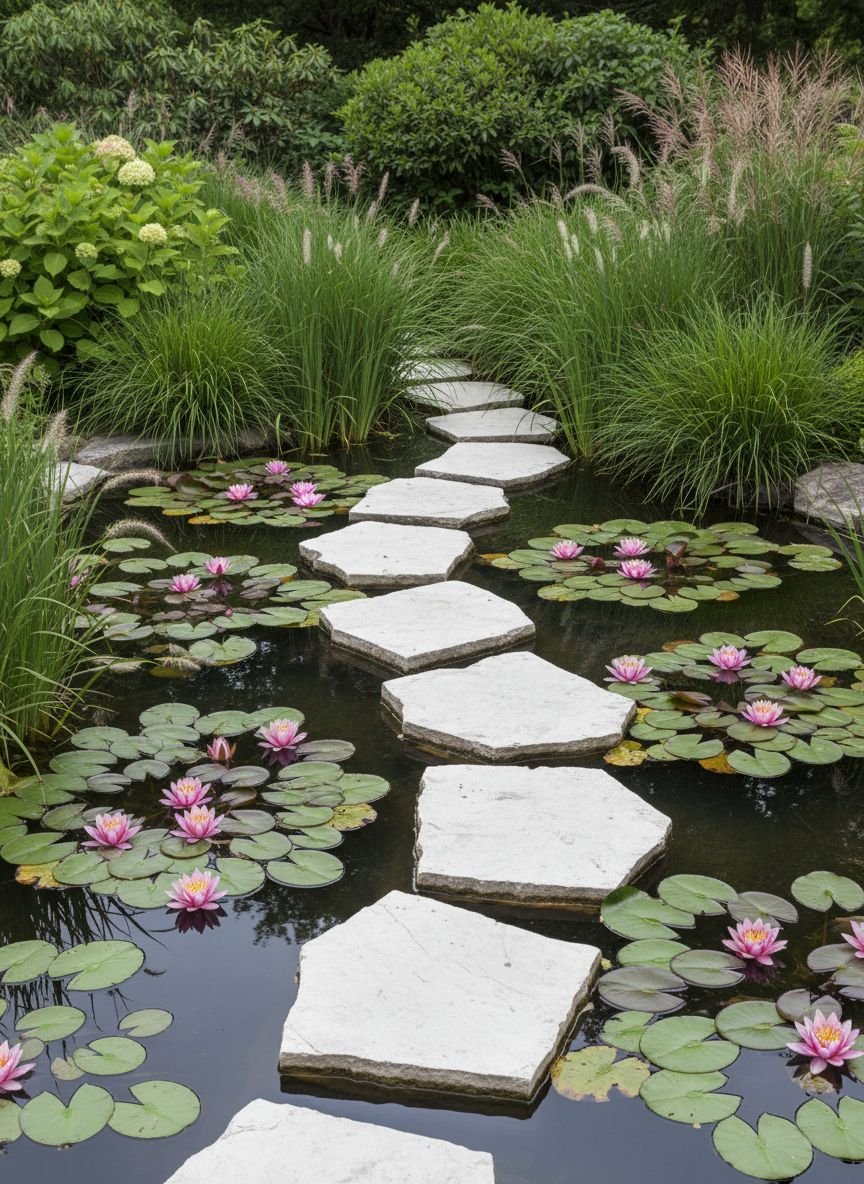
Water reflects the sky, effectively bringing light down into a deep, enclosed courtyard. A formal rectangular or square pond acts as a mirror, doubling the visual height of the surrounding walls. Keep the edges sleek—concrete or cut stone—to frame the water like a picture.
Float water lilies or lotus flowers on the surface to break up the reflection and add color. Install “floating” concrete stepping stones across the water surface. This allows you to walk over the water, an experience that feels adventurous and luxurious. The water also cools the ambient air temperature, making the courtyard more comfortable during hot summers.
Pro Tip: Add mosquito fish (Gambusia) to your pond. They are tiny, low-maintenance, and will eat any mosquito larvae, keeping your sanctuary pest-free.
Minimalist stone courtyard with oversized planters and a single statement tree
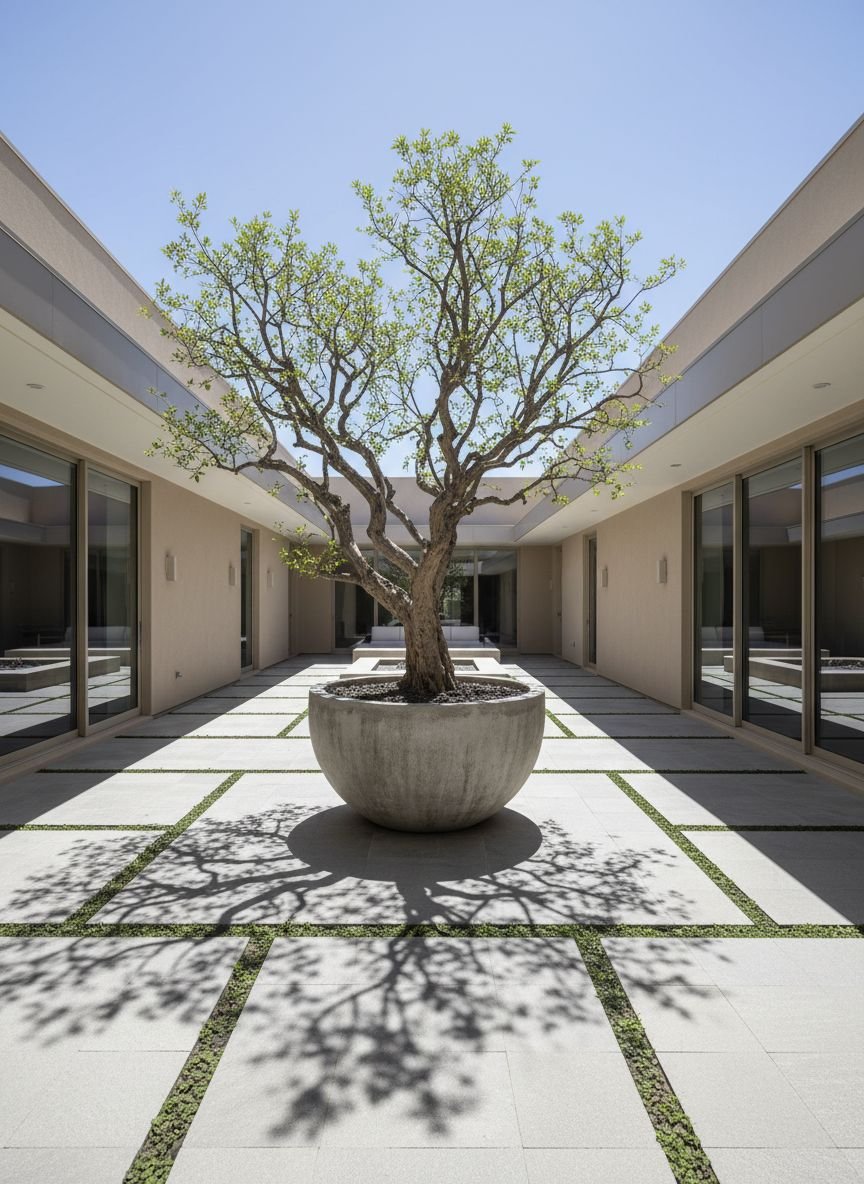
Sometimes, less really is more. This design focuses on high-quality materials and a singular focal point. Use large-format limestone or bluestone pavers with tight grout lines for a seamless floor. In the optimal spot for light, plant one magnificent tree—a Japanese Maple, a Crape Myrtle, or an Olive tree.
Surround the perimeter with oversized, monochromatic planters. These should be waist-height or taller to bring the greenery up to eye level without cluttering the floor. Fill them with uniform ornamental grasses or architectural agave. The emptiness of the space is the luxury; it allows the eye to rest and highlights the sculptural beauty of the single tree.
Pro Tip: Uplight the statement tree from two different angles. This cross-lighting eliminates flat shadows and highlights the texture of the bark and leaves.
Cottage-style courtyard bursting with edible flowers and salad greens
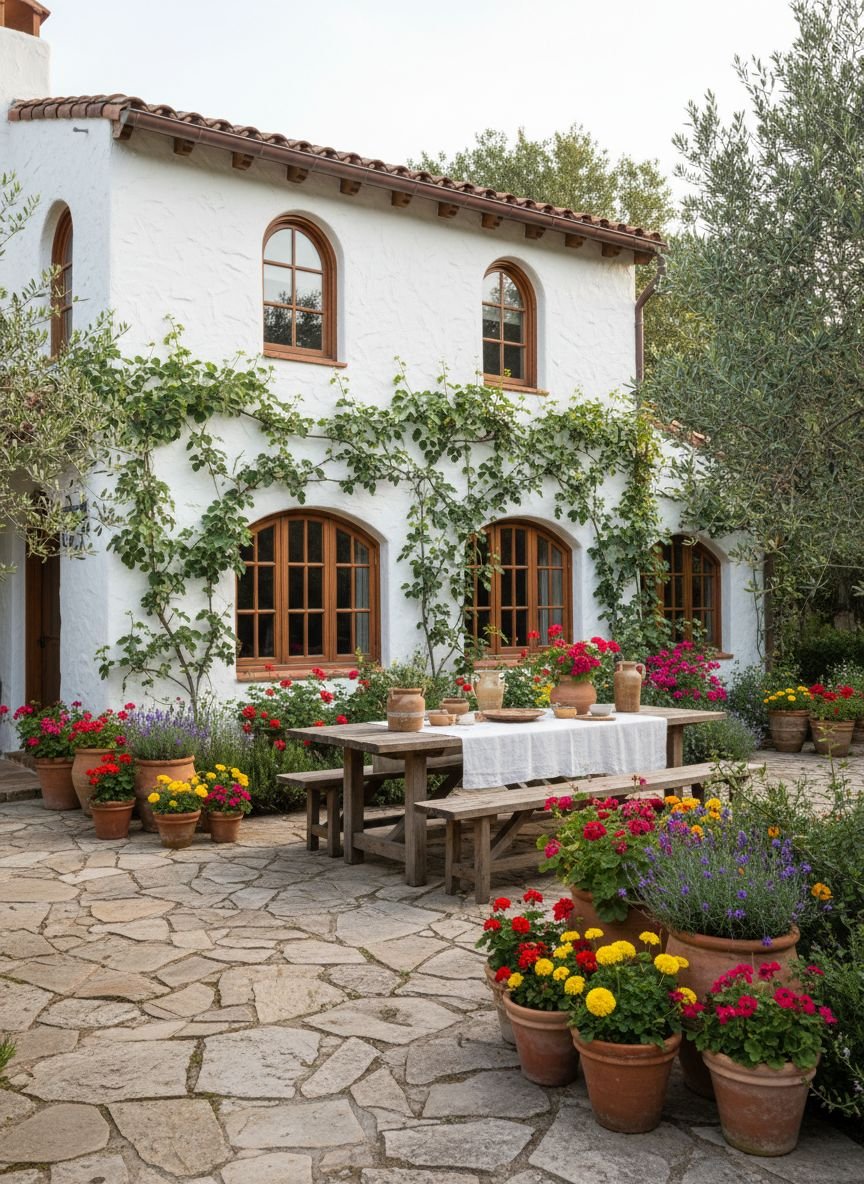
This is the “potager” garden condensed into a courtyard. It blends beauty and utility, mixing ornamental flowers with edible crops. Use raised wooden beds or wicker hurdles to contain the chaos. Plant rainbow chard, purple kale, and lettuces alongside marigolds, violas, and calendula.
The result is a tapestry of texture and color that you can eat. Train runner beans or sweet peas up a trellis for vertical interest. The vibe is abundant, informal, and generous. It transforms the courtyard into a working part of the home, where you can step out with a pair of scissors and harvest a salad in seconds.
Pro Tip: Interplant chives and garlic among your flowers. Their strong scent confuses pests and protects your leafy greens without chemicals.
Moroccan courtyard with patterned tile fountain and trailing jasmine
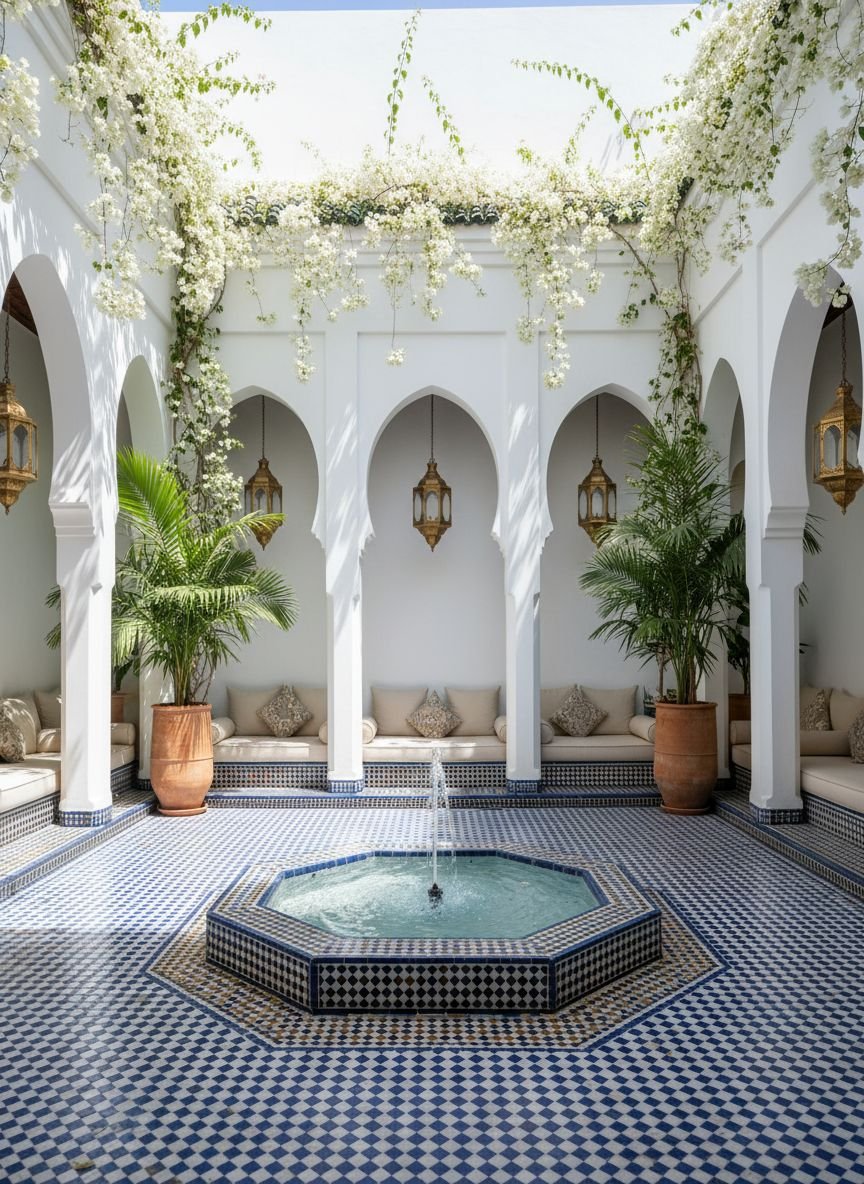
Inspired by the riads of Marrakesh, this design is about enclosure, privacy, and cooling water. The centerpiece is a wall fountain or central basin clad in zellige (patterned geometric tiles) in shades of turquoise, cobalt, and emerald. The sound of water is essential here.
Paint the courtyard walls a warm earth tone or a crisp white to make the tile colors pop. lush, trailing jasmine or bougainvillea should drape down from the top of the walls, creating a curtain of green and pink. Use low, plush seating with plenty of cushions and brass lanterns to complete the exotic, lounge-like atmosphere.
Pro Tip: If you can’t re-tile a fountain, use a stencil and outdoor concrete paint to mimic the look of Moroccan tiles on a plain concrete wall or floor.
Popular Asked Questions
How do I design a small courtyard garden?
Start by defining the purpose: is it for dining, lounging, or viewing? Keep the floor plan simple using one primary material (like gravel or large pavers) to avoid visual clutter. Use vertical space for plants to save floor area, and install a focal point—like a small tree or water feature—to draw the eye. Finally, add lighting to make the space usable at night.
What are the best plants for an enclosed courtyard?
Enclosed courtyards often have lower light and less air circulation. The best plants are shade-tolerant and architectural. Ferns, Hostas, and Japanese Maples love the shelter. For vertical greening, Star Jasmine and Climbing Hydrangea thrive on walls. If you have a sunny spot, Mediterranean herbs like Lavender and Rosemary do well in pots.
How do you drain a courtyard garden?
Drainage is critical in enclosed spaces to prevent flooding. Ensure the patio floor slopes slightly (about 1-2%) away from the house toward a drain channel or a permeable area. Using permeable surfaces like gravel or decking with gaps allows water to soak into the ground. If you have solid paving, install a linear channel drain connected to a soakaway or stormwater system.
How much does it cost to landscape a small courtyard?
A DIY courtyard makeover using gravel, potted plants, and simple furniture can cost between $500 and $2,000. A professional landscape design involving new hardscaping (pavers/tiles), built-in seating, and lighting typically ranges from $5,000 to $15,000 depending on materials and complexity.
Conclusion
Your courtyard doesn’t have to be a dark, forgotten corner. By applying these design principles—verticality, lighting, and zoning—you can unlock the potential of your outdoor room. Whether you crave the structure of a modern geometric garden or the romance of a wildflower meadow, there is a design here that fits your lifestyle.




Leave a Comment