

The Utility Hook
You look out at your backyard and see… nothing but flat, green grass. It feels boring. It lacks character. You want a lush, colorful escape, but you don’t know where to start with a blank, level canvas. You are not alone. Most homeowners struggle to visualize depth on a flat lot. This guide fixes that. We break down exactly how to turn a two-dimensional lawn into a multi-layered floral paradise using smart zoning, vertical tricks, and 2026 design trends. Get ready to stop mowing and start living in your own private garden.
Key Takeaways
- Create “Rooms”: Break a flat lawn into distinct zones for dining, lounging, and planting to add instant structure.
- Go Vertical: Use arbors, trellises, and tall grasses to force the eye upward and banish the “flat” feeling.
- Layering is Key: Place tall plants in the back and short ones in front to create a false sense of depth and volume.
- Ditch the Turf: Swap high-maintenance grass for gravel paths, ground cover, and wide flower beds to reduce work and boost color.
Table of Contents
- Establishing Garden Zones for Seamless Outdoor Flow
- Backyard Garden Design: From Flat Lawn to Floral Retreat
- Integrating Water Features for a Serene Escape
- Using Linear Elements and Structured Greenery for Modern Appeal
- Enhancing Your Space with Natural Plantings and Flower Borders
- Incorporating Tropical Inspirations in Your Design
- Smart Use of Containers and Hardscaping Elements
- Designing with a Calm Color Palette and Textural Contrast
- Related posts :
- Popular Asked Questions
- Conclusion
Establishing Garden Zones for Seamless Outdoor Flow

A flat yard often looks smaller than it is because your eye sees the back fence immediately. Breaking the space into “rooms” stops this visual slide. By using hardscaping or planting changes to define areas, you create a journey through the garden. Think of your outdoor space like a floor plan inside your house. You need a dedicated spot for eating, a spot for relaxing, and a spot for play.
Visual Analysis:
Notice how successful flat gardens use texture changes on the ground to signal a new zone. A shift from grass to gravel or decking instantly tells the brain “this is a different room.” Rugs and furniture placement further reinforce these boundaries without needing physical walls.
Implementation:
- The Dining Deck: Build a low floating deck or lay a paver patio near the house for meals.
- The Secret Lounge: Place a fire pit or bench in a far corner, screened by tall grasses.
- The Transition: Use a pergola or archway to mark the entry from one zone to the next.
Pro Tip: Use outdoor rugs to define a “living room” on a patio. It creates an instant focal point and anchors your furniture.
Save this idea to your Pinterest.
Backyard Garden Design: From Flat Lawn to Floral Retreat

This is the core transformation. Moving from a monoculture of grass to a biodiversity-rich retreat requires a shift in mindset. You are trading open, empty space for pockets of life. The goal is to reduce the lawn size by at least 50% and replace it with deep garden beds. This adds the volume and interest that a flat lawn lacks.
Design Principle:
The “Enclosure” principle works well here. Humans feel more comfortable in spaces that hug them slightly. Wide flower beds that encroach on the central lawn create a cozy, sheltered feeling.
Implementation:
- Sheet Mulching: Don’t dig up the grass. Lay down cardboard over the turf you want to remove, wet it, and cover it with 4 inches of compost/mulch. Plant directly into it next season.
- Curved Edges: Cut deep, curving edges into your lawn. Curves make a space feel larger and more organic than straight lines.
- Island Beds: Create a floating flower bed in the middle of the lawn to break up the expanse of green.
Pro Tip: Leave a wide grassy path winding through the center. It acts as negative space to let the eye rest between flower bursts.
Integrating Water Features for a Serene Escape

Water adds a fourth dimension to a flat garden: sound. The noise of trickling water masks traffic and neighbor noise, turning your backyard into a true retreat. On a flat lot, you don’t need a hill for a waterfall. Modern, self-contained units work perfectly and add a sculptural element.
Visual Analysis:
Reflective surfaces are powerful in flat spaces. A still pond or birdbath reflects the sky and plants, creating an illusion of depth that goes down into the ground.
Implementation:
- The Pondless Waterfall: A hidden reservoir pumps water up to a rock pile. It disappears into the stones, so it is safe for kids and pets.
- Solar Fountains: Float a solar bubbler in a large ceramic pot. No wiring needed.
- Rectangular Troughs: Use a long, sleek metal trough as a modern reflecting pool. It mimics the lines of the house.
Pro Tip: Place your water feature near the seating area. The visual is nice, but the auditory benefit is the real game-changer.
Save this idea to your Pinterest.
Using Linear Elements and Structured Greenery for Modern Appeal

If you prefer a clean, organized look, linear design is your best friend. Straight lines and geometric shapes can make a small, flat yard feel orderly and spacious. This style relies on repetition and clear boundaries. It contrasts beautifully with the softness of flowers.
Design Principle:
Rhythm and Repetition. Repeating a plant or shape (like a row of boxwoods or three identical planters) leads the eye across the garden, making it feel longer.
Implementation:
- Paver Ribbons: Lay long, thin pavers with grass or gravel growing between them. This draws the eye lengthwise.
- Hedged Walls: Plant a row of columnar trees (like Italian Cypress or Sky Pencil Holly) along the fence line. They take up little width but provide massive height.
- Symmetrical Borders: Plant the exact same flower mix on both sides of a straight path for a formal, grand entrance.
Pro Tip: Use steel edging for your garden beds. It keeps lines razor-sharp and prevents grass from creeping into your structured beds.
Enhancing Your Space with Natural Plantings and Flower Borders

To get the “Floral Retreat” vibe, you need abundance. This section is about the “Cottage Garden” style where plants spill over edges and mix together. It softens the hard lines of fences and adds romance. The key here is height variation to fight the flatness of the yard.
Visual Analysis:
A flat yard needs vertical layers. Think of a choir riser. Short plants in front, medium in the middle, tall in the back. This “stadium seating” arrangement ensures every plant is seen and adds perceived depth.
Implementation:
- Back Layer: Hollyhocks, Delphiniums, or Sunflowers. These tower over 5 feet.
- Middle Layer: Coneflowers, Black-eyed Susans, or Salvia. These provide the bulk of the color.
- Front Layer: Creeping Phlox, Alyssum, or Thyme. These spill onto the pathway.
- Drift Planting: Plant in groups of 3, 5, or 7. Single plants look messy; clumps look designed.
Pro Tip: Deadhead (cut off) spent blooms weekly. This tricks the plant into making more flowers, keeping your retreat colorful all summer.
Save this idea to your Pinterest.
Comparison: Structured vs. Natural Garden Styles
| Feature | Structured (Linear/Modern) | Natural (Cottage/Floral) |
|---|---|---|
| Maintenance | Medium (Pruning needed) | High (Deadheading/weeding) |
| Vibe | Calm, Orderly, Clean | Romantic, Wild, lush |
| Space Perception | Makes space feel longer | Makes space feel cozy/full |
| Best Plants | Boxwood, Grasses, Succulents | Roses, Peonies, Daisies |
| Winter Look | Good (Evergreen structure) | Bare (Dies back to ground) |
Incorporating Tropical Inspirations in Your Design

Nothing says “Retreat” like a tropical vacation. Even in non-tropical climates, you can achieve this look using plants with giant leaves and bold textures. Large leaves disrupt the visual field, making a small flat yard feel like a dense jungle.
Design Principle:
Texture over Color. Tropical gardens rely on the contrast between leaf shapes (shiny vs. matte, huge vs. frilly) rather than just flower color.
Implementation:
- The Giants: Use Canna Lilies, Elephant Ears (Colocasia), or Bananas (Musa). Many of these are bulbs you can dig up and save in winter.
- The Ferns: Fill shady corners with Ostrich Ferns or Japanese Painted Ferns for a lush, prehistoric look.
- Bamboos: Use clumping bamboo (not running!) for a fast, whispering privacy screen that blocks the neighbors.
Pro Tip: Group your tropical pots together. They create a humid microclimate that helps them thrive, and the visual impact of a “jungle corner” is stronger.
Smart Use of Containers and Hardscaping Elements

Containers are the jewelry of the garden. They allow you to add height instantly without waiting for a tree to grow. In a flat yard, pots are crucial for breaking up level changes. Hardscaping (patios, paths) provides the bones that the plants hang onto.
Visual Analysis:
A large pot acts as a “full stop” for the eye. Placing a giant urn at the end of a path gives the eye a destination, making the garden feel purposeful.
Implementation:
- The Rule of Thriller, Filler, Spiller: In every pot, put a tall plant (Thriller), a bushy plant (Filler), and a trailing plant (Spiller).
- Vertical Gardening: Bolt planters to your fence or use a trellis in a pot. This greens up your walls without using ground space.
- Gravel Patios: Instead of expensive concrete, use pea gravel over landscape fabric. It’s chic, drains well, and sounds satisfying to walk on.
Pro Tip: Stick to one or two colors for your pots (e.g., all terracotta or all glazed blue). Mismatched pots can look cluttered in a small space.
Save this idea to your Pinterest.
Designing with a Calm Color Palette and Textural Contrast

A “Retreat” implies rest. Too many colors can be chaotic. A curated palette calms the mind. For 2026, the trend is “Quiet Luxury” in the garden—monochrome greens, whites, and soft pastels. Texture plays a huge role here; when color is simple, leaf shape becomes the star.
Design Principle:
Unity and Harmony. Limiting your colors makes the garden feel like one cohesive thought rather than a random collection of plants.
Implementation:
- The Moon Garden: Use only white flowers (Hydrangeas, White Roses, Moonflowers) and silver foliage (Lamb’s Ear, Dusty Miller). These glow at night.
- Cool Tones: Blues, purples, and pinks recede visually, making a small yard feel bigger.
- Texture Pairing: Plant feathery ornamental grasses next to bold, round Hosta leaves. The contrast makes both look better.
Pro Tip: Use dark foliage plants (like Heuchera ‘Obsidian’ or Black Mondo Grass) to add depth. Dark colors act like shadows, making the bright greens pop.
Related posts :
- 16 Charming Front Yard Bench Ideas That Instantly Enhance Your Space
- 17 Covered Outdoor Kitchen Ideas: Inspiration for Your Backyard Oasis That Feels Like a Resort
Popular Asked Questions
How do you add depth to a flat backyard?
You add depth by creating layers. Instead of planting everything along the fence, bring garden beds forward into the lawn. Use plants of different heights: tall in the back, medium in the middle, and short in front. Adding vertical structures like arbors, pergolas, or tall trellis screens also forces the eye to look up, breaking the flat horizon line.
What are the garden trends for 2026?
The biggest trends for 2026 include the “Anti-Lawn” movement, where grass is replaced by clover or wildflower meadows to help pollinators. “Quiet Luxury” is also huge, focusing on high-quality natural materials like stone and wood with a simple, calming color palette. Vertical vegetable gardening is also growing, allowing you to grow food on fences in small spaces.
How do I turn my grass lawn into a flower bed without digging?
The easiest method is “Sheet Mulching” (also called Lasagna Gardening). You simply mow the grass very short, cover it with layers of cardboard (remove tape/staples first), wet the cardboard, and cover it with 4-6 inches of compost or mulch. The grass dies underneath and turns into soil food. You can plant directly into the compost immediately or wait a season for it to break down.
How can I make a small flat garden look bigger?
Use diagonal lines. Laying a patio or path on a diagonal draws the eye to the longest point of the yard, making it feel expansive. Mirrors placed on fences can also double the visual space (just ensure they are weatherproof). dividing the garden into hidden “rooms” also helps; if you can’t see the whole garden at once, your brain assumes there is more to explore.
What is the cheapest way to landscape a flat backyard?
Gravel and seeds are your best budget friends. A gravel patio costs a fraction of pavers or concrete. Growing plants from seed (like Zinnias, Cosmos, and Sunflowers) costs pennies compared to buying grown plants. Also, look for free mulch from local tree trimming companies to cover large areas of soil and suppress weeds cheaply.
Conclusion
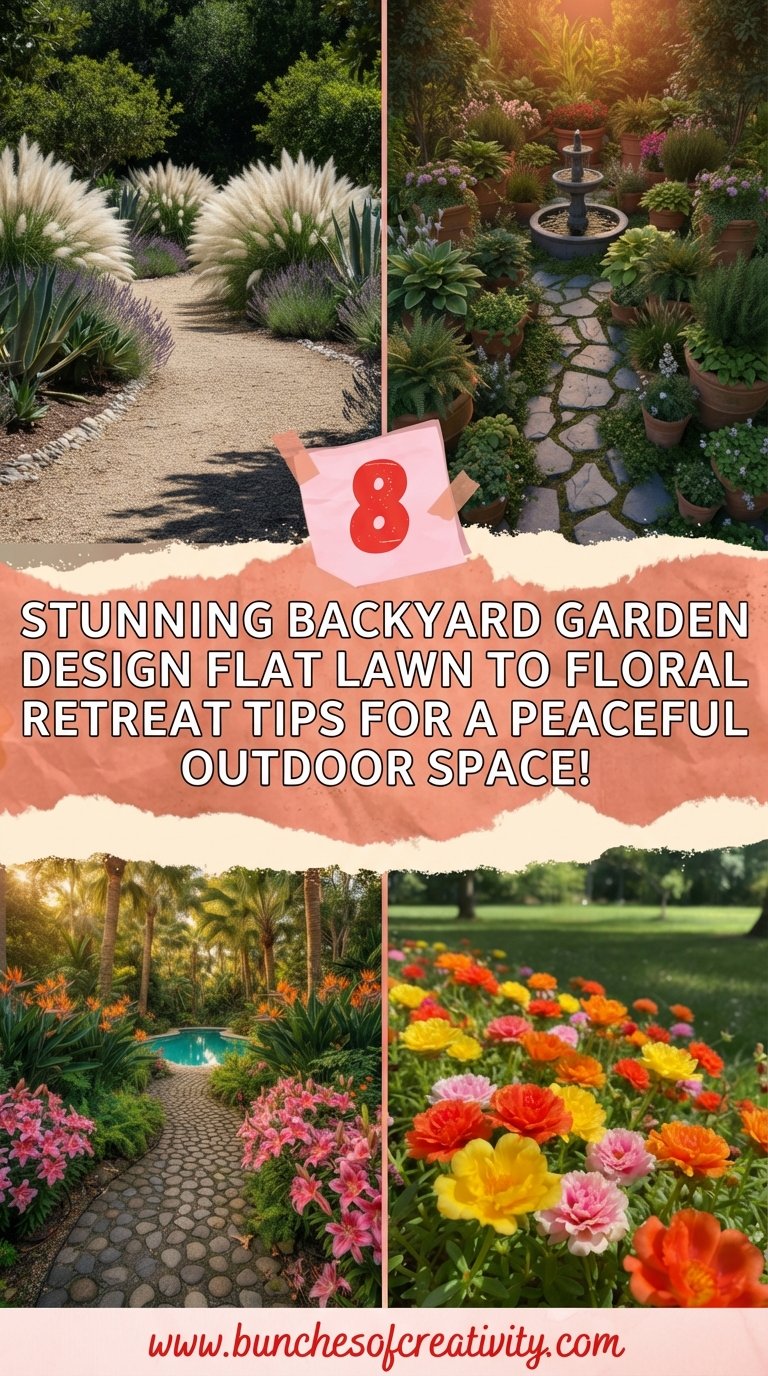
Turning a flat lawn into a floral retreat is about more than just digging holes. It is about creating layers, zones, and feelings. By using vertical elements, smart planting strategies, and a cohesive design plan, you can change a boring square of grass into a multi-dimensional sanctuary. Whether you choose a wild cottage vibe or a sleek modern look, the key is to start.



Leave a Comment