
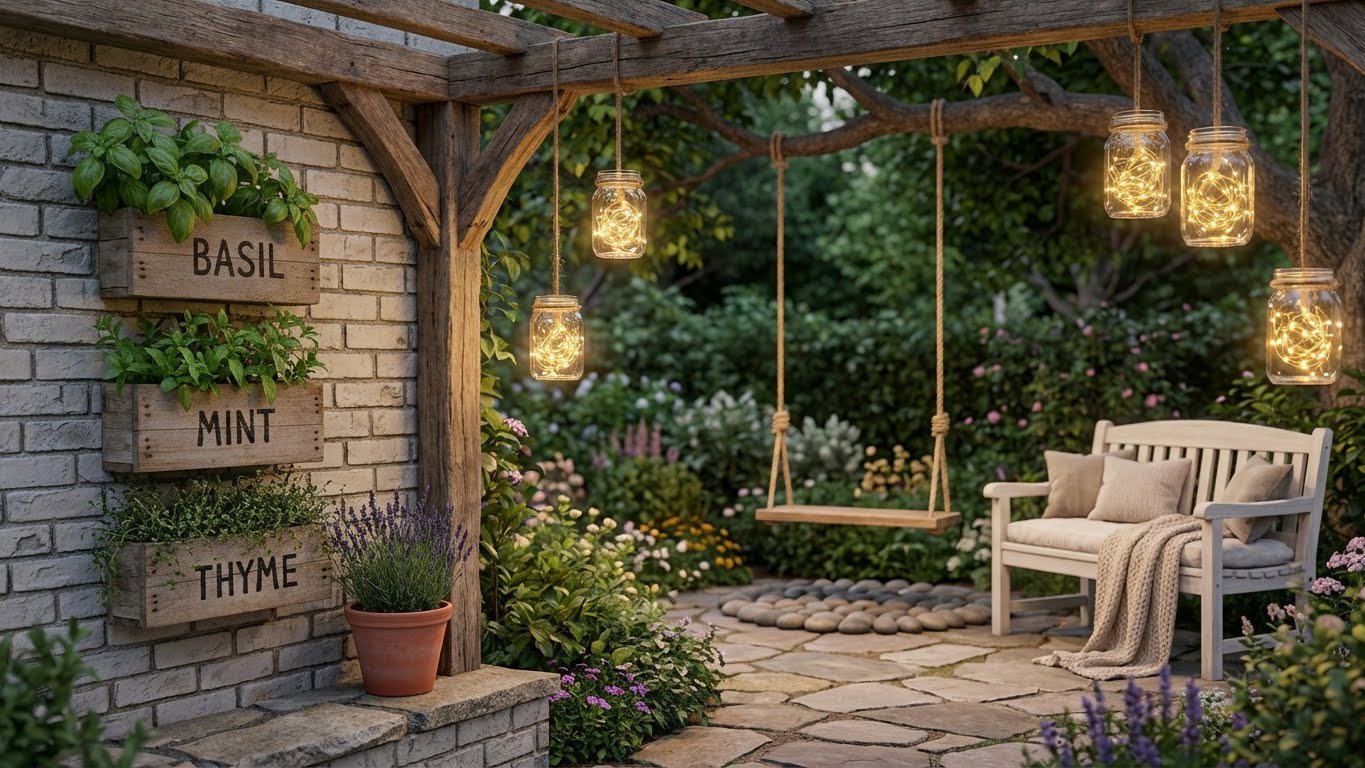
Your backyard feels flat. You stare at the grass and see potential, but the budget for a professional landscaper just isn’t there. You need outdoor garden decor ideas that make a massive visual impact without draining your wallet. Transforming a dull patch of green into a personal retreat does not require a degree in landscape architecture. It requires creativity and a few free weekends.
This guide breaks down thirteen specific, high-impact DIY projects. These ideas focus on upcycling, natural textures, and smart spatial design. You will learn how to turn “trash” like old tires and pallets into high-end garden features. We prioritize projects that withstand the elements and improve with age.
Key Takeaways
- Upcycling Saves Money: Repurposing items like tires, pallets, and crates drastically reduces material costs while adding unique character.
- Verticality is Crucial: diverse heights (ladders, hanging jars, swings) force the eye to move up, making small gardens feel larger.
- Texture Over Color: Mixing stone, wood, glass, and metal creates a sophisticated look that outlasts fleeting color trends.
- Lighting Sets the Mood: Simple DIY lighting solutions extend the usability of your garden well into the evening.
Table of Contents
- Vintage Watering Can Flower Display
- DIY Stone Garden Border
- Wooden Pallet Plant Stand
- Hanging Mason Jar Lanterns
- Ladder Shelf with Potted Plants
- Recycled Tire Planters
- Garden Path with Pebbles and Stepping Stones
- Old Bicycle Planter
- Wooden Crate Herb Garden
- Tree Stump Table
- Wooden Swing Hanging from a Tree
- DIY Bird Bath from Flower Pots
- Colorful Flower Bed
- Popular Asked Questions
- Conclusion
Vintage Watering Can Flower Display
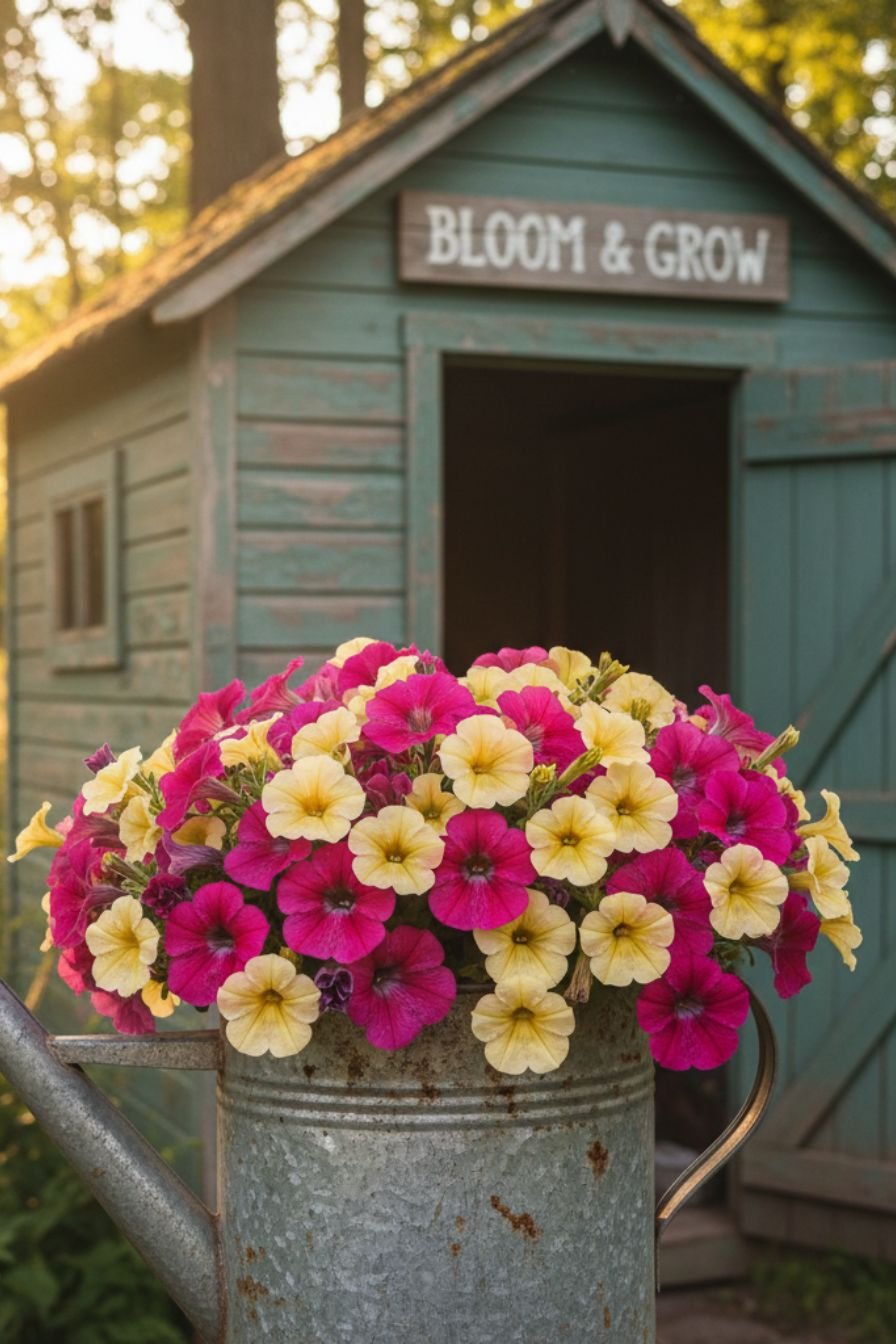
Metal watering cans possess a nostalgic charm that modern plastic options lack. A galvanized steel can with a bit of rust tells a story of past seasons. This project plays on the concept of “spilling” or “cascading” blooms. The metal offers a cool, industrial contrast against the soft, organic shapes of petunias or creeping jenny. Placing the can on a slight angle creates the illusion that water—and life—is perpetually pouring out.
To achieve this look, you need a rod or a sturdy stick to anchor the can at a forty-five-degree angle. Thread the rod through the spout and drive it deep into the soil. Pack soil tightly inside the can to hold the root balls securely. Choose trailing plants like lobelia or string of pearls. These varieties naturally flow downward, mimicking the path of water. The result is a dynamic, frozen-in-time sculpture that adds movement to a static flower bed.
Pro Tip: Drill four or five drainage holes in the bottom side of the can to prevent root rot during heavy rain.
DIY Stone Garden Border
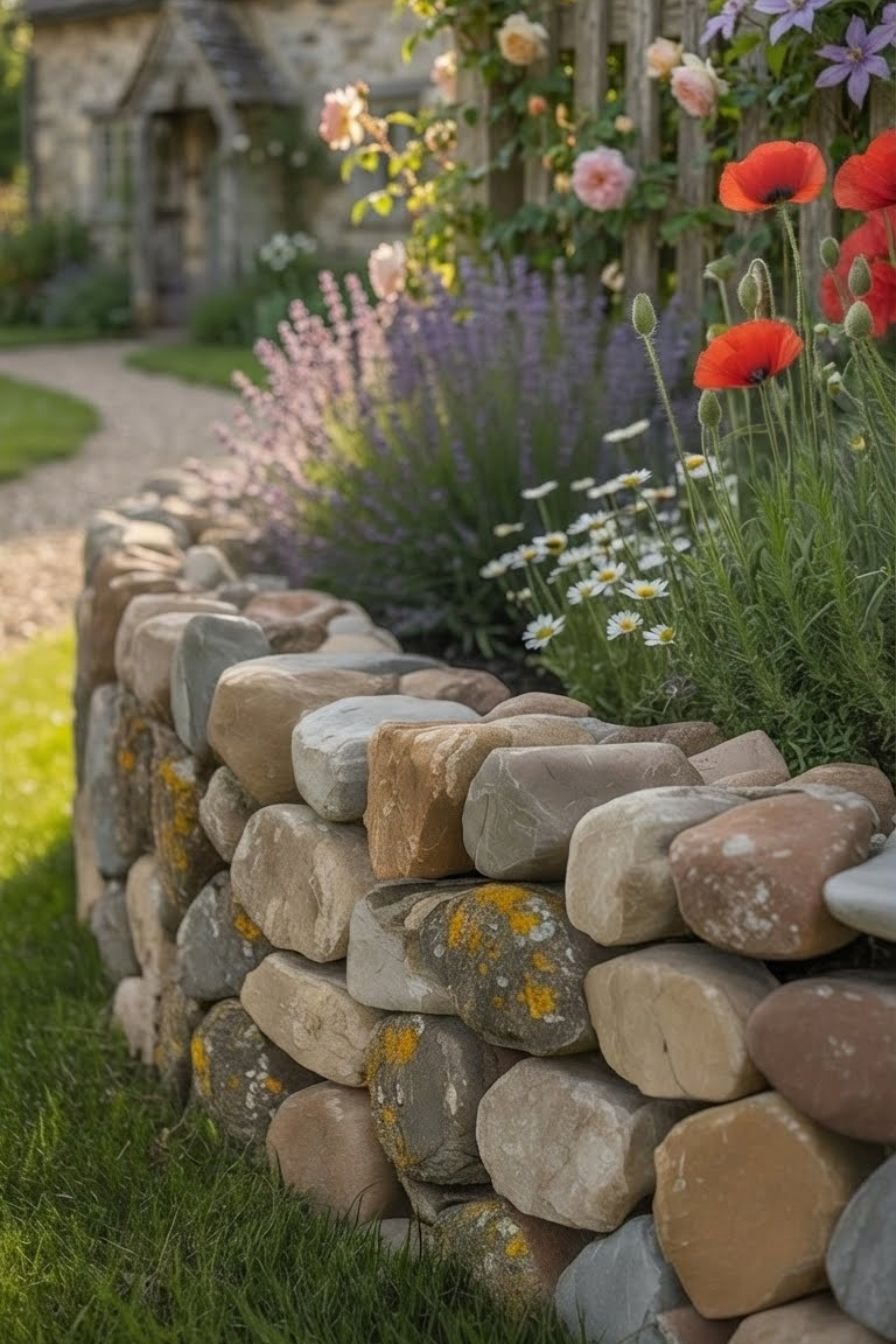
Defining the edges of your garden beds instantly makes the entire yard look cleaner and more intentional. A stone border acts as a visual frame. It separates the chaos of the lawn from the curated beauty of your plants. Natural river rocks or flat slate pieces introduce a hard, permanent texture that grounds the soft foliage. This separation also serves a practical purpose by preventing grass roots from invading your flower beds.
You do not need mortar or cement for a successful border. A dry-stack method works perfectly for low barriers. Dig a shallow trench about two inches deep along the perimeter of your bed. Place the largest, flattest stones in this trench to form a stable base. Stack smaller stones on top, interlocking them like puzzle pieces. Varying the colors from grey to beige adds visual depth. The weight of the stones keeps mulch in place and reduces maintenance time.
Pro Tip: Place a layer of landscape fabric under the base stones to stop weeds from growing up through the cracks.
Wooden Pallet Plant Stand
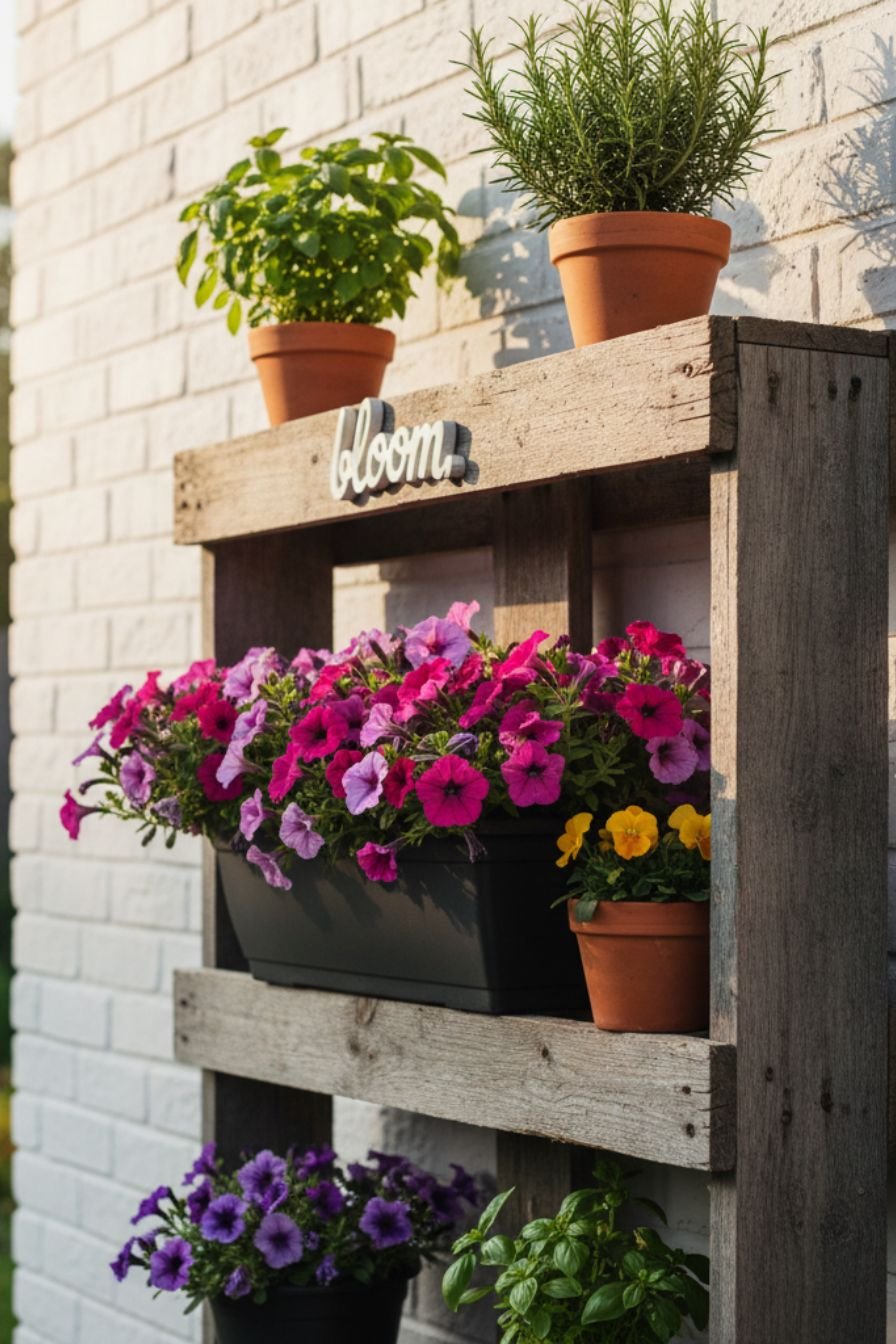
Shipping pallets are the ultimate resource for budget-friendly outdoor garden decor ideas. The rough-hewn wood brings a rustic, farmhouse aesthetic to any patio or corner. A vertical pallet stand solves the problem of limited ground space. It draws the eye upward and allows you to display twice as many plants in the same footprint. The horizontal slats serve as perfect natural shelves or anchor points for hanging pots.
Sand the pallet down thoroughly to remove dangerous splinters. You can leave the wood raw for a weathered gray look or apply a cedar-toned stain for warmth. Secure landscape fabric to the back of the pallet to create pockets between the slats, or simply use hose clamps to attach terra cotta pots directly to the wood. This structure works exceptionally well for an upright succulent garden or a display of small annuals. The linear structure contrasts beautifully with the round, organic shapes of the pots.
Pro Tip: Lean the pallet against a wall at a slight angle for stability, or mount it securely to a fence to prevent tipping during high winds.
Save this idea to your Pinterest.
Hanging Mason Jar Lanterns
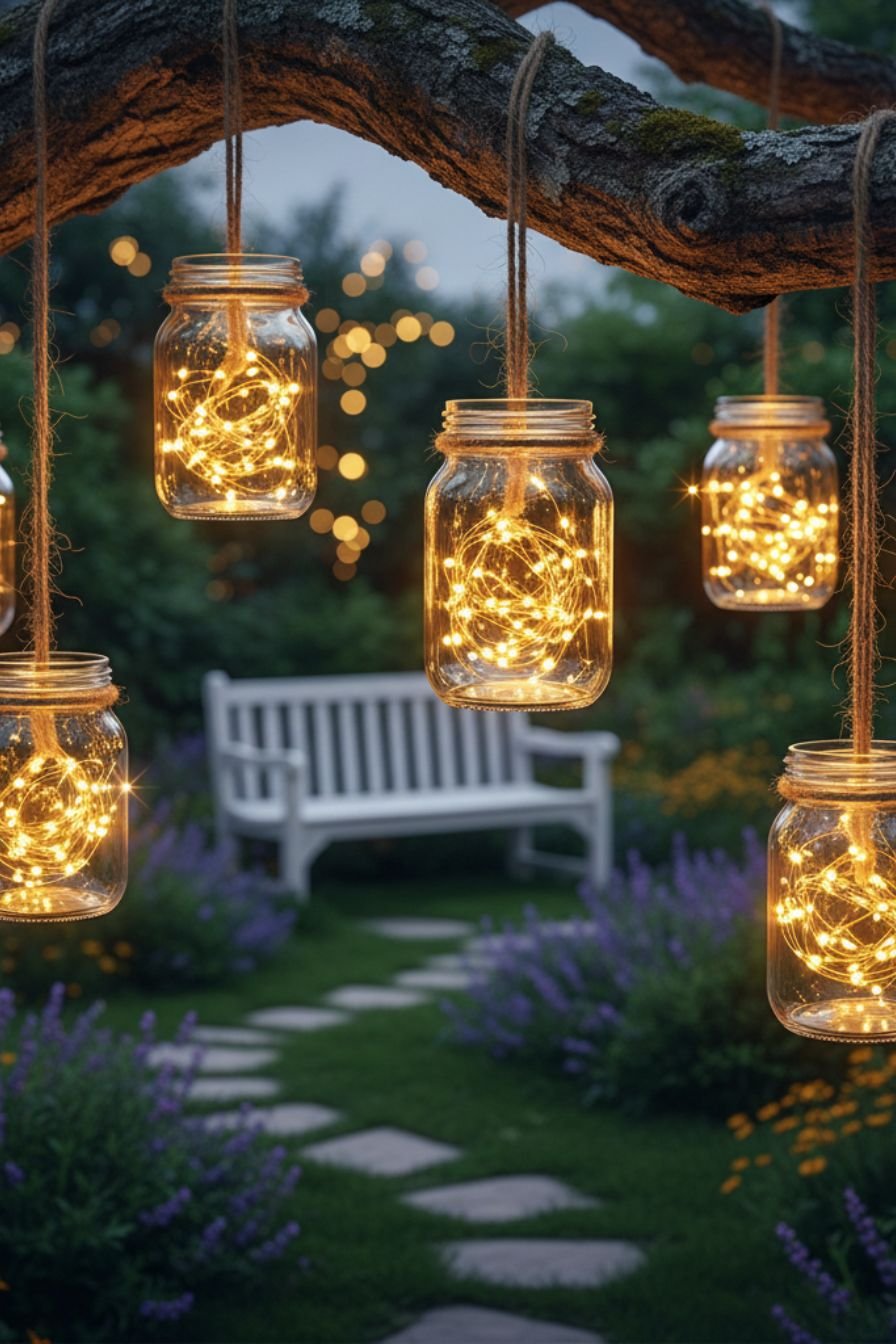
Lighting transforms a garden from a day-time space to an evening sanctuary. Mason jars offer a classic, timeless vessel for light. The thick glass diffuses the glow, creating a soft, warm ambiance reminiscent of fireflies. Hanging these lanterns from tree branches or a pergola adds a layer of magic at eye level. The repetition of multiple jars creates a cohesive design rhythm across the yard.
Wrap sturdy wire or twine around the neck of each jar to create a handle. Fill the bottom inch of the jar with sand, pebbles, or dried beans to anchor a votive candle. For a fire-safe and lower maintenance option, use solar-powered fairy light lids. These charge during the day and automatically flicker on at dusk. Grouping them in clusters of three at varying heights creates more visual interest than hanging them all in a straight line.
Pro Tip: If using real candles, use citronella tea lights to keep mosquitoes away while you enjoy the glow.
Ladder Shelf with Potted Plants
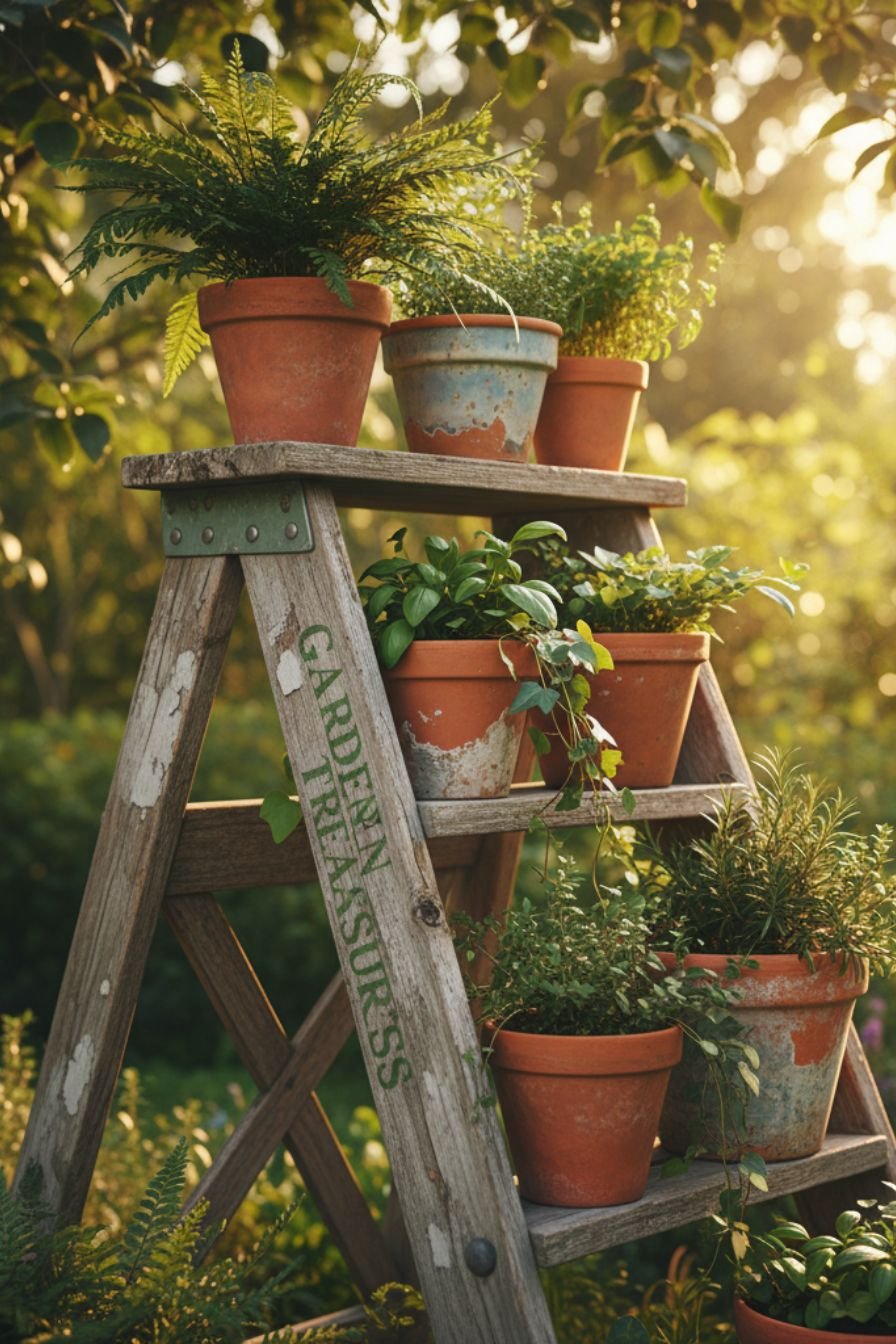
An old wooden ladder is a readymade tiered shelving unit. The A-frame structure is naturally stable and provides platforms at different heights. This arrangement allows every plant to receive sunlight without shading its neighbors. The weathered wood of a vintage ladder pairs perfectly with the greenery, reinforcing a “shabby chic” or “cottage core” vibe. It turns a collection of mismatched pots into a unified display.
Place the largest, heaviest pots on the bottom rungs to anchor the structure. Use the upper, narrower rungs for small herbs or trailing vines. If the rungs are too narrow for your pots, lay wooden planks across the steps to create wider shelves. Painting the ladder a bold color like teal or sunny yellow can make it a focal point in a green-heavy garden. Alternatively, a whitewash finish keeps the look subtle and airy.
Pro Tip: Secure the pots to the ladder with a dab of outdoor construction adhesive if you live in a windy area.
Related posts :
- 15 Gorgeous Outdoor DIY Decor Projects for Summer That Instantly Upgrade Your Backyard Sanctuary
- 10 Creative Small Vegetable Garden Design Ideas That Instantly Double Your Harvest
- 15 Inspirational Modern Patio Ideas for Your Backyard Retreat That Instantly Upgrade Your Home
Recycled Tire Planters
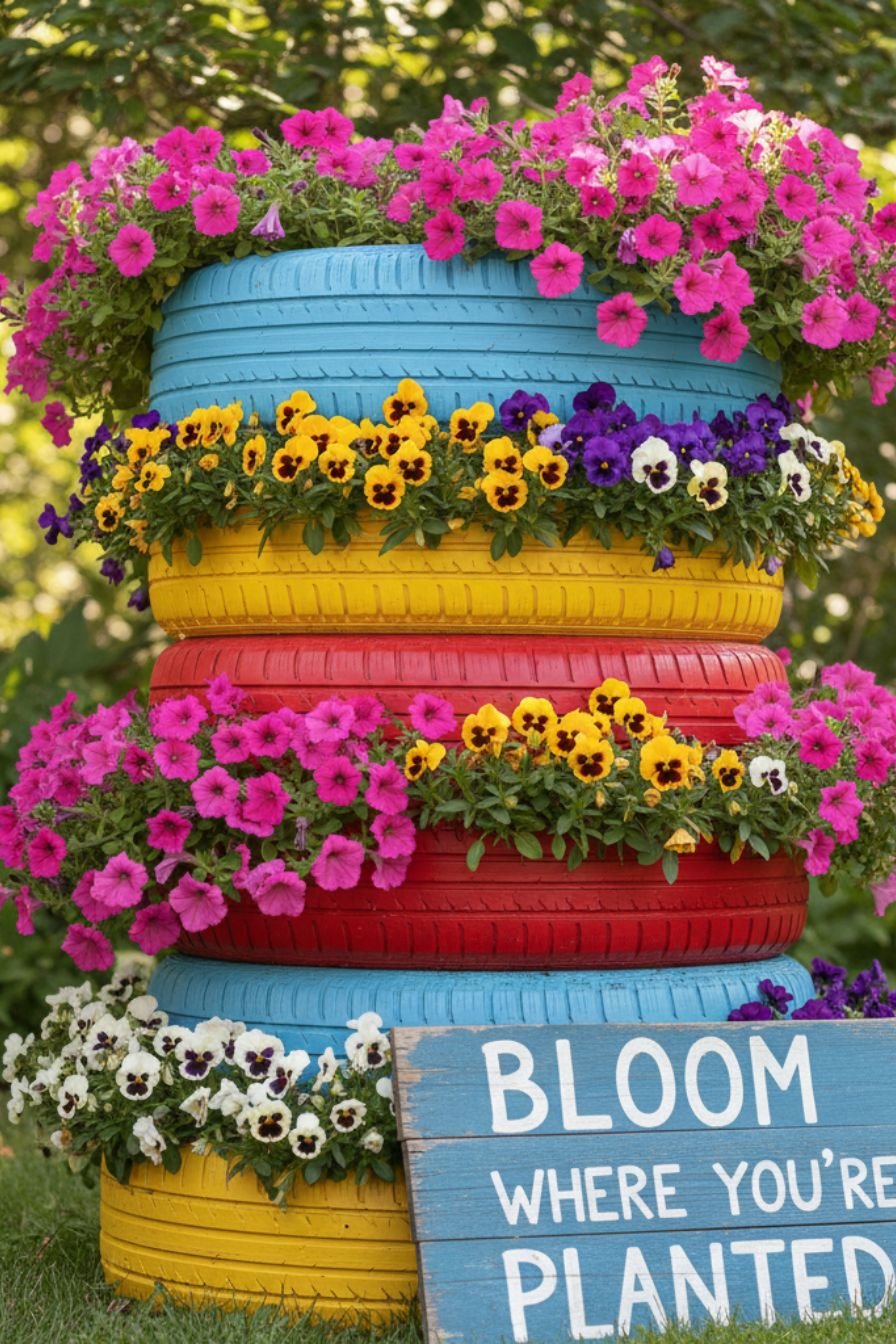
Old tires often sit in landfills, but your garden offers them a second life. A coat of high-gloss outdoor paint hides the rubber texture completely. Stack them in staggered formations to create dynamic height or hang them vertically on a dull fence. The deep cavity provides ample room for root systems of larger perennials or even small shrubs. This project is a masterclass in turning industrial waste into vibrant art.
Scrub the tires vigorously with a degreaser before painting to ensure adhesion. Bright colors like turquoise, magenta, or lime green pop against the natural grass. For a more sophisticated look, wrap the tire exterior in thick jute rope using heavy-duty glue. This conceals the rubber entirely and introduces a natural, nautical texture. Fill the bottom of the tire with empty plastic bottles before adding soil to reduce the weight and improve drainage.
Pro Tip: Avoid growing edible plants in tires, as chemicals from the rubber can leach into the soil over time. Stick to ornamental flowers.
Garden Path with Pebbles and Stepping Stones
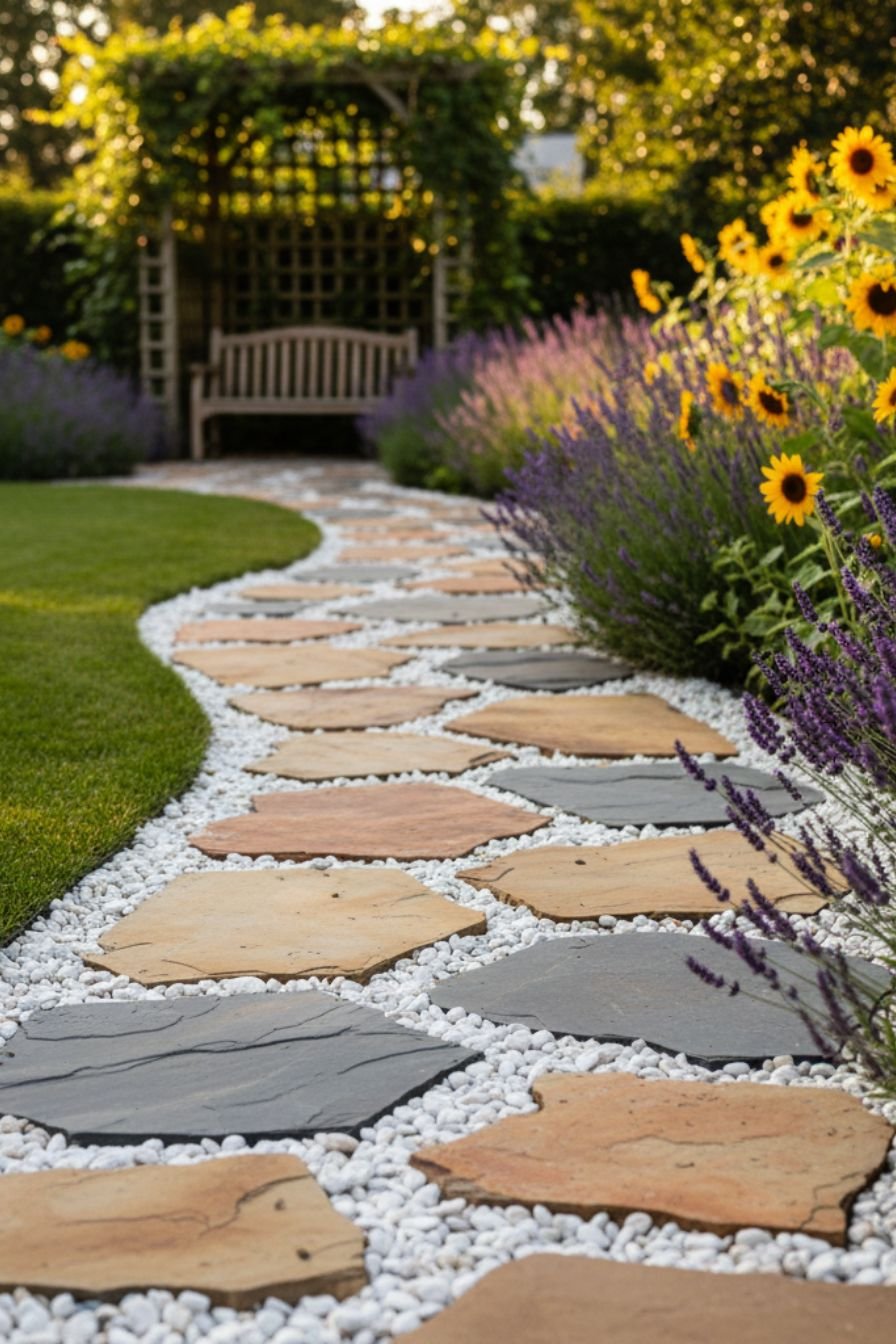
A path invites exploration. It guides a guest through your garden, dictating the flow and pace of their walk. Combining large, flat stepping stones with small, loose pebbles creates a satisfying textural contrast. The solid stones provide stability, while the crunch of pebbles underfoot adds an auditory element to the garden experience. This mix allows for irregular, organic shapes that rigid concrete pavers cannot achieve.
Lay out your path shape with a garden hose first to visualize the curves. Remove the sod and put down a weed barrier. Place your large stepping stones first, spacing them about a relaxed stride apart (roughly 24 inches center-to-center). Fill the gaps with pea gravel or crushed granite. Choose stone colors that complement your house’s exterior. Dark grey slate looks modern, while warm sandstone feels traditional.
Pro Tip: Install flexible landscape edging along the sides of the path to keep the pebbles from migrating into your lawn.
Old Bicycle Planter
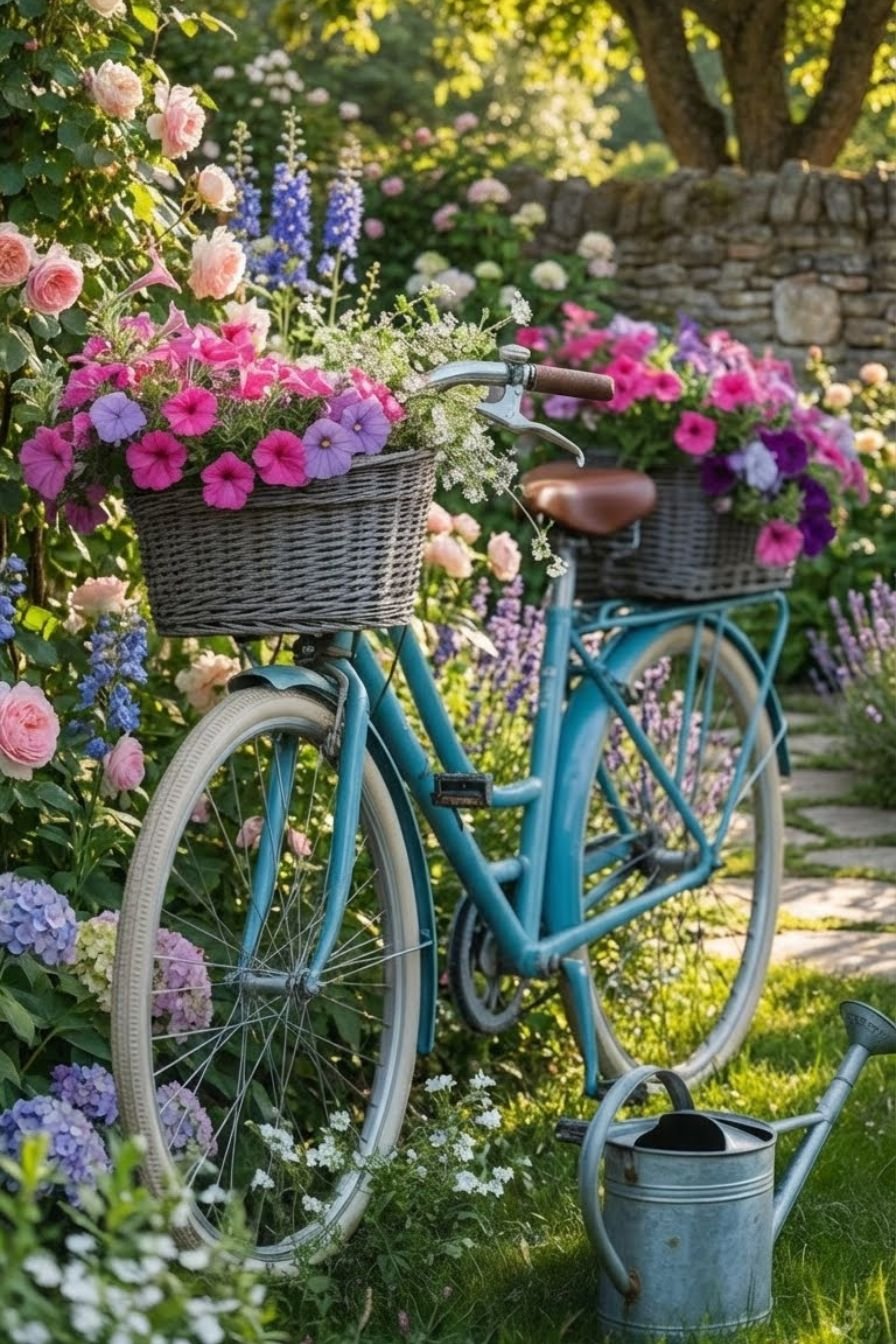
A vintage bicycle propped against a tree or fence acts as a whimsical centerpiece. It suggests a leisurely ride paused for a moment of appreciation. The metal frame offers multiple mounting points for flowers. The front basket, the rear rack, and even the handlebars can hold containers. Over time, vines can wrap around the spokes, integrating the machine into nature.
Look for a bike with a step-through frame for the classic look. Spray paint the entire bike—tires, seat, chain, and all—in a single solid color for a modern art installation vibe. White or pastel pink are popular choices that stand out against green foliage. Secure baskets with zip ties or wire. Plant prolific bloomers like geraniums or petunias that will overflow the containers and soften the hard lines of the metal frame.
Pro Tip: Spray the bike with a clear rust-oleum coat annually to stop the rust from compromising the frame’s structural integrity.
Save this idea to your Pinterest.
Wooden Crate Herb Garden
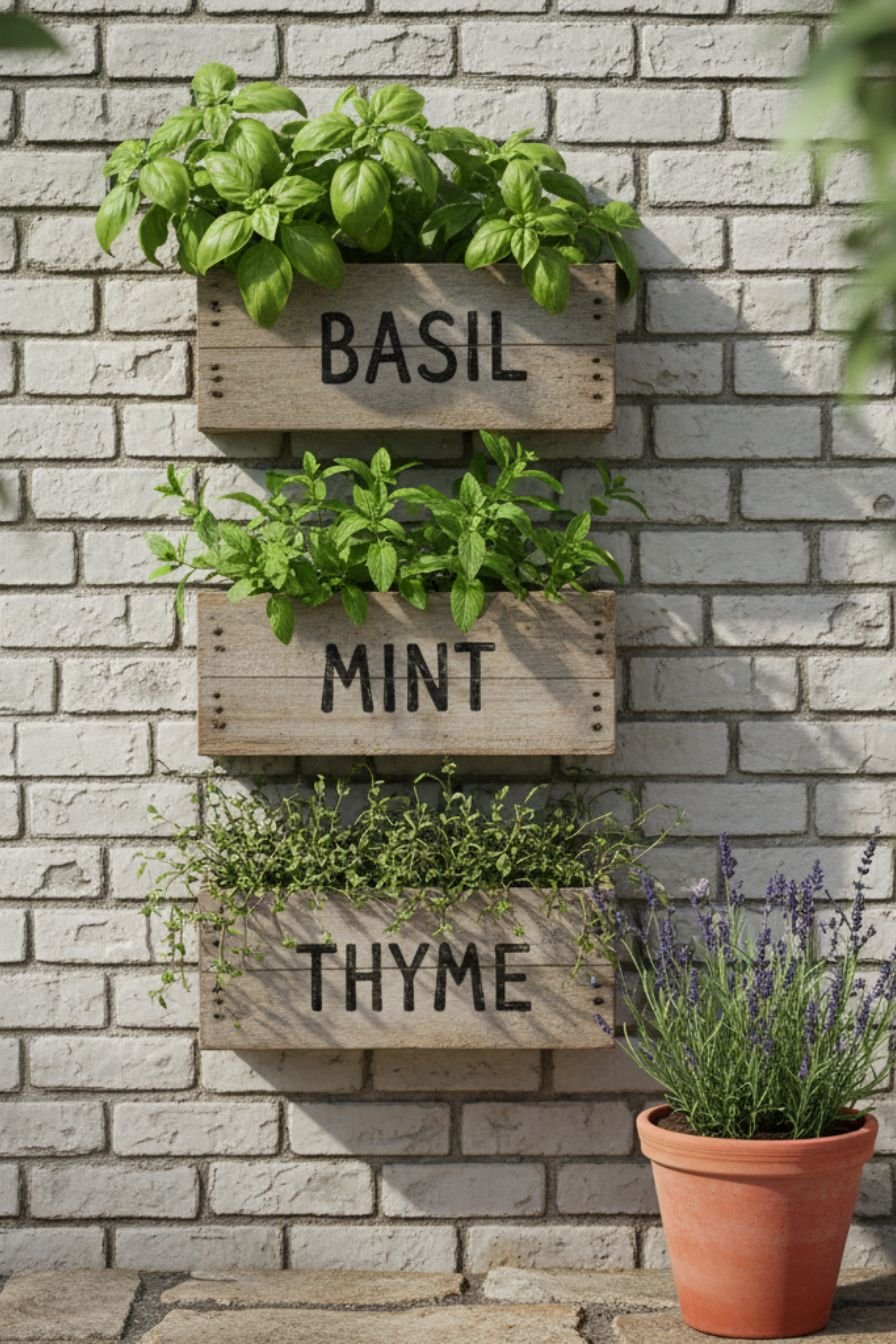
Wooden crates offer modularity. You can stack them, hang them, or arrange them in a grid. They are perfect for an organized herb garden. The separation helps you manage invasive herbs like mint without them taking over the whole plot. The vintage typography often found on old fruit crates adds a graphic element to the garden design. This setup brings the kitchen garden right to your back door.
Line the inside of the crates with landscape fabric to hold the soil in while allowing water to drain. Stack the crates on their sides to create cubbies for small pots, or fill them with soil to plant directly. Stacking them creates a vertical wall of greenery that can double as a privacy screen on a patio. Label each crate with hand-painted signs or slate markers to identify your basil, thyme, and rosemary.
Pro Tip: Elevate the bottom crates on bricks or feet to prevent the wood from rotting due to contact with damp ground.
Tree Stump Table
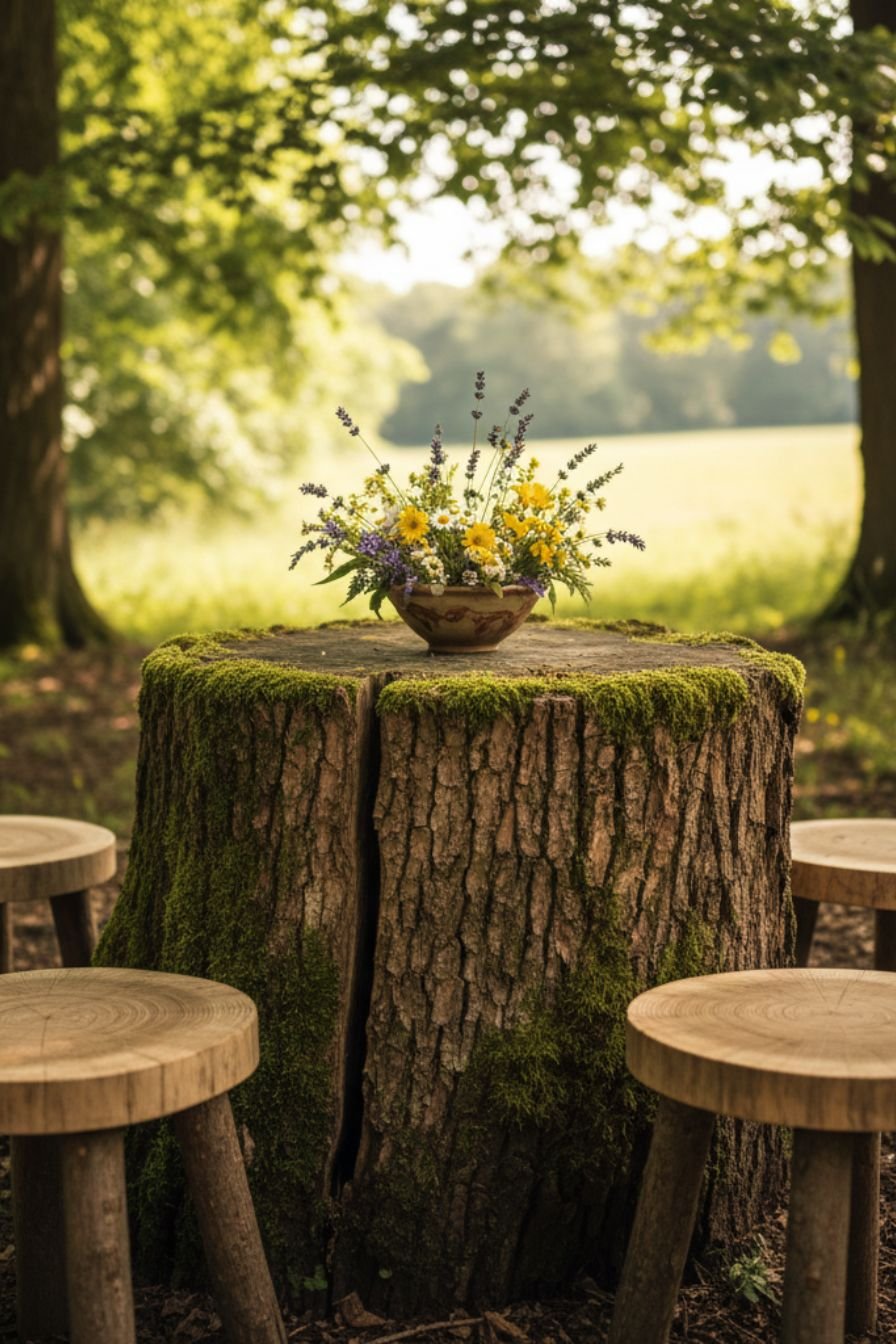
A tree stump is not an eyesore; it is a furniture opportunity. Instead of paying for expensive removal, grind the top flat to create a natural side table. The rings of the wood display the history of the tree, adding a deep connection to nature. This piece of furniture is as sturdy as they come and weathers beautifully. It blends seamlessly with the surroundings rather than standing out like plastic furniture.
Sand the top surface until it is smooth to the touch. Seal it with a marine-grade spar varnish to protect it from moisture and UV rays. This preserves the honey tones of the wood. If the stump is low, it can serve as a plant stand for a large fern. If it is chair-height, it becomes the perfect spot to rest a drink. You can even surround it with chairs to create a natural conversation nook.
Pro Tip: If the stump is hollow or rotting in the center, fill the cavity with soil and plant flowers inside for a “living vase” effect.
Material Comparison: DIY Planters
| Material | Aesthetic Vibe | Durability | Best For |
|---|---|---|---|
| Wood (Pallets/Crates) | Rustic, Warm, Natural | Medium (Needs sealing) | Herbs, Vertical gardens |
| Rubber (Tires) | Bold, Industrial, Pop Art | High (Indestructible) | Large annuals, Retaining walls |
| Metal (Cans/Bikes) | Vintage, Shabby Chic | Medium (Will rust) | Trailing flowers, Accents |
| Stone/Concrete | Elegant, Permanent | Very High | Borders, Paths, Foundations |
Wooden Swing Hanging from a Tree
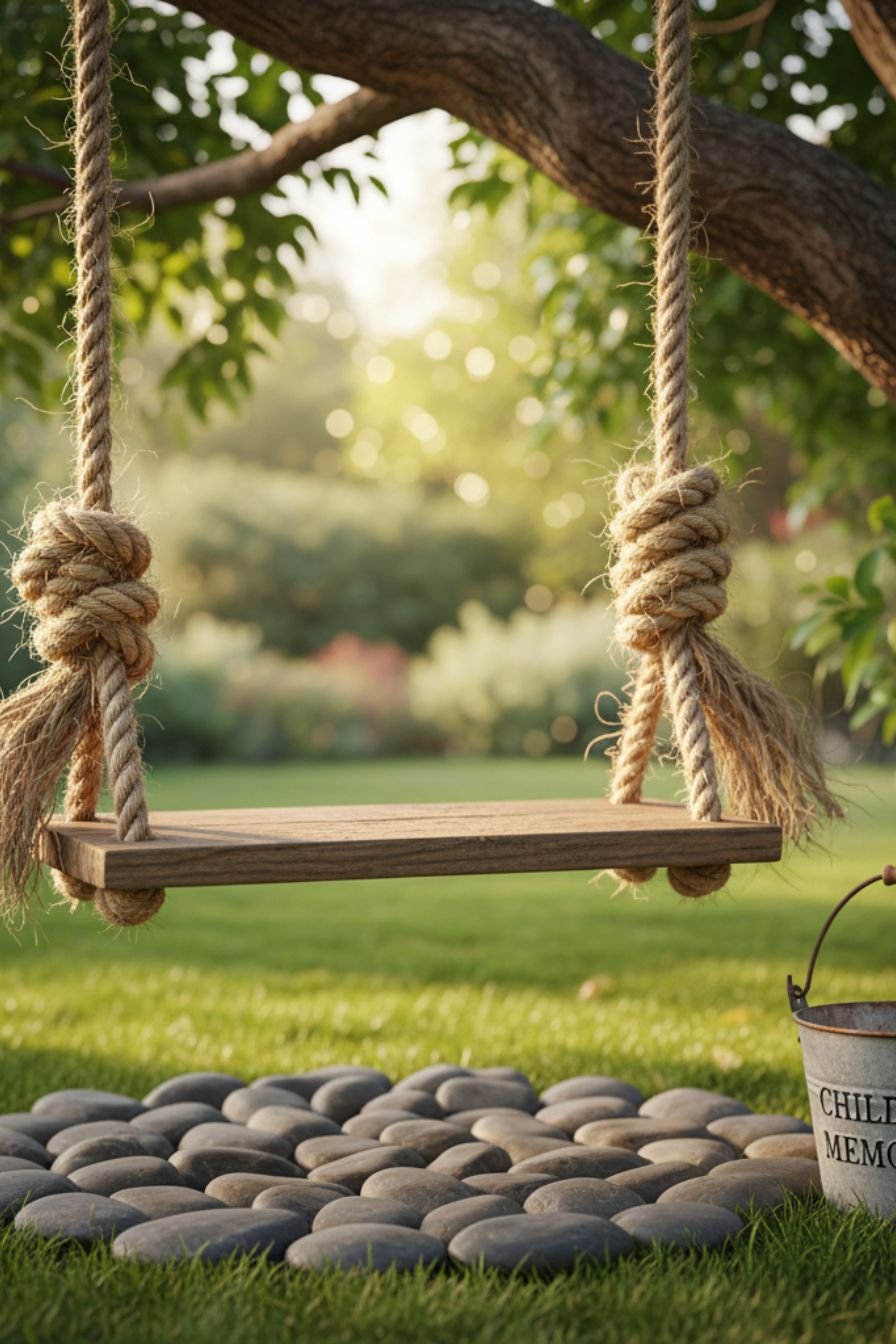
Movement brings a garden to life. A simple wooden swing invites adults and children alike to interact with the space physically. It creates a focal point that draws the eye upward into the canopy of a large tree. The gentle swaying motion is inherently relaxing. Visually, the long vertical ropes break up the horizontal lines of fences and hedges.
Select a sturdy hardwood plank like oak or cedar for the seat. Drill two holes at each end. Use heavy-duty natural fiber rope, like manila, for a classic look that grips the tree branch well without slipping. Ensure the branch you choose is live, healthy, and at least eight inches in diameter. The knot work acts as a decorative element itself. A simple running bowline knot is secure and looks nautical.
Pro Tip: Slip a piece of rubber hose over the rope where it contacts the tree branch to prevent friction damage to the bark.
DIY Bird Bath from Flower Pots
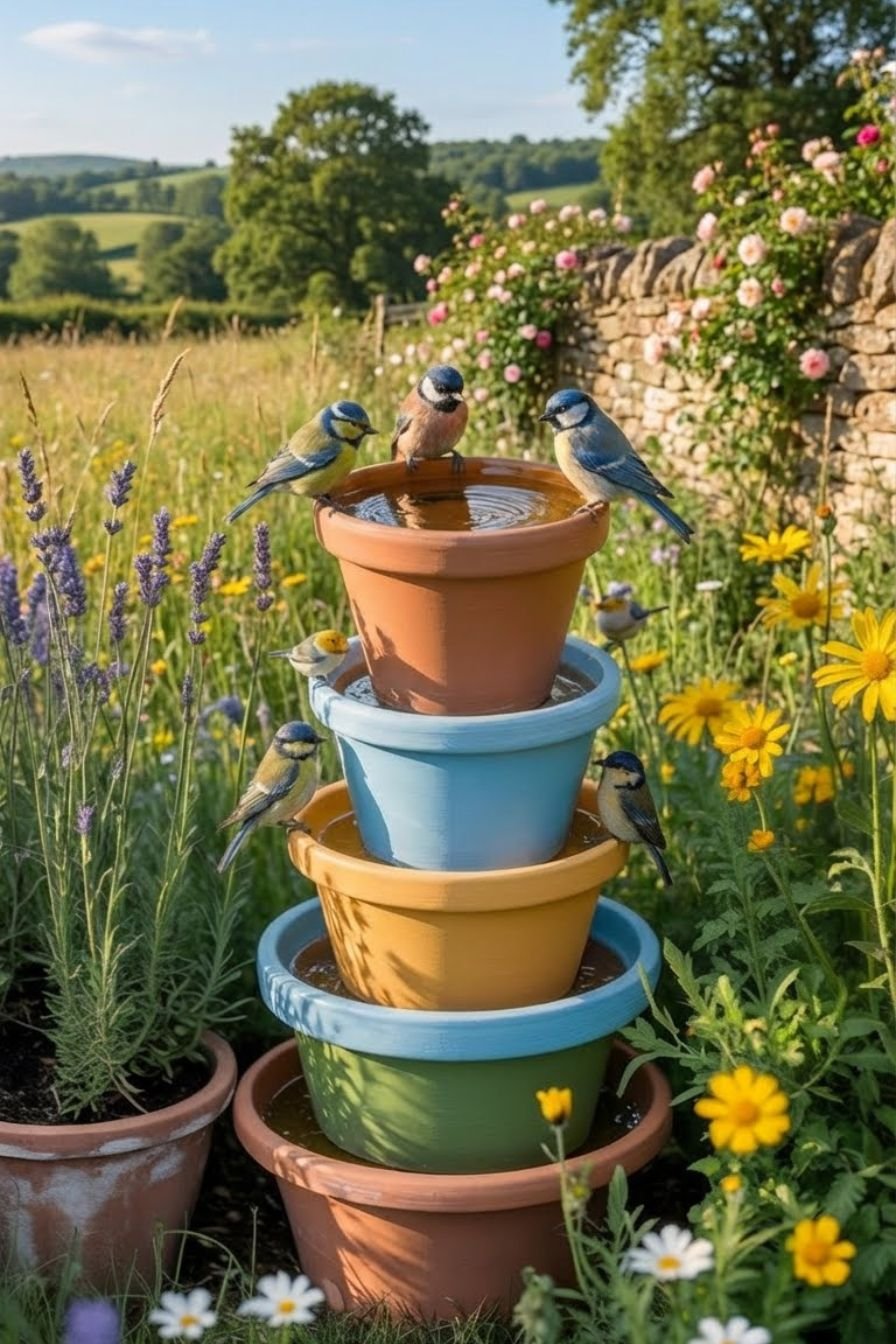
Birds bring sound and movement to your garden ecosystem. They also help control pest populations. A bird bath serves as an invitation for them to stay. You can construct a classic pedestal style bath using terra cotta pots and a saucer. The geometric shapes of the inverted pots create a stately architectural column.
Stack two or three pots of decreasing size upside down. Run a threaded rod through the drainage holes to secure them, or use a strong construction adhesive like E6000. Place a large terra cotta saucer on top. Paint the pots in bright colors or mosaic them with broken tile pieces for a custom art piece. The water reflects the sky, adding a small pool of light to shady corners of the garden.
Pro Tip: Place a few flat stones inside the saucer. This gives bees and butterflies a safe place to land and drink without drowning.
Colorful Flower Bed
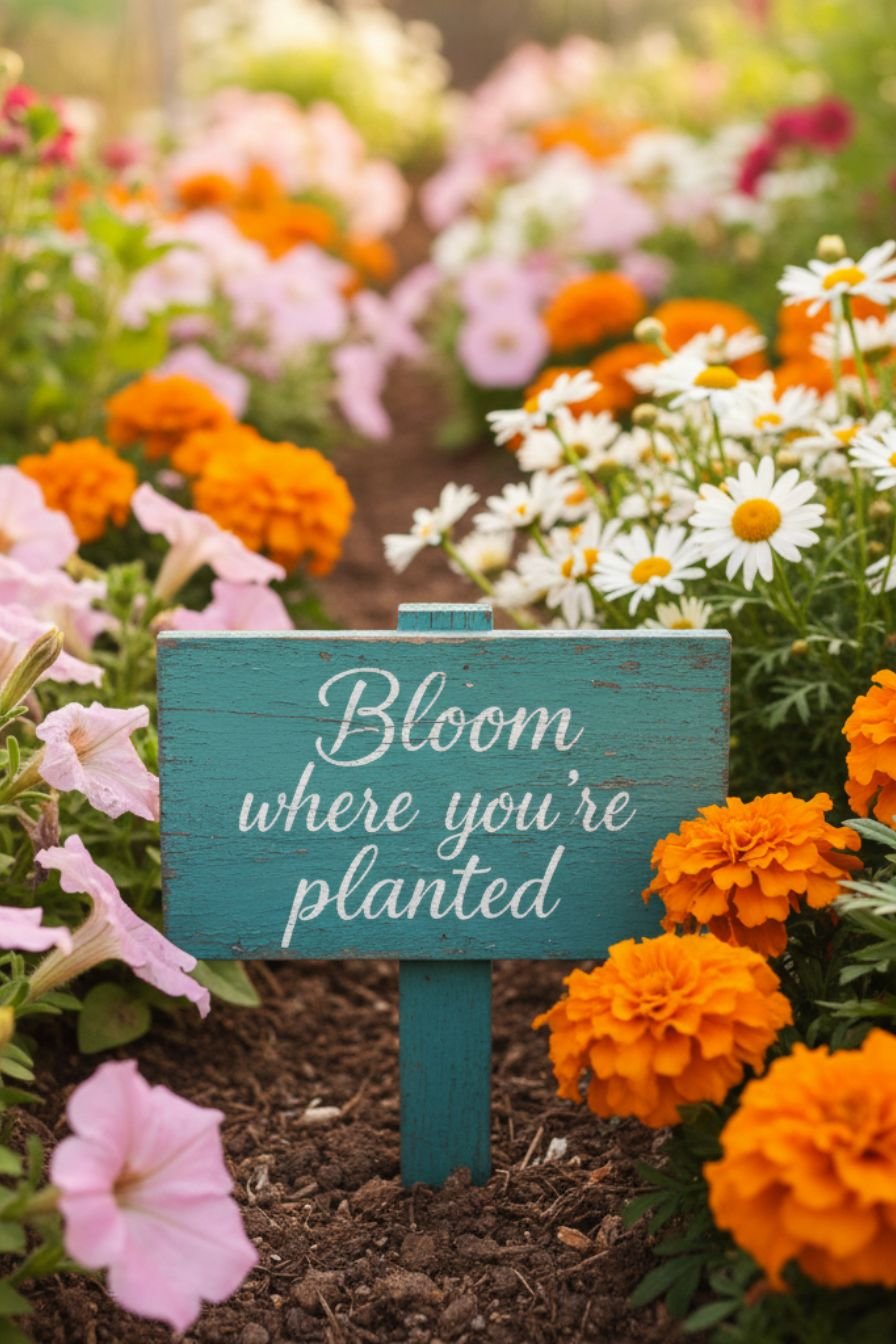
A flower bed is the canvas of the garden. While green is the background, color is the emotion. A well-planned flower bed uses color theory to create a mood. Cool blues and purples create distance and calm, while hot reds and oranges advance and create excitement. Mixing annuals for instant color with perennials for long-term structure ensures the bed looks good all season.
Do not plant in single rows. Plant in drifts or clumps of three, five, or seven. This creates “swaths” of color that are visible from a distance. Vary the height of the plants, placing tall sunflowers or hollyhocks in the back and low creeping phlox in the front. Amend your soil with compost before planting. Healthy soil creates vibrant blooms. Mulch heavily to make the colors of the petals pop against the dark ground.
Pro Tip: Deadhead (remove) spent blooms weekly. This tricks the plant into thinking it hasn’t produced seeds yet, forcing it to produce more flowers.
Popular Asked Questions
How can I decorate my garden on a low budget?
The cheapest way to decorate is by upcycling items you already own. Use old tires for planters, pallets for vertical gardens, or glass jars for lighting. Propagation is also free; take cuttings from friends’ plants to fill your garden without buying new nursery stock.
What are low maintenance outdoor decor ideas?
Choose decor made from stone, concrete, or treated metal. A rock garden border or a pebble path requires almost zero upkeep compared to wood that needs staining. For plants, choose native perennials that are adapted to your local climate and require less watering.
How do I make my small garden look bigger?
Use vertical space. Ladders, hanging baskets, and wall-mounted planters draw the eye up. Use mirrors on fences to reflect light and create the illusion of a portal to another area. Keep the center of the lawn open to create a sense of spaciousness.
Is it safe to use tires for gardening?
Tires are safe for ornamental plants, flowers, and shrubs. However, as rubber breaks down over many years, it can release trace chemicals. Most experts recommend avoiding tires for growing edible root vegetables or herbs that you intend to eat.
Conclusion
Your backyard has the potential to be your favorite room in the house. These outdoor garden decor ideas prove that you do not need a massive budget to create a stunning sanctuary. Whether you choose to stack a stone border, hang a mason jar lantern, or paint an old bike, the secret is simply to start. Each project adds a layer of personality that makes the space uniquely yours.




Leave a Comment