

Your living room is the heart of your home, but staring at four identical, plain walls can feel uninspiring. You might be craving a refresh but feel held back by the fear of expensive renovations or complicated construction. The truth is, you do not need a contractor or a massive budget to completely transform your space.
The accent wall remains one of the most powerful tools in interior design because it creates an instant focal point, anchors your furniture, and injects personality into a room without overwhelming it. Whether you are renting an apartment or updating your forever home, a single feature wall can elevate your design from “standard builder grade” to “custom curation” in just one weekend.
This guide provides 18 high-impact, budget-friendly accent wall ideas that blend current 2026 trends—like tactile textures and earthy tones—with timeless style. Get ready to turn that blank canvas into a masterpiece.
Key Takeaways
- Texture Over Color: The biggest trend for 2026 is moving beyond flat paint. Think wood slats, stone veneers, and plaster finishes that add physical depth.
- Strategic Placement: Always choose the wall that naturally draws the eye, typically behind the sofa or the TV, to anchor the room’s layout.
- Budget-Friendly Impact: High-end looks like marble or brick can be achieved for a fraction of the cost using modern peel-and-stick technologies and faux finishes.
- Renters Can Join In: Many of these ideas, including removable wallpaper and floating shelves, are 100% reversible and landlord-approved.
Table of Contents
- Bold Geometric Patterns with Navy Blue
- Rustic Wood Panel Accent Wall
- Floor-to-Ceiling Bookshelf Wall
- Emerald Green Velvet Upholstery Wall
- Oversized Botanical Murals
- Brick Veneer in Classic Red
- Slate Stone Textured Accent
- Mirrored Hexagon Tiles
- Gold Leaf Highlights
- Adobe Plaster Finish
- Gallery Wall of Eclectic Art
- Wainscoting with Soft Gray Paint
- Striped Wallpaper in Pastels
- Black Chalkboard Paint Wall
- Floating Shelves with Indoor Plants
- Faux Concrete Industrial Look
- Vertical Garden with Succulents
- Moroccan Tile Pattern
- Popular Asked Questions
- Conclusion
Bold Geometric Patterns with Navy Blue

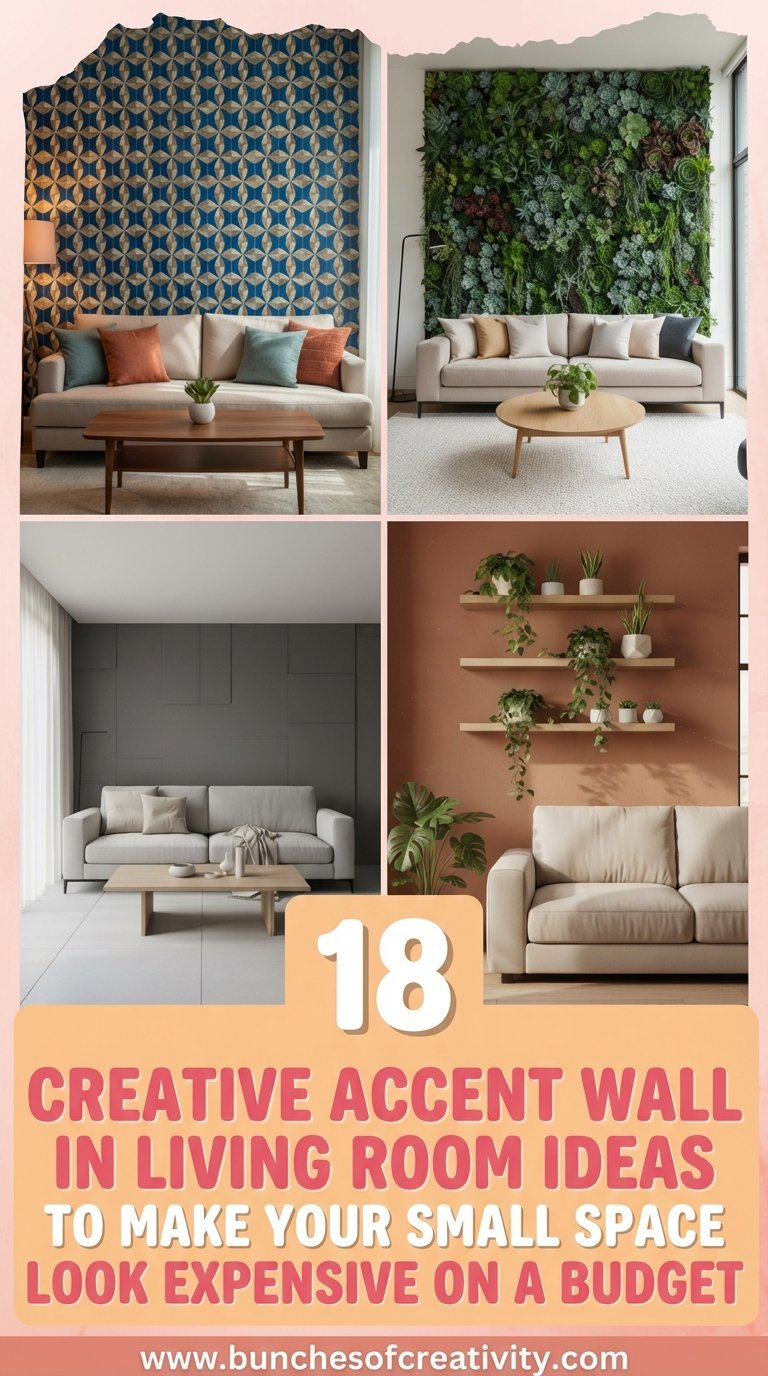
Navy blue is a powerhouse color in interior design because it acts as a neutral while providing deep, moody drama. When you combine this rich hue with sharp geometric patterns, you create a modern masterpiece that feels architectural and expensive. The beauty of this design lies in the contrast. The deep blue recedes, making the room feel larger, while the geometric lines—often created with gold metallic tape or contrasting white paint—bring a layer of sophistication that keeps the eye moving. This approach is perfect for defining a specific zone in your living room, such as a reading nook or the area behind a media console.
To execute this look without spending a fortune, you only need high-quality painter’s tape, a level, and patience. Start by painting the wall your base color, usually the lighter shade or the metallic gold if you are doing pinstripes. Once dry, apply your tape in your desired geometric pattern (triangles, diamonds, or irregular polygons). Then, paint over the entire wall with your navy blue. When you peel back the tape, you reveal crisp, striking lines that look like custom wallpaper.
Pro Tip: To ensure razor-sharp lines, seal the edge of your painter’s tape with a thin layer of the base color before applying the top coat. This prevents the navy paint from bleeding under the tape.
Rustic Wood Panel Accent Wall
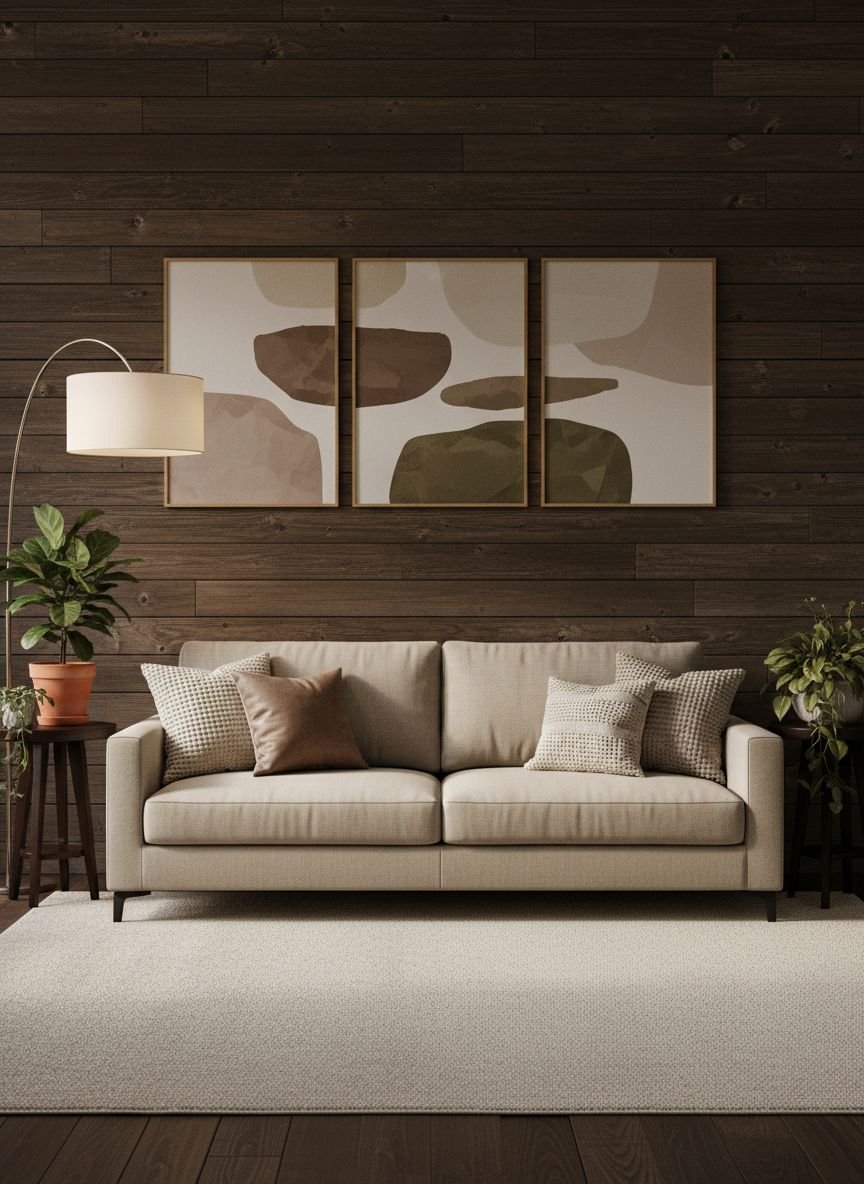
Bringing the outdoors in is a design philosophy that never fades, and a rustic wood panel wall is the ultimate expression of this organic warmth. This style works exceptionally well in living rooms that feel too sterile or cold, as the natural grain and variation in the wood tones instantly add coziness. You can opt for reclaimed barn wood for a truly authentic farmhouse vibe, or use new pine boards stained in varying shades of walnut and oak for a more polished, mid-century modern aesthetic. The vertical or horizontal orientation of the planks can also manipulate the room’s proportions; vertical planks make low ceilings feel higher, while horizontal ones widen a narrow room.
For the budget-conscious DIYer, you do not need to source expensive vintage timber. Plywood cut into six-inch strips and stained individually offers the same visual impact for a fraction of the cost. Alternatively, peel-and-stick wood veneer planks are now available that look incredibly realistic and require no power tools to install. This texture absorbs light rather than reflecting it, creating a soft, intimate atmosphere perfect for evening relaxation.
Pro Tip: If using real wood, let the planks acclimate to your room’s humidity for 48 hours before installation to prevent warping or gaps appearing later.
Save this idea to your Pinterest.
Floor-to-Ceiling Bookshelf Wall

For those who love functionality mixed with aesthetics, a floor-to-ceiling bookshelf wall is the ultimate two-for-one solution. It serves as a stunning visual feature while solving your storage woes. This type of accent wall transforms a living room into a sophisticated library, offering a sense of intellectual charm and curated chaos. The key to making this look “pop” is not just the shelves themselves, but what is behind them. Painting the back wall of the shelving unit a contrasting color, or applying a subtle wallpaper, adds depth and makes your books and decor objects stand out.
You can achieve this look using pre-made bookcases (like the famous IKEA Billy hack) anchored together and trimmed with molding to look built-in. This gives you the custom cabinetry look without the custom cabinetry price tag. Style the shelves with a mix of books stacked both vertically and horizontally, interspersed with sculptural objects, plants, and framed photos. This breaks up the visual monotony and turns your storage into a dynamic art display.
Pro Tip: Leave about 20% of the shelf space empty. “Negative space” is crucial to prevent the wall from feeling cluttered and overwhelming.
Emerald Green Velvet Upholstery Wall
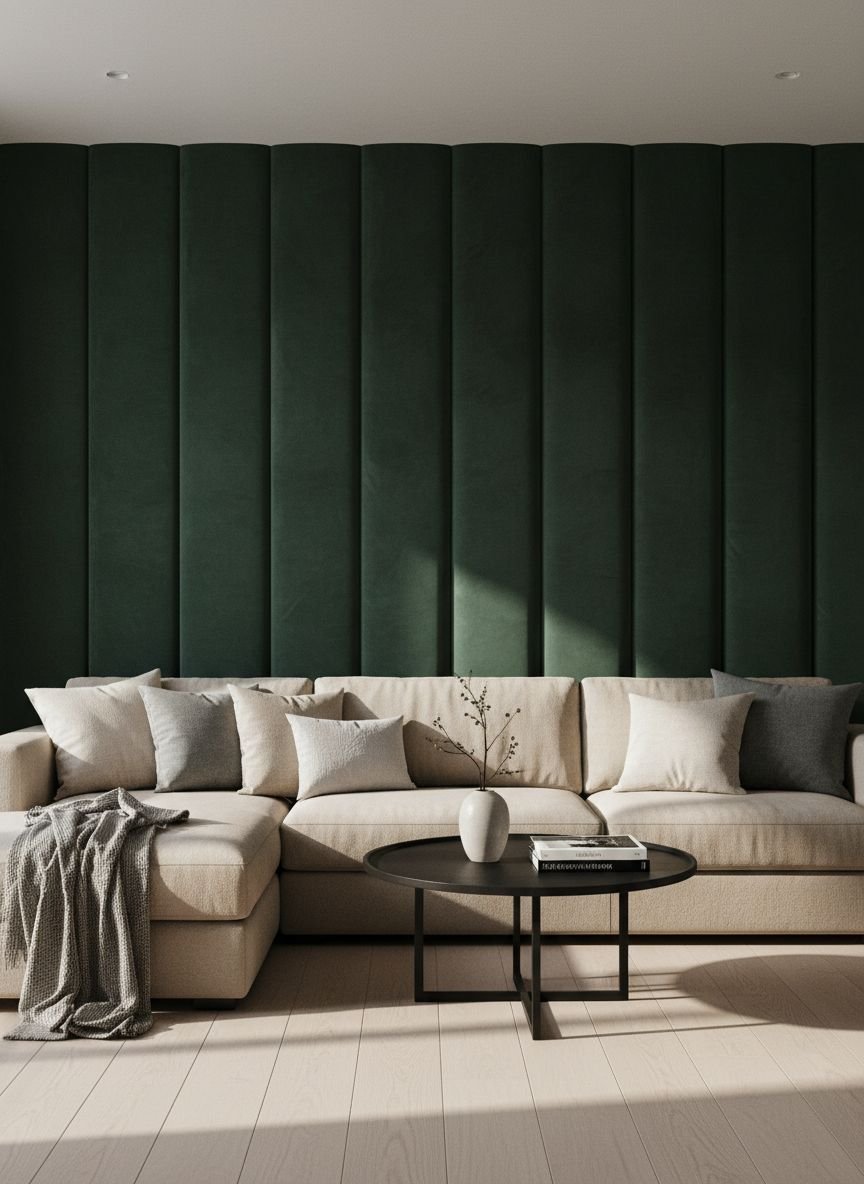
If you want to inject a serious dose of luxury and glamour into your living space, an upholstered wall is a showstopper. Specifically, emerald green velvet brings a regal, tactile quality that paint simply cannot replicate. This technique softens the acoustics of the room, making it quieter and more intimate, which is perfect for living rooms with high ceilings or echoey hardwood floors. The rich jewel tone changes beautifully depending on the light, appearing vibrant during the day and deep and moody at night.
While traditional upholstered walls involve batting and fabric stapled directly to the drywall, a more renter-friendly and manageable approach is to create fabric-wrapped panels. You can cut thin plywood or foam board into squares or rectangles, wrap them in batting and your chosen velvet fabric, and mount them to the wall using heavy-duty velcro or construction adhesive. This allows you to create a grid pattern or a vertical channel tufted look that rivals high-end hotel lobbies.
Pro Tip: Use a fabric with a “performance” rating or stain-resistant coating, especially if you have pets or children, as velvet can attract dust and fur.
Oversized Botanical Murals

Maximalism has made a grand return, and nothing says “bold” quite like an oversized botanical mural. This trend moves away from small, repeating floral patterns and embraces large-scale, dramatic imagery—think palm leaves the size of a sofa or dark, moody floral bouquets that span the entire wall. This design choice instantly transports you to another world, turning your living room into a lush garden or a tropical paradise. It works particularly well in spaces with neutral furniture, as the wall becomes the primary artwork for the room.
Thanks to modern digital printing, you can find high-definition murals that come in peel-and-stick panels, making installation a breeze even for beginners. The lack of a repeating pattern means you don’t have to worry as much about matching seams perfectly every 12 inches. When choosing a mural, consider the scale of your room; a massive, dark floral print can make a large room feel cozy, while a light, airy jungle scene can open up a smaller space.
Pro Tip: If you choose a busy mural, keep your furniture and rug relatively solid-colored to avoid visual chaos. Let the wall be the star.
Brick Veneer in Classic Red

Exposed brick is the holy grail of industrial and loft-style living, but not everyone is lucky enough to live in a converted warehouse. Fortunately, brick veneer offers the exact same look and texture without requiring structural masonry. A classic red brick accent wall adds instant history, warmth, and texture to a living room. The rough surface contrasts beautifully with soft textiles like wool rugs and velvet sofas, creating a balanced and inviting environment.
You can purchase thin brick “slips” that are essentially real bricks sliced thin. These are applied to the wall with tile adhesive and then grouted, just like real brickwork. For an even tighter budget, high-quality 3D textured wallpaper or faux brick panels can mimic the look surprisingly well. If you go the panel route, pay close attention to the seams—using a little bit of filler or paint at the joints can make the difference between “fake” and “convincing.”
Pro Tip: If the classic red feels too heavy for your space, consider a “German Schmear” technique. Smear white mortar over the brick to soften the red tones and create a distressed, old-world cottage look.
Comparison: Accent Wall Materials
| Material | Cost | DIY Difficulty | Renter Friendly? | Best For |
|---|---|---|---|---|
| Paint | Low | Easy | Yes | Quick refreshes, geometric patterns |
| Wallpaper (Peel & Stick) | Medium | Medium | Yes | Bold patterns, murals, intricate designs |
| Wood/Shiplap | Medium | Medium-Hard | No (mostly) | Rustic warmth, farmhouse style |
| Brick Veneer | High | Hard | No | Industrial texture, loft vibes |
| Wainscoting/Trim | Low-Med | Medium | No | Elegant, traditional, classic looks |
Slate Stone Textured Accent

For a sleek, modern, and earthy aesthetic, a slate stone accent wall is unbeatable. The natural variation in gray, charcoal, and rust tones found in slate provides a sophisticated palette that pairs with almost any color scheme. Unlike brick, which feels industrial, slate feels organic and spa-like. It is an excellent choice for a wall featuring a fireplace or a mounted television, as the dark stone helps camouflage the black TV screen when it is turned off.
Stacked stone ledger panels are the easiest way to achieve this. These are pre-assembled sections of stone that interlock, hiding the seams and making installation relatively fast. The texture is incredibly rugged and tactile, catching light from floor lamps or sconces in a way that flat paint never could. This creates dynamic shadows that change throughout the day.
Pro Tip: Install focused lighting, such as track lighting or wall washers, directly above the stone wall. The grazing light will highlight the rugged texture and maximize the dramatic effect.
Mirrored Hexagon Tiles

If your living room is small or lacks natural light, a mirrored accent wall is a strategic design move. However, an entire wall of floor-to-ceiling mirror can feel dated (reminiscent of the 1980s). The modern solution is to use mirrored tiles, specifically in trendy shapes like hexagons or diamonds. This reflects light and bounces it around the room, effectively doubling the visual space, but the geometric grout lines break up the reflection, adding artistic interest.
You can arrange these tiles in a scattered pattern—starting densely at the bottom or one side and “fading out” as they move across the wall—for an organic, falling-confetti effect. This looks incredibly chic and high-end. Acrylic mirror stickers are a safe, lightweight, and budget-friendly alternative to heavy glass tiles, making this a project you can complete with just a ruler and adhesive.
Pro Tip: Place a lamp or a few candles in front of the mirrored section. The reflection will multiply the warm glow, creating a magical ambiance in the evening.
Save this idea to your Pinterest.
Gold Leaf Highlights

Gold leaf highlights offer a touch of opulence that feels bespoke and artistic. This isn’t about covering a whole wall in gold, which would be overwhelming. Instead, this technique involves applying gold leaf to specific architectural details, or creating an abstract, organic design over a dark base color like charcoal or midnight blue. The contrast between the matte dark paint and the shimmering metallic gold is stunning and screams “luxury.”
You can use metal leaf adhesive (size) and imitation gold leaf sheets, which are very affordable. Brush the adhesive on in random, organic strokes or use a stencil for a pattern. Once the leaf is applied and the excess brushed away, you are left with a gleaming texture that looks like veins of gold running through the wall. This is particularly effective in a glam or art deco inspired living room.
Pro Tip: Seal the gold leaf with a clear sealer specifically designed for metal leaf to prevent it from tarnishing or flaking off over time.
Adobe Plaster Finish

The “wabi-sabi” trend, which appreciates imperfection and organic materials, has brought textured plaster walls to the forefront of design in 2026. An adobe or limewash plaster finish gives your walls a soft, cloud-like movement that feels ancient and grounding. Unlike flat paint, plaster has physical depth and a matte, chalky finish that feels incredibly soft to the touch. It evokes the feeling of a Mediterranean villa or a Santa Fe casita.
You don’t need to re-plaster your drywall to get this look. “Limewash” style paints are available that create this effect with a brush application. Alternatively, you can mix joint compound with paint (a technique often called “texture painting”) and apply it with a wide putty knife or trowel to create physical ridges and swirls. The result is a wall that feels alive and handmade.
Pro Tip: Use a large block brush and apply the paint in crisscross “X” strokes. This random application is what creates the characteristic cloudy, velvety depth of limewash.
Get The Look: DIY Tool Kit
Ready to start? Here are the essentials you will likely need for most of these projects:
- Laser Level: For perfectly straight lines (Crucial for geometric, shiplap, and gallery walls).
- Painter’s Tape: Do not skimp here. Get the “sharp lines” or “delicate surface” version.
- Stud Finder: Essential for safety when mounting shelves, heavy mirrors, or wood planks.
- Construction Adhesive (Liquid Nails): The secret weapon for attaching panels and faux veneers.
- Sanding Block: For smoothing out walls before painting or prepping wood.
Gallery Wall of Eclectic Art

A gallery wall is perhaps the most personal accent wall you can create. It allows you to display a collection of who you are—your travels, your family, your taste in art, and your favorite quotes. The “eclectic” style means you don’t have to match frames or themes perfectly. In fact, mixing vintage gold frames with sleek black modern ones, and combining photography with oil paintings and textile art, creates a rich, collected look that feels curated over time.
To prevent it from looking messy, keep one unifying element. This could be a consistent spacing distance between frames (usually 2-3 inches) or a general color palette within the art itself. Lay out your arrangement on the floor first to find the right balance before hammering a single nail. This is a zero-renovation option that can be changed or expanded whenever you find a new piece you love.
Pro Tip: Use paper templates. Trace your frames onto kraft paper, cut them out, and tape them to the wall. This allows you to rearrange the layout without putting hundreds of holes in your drywall.
Wainscoting with Soft Gray Paint

Wainscoting brings a traditional, architectural elegance that adds value and character to a home. While it looks expensive, it is surprisingly cheap to DIY using trim molding and MDF boards. By installing a chair rail and creating boxes or vertical battens below it, you add three-dimensional interest to the wall. Painting the wainscoting a soft, dove gray while keeping the upper wall white (or vice versa) creates a subtle contrast that is sophisticated and airy.
This style is perfect for bridging the gap between modern and traditional decor. It adds structure to a plain rectangular room and breaks up the vertical height, making the space feel more grounded. The soft gray is neutral enough to work with any furniture color but interesting enough to not be “just white.”
Pro Tip: Caulk is your best friend here. Fill every gap between the wood trim and the wall before painting. Seamless joints are the secret to making DIY wainscoting look like it was installed by a master carpenter.
Striped Wallpaper in Pastels

Stripes are a classic pattern that can manipulate how your eye perceives the size of a room. Vertical stripes make ceilings feel higher, while horizontal stripes make a room feel wider. Using pastel tones—like soft mint, blush pink, or buttery yellow—keeps the graphic pattern from feeling too intense or circus-like. Instead, it feels fresh, playful, and light.
Peel-and-stick wallpaper options in striped patterns are abundant and easy to apply. This is a fantastic option for a spring refresh or for brightening up a living room that doesn’t get a lot of natural sunlight. The pastel tones reflect light beautifully and pair well with light wood furniture and linen fabrics.
Pro Tip: Ensure your first strip of wallpaper is perfectly plumb (vertically straight) using a level. If the first strip is crooked, every subsequent stripe will be crooked, and the effect will be dizzying.
Black Chalkboard Paint Wall

For a living room that is truly interactive and constantly evolving, a black chalkboard wall is a fun and edgy choice. It provides a matte black finish that is very trendy, but with the added utility of being a canvas. This is great for creative families, allowing you to draw seasonal murals, write inspiring quotes, or let guests leave messages.
The matte texture of chalkboard paint is excellent for hiding imperfections in an old wall. It absorbs light, creating a cozy “den” feel. You can frame the chalkboard area with wood trim to make it look like a deliberate oversized message board rather than just a painted wall, which elevates the look from “playroom” to “industrial chic.”
Pro Tip: “Season” your chalkboard wall before using it. Rub the side of a piece of chalk over the entire surface and wipe it off. This prevents your first drawing from being permanently “burned” into the surface (ghosting).
Floating Shelves with Indoor Plants

Biophilic design—connecting with nature indoors—is a major wellness trend. A wall dedicated to floating shelves filled with cascading indoor plants creates a living, breathing accent wall. The greenery adds vibrant color and organic texture that softens the hard lines of furniture and architecture. It also improves air quality and boosts mood.
Install rows of floating wooden shelves and mix different types of plants: trailing pothos or ivy for vertical drama, structural snake plants for height, and small succulents for texture. Intermingle the plants with small decor items like candles or ceramic vases to create a balanced vignette. The wood tones of the shelves combined with the green leaves create a natural, calming palette.
Pro Tip: Ensure your shelves are anchored into studs. Wet soil and ceramic pots can be very heavy, and drywall anchors alone may not support the weight of a fully stocked plant wall.
Save this idea to your Pinterest.
Related posts :
- 10 Rustic Kitchen Islands with Seating and Storage That Transform Your Home
- 16 Inspired Moroccan Hallway Decor Ideas That Instantly Warm Your Home
- 12 Dreamy Boho Bedroom Ideas You’ll Love That Transform Your Space Instantly
Faux Concrete Industrial Look

The industrial aesthetic relies heavily on raw, unfinished materials, and concrete is the star of that show. A concrete accent wall brings a cool, urban edge to a living room. It provides a neutral gray backdrop that allows colorful art or bright furniture to pop. While pouring a real concrete wall is impossible in most finished homes, you can achieve the look with specialized faux-finish paints or concrete-effect wallpaper.
There are trowel-on products available that mimic the texture and color variation of real poured concrete. You can even add “form lines” and “bolt holes” to the design to mimic the look of structural concrete slabs found in modern lofts. This pairs exceptionally well with black metal accents, leather furniture, and exposed filament bulbs.
Pro Tip: When applying a trowel-on concrete finish, work in small sections and keep a “wet edge” to blend the sections seamlessly. Imperfection is part of the charm, so don’t stress about making it perfectly smooth.
Vertical Garden with Succulents
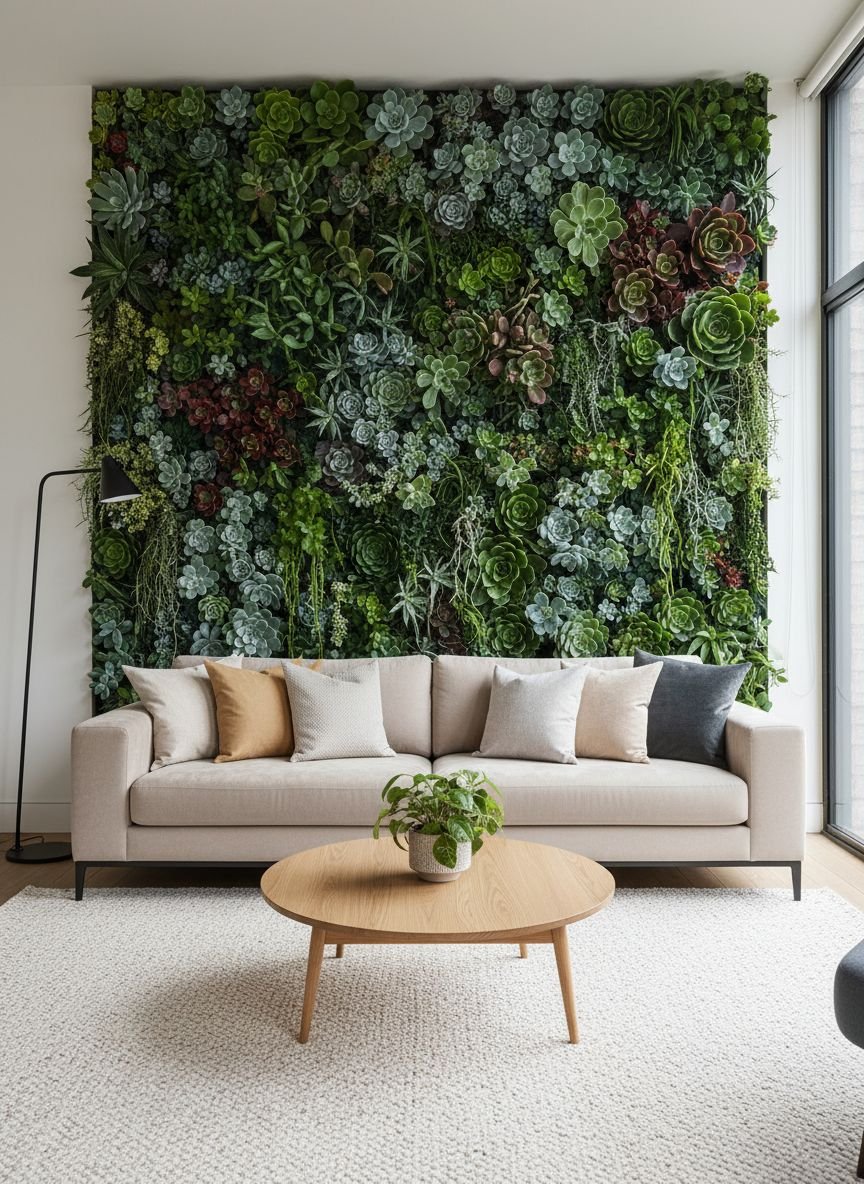
Taking the plant shelf idea a step further, a vertical garden wall is a literal wall of life. This can be achieved using modular planter systems that mount directly to the wall, creating a lush tapestry of greenery. Succulents are the ideal choice for this because they have shallow root systems and require less frequent watering than tropical plants, making maintenance much easier.
This is a stunning focal point that acts as living art. The varying shades of green, purple, and teal found in succulents create a beautiful, natural mosaic. It works best on a wall that receives good natural light. For a lower maintenance version, high-quality artificial succulent panels are available that look incredibly realistic and require zero water.
Pro Tip: If using real plants, ensure your planter system has a way to catch excess water to prevent damage to your drywall or floor.
Moroccan Tile Pattern
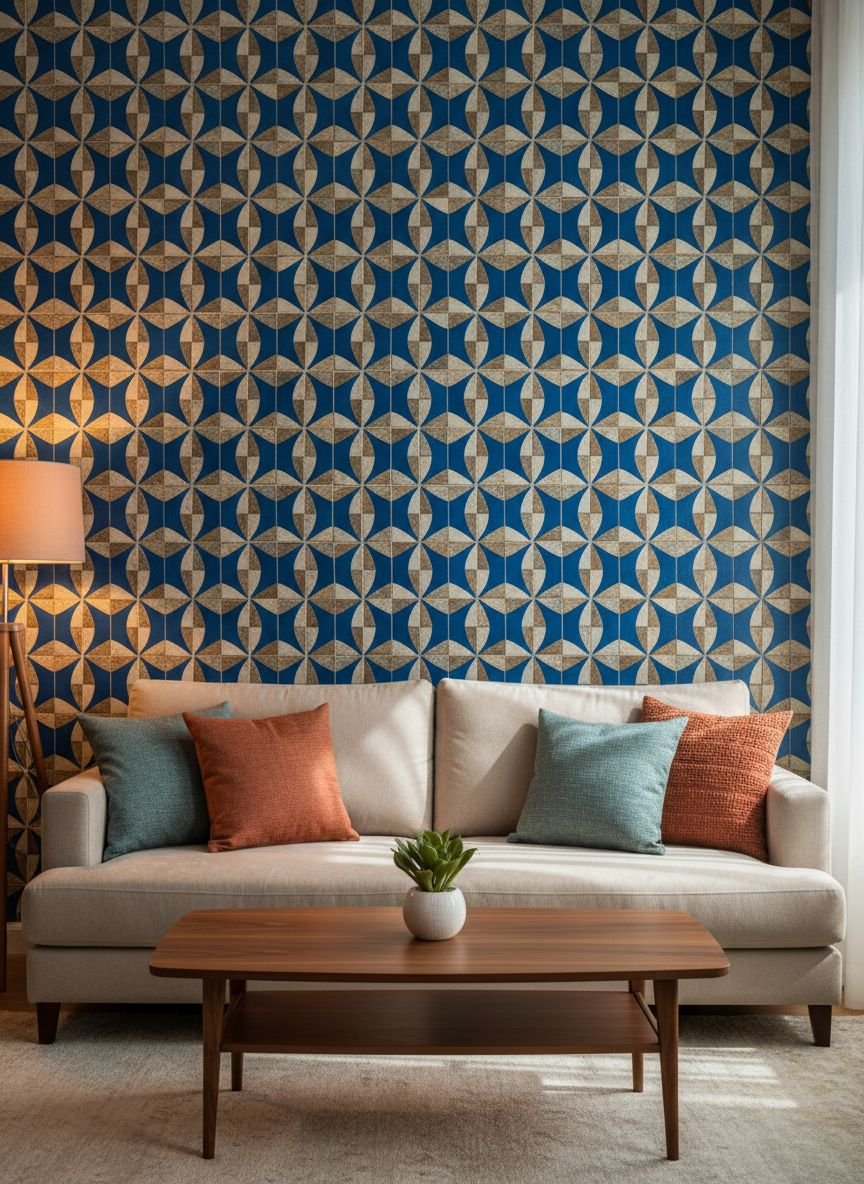
Moroccan design is famous for its intricate geometric patterns and vibrant colors. A Moroccan tile accent wall brings a sense of global travel and exotic warmth to your living room. While tiling an entire living room wall might be labor-intensive, you can use stencils to paint a tile pattern over a solid base color. This allows you to customize the colors to match your decor perfectly.
Typically, this involves a white base with a pattern stenciled in blue, terracotta, or sage green. The repetitive pattern is mesmerizing and adds a high level of detail to the room. It pairs beautifully with leather poufs, woven rugs, and brass lanterns, completing the boho-chic look.
Pro Tip: Use a dense foam roller for stenciling and offload most of the paint onto a paper towel before touching the wall. “Dry rolling” is the only way to prevent paint from bleeding under the stencil and ruining the crisp tile pattern.
Popular Asked Questions
Is an accent wall still in style for 2026?
Yes, but the style has evolved. The trend has moved away from just painting a single wall a bright, flat color. In 2026, accent walls are all about texture and dimension. Think wood slats, stone veneers, limp-wash plaster, or architectural molding. The goal is to add depth and character to the room rather than just a block of contrasting color.
Which wall should be the accent wall in a living room?
The best wall to choose is the one that serves as the natural focal point. This is usually the wall you face when you enter the room, the wall behind your sofa, or the wall where your TV or fireplace is located. Avoid choosing a wall with windows or doors if possible, as these break up the visual impact of the accent.
Should an accent wall be lighter or darker?
Generally, an accent wall should be darker than the other walls in the room to create depth and anchor the space. A darker shade recedes visually, which can actually make a small room feel slightly larger. However, if you are using a patterned wallpaper or a texture like white shiplap, it can be lighter as long as it contrasts enough with the surrounding walls to stand out.
How can I create an accent wall on a tight budget?
Paint is the most affordable option. You can create geometric shapes or use stencils to mimic expensive wallpaper for the cost of a can of paint and some tape. Other budget-friendly options include using peel-and-stick wallpaper, creating a gallery wall with thrifted frames, or using inexpensive materials like plywood strips to create a board-and-batten look.
Conclusion
Creating an accent wall is one of the most rewarding DIY projects you can tackle. It completely changes the energy of your living room, taking it from a basic box to a custom-designed sanctuary. Whether you choose the moody drama of navy geometric patterns, the organic warmth of rustic wood, or the tactile luxury of an emerald velvet wall, the key is to choose a style that resonates with you.
Don’t be afraid to experiment with texture and materials beyond just paint. The trends for 2026 are inviting us to make our homes feel more personal, grounded, and layered.




Leave a Comment