
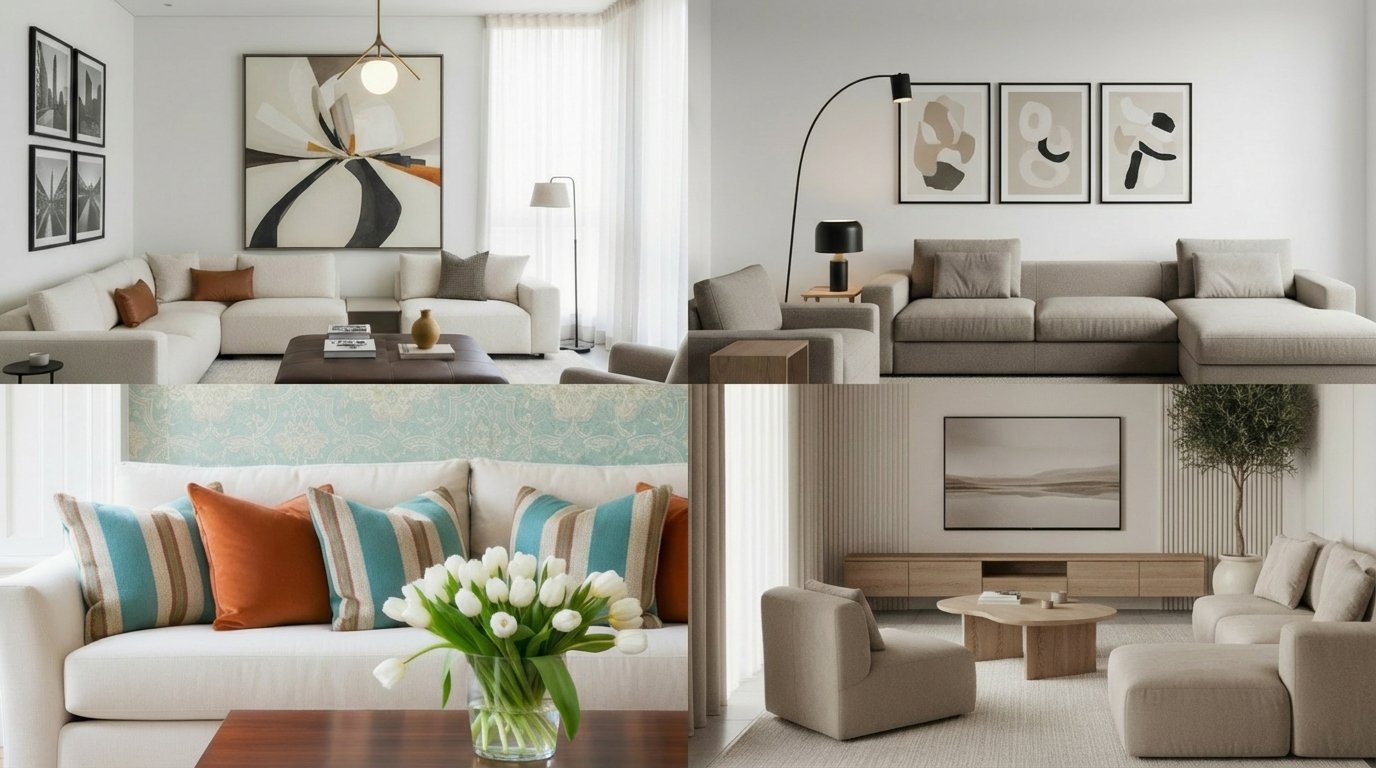
Modern design often feels cold or unapproachable. You might see glossy magazine spreads and think those spaces look perfect but unlivable. You want a home that looks current yet feels inviting. You need a space where clean lines meet real life.
This guide solves that friction. We break down the exact elements that make a living room feel modern, functional, and warm. You will find actionable layouts, color strategies, and furniture choices here. These ideas work for sprawling open floor plans and compact apartments alike. We focus on tangible changes you can make this weekend alongside larger renovation goals.
Key Takeaways
- Texture Beats Color: Modern design relies on layering materials like wool, stone, and wood rather than bold paint colors to create interest.
- Light Sculpts Space: Lighting is not just functional; it serves as art. Layering floor, table, and ceiling fixtures defines zones.
- Function First: Every piece of furniture must serve a purpose. Modular and smart furniture choices keep the space clutter-free and adaptable.
Table of Contents
- Neutral Color Palette
- Open Concept Layout
- Statement Furniture
- Floor-to-Ceiling Windows
- Geometric Patterns
- Monochrome Themes
- Minimalist Decor
- Natural Materials
- Layered Lighting
- Modular Furniture
- Bold Accent Walls
- Smart Technology Integration
- Popular Asked Questions
- Conclusion
Neutral Color Palette
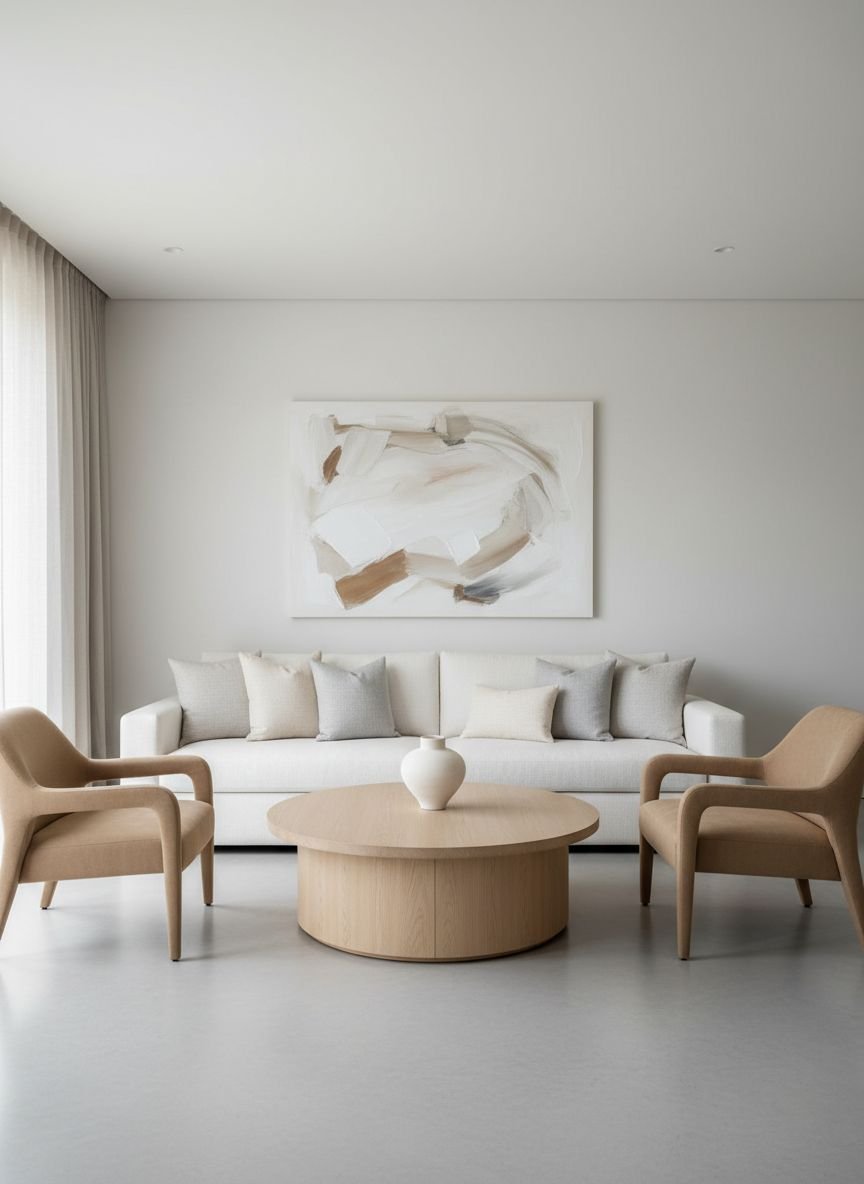
A neutral color palette serves as the backbone of modern interior design. It creates a calm canvas that allows architecture and furniture to take center stage. You might think beige or white sounds boring, but the magic lies in the variation of tones. Think warm oatmeal, cool greige, soft cream, and deep charcoal. These shades work together to expand the visual perception of space. Light bounces freely around the room. This makes even small areas feel airy and expensive.
To keep a neutral room from feeling flat, you must focus on undertones. Mixing a yellow-based cream with a blue-based grey creates visual conflict. Stick to one temperature family. Warm neutrals create a cozy, inviting atmosphere perfect for relaxation. Cool neutrals offer a crisp, gallery-like aesthetic. Paint your walls a matte off-white and layer in furniture with slightly darker or lighter fabrics. This tonal shift adds depth without screaming for attention.
Pro Tip: Use the 60-30-10 rule even with neutrals. 60% dominant color (walls), 30% secondary color (sofa/rug), and 10% accent color (pillows/art) in a slightly deeper shade.
Save this idea to your Pinterest.
Open Concept Layout
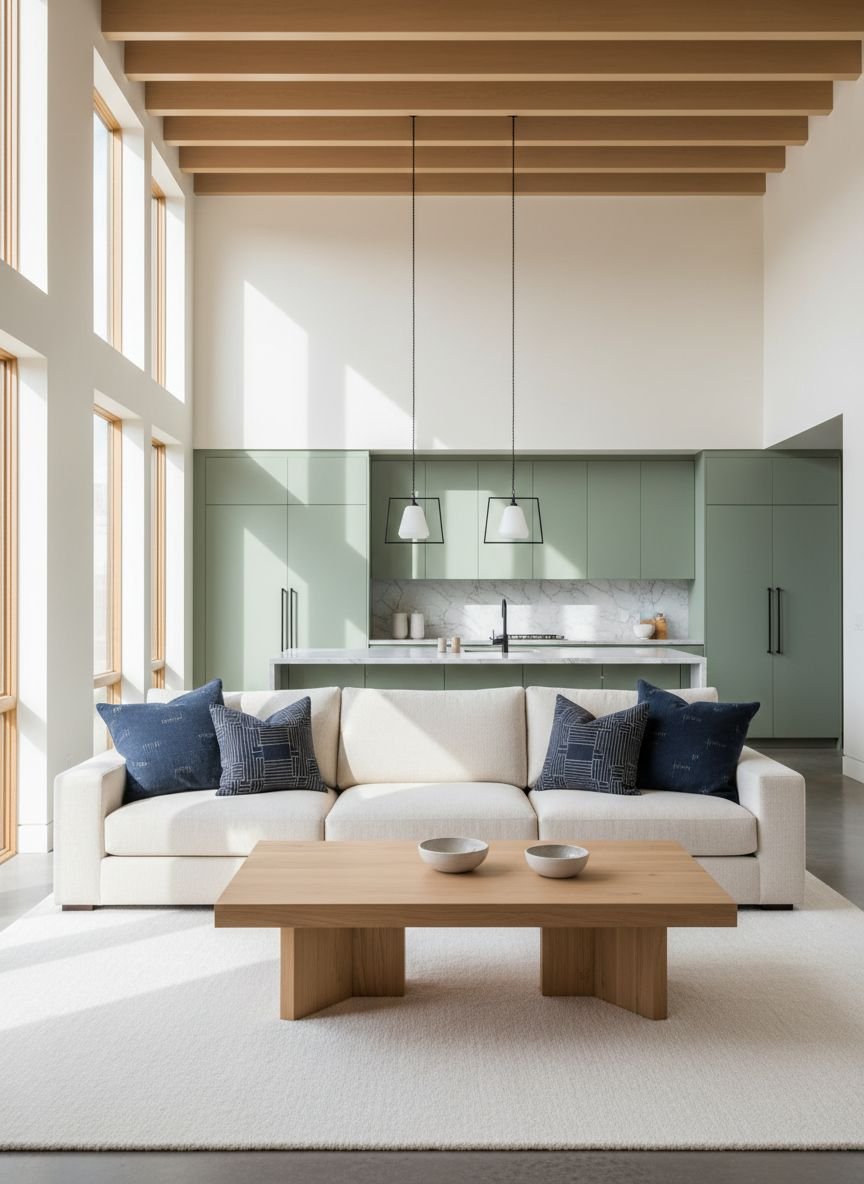
Open concept layouts define modern living. The removal of walls between the kitchen, dining, and living areas encourages social interaction and maximizes light flow. The challenge here is defining zones without physical barriers. You do not want your home to feel like a warehouse. Visual separation is key. You achieve this through furniture placement and flooring choices.
Turn the back of your sofa against the dining area to create a clear “living room” boundary. Use a large area rug to anchor the seating group. This signals to the brain that this specific square footage is for lounging. Keep sightlines clear. Avoid tall bookshelves in the middle of the room that block the view from one end to the other. The goal is a seamless transition where energy flows unobstructed.
Pro Tip: Keep flooring consistent throughout the entire open space to maintain unity, but change the ceiling height or add beams to subtly mark different zones.
Statement Furniture
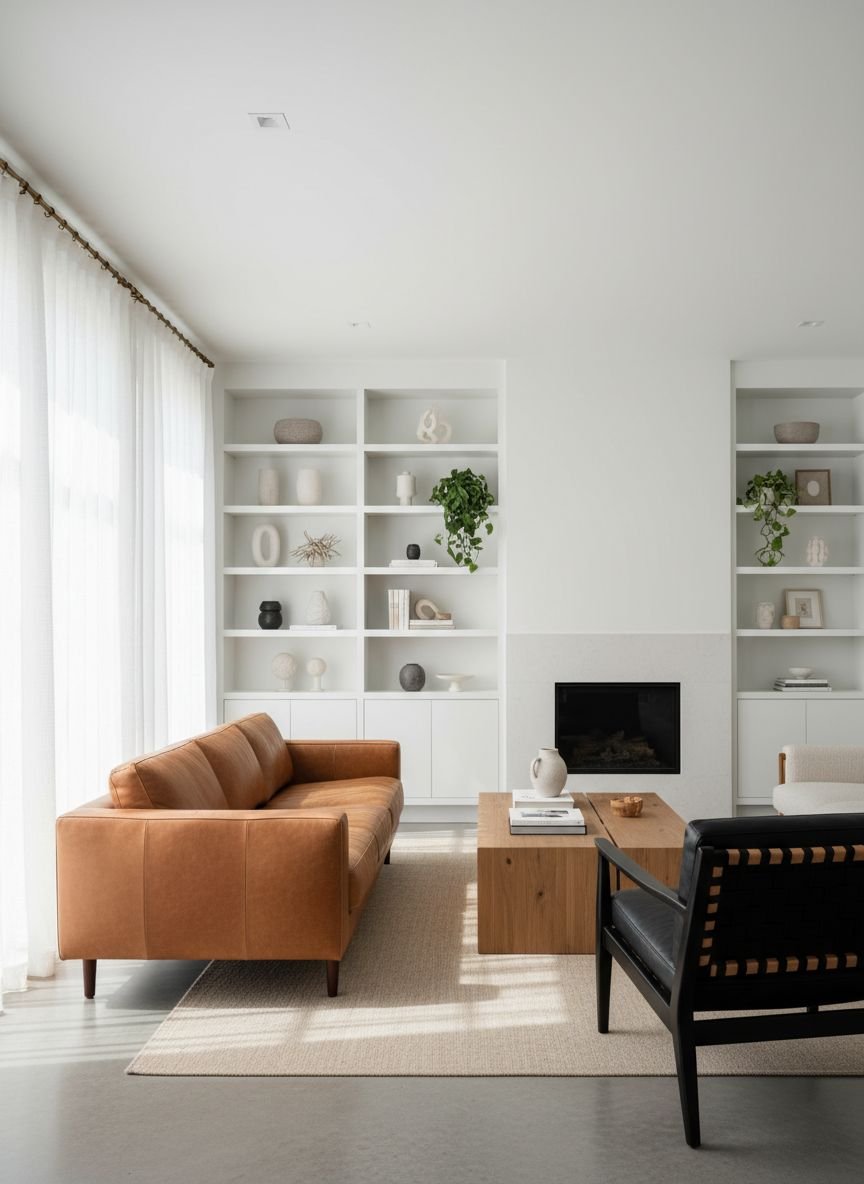
Modern design often favors minimalism, which means you have fewer pieces in the room. This makes the quality and shape of each piece critical. A statement chair or a sculptural sofa acts as art. You stop looking at the furniture as just a place to sit and start seeing it as a key design element. Look for pieces with interesting silhouettes. A curved velvet armchair or a sharp, angular coffee table draws the eye immediately.
You do not need a room full of loud furniture. One or two hero pieces are enough. If you choose a bright orange toggle chair, keep the sofa and rug neutral. If you opt for a massive, tufted leather sectional, keep the coffee table simple and glass. Balance is the priority. The statement piece should spark conversation but not overwhelm the senses.
Pro Tip: Measure your space twice. A statement piece only works if it fits the scale of the room. An oversized sofa in a small room feels cramped, not luxurious.
Floor-to-Ceiling Windows
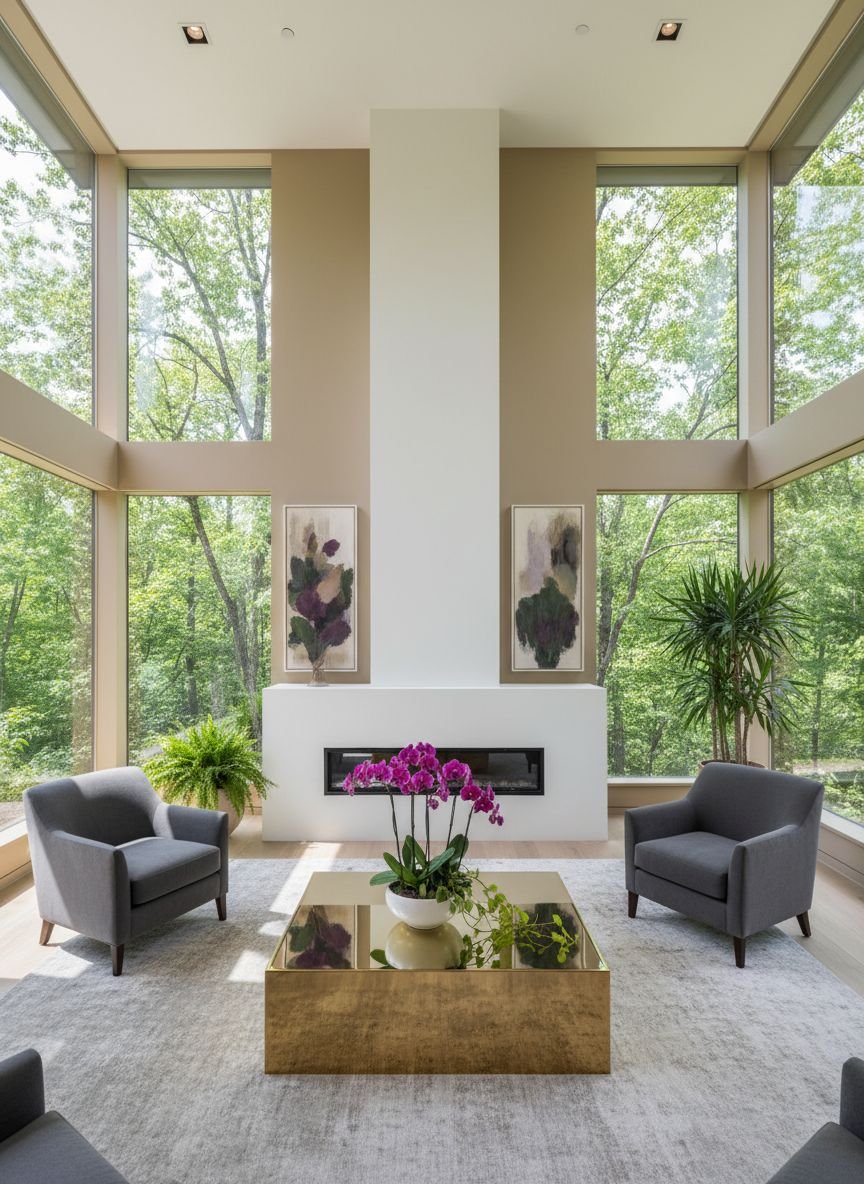
Natural light is the ultimate luxury in modern design. Floor-to-ceiling windows blur the line between indoors and outdoors. They turn your garden or city view into a living wallpaper that changes with the seasons. This architectural feature creates a sense of grandeur and openness that artificial lighting cannot replicate. The influx of daylight boosts mood and makes the room feel twice as big.
Privacy can be a concern with such expansive glass. Sheer curtains are a perfect solution. They diffuse harsh sunlight and block the view from outside during the day while maintaining that airy feel. For total privacy at night, layer heavy drapes or automated roller shades that disappear into a recessed ceiling pocket when not in use. Keep the window frames minimal—black aluminum or warm wood—to frame the view without distraction.
Pro Tip: If you cannot install new windows, hang curtains from the very top of the wall down to the floor to mimic the height and grandeur of larger windows.
Geometric Patterns
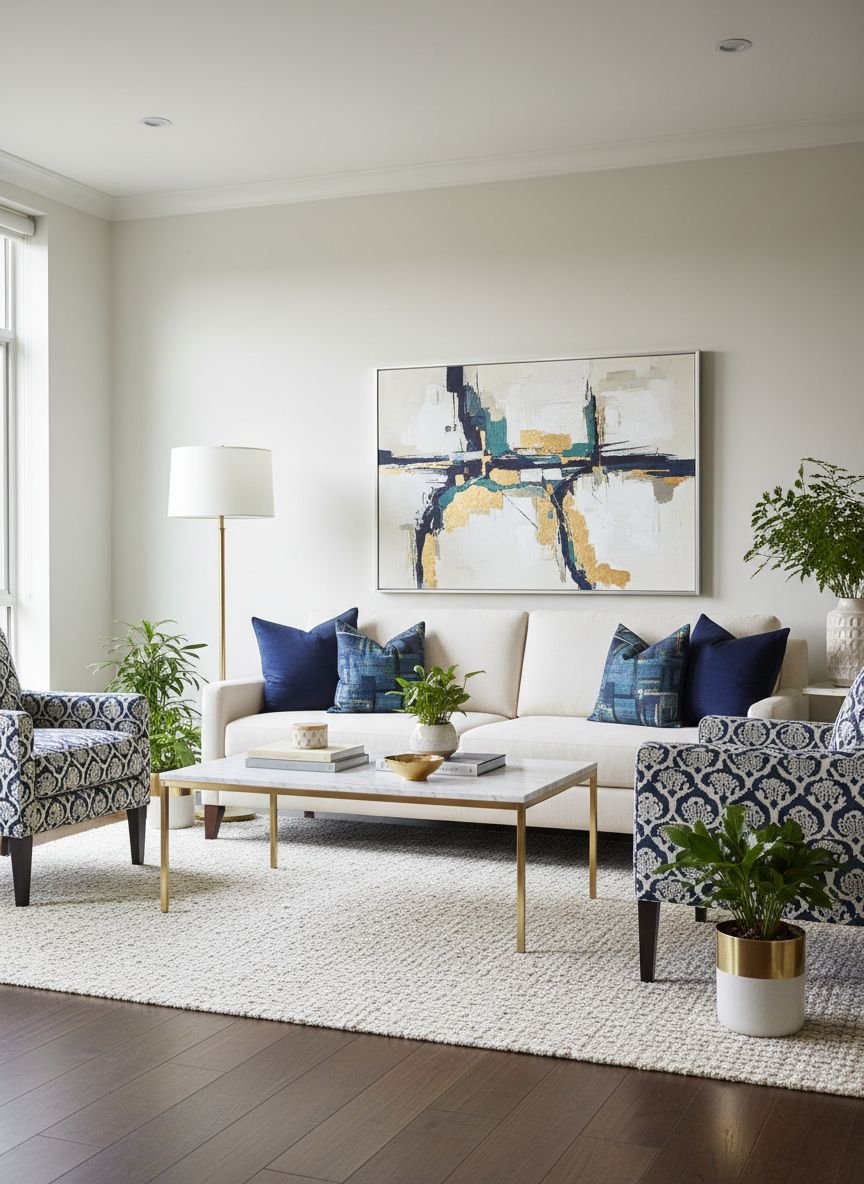
Geometric patterns inject energy into a modern living room. They break up the monotony of solid colors and straight architectural lines. You can introduce geometry through area rugs, throw pillows, or wall art. Triangles, hexagons, and chevron prints offer a dynamic rhythm. The key is to use them sparingly. A geometric rug pairs best with solid-colored furniture.
Scale matters when mixing patterns. If you have a large-scale geometric rug, choose smaller, more subtle prints for your cushions. This prevents the patterns from fighting for attention. Black and white geometric designs are classic and fit seamlessly into monochrome or industrial themes. For a softer look, choose patterns in muted tones like sage green or terracotta.
Pro Tip: A round coffee table or circular mirror softens the harsh angles of geometric prints and square furniture.
Design Choice Comparison: Paint vs. Wallpaper
| Feature | Paint | Wallpaper |
|---|---|---|
| Cost | Generally lower upfront cost. | Higher cost for materials and installation. |
| Durability | Easy to touch up; lasts 5-10 years. | Can last 15+ years; washable options available. |
| Visual Impact | Great for solid color blocking. | Adds texture, pattern, and depth instantly. |
| Application | DIY friendly. | Requires precision; often needs a pro. |
| Modern Vibe | Matte finishes look sleek. | Geometric/Textured papers add luxury. |
Monochrome Themes
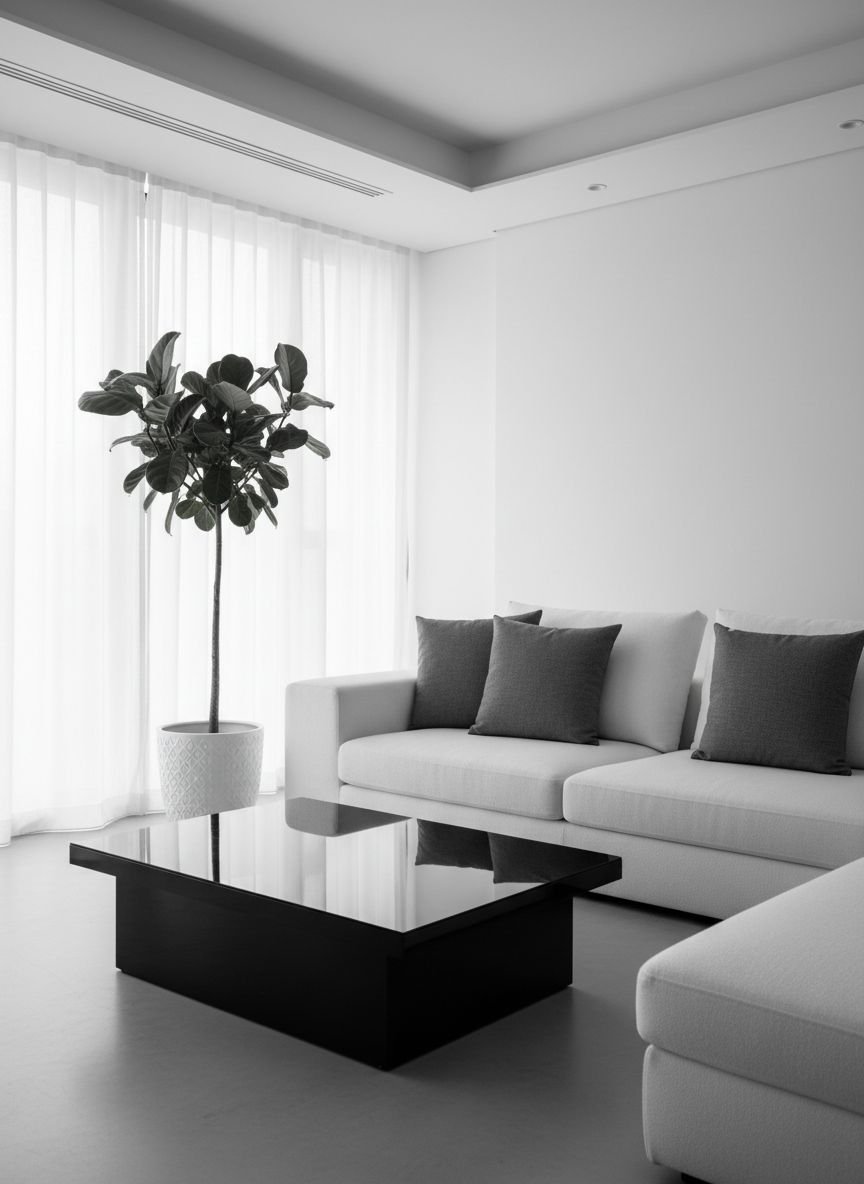
Monochrome does not mean boring. It means using varying shades of a single color to create a sophisticated, cohesive look. A black-and-white scheme is the most iconic modern example. It creates high contrast and instant drama. However, you can apply this principle to grey, blue, or even beige. The success of a monochrome room relies entirely on texture.
Without texture, a single-color room looks flat. Mix materials to create distinction. Pair a grey velvet sofa with a grey wool rug and grey linen curtains. The light hits each fabric differently, creating shadows and highlights that add richness. Use metal accents to break up the color blocks. A brass lamp or chrome table legs add a necessary spark to a monochromatic space.
Pro Tip: Add a living plant. The burst of green looks vibrant against a monochrome backdrop and brings life to the room.
Save this idea to your Pinterest.
Minimalist Decor
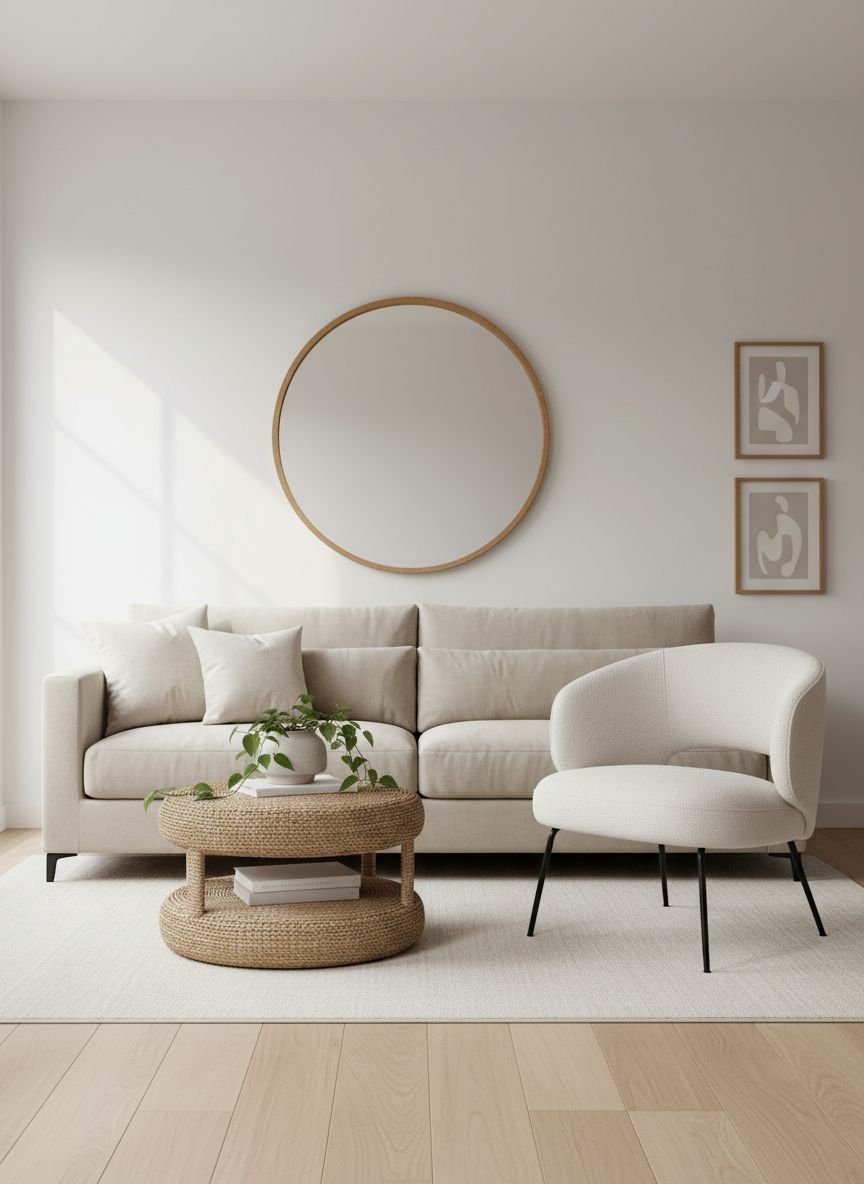
Minimalism is the art of editing. It is not about living in an empty box; it is about keeping only what is functional or beautiful. In a modern living room, clutter is the enemy. Surfaces should remain mostly clear. Bookshelves should breathe, with empty space acting as a visual pause between objects. This approach reduces visual noise and lowers stress.
Storage is your best friend here. Use closed cabinets to hide remote controls, cables, and paperwork. Display only a few curated items—a vase, a stack of art books, a sculpture. When you select decor, choose items that bring you genuine joy. If an object does not serve a purpose or make you happy, remove it. The negative space around the furniture is just as important as the furniture itself.
Pro Tip: Follow the “one in, one out” rule. If you buy a new decorative item, donate or sell an old one to maintain the balance.
Natural Materials
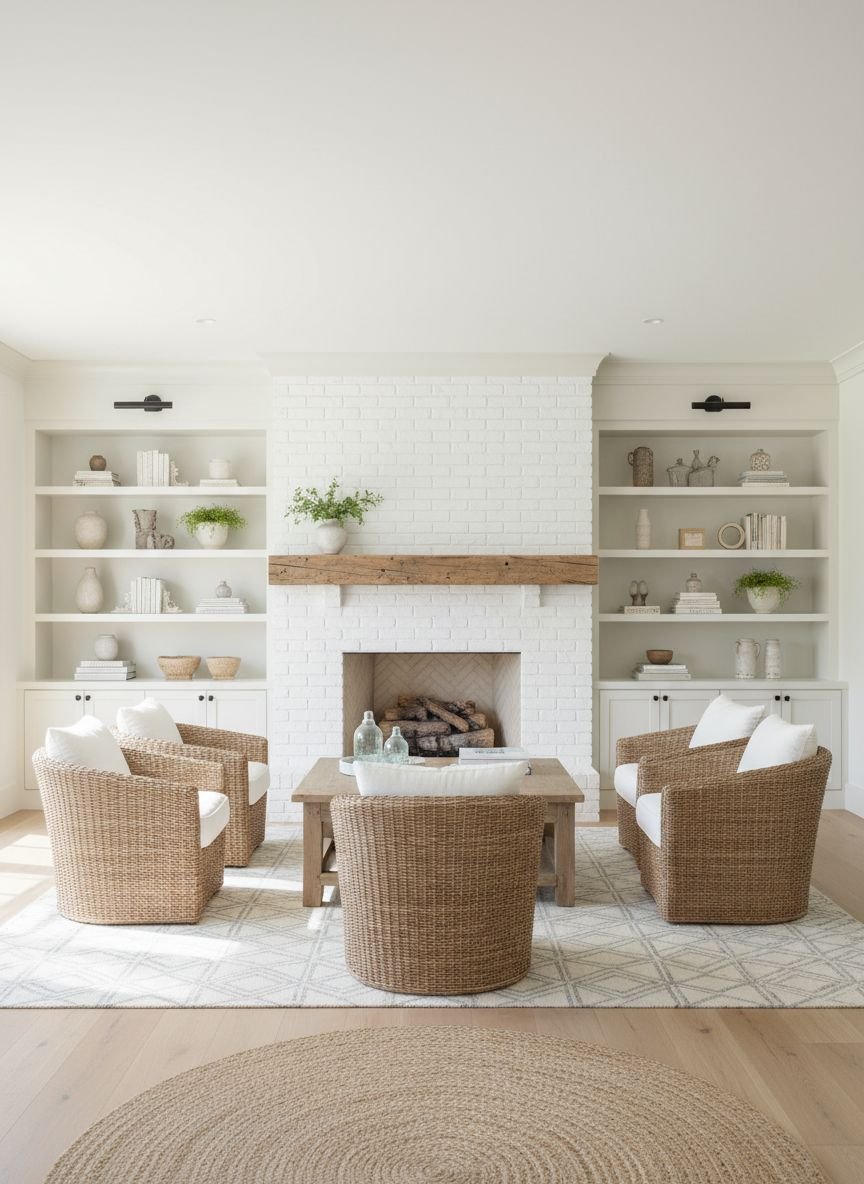
Modern design has shifted away from the sterile plastics of the 90s toward warm, organic materials. Wood, stone, leather, and wool ground the space. They add a tactile quality that makes a modern room feel habitable. A raw wood coffee table brings warmth to white walls. A stone fireplace surround adds weight and permanence.
Imperfection is beautiful here. The grain of the wood, the veins in the marble, and the patina on leather tell a story. These elements age well and look better over time. Combine rough textures with smooth ones. A chunky knit throw blanket looks incredible draped over a sleek leather sofa. This contrast creates a sensory experience that invites you to touch and relax.
Pro Tip: Jute or sisal rugs are an affordable way to bring a large amount of natural texture into the room instantly.
Layered Lighting
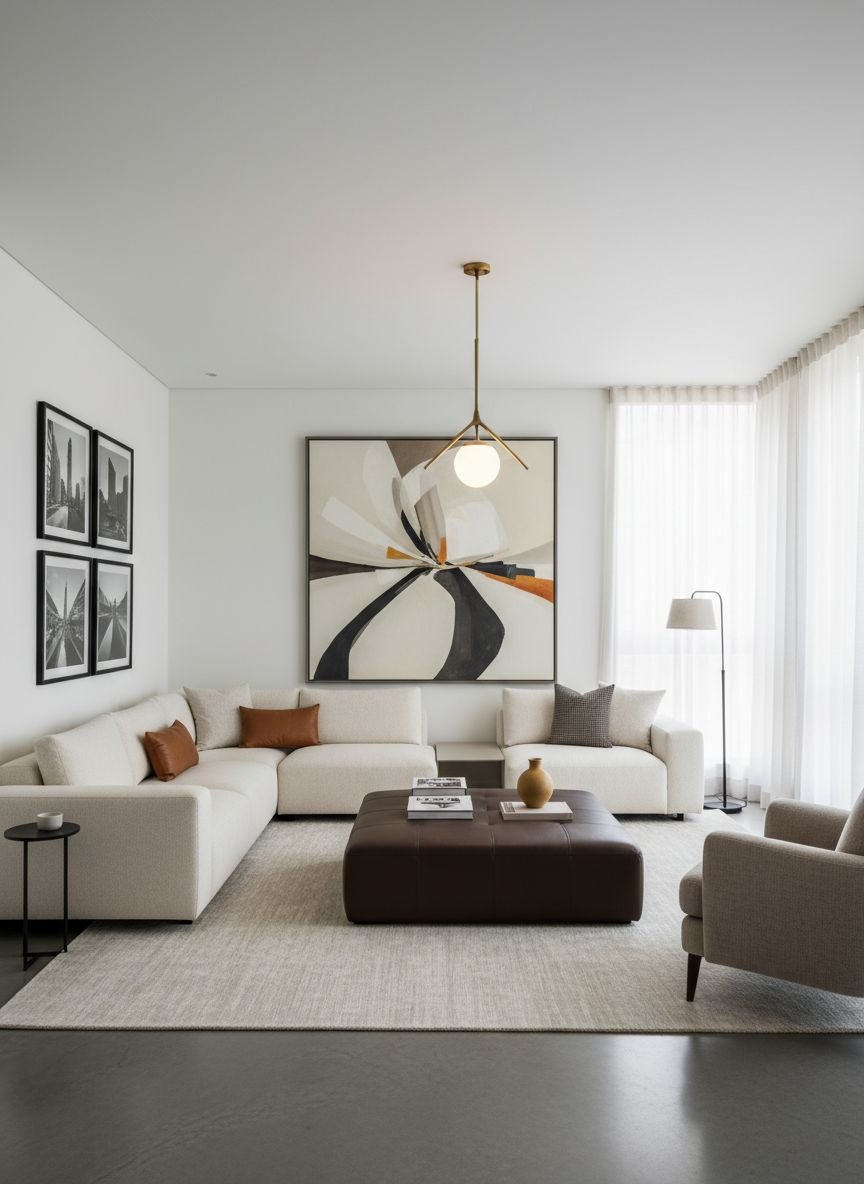
Never rely on a single overhead light. It creates harsh shadows and makes the room feel clinical. Modern living rooms use layered lighting to create mood and functionality. You need three types: ambient (general light), task (reading/working), and accent (highlighting art/features).
Start with recessed lighting or a central pendant for ambient light. Install dimmer switches to control the intensity. Add floor lamps near seating areas for task lighting. Use LED strips under floating shelves or behind the TV for accent lighting. This creates a soft glow that feels high-end. The fixtures themselves should be stylish. Matte black sconces or brass pendants act as jewelry for the room.
Pro Tip: Use warm white bulbs (2700K-3000K). Cool white bulbs (4000K+) can make a living room feel like a hospital or office.
Modular Furniture
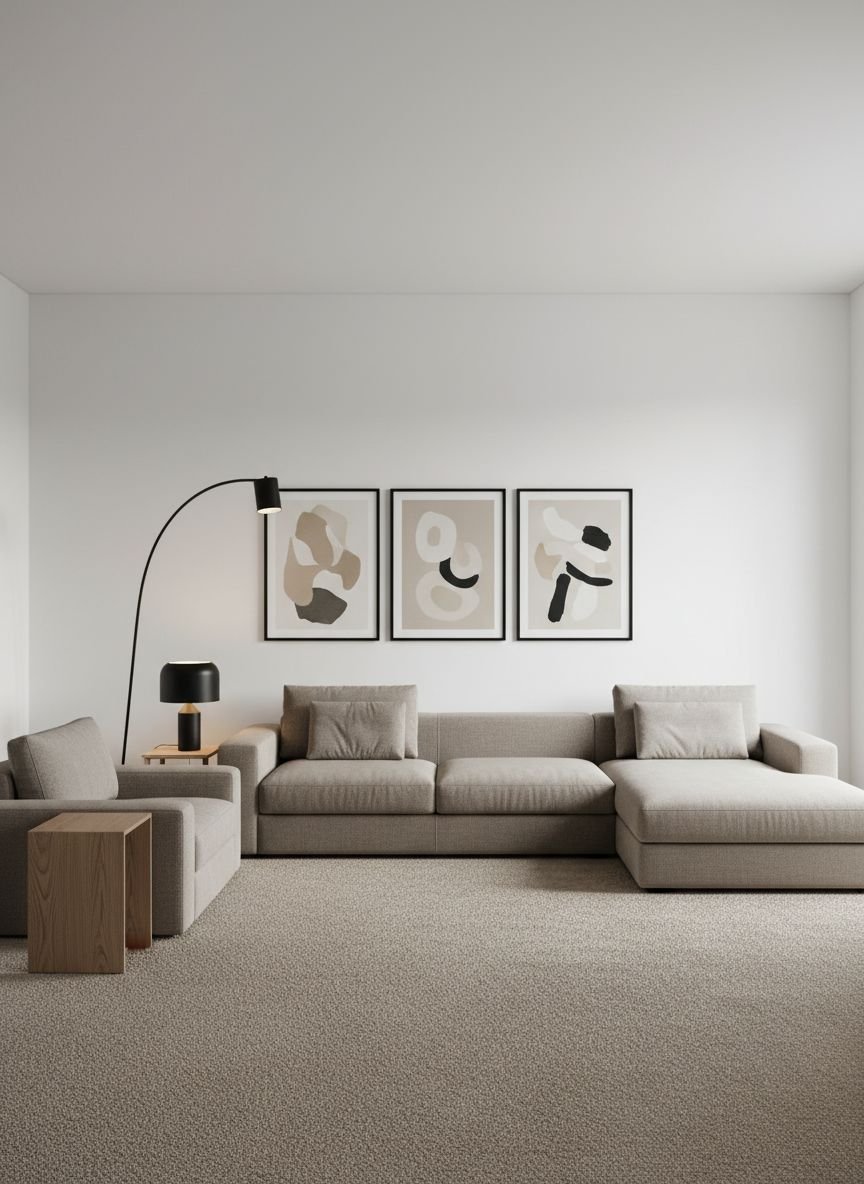
Life changes, and your furniture should adapt. Modular sofas are a staple of modern living rooms. They consist of separate sections that you can rearrange. You can create a large L-shape for movie nights, split them into separate seating groups for parties, or turn them into a guest bed. This flexibility is invaluable.
Look for low-profile modular pieces with deep seats. They encourage lounging and keep the sightlines open. Many modular systems now come with built-in storage or attached side tables. This maximizes utility in smaller footprints. The aesthetic is blocky and substantial, which works perfectly with the clean lines of modern architecture.
Pro Tip: Choose stain-resistant performance fabrics for modular sofas, as they will get heavy use and likely be moved around frequently.
Related posts :
- 16 Stunning Beige Living Room Ideas That Instantly Create a Cozy and Stylish Space
- 15 Sage Green Living Rooms That Transform Your Interior into a Haven of Peace
- 15 Jaw-Dropping Living Room Dreams That Will Instantly Upgrade Your Home Sanctuary
Bold Accent Walls
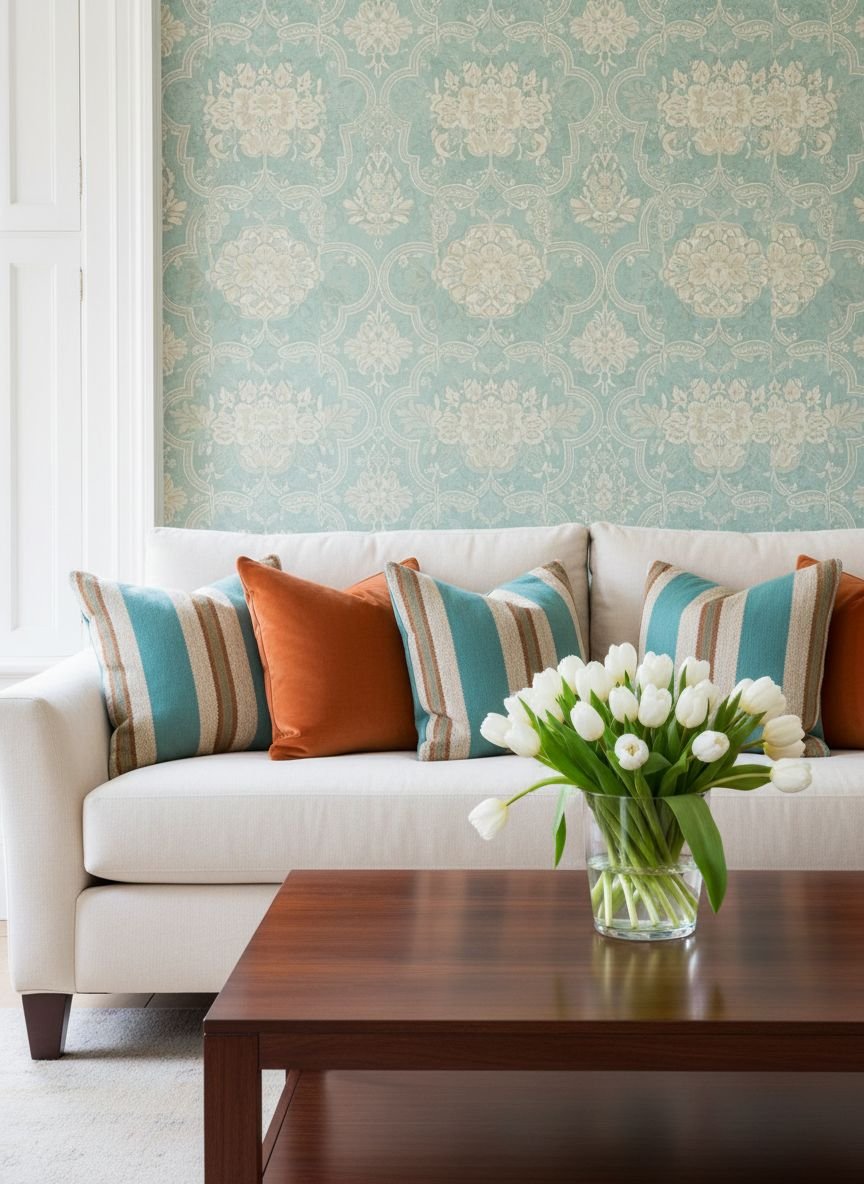
An accent wall creates an instant focal point. While white walls are common in modern design, a single dark wall adds incredible depth. Deep navy, charcoal, or forest green are excellent choices. They make the TV disappear when mounted against them and make artwork pop.
Paint is not the only option. Wood slat paneling is a massive trend. It adds texture and sound dampening while looking warm and architectural. Concrete-effect plaster gives an industrial edge. Wallpaper with a large-scale mural can turn a plain wall into a work of art. Ensure the accent wall is the one you look at most often—usually behind the sofa or the TV.
Pro Tip: If you paint an accent wall dark, consider painting the baseboards and trim the same color for a seamless, floor-to-ceiling look.
Smart Technology Integration
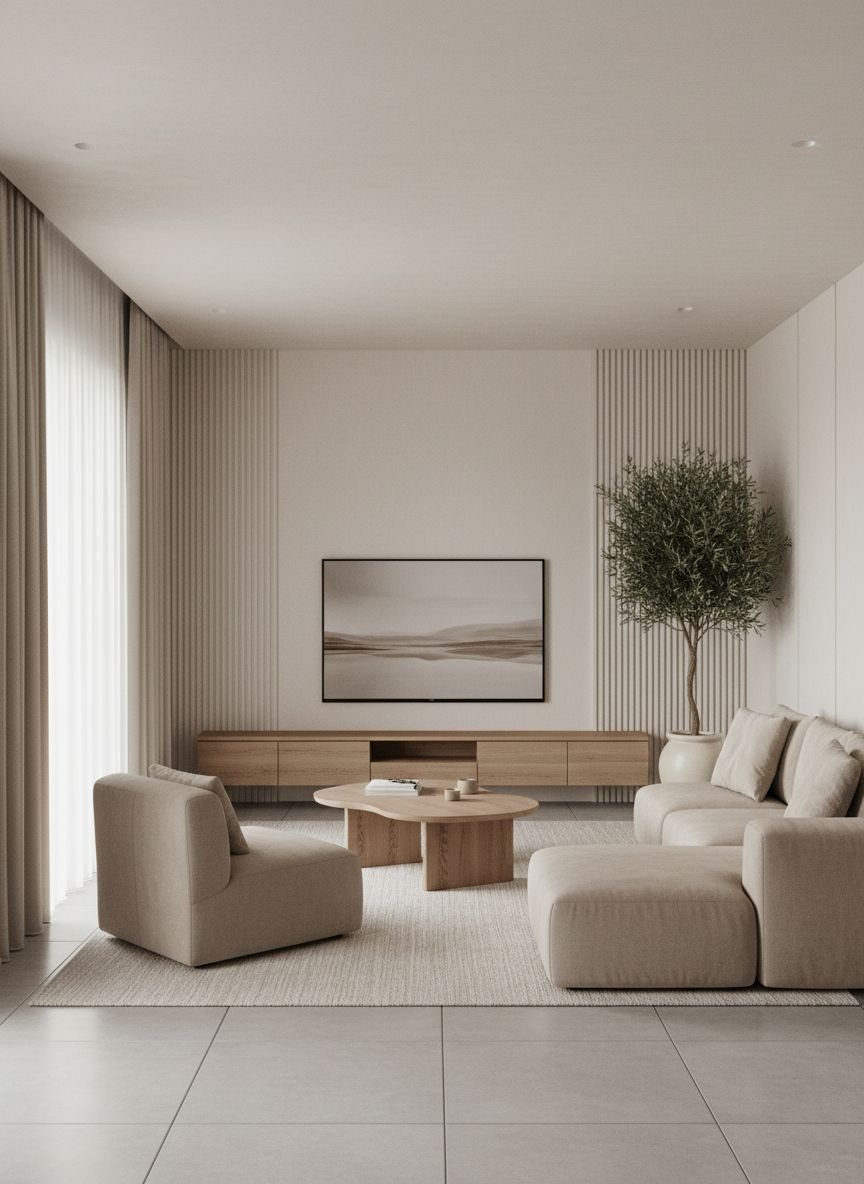
A truly modern living room is smart. Technology should enhance your life without cluttering your design. The goal is “invisible tech.” Frame TVs look like art when not in use, eliminating the black void of a standard screen. Smart bulbs allow you to change the color temperature and brightness of your lights from your phone.
Voice-activated assistants can be hidden in ceilings or sleek speakers. Automated blinds rise with the sun. Wireless charging pads can be built directly into side tables or stone countertops. Cable management is crucial. Run cords behind walls or use paintable cord covers. Seeing a tangle of wires ruins the clean aesthetic of modern design instantly.
Pro Tip: Invest in a universal remote or a smart hub system to control audio, video, and lighting from a single interface.
Popular Asked Questions
How do I make my living room look modern on a budget?
Focus on decluttering first—it is free and instantly modernizes a space. Paint your walls a crisp white or soft neutral. Swap out dated hardware (cabinet pulls, door handles) for matte black or brass options. Add a large, inexpensive jute rug to cover dated flooring. finally, update your lighting fixtures or just the lampshades to simple drum shapes.
What are the trending colors for living rooms in 2026?
Warm neutrals are replacing cool greys. Think “greige” (grey-beige), mushroom, terracotta, and warm whites. For accents, nature-inspired tones like sage green, olive, and deep ocean blue are very popular. Dark, moody rooms in charcoal or midnight blue are also trending for a cozy, sophisticated vibe.
How do I mix modern and traditional styles?
This mix is called “Transitional Design.” The secret is balance. If you have traditional architecture (crown molding, wood floors), use sleek, modern furniture. If you have a modern boxy room, add vintage rugs or an antique wooden chest to add soul. Stick to a neutral color palette to tie the disparate eras together seamlessly.
What is the best lighting for a modern living room?
Layered lighting is best. You need a mix of overhead lights (recessed or a statement pendant), floor lamps for corners, and table lamps for reading. Avoid relying on just one ceiling light. Use warm white bulbs (2700K-3000K) to keep the space inviting, not sterile.
Conclusion
Creating a stunning modern living room is about finding the balance between form and function. It is not just about buying the trendiest sofa; it is about crafting a space that feels open, light, and personal. Whether you choose the calm of a neutral palette or the drama of a dark accent wall, the goal is a home that serves your lifestyle.
Start with one change. Maybe it is decluttering your shelves or painting a wall. Watch how the energy of the room shifts.

Leave a Comment