
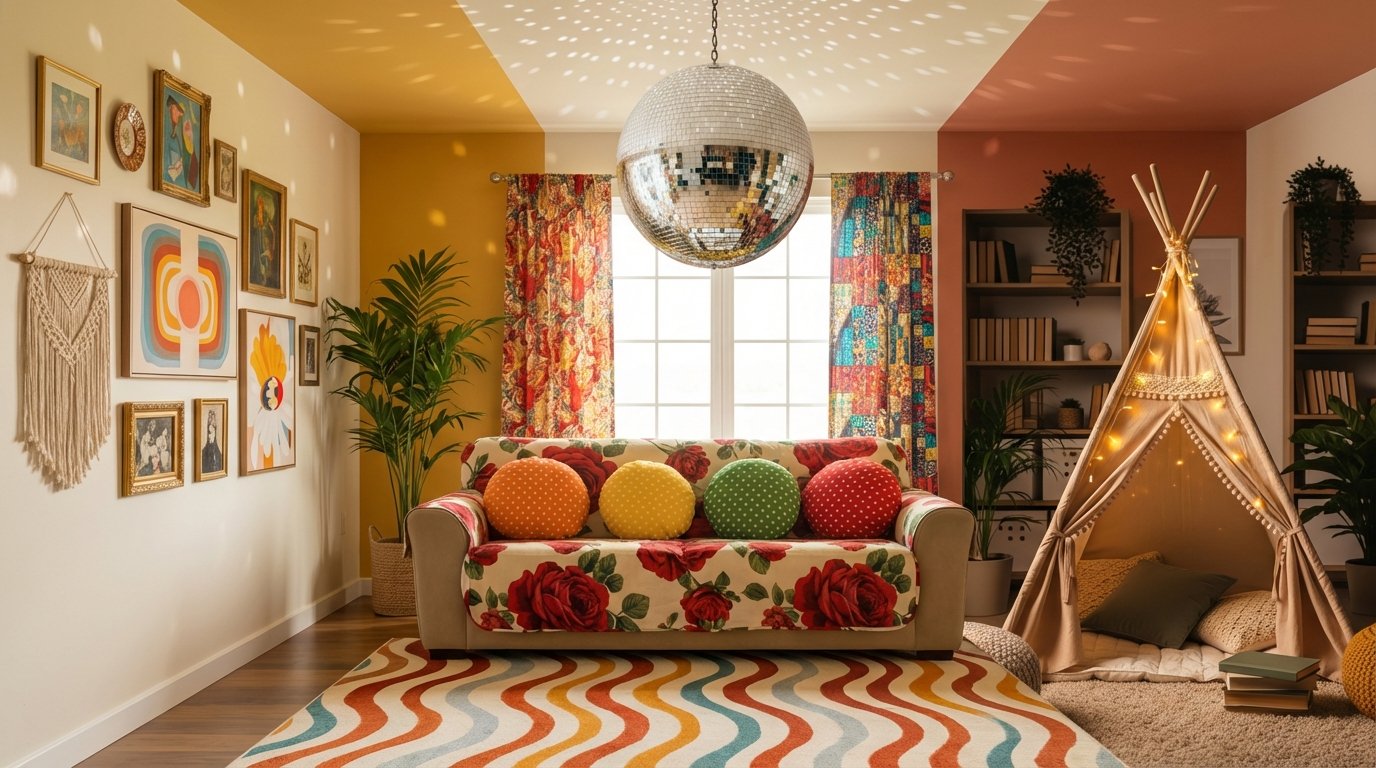
You walk into your living room and sigh. It’s clean, it’s functional, but it feels… beige. Safe. Maybe even a little boring. You scroll through Pinterest and see rooms exploding with personality, color, and joy, and you wonder, “Could I actually pull that off?” The answer is yes.
The “Whimsical” trend (often called Dopamine Decor) isn’t about clutter; it’s about curating happiness. It is the antidote to the sterile “sad beige” aesthetic that has dominated our feeds for years. By injecting playful elements, unexpected textures, and bold choices into your home, you don’t just change the look; you change how you feel when you walk through the door.
In this guide, we are breaking down 14 specific, actionable ways to transform your living room from mundane to magical. These aren’t vague concepts; they are concrete steps to add life, humor, and fabulous energy to your space today.
Key Takeaways
- Personality Over Perfection: Whimsy is about showcasing what makes you smile, not adhering to a strict catalog look.
- Texture is King: Mixing soft macramé, sleek metal, and fuzzy rugs creates the tactile variety that defines this style.
- Scale Matters: Oversized items (like giant plushies or huge chandeliers) instantly disrupt the norm and create a focal point.
- Color Confidence: You don’t need to paint the whole room; a single teal wall or neon accent furniture piece is enough to shift the vibe.
Table of Contents
- Add a Ceiling Chandelier with Quirky Shapes
- Mix Polka Dot Cushions with Floral Throws
- Paint One Wall Bright Teal for an Instant Vibe Shift
- Use a Vintage Trunk as a Coffee Table
- Hang Macramé Plant Holders from the Ceiling
- Swap Out Plain Curtains for Mismatched Patterned Ones
- Add a Quirky Bookshelf Shaped Like a Tree
- Spray Paint Old Furniture Neon Pink
- Frame Kids’ Art in Funky Mismatched Frames
- Lay Down a Rug with a Wacky Geometric Print
- Place a Giant Stuffed Animal in the Corner
- Use a Teepee Tent as a Reading Nook
- String Fairy Lights in Unexpected Corners
- Put a Disco Ball in the Center of the Room
- Popular Asked Questions
- Conclusion
Add a ceiling chandelier with quirky shapes
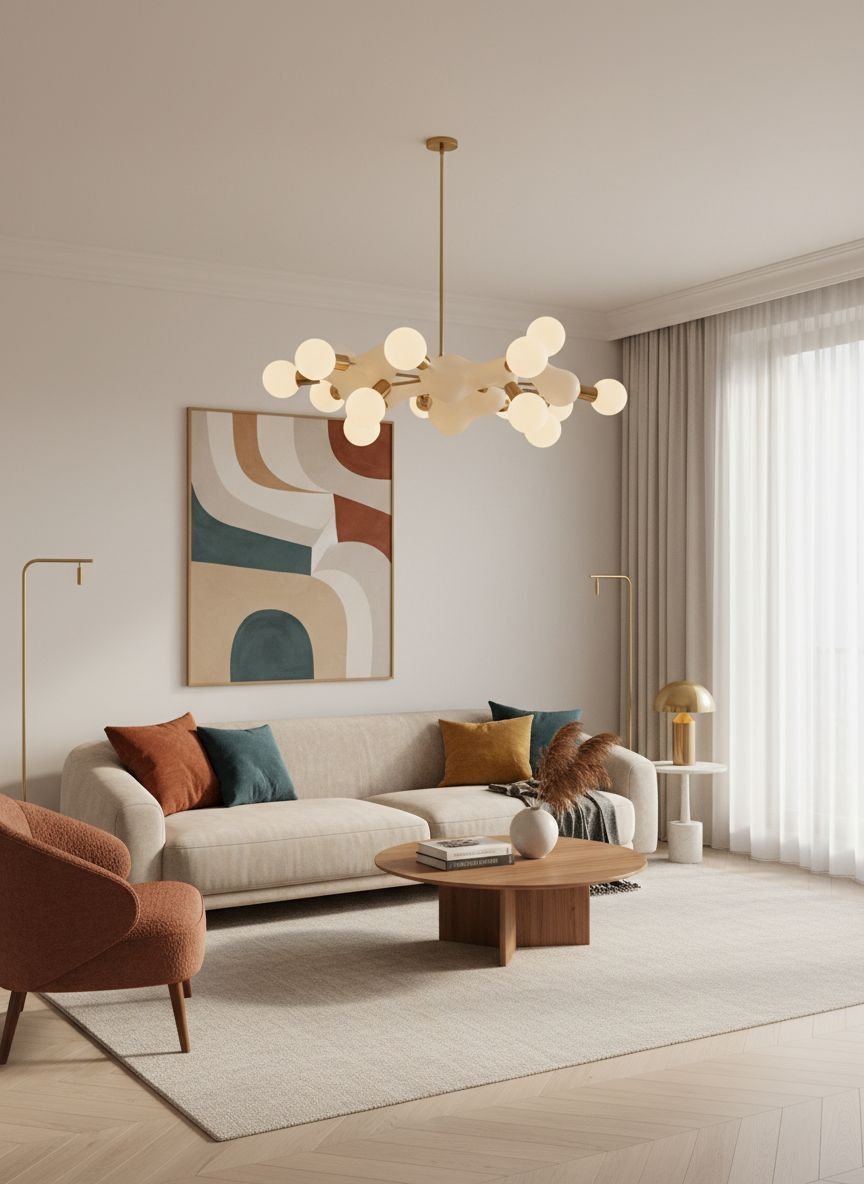
Lighting is often treated as purely functional, but in a whimsical living room, it is the crown jewel of the ceiling. A standard flush mount light fades into the background, whereas a chandelier with irregular, organic, or sputnik-style shapes forces the eye upward and sets a playful tone immediately. We are seeing a massive surge in “bubble” chandeliers and asymmetrical brass fixtures that look more like floating sculptures than light sources.
The magic here lies in the silhouette. When the light is off, the fixture acts as modern art. When the light is on, the quirky shapes cast interesting shadows that add depth and drama to the room. This breaks the rigidity of square rooms and rectangular furniture. To implement this, look for fixtures that feature mixed materials, such as colored glass or bent metal arms.
Pro Tip: Install a dimmer switch with your quirky chandelier. This allows you to shift the mood from “bright art gallery” to “cozy lounge” instantly.
Mix polka dot cushions with floral throws
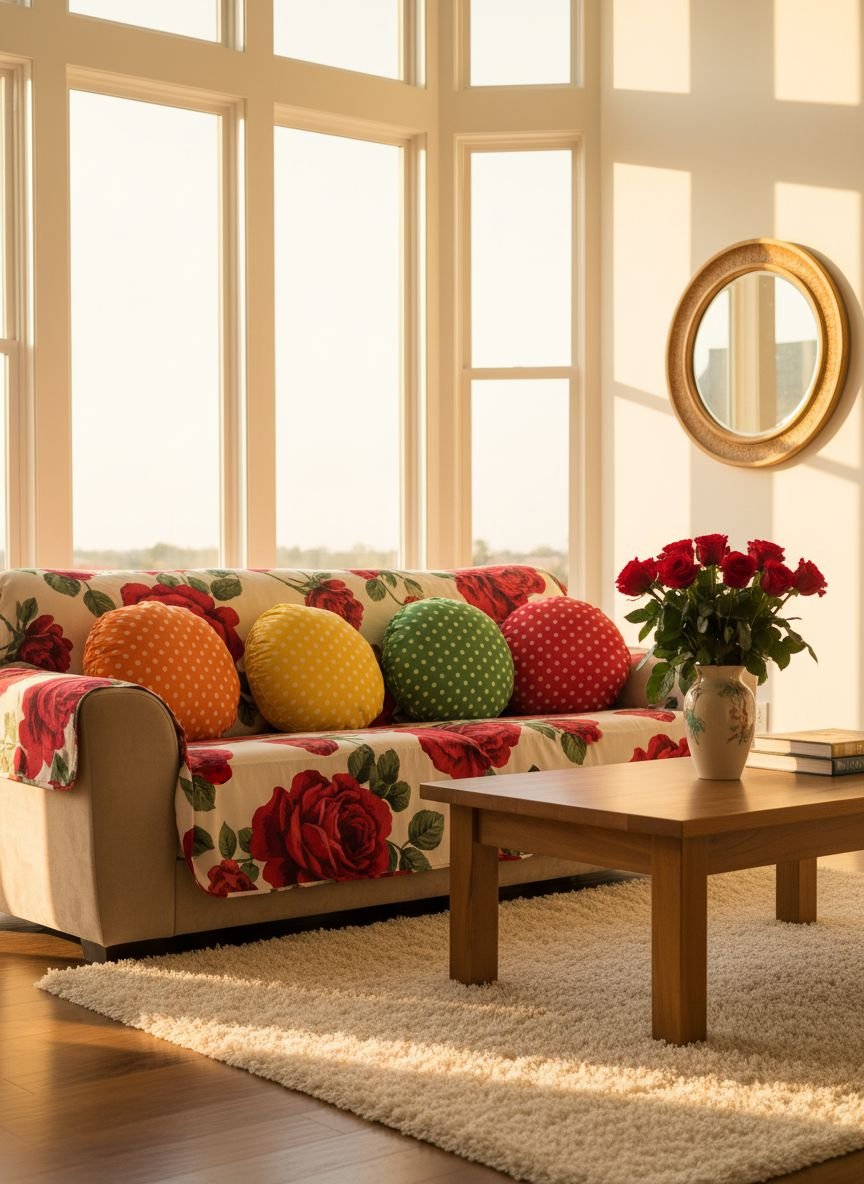
The old rulebook says patterns shouldn’t clash, but the whimsical aesthetic thrives on “intentional chaos.” Combining the structured, geometric nature of polka dots with the organic, flowing lines of floral prints creates a dynamic visual tension that feels energetic and lived-in. This combination works because it balances masculine and feminine energy, preventing the room from feeling too stiff or too chaotic.
To make this work without giving yourself a headache, keep a cohesive color thread. If your floral throw has hints of mustard yellow and sage green, ensure your polka dot cushions share at least one of those tones. The difference in scale is also vital; use large, bold florals paired with smaller, tighter polka dots (or vice versa) to ensure the patterns don’t compete for attention.
Pro Tip: Start with three pillows: one large floral, one medium solid color pulled from the floral, and one small lumbar pillow in polka dots.
Paint one wall bright teal for an instant vibe shift
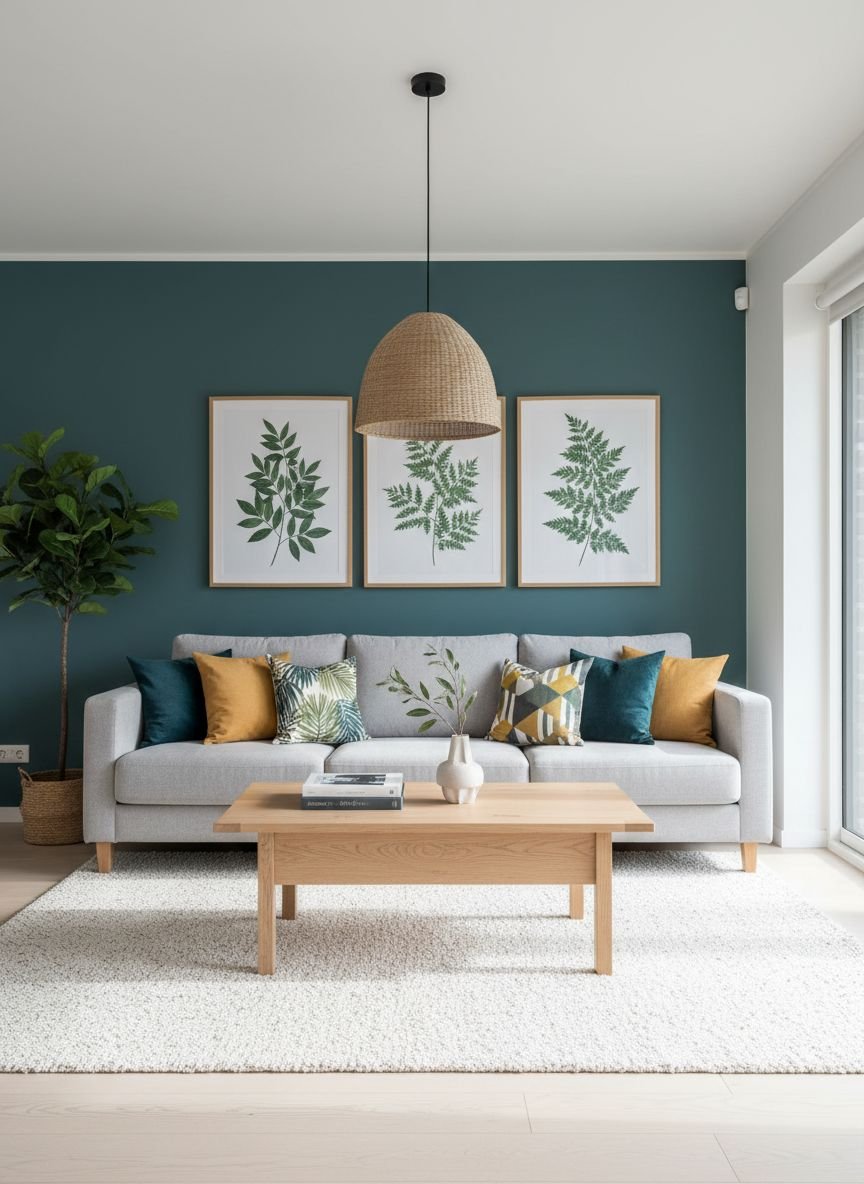
If you want to maximize impact on a budget, paint is your best friend. A bright teal accent wall anchors the room and provides a rich, saturated backdrop for your furniture. Teal is particularly effective because it sits on the border between calming blue and energizing green. It evokes feelings of tropical escapes and creative studios, making it the perfect color for a high-energy, happy living space.
Visually, a dark or bright accent wall adds depth, making the room actually feel larger rather than smaller. It creates a focal point that draws the eye, which is perfect for positioning behind a sofa or a TV unit. When painting, choose a matte or eggshell finish. High gloss on a bright color can look cheap and will reflect too much glare from your quirky chandelier.
Pro Tip: If painting a whole wall feels too permanent, try painting an arch shape behind a shelf or console table for a trendy, renter-friendly pop of color.
Use a vintage trunk as a coffee table
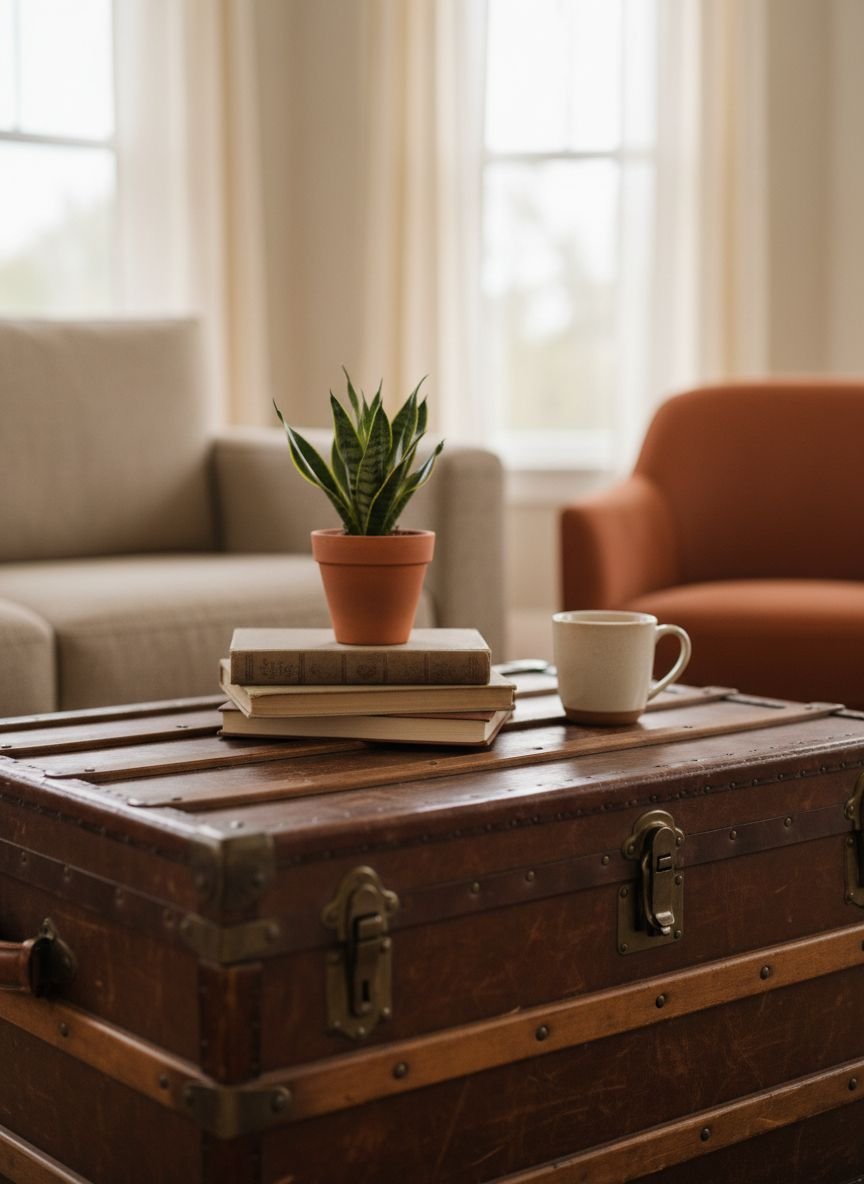
Replacing a standard glass or wood coffee table with a vintage trunk introduces a layer of history and mystery to your living room. Whether it is a battered leather steamer trunk or a painted metal military chest, this piece tells a story. The texture of worn leather or rusted metal contrasts beautifully with soft sofas and plush rugs, adding that “found object” charm central to whimsical decor.
Functionally, a trunk is a storage powerhouse. It is the perfect hiding spot for winter blankets, board games, or that clutter you need to stash away before guests arrive. To style it, use a large tray on top to provide a stable surface for drinks and candles, as the top of a vintage trunk can sometimes be uneven.
Pro Tip: If the trunk is too low for your sofa, add screw-on wooden legs or heavy-duty caster wheels to raise it to a comfortable height.
Hang macramé plant holders from the ceiling
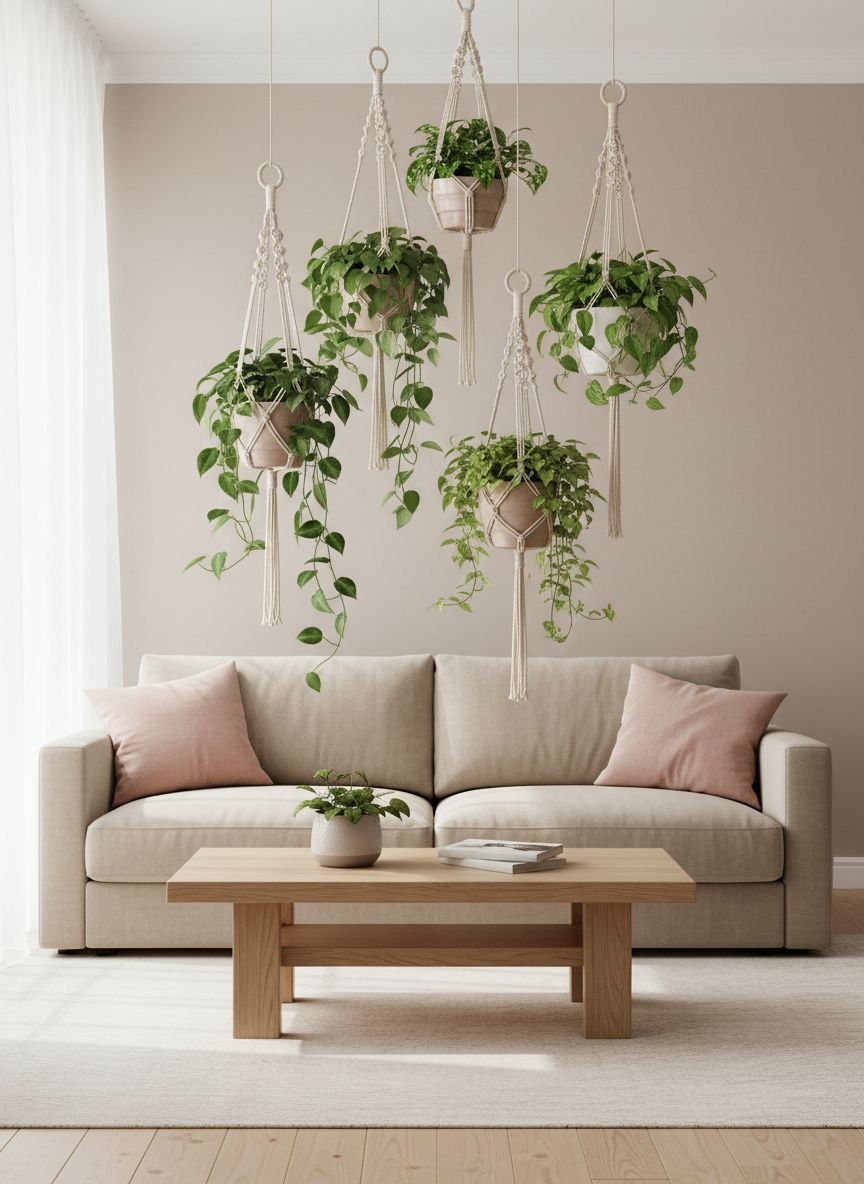
Verticality is often ignored in living room design. Hanging macramé plant holders draws the eye upward and softens the hard angles of corners and windows. The texture of the knotted cotton rope adds a bohemian, handmade touch that feels warm and inviting. Combined with the trailing vines of a Pothos or Philodendron, you bring a literal breath of fresh air into the space.
This design choice utilizes “dead space” near windows where furniture can’t fit. The organic shapes of the plants break up the straight lines of walls and shelves. To keep it whimsical, vary the lengths of your hangers. Grouping three plants at different heights creates a cascading waterfall effect that looks far more designed than a single lonely plant.
Pro Tip: Use lightweight plastic pots inside your decorative planters to reduce the weight load on your ceiling hooks.
Comparison: Pattern Mixing Strategies
| Strategy | Visual Impact | Difficulty Level | Best For |
|---|---|---|---|
| Monochromatic | Low / Subtle | Easy | Beginners who want texture without chaos. |
| Scale Contrast | Medium / Balanced | Medium | Mixing large florals with small geometrics (Recommended). |
| Complementary | High / Bold | Hard | Maximalists who love clashing colors like teal and orange. |
Swap out plain curtains for mismatched patterned ones
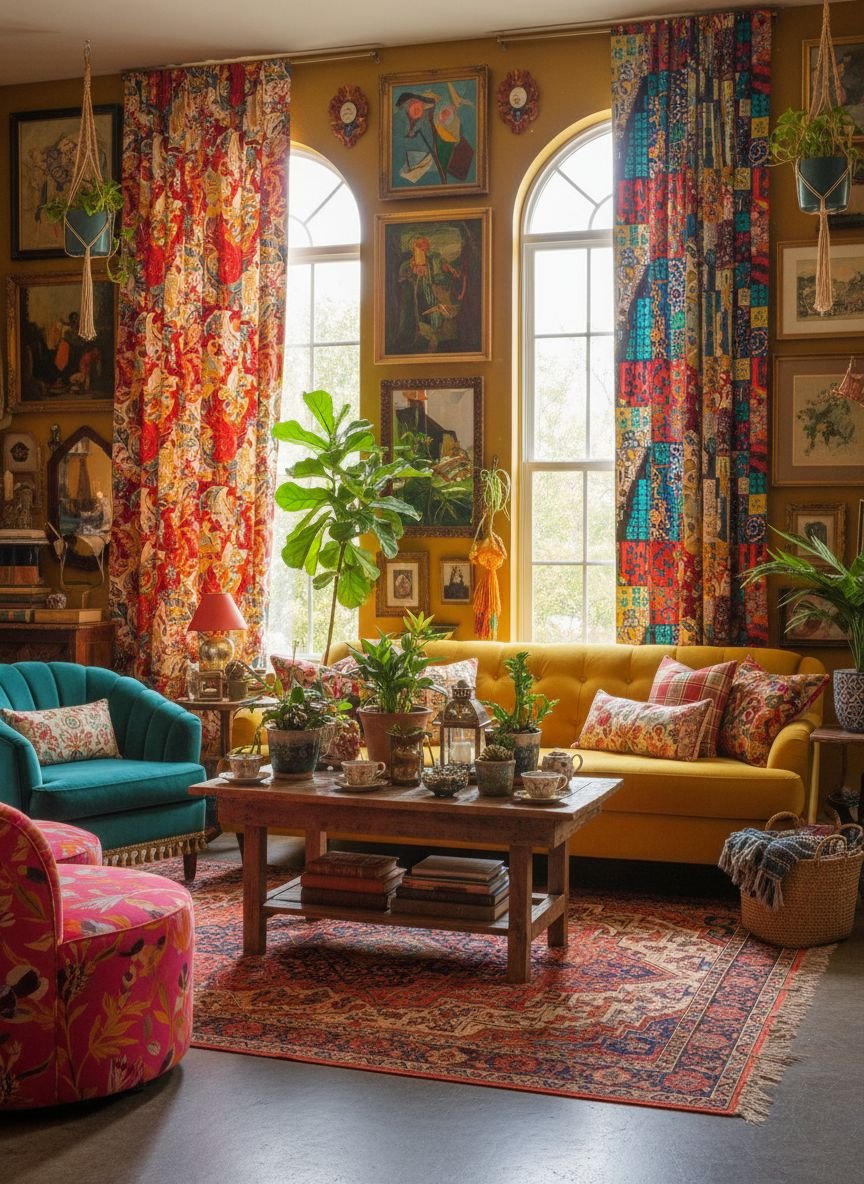
Who says your left curtain panel has to match the right one? In the world of whimsical decor, symmetry is overrated. Swapping plain beige drapes for mismatched patterned curtains creates an eclectic, storybook feel. You might pair a thick velvet curtain in mustard yellow on one side with a sheer, embroidered floral curtain on the other.
This technique frames the window like a piece of art. It allows you to control light filtration dynamically; the sheer side lets in sun, while the heavy side blocks it. It suggests a home that has been collected over time rather than bought in a single trip to a big-box store. Ensure the two curtains share at least one color tone or have the same length to keep the look intentional, not accidental.
Pro Tip: Use curtain clips instead of rod pockets. This makes it incredibly easy to swap out fabrics seasonally or whenever the mood strikes.
Add a quirky bookshelf shaped like a tree
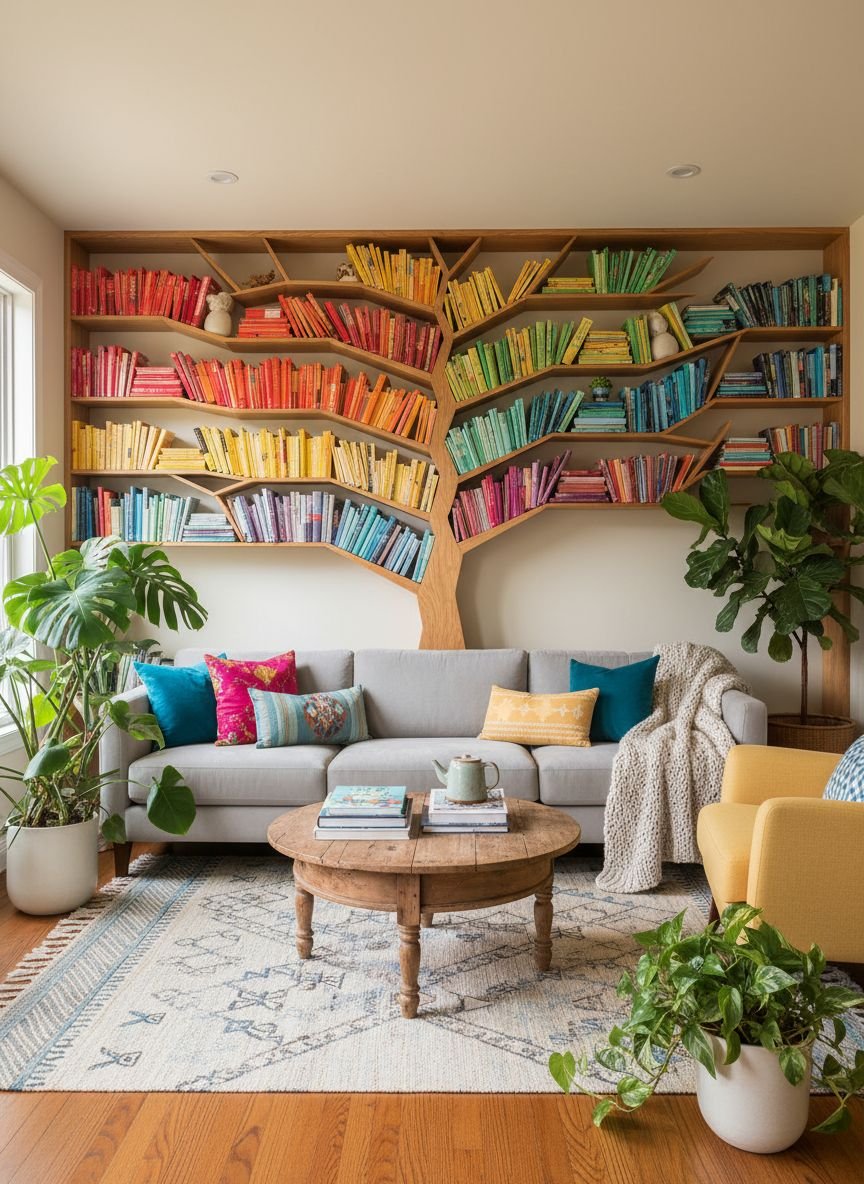
Storage doesn’t have to be a boring rectangle. A tree-shaped bookshelf acts as a functional sculpture, turning your book collection into the leaves of a literary forest. The angled branches create dynamic lines on the wall, forcing you to stack books in different directions—some vertical, some horizontal, some leaning. This breaks the monotony of traditional vertical shelving.
This piece works exceptionally well in smaller living rooms where floor space is premium, as many tree shelves are wall-mounted and vertical. It instantly signals creativity and imagination. Use the lower branches for heavier hardcovers and the upper branches for lighter paperbacks or small decor items like succulents or figurines.
Pro Tip: Organize books by color on the “branches” to create a rainbow tree effect that pops against a neutral wall.
Spray paint old furniture neon pink
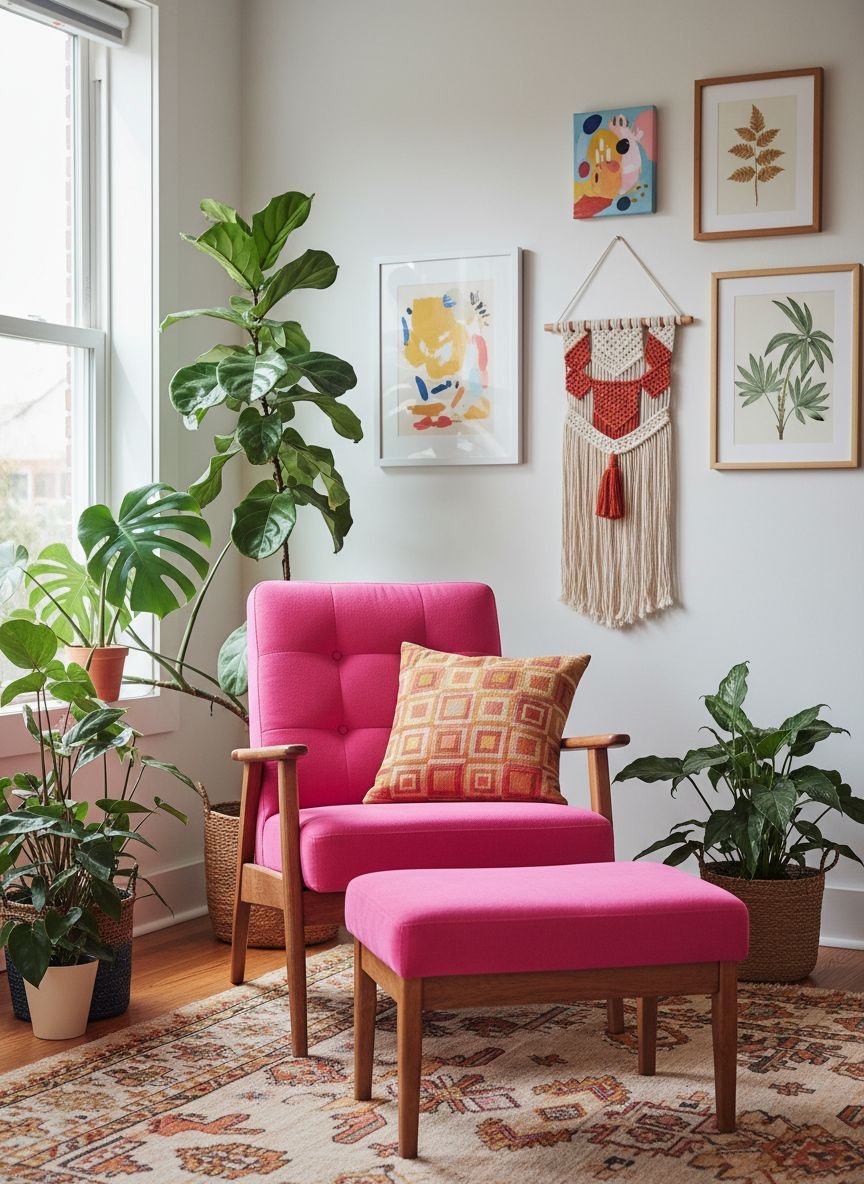
One of the hallmarks of the whimsical style is the fearless use of neon. Taking a traditional piece of furniture, like a Victorian-style side table or a wooden Windsor chair, and spray painting it hot pink creates a stunning contrast between form and finish. It is a punk-rock approach to interior design that says you don’t take yourself too seriously.
The visual shock of neon pink against natural wood or neutral walls creates an immediate focal point. It breathes new life into thrifted or damaged furniture that might otherwise be discarded. The key is to prep the surface correctly—sand it down and use a high-quality primer—so the neon paint pops vividly and doesn’t peel.
Pro Tip: Seal your neon creation with a clear glossy topcoat. Neon paint can sometimes have a chalky finish, and the gloss makes it look like high-end acrylic.
Frame kids’ art in funky mismatched frames
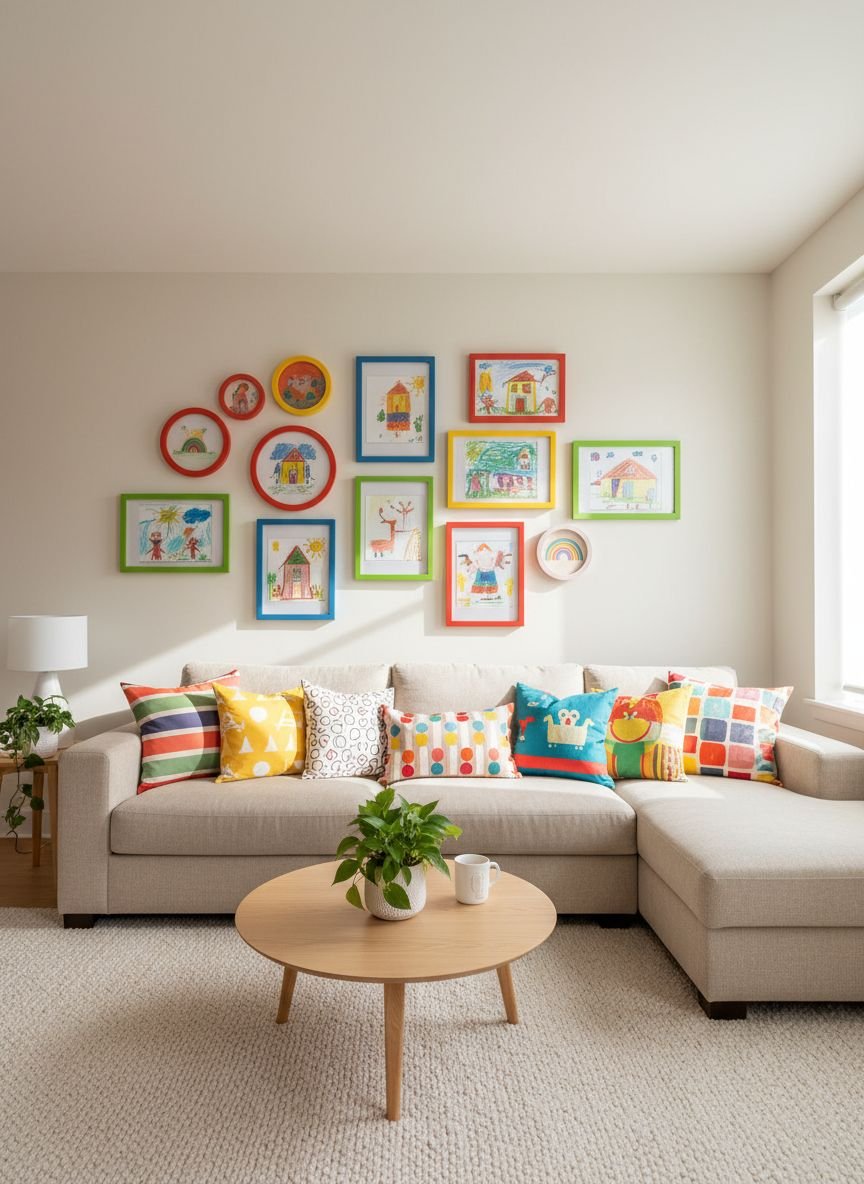
Gallery walls are a staple of modern design, but a whimsical gallery wall ditches the matching black frames for a riot of color and style. Using ornate gold frames, sleek modern white frames, and rustic wood frames together creates a textured, eclectic look. Filling these frames with children’s art adds a layer of raw, unfiltered creativity that professional prints often lack.
The abstract shapes and bold colors children use fit perfectly with the whimsical aesthetic. It personalizes the space deeply, transforming your living room into a family museum. Arrange the frames in an organic “cloud” shape rather than a strict grid to maintain the playful energy.
Pro Tip: If you don’t have kids, look for “naive art” or abstract prints on Etsy that mimic the uninhibited style of childhood drawings.
Lay down a rug with a wacky geometric print
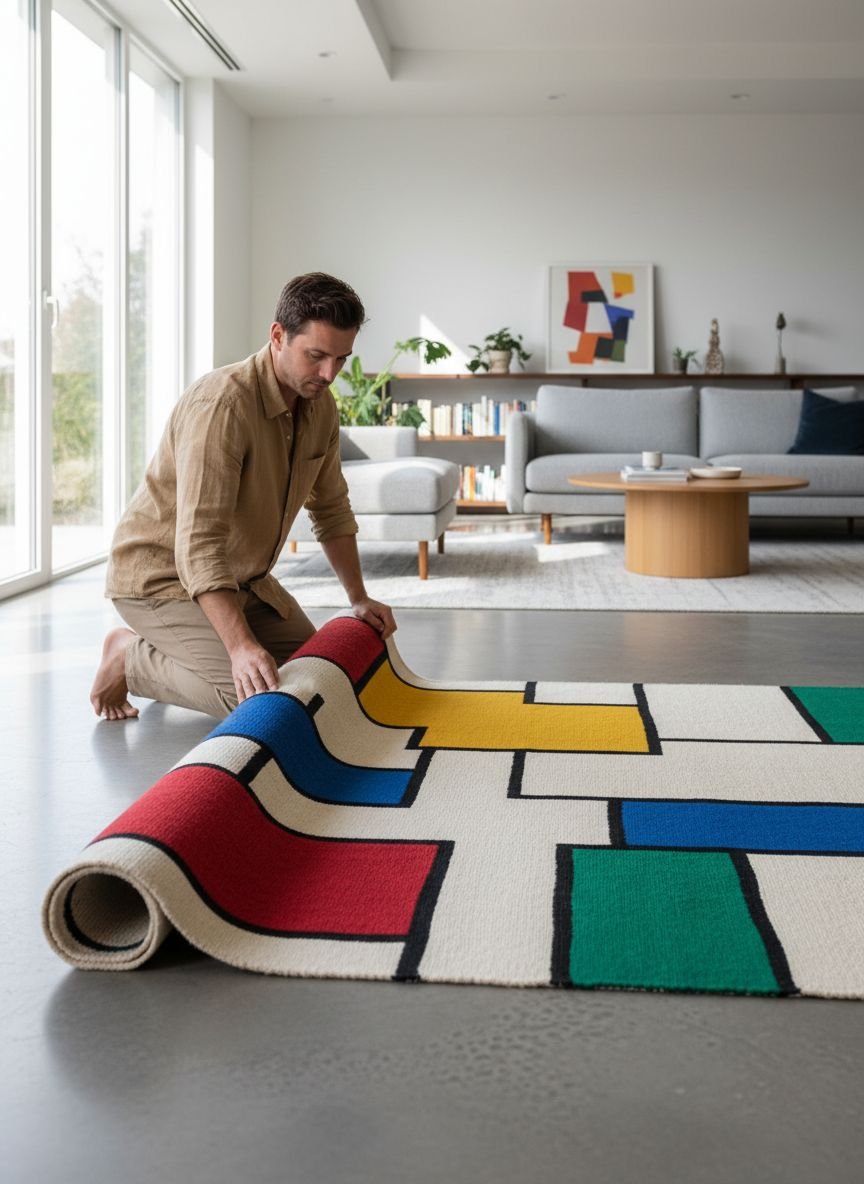
The floor is the largest canvas in your room, yet it is often covered in plain gray or beige. A rug with a wacky geometric print—think Memphis Design squiggles, optical illusions, or bold color blocks—grounds the room in fun. It acts as an island of energy that defines the seating area.
Geometric patterns provide a sense of movement. Your eye traces the lines across the floor, making the room feel dynamic. If your furniture is mostly solid colors, a loud rug does the heavy lifting for the entire design scheme. Choose a low-pile rug if you want the pattern to look crisp and sharp, or a shag rug if you want to soften the geometry with texture.
Pro Tip: Use rug tape on the corners. Geometric patterns look best when they lie perfectly flat; curled corners ruin the optical effect.
Get The Look: Whimsical Essentials
- Lighting: Look for “Sputnik” or “Bubble” chandeliers.
- Textiles: Velvet cushions, chunky knit throws, and floral cottons.
- Paint: Teal, Coral, or Sunshine Yellow in matte finishes.
- Decor: Disco balls, vintage trunks, and quirky ceramics.
Related posts :
- 12 Stunning Modern Living Room Ideas to Transform Your Space
- 18 Stunning Home Decoration Ideas To Jazz Things Up & Instantly Refresh Your Space
- 15 Playful & Bright Corner Shelf Decor for Kids’ Rooms That Will Spark Joy Imagination
Place a giant stuffed animal in the corner (yes, really)
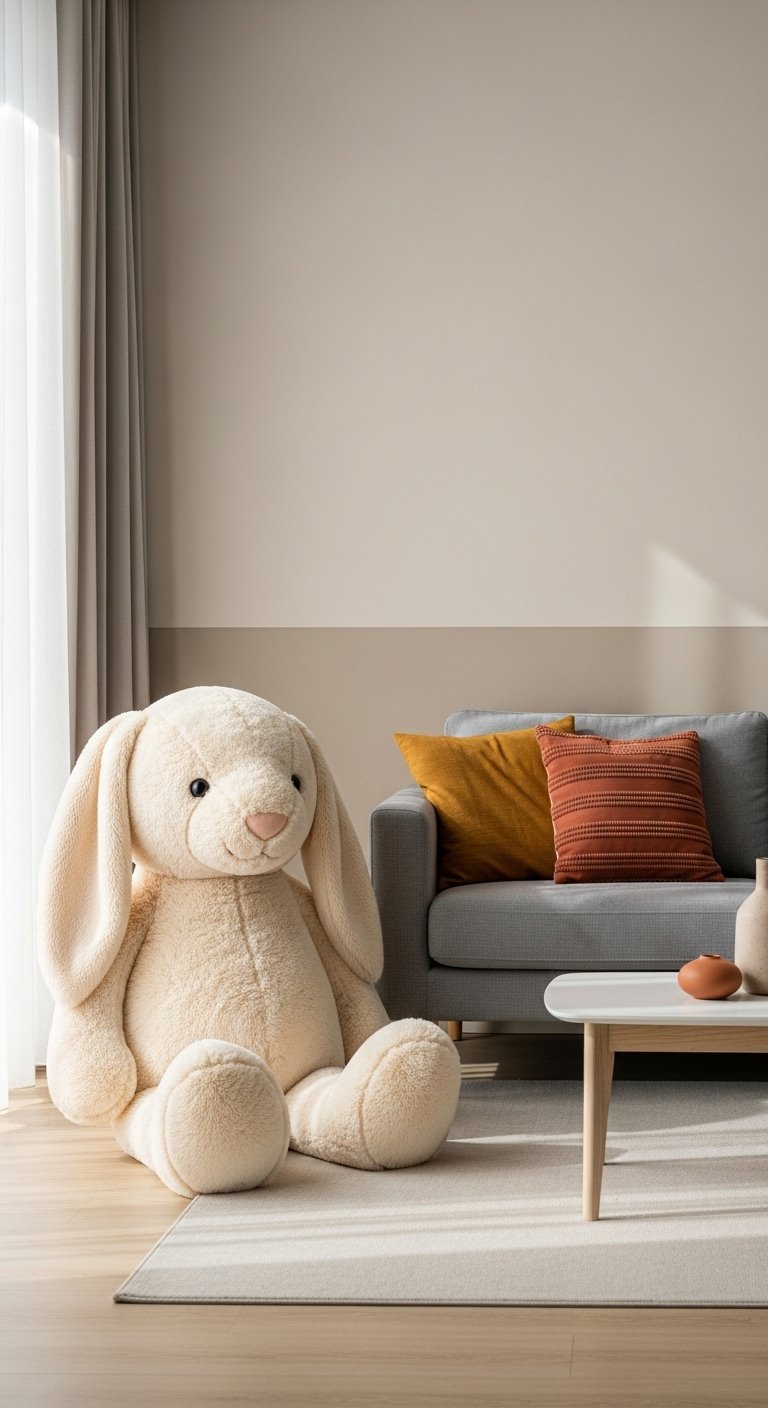
This is the ultimate commitment to whimsy. Placing a giant plush giraffe, bear, or tiger in the corner of the living room is a bold move that subverts expectations. It takes an item usually reserved for a nursery and elevates it to pop art. It is a conversation starter that immediately disarms guests and makes them smile.
Visually, a large plush toy adds softness and organic curves to a corner that might otherwise be dead space. It plays with scale, making the room feel like a wonderland. To keep it looking “chic whimsical” rather than “messy playroom,” ensure the rest of the corner is tidy. Maybe the giraffe is peering over a reading chair or standing next to a tall plant.
Pro Tip: Save this idea to your Pinterest board. Look for realistic-looking plush animals rather than cartoonish ones to keep the aesthetic slightly more sophisticated.
Use a teepee tent as a reading nook
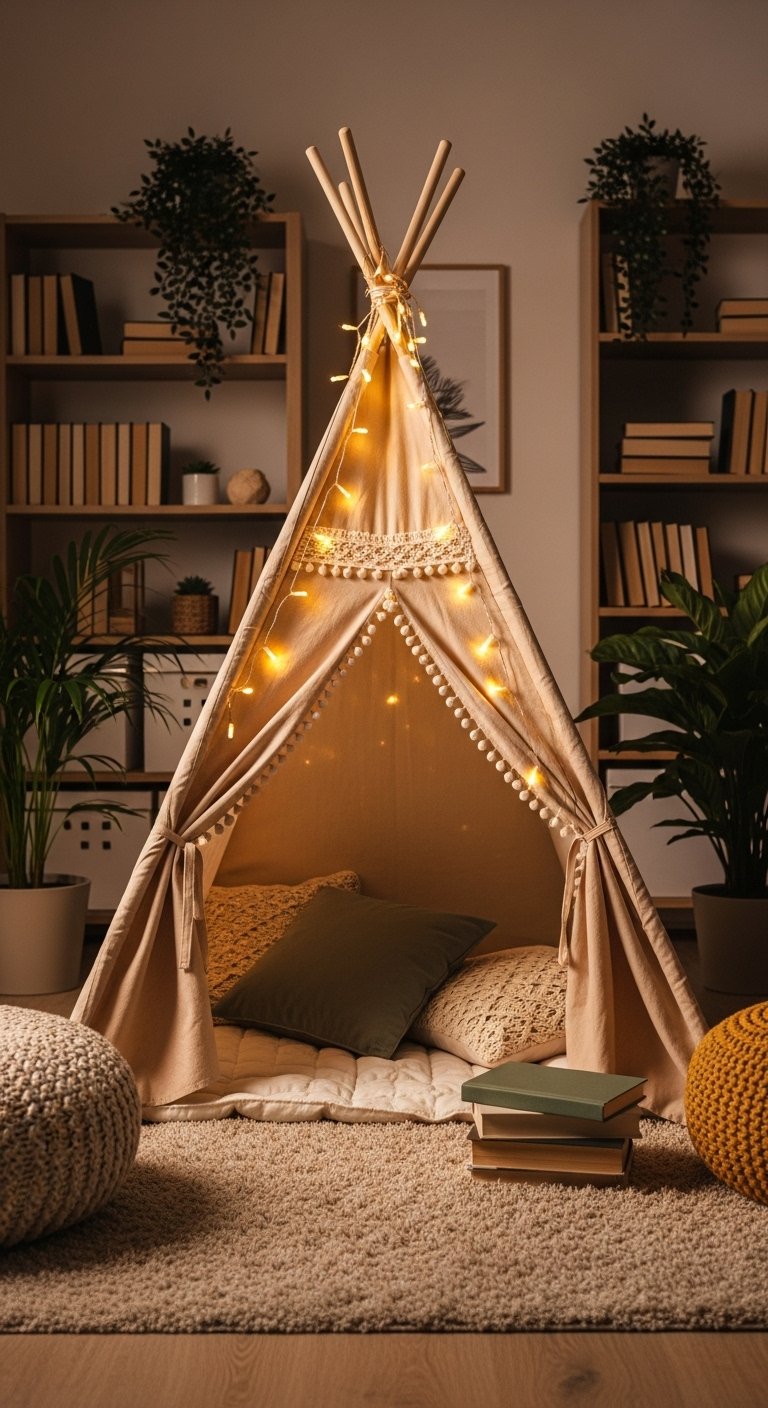
We all crave a safe, cozy hiding spot. A canvas teepee tent in the corner of the living room provides a semi-private retreat for reading, meditating, or just scrolling on your phone. It adds a strong architectural triangle shape to the room, breaking up the horizontal lines of sofas and tables.
Layer the inside with sheepskin rugs, floor cushions, and soft throws to create a “nest” vibe. The fabric walls of the teepee soften the acoustics of the room, making it a quiet zone. This is particularly great for open-concept homes where it can be hard to find a secluded spot.
Pro Tip: Drape a strand of battery-operated lights around the opening of the teepee to make it look inviting in the evening.
String fairy lights in unexpected corners
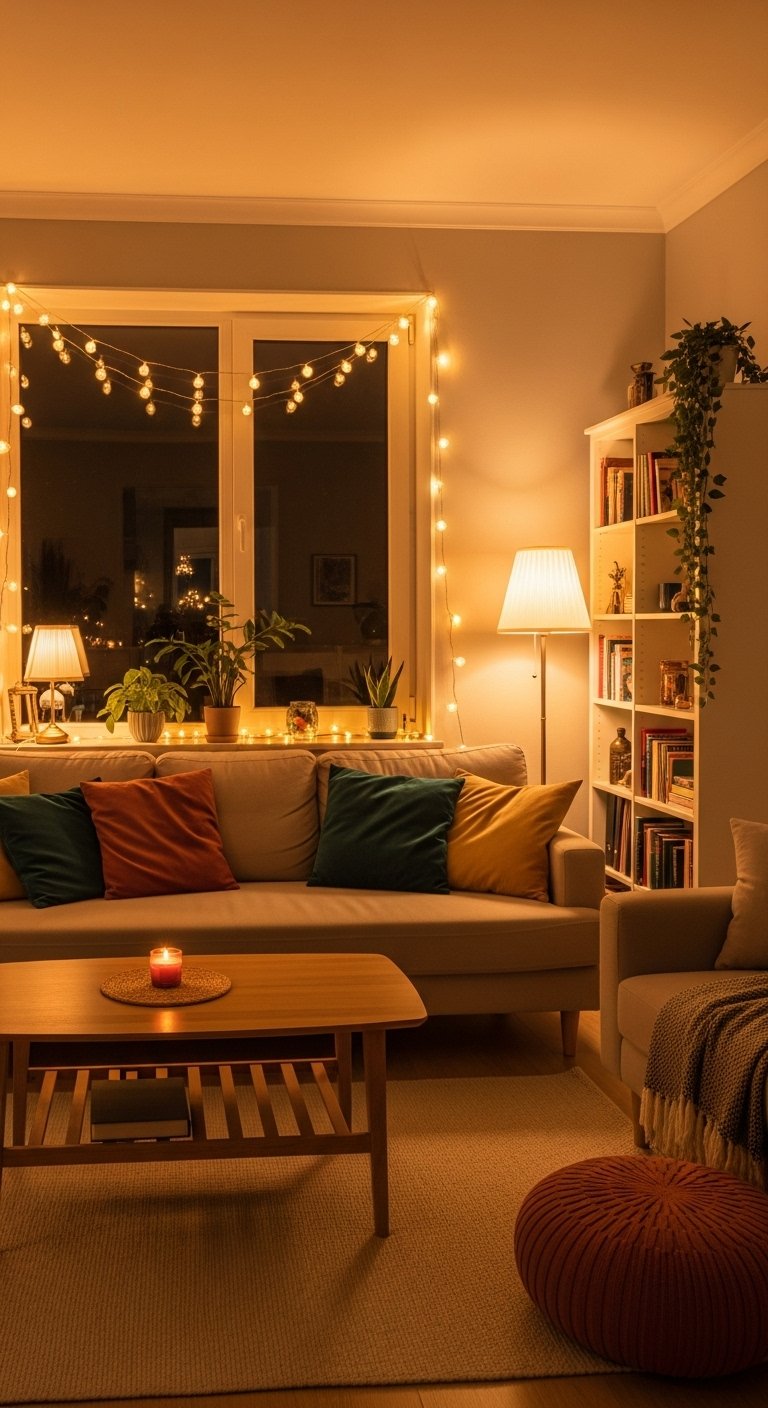
Fairy lights are not just for Christmas trees or dorm rooms. When used intentionally, they add a layer of magical, soft ambient light that overhead bulbs cannot replicate. The key is “unexpected” placement. Instead of just hanging them on the wall, stuff a glass vase full of copper wire lights, drape them over a mirror, or weave them through the macramé plant holders mentioned earlier.
The warm glow of fairy lights creates “hygge”—a feeling of cozy contentment. They act as lowlights that highlight specific textures in the room. Opt for warm white lights on copper or silver wire; the wire is thin and almost invisible during the day, so it doesn’t look messy.
Pro Tip: Put your fairy lights on a smart plug with a timer so your living room automatically starts glowing at sunset every day.
Put a disco ball in the center of the room
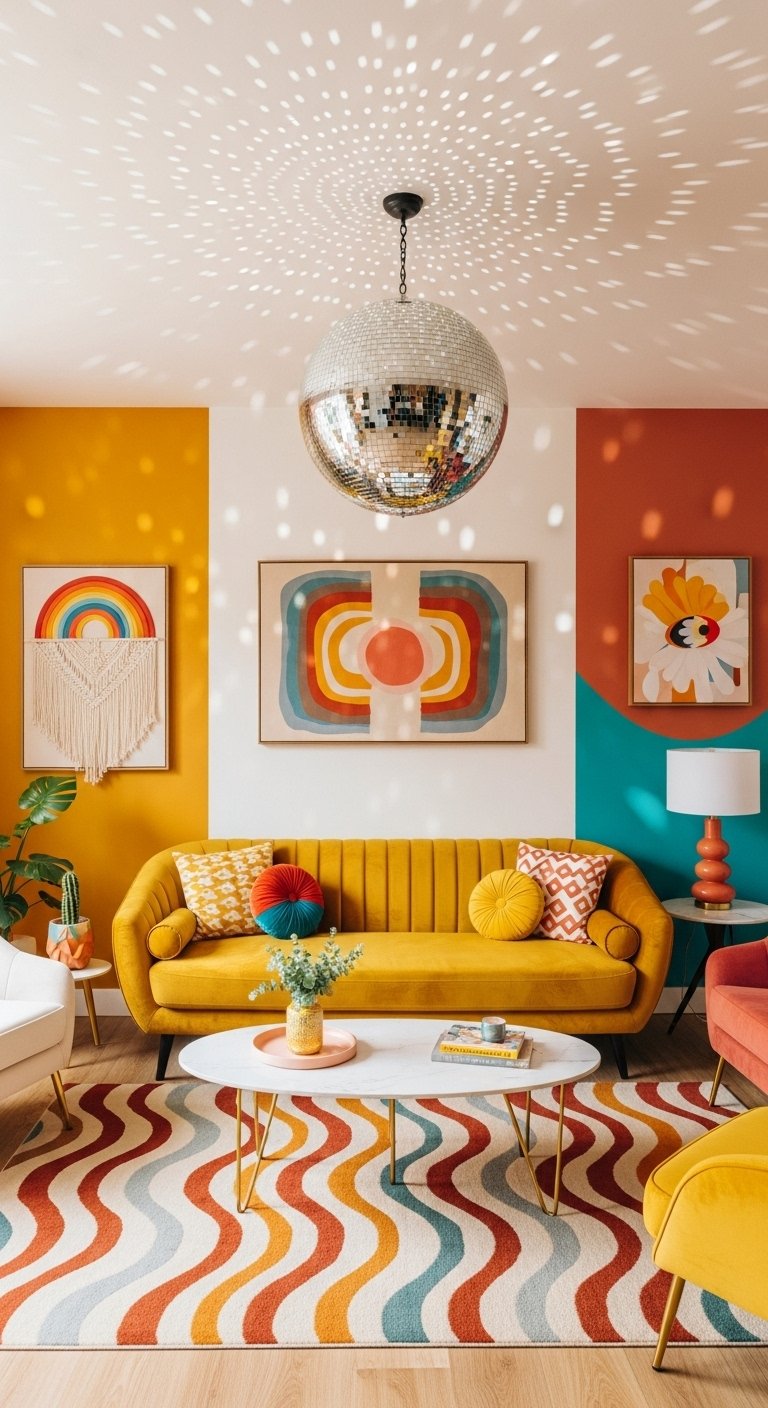
The disco ball is the ultimate symbol of the party, but in interior design, it is a tool for light manipulation. Placed on the floor near a window or hung low over a side table, a disco ball catches the sunlight and scatters specks of light across the walls, floor, and ceiling. This effect, known as “light dappling,” changes throughout the day as the sun moves.
It brings movement and sparkle to the room without requiring electricity. It contrasts shiny, hard mirrors against soft fabrics. Even on a cloudy day, a disco ball adds a touch of glamour and nostalgia. It tells guests that this is a home where fun happens.
Pro Tip: If you have a cat, a floor-level disco ball will provide them (and you) with endless entertainment as they chase the reflections.
Popular Asked Questions
What makes a room look whimsical?
A whimsical room is defined by unexpected combinations, playful colors, and a sense of humor. It avoids strict matching and embraces curiosity. Key elements include mixing patterns (like florals and stripes), using furniture with organic or odd shapes, and incorporating items that spark joy, such as colorful art or nostalgic decor. It is about breaking traditional design rules to create a space that feels personal and magical.
How can I make my living room look unique on a budget?
You can transform a room cheaply by focusing on paint and “upcycling.” Painting a single wall or a piece of furniture a bold color (like teal or neon pink) costs very little but has a huge impact. Swapping out small hardware like drawer pulls, changing cushion covers, or framing free printable art or children’s drawings are also low-cost ways to add unique personality without buying new furniture.
Is whimsical decor the same as maximalism?
They are cousins, but not twins. Maximalism is about “more is more”—layering many objects, patterns, and colors. Whimsical decor is about “playfulness.” You can have a minimalist whimsical room (e.g., a white room with one giant stuffed giraffe and a disco ball). However, they often overlap because both styles reject the “sad beige” trend and embrace personality.
How do I add whimsy without it looking like a messy playroom?
The secret is “curation.” Don’t just fill the room with toys. Choose specific, high-quality items that act as focal points. If you use a giant stuffed animal, keep the surrounding area clutter-free. If you mix patterns, keep a cohesive color palette. Balance the playful items with “grown-up” elements like a velvet sofa, a vintage trunk, or architectural plants to ground the space.
Conclusion
Transforming your living room into a whimsical paradise isn’t about following a strict set of rules; it’s about giving yourself permission to have fun. whether you start small with a disco ball on the floor or go big with a teal accent wall, every change brings a little more dopamine into your daily life.




Leave a Comment