
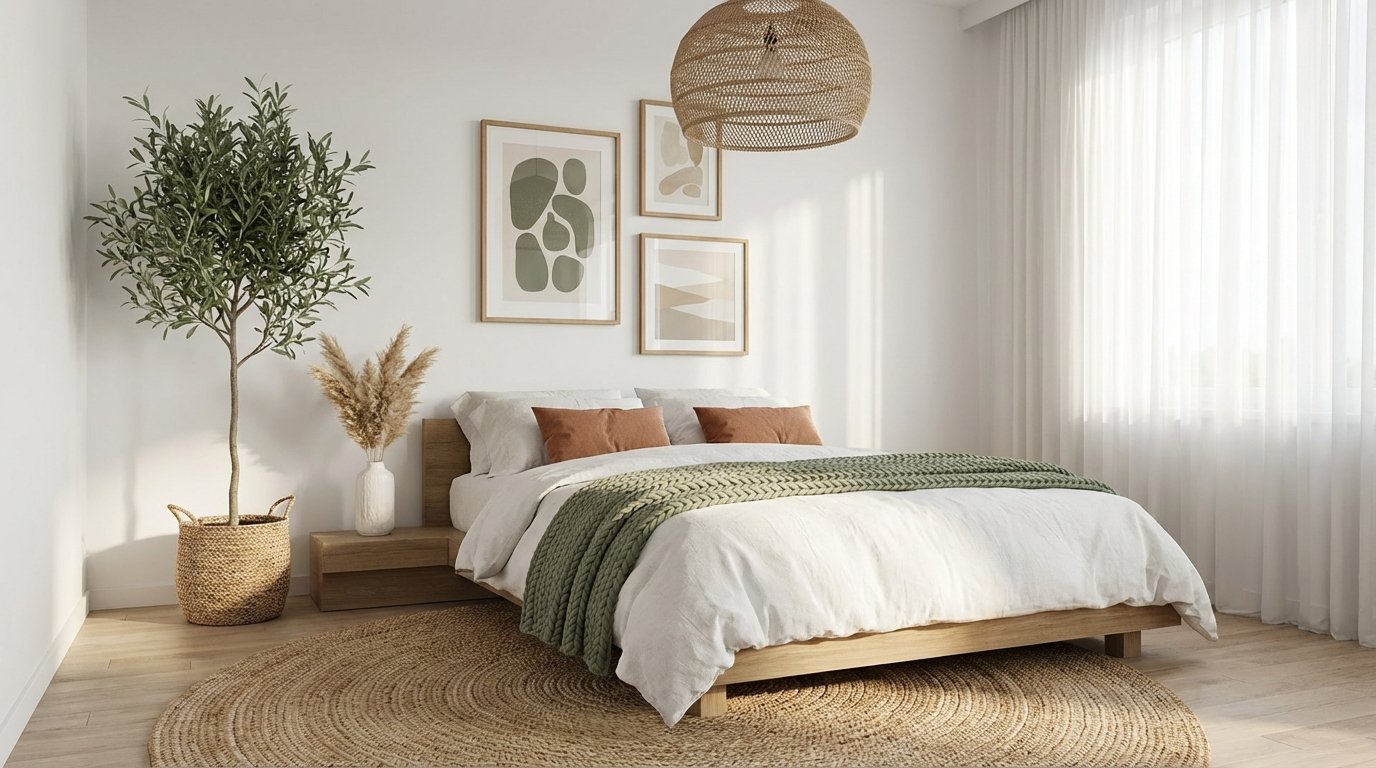
In a world that feels increasingly chaotic and loud, your bedroom should be the one place where the noise stops. Minimalist bedroom ideas are trending not just because they look aesthetically pleasing on Pinterest, but because they solve a genuine problem: the need for mental quiet. A cluttered room often leads to a cluttered mind, and high-retention design trends for 2026 are shifting heavily toward “Soft Minimalism”—spaces that are clean but warm, functional yet cozy.
If you are tired of tripping over laundry or feeling overwhelmed by visual noise the moment you wake up, this guide is for you. We aren’t just talking about empty white rooms. We are talking about intentional design that maximizes space, reduces stress, and actually helps you sleep better. Whether you have a tiny apartment or a spacious master suite, these 16 ideas will help you curate a space that feels like a deep exhale.
Key Takeaways
- Function First: Minimalism is not about having nothing; it is about having everything you need and nothing you don’t.
- Texture Over Color: When you reduce color, you must increase texture (wood, linen, wool) to prevent the room from feeling sterile.
- Hidden Storage is King: The secret to a “perfect” minimalist look is usually clever, concealed storage solutions that hide the daily mess.
- Lighting Sets the Mood: Layered lighting (ambient, task, accent) is crucial for shifting a room from “stark” to “sanctuary.”
Table of Contents
- White Bedroom Serenity
- Grey Bedroom Calm
- Blue Bedroom Oasis
- Create Your Serene Sanctuary
- Neutral Bedroom Bliss
- Embrace Serenity: Minimalist Bedroom Design for Peaceful Slumber
- Pink Bedroom Touch
- Lavender Bedroom Dream
- Beige Bedroom Comfort
- Cream Bedroom Warmth
- Navy Bedroom Depth
- Serene Bedroom Oasis: Embrace Minimalist Calm
- Olive Bedroom Nature
- Create a Serene & Stylish Bedroom Oasis
- Mustard Bedroom Glow
- White And Wood Bedroom
- Popular Asked Questions
- Conclusion
White Bedroom Serenity
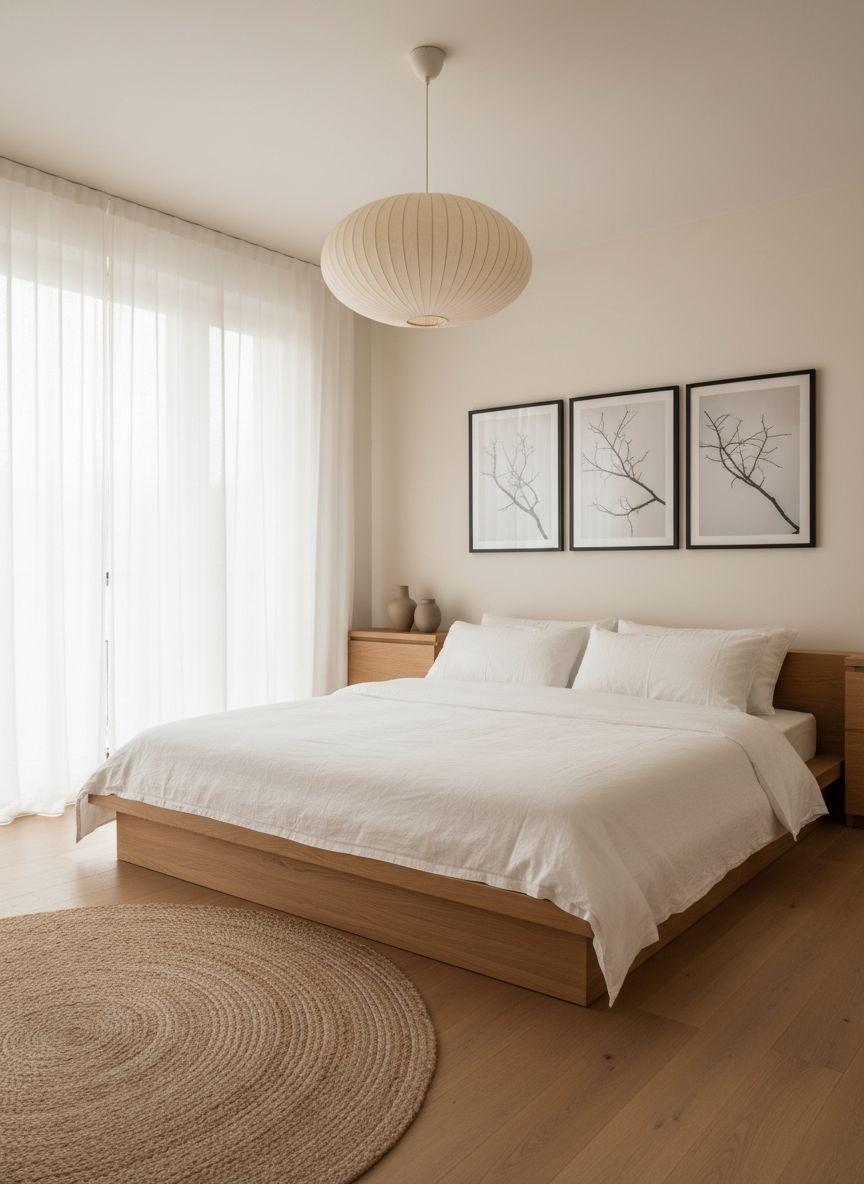
A white minimalist bedroom is the quintessential example of this design philosophy. It acts as a blank canvas for your mind, stripping away visual stimuli to promote deep rest. To achieve this look without it feeling like a hospital room, you must rely heavily on the interplay of light and texture. Think crisp white cotton sheets paired with a chunky knit white throw and sheer curtains that diffuse natural light into a soft glow. The absence of color forces the eye to appreciate the subtle differences in materials, such as the grain of a white-washed wood floor or the matte finish of a ceramic vase.
Implementation is straightforward but requires discipline. Paint your walls a warm white (avoid cool, blue-toned whites which can feel sterile). Choose furniture with clean lines and low profiles. If the room feels too cold, add a white faux fur rug or a textured wall hanging. The goal is to create a “cloud-like” atmosphere where the boundaries of the room seem to disappear, making even a small bedroom feel expansive and airy.
Pro Tip: Use “Warm White” light bulbs (2700K-3000K) instead of “Daylight” bulbs. This ensures your white room feels cozy at night rather than stark.
Save this idea to your Pinterest.
Grey Bedroom Calm
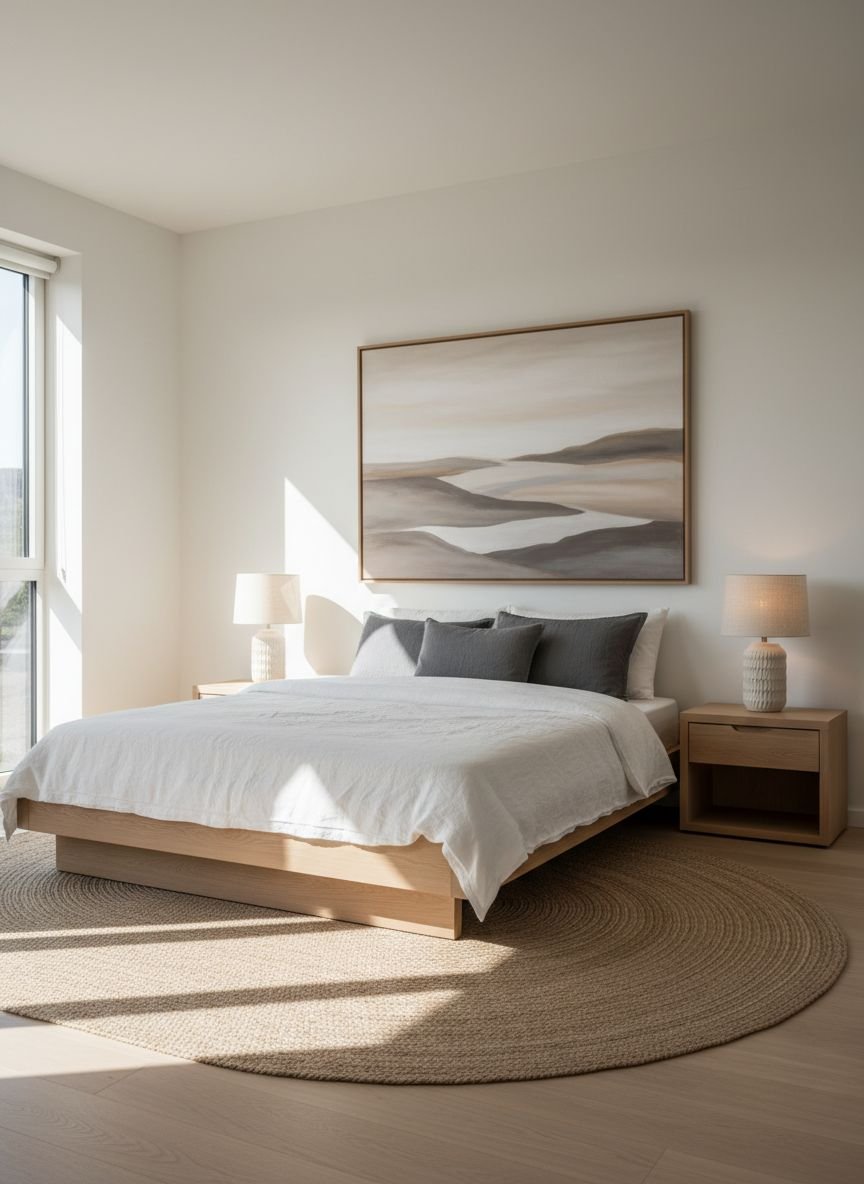
Grey is the perfect middle ground for those who find white too bright but dark colors too oppressive. A grey minimalist bedroom offers a sophisticated, moody vibe that is inherently calming. The key here is to layer different shades of grey—from pale dove grey on the walls to charcoal accents in the bedding or rug. This monochromatic approach adds depth and interest without breaking the minimalist rule of simplicity. It is a popular choice for modern minimalist bedroom ideas because it feels grounded and masculine yet soft.
When designing a grey space, pay close attention to the undertones. A “greige” (grey-beige) will feel warmer, while a blue-grey will feel cooler and more crisp. Combine matte grey walls with metallic accents like brushed nickel or matte black light fixtures to add a touch of industrial elegance. Keep the furniture simple; a grey upholstered headboard or a sleek concrete bedside table works beautifully. The result is a cocoon-like environment that feels safe and secluded from the outside world.
Pro Tip: Add a living green plant. The pop of natural green against a grey backdrop creates a striking, high-contrast look that feels fresh and alive.
Blue Bedroom Oasis
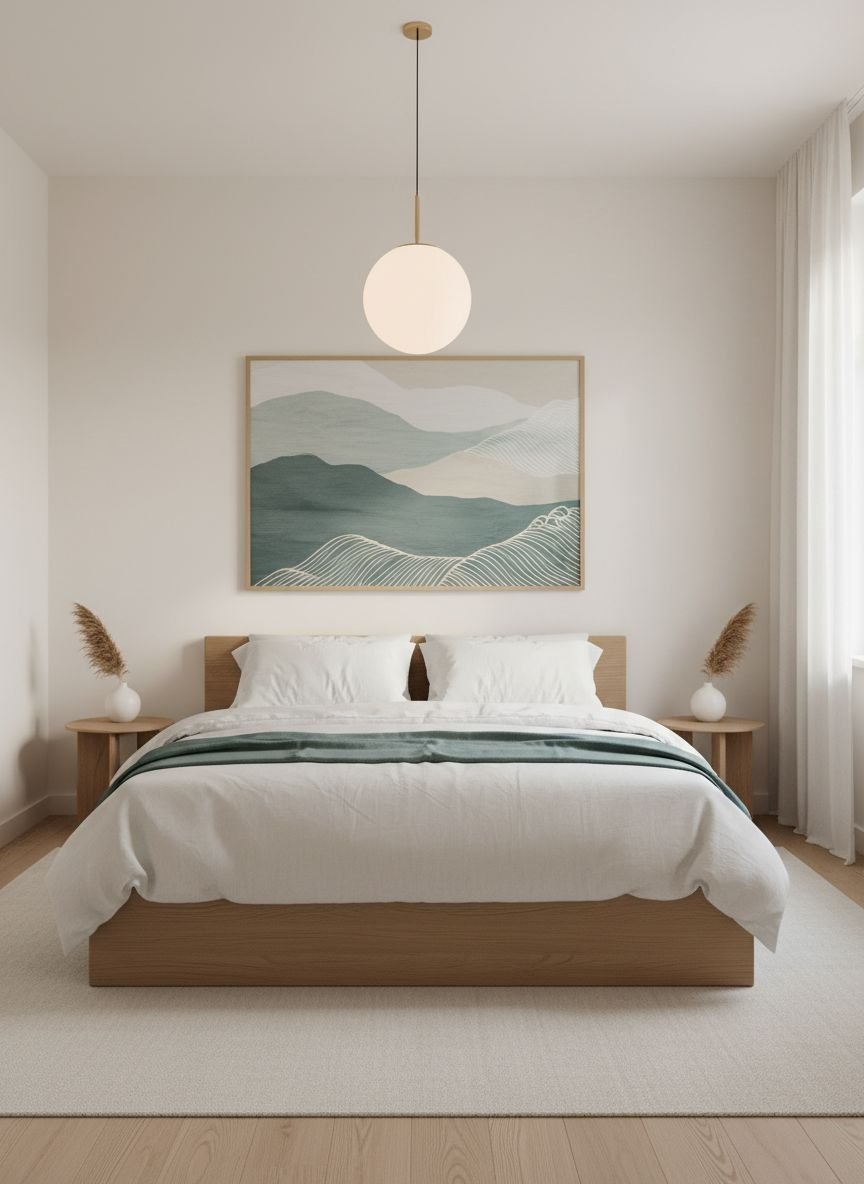
Blue is scientifically proven to lower blood pressure and heart rate, making it an ideal color for a sleep sanctuary. A blue minimalist bedroom does not mean painting every wall bright azure. Instead, it focuses on using calming shades like slate blue, powder blue, or dusty teal as a primary anchor. You might choose a statement wall in a deep matte blue while keeping the rest of the room neutral, or opt for blue linen bedding that serves as the focal point.
In a minimalist context, blue works best when paired with natural wood tones. The warmth of oak or walnut furniture balances the coolness of the blue, preventing the room from feeling icy. Keep decor to an absolute minimum; let the color itself be the decoration. A single piece of abstract art featuring blue tones or a simple glass vase is all you need. This style channels the energy of the ocean or the sky, fostering a sense of limitless space and tranquility.
Pro Tip: If you commit to blue walls, paint the baseboards and trim the same color. This “color drenching” technique simplifies the visual lines and makes the ceilings appear higher.
Create Your Serene Sanctuary
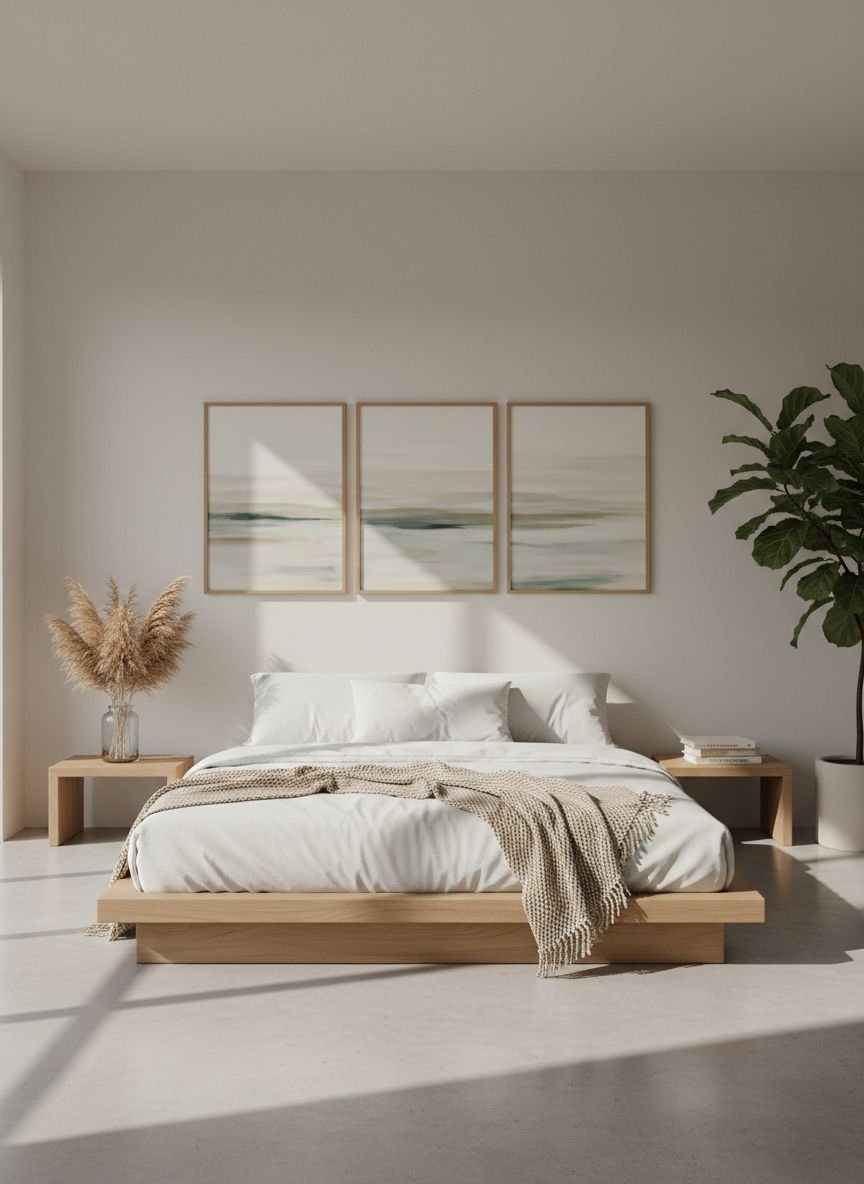
Creating a sanctuary goes beyond just color; it is about the layout and the flow of energy in the room. This concept draws heavily from Zen minimalist bedroom design principles, where every object has a specific place and purpose. The bed should be the undisputed commander of the room, positioned to allow a clear view of the door but not directly in line with it. Walkways must be clear of obstacles—no piles of books or laundry baskets blocking your path.
To achieve this “sanctuary” feel, focus on negative space. Do not feel the need to fill every corner. An empty corner is not a waste of space; it is a space for your eyes to rest. Use low-profile furniture, such as a platform bed, to keep the visual weight of the room close to the floor, which makes the ceiling feel higher and the room more open. Soft, diffused lighting is essential here—avoid a single bright overhead light in favor of wall sconces or floor lamps that create pools of warm light.
Pro Tip: Invest in a high-quality area rug that extends at least 18 inches beyond the sides of your bed. stepping onto a soft surface immediately signals “comfort” to your brain.
Neutral Bedroom Bliss
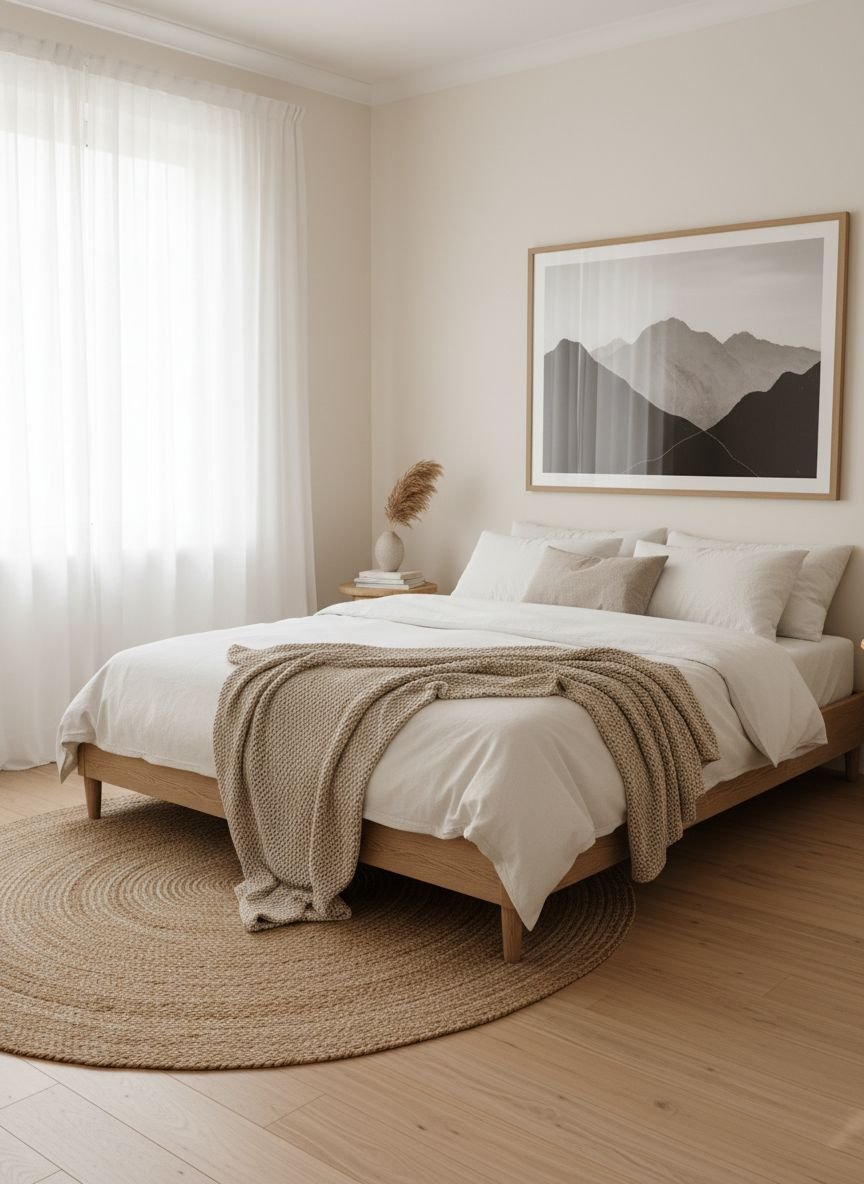
Neutral minimalist bedrooms are the chameleons of interior design. By sticking to a palette of taupe, sand, stone, and ivory, you create a timeless look that outlasts fleeting trends. This style is particularly effective for those who want a “luxury hotel” feel at home. The magic of a neutral palette lies in its ability to reflect light, making the room feel bright and cheerful during the day and warm and intimate at night.
Since you aren’t using bold colors, you must use high-quality materials to make the design sing. Think linen curtains that pool slightly on the floor, a wool boucle armchair, or a headboard upholstered in natural cotton. These textures invite touch and add a layer of sensory richness. This is also an excellent strategy for a minimalist bedroom on a budget, as neutral basics are widely available and easy to mix and match without clashing.
Pro Tip: Vary the scale of your furniture. A chunky knit blanket looks amazing next to a sleek, thin-legged side table. The contrast in visual weight keeps the eye interested.
Related posts :
- 16 Beige Bedroom Inspiration for Your Home That Feels Warm and Luxurious
- 18 Stunning Accent Wall in Living Room Ideas That Will Make Your Space Pop Without Breaking the Bank
Embrace Serenity: Minimalist Bedroom Design for Peaceful Slumber
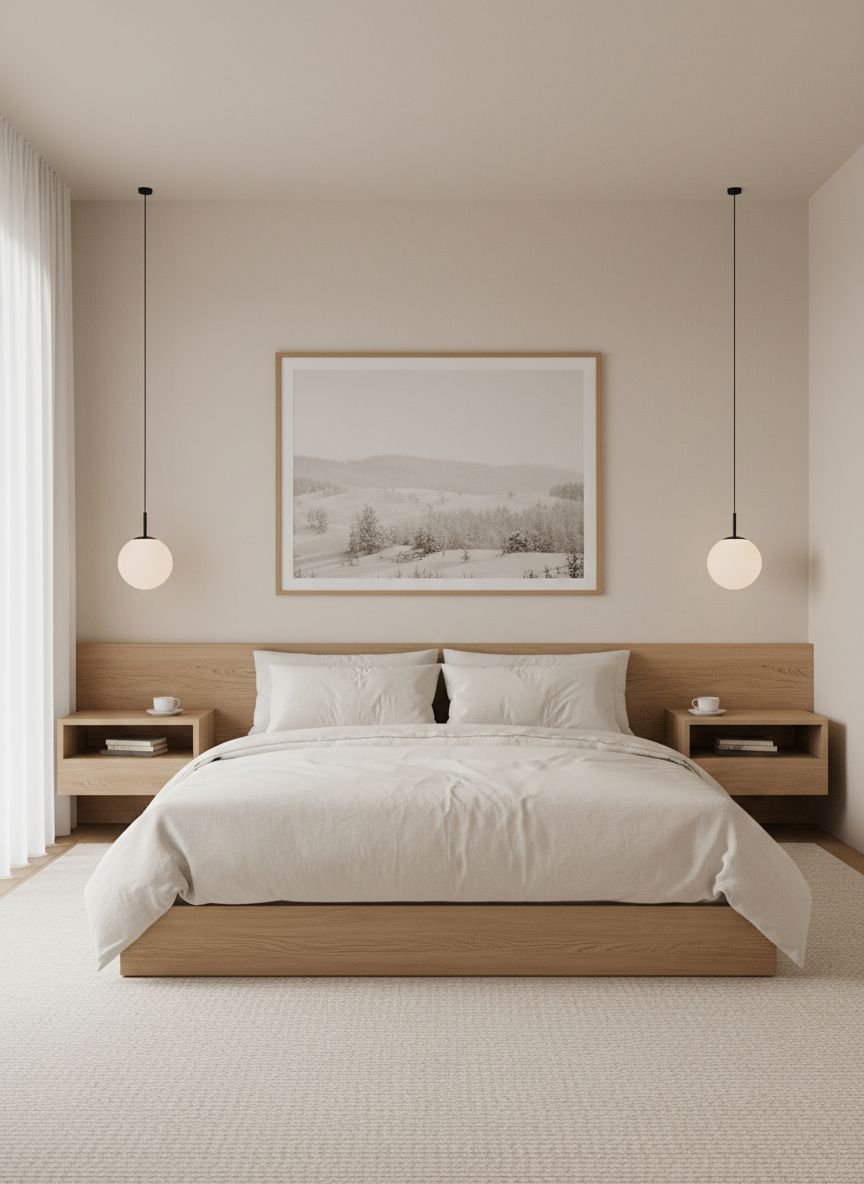
This concept focuses specifically on the “sleep hygiene” aspect of minimalism. A bedroom designed for peaceful slumber eliminates all distractions. This means no TV, no visible electronics, and absolutely no work materials. The design is strictly functional for rest. The color palette is usually dark and moody or soft and muted to signal the brain that it is time to wind down.
Implementation involves rigorous decluttering. Use bedside tables with drawers to hide your phone, charger, and current read. Install blackout curtains that are sleek and unobtrusive, perhaps hidden behind a pelmet or track. The bedding should be the star—invest in the highest thread count or pure linen you can afford. The visual silence of the room allows your mind to quiet down faster, directly combating insomnia and restlessness.
Pro Tip: Scent is invisible decor. Use a stone or ceramic diffuser with lavender or eucalyptus oil to add a sensory layer to your minimalist design without adding visual clutter.
Pink Bedroom Touch
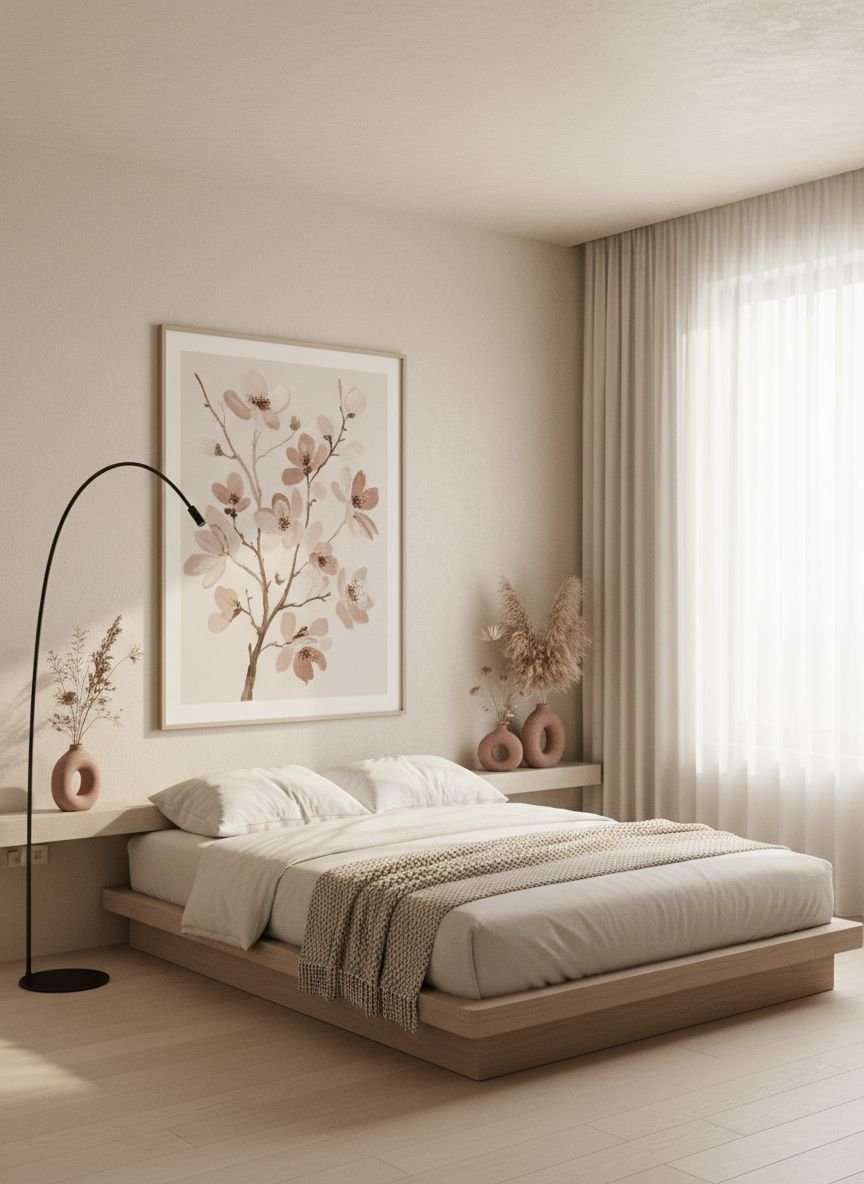
Minimalism doesn’t have to mean devoid of fun. A “Pink Touch” bedroom uses blush or dusty rose as a neutral. Unlike hot pink or bubblegum, these muted earth-toned pinks act similarly to beige but with a warmer, more romantic undertone. This style is perfect for a soft, feminine minimalist aesthetic that feels nurturing rather than childish.
To keep it minimalist, use pink sparingly or as a monochrome wash. You might have blush bedding against white walls, or a dusty pink accent wall with light wood furniture. The key is to pair the pink with mature elements like black metal hardware, grey concrete, or natural leather. This juxtaposes the sweetness of the color with the hardness of the materials, creating a balanced, modern look.
Pro Tip: Avoid patterns. If you use pink, let the color be a solid block. Floral pink patterns will instantly push the style towards “cottage” or “shabby chic” rather than minimalist.
Save this idea to your Pinterest.
Lavender Bedroom Dream
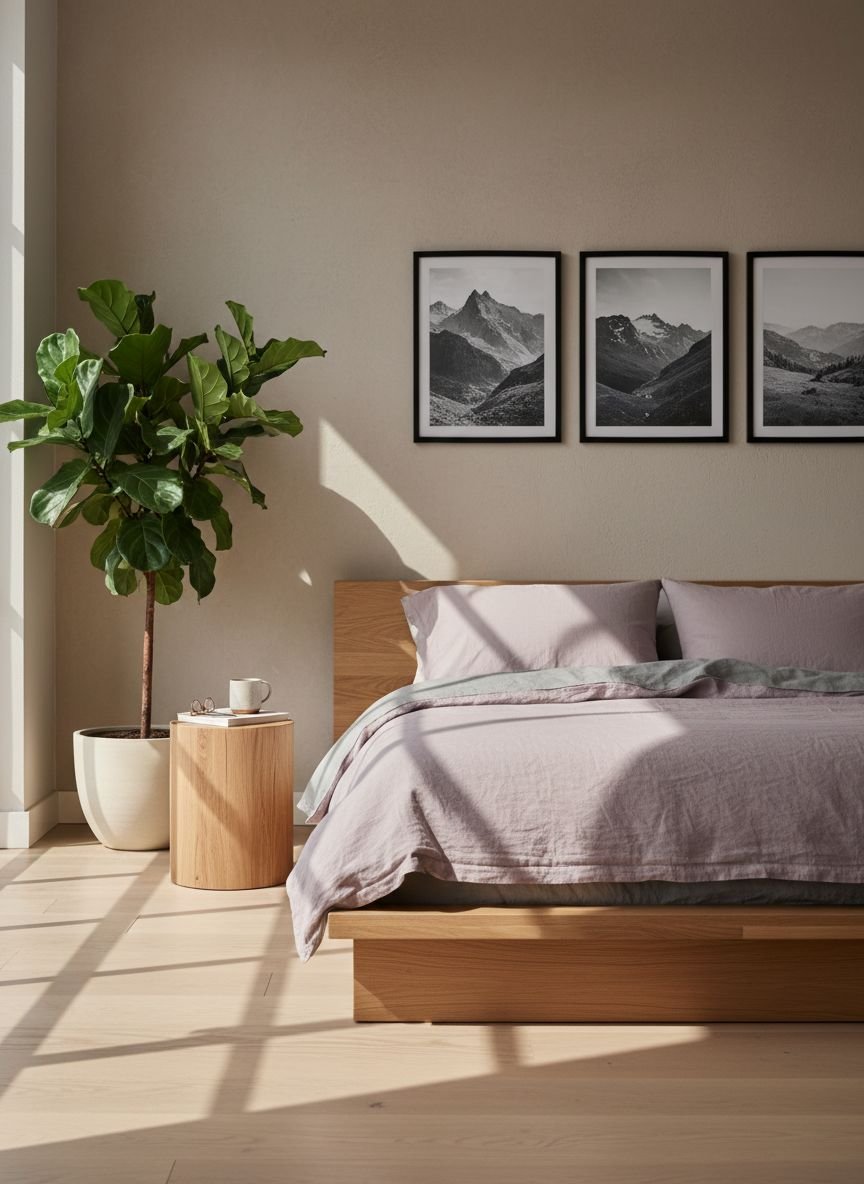
Lavender is making a massive comeback in 2026 as a digital-pastels trend, but in a minimalist setting, it offers a fresh, airy alternative to grey. A pale lavender wall can make a small room feel larger and cooler. It pairs exceptionally well with white and silver, creating a crisp, clean look that feels very “Scandi-cool.”
When designing with lavender, keep the furniture white or very light wood (like birch or ash). Dark wood can sometimes clash and make the purple look muddy. Use white bedding to keep the look crisp. Lavender is a complex color that changes with the light—looking grey in the morning and warmer in the evening—adding a dynamic element to your simple room without the need for extra decor.
Pro Tip: Add silver or chrome accents. A chrome bedside lamp or silver drawer pulls complement the cool undertones of lavender perfectly.
Beige Bedroom Comfort
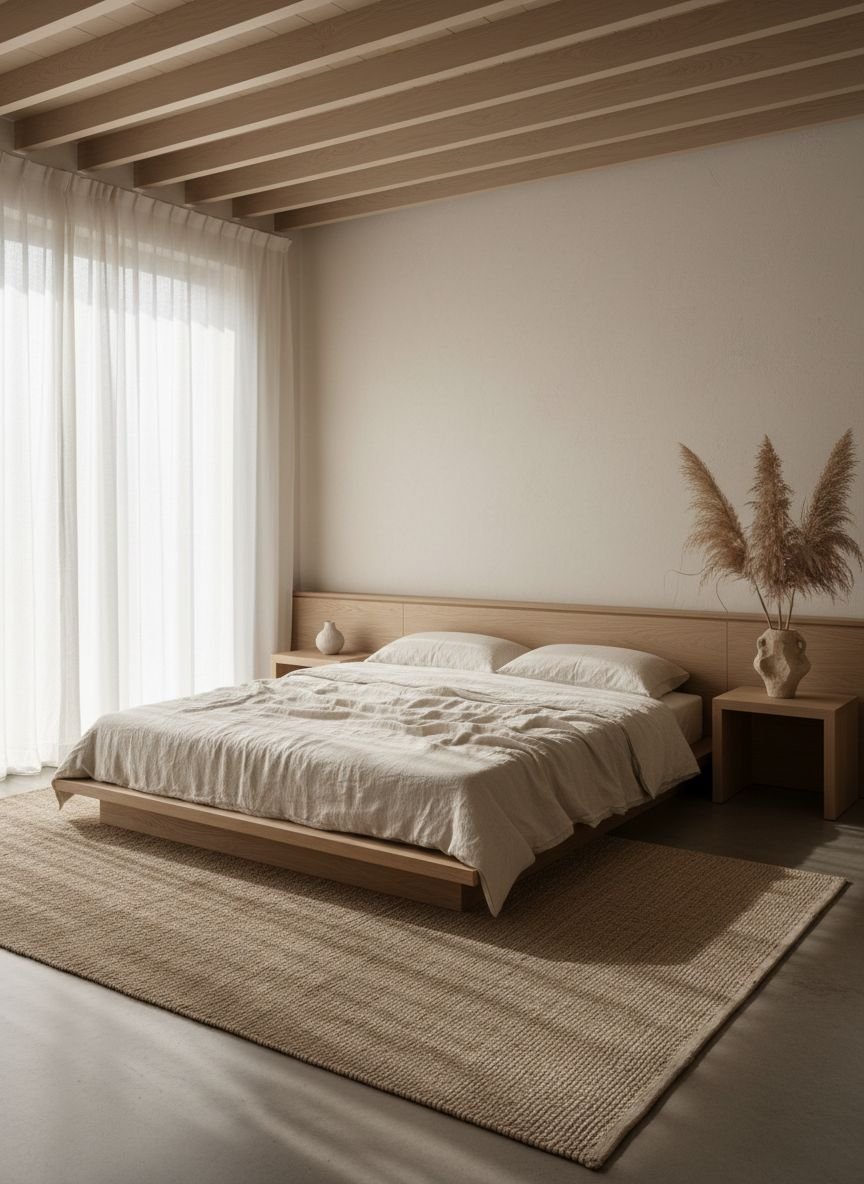
Beige has shed its reputation for being boring and has re-emerged as the champion of “Warm Minimalism.” A beige minimalist bedroom feels grounded, earthy, and incredibly cozy. It draws inspiration from nature—sand, wheat, dried grass—to create a space that feels organic. This is the ideal style for those who love the “Japandi” (Japanese + Scandinavian) aesthetic.
Layering is critical here. Mix different shades of beige, from oatmeal to fawn to espresso. Use materials like rattan, jute, and unbleached linen. A beige linen duvet cover has a natural wrinkle that adds a relaxed, lived-in vibe which is perfect for a stress-free bedroom. Unlike a stark white room that demands perfection, a beige room embraces imperfection and warmth.
Pro Tip: Paint your ceiling a shade of beige just slightly lighter than your walls. It wraps the room in warmth and avoids the harsh contrast of a bright white ceiling.
Cream Bedroom Warmth
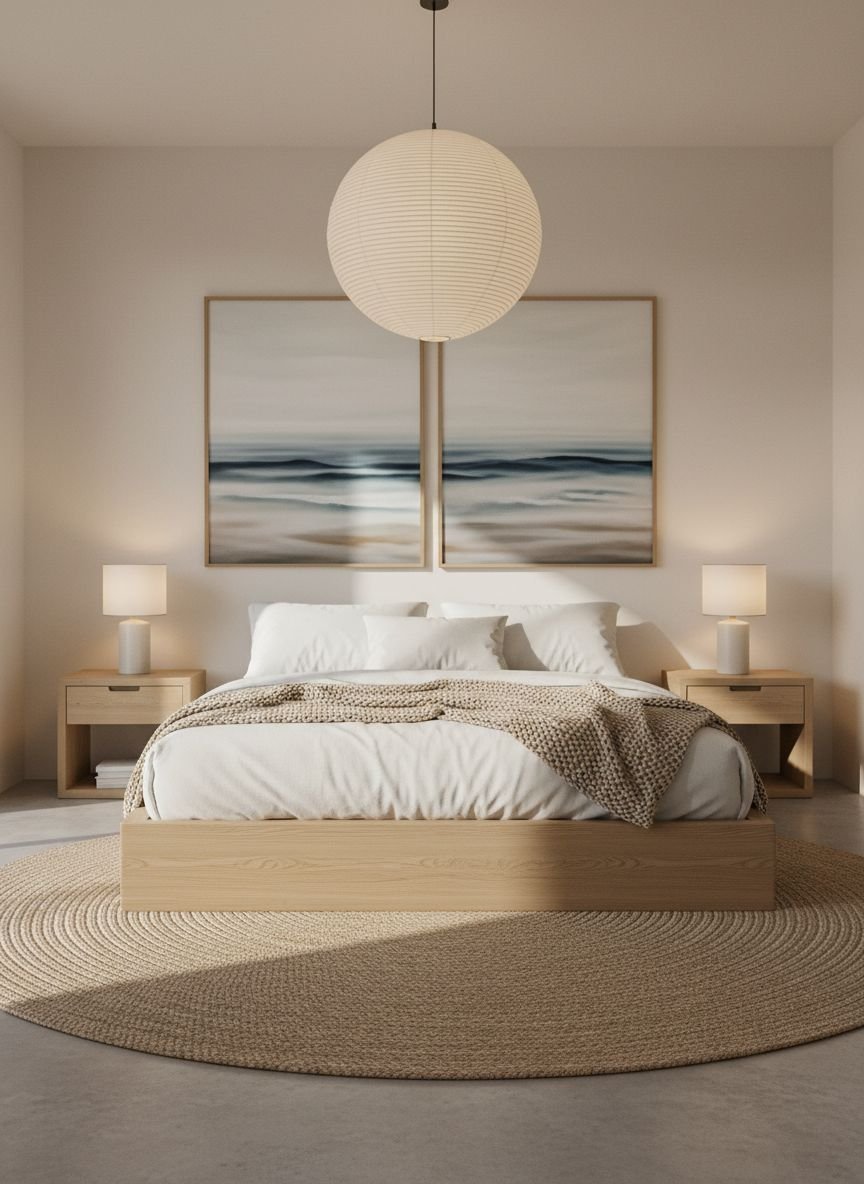
Cream differs from white and beige by having a distinct yellow or buttery undertone. It is the color of sunlight and warmth. A cream minimalist bedroom feels sunny and inviting, even on a gloomy day. This style works exceptionally well in rooms that don’t get a lot of natural light, as the warm undertones fake a sunlit glow.
To execute this, focus on “tone-on-tone” styling. Use cream walls, cream bedding, and cream curtains. To prevent it from looking flat, introduce texture through fabrics—a velvet throw pillow, a shearling rug, or a boucle bench. Gold or brass accents look stunning against cream, adding a touch of luxury without clutter. It’s a soft, buttery aesthetic that feels incredibly indulgent.
Pro Tip: Incorporate wood with warm, honey tones (like oak or pine) to enhance the golden glow of the cream palette.
Navy Bedroom Depth
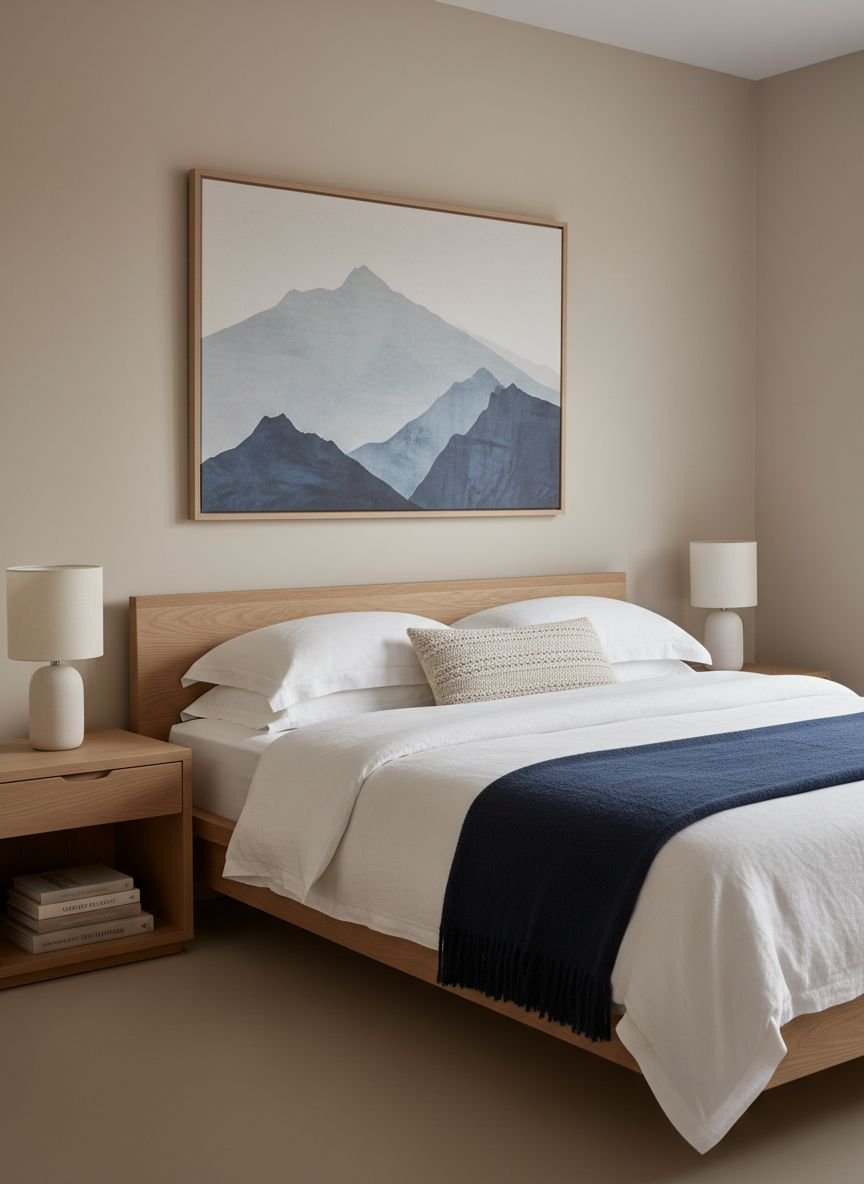
For those who crave darkness for sleep, a navy minimalist bedroom is a bold but rewarding choice. Dark walls recede, blurring the boundaries of the room and making it feel infinite. Navy is classic and pairs beautifully with almost any wood tone or metal finish. In a minimalist setting, a dark room feels like a cozy cave or a private cinema—intimate and secure.
The trick to dark minimalism is ensuring you have adequate lighting options. You need good ambient light for the day and soft, moody light for the night. Keep the bedding light (white or light grey) to create a striking contrast that breaks up the darkness. Minimal furniture is essential here because dark walls can make a room feel fuller; sleek, leggy furniture helps maintain a sense of flow.
Pro Tip: Use mirrors. A large mirror in a navy room reflects light and breaks up the solid block of dark color, adding depth and dimension.
Serene Bedroom Oasis: Embrace Minimalist Calm
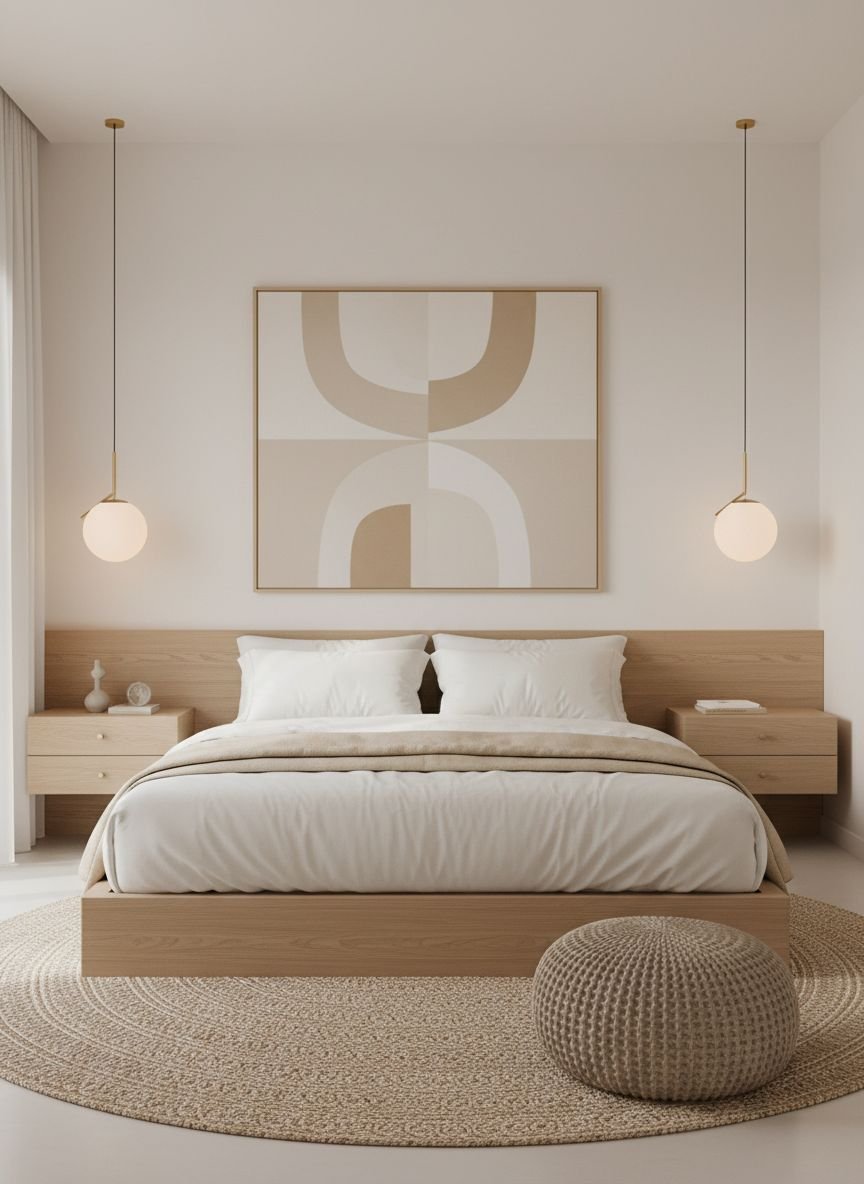
This style combines elements of the “spa” aesthetic with bedroom functionality. It often involves a connection to a bathroom or an ensuite, blurring the lines between sleeping and bathing rituals. Think of a freestanding tub in the bedroom corner or an open-concept vanity. The materials are often stone, tile, and water-resistant woods.
To achieve this look, keep the color palette inspired by water and stone—cool greys, aquas, and whites. Use fluffy white towels and robes as part of the “decor.” The furniture should be minimal and perhaps slightly lower to the ground, mimicking a Japanese tatami style. It is about creating a holistic space for wellness and rest.
Pro Tip: Keep the floor clear. Wall-mounted nightstands and floating beds are perfect for this style as they make cleaning easier and enhance the open, airy “spa” feel.
Save this idea to your Pinterest.
Olive Bedroom Nature
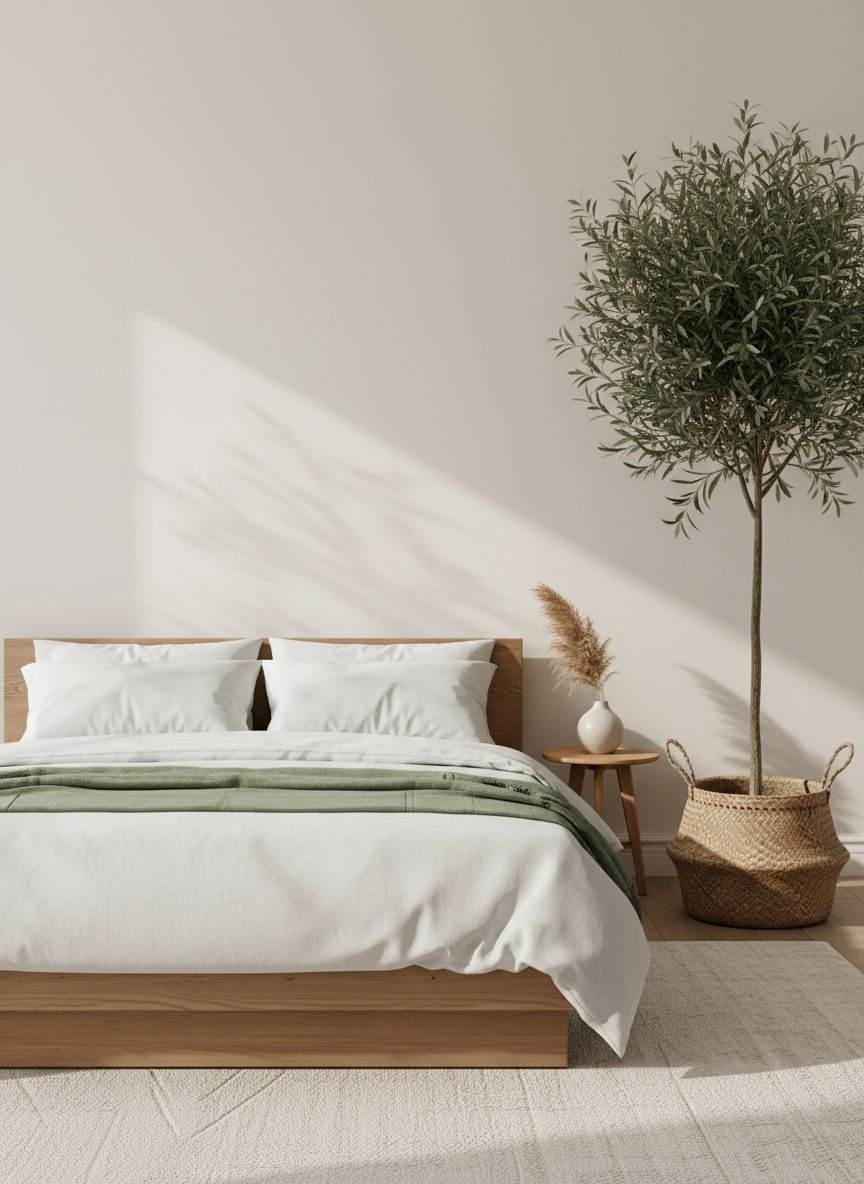
Bringing the outdoors in is a staple of modern design, and an olive green minimalist bedroom does this perfectly. Olive is a sophisticated, muted green that acts as a neutral. It pairs wonderfully with leather, wood, and black accents. This style feels organic, grounded, and very calming—like sleeping in a forest canopy.
Use olive green on the walls or as a major bedding element. Pair it with dark wood furniture (walnut or mahogany) for a rich, moody look, or light wood for a fresh, spring-like feel. Plants are a non-negotiable accessory here; they bridge the gap between the paint color and living nature. Keep the pots simple—terracotta or plain concrete.
Pro Tip: Leather accents, such as a leather headboard or leather drawer pulls, look incredible against olive green walls. It adds a masculine, earthy texture.
Create a Serene & Stylish Bedroom Oasis
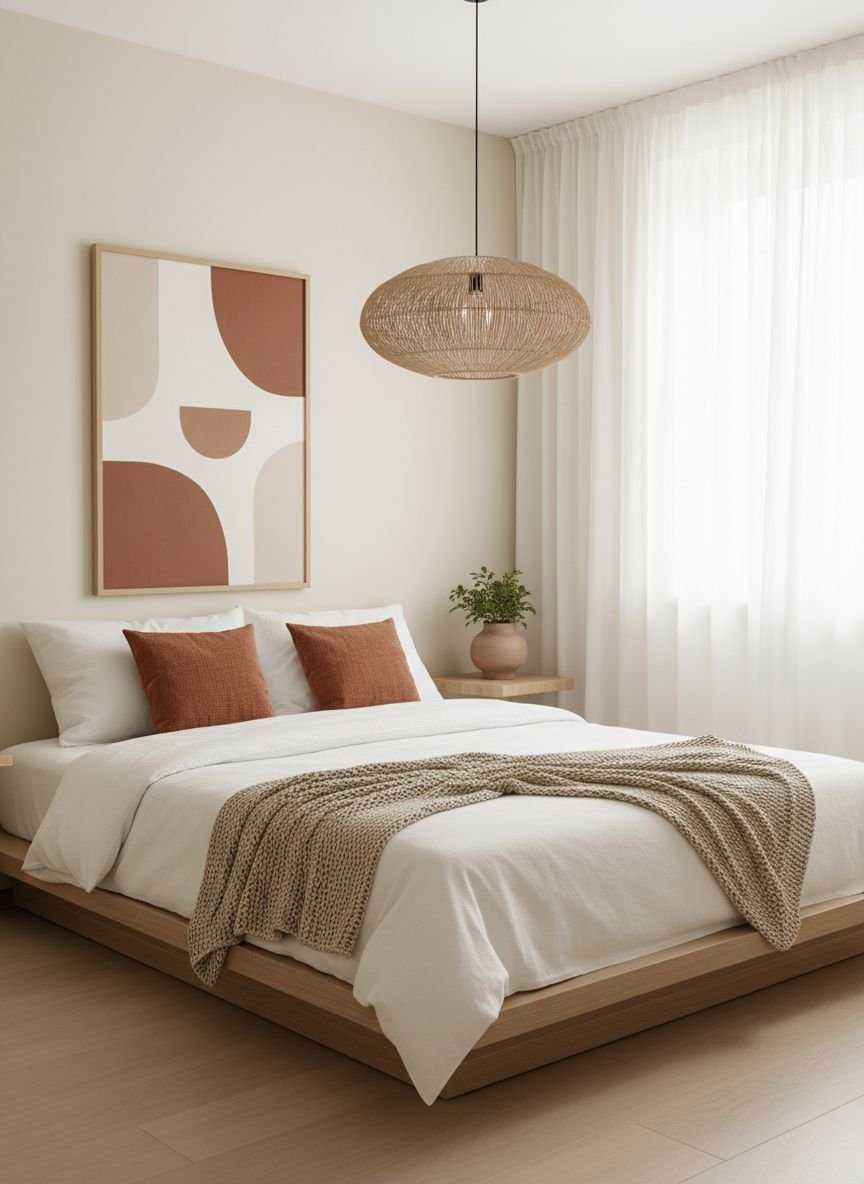
This section focuses on the “Stylish” element—how to be minimalist without being boring. The answer often lies in a single statement piece. In a room stripped of clutter, one beautiful object becomes a masterpiece. This could be a sculptural chair, an oversized pendant light, or a large-scale piece of art.
The background remains quiet—neutral walls and simple bedding—so the statement piece can shine. This approach allows you to express personality without clutter. If you love vintage, maybe your one item is a mid-century modern dresser. If you love art, maybe it’s a gallery-quality painting above the bed. The rest of the room supports this hero piece.
Pro Tip: When choosing a statement light fixture, go big. An oversized paper lantern or a large woven chandelier acts as a focal point that draws the eye up and centers the room.
Mustard Bedroom Glow
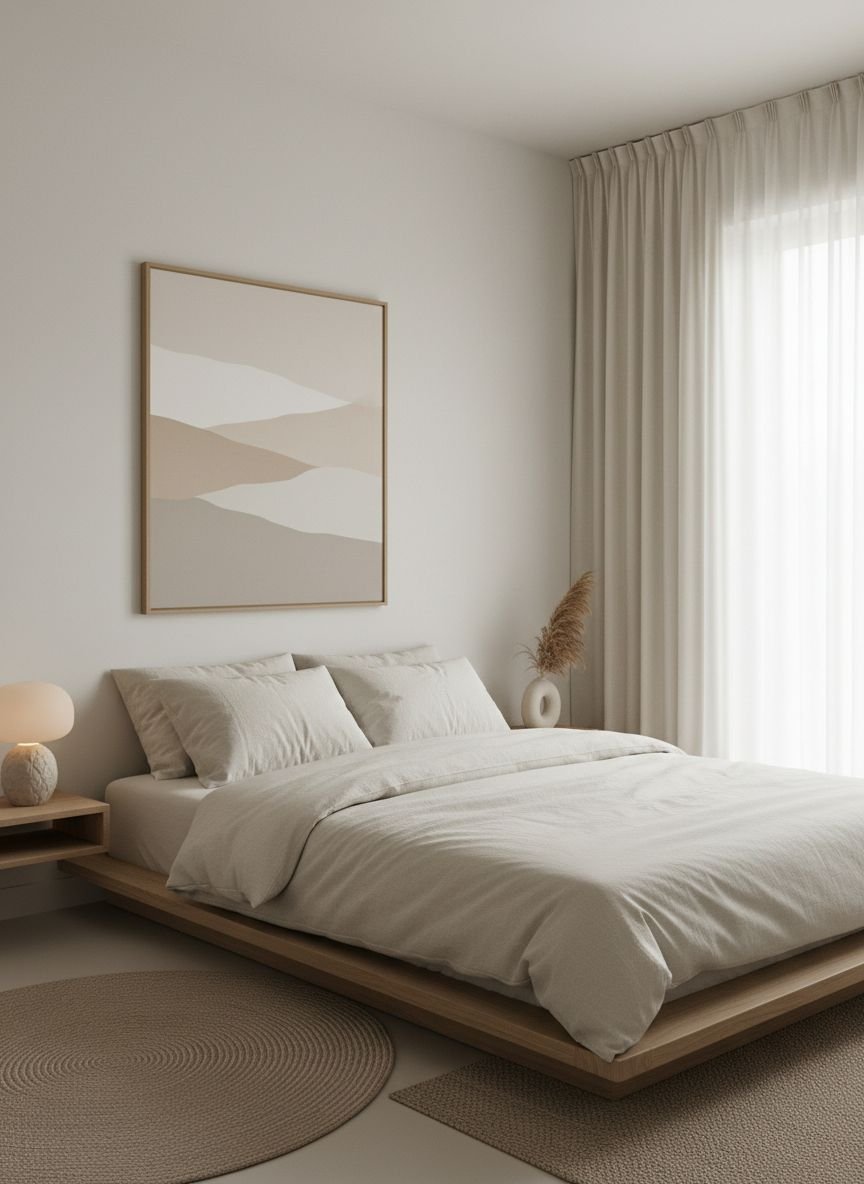
Mustard yellow is a surprising but effective choice for a minimalist accent. It adds a retro, warm vibe that feels cheerful and energetic. In a minimalist bedroom, you don’t paint the whole room mustard. Instead, you use it as a “pop” against a grey, white, or navy background.
Imagine a charcoal grey room with a mustard yellow velvet throw blanket. The contrast is stunning and high-fashion. Or a white room with a mustard upholstered bed frame. It adds just enough heat to the room to make it interesting. Keep other colors away; let the mustard be the only star against the neutrals.
Pro Tip: Mustard looks best in tactile fabrics like velvet, corduroy, or wool. Flat cotton mustard can sometimes look like a condiment; texture gives it luxury.
White And Wood Bedroom
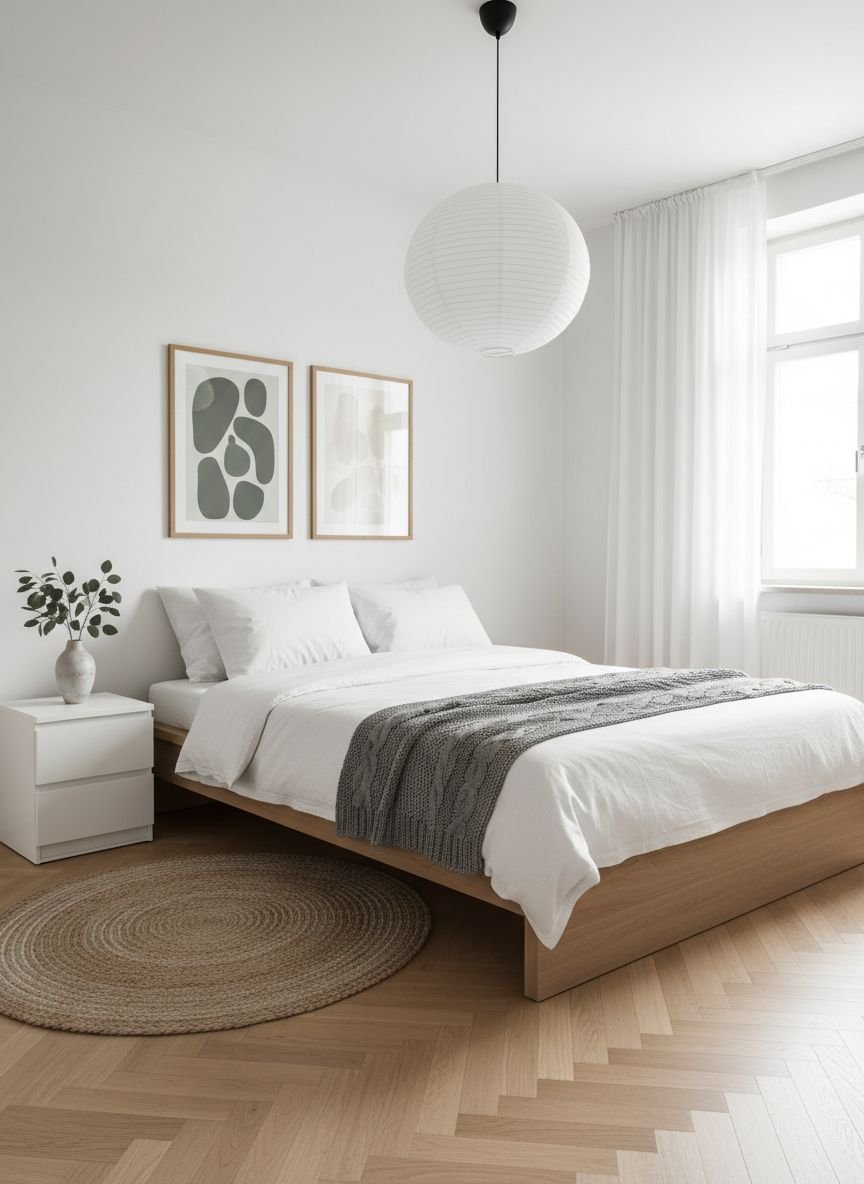
The combination of white and wood is the backbone of Scandinavian design. It is fresh, organic, and timeless. The white provides the airiness, while the wood provides the warmth. This style relies on the natural grain and imperfections of the wood to act as the “pattern” in the room.
You can mix wood tones, but it is safer to stick to one family (e.g., all warm oaks or all cool ashes). A wooden slat feature wall is a popular way to add texture to a white room without adding clutter. Wooden beams on the ceiling can also ground a high-ceilinged white room. This style is incredibly versatile and easy to update with seasonal textiles.
Pro Tip: Don’t forget the floor. A light wood floor with a white rug is a classic layering technique that feels soft underfoot and looks incredibly chic.
Popular Asked Questions
How do I make my bedroom minimalist on a budget?
You can create a minimalist bedroom without spending any money by starting with a “reverse declutter.” Remove everything from the room except the bed. Only bring back items that are absolutely essential for sleep or dressing. For decor, use paint (which is cheap) to create a clean, fresh backdrop, and thrift for simple wooden furniture that you can sand down or paint.
What are the 3 rules of minimalism in a bedroom?
- Everything needs a home: If an item does not have a specific drawer or shelf where it lives, it is clutter.
- Clear surfaces: Nightstands and dressers should be 90% clear of objects. Only a lamp, a book, or a glass of water should be visible.
- Quality over quantity: It is better to have one incredible set of sheets and one beautiful piece of art than ten mediocre items filling the space.
How to make a small bedroom look minimalist?
In a small bedroom, floor space is premium real estate. Use vertical storage (tall shelves) and wall-mounted furniture (floating nightstands and lamps) to keep the floor visible. Visible floor makes a room look bigger. Stick to a light, monochromatic color palette to blur the corners of the room, and use mirrors to bounce light around.
What colors are best for a minimalist bedroom?
While white is the most famous, the best colors are “quiet” colors. This includes soft greys, warm beiges, muted greens (sage, olive), and calming blues. The goal is to choose colors that do not demand attention but rather support a feeling of relaxation.
Does a minimalist bedroom have to be white?
Absolutely not. Minimalism is a design philosophy about function and simplicity, not a color chart. You can have a black, navy, or even pink minimalist bedroom. As long as the room is free of clutter, has clean lines, and every item serves a purpose, it is minimalist.
Conclusion

Adopting these 16 Minimalist Bedroom Ideas is about more than just following a trend; it is about reclaiming your personal space. By stripping away the unnecessary, you make room for what truly matters: rest, peace, and clarity. Whether you choose the stark serenity of an all-white room or the cozy depth of a navy cave, the principles remain the same. Clear the clutter, focus on quality, and let your bedroom be the sanctuary you deserve.





Leave a Comment