
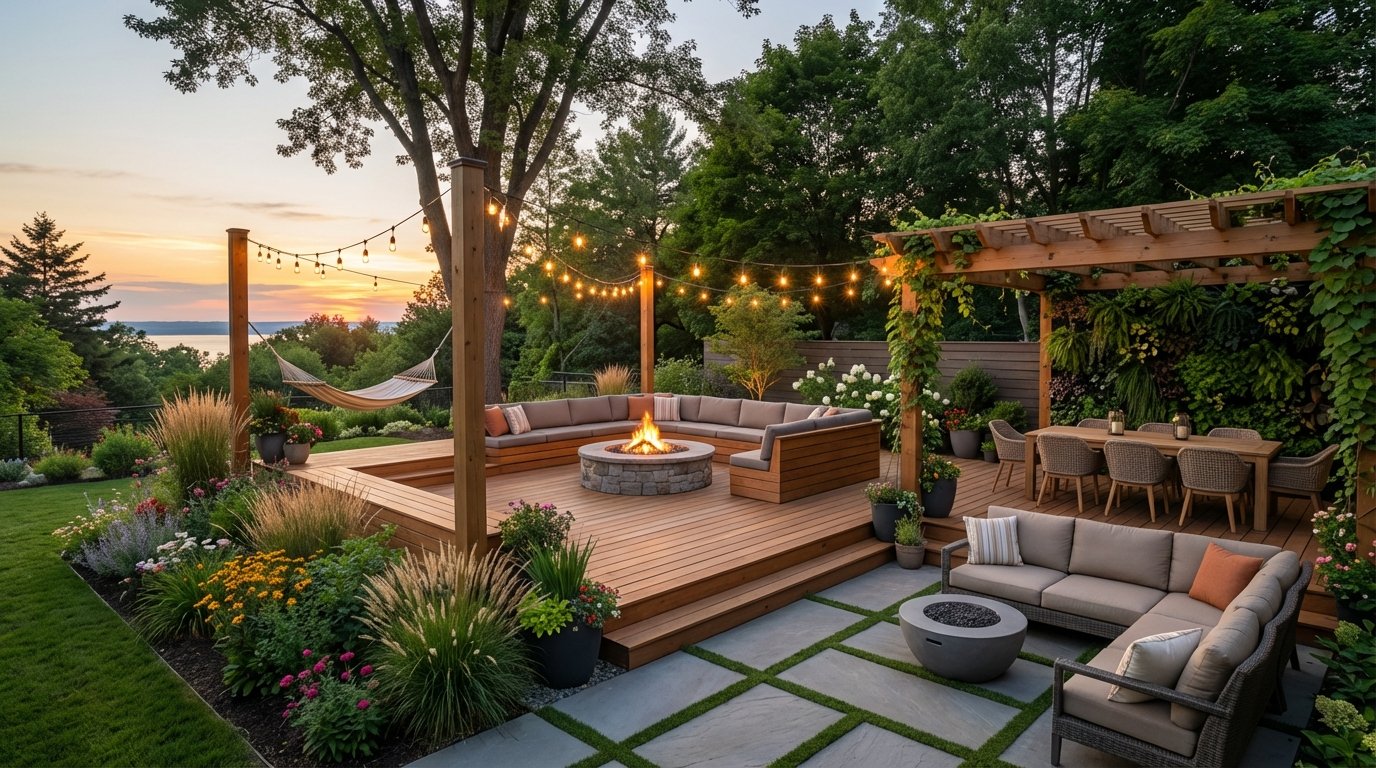
Designing a backyard that caters to both energetic children and adults seeking relaxation is one of the most rewarding home improvement projects you can undertake. The trend for 2026 is all about “Outdoor Zoning,” where specific areas are designated for play, dining, and lounging, creating a seamless flow that feels much larger than it actually is. If you are struggling with a chaotic yard or a blank canvas, you are not alone. Most families want a space that is safe for toddlers, engaging for older kids, and stylish enough for evening dinner parties. This guide delivers 12 actionable, high-value layout ideas that solve these problems. We will show you exactly how to balance aesthetics with functionality to create a haven you will never want to leave.
Key Takeaways
- Zoning is Essential: Distinct areas for play and rest prevent clutter and accidents while maximizing utility.
- Verticality Saves Space: Using walls for gardens or play features keeps the ground open for running and entertaining.
- Multi-Functional Furniture: Benches with storage and fire pits that double as tables are critical for keeping family yards tidy.
- Sensory Elements: Incorporating textures, scents, and edible plants engages children and relaxes adults simultaneously.
Table of Contents
- Inviting Gathering Spaces for Family Fun
- Kid-Friendly Play Zones with Creative Features
- Lush Hand-Drawn Garden Layouts
- Inspiring Landscape Designs for All Seasons
- Cozy Hammock Areas Near a Fire Pit
- Modern Outdoor Patio Concepts
- Wooden Pergolas with Swings and Fire Pits
- Suburban Backyard Transformation Inspiration
- Nature-Themed Playgrounds for Little Adventurers
- Perfect Entertaining Areas for Large Gatherings
- Simple and Elegant Small Space Gardening Tips
- Backyard Entertaining Area Layout Ideas
- Popular Asked Questions
- Conclusion
Inviting Gathering Spaces for Family Fun
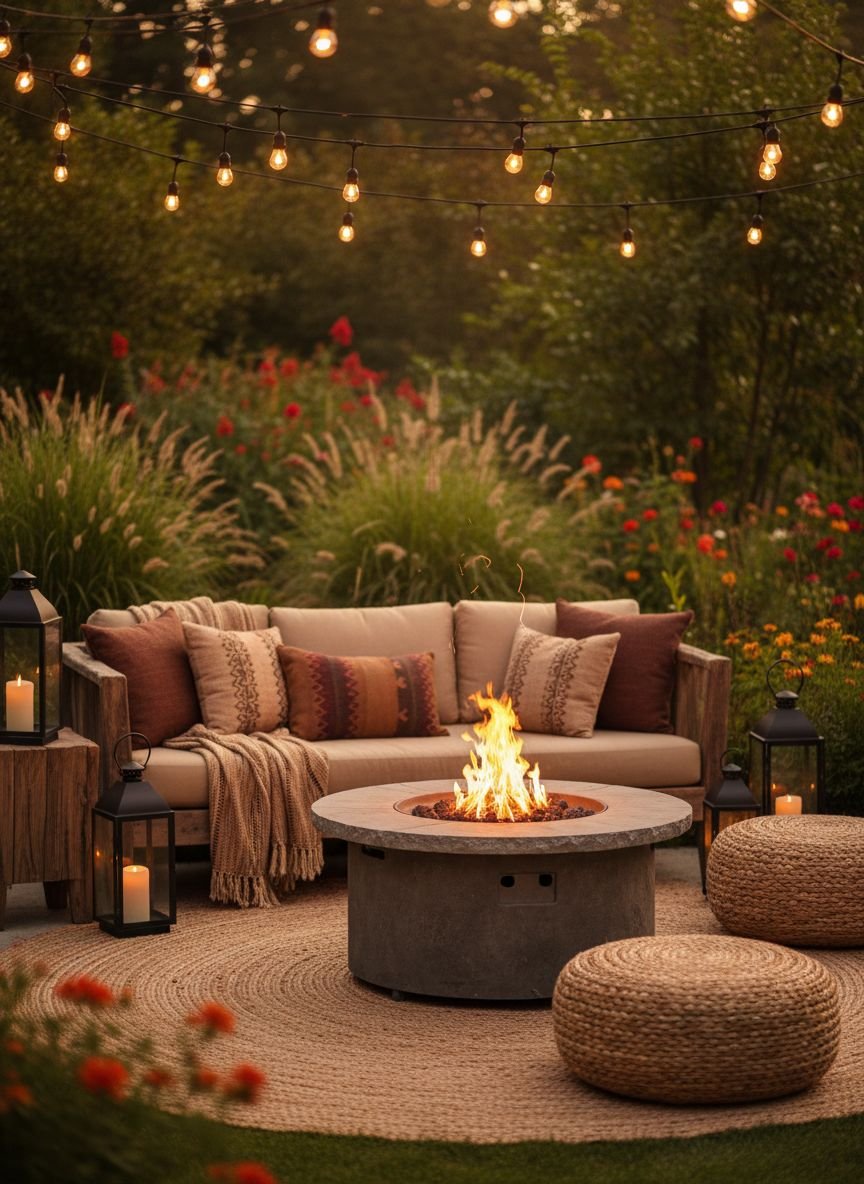
Creating a central hub for family interaction is the cornerstone of any successful backyard layout. An inviting gathering space usually centers around a durable, weather-resistant sectional sofa arranged in a “U” or “L” shape to encourage conversation. The key visual element here is the use of soft, outdoor-grade textiles in warm neutrals or earth tones, which bridge the gap between indoor comfort and outdoor durability. By anchoring this furniture on a defined hardscape, such as pavers or a composite deck, you establish a clear “living room” zone that feels intentional rather than temporary.
From a design perspective, this layout works because it utilizes the principle of containment. Low planters or a change in flooring material can subtly define the perimeter without blocking sightlines, which is crucial for parents monitoring children in other parts of the yard. To implement this, choose furniture with washable covers and position the arrangement to face the main activity zones. Add an oversized outdoor rug to ground the space and provide a soft surface for younger children who might prefer playing on the floor.
Pro Tip: Install dimmable string lights overhead to transition this space from a daytime play monitoring station to an intimate evening lounge for adults.
Kid-Friendly Play Zones with Creative Features
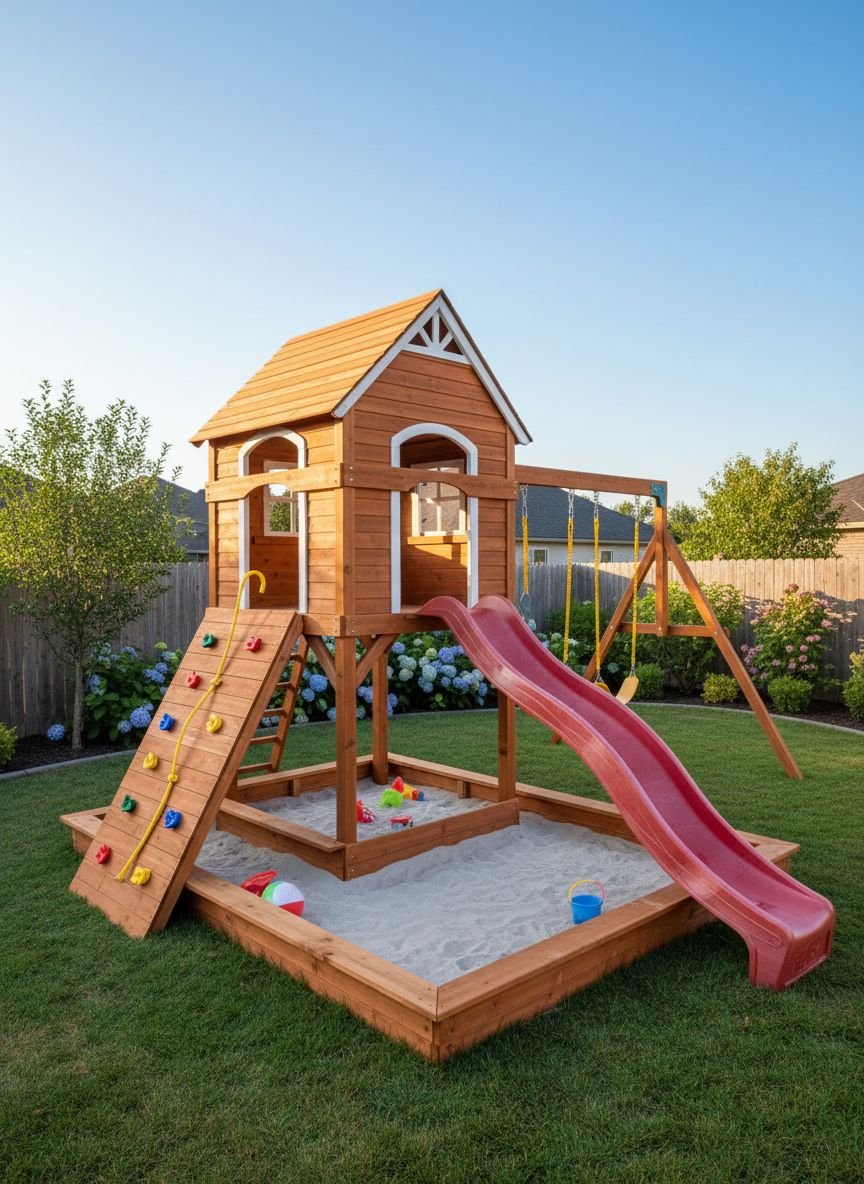
Gone are the days when a kid-friendly zone meant a plastic slide in the middle of the lawn. Modern family backyard layout ideas focus on integrating play equipment into the landscape design so it looks attractive rather than cluttered. Consider a custom-built wooden climbing structure that mimics the architectural lines of your fence or pergola. Use natural materials like cedar or redwood, which age beautifully and blend with the surrounding greenery. The visual texture of wood against lush grass creates a harmonious look that plastic simply cannot achieve.
The design theory here is “integrated play.” Instead of segregating the fun to a hidden corner, you incorporate it into the flow of the garden. A sandbox can be designed with a hinged wooden lid that transforms into a sunbathing deck when not in use. Implementation involves excavating a specific area and filling it with safety-rated rubber mulch or wood chips, bordered by smooth river stones or timber edging. This keeps the loose material contained and provides a safety cushion for active play.
Pro Tip: Add a “mud kitchen” using an old sink and pallets against a fence; it encourages sensory play and keeps the mess concentrated in one easy-to-hose-down area.
Lush Hand-Drawn Garden Layouts
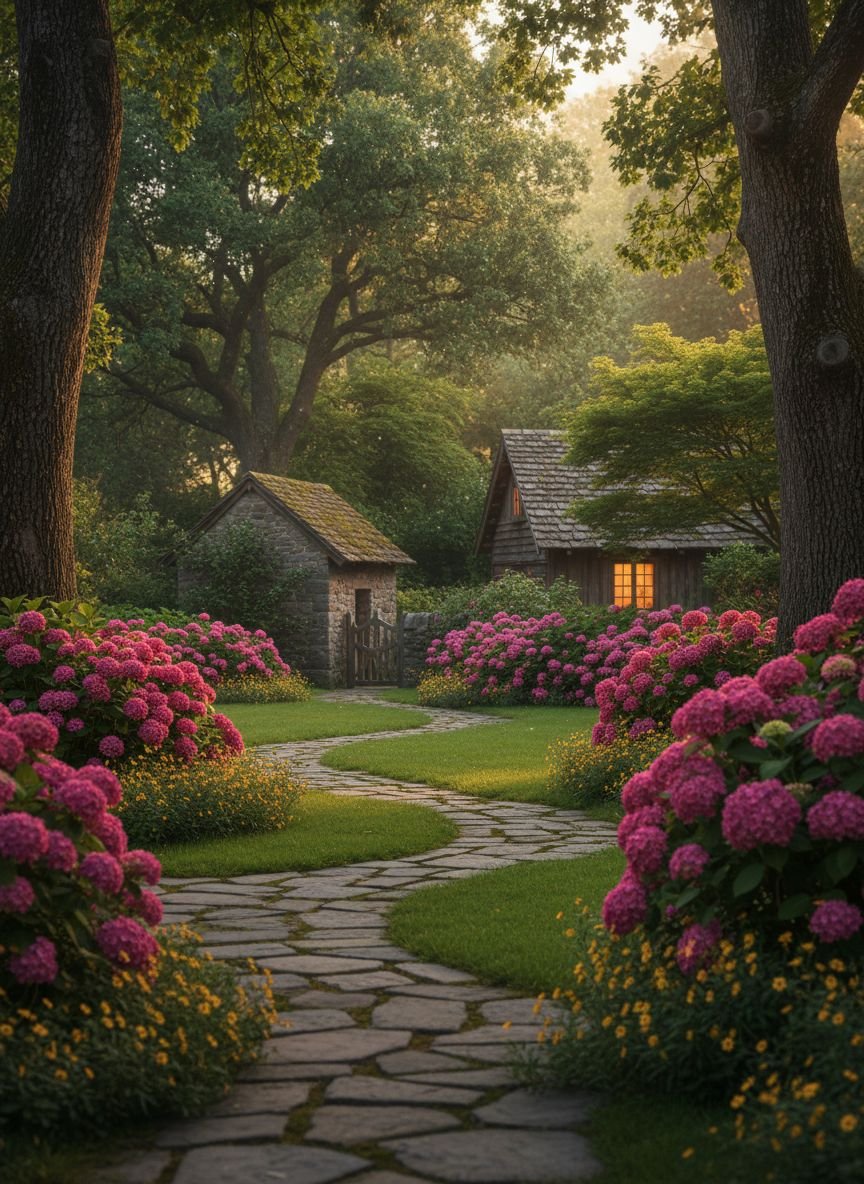
There is something undeniably charming about a garden that feels organic and slightly wild, rather than rigidly manicured. Lush, hand-drawn style layouts rely on sweeping curves and kidney-shaped flower beds rather than sharp geometric angles. This approach softens the hard edges of fences and property lines, making the yard feel more expansive. Visually, you want to layer plants by height: tall ornamental grasses or bamboo at the back for privacy, flowering shrubs in the middle, and creeping ground cover at the front.
This layering technique creates depth and visual interest throughout the year. To achieve this look, start by sketching your yard on paper and drawing free-flowing lines that guide the eye from one corner to another. When planting, group species in odd numbers (threes or fives) to create natural-looking clusters. Use plants with varying textures, such as the feathery fronds of ferns against the broad, glossy leaves of hostas, to create a rich tapestry of green that feels like a secret garden.
Pro Tip: Use flexible metal or composite garden edging to maintain those perfect curves and prevent grass from creeping into your flower beds.
Save this idea to your Pinterest.
Inspiring Landscape Designs for All Seasons
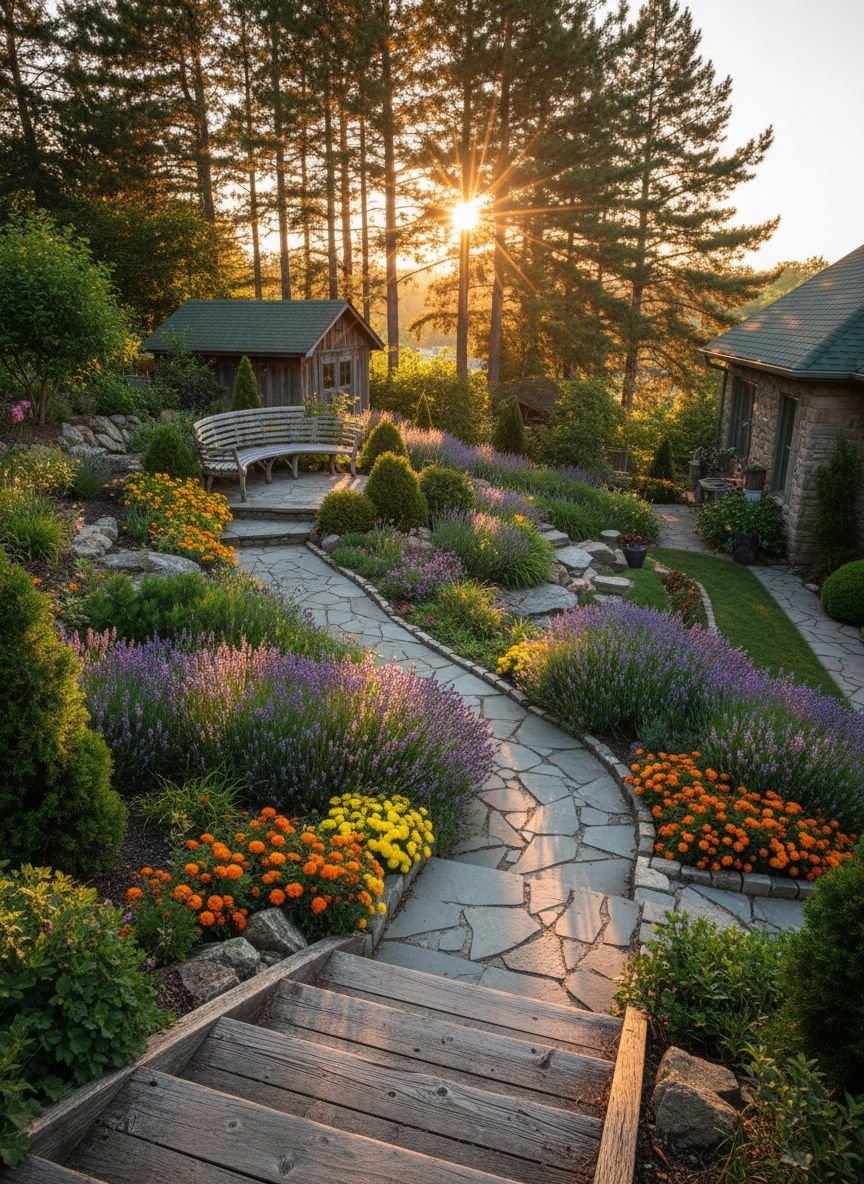
A truly perfect outdoor space serves your family year-round, not just in summer. This layout focuses on “four-season interest,” ensuring that your backyard has visual appeal even in the depths of winter. The strategy involves selecting a backbone of evergreen shrubs and trees that provide structure and color when everything else is dormant. Intersperse these with deciduous trees that offer shade in summer and sculptural branch silhouettes in winter.
The design principle is balance and succession. You want to ensure that as one plant fades, another comes into bloom. For spring, plant bulbs like tulips and daffodils; for summer, hydrangeas and lavender; for autumn, Japanese maples or sedum; and for winter, holly or boxwood. Implementation requires a bit of research into your local hardiness zone, but the result is a dynamic landscape that changes with the months. Hardscaping also plays a role here; a stone path or a brick wall looks beautiful covered in snow or glistening with rain, adding permanent structure to the organic changes.
Pro Tip: Incorporate a fire feature or patio heater into this design to physically extend the usability of the space into the colder months.
Cozy Hammock Areas Near a Fire Pit
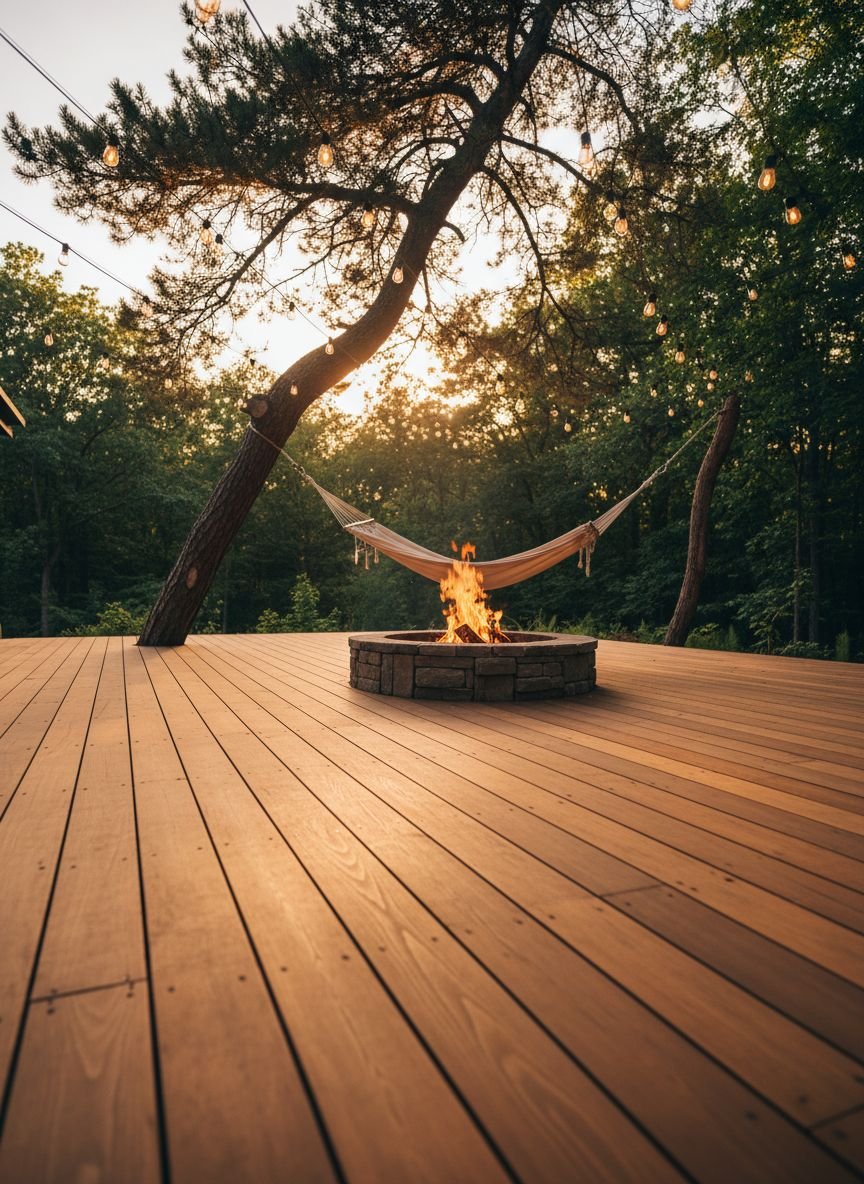
Combining a hammock zone with a fire pit creates the ultimate relaxation destination for teenagers and adults. This layout idea is perfect for unused corners of the yard. Visually, the drape of a hammock adds a soft, curved line that contrasts beautifully with the solid, grounded nature of a stone or metal fire pit. The texture of a woven cotton hammock paired with rough-hewn stone or sleek concrete creates a tactile experience that invites touch and rest.
Functionally, this setup creates a “retreat zone” away from the high-energy play areas. To implement this, you need two sturdy anchor points for the hammock—either mature trees or deeply set posts (4×4 pressure-treated timber works well). Position the hammock safely away from the fire’s heat but close enough to enjoy the warmth and ambient light. Surround the area with gravel or crushed granite for a satisfying crunch underfoot and excellent drainage. This low-maintenance ground cover also prevents sparks from igniting dry grass.
Pro Tip: If you lack trees, use a hammock stand and bury the legs in the gravel for a cleaner, “floating” look.
Comparison: Ground Cover Options for Family Yards
| Material | Pros | Cons | Best For |
|---|---|---|---|
| Natural Grass | Soft, cool, classic look | High maintenance, water usage | Open play areas |
| Artificial Turf | No mud, evergreen, durable | Can get hot, higher upfront cost | High-traffic zones |
| Pea Gravel | Excellent drainage, affordable | Can migrate, not barefoot friendly | Fire pit & dining areas |
| Rubber Mulch | Superior shock absorption | Can retain heat, synthetic look | Under play structures |
Related posts :
- 15 Spectacular Outdoor Mini Water Garden Ideas That Transform Small Spaces
- 9 Smart and Space-Saving Design Ideas for Small Backyards That Maximize Every Inch
Modern Outdoor Patio Concepts
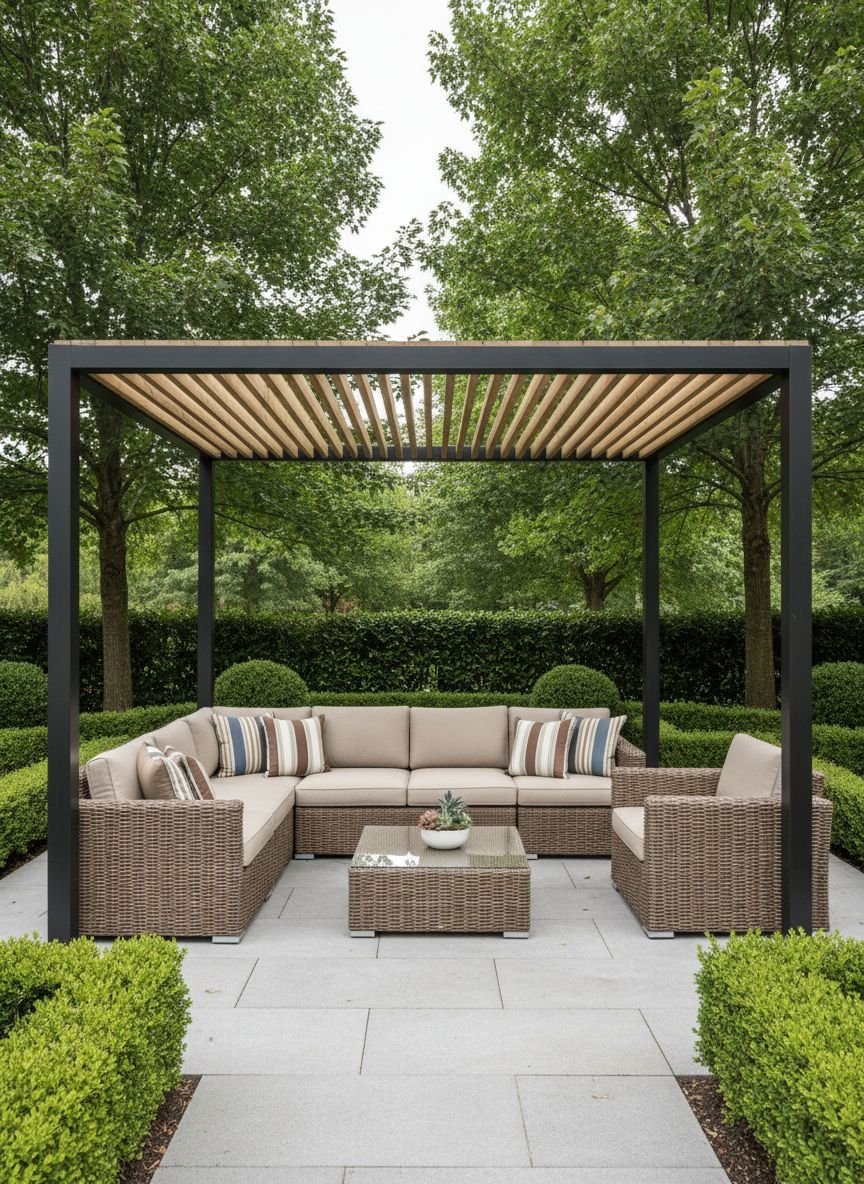
Modern patio concepts for 2026 are defined by clean lines, large-format pavers, and a monochromatic color palette. This style is excellent for families who want a low-maintenance, high-style look. The visual impact comes from the repetition of geometric shapes—rectangular concrete slabs separated by strips of river rock or dwarf mondo grass. This “grid” pattern makes small spaces feel wider and more organized.
The design principle at play is minimalism. By reducing visual clutter, you create a sense of calm. Furniture should be sleek, often utilizing aluminum or teak with sharp, angular cushions. Implementation involves careful leveling of the ground and precise spacing of the pavers. This layout is particularly effective for connecting the indoor living area to the outdoors, especially if you have sliding glass doors. The continuity of style blurs the boundary between inside and out, effectively doubling your entertaining space.
Pro Tip: Use large potted plants with architectural foliage, like Snake Plants or Agave, to add height and organic contrast without breaking the minimalist vibe.
Wooden Pergolas with Swings and Fire Pits
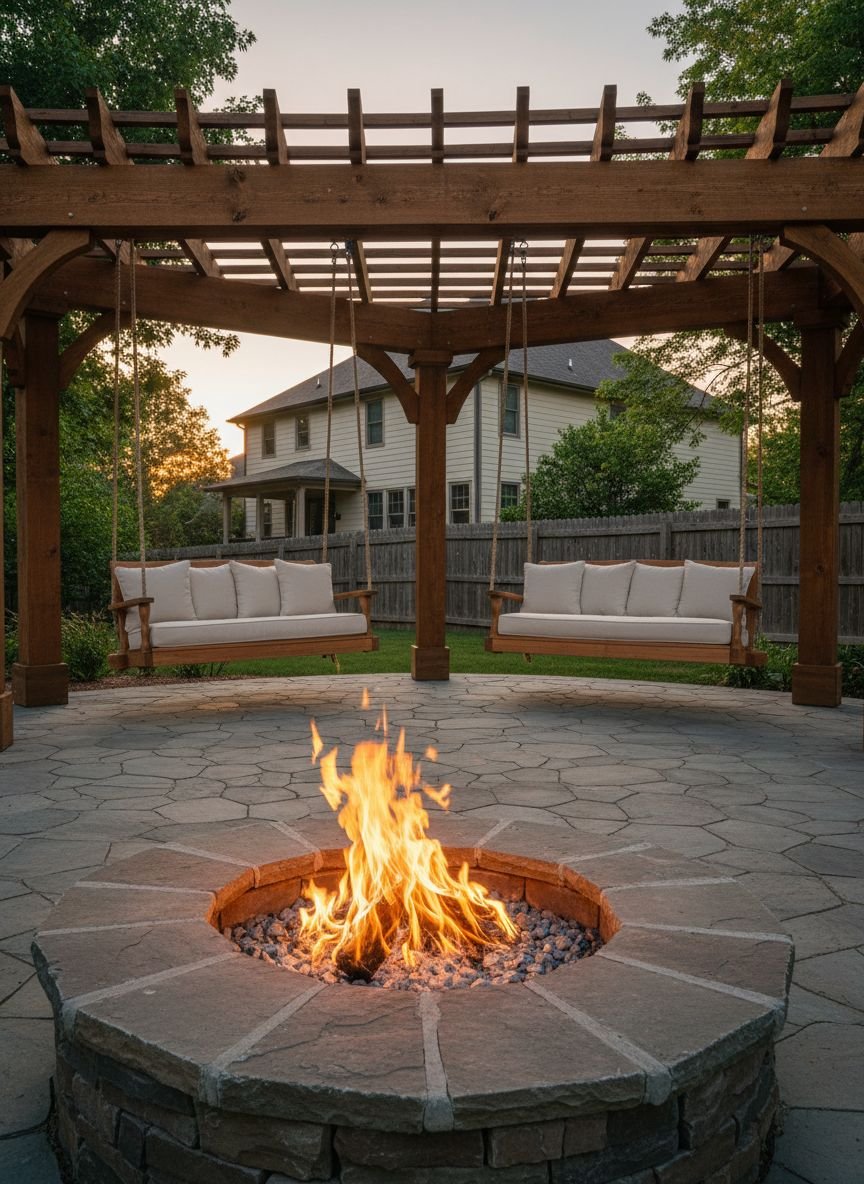
A wooden pergola serves as the architectural anchor of a backyard, providing vertical interest and much-needed shade. When you combine this structure with a porch swing and a central fire pit, you create a “room without walls” that is cozy and intimate. The visual warmth of stained wood (cedar or pressure-treated pine) complements the flickering light of a fire, creating a rustic yet refined atmosphere.
This layout works by defining a volume of space. The overhead beams of the pergola give the psychological feeling of a ceiling, making the area feel protected and enclosed. To implement this, anchor the pergola posts in concrete footings for stability. Hang a wide, deep-seated swing or a “bed swing” on one side, facing the fire pit. Ensure the swing hardware is rated for significant weight. This setup is perfect for storytelling, roasting marshmallows, or simply swaying gently while watching the kids play nearby.
Pro Tip: Train climbing vines like Wisteria or Jasmine up the pergola posts to add fragrance and soften the structure’s hard lines.
Save this idea to your Pinterest.
Suburban Backyard Transformation Inspiration
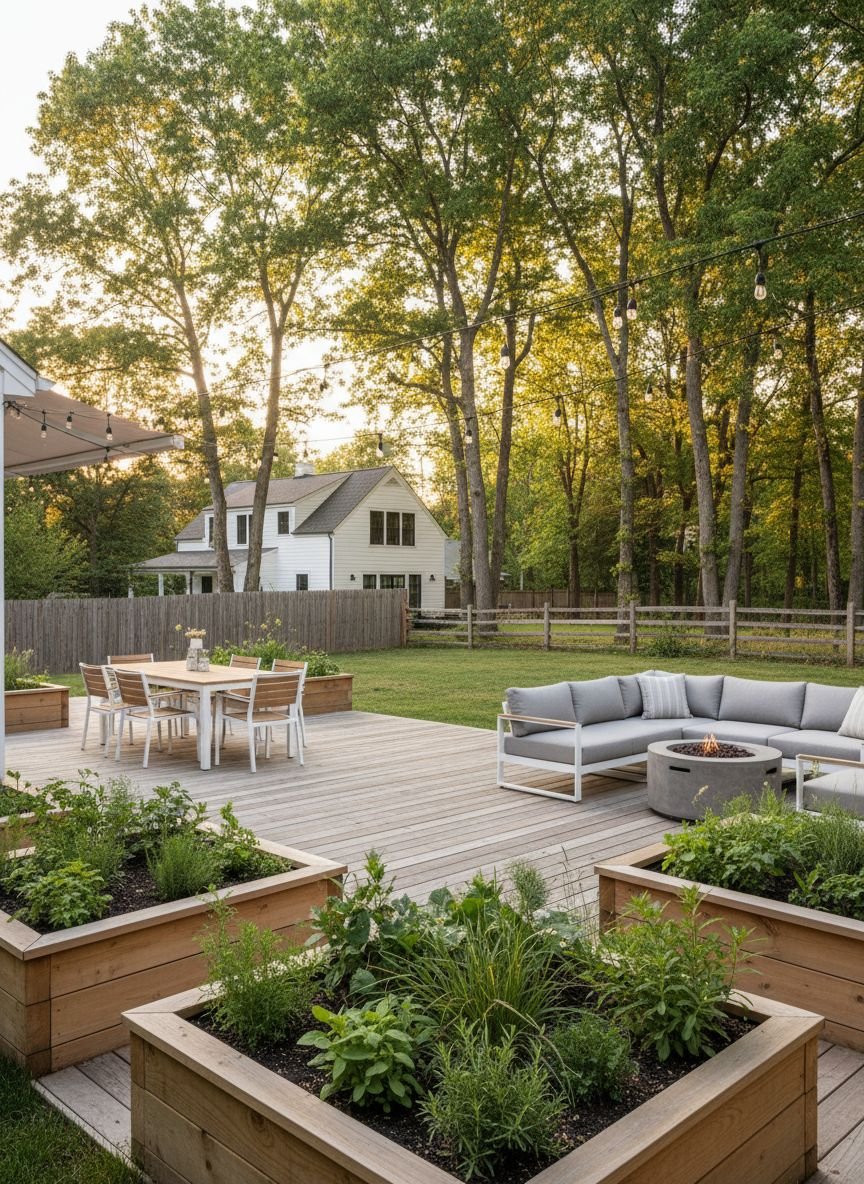
The typical suburban backyard is often a flat rectangle of grass surrounded by a wooden fence. Transforming this into a dynamic family oasis requires “breaking the box.” This layout idea involves creating diagonal sightlines and curved pathways that disrupt the rectangular feel. Visually, you want to use hardscaping to guide the eye to different focal points—a fountain in one corner, a bench in another—rather than letting the eye sweep across a boring flat lawn.
The design strategy is to create a journey. Even in a small yard, a winding path makes the space feel larger because it takes longer to traverse visually. Implementation might involve removing a portion of the lawn to install a winding paver path or a dry creek bed. Use planting beds of varying depths along the fences to hide the rigid property lines. By varying the height of the plants, you create an undulating horizon line that mimics a natural landscape.
Pro Tip: Paint your fence a dark charcoal or black; this “magical” designer trick makes the fence recede visually, making the green plants pop and the yard feel infinite.
Nature-Themed Playgrounds for Little Adventurers
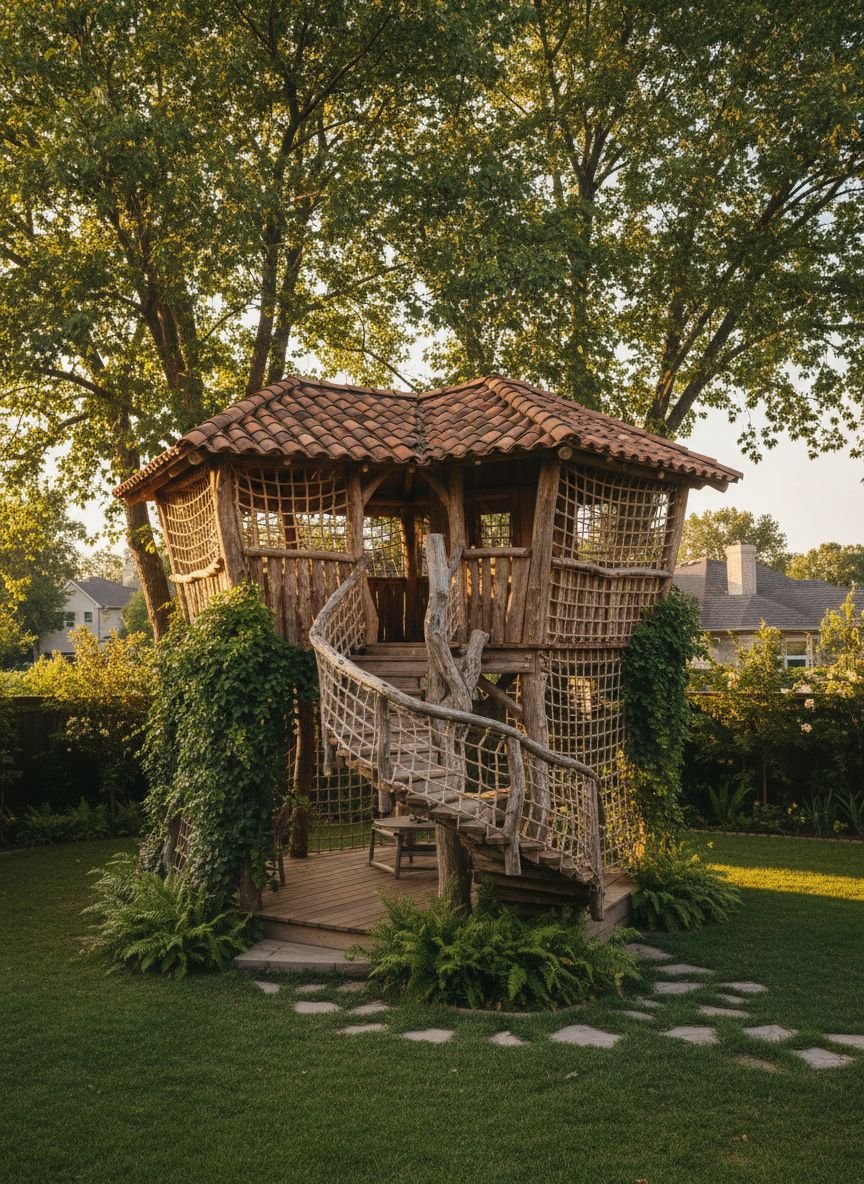
Nature-themed playgrounds are a massive trend because they encourage imaginative play and look beautiful. Instead of bright primary colors, this layout uses logs, stumps, boulders, and hills. The visual aesthetic is organic and earthy, blending seamlessly with the garden. A “stump jump” area, a tunnel made of willow branches, or a slide built into a small grassy hill are key features.
The design theory is “biophilic play,” which suggests that humans have an innate connection to nature. By using natural materials, you provide tactile stimulation—rough bark, cool stone, soft grass—that plastic cannot offer. Implementation is often cheaper and more DIY-friendly than buying a large playset. You can source logs from local arborists or tree trimming services. Ensure all wood is sanded to prevent splinters and that heavy items like boulders are securely buried to prevent rolling.
Pro Tip: Create a “sensory path” with sections of different materials like smooth stones, moss, wood chips, and sand for kids to walk on barefoot.
Perfect Entertaining Areas for Large Gatherings
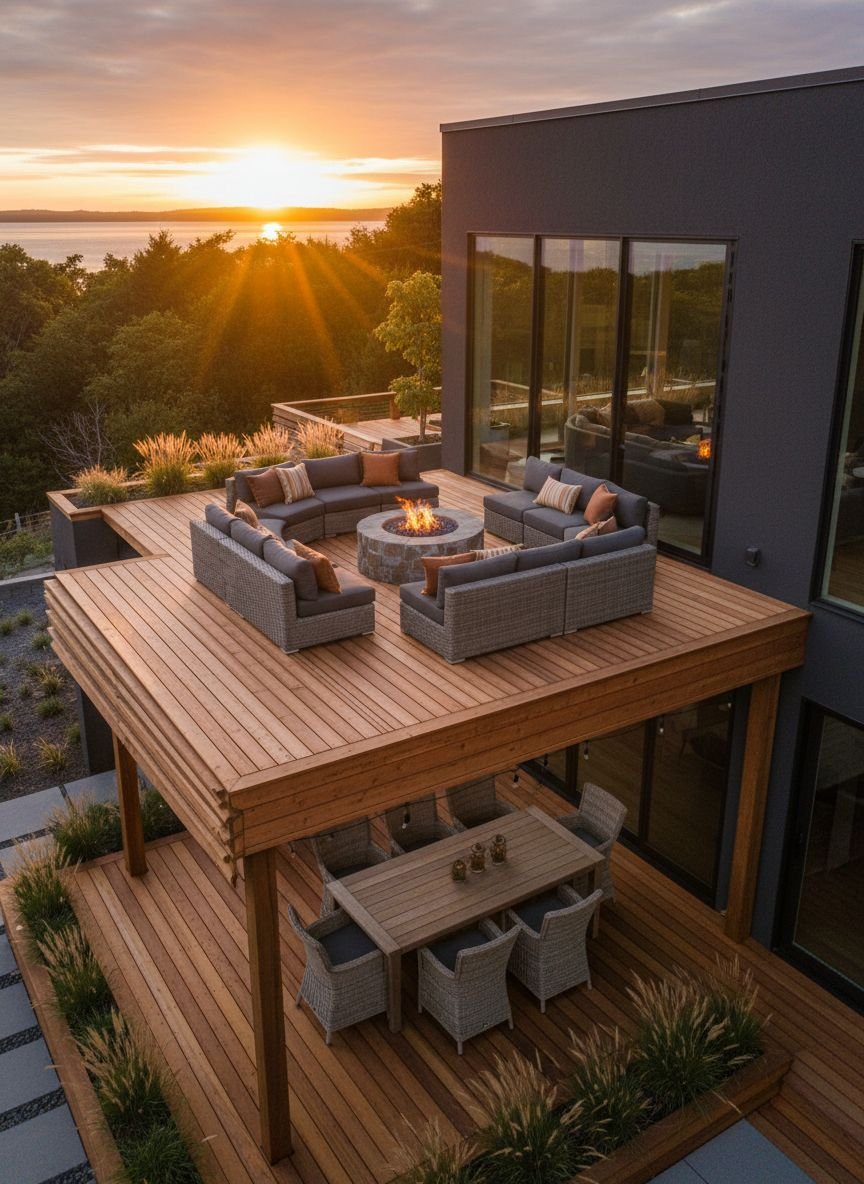
If your family loves to host, your backyard needs a layout that facilitates flow and prevents bottlenecks. The perfect entertaining area features multiple “micro-zones” that allow guests to mingle in smaller groups while remaining part of the larger party. Visually, this is achieved by using different flooring materials to designate zones—a deck for dining, a patio for the bar, and a grassy area for standing and mingling.
The design principle is circulation. You need clear, wide pathways (at least 3-4 feet) between furniture groupings so people can move freely with drinks in hand. Implementation involves placing the dining table near the kitchen door for easy food transport, while the lounge or fire pit area can be further out. A buffet station or an outdoor kitchen sidebar is essential to keep food service organized. Good lighting is also critical here; use a mix of overhead festive lights and low-level path lights to ensure safety and ambiance.
Pro Tip: invest in stackable outdoor chairs and a folding table that can be stored away when not in use, allowing you to expand your seating capacity instantly.
Get The Look: Entertaining Essentials
- Lighting: Solar-powered LED path lights and commercial-grade string lights.
- Textiles: Outdoor throw pillows in Sunbrella fabric (fade-resistant).
- Heating: A propane patio heater or a smokeless fire pit (like a Solo Stove).
- Surface: All-weather outdoor rugs to define seating areas.
Simple and Elegant Small Space Gardening Tips
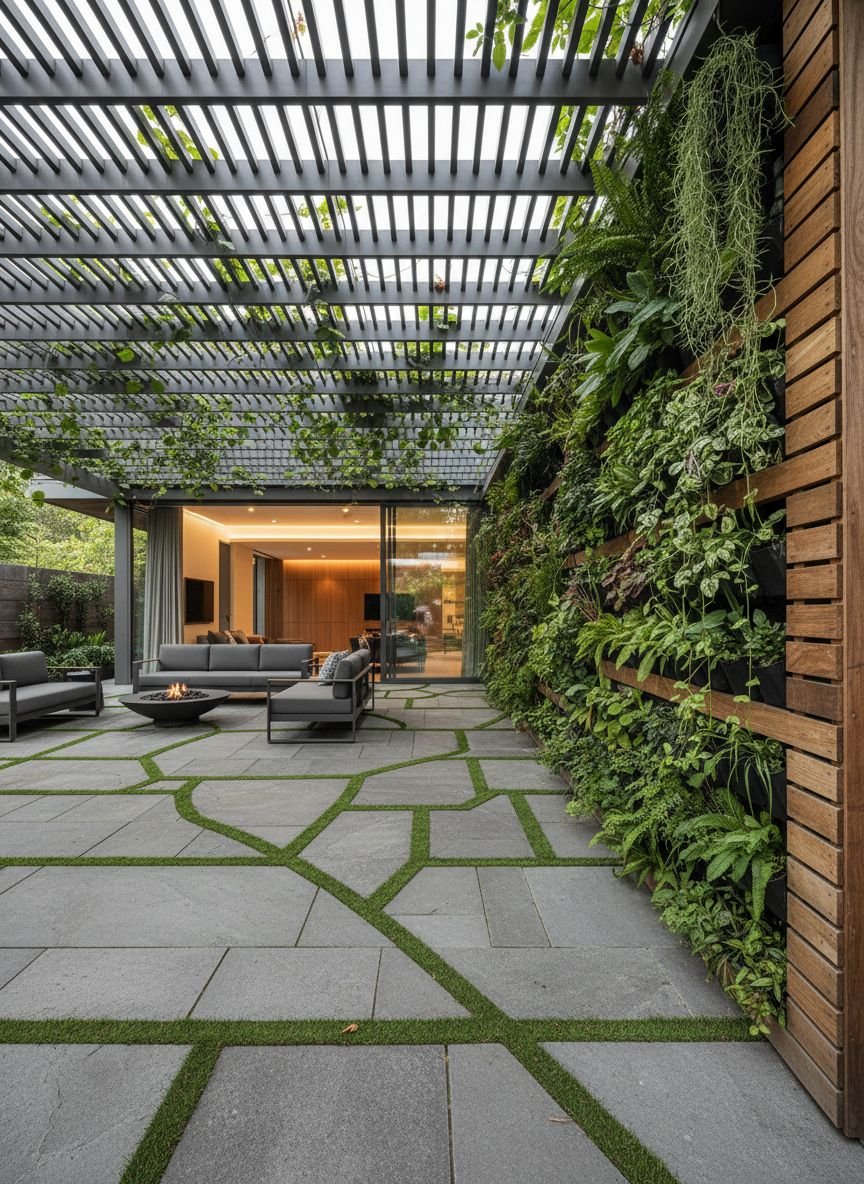
For families with limited square footage, vertical gardening is the solution. This layout utilizes fences, walls, and trellises to grow upwards rather than outwards. Visually, a “living wall” or a fence covered in climbing roses creates a lush, green backdrop that feels immersive without taking up floor space. This is vital for maintaining enough open ground for children to play.
The design principle is maximizing vertical volume. By drawing the eye up, you make the footprint feel less constrained. Implementation can be as simple as hanging planter boxes on the fence or installing a wooden lattice. Choose trailing plants like ivy or sweet potato vine for a cascading effect, or herbs for a functional kitchen garden. Container gardening is also key here; use tall, slender pots that provide root depth without a wide footprint.
Pro Tip: Use a tiered plant stand or a ladder shelf to display multiple pots in the space of just one, effectively tripling your planting area.
Backyard Entertaining Area Layout Ideas
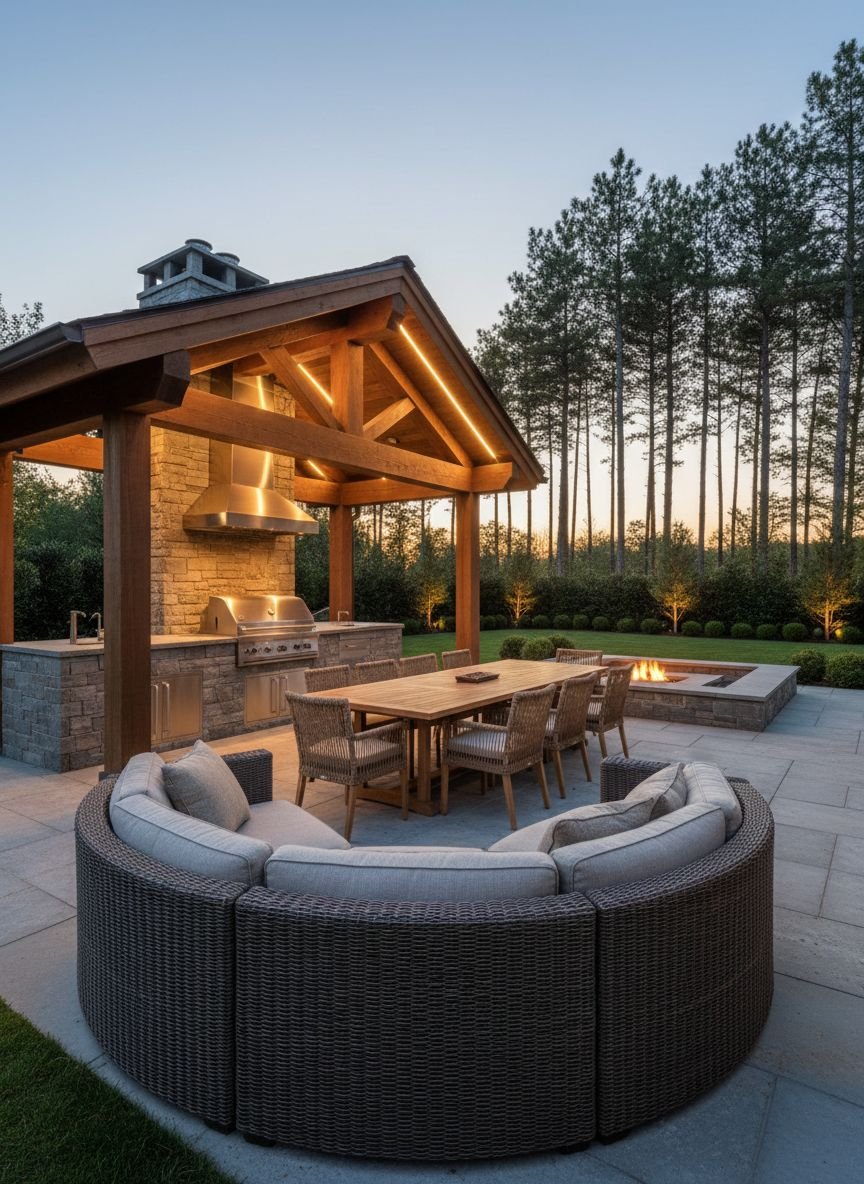
This final layout brings everything together, focusing on the “Triangle of Leisure”: Dining, Lounging, and Cooking. Ideally, these three zones form a triangle layout that allows for social interaction between the cook, the diners, and the relaxers. Visually, you can unify these areas using a consistent color palette or material choice, such as using the same stone for the patio and the BBQ island cladding.
The design theory is social ergonomics. The cook should never be isolated. Place the grill island so it faces the guests, not a wall. Implementation involves hardscaping a large enough area to accommodate these three zones without them feeling cramped. If space is tight, combine dining and lounging with a “fire table”—a gas fire pit with a wide rim that serves as a dining surface. This dual-purpose furniture is a game-changer for efficient backyard layouts.
Pro Tip: Install an outdoor sound system or use high-quality portable speakers to zone audio as well, keeping the music at a conversational level.
Popular Asked Questions
How do I design a backyard for a family?
Designing a family backyard starts with “zoning.” Think of your yard like your house; you need a room for eating, a room for playing, and a room for relaxing. Start by sketching your yard and drawing circles for where these activities will happen. Place the adult seating area where you have a clear view of the kids’ play zone. Use paths or different ground materials (like grass vs. patio stones) to show where one zone ends and another begins. Safety is the top priority, so ensure fences are secure and water features are covered or shallow.
What is the best layout for a small family backyard?
For small backyards, the best layout pushes everything to the edges. Keep the center open and grassy to give kids room to run. Place flower beds, seating, and storage along the fences. Use vertical space by hanging plants on walls or building a tall, narrow playhouse. Multi-functional furniture is your best friend here—look for benches that open up to store toys or tables that fold down when not in use. This “open center” layout makes the yard feel twice as big.
How can I make my backyard fun for kids on a budget?
You don’t need an expensive playset to make a yard fun. Kids love sensory play. A simple “mud kitchen” made from old pallets and pots is often more popular than a swing set. You can also build a DIY sandbox using wood planks, or create a “chalkboard wall” on your fence. Another cheap idea is a “stump hop” using free logs cut to different heights. The goal is to create areas that encourage imagination rather than just providing a slide.
What are the trends for backyard landscaping in 2026?
The biggest trends for 2026 are “Outdoor Rooms” and sustainability. Families are creating covered pergolas that look like living rooms with rugs and lamps. There is also a huge shift toward “edible landscaping,” where you mix vegetable plants and fruit bushes right in with your flowers. Technology is also big, with smart irrigation systems that save water and app-controlled lighting that changes colors for parties. Finally, “wild” gardens with native plants are replacing perfect, chemical-heavy lawns.
How do I create privacy in a backyard with neighbors nearby?
Layering is the secret to privacy. Start with your fence, then plant tall, fast-growing shrubs like Arborvitae or Bamboo (in containers) in front of it. Add a pergola or shade sail overhead to block the view from two-story neighbor houses. You can also use outdoor curtains on a porch or trellis panels with climbing vines to create secluded nooks. The sound of a water feature, like a small fountain, can also help mask noise from neighbors, increasing the feeling of privacy.
Conclusion
Transforming your outdoor space into a delightful family haven is about more than just buying furniture; it is about creating a lifestyle. By implementing these family backyard layout ideas, you are building a backdrop for childhood memories, summer barbecues, and quiet moments of reflection. Whether you choose a nature-themed playground, a modern minimalist patio, or a lush garden retreat, the key is to design for how your family actually lives.





Leave a Comment