
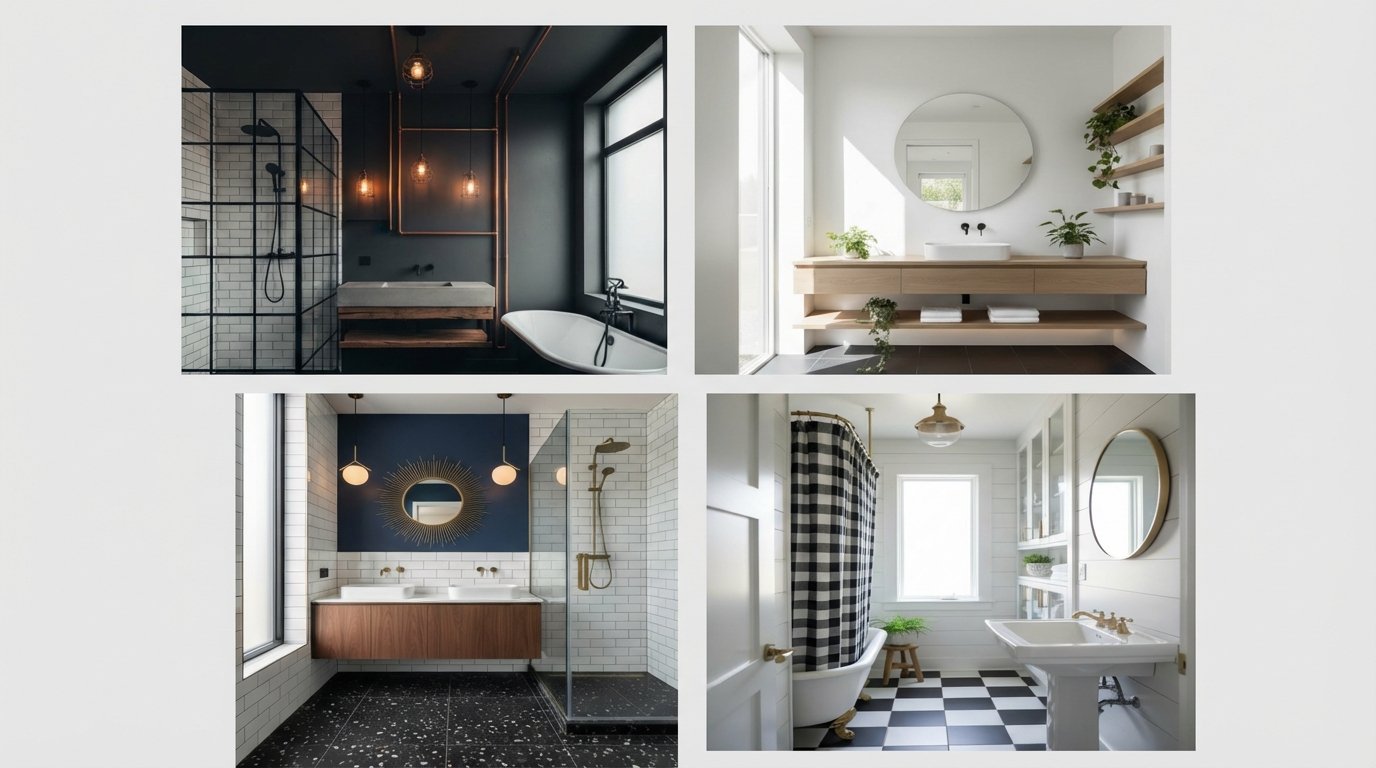
The “Utility” Hook
Are you tired of the endless sea of sterile all-white bathrooms that feel more like a hospital than a home? You are not alone. The “11 Trendy Black Floor Bathroom” aesthetic is surging in popularity because it solves a massive design problem: how to create depth and drama without shrinking a small space.
Contrary to popular belief, black floors do not make a room feel claustrophobic. When executed correctly, they ground the space, pushing the walls outward visually and hiding the daily wear and tear that light floors amplify. Whether you are dealing with a tiny powder room or a sprawling master bath, switching to a dark foundation instantly elevates the perceived value of your home.
In this guide, we reveal 11 specific, high-impact black floor designs that range from budget-friendly DIY updates to high-end luxury renovations. Plus, we answer the biggest question everyone asks: Are they a nightmare to clean? (Spoiler: Not if you choose the right finish).
Key Takeaways
- Grounding Effect: Black floors act as a visual anchor, allowing white fixtures and metallic accents to “pop” with higher definition.
- Texture Matters: Matte and textured finishes (like slate or river rock) are far easier to maintain than high-gloss black tiles, which show every water spot.
- Space Perception: Pair dark floors with light walls and large mirrors to create an optical illusion of expansive vertical space.
- Versatility: Black flooring works across every design era, from Art Deco glam to rustic Farmhouse.
- Value Add: Dark stone or high-quality dark tile is perceived as a luxury upgrade, potentially boosting resale value.
Table of Contents
- Modern Minimalist
- Industrial Luxe
- Scandinavian Spa
- Art Deco Glam
- Farmhouse Fresh
- Contemporary Coastal
- Transitional Elegance
- Mid-Century Modern
- Eclectic Vintage
- Zen Retreat
- Hollywood Regency
- Popular Asked Questions
- Conclusion
Modern Minimalist
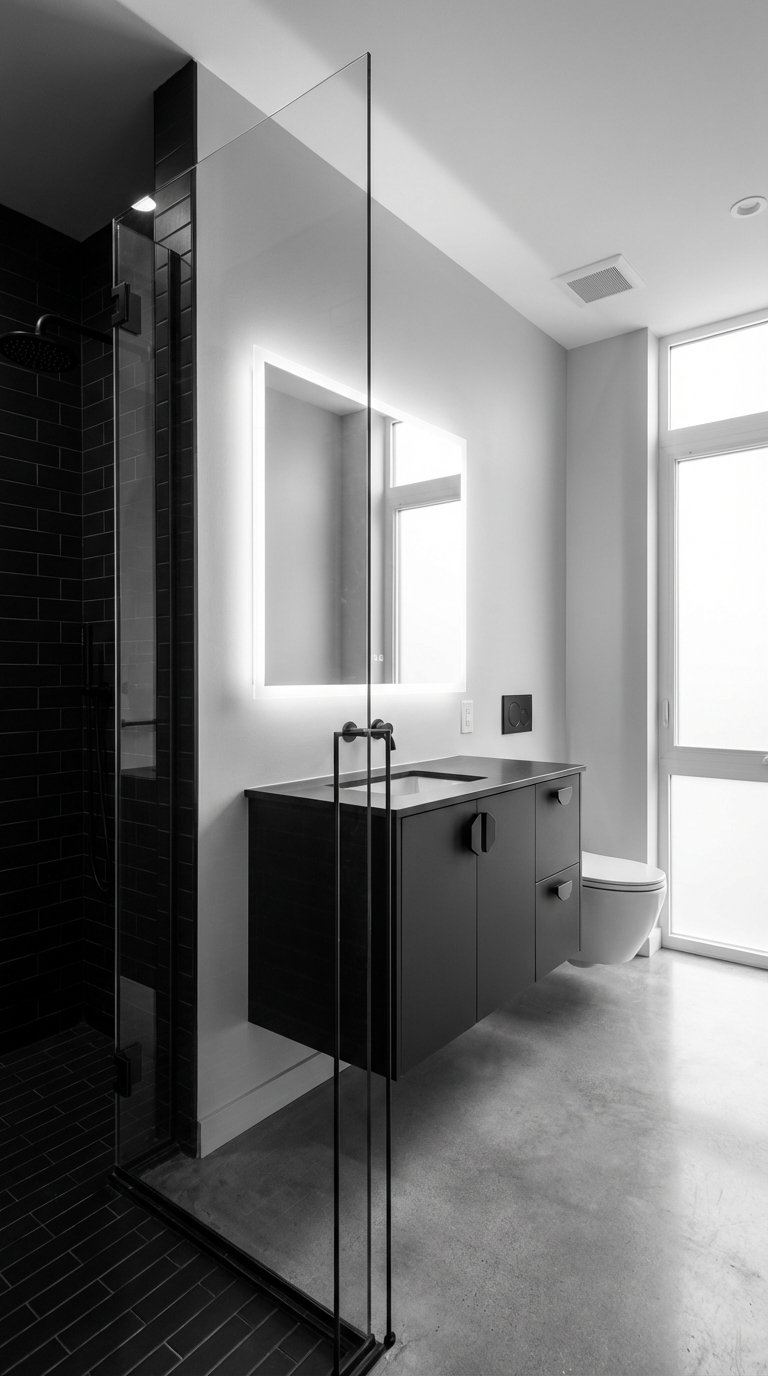
The Modern Minimalist approach is the gateway drug to the “11 Trendy Black Floor Bathroom” aesthetic. It relies on the power of high contrast to create a clean, architectural look that feels timeless rather than trendy. The key here is removing visual clutter so the floor can serve as a bold statement piece.
Visual Analysis & Design Principle
This style typically utilizes large-format matte black porcelain tiles (think 24×24 inches) with minimal grout lines. By using dark grout that matches the tile, you create a seamless “infinity” floor that deceives the eye into thinking the room is larger than it is. The design principle at play is Negative Space; the heavy, dark floor allows the floating white vanity and wall-hung toilet to appear weightless. The lighting should be cool and diffused, bouncing off the white walls to prevent the room from feeling cave-like.
Implementation & Styling
To achieve this look, opt for a floating vanity in a high-gloss white or a very pale ash wood. Keep hardware strictly chrome or matte black for a monochromatic palette. Avoid warm metals like brass here; you want the coolness of silver tones to maintain that crisp, gallery-like atmosphere. For textiles, use only fluffy white towels—no patterns.
Pro Tip: Use “rectified” tiles, which are cut to exact edges, allowing for super-thin 1/16-inch grout lines. This minimizes the grid pattern and enhances the seamless, modern vibe.
Micro-CTA: Save this idea to your Pinterest.
Industrial Luxe
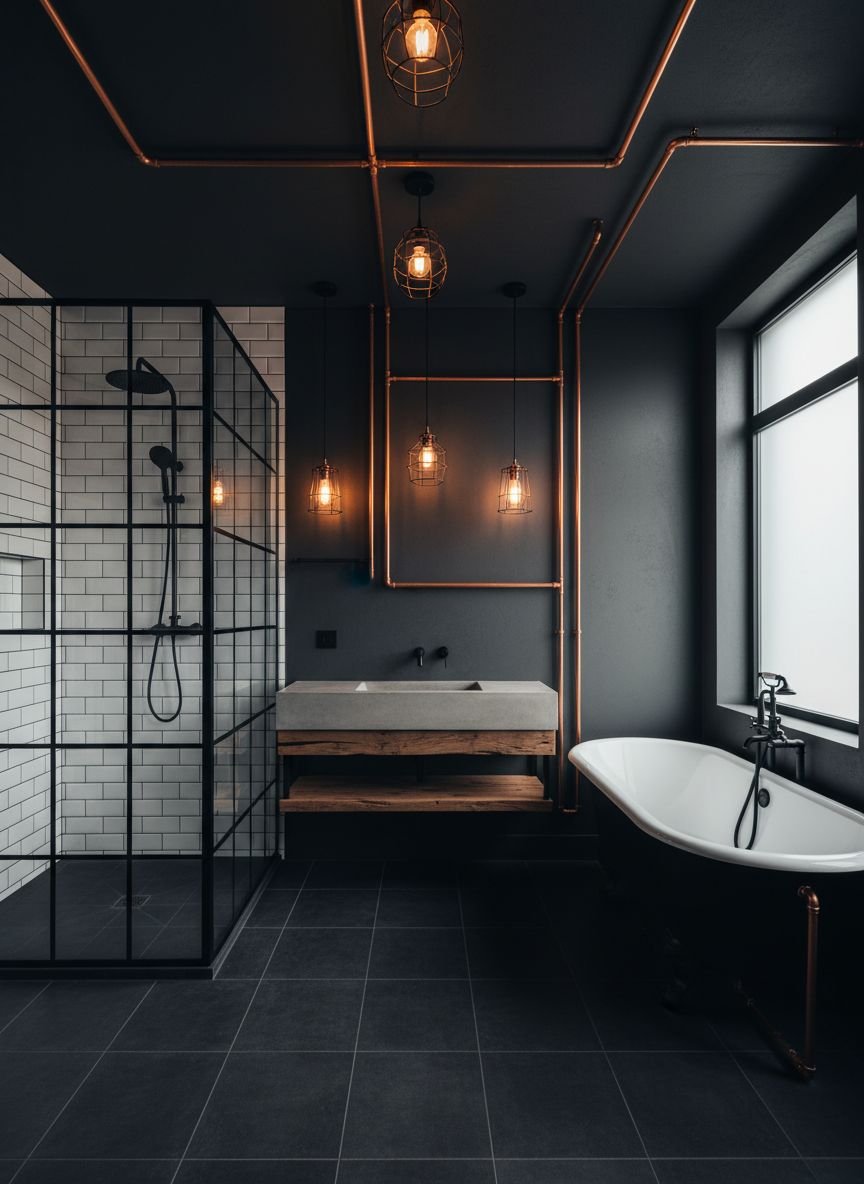
Industrial design often risks feeling cold or unfinished, but the “Luxe” variant brings warmth and livability to the raw aesthetic. This style is perfect for urban lofts or anyone wanting a bathroom that feels sturdy, masculine, and incredibly chic.
Visual Analysis & Design Principle
The star here is matte black concrete flooring or large-format tiles that mimic the look of stained concrete. The texture is imperfect, slightly cloudy, and incredibly forgiving of dust. We contrast this rough floor with Warm Metals—specifically exposed copper pipes or brushed bronze faucets. The design principle is Juxtaposition: the grit of the concrete floor highlights the shine of the metal and the clarity of the glass shower enclosures. Edison bulbs with warm filaments add a golden glow that softens the harsh black floor.
Implementation & Styling
If pouring actual concrete is out of budget or structurally impossible, look for “concrete-look” porcelain tiles in a charcoal-to-black gradient. Pair this with an open-shelf vanity made of reclaimed wood and black metal piping. Exposed plumbing is a plus here, not a flaw. Add a vintage Persian-style runner rug in deep reds or burnt oranges to inject a layer of history and softness underfoot.
Pro Tip: Concrete floors (or porous tiles) must be properly sealed. Water absorption can lead to dark spots that don’t dry out. Use a high-quality penetrating sealer every 12-18 months.
Scandinavian Spa
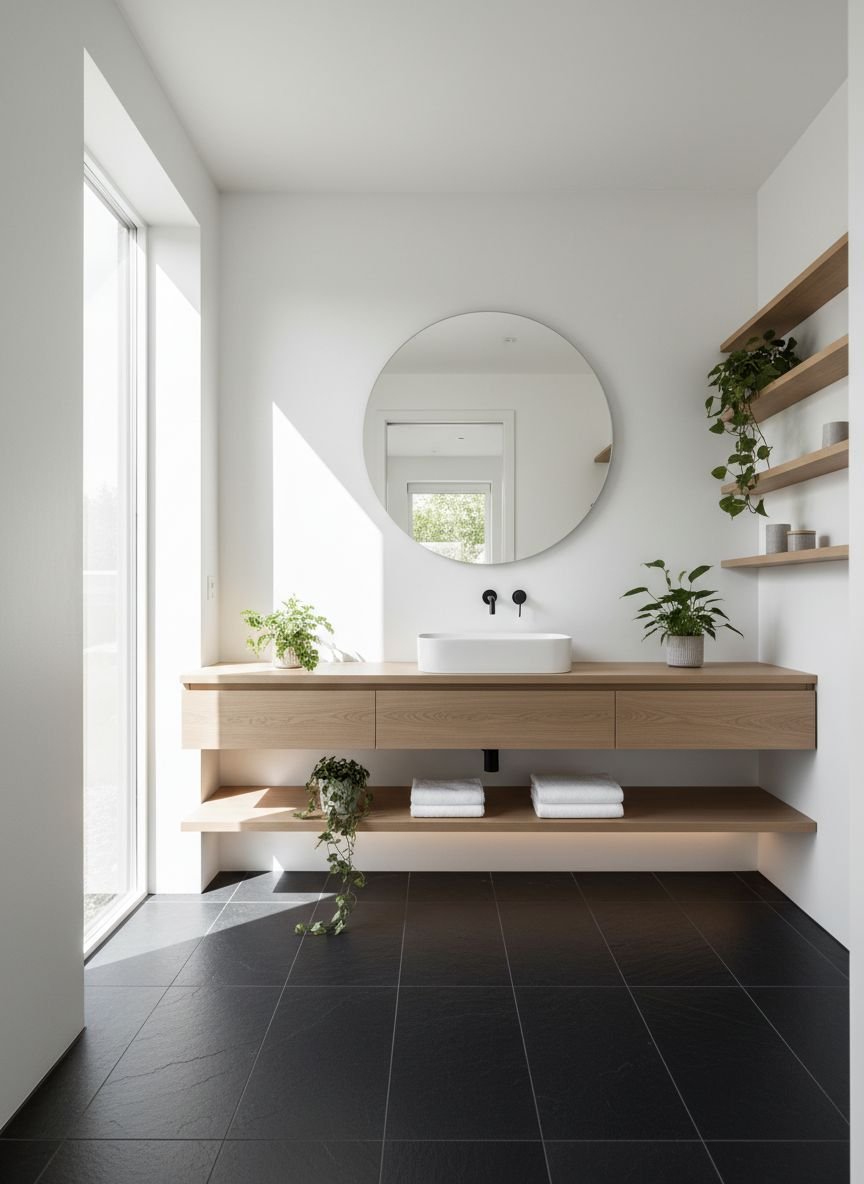
Scandinavian design is usually associated with light wood and white floors, but the “Dark Scandi” movement is taking over 2026. This variation uses a black floor to create a cozy, “hygge” cocoon that feels like a high-end sauna or spa retreat.
Visual Analysis & Design Principle
Instead of smooth tiles, this style often employs Black Slate or dark stone with a natural cleft texture. The uneven surface provides a tactile experience for bare feet, grounding you in nature. The design theory here is Biophilic Contrast. The dark, organic stone floor represents the earth, while light oak cabinetry and greenery represent the forest. It creates a sense of calm and stability that smooth ceramic tiles simply cannot replicate.
Implementation & Styling
Pair the slate floor with a vanity in blonde wood (white oak, birch, or maple). The wood tone is crucial—it must be light to prevent the room from feeling heavy. Introduce soft textures: a waffle-knit robe hanging on a wooden hook, a bamboo bath mat, and woven seagrass baskets for storage. Lighting should be warm (2700K) to enhance the wood tones.
Pro Tip: Slate is naturally slip-resistant due to its texture, making it one of the safest choices for families with children or elderly members.
Art Deco Glam
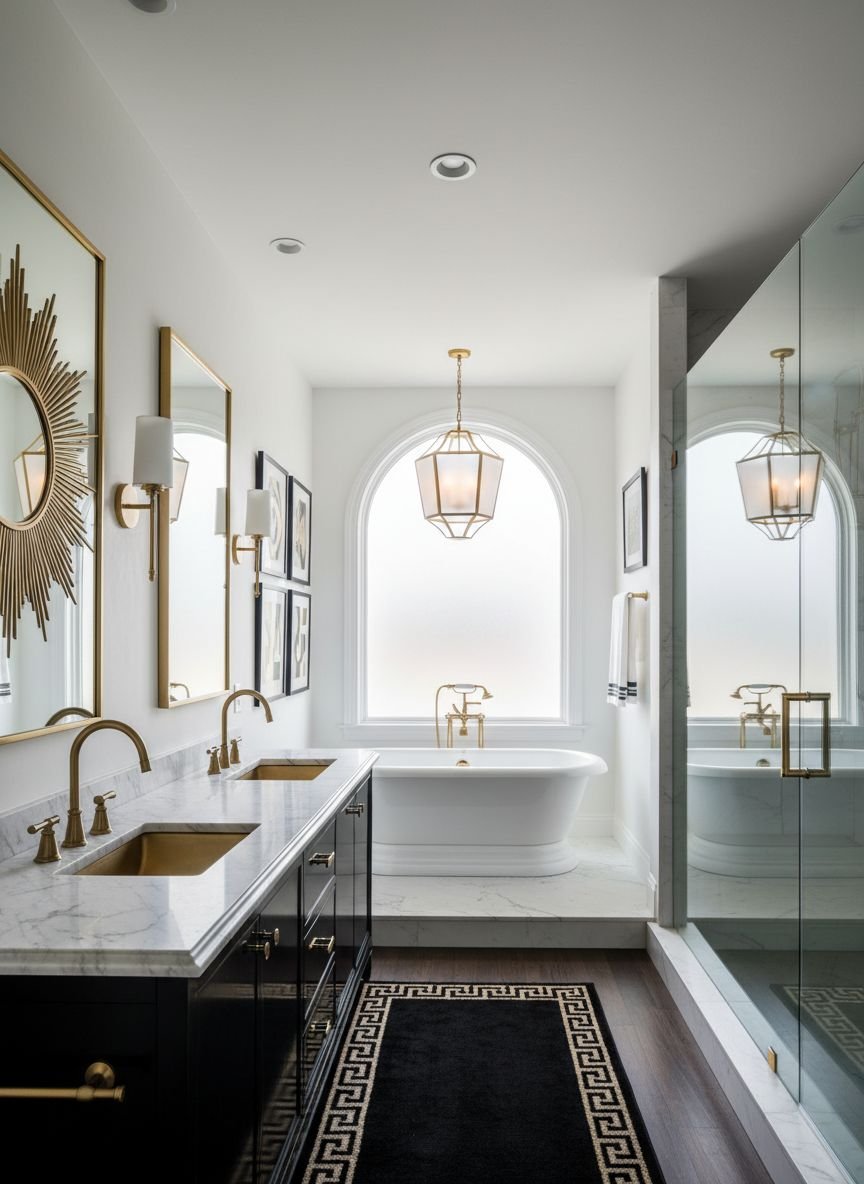
For those who believe a bathroom should be a showstopper, Art Deco Glam offers unapologetic luxury. This style embraces the drama of the “11 Trendy Black Floor Bathroom” keyword by turning the floor into a piece of art.
Visual Analysis & Design Principle
This look demands Glossy Black Marble (like Nero Marquina) with striking white lightning-bolt veining. Alternatively, you can use black and white geometric mosaic tiles in a fan or scallop pattern. The design principle is Opulence and Geometry. The reflective floor bounces light around the room, amplifying the sparkle of crystal chandeliers and glass mirrors. It is a high-energy style that feels expensive and curated.
Implementation & Styling
Hardware is non-negotiable: it must be Gold, Brass, or Polished Nickel. A clawfoot tub with gold feet or a vanity with gold inlay details fits perfectly. Mirrors should be geometric—hexagonal or arched—rather than simple rectangles. Wall colors can be bold; think emerald green or deep navy wallpaper with gold foil accents to match the floor’s intensity.
Pro Tip: Glossy black marble is the highest maintenance floor on this list. It shows water spots and dust instantly. Keep a dry microfiber mop nearby for daily quick swipes to keep the shine blindingly bright.
Micro-CTA: Save this idea to your Pinterest.
Farmhouse Fresh
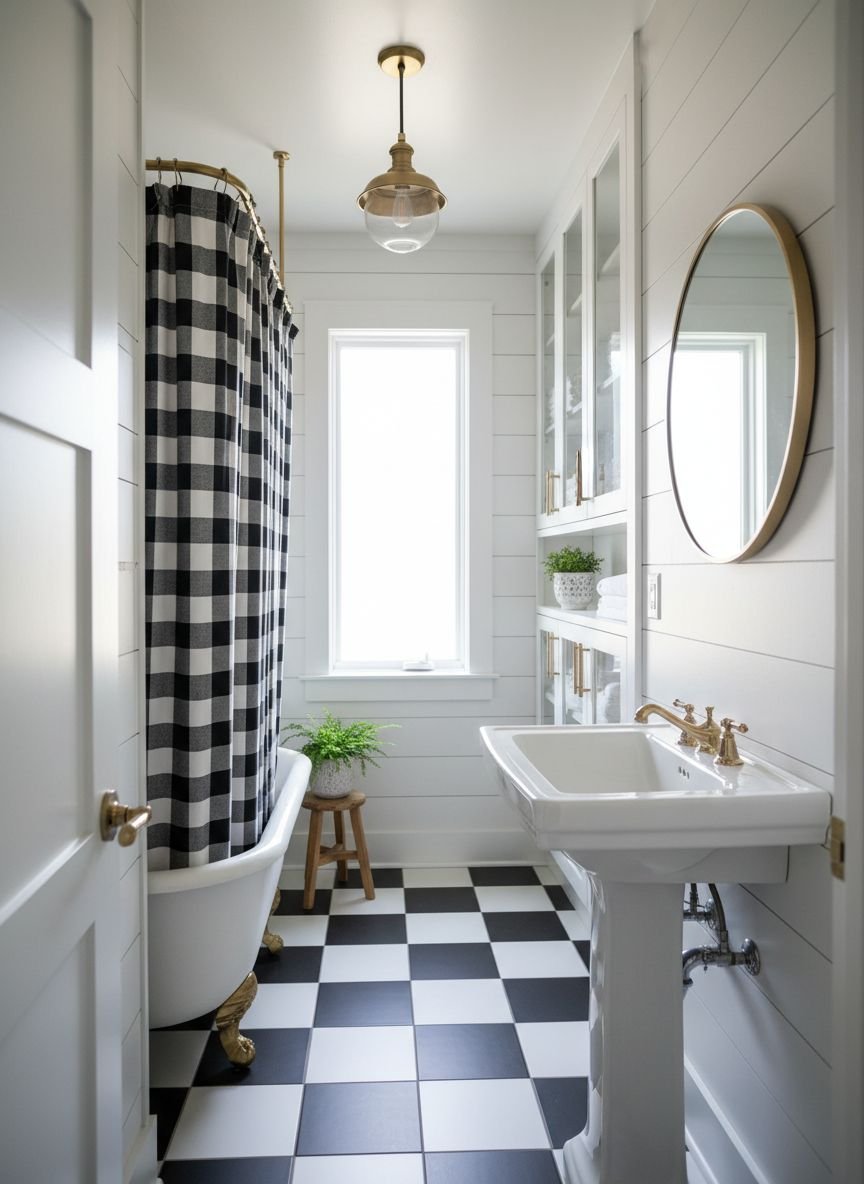
Modern Farmhouse has evolved. It is no longer just about “Live, Laugh, Love” signs; it is about high-contrast, durable materials that look good with a little bit of mud on them. A black floor gives the farmhouse style a contemporary edge that feels less rustic and more refined.
Visual Analysis & Design Principle
The classic choice here is a large-scale Black and White Checkered floor, or black hexagonal tiles with contrasting white grout. This pattern creates a sense of Nostalgia and Rhythm. The grid draws the eye across the room, making it feel wider. Pairing this graphic floor with white shiplap walls creates a vertical vs. horizontal balance that feels structured and orderly.
Implementation & Styling
Combine the patterned floor with vintage-inspired fixtures, such as a bridge faucet in oil-rubbed bronze or matte black. A trough sink or a classic pedestal sink works wonders here. For decor, use wire baskets, glass apothecary jars filled with cotton balls, and striped linen towels. A wooden stool in a dark walnut stain adds a necessary touch of warmth.
Pro Tip: If using hexagonal tiles, choose a smaller size (2-inch or 3-inch) for shower floors to provide better grip, and transition to larger hex tiles (8-inch or 10-inch) for the main bathroom area.
Comparison: Matte vs. Glossy Black Floors
| Feature | Matte Black Finish | Glossy Black Finish |
|---|---|---|
| Visual Impact | Subtle, grounded, modern, soft. | Dramatic, high-end, reflective, sharp. |
| Maintenance | High. Hides dust well but can trap soap scum in texture. | Very High. Shows every water spot, footprint, and dust mote. |
| Slip Resistance | Excellent. Great for wet zones and showers. | Poor. Can be very slippery when wet. |
| Best Style Match | Industrial, Scandi, Minimalist, Farmhouse. | Art Deco, Hollywood Regency, Glam. |
| Light Interaction | Absorbs light; reduces glare. | Reflects light; expands space visually. |
Contemporary Coastal
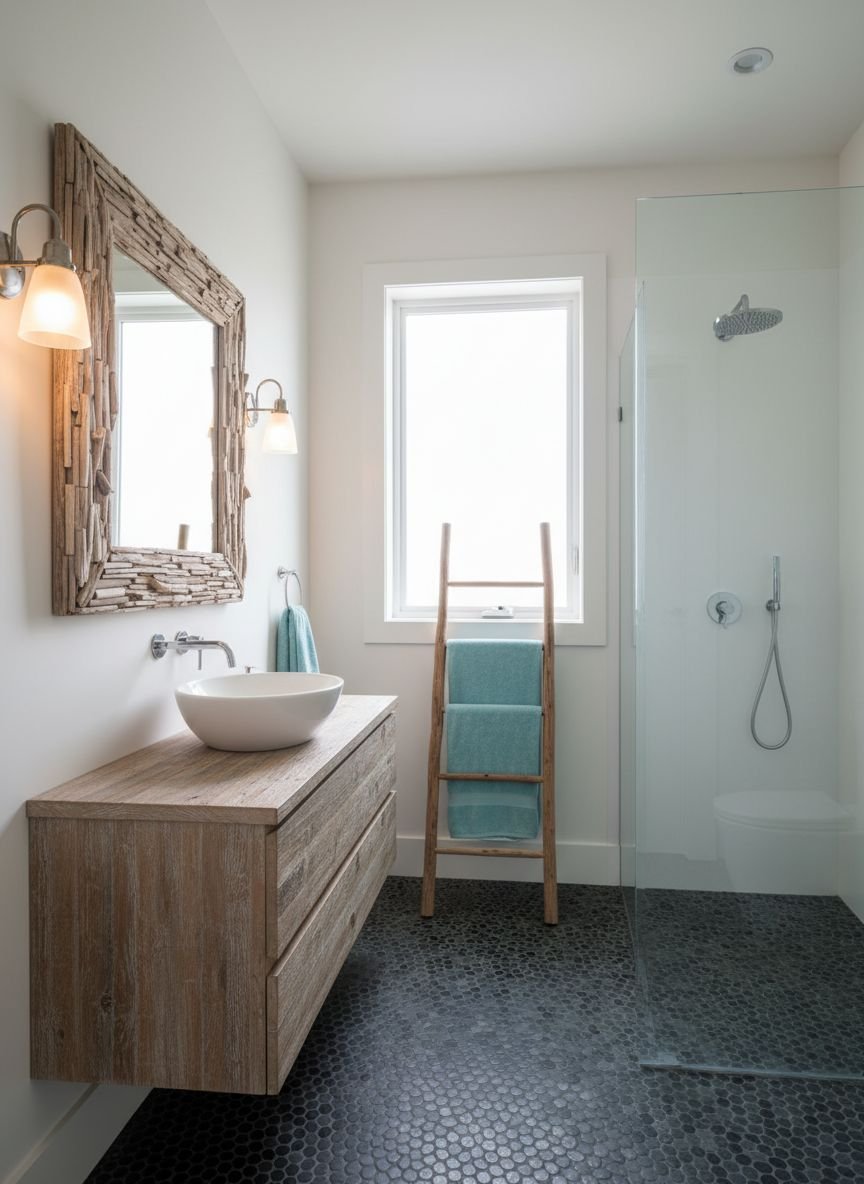
Coastal design doesn’t always have to mean beige sand and blue water. Contemporary Coastal introduces black elements to create a “stormy sea” aesthetic that is moody, romantic, and incredibly sophisticated.
Visual Analysis & Design Principle
Instead of sandy beige tiles, we use Black Pebble Tiles or river rocks for the shower floor, transitioning to black wood-look planks in the main area. This mimics the dark, wet rocks found on a rugged coastline. The design principle is Textural Contrast. The rough, bumpy pebbles contrast beautifully with smooth sea glass accents and whitewashed wood elements, creating a sensory experience that mimics the outdoors.
Implementation & Styling
The walls should remain white or a very pale misty gray to keep the “breezy” feel. Accessories are key: use frosted sea glass vases in blues and greens, bleached coral decor, and mirrors framed in driftwood or rope. The black floor grounds these airy elements, preventing the room from feeling too “beachy kitsch” and keeping it firmly in the realm of elegant design.
Pro Tip: When using pebble tile, ensure your installer uses a high-quality grout release before grouting. The uneven surface of stones makes it difficult to clean grout haze off later if not prepped correctly.
Transitional Elegance
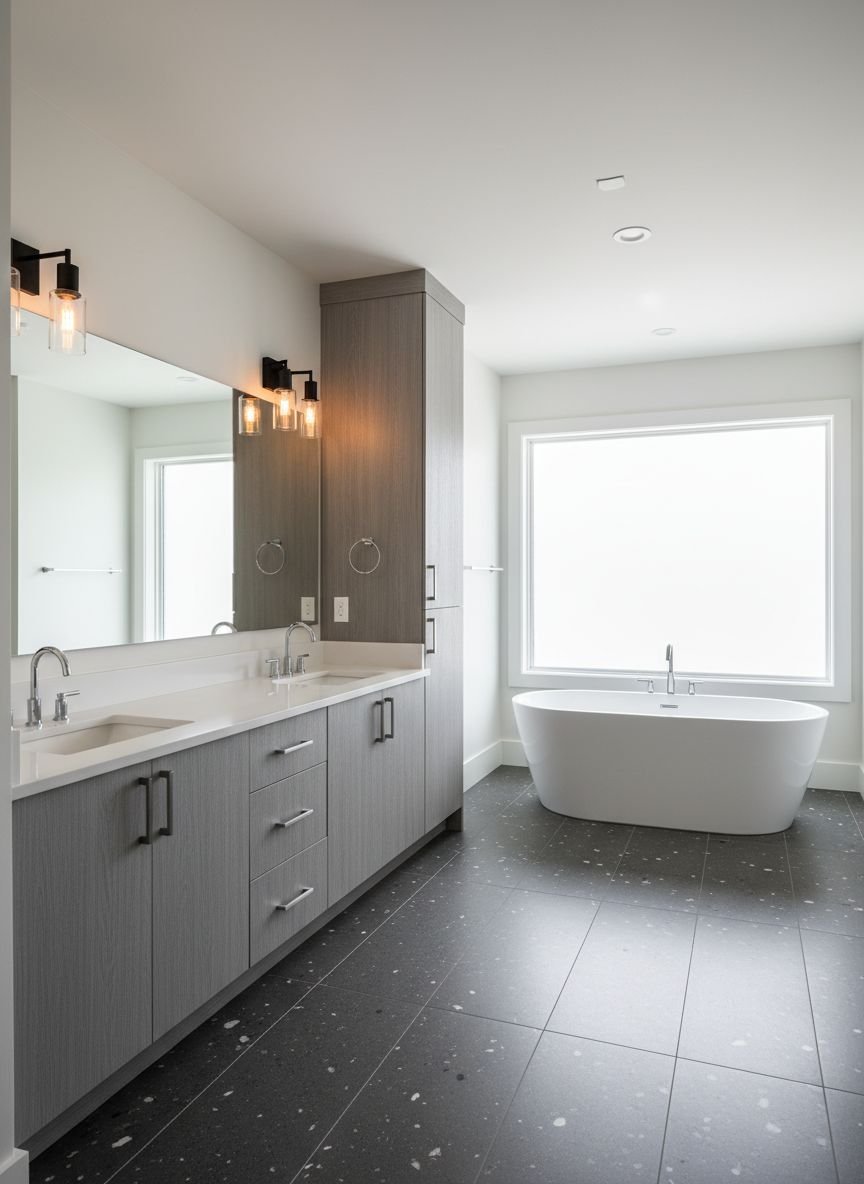
Transitional design is the bridge between traditional and modern, making it the most popular interior design style today. It balances the comfort of the old with the clean lines of the new, and a black floor serves as the perfect neutral canvas for this mix.
Visual Analysis & Design Principle
Here, we often see Black Granite or honed limestone tiles. The stone has a subtle speckle or movement that adds depth without being as loud as marble. The design principle is Balance and Neutrality. The black floor is paired with gray cabinetry (a hallmark of transitional style) and chrome details. It avoids the extremes of minimalism or maximalism, settling in a comfortable, elegant middle ground.
Implementation & Styling
Choose a vanity in a “Greige” (gray-beige) or charcoal color with a white quartz countertop. Chrome hardware keeps the look crisp and clean. Lighting should be layered: sconces on either side of the mirror for task lighting, and a small chandelier for ambient elegance. Soften the look with a plush, white faux-fur rug or a high-quality bath mat with a simple Greek key border.
Pro Tip: Black granite is incredibly durable and resistant to scratching, making it perfect for high-traffic family bathrooms where durability is just as important as aesthetics.
Mid-Century Modern
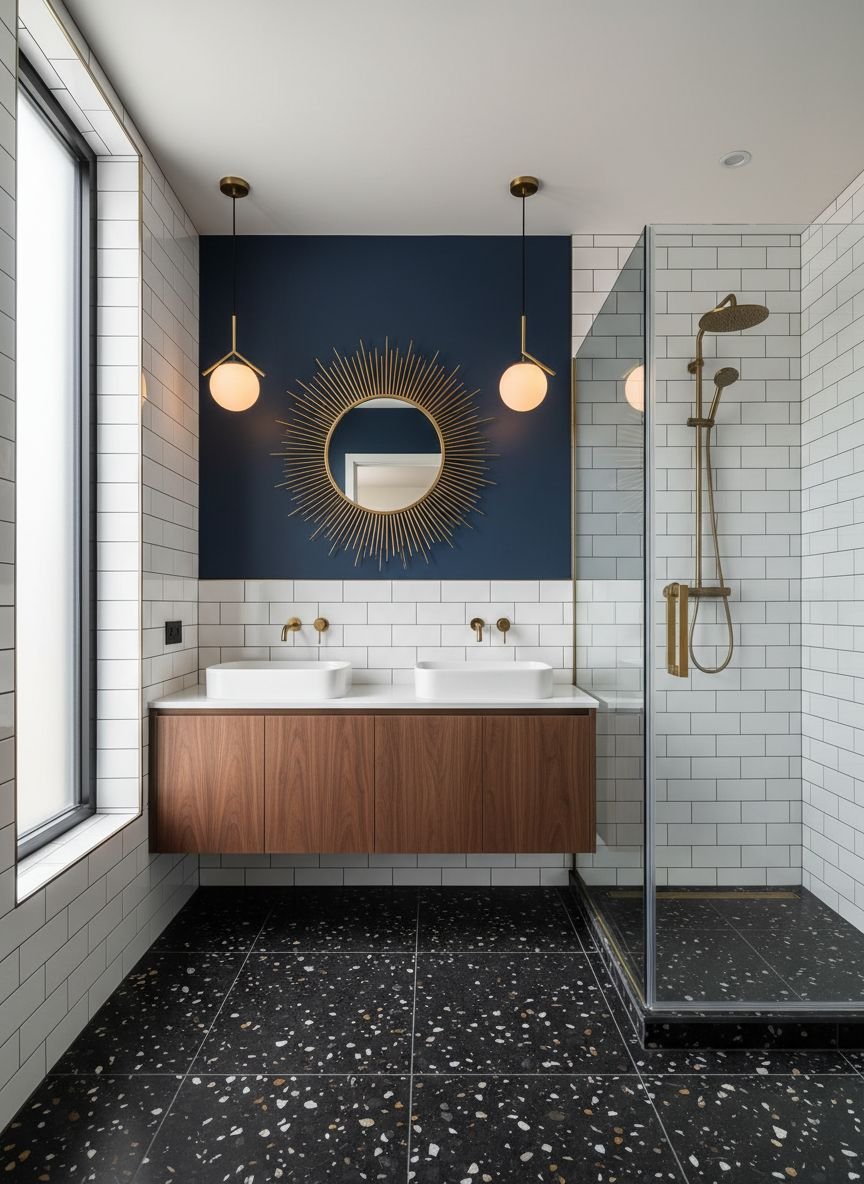
Mid-Century Modern (MCM) loves to play with shapes and materials. While terrazzo was huge in the 50s, the modern interpretation often features a black base with chips of white, gray, and even brass, creating a playful yet sophisticated floor.
Visual Analysis & Design Principle
Black Terrazzo is the hero here. It offers the darkness you want but with built-in camouflage for dirt thanks to the speckled pattern. The design principle is Playfulness and Form. The random pattern of the terrazzo contrasts with the strict, clean lines of MCM furniture, like teak vanities with tapered legs. It feels retro but updated for 2026.
Implementation & Styling
You must pair this floor with a Walnut vanity. The rich, dark wood tone against the black floor is a signature MCM look. Add globe lights (milk glass spheres) and a round mirror. Accessories should introduce pops of muted color—mustard yellow, teal, or olive green towels work beautifully against the black and walnut backdrop.
Pro Tip: Terrazzo is one of the most eco-friendly flooring options available, often made from recycled glass and stone chips set in concrete or resin.
Eclectic Vintage
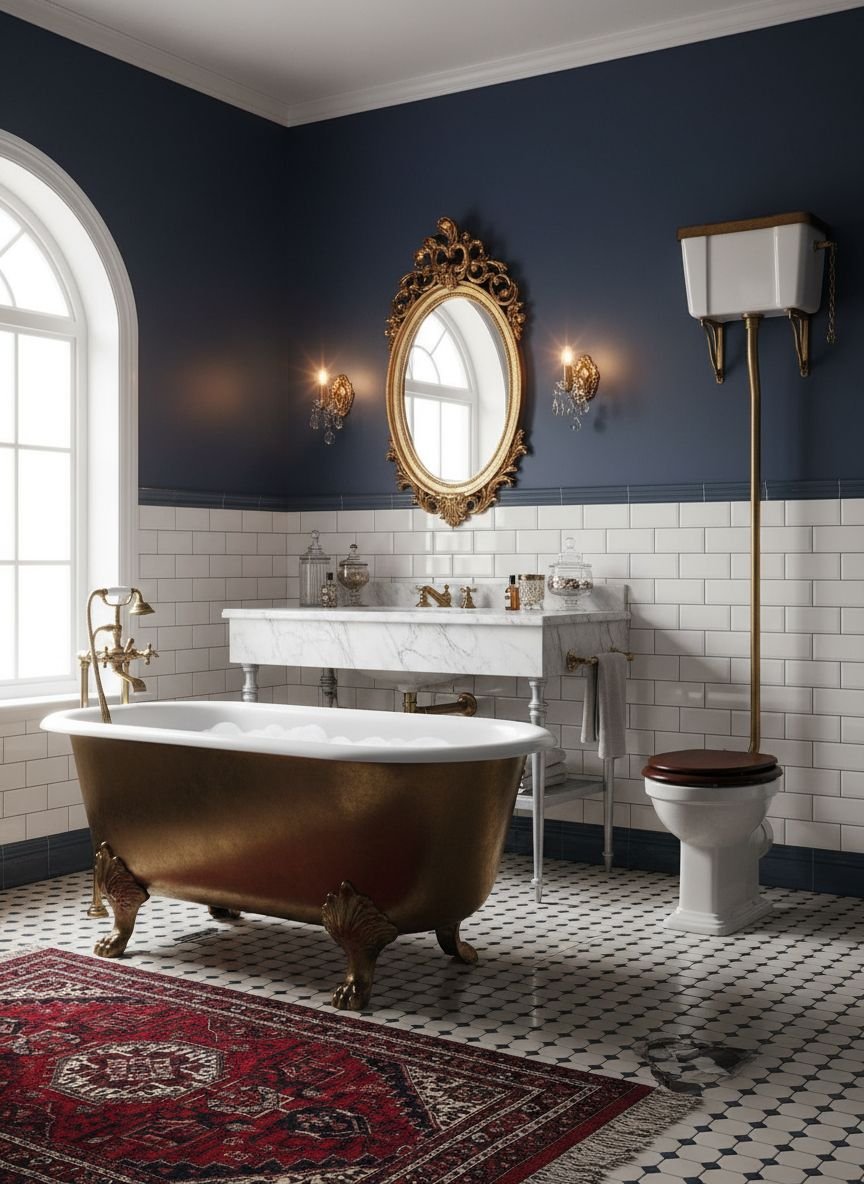
Eclectic Vintage is for the collector, the traveler, and the storyteller. It creates a space that feels curated over decades rather than bought from a catalog. A black floor provides the “museum backdrop” needed to let your unique pieces shine.
Visual Analysis & Design Principle
This style often uses Black Victorian Patterned Tiles or black penny tiles with a floral rosette pattern. The intricate floor pattern sets a historical tone. The design principle is Curated Chaos. The busy floor pattern is balanced by solid-colored walls (often white or dark green) and an eclectic mix of antique mirrors, brass frames, and oddities like vintage perfume bottles or old maps.
Implementation & Styling
A clawfoot tub is almost mandatory here, painted black on the outside to match the floor. Use a repurposed antique dresser as a vanity with a vessel sink. Mix your metals—brass faucets can live happily next to a silver mirror frame. Hang oil paintings or botanical prints on the walls to complete the “lived-in” vintage aesthetic.
Pro Tip: If you find original vintage tiles, great! If not, many modern ceramic manufacturers produce “encaustic” style tiles that mimic the matte, chalky finish of old cement tiles but are sealed for better stain resistance.
Related posts :
- 15 New Bathroom Design Trends for 2026 That Will Transform Your Home Into a Sanctuary
- 16 Minimalist Bedroom Ideas That Instantly Create A Serene Sanctuary
- 7 Cozy Small Living Room Ideas That Feel Spacious and Warm
Zen Retreat

In a fast-paced world, the bathroom is often the only place for solitude. The Zen Retreat style uses black floors to create a deep, meditative atmosphere that mimics the quiet of a Japanese garden or a shadowed forest.
Visual Analysis & Design Principle
Black River Rock or large, dark slate tiles are essential. The focus is on Sensory Deprivation and Calm. By darkening the lower half of the room, you create a sense of grounding and safety. The black floor absorbs light rather than reflecting it, reducing visual noise and glare, which is essential for relaxation.
Implementation & Styling
Combine the dark floor with bamboo or teak wood accents—a teak shower bench is a perfect addition. A Japanese soaking tub (ofuro) is the ultimate luxury, but a deep freestanding tub works too. Keep the walls minimal; a lime wash paint in a soft stone color adds texture without pattern. Use live plants—orchids, ferns, or bamboo—to bring life into the dark space.
Pro Tip: Install dimmable lighting. A Zen bathroom with a black floor transforms completely when the lights are low; it becomes a warm, enveloping cave perfect for long baths.
Hollywood Regency
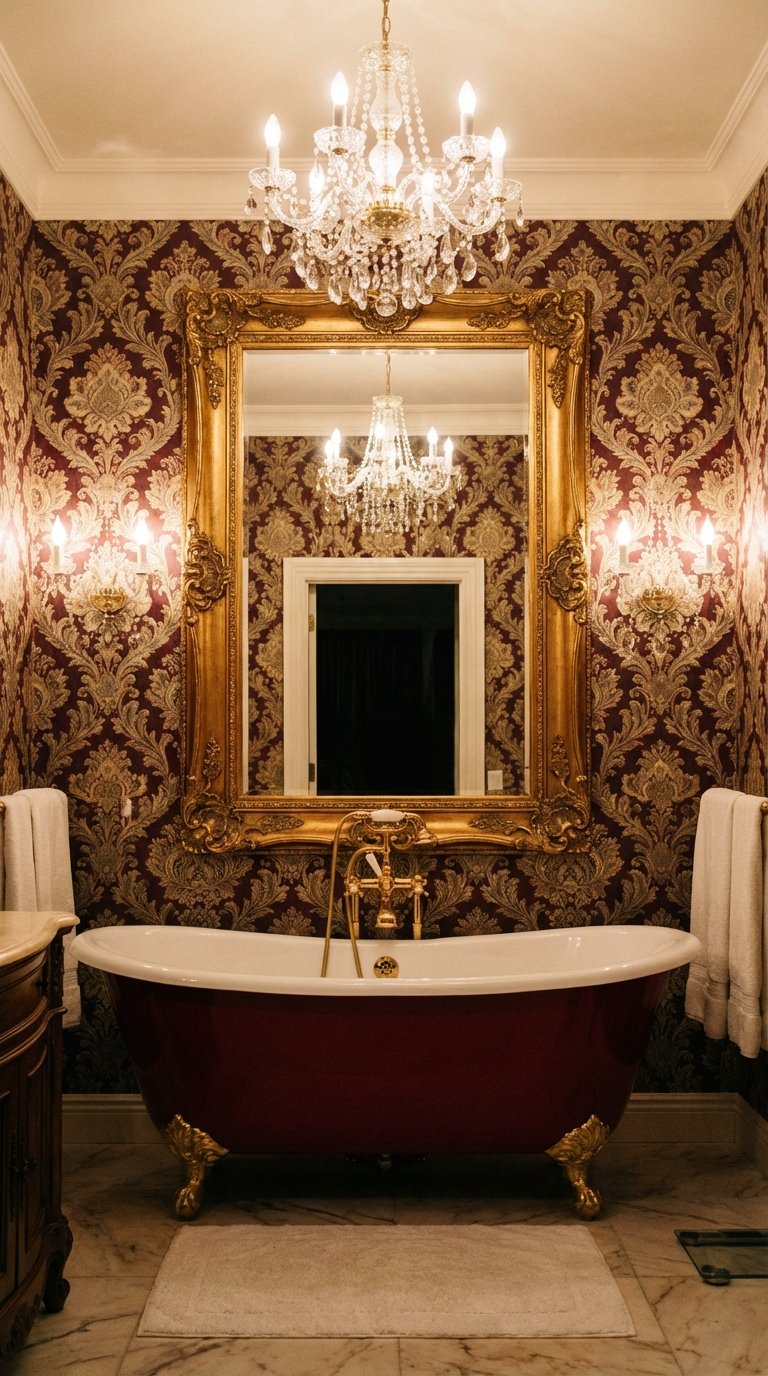
We end with the most dramatic style of all. Hollywood Regency is about glitz, glamour, and the golden age of cinema. It takes the “11 Trendy Black Floor Bathroom” concept and adds diamonds, mirrors, and velvet.
Visual Analysis & Design Principle
Polished Black Onyx (or porcelain that mimics it) is the material of choice. It has a translucency and depth that standard marble lacks. The design principle is Reflection and Illusion. By using mirrored surfaces on the vanity, the walls, and even the ceiling, the black floor is reflected infinitely, creating a dazzling, jewelry-box effect.
Implementation & Styling
Crystal chandeliers are a must. Sconces should be crystal or polished chrome. The vanity should be mirrored or high-gloss black lacquer. Add a pop of color with a tufted velvet vanity stool in hot pink, turquoise, or royal purple. This is not a style for the timid; it is for the diva in all of us.
Pro Tip: Because this style relies on reflection, ensure your lighting is “warm white” (3000K). Cool white bulbs can make the high-contrast black and mirrors feel like a dentist’s office rather than a movie star’s dressing room.
Micro-CTA: Save this idea to your Pinterest.
Popular Asked Questions
Are black bathroom floors hard to keep clean?
Yes and no. Black floors are excellent at hiding dark stains like makeup spills or muddy footprints. However, they are notorious for showing light-colored debris like dust, pet hair, soap scum, and water spots (limescale). The finish makes all the difference: Matte or textured tiles are much more forgiving and easier to live with than glossy black tiles, which act like a mirror for every speck of dust.
Do black tiles make a small bathroom look smaller?
Not necessarily. While light colors recede, dark colors recede too when used correctly. A black floor can “push” the boundaries of the room out by blurring the corners, especially if the grout is also black. To maximize space, pair the black floor with bright white walls and a large mirror. This high-contrast look creates depth and makes the room feel taller and more expansive.
What wall color goes best with black floor tiles?
You have three main paths:
- Crisp White: For a modern, gallery-like high-contrast look.
- Warm Gray/Greige: For a softer, transitional vibe that feels cozy.
- Moody Jewel Tones: Emerald green, navy blue, or charcoal for a dramatic, immersive “powder room” effect.
Avoid pastel yellows or peaches, as they can look dated against stark black.
Should I use black or white grout with black tiles?
- Black/Charcoal Grout: Creates a seamless, expansive look. It makes the floor look like one continuous surface and hides dirt in the grout lines perfectly.
- White Grout: Creates a retro, graphic look (especially with subway or hex tiles). It highlights the pattern of the tile but requires much more cleaning to keep the white lines bright.
Are black floor tiles slippery?
Glossy black tiles can be very slippery when wet and are generally not recommended for shower floors or homes with children/seniors. Matte, honed, or textured finishes (like slate or river rock) provide excellent grip and are the safer choice for bathroom flooring.
Conclusion

The “11 Trendy Black Floor Bathroom” aesthetic is more than just a fleeting design fad; it is a shift towards bathrooms that feel grounded, luxurious, and full of character. Whether you opt for the rugged texture of Scandinavian slate or the high-gloss drama of Art Deco marble, a black floor transforms your bathroom from a utility space into a sanctuary.
It demands a little more thought in lighting and perhaps a quick daily sweep for dust, but the visual payoff is undeniable. You get a space that feels expensive, custom, and boldly unique.

Leave a Comment