
The Utility Hook
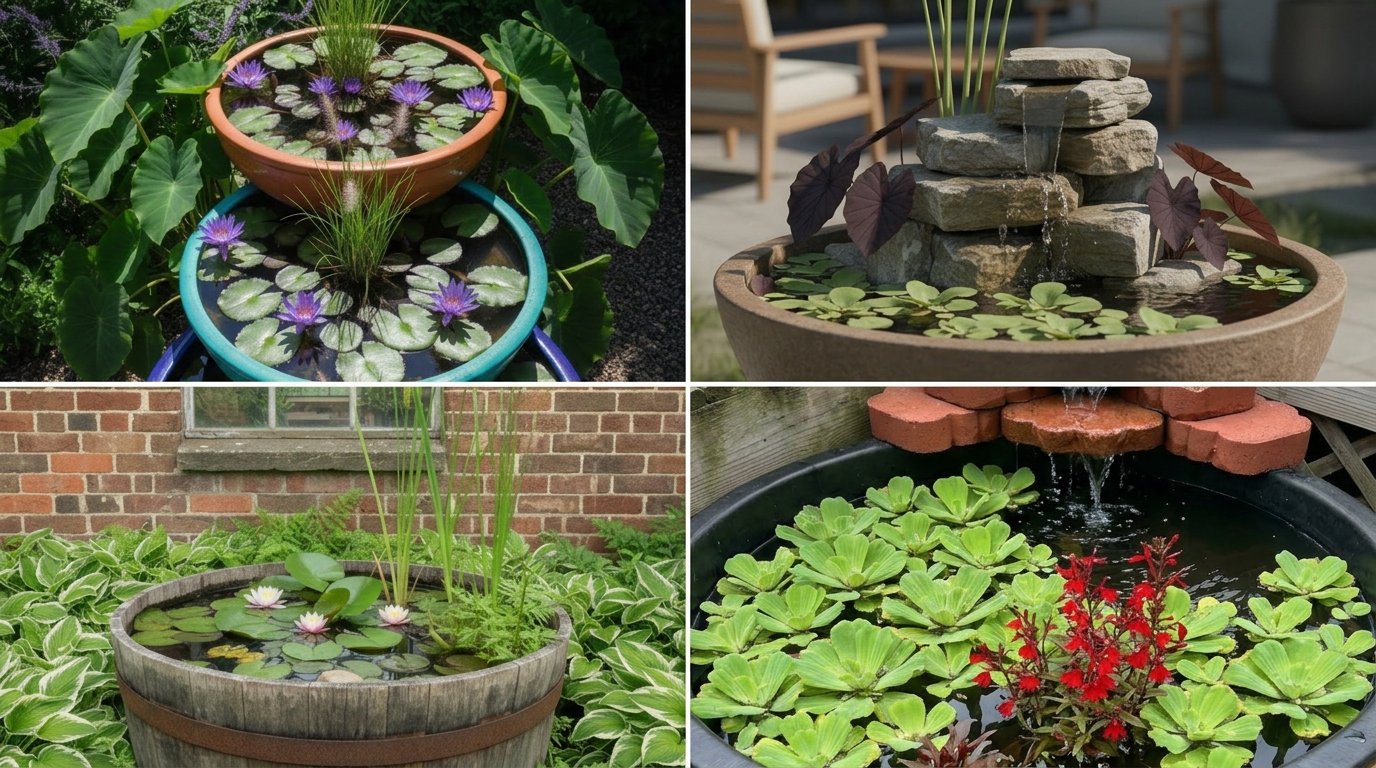
The “biophilic design” trend is dominating 2026, but you do not need a sprawling estate to embrace it. If you have a balcony, a tiny patio, or just a corner of a deck, you have enough space for a stunning aquatic feature. Mini water gardens are the ultimate low-maintenance solution for bringing tranquility and biodiversity into urban environments. They cool the surrounding air, attract beneficial pollinators, and provide a focal point that instantly elevates your outdoor aesthetic.
In this guide, we reveal 15 specific, high-impact designs that range from rustic wine barrels to modern minimalist bowls. You will learn exactly how to balance aquatic plants to keep the water crystal clear without expensive filters. We also cover the essential “thriller, filler, spiller” planting strategy adapted for water features.
Key Takeaways
- Scalability: These designs fit anywhere, from a 6-inch tabletop bowl to a 20-gallon patio tub.
- Ecosystem Balance: Learn how to use oxygenating plants to naturally prevent algae and mosquitoes.
- Budget-Friendly: Most of these ideas use upcycled containers and affordable aquatic starts.
- Instant Zen: The sound and sight of still water lower cortisol levels and create a calming atmosphere.
Table of Contents
- Mini Pond in a Wine Barrel
- Japanese Water Garden Pot
- Water Hyacinth & Paper Reed Pond
- Water Lily, Umbrella Plant, and other Bog Plants in a Vintage Tub
- Outdoor Aquatic Garden in Plastic Tubs
- Mini Rustic Pond in the Patio
- Mini Aquatic Tank in Whiskey Barrel
- Aquatic Pond in Textured Cement Tub
- Lotus Garden in Beautiful Ceramic
- Water Garden with Alocascia, Hyacinth, and other Aquatic Plants
- Barrel Water Garden in the Yard
- Mini Garden Wetland
- Floating Aquatic Garden in Plastic Tub
- Large Patio Pond Bordered in Pavestone
- Carnivorous Bog Garden
- Popular Asked Questions
- Conclusion
Mini Pond in a Wine Barrel
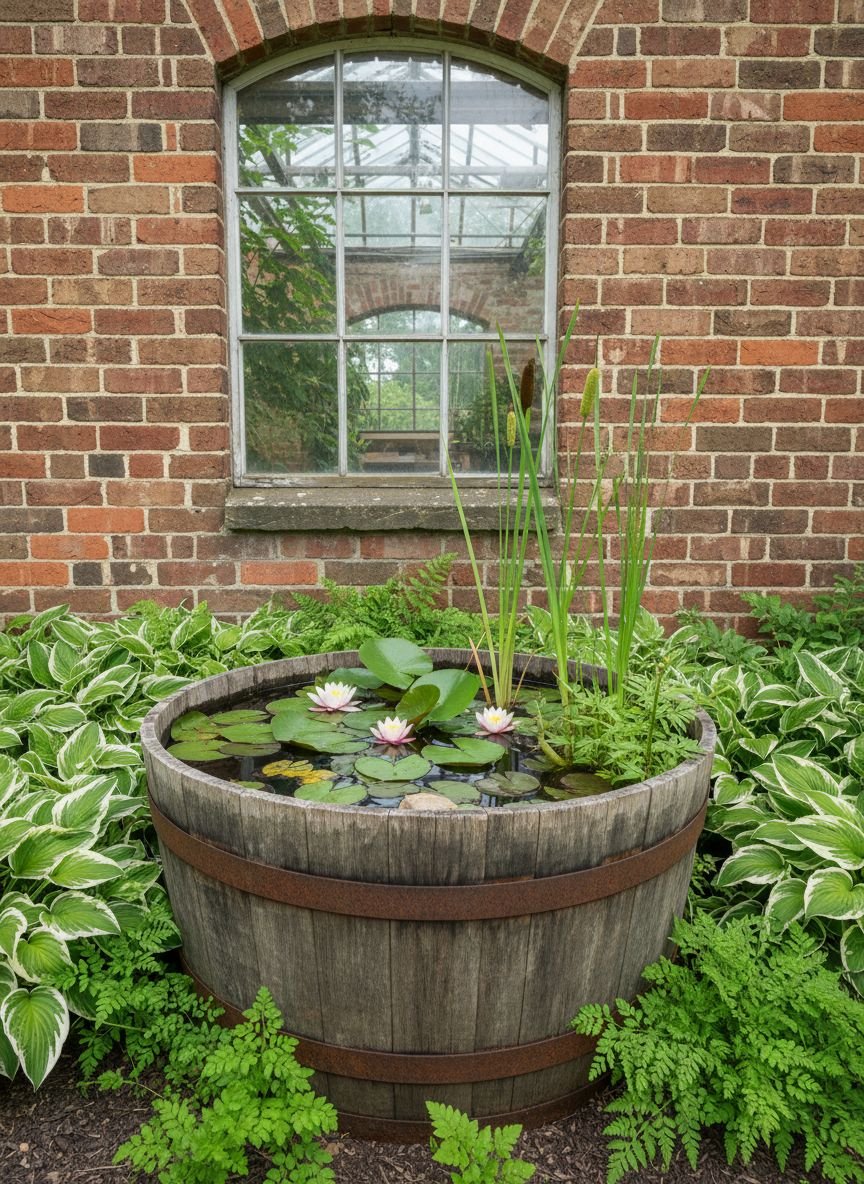
A halved wine barrel is the quintessential vessel for a rustic water garden. The aged wood texture contrasts beautifully with the glossy green leaves of aquatic plants, creating a warm and inviting focal point. To implement this, you must first ensure the barrel is watertight. Authentic barrels often need a heavy-duty pond liner stapled to the rim to prevent leaks and protect plants from potential toxins in the wood.
Visually, the dark wood anchors the space, allowing bright blooms like water lilies to pop. Place this feature in a corner of your patio where it can receive at least six hours of sunlight. The height of the barrel makes it perfect for viewing while seated, bringing the water closer to eye level.
Pro Tip: Scrub the liner before filling to remove manufacturing residues. Add a few “mosquito fish” (Gambusia) to eat larvae and keep the water pest-free.
Japanese Water Garden Pot
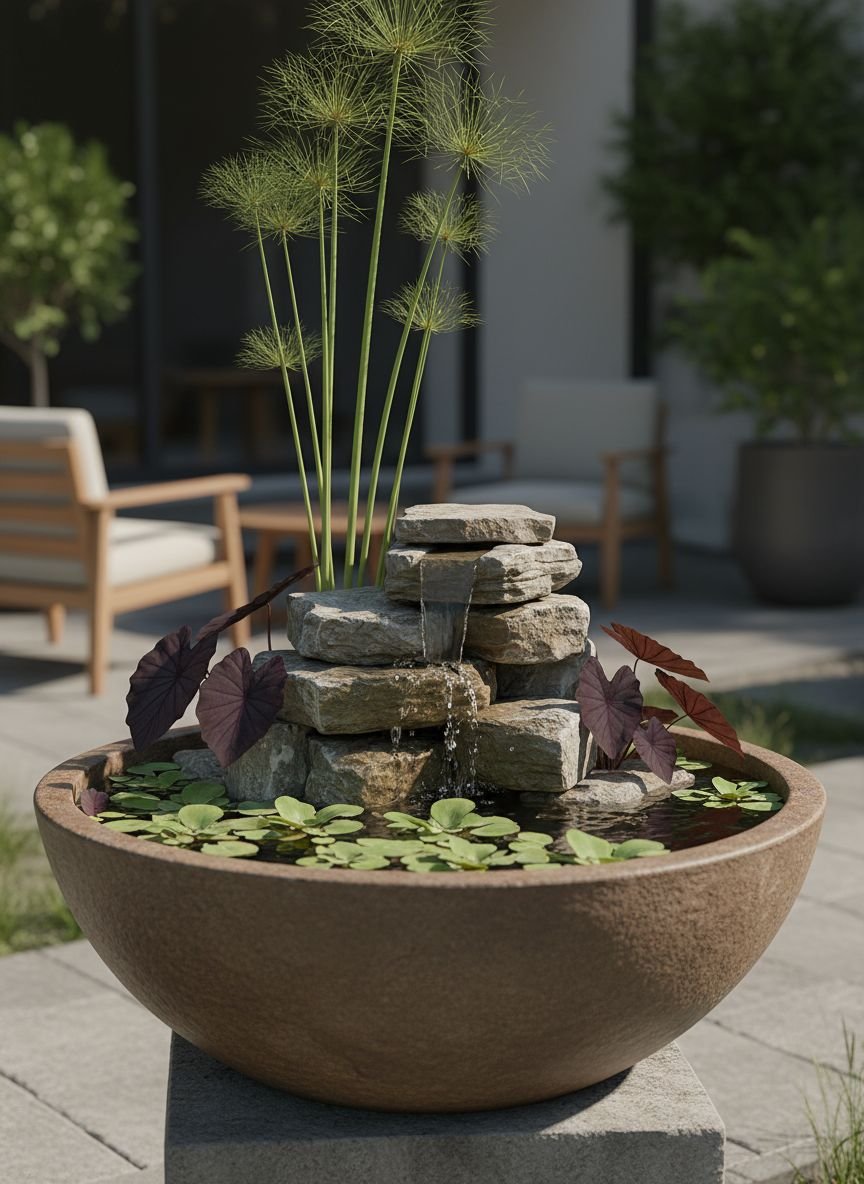
This design embraces the concept of Wabi-sabi, finding beauty in imperfection and nature. Use a wide, glazed ceramic pot in earth tones—moss green, slate grey, or charcoal. The key here is minimalism. Do not overcrowd the water. A single architectural plant, like Horsetail Reed (Equisetum), provides vertical interest that mimics bamboo forests.
Pair the vertical reeds with a floating plant like Frogbit to cover the surface and reduce evaporation. The stillness of the water in a dark pot creates a mirror effect, reflecting the sky and surrounding greenery. This setup works exceptionally well in modern or Zen-inspired small balconies where clutter is the enemy.
Pro Tip: Place a small bamboo water spout (Shishi-odoshi) on the rim. The gentle trickle adds an auditory layer of relaxation without needing a high-powered pump.
Water Hyacinth & Paper Reed Pond
Texture is the driving force behind this dynamic arrangement. Paper Reed (Cyperus haspan) offers delicate, starburst-like heads that dance in the breeze, providing a soft vertical element. In contrast, Water Hyacinth acts as a floating carpet with its thick, bulbous stems and vibrant purple flowers. This combination creates a lush, overgrown look that feels like a slice of a wild wetland.
To achieve this look, use a wide, shallow container. The Water Hyacinth is a vigorous grower and a heavy feeder, meaning it will rapidly absorb excess nutrients in the water, naturally preventing algae blooms. This is an excellent choice for beginners because the plants are incredibly hardy and forgiving.
Pro Tip: Water Hyacinth can be invasive in warm waterways. Never dispose of it in natural lakes or streams; compost it instead.
Water Lily, Umbrella Plant, and other Bog Plants in a Vintage Tub
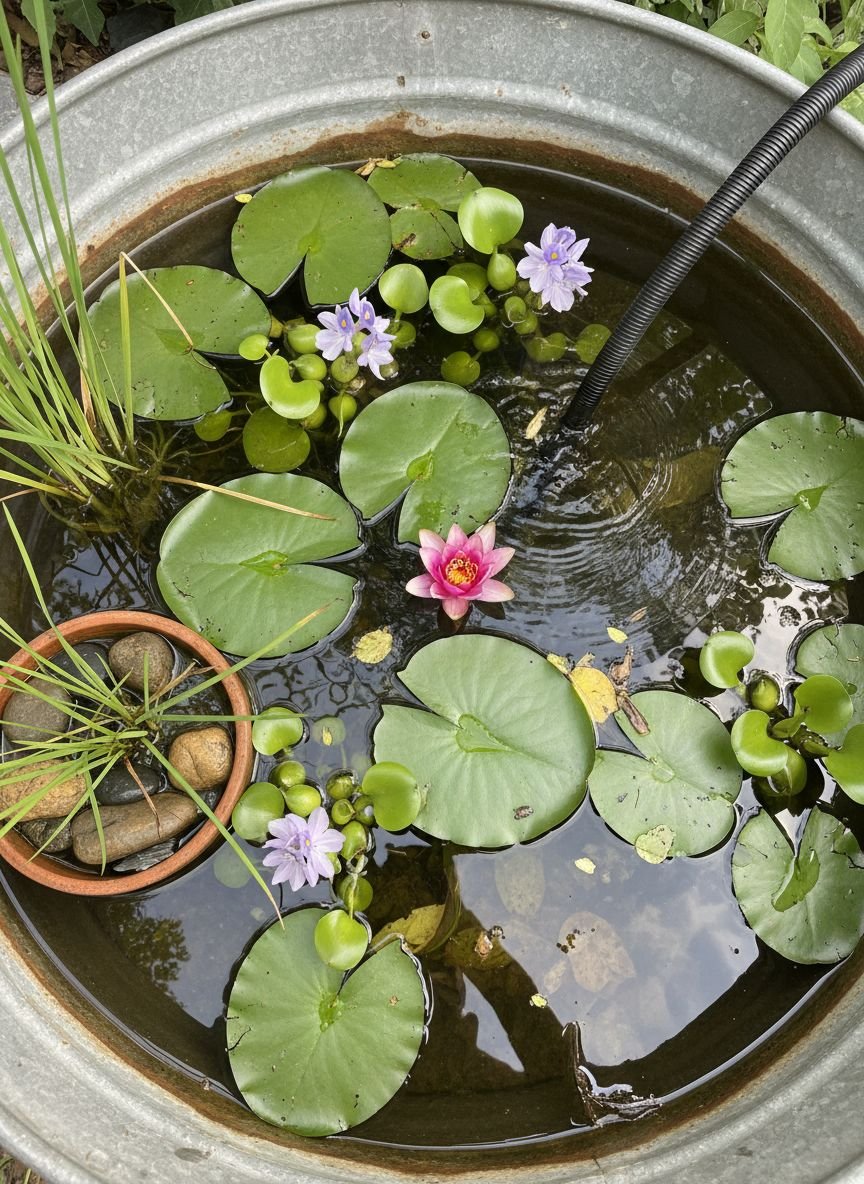
Repurposing a vintage galvanized wash tub or a clawfoot bathtub adds a layer of farmhouse charm to your garden. The metallic finish of the tub reflects heat, so it is vital to place this in a spot with afternoon shade to prevent the water from overheating. The “thriller” in this composition is the Umbrella Plant, which stands tall and creates a canopy over the water.
Beneath the Umbrella Plant, introduce a hardy Water Lily. The lily pads provide essential shade for the water, keeping it cool for any fish you might add. This multi-tiered planting approach—tall bog plants in the back, floating lilies in the front—mimics the natural layering found in ponds and creates a sense of depth in a small footprint.
Pro Tip: Elevate the pots inside the tub using bricks or inverted plastic crates so the plant crowns sit at the correct water depth (usually 2-6 inches below the surface).
Outdoor Aquatic Garden in Plastic Tubs
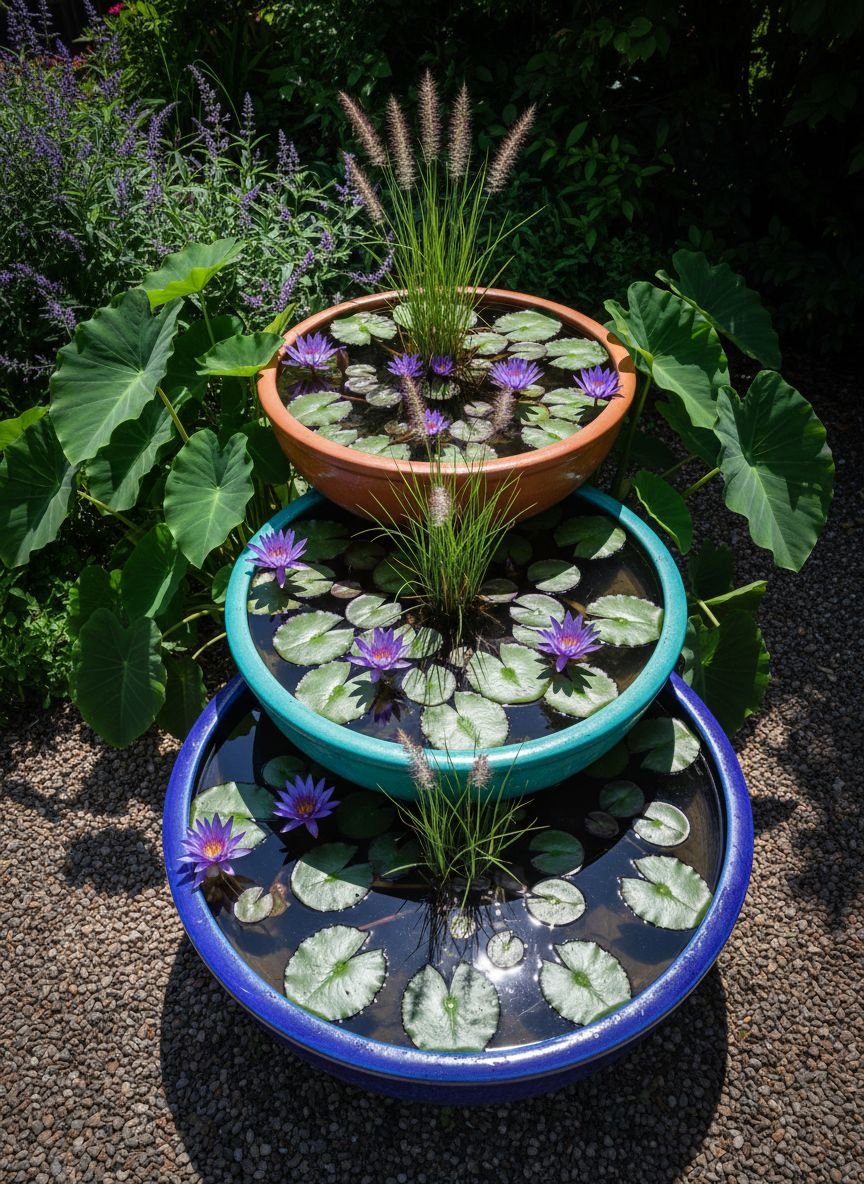
You do not need expensive ceramics to start a water garden. Heavy-duty plastic utility tubs or resin planters are lightweight, durable, and frost-resistant. The secret to making them look “spectacular” is to disguise the rim or choose a matte finish that resembles stone or concrete. These tubs are often deeper than decorative pots, allowing for a more stable water temperature.
This stability allows you to grow a wider variety of submerged oxygenators like Anacharis. Design-wise, treat the plastic tub as a blank canvas. Surround the base with potted trailing plants like Creeping Jenny to soften the edges and integrate the tub into your patio floor. The focus remains entirely on the lush aquatic life rather than the container itself.
Pro Tip: Save this idea to your Pinterest. If using a black plastic tub, it will absorb heat. Use this to your advantage in cooler climates to extend the growing season for tropical aquatic plants.
Comparison: Choosing Your Container
| Material | Pros | Cons | Best Style |
|---|---|---|---|
| Ceramic | Beautiful glazes, keeps water cool | Heavy, can crack in frost | Zen / Modern |
| Wood (Barrel) | Rustic aesthetic, durable | Needs lining, can rot over time | Farmhouse / Cottage |
| Plastic/Resin | Lightweight, inexpensive, frost-proof | Can look cheap if not styled well | Utility / Budget |
| Metal (Galvanized) | Trendy industrial look, durable | Conducts heat (water gets hot) | Vintage / Industrial |
Related posts :
- 9 Smart and Space-Saving Design Ideas for Small Backyards That Maximize Every Inch
- 8 Breathtaking Backyard Garden Design Ideas That Transform a Flat Lawn to Floral Retreat
- 17 Covered Outdoor Kitchen Ideas: Inspiration for Your Backyard Oasis That Feels Like a Resort
Mini Rustic Pond in the Patio
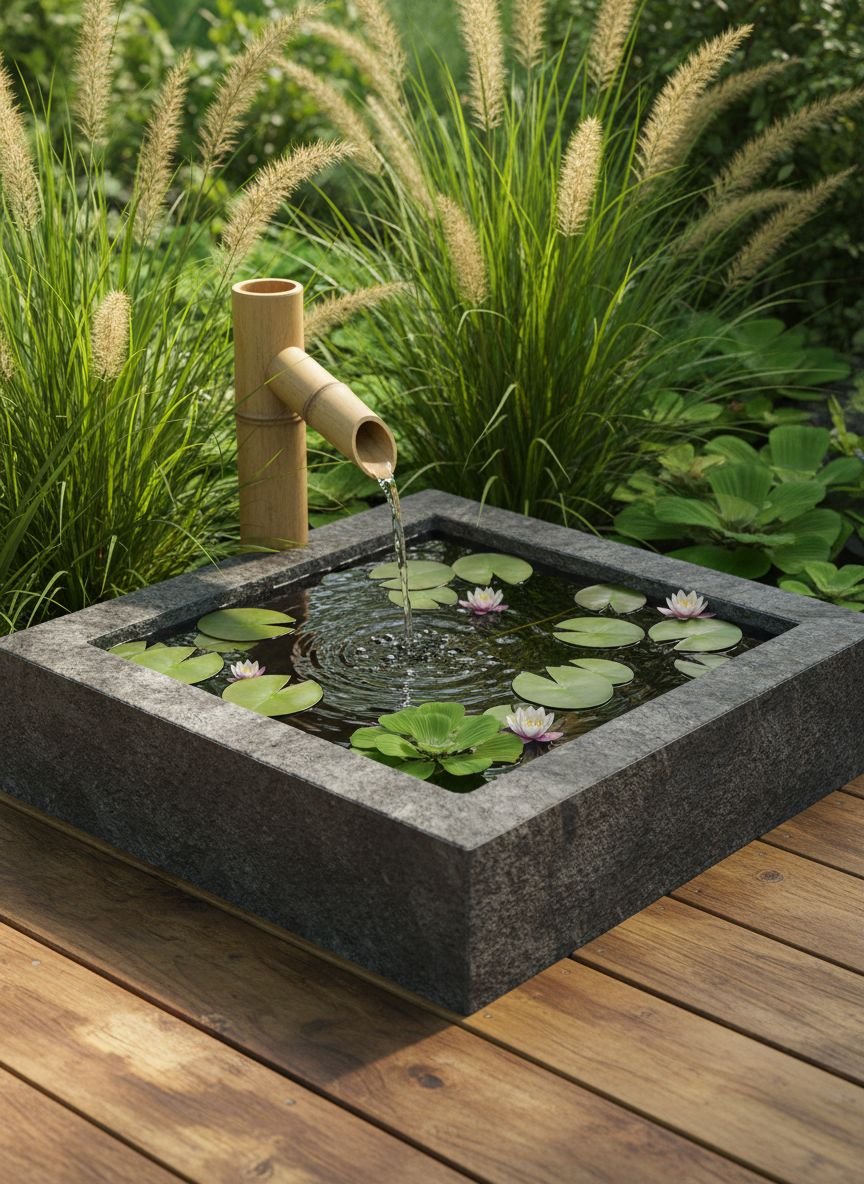
For a seamless integration into a stone or brick patio, consider a “sunken” look or a low-profile stone trough. This design relies on natural materials to bridge the gap between hardscaping and nature. Use a container with a rough, stone-like texture. Stack flat river stones or slate around the base to hide the pot completely, giving the illusion that the water is springing naturally from the ground.
Plant selection should favor native species that look at home in a rockery. Dwarf Cattails or Sweet Flag (Acorus) offer grassy textures that complement stone surroundings. This low-profile design is excellent for viewing from a lounge chair, allowing you to gaze down into the reflective surface.
Pro Tip: Incorporate a small solar-powered bubbler. The gentle movement attracts birds for bathing and prevents stagnation without requiring an electrical outlet.
Mini Aquatic Tank in Whiskey Barrel
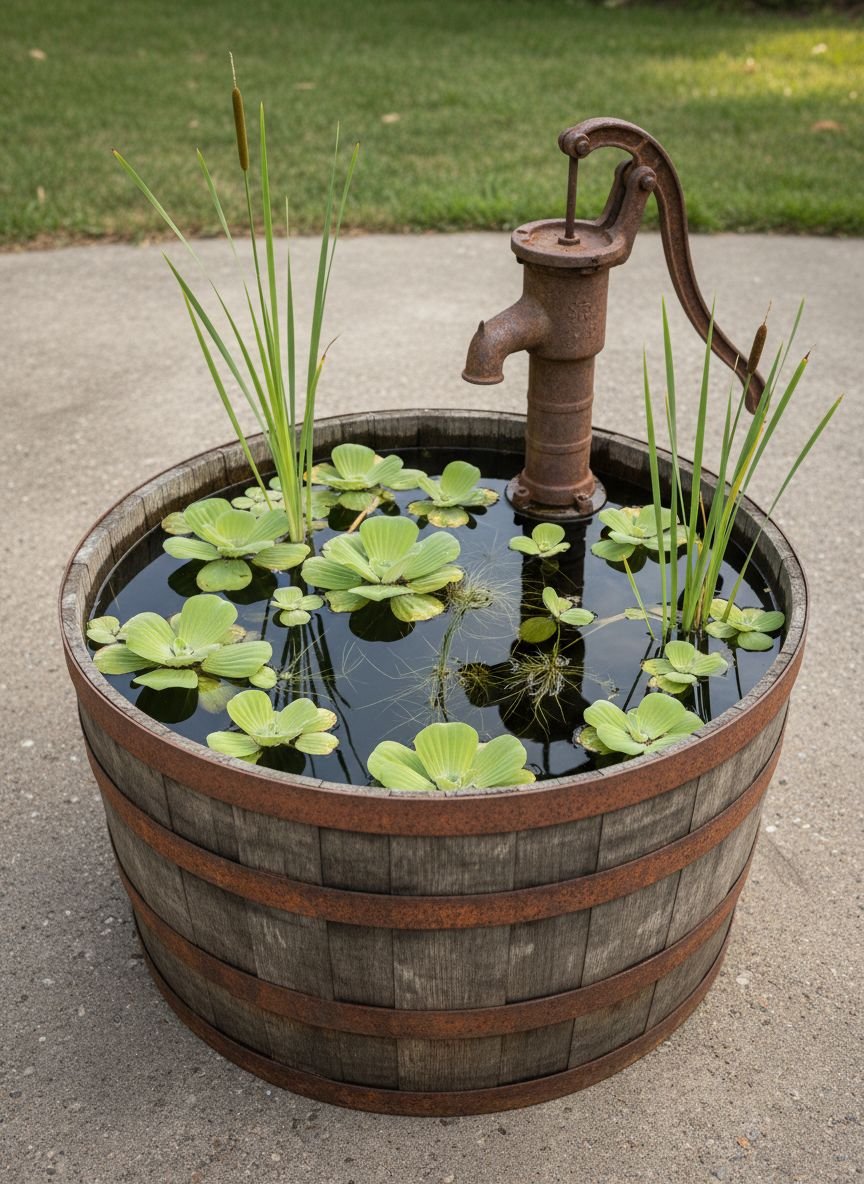
Similar to the wine barrel but often smaller and more charred, a whiskey barrel planter brings a deep, masculine aesthetic to the garden. The charred interior (if visible) and iron bands provide strong visual contrast. This vessel is deep enough to support a small ecosystem, including snails and larger floating plants like Water Lettuce.
To prevent the “floating soup” look, use a submerged ring to corral floating plants into specific zones. This keeps open water visible, allowing you to see the stems of submerged plants and any aquatic life. The dark wood of the whiskey barrel looks stunning against a backdrop of bright green ferns or hostas planted nearby on the deck.
Pro Tip: If the barrel is not lined, the water will eventually turn brown from tannins. While harmless to plants, a liner is recommended if you want crystal clear water.
Aquatic Pond in Textured Cement Tub
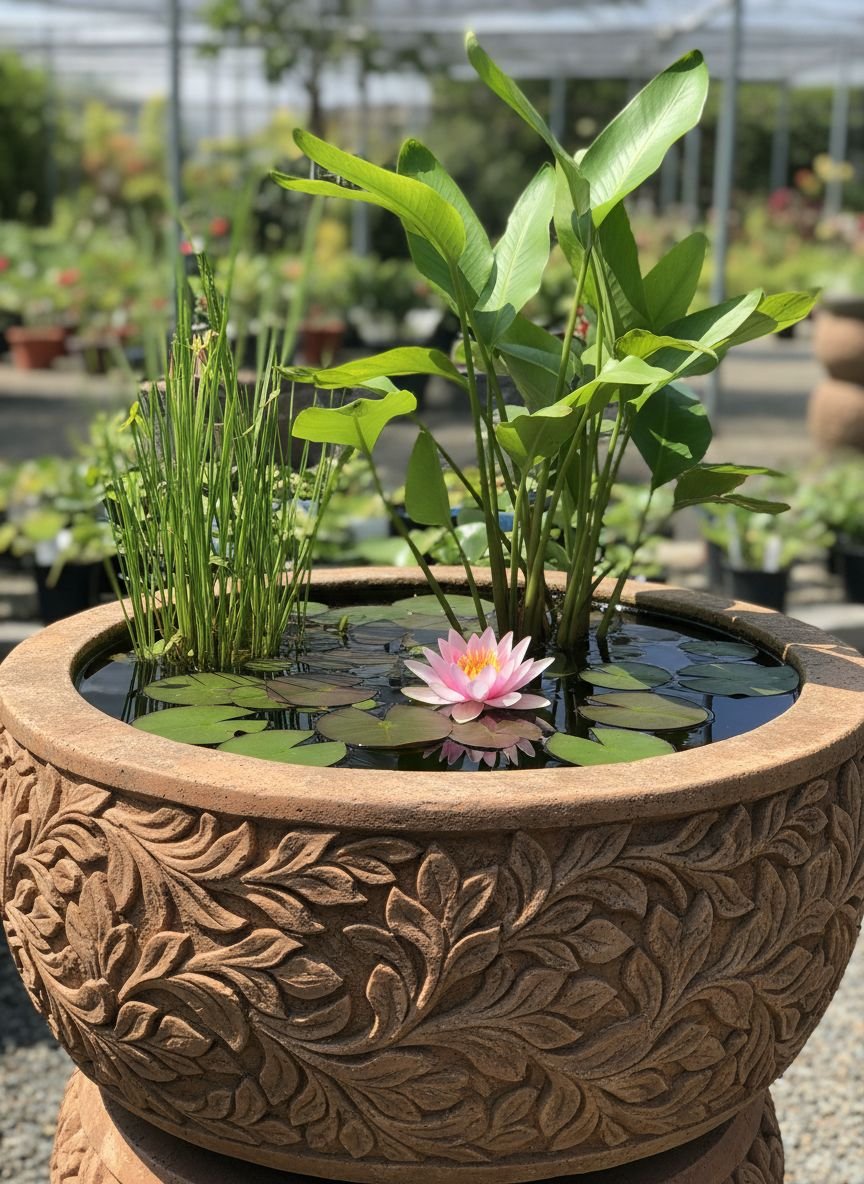
Industrial chic meets organic softness in this design. A cast concrete or hypertufa tub offers a porous, textured surface that ages beautifully, often developing a patina of moss over time. The grey tones of the cement make green foliage appear more vibrant. This is the perfect vessel for architectural plants like Thalia (Hardy Canna) which has bold, paddle-shaped leaves.
Place this tub in a modern, geometric garden. The rigidity of the concrete container contrasts with the fluidity of the water and the soft movement of the plants. Because concrete is heavy, decide on its permanent location before filling it. It is an ideal anchor for a corner of a windy balcony where lighter pots might tip over.
Pro Tip: New concrete can leach lime, raising the pH of the water. Scrub the interior with vinegar and rinse thoroughly before planting to neutralize it.
Lotus Garden in Beautiful Ceramic
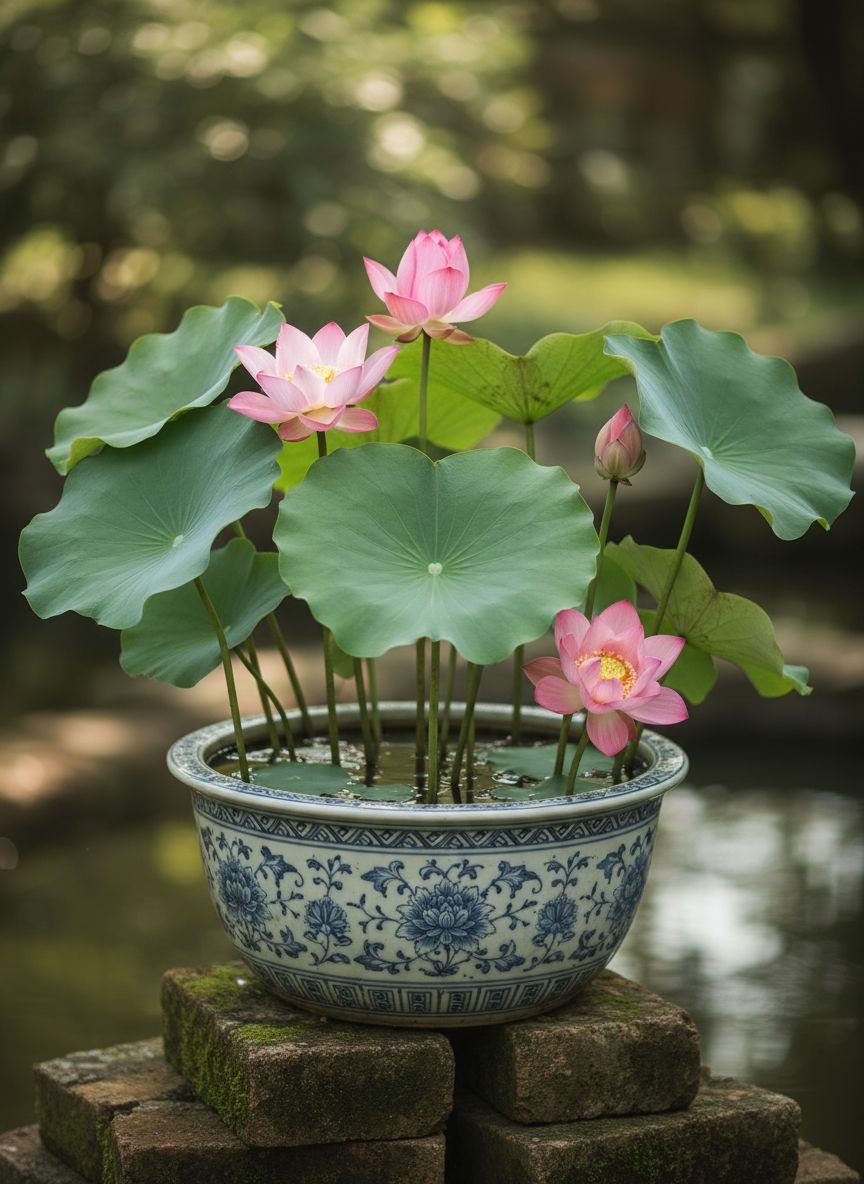
The Lotus is the crown jewel of water gardening. Unlike water lilies that float on the surface, Lotus leaves and flowers rise high above the water, creating a dramatic, sculptural display. A tall, glazed ceramic pot is necessary here—not just for aesthetics, but because Lotus tubers need significant depth and heavy soil to thrive.
Choose a pot with a wide mouth; Lotus plants are runners and will circle the container. A single specimen is often enough to fill the space. Visually, the hydrophobic leaves (which repel water in beads) are mesmerizing to watch after rain. This setup is a showstopper and should be placed as a standalone feature where it can be admired from all angles.
Pro Tip: Lotus are heavy feeders. Push fertilizer tablets deep into the soil once a month during the growing season to ensure prolific blooming.
Water Garden with Alocascia, Hyacinth, and other Aquatic Plants
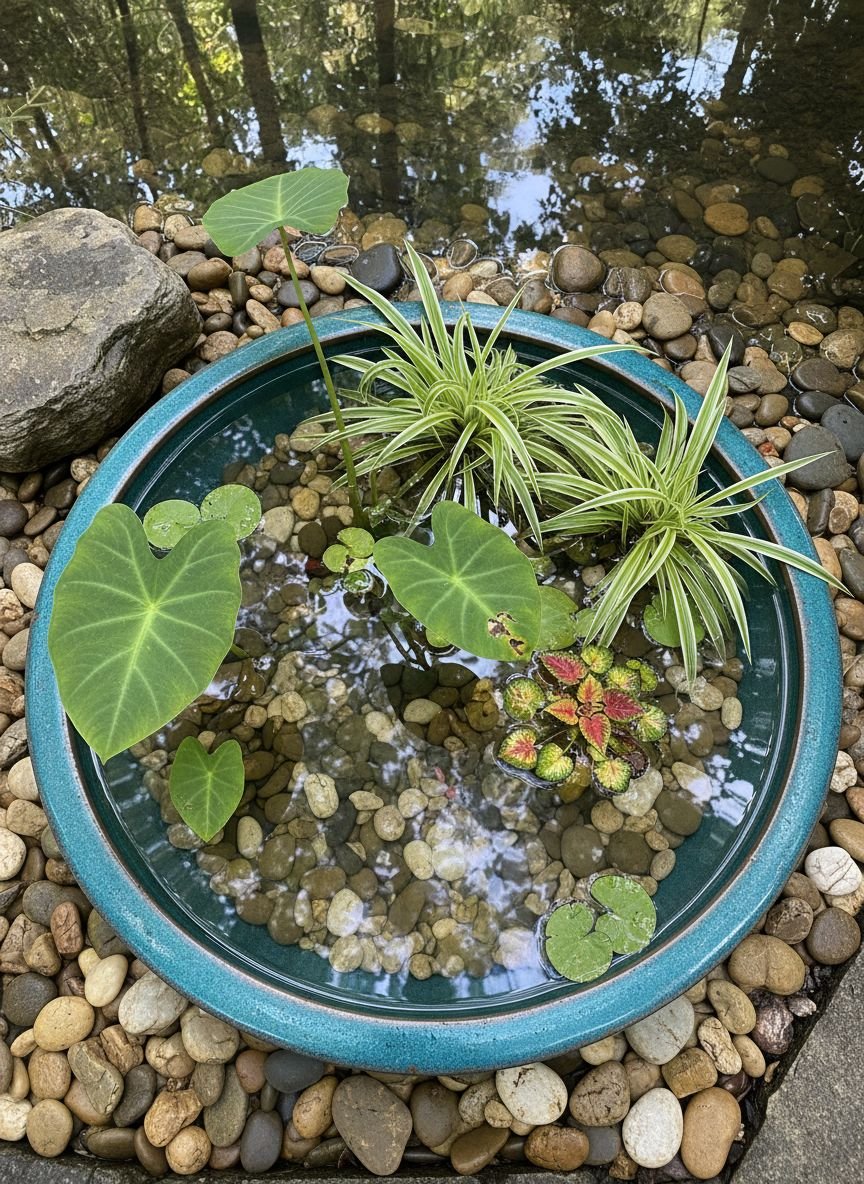
This design pushes the boundaries of traditional water gardening by incorporating semi-aquatic tropicals. Alocasia (Elephant Ear) loves moisture and can thrive with its roots in wet, boggy soil at the water’s edge. Combined with the floating rosettes of Water Hyacinth, this creates a lush, jungle vibe.
You will need a large container for this, as Alocasia leaves can get massive. The key is to create a “shelf” inside the pot using bricks so the Alocasia pot sits just at the water line, while the Hyacinth floats in the deeper sections. This tiered approach maximizes vertical space and creates a dense, verdant display perfect for privacy screening on a patio.
Pro Tip: Alocasia is not frost-hardy. As winter approaches, lift the Alocasia pot out and bring it indoors as a houseplant, leaving the hardy aquatic plants outside.
Get The Look: Essentials for Success
- Substrate: Do not use regular potting soil (it floats and clouds water). Use heavy clay garden soil or specific aquatic planting media.
- Pea Gravel: Top every plant pot with 1 inch of gravel to keep the soil down and fish away from roots.
- Mosquito Dunks: A biological larvicide that is safe for birds and pets but deadly to mosquito larvae.
- Solar Fountain: Adds oxygen and sound without increasing your electric bill.
Barrel Water Garden in the Yard
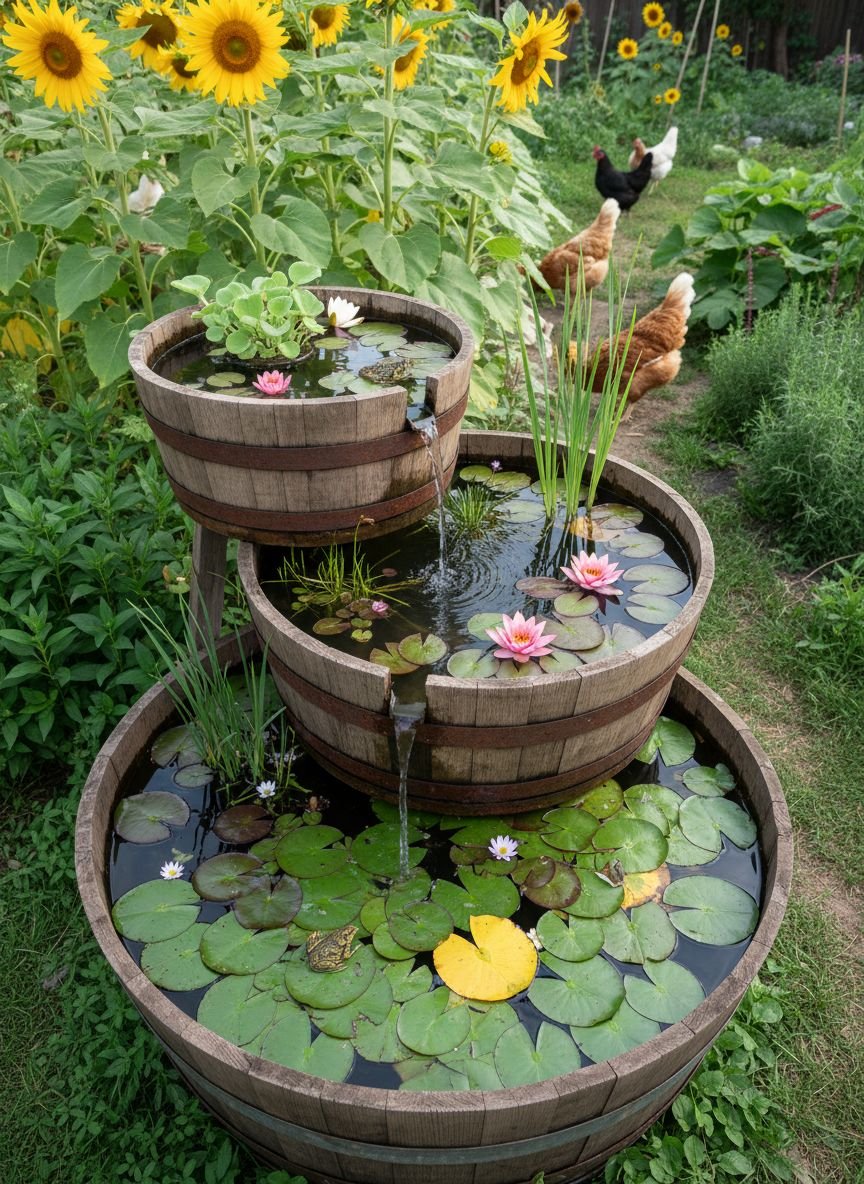
Moving off the patio and into the yard, a barrel water garden can serve as a focal point in a flower bed. Dig the barrel halfway into the ground to stabilize temperature and integrate it into the landscape. Surround the base with low-growing ground cover like creeping thyme or sedum to hide the rim.
This semi-inground installation allows frogs and toads easy access to the water. They are beneficial predators that will eat slugs and bugs in your garden. Inside the barrel, mix marginal plants like Pickerelweed (which has lovely purple spikes) with oxygenating grasses. This creates a functional mini-ecosystem that supports local wildlife.
Pro Tip: Ensure the rim is at least 2 inches above the soil line to prevent heavy rain from washing muddy garden soil into your clean pond water.
Mini Garden Wetland
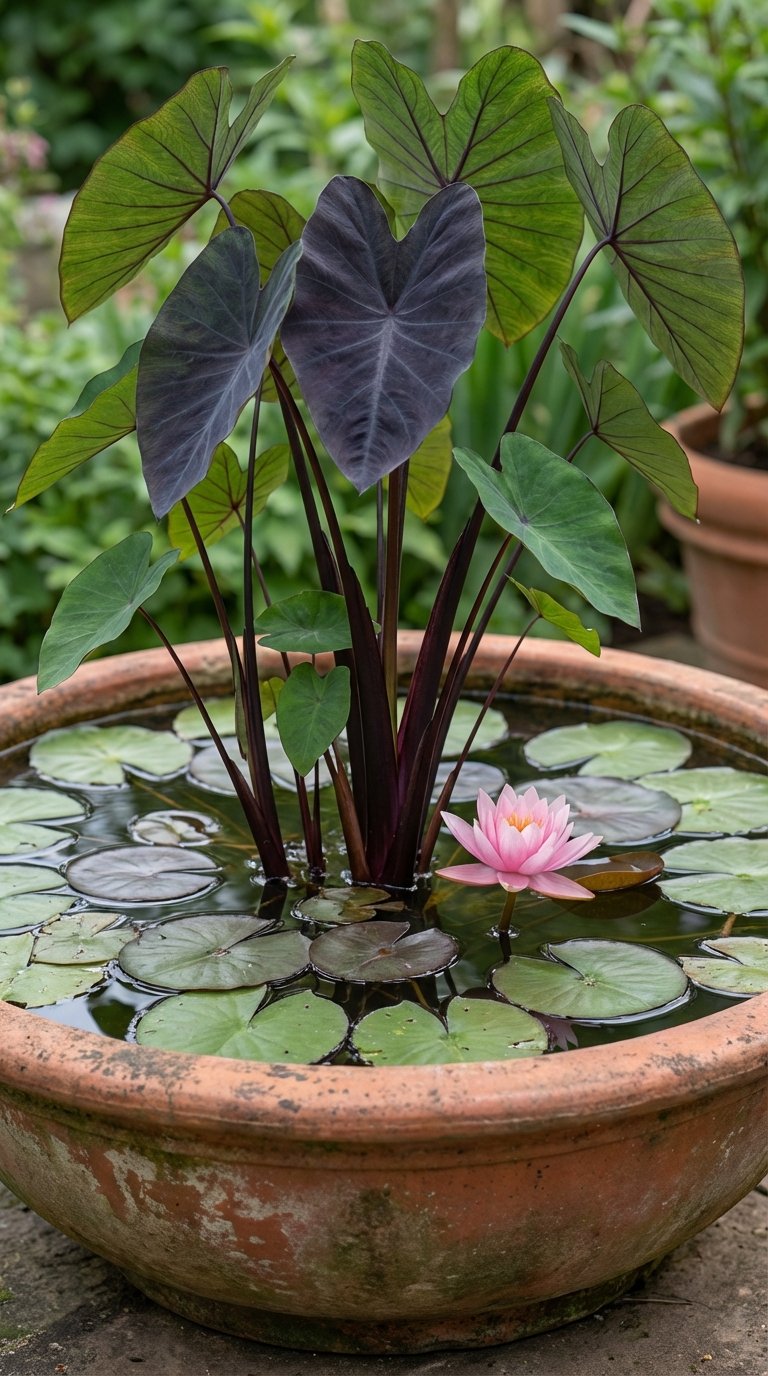
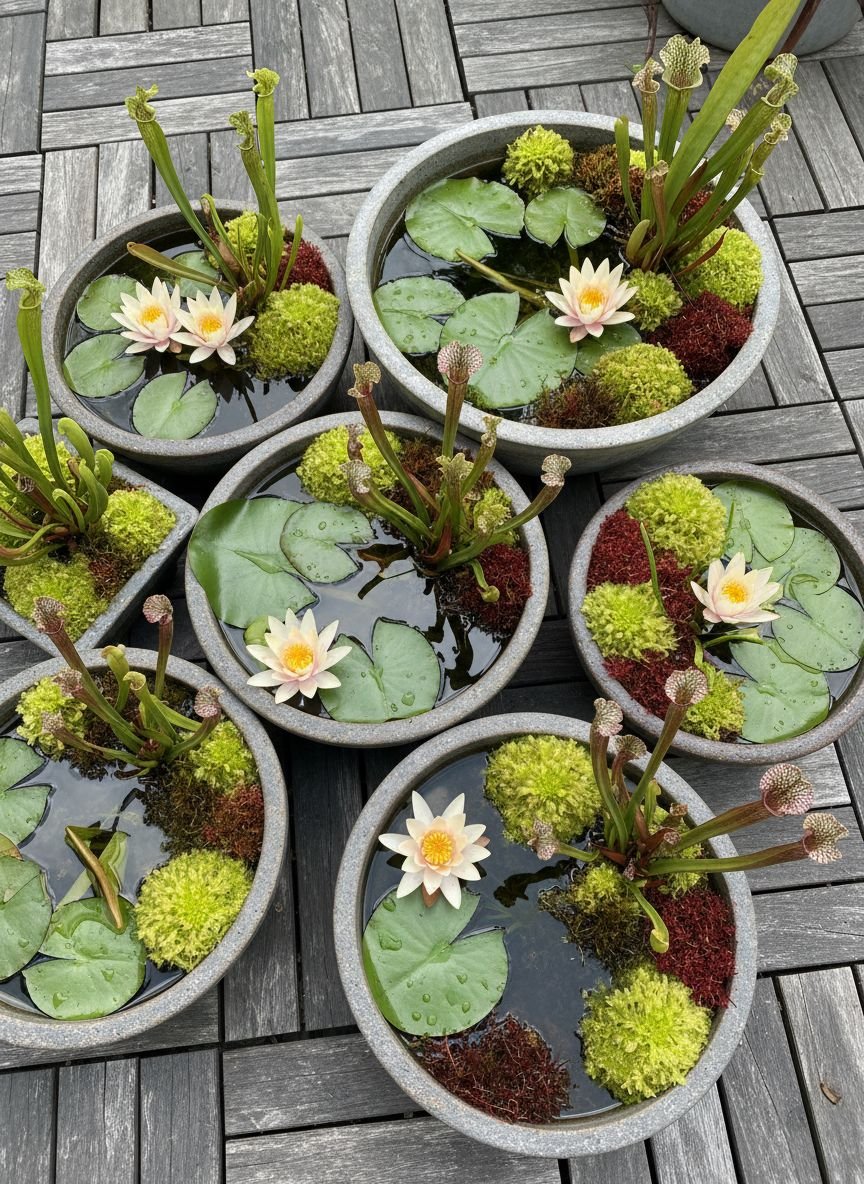
A wetland garden differs from a pond in that it is packed with plants, with very little open water visible. The goal is to simulate a bog. Use a wide, shallow tray or saucer. Pack it densely with moisture-loving plants like Corkscrew Rush, Pitcher Plants, and Iris.
This is an excellent solution for shady areas where water lilies might struggle. The textures of the rushes and the architectural leaves of the Iris create a sophisticated, grassy look. Because the water volume is low and heavily planted, evaporation will be high. You will need to top this off frequently, making it a “high interaction” feature that encourages you to visit your garden daily.
Pro Tip: Use rainwater to fill your wetland if possible. Many bog plants are sensitive to the chlorine and minerals found in tap water.
Floating Aquatic Garden in Plastic Tub
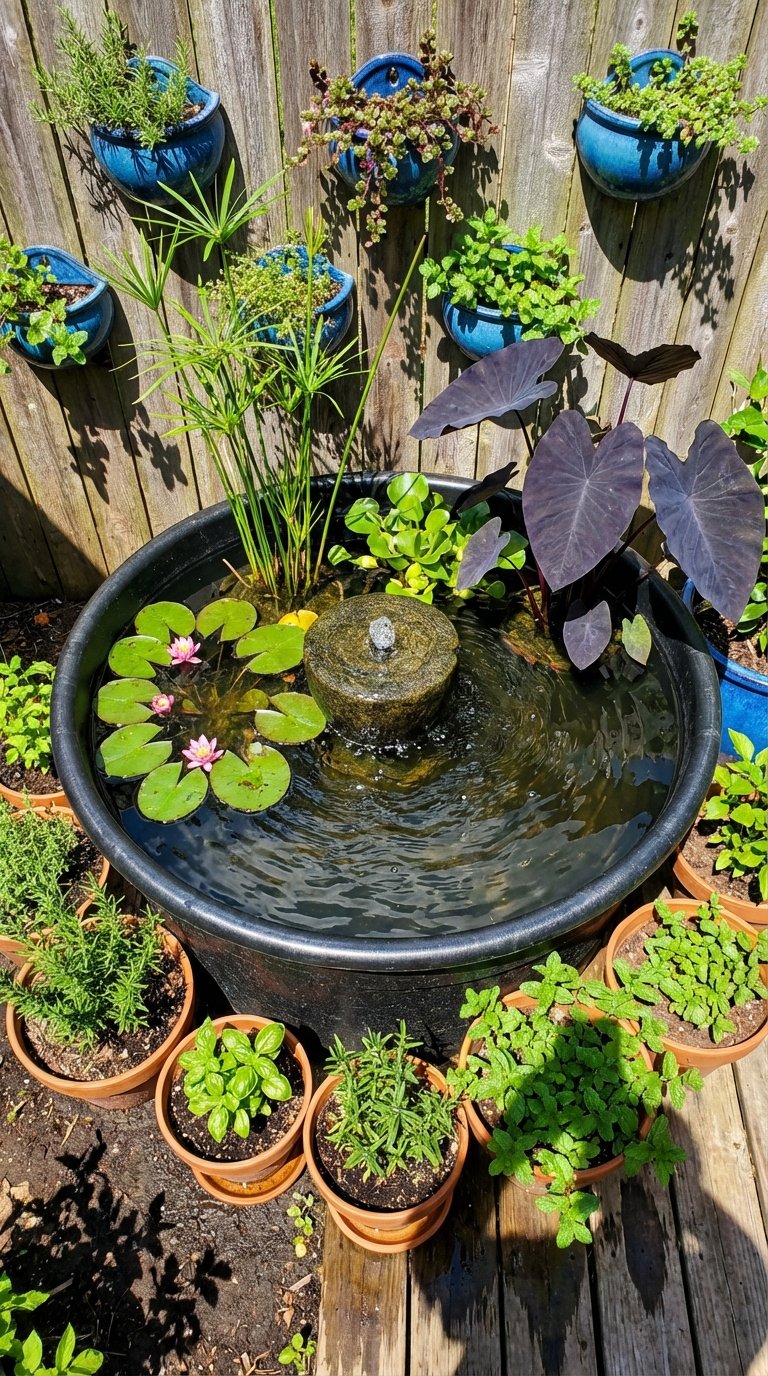
This idea focuses entirely on surface dwellers. Using a simple dark plastic tub, fill it with a variety of floating plants: Water Lettuce, Duckweed, Azolla (Fairy Moss), and Frogbit. The visual appeal comes from the “quilt” of different leaf shapes and shades of green on the water’s surface.
This is the easiest water garden to set up—no potting required. You simply toss the plants in. It is perfect for a modern, minimalist look where you want the calming effect of water without the visual noise of tall vertical plants. The dense cover also prevents algae by blocking 100% of the sunlight from entering the water column.
Pro Tip: Scoop out excess plants weekly. These floaters grow exponentially and make excellent nutrient-rich compost for your vegetable garden.
Large Patio Pond Bordered in Pavestone
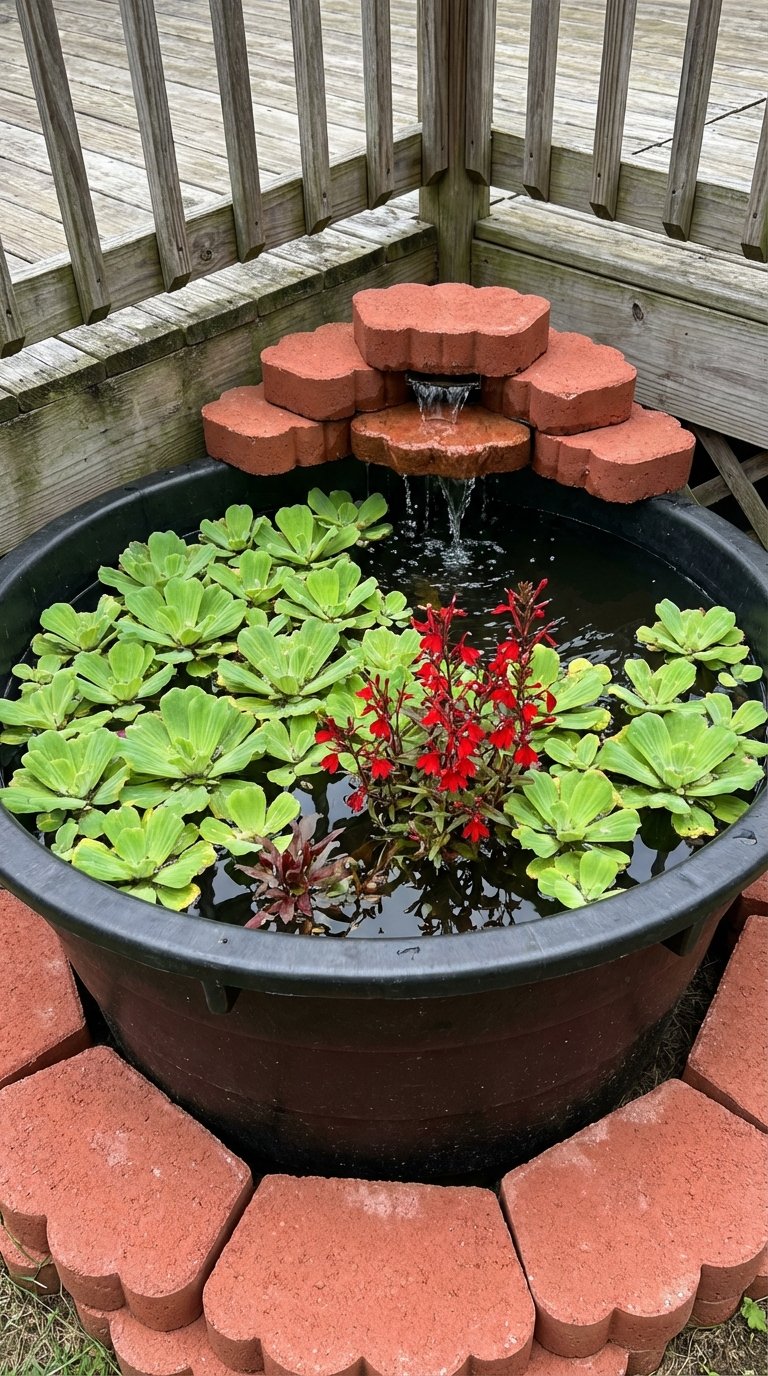
For a more permanent feel on a rented patio, create a temporary raised bed pond. Place a large rigid pond liner or stock tank on the patio, then build a dry-stack wall around it using retaining wall blocks or pavestones. Cap the wall with flat stones to create a sitting ledge.
This structure hides the “ugly” plastic liner and provides a place to sit and enjoy the fish or plants. It looks like a built-in architectural feature but can be dismantled in an hour. The thermal mass of the stones helps regulate the water temperature, allowing you to keep more sensitive fish like fancy goldfish or Japanese Rice Fish.
Pro Tip: Leave small gaps in the dry-stack stone at the bottom to provide shelter for lizards and beneficial garden insects.
Carnivorous Bog Garden
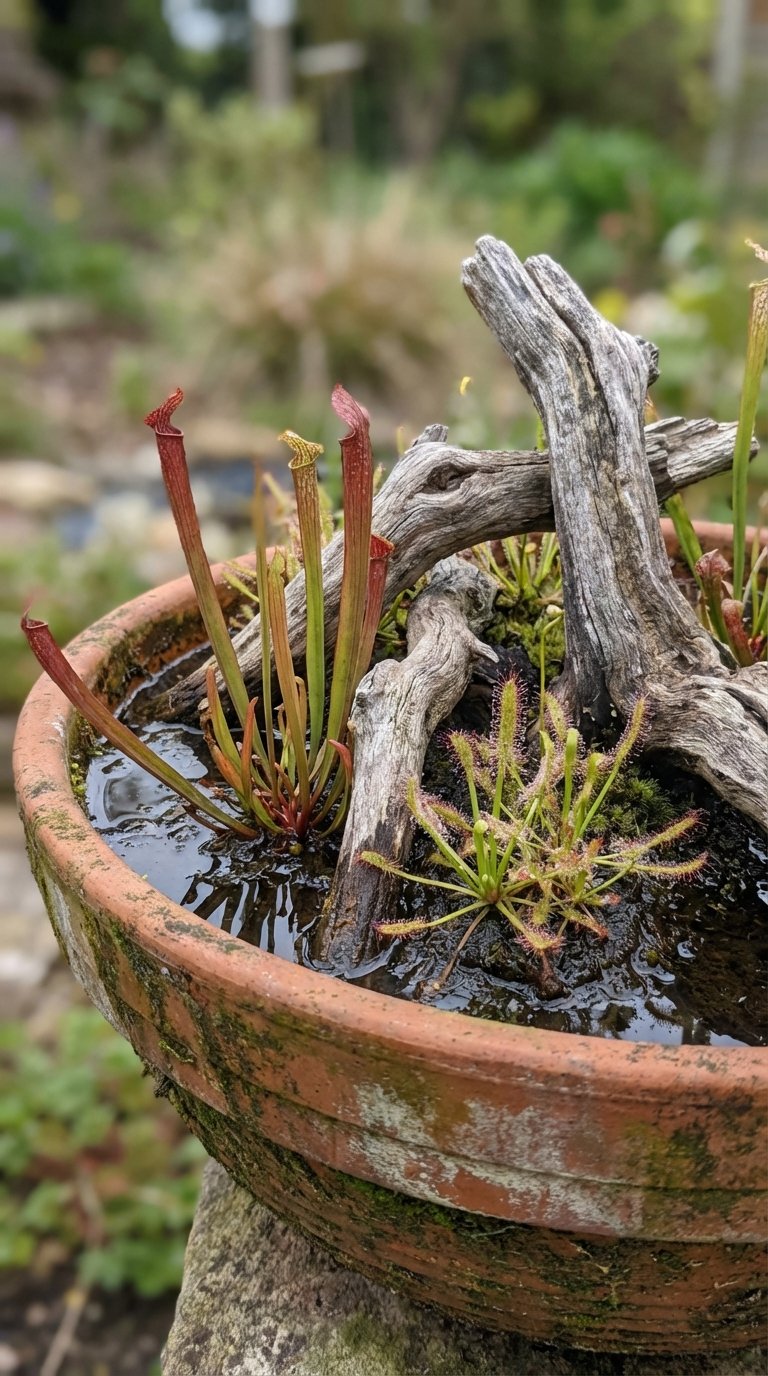
For something truly unique, turn your water feature into a carnivorous bog. Use a shallow, wide planter filled with a mix of peat moss and sand (no fertilizer!). Keep the soil constantly soggy by sitting the pot in a saucer of water or having a high water table within the pot.
Plant Sarracenia (Pitcher Plants), Sundews, and Venus Flytraps. These plants are fascinating to watch and serve a practical purpose by eating flies and gnats. The exotic shapes and bright reds and greens of the pitchers look alien and spectacular. This is a conversation starter that thrives in full, blasting sun.
Pro Tip: Never use tap water for carnivorous plants; the minerals will kill them. You must use distilled water, reverse osmosis water, or rainwater.
Popular Asked Questions
How do you make a simple mini water garden?
You need a watertight container, heavy garden soil (not potting mix), gravel, and aquatic plants. Place the soil in small pots, plant your aquatic greens, top with gravel, and submerge them in the water-filled container. Place it in a sunny spot and wait for the ecosystem to balance.
Do mini ponds need a pump?
No, they do not. A balanced mini pond relies on plants to filter the water. “Oxygenating” plants (like Anacharis) add oxygen underwater, while floating plants (like Lilies) shade the surface to stop algae. A pump is only decorative unless you have a lot of fish.
What are the best plants for a small water container?
For small spaces, choose plants that won’t take over. Dwarf Water Lilies are perfect for blooms. Water Lettuce is great for surface coverage. Horsetail Reed adds height without spreading too wide. Avoid large cattails or standard lotus, which are too big.
Do mosquitoes breed in mini water gardens?
They can, but it is easy to stop. The best way is to add a “Mosquito Dunk” (a natural bacteria that kills larvae) or add small fish like Guppies or White Cloud Mountain Minnows. Moving water from a solar bubbler also discourages them from laying eggs.
Conclusion
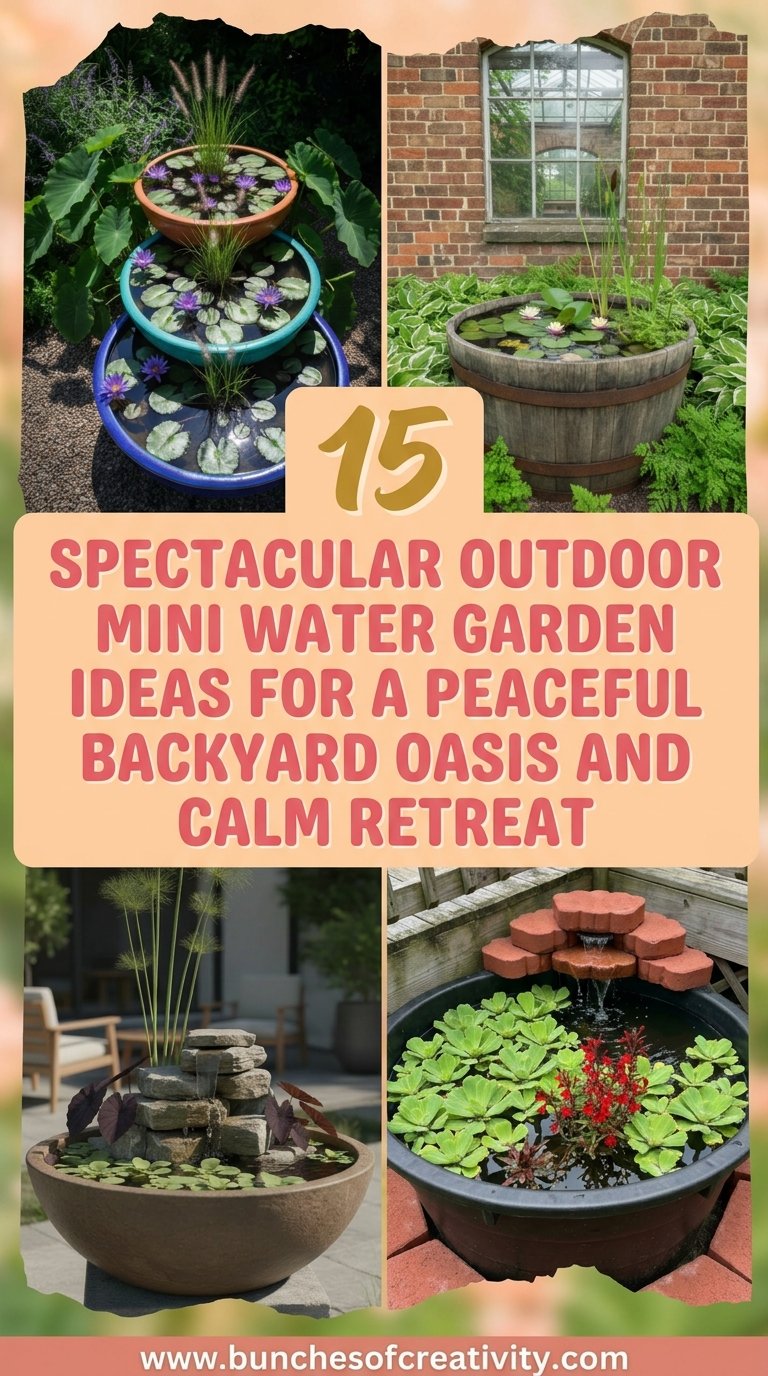
Creating a mini water garden is one of the most rewarding DIY projects for 2026. It requires minimal space but delivers maximum impact, transforming a flat, lifeless patio into a vibrant ecosystem. Whether you choose the rustic charm of a wine barrel or the sleek lines of a ceramic lotus pot, the key is to start simple. Balance your plants, watch the water clear, and enjoy the zen.



Leave a Comment