
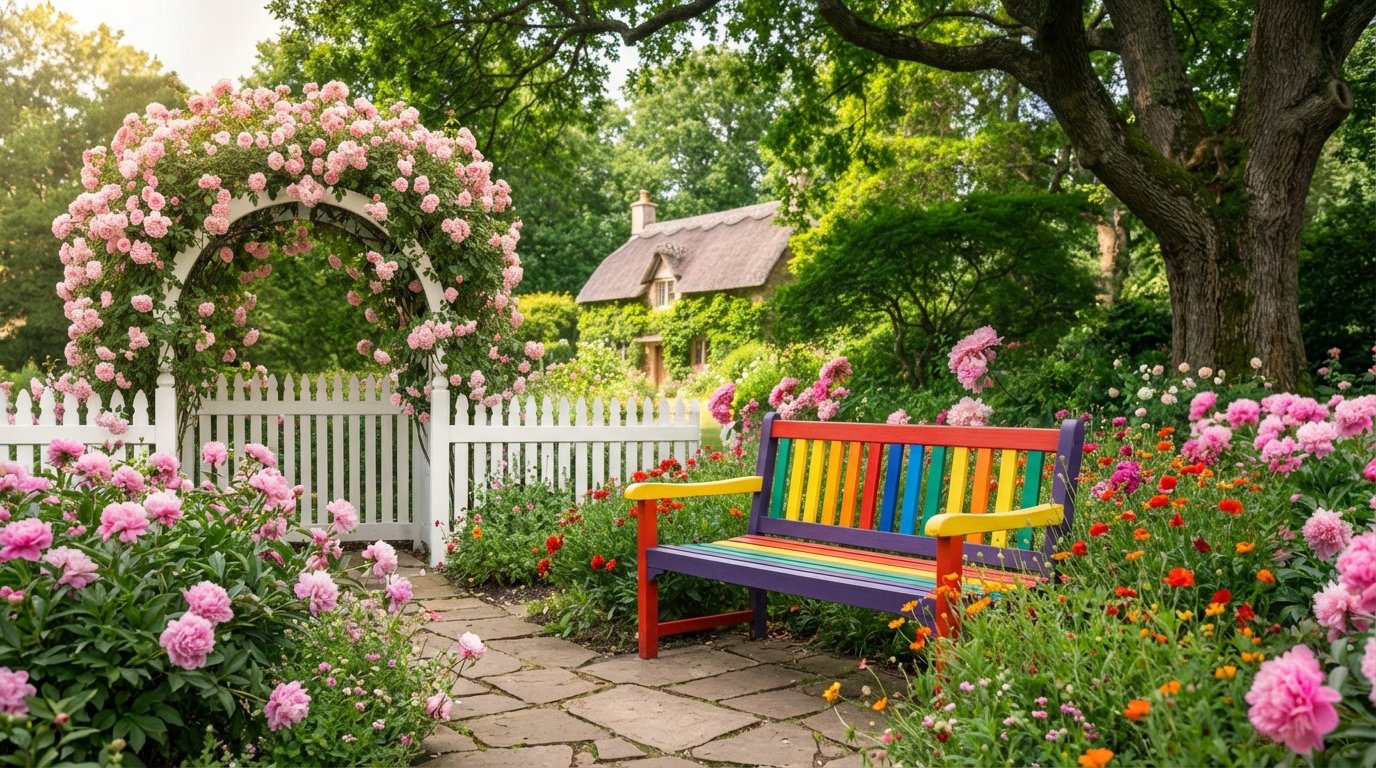
Your front yard is more than just a patch of grass between the sidewalk and your front door. It is the first impression your home makes and a potential haven for neighborhood connection. The current trend of “front yard socializing” has turned the humble bench into a must-have statement piece. Whether you have a sprawling lawn or a modest porch, the right seating can transform an unused corner into a welcoming retreat.
In this guide, we explore 16 distinct front yard bench ideas that blend functionality with high-end design. From rustic reclaimed wood to sleek modern concrete, these selections solve common landscaping problems like lack of focal points or poor curb appeal. We promise you will find a style here that not only fits your budget but also elevates your home’s exterior aesthetic immediately.
Key Takeaways
- Curb Appeal Booster: A well-placed bench acts as an architectural anchor, instantly making your home look more inviting and thoughtful.
- Material Matters: The longevity of your bench depends entirely on choosing weather-resistant materials like teak, cedar, or powder-coated metal.
- Dual Functionality: Many modern designs incorporate storage or planters, solving space issues in smaller gardens.
- Social Connection: Moving seating to the front yard encourages community interaction and creates a “porch culture” vibe even without a porch.
Table of Contents
- Traditional Cast Iron
- Eco-friendly Reclaimed Wood
- Curved for Conversation
- Garden Storage Combo
- Brightly Painted Pop
- Whimsical Barrel Bench
- Classic Wooden Warmth
- Ornate Metal Elegance
- Enchanting Arbor Bench
- DIY Pallet Project
- Rock Solid Stone Seat
- Minimalist Modern
- Built-in Planter Bench
- Rustic Log Bench
- Reversible Convertible
- Textured Concrete Chic
- Comparison: Wood vs Metal vs Stone
- Popular Asked Questions
- Conclusion
Traditional Cast Iron
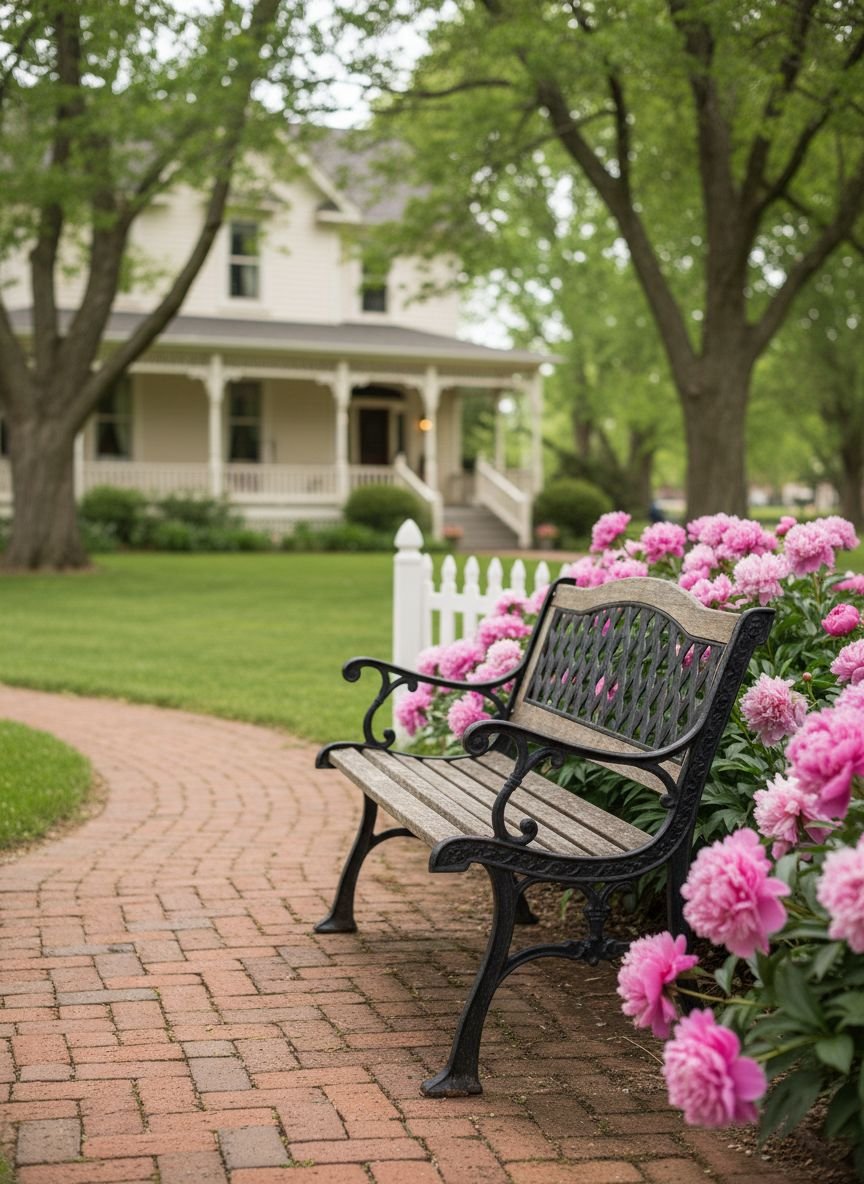
The traditional cast iron bench is the quintessential park-style seat that brings a sense of history and permanence to any front garden. Visually, these benches often feature black or dark green metal frames with intricate scrollwork, paired with warm wooden slats that soften the industrial feel. The contrast between the rigid, dark metal and the organic wood grain creates a timeless look that works exceptionally well in Victorian, Colonial, or English Cottage garden styles.
From a design perspective, the heavy visual weight of cast iron anchors a space. It works best when placed against a backdrop of light-colored siding or a vibrant flower bed, where the dark frame can pop. The durability of cast iron is unmatched, though it does require maintenance to prevent rust. To implement this look, place the bench under a large shade tree or along a paved walkway. It serves not just as a seat but as a sculptural element that defines the path.
Pro Tip: Apply a coat of marine-grade varnish to the wooden slats annually and touch up any scratches on the iron with rust-inhibiting paint to keep it looking new for decades.
Save this idea to your Pinterest.
Eco-friendly Reclaimed Wood
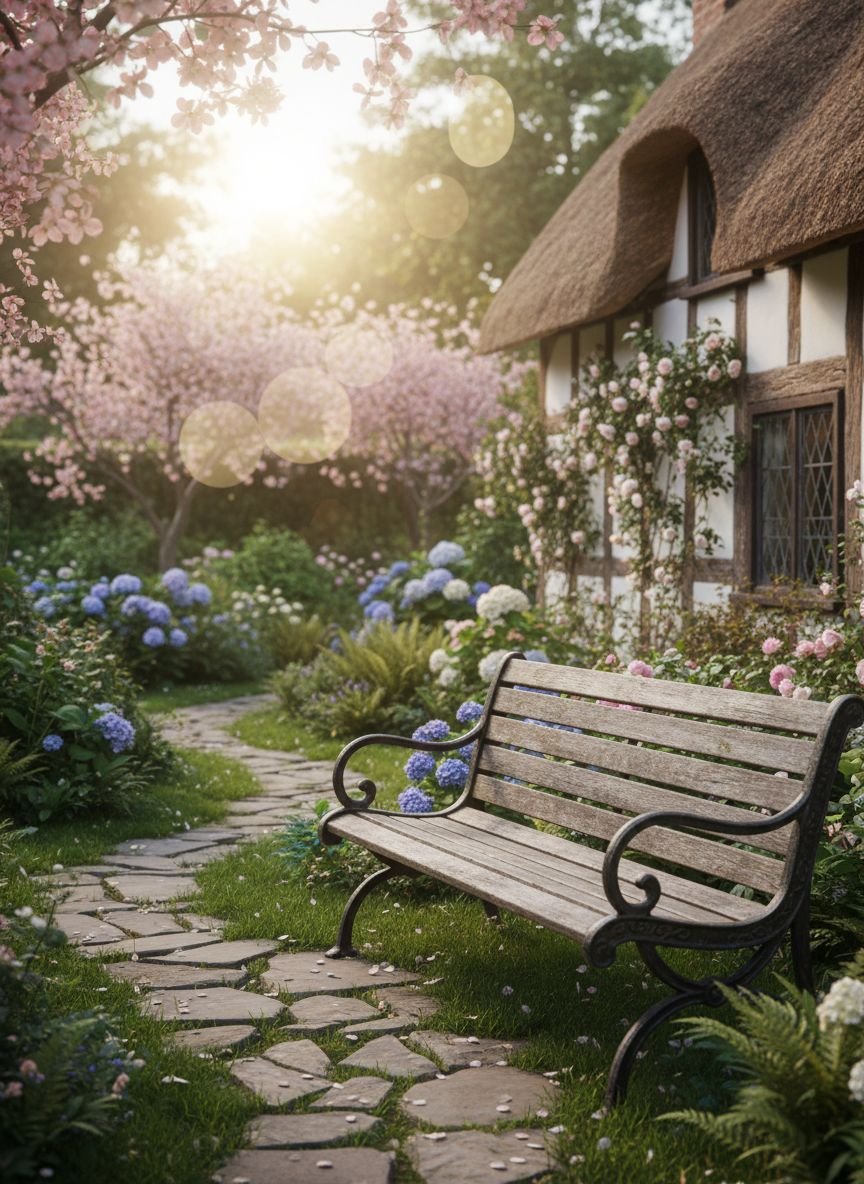
Sustainability is a massive trend in exterior design, and a reclaimed wood bench is the perfect way to participate. These benches are characterized by their weathered, greyed patina and visible imperfections like knots or nail holes, which tell a story. The texture is rough and tactile, offering a stark, beautiful contrast to soft green foliage and delicate blooms. This style fits seamlessly into farmhouse, rustic, or bohemian front yards where perfection is less important than character.
The design principle here is “wabi-sabi,” the Japanese art of finding beauty in imperfection. A reclaimed wood bench softens the sharp lines of modern architecture and adds warmth to concrete walkways. Implementation is often a DIY journey or a hunt at local architectural salvage yards. Because the wood is already aged, it is naturally acclimated to the environment, though it may be less rot-resistant than treated lumber if not sealed properly.
Pro Tip: seal the feet of the bench with epoxy or place them on stone pavers to prevent moisture from the ground from wicking up into the wood and causing rot.
Save this idea to your Pinterest.
Curved for Conversation
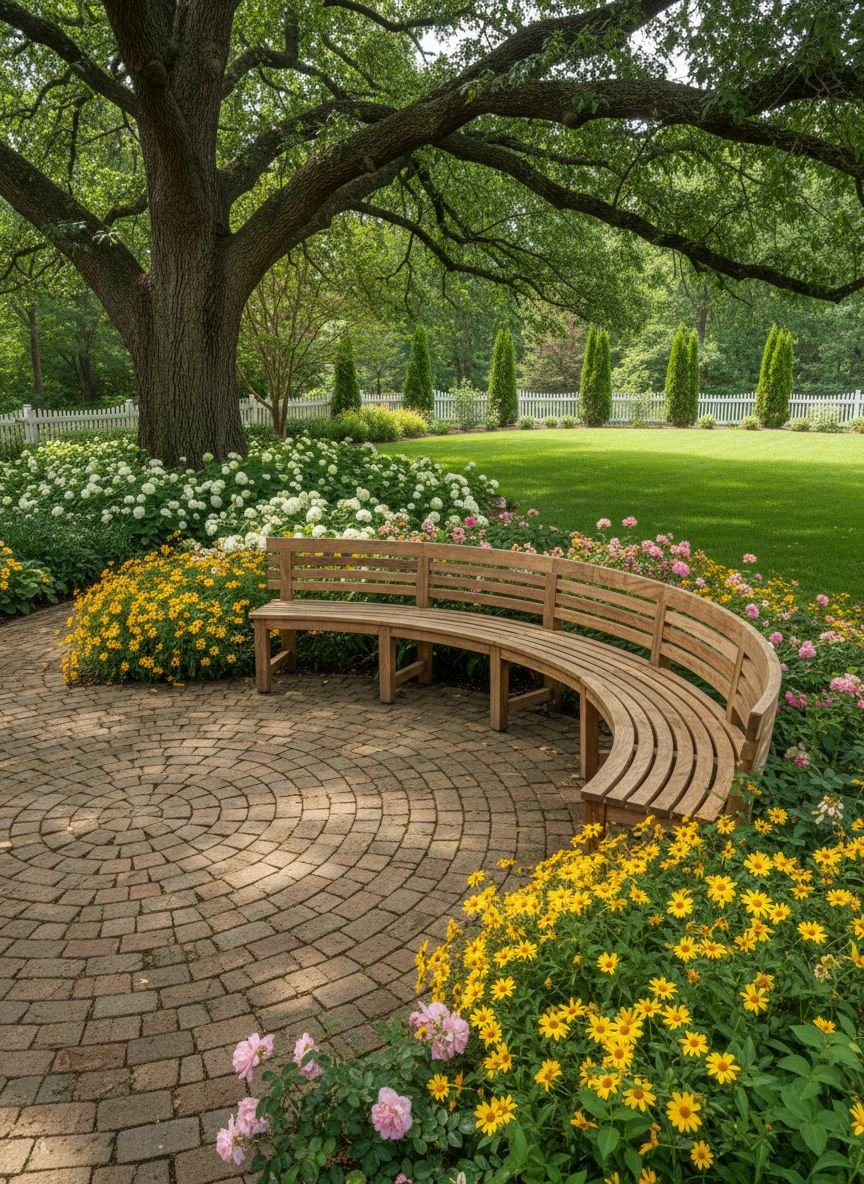
A curved bench is a sophisticated choice that breaks away from the rigid linearity of most outdoor furniture. These benches are often designed to wrap around a focal point, such as a fire pit, a round table, or a large tree. The visual flow of a curved bench softens the angles of a square front yard and invites a more communal, intimate seating arrangement. It suggests inclusivity and conversation, making it ideal for households that love to host neighbors.
Design-wise, curves add dynamic movement to a landscape. If your front yard features a lot of rectangular shapes—straight driveways, square windows, linear hedges—a curved bench introduces a necessary counterbalance. You can find these in materials ranging from poured concrete to bent wood. When installing, ensure the radius of the curve matches the feature it surrounds so the spacing feels intentional and harmonious rather than accidental.
Pro Tip: If placing this around a tree, leave at least 6 inches of clearance between the bench back and the tree trunk to allow for future growth without damaging the furniture.
Save this idea to your Pinterest.
Garden Storage Combo
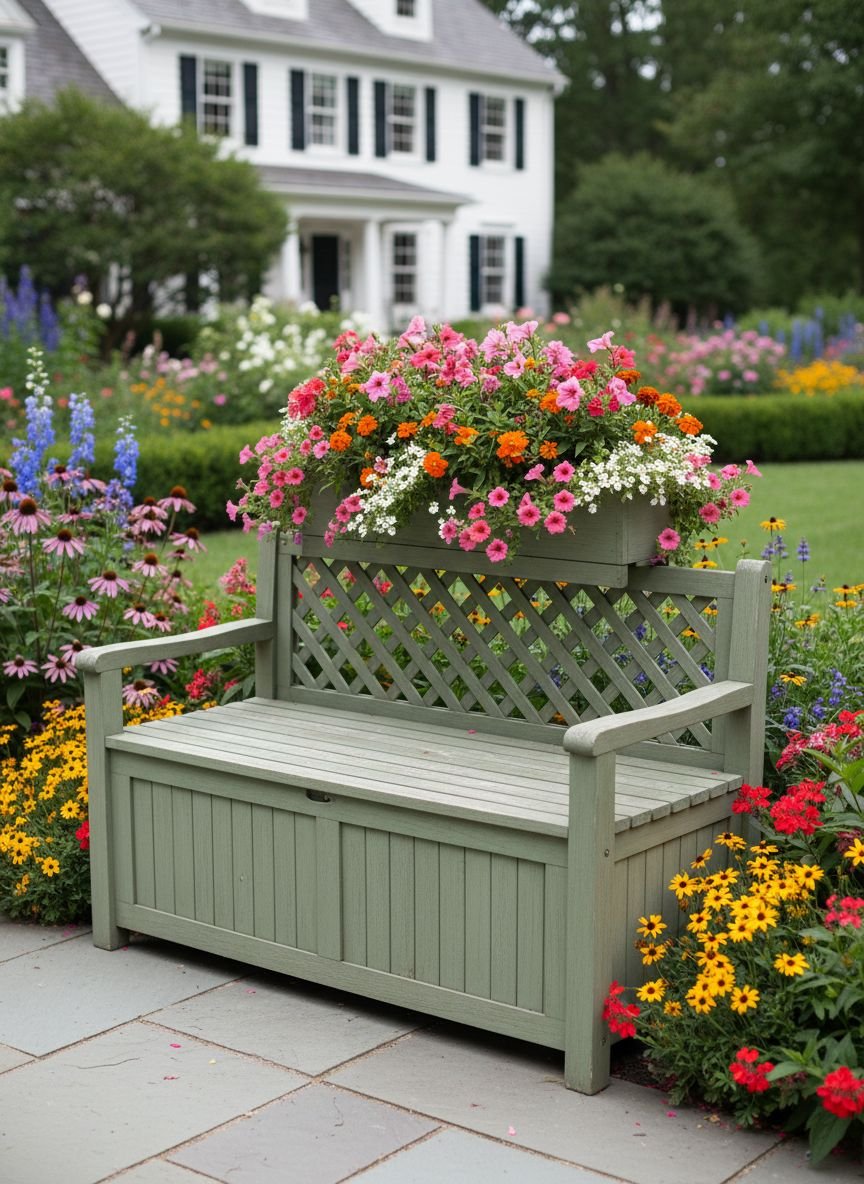
For smaller front yards or homes without a garage, the storage bench is a game-changer. Visually, these benches look like standard box-style seating, often made of weather-resistant resin or treated wood with a hinged seat. The hidden compartment underneath provides ample space for garden tools, cushions, or children’s toys. The aesthetic is usually clean and solid, prioritizing function, but can be dressed up with outdoor throw pillows to hide the “boxiness” of the design.
The design principle at play here is utility optimization. In a small space, every square foot must work double duty. A storage bench eliminates the need for a separate deck box, keeping your front porch clutter-free. To implement this effectively, choose a water-tight model if it is not under a roof overhang. Place it near the front door for easy access to packages or shoes, or near your garden beds to store trowels and gloves.
Pro Tip: Place cedar blocks or moisture-absorbing packets inside the storage compartment to keep your stored fabrics or tools dry and free from mildew.
Save this idea to your Pinterest.
Brightly Painted Pop
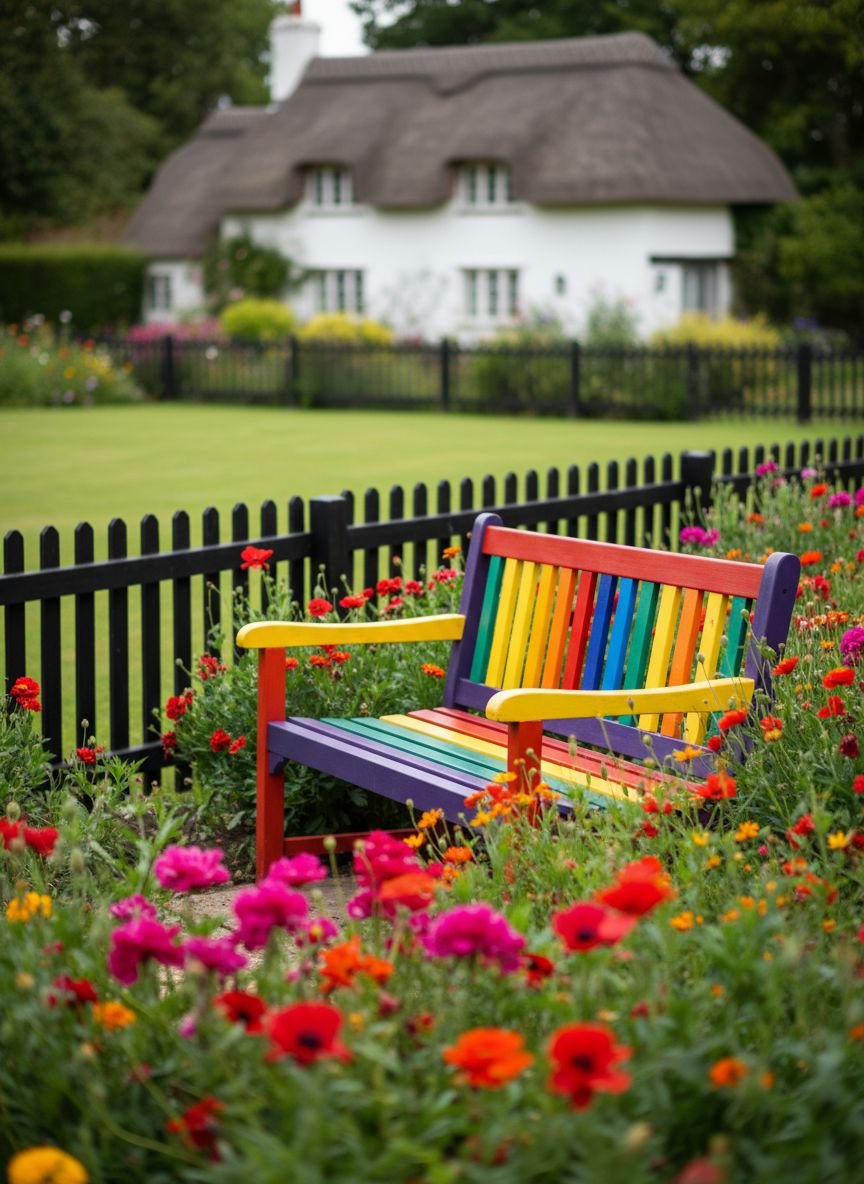
Sometimes a front yard needs a jolt of energy, and a brightly painted bench is the fastest way to achieve it. Imagine a classic wooden bench painted in electric blue, sunny yellow, or coral pink. This visual strategy uses color psychology to evoke emotion; yellow for happiness, blue for calm, red for energy. It turns the bench into the primary focal point of the yard, drawing the eye immediately from the street to your home.
This approach relies on the design principle of emphasis. By keeping the rest of the landscaping neutral or green, the colorful bench stands out aggressively in a pleasing way. It is a low-stakes commitment because paint is cheap and changeable. To implement this, find a second-hand wooden bench, sand it down, and apply a high-quality exterior latex paint. It is a weekend project that completely reinvents your curb appeal.
Pro Tip: Use a primer specifically designed for exterior wood before applying your bold color. This ensures the pigment pops and prevents the old wood color from bleeding through.
Save this idea to your Pinterest.
Comparison: Wood vs Metal vs Stone
| Feature | Wood (Teak/Cedar) | Metal (Iron/Aluminum) | Stone/Concrete |
|---|---|---|---|
| Durability | High (if maintained) | Very High | Extreme |
| Comfort | Warm, forgiving | Cold, hard | Cold, very hard |
| Maintenance | Annual sealing/oiling | Rust prevention | Power washing |
| Aesthetic | Natural, Rustic | Classic, Ornate | Modern, Statuesque |
| Cost | Moderate to High | Low to Moderate | Moderate to High |
Whimsical Barrel Bench
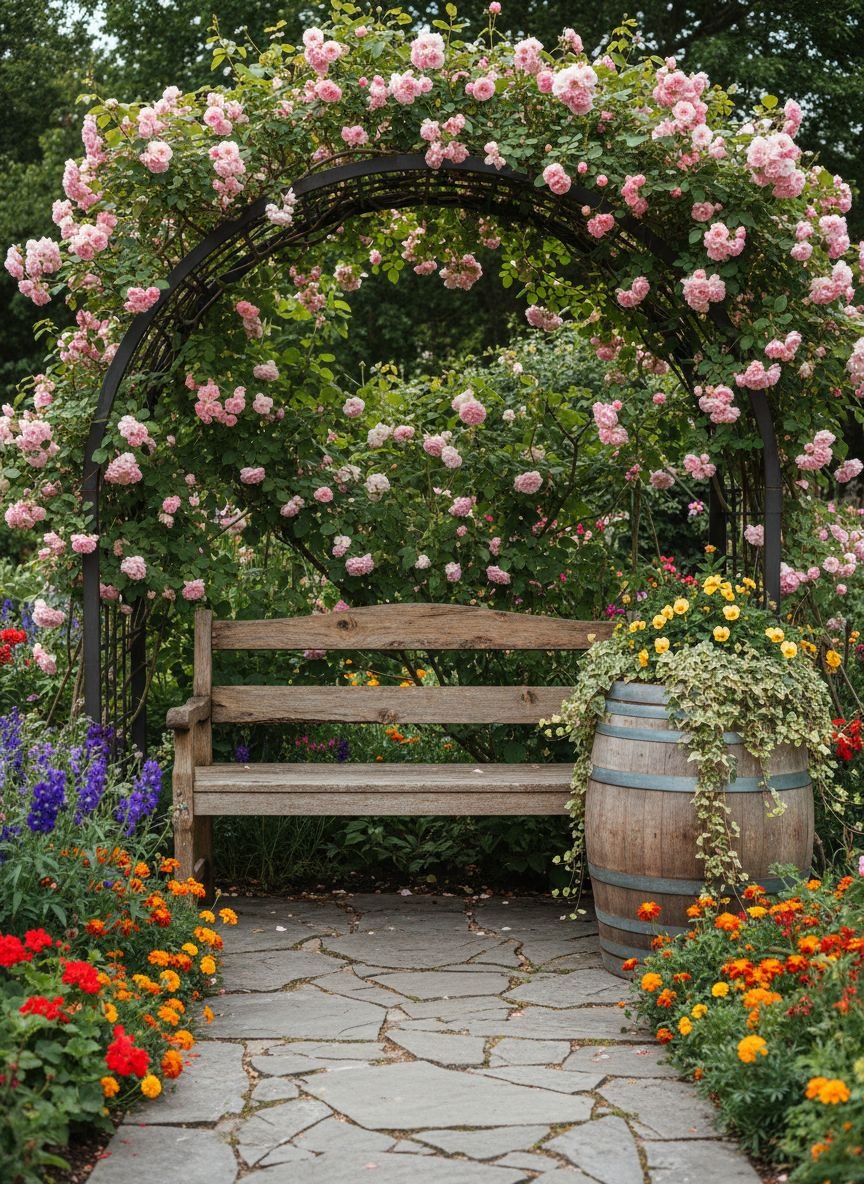
The barrel bench is a unique, upcycled creation made from repurposed wine or whiskey barrels. Visually, these benches feature the distinct curve of the barrel staves and the rustic metal hoops that hold them together. The wood is often stained with the deep reds of wine or the charred blacks of whiskey, adding a rich, sensory layer to the piece. This style is incredibly charming and works perfectly in cottage gardens, vineyard-style landscapes, or rustic homes.
The design appeal lies in the repetition of curves and the narrative of the material. It signals a love for history and craftsmanship. Because barrels are made of white oak, they are naturally rot-resistant and durable. To implement this, you can purchase pre-made barrel benches or buy a half-barrel and construct a seat within it. Pair it with lavender bushes or grapevines to enhance the winery aesthetic.
Pro Tip: If the barrel still has its metal hoops, apply a clear rust sealant to them immediately, as the metal on barrels is often untreated steel that will rust quickly outdoors.
Save this idea to your Pinterest.
Classic Wooden Warmth
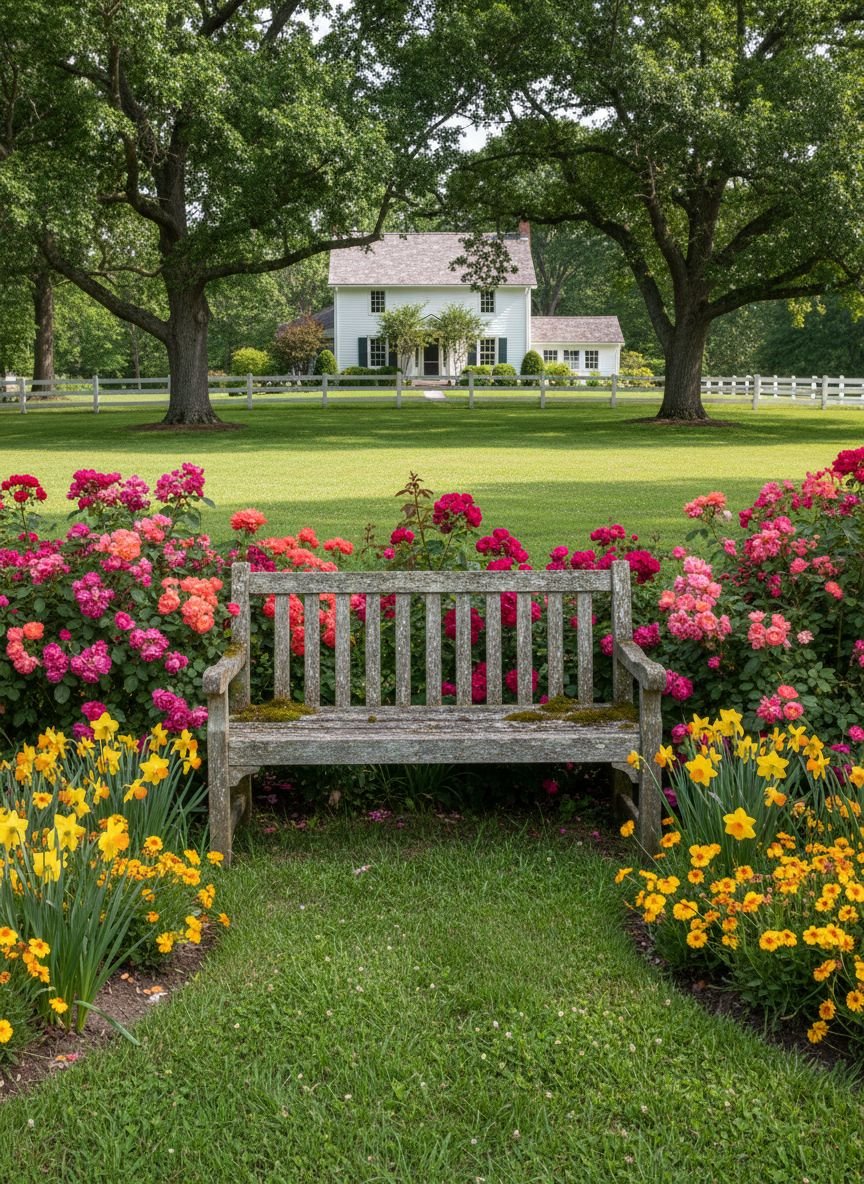
There is nothing quite like the classic warmth of a natural timber bench. Whether it is cedar, teak, or acacia, a simple slatted wooden bench offers a golden-brown hue that glows in the sunlight. Visually, the linear slats create a rhythm that is pleasing to the eye, while the natural grain provides texture. This is the most versatile style on our list, fitting effortlessly into modern, traditional, or eclectic yards.
The design strength of this bench is its neutrality. It does not compete with your landscaping; it supports it. Wood is a “warm” material, making the space feel inviting and lived-in, unlike colder metal or stone. Implementation involves choosing the right wood species for your climate. Teak is the gold standard for resisting rain and sun, while cedar is a budget-friendly alternative that naturally repels insects.
Pro Tip: Allow your teak bench to weather naturally to a silvery-grey for a low-maintenance, coastal look, or oil it annually to maintain the rich brown color.
Save this idea to your Pinterest.
Ornate Metal Elegance
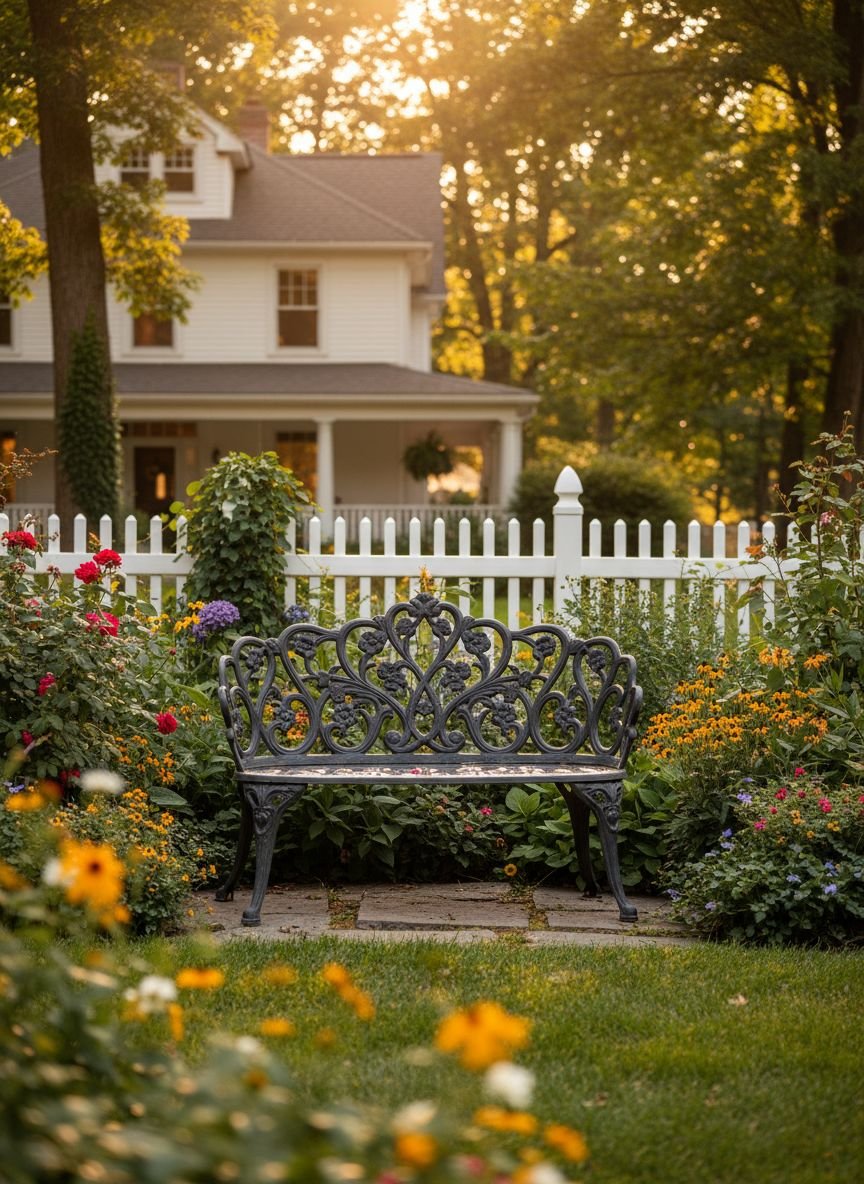
For homes with a touch of grandeur, an ornate metal bench is the ideal choice. These benches often feature elaborate motifs—flowers, vines, or geometric patterns—laser-cut or cast into the backrest. Visually, they are light and airy because you can see through the pattern, which prevents them from blocking the view of the garden behind them. They are often finished in bronze, copper, or white powder coating.
The design principle here is transparency and intricacy. Unlike a solid stone bench, an ornate metal bench feels delicate and does not visually clutter a small space. It adds a layer of sophistication and “jewelry” to the front yard. To implement, place this bench against a solid wall or a dense hedge so the intricate pattern of the backrest is clearly visible against the background.
Pro Tip: Choose cast aluminum over cast iron if you live in a rainy climate. Aluminum does not rust and is much lighter to move around when mowing the lawn.
Save this idea to your Pinterest.
Enchanting Arbor Bench
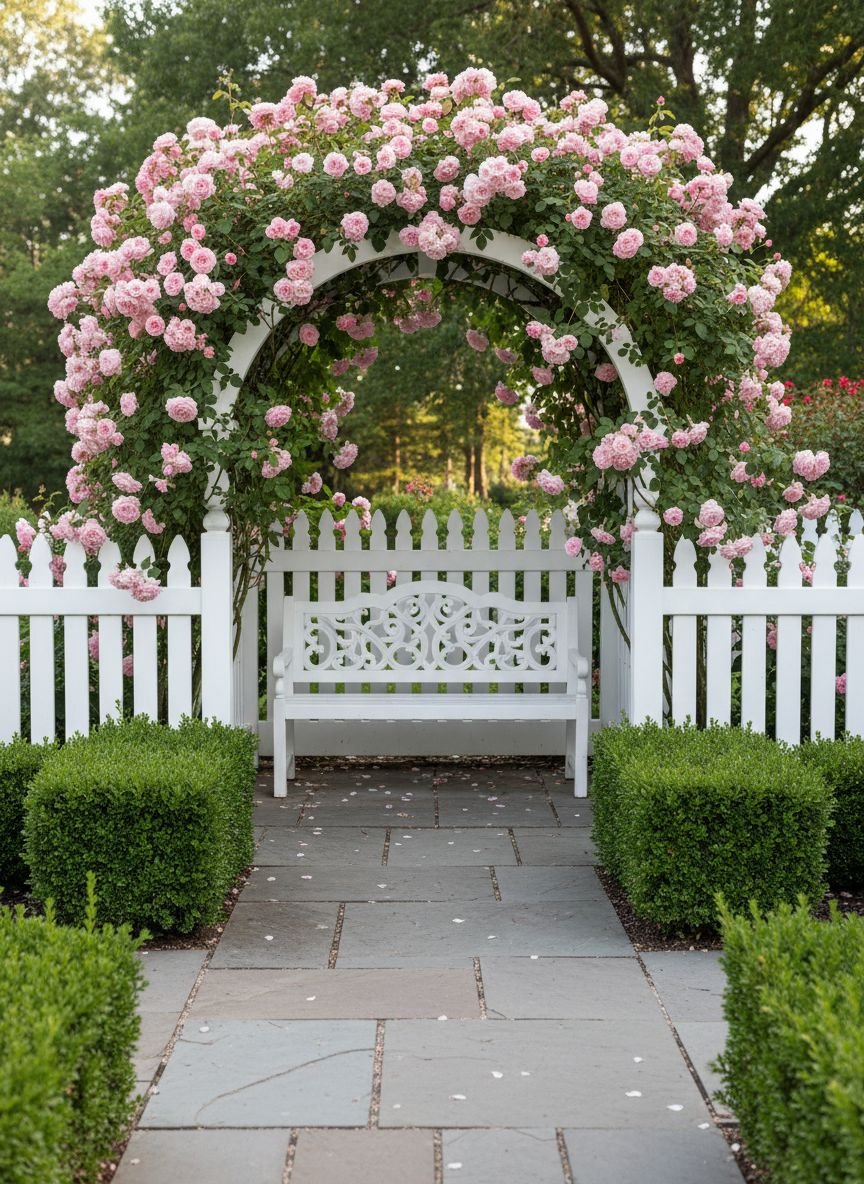
An arbor bench combines seating with a vertical trellis, creating a self-contained sanctuary. Visually, it adds height to your garden, drawing the eye upward. When covered in climbing roses, jasmine, or ivy, it becomes a living structure that changes with the seasons. This idea is perfect for flat yards that lack vertical interest or for creating a privacy screen from a nearby street.
The design concept is “enclosure.” Humans naturally feel safer and more relaxed when seated in a sheltered space. The arbor provides a roof and walls of greenery, creating a cozy nook. Implementation requires anchoring the structure securely into the ground, as the added weight of plants and wind resistance can make it top-heavy. It is a stunning focal point for an entryway or a corner of the front lawn.
Pro Tip: Plant evergreen climbers like Clematis armandii or English Ivy if you want the arbor to look lush and provide privacy all year round, not just in summer.
Save this idea to your Pinterest.
DIY Pallet Project

For the budget-conscious creative, the DIY pallet bench is a champion of ingenuity. Visually, it has a chunky, industrial-chic aesthetic. You can stack pallets to create a low-profile lounge seat or disassemble them to build a bench with a back. The look is raw and customizable; you can sand it smooth for a polished look or leave it rough for a grunge vibe. It is painted easily and dressed up with thick outdoor cushions.
The design ethos here is upcycling and modularity. You can build it to the exact dimensions of your space, making it perfect for odd-shaped porches. Implementation is low-cost but labor-intensive. You need to ensure the pallets are heat-treated (marked HT) rather than chemically treated (MB) to ensure they are safe for skin contact.
Pro Tip: Pallet wood is very porous. You must apply a heavy-duty wood sealer or outdoor paint to prevent the wood from absorbing water and rotting within a year.
Save this idea to your Pinterest.
Rock Solid Stone Seat

A stone bench is less furniture and more architecture. Whether it is a polished granite slab, a rough-hewn limestone block, or a cast concrete classic, this bench conveys permanence and stability. Visually, it blends perfectly with the hardscaping—pathways, retaining walls, and driveways. It does not demand attention with bright colors but commands respect with its weight and texture.
The design principle is harmony with nature. Stone is an elemental material that grounds the landscape. It works beautifully in xeriscapes, modern minimalist gardens, or English formal gardens. Implementation is a “set it and forget it” strategy. Once placed, it will not blow away in a storm, rot, or rust. However, it is cold and hard, so it is better suited for short rests or visual appeal rather than long lounging sessions.
Pro Tip: Stone retains temperature. In hot climates, place it in the shade to avoid burning skin; in cold climates, place it in the sun to retain warmth.
Save this idea to your Pinterest.
Minimalist Modern
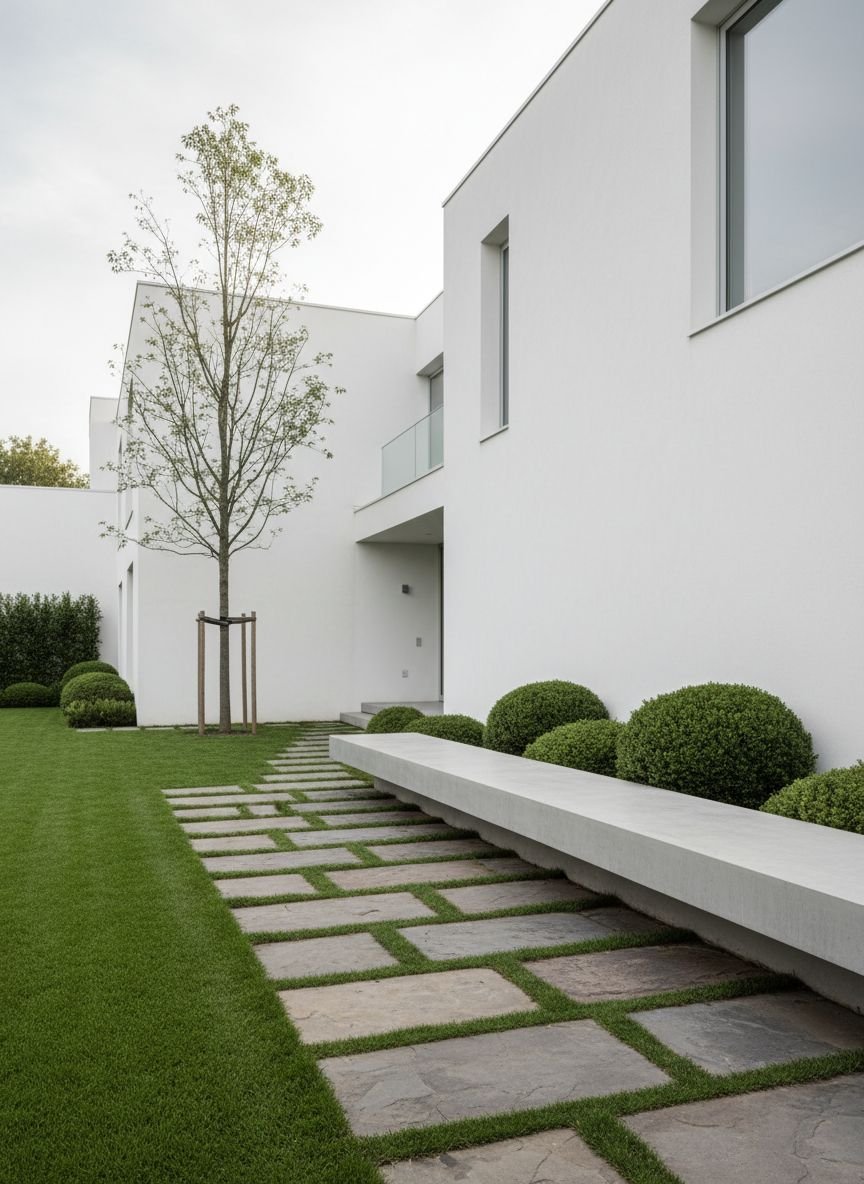
The minimalist modern bench is defined by clean lines, geometric shapes, and a lack of ornamentation. Visually, these benches often mix materials like sleek wooden slats with matte black steel legs, or they might be a single molded piece of concrete. The profile is low and unobtrusive, allowing the architecture of the home or the plants to take center stage. This style is essential for contemporary, mid-century modern, or Scandinavian-inspired exteriors.
The design philosophy is “less is more.” By reducing the bench to its essential form, it creates a sense of calm and order. It prevents the front yard from looking cluttered. To implement, look for “floating” benches that can be mounted to a retaining wall, or simple platform benches without backs. Keep the surrounding planting simple—ornamental grasses or structured boxwoods complement this look best.
Pro Tip: If choosing a backless minimalist bench, ensure it is deep enough (at least 16-18 inches) to be comfortable to sit on from either side.
Save this idea to your Pinterest.
Built-in Planter Bench

The built-in planter bench creates a seamless integration between nature and furniture. Visually, this design features a bench seat connecting two large planter boxes. The planters act as the “legs” or supports for the bench. This setup creates an immediate sense of lushness, as you are literally sitting among the plants. It is an excellent solution for adding greenery to a concrete patio or a paved front courtyard.
The design principle is cohesion. Instead of buying a separate bench and separate pots, this unit combines them into one architectural feature. It frames the seating area and can provide natural fragrance if you plant herbs or flowers like gardenias nearby. Implementation can be a DIY project using cedar planks or a purchased kit. It adds substantial weight, making it stable and permanent.
Pro Tip: Ensure the planter boxes have drainage holes drilled at the bottom. If the soil becomes waterlogged, it can rot the wooden structure of the bench from the inside out.
Save this idea to your Pinterest.
Rustic Log Bench
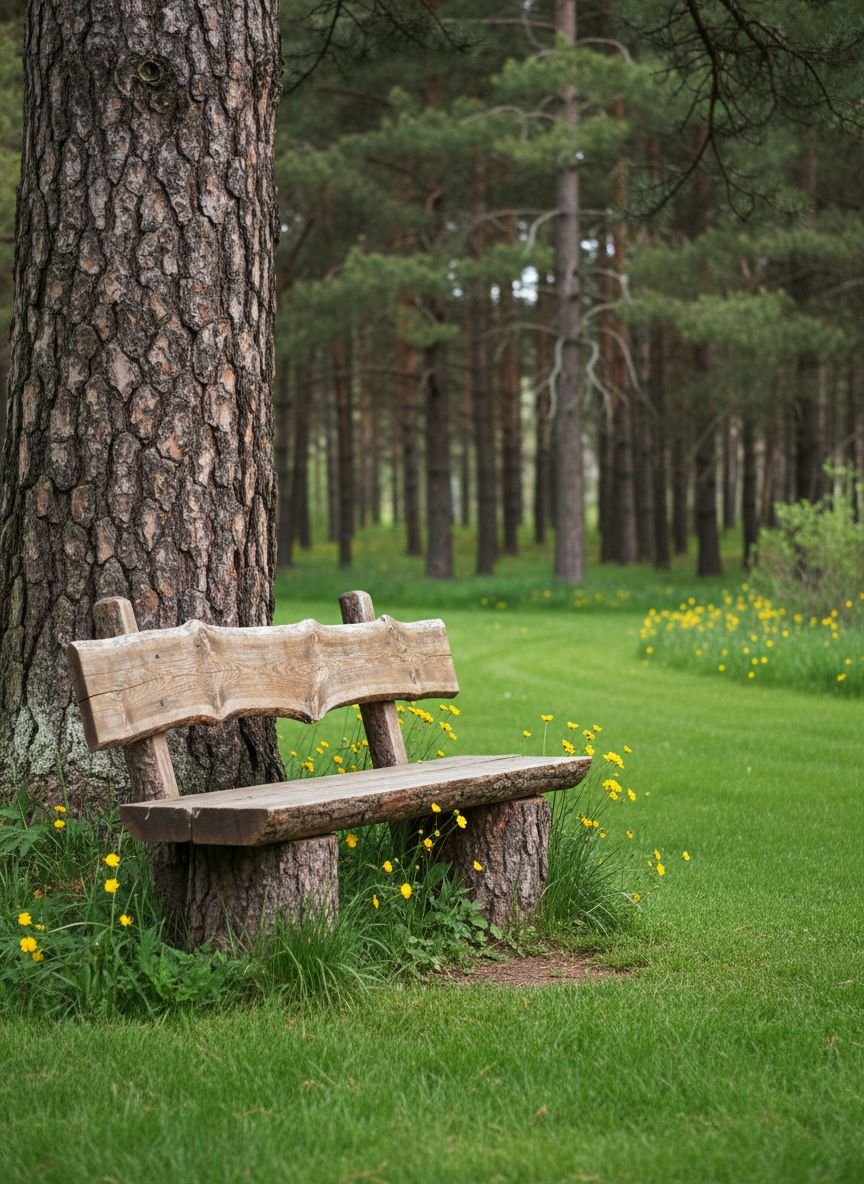
For a cabin, lodge, or woodland home, the rustic log bench is the ultimate choice. Visually, these are made from whole logs that have been halved or roughly hewn to create a flat surface. The bark is often left on the underside or legs to maintain the natural texture. It looks like it grew out of the forest floor. This style brings a rugged, masculine energy to the front yard and pairs well with stone pathways and native wildflowers.
The design appeal is organic texture. The rough bark and irregular shapes contrast beautifully with the straight lines of house siding. It connects the home to the surrounding landscape. Implementation involves sourcing local timber. A heavy log bench is difficult to move, so choose your spot wisely—perhaps under a large pine tree or near a fire pit.
Pro Tip: Peel the bark off the top seating surface and sand it smooth to prevent splinters and resin from ruining your clothes, while leaving the bark on the sides for the look.
Save this idea to your Pinterest.
Reversible Convertible
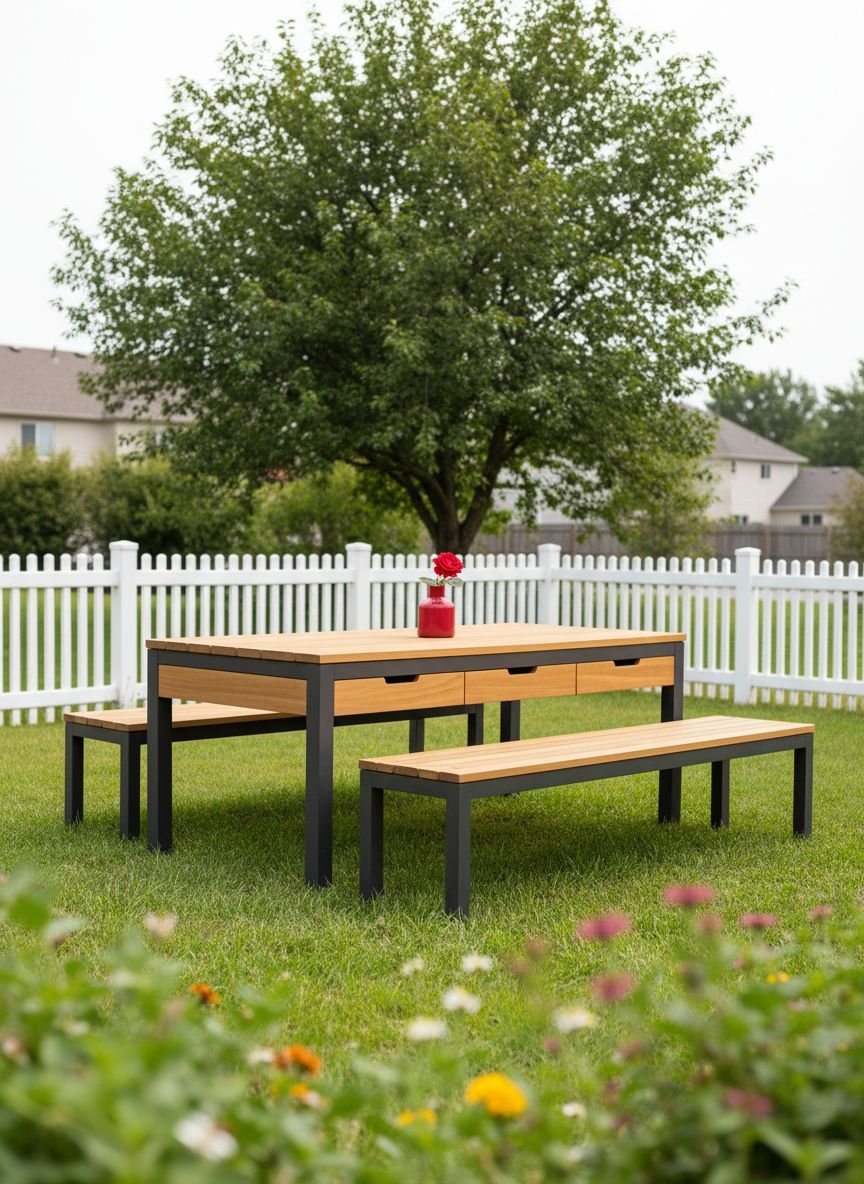
The reversible or convertible bench is a marvel of modern engineering. Visually, it looks like a standard bench, but it has a mechanism that allows the backrest to flip over, changing the direction you face. Alternatively, some models convert from a bench into a picnic table. This versatility is perfect for front yards that serve multiple purposes—watching the kids play in the driveway one moment, then facing the garden for a quiet coffee the next.
The design focuses on flexibility. It acknowledges that our needs change throughout the day. A convertible bench maximizes the utility of a small front porch. Implementation is as simple as buying the right product. Look for durable hinges and locking mechanisms that won’t pinch fingers.
Pro Tip: Lubricate the moving parts with a silicone-based spray twice a year to ensure the conversion mechanism stays smooth and doesn’t rust or seize up.
Save this idea to your Pinterest.
Textured Concrete Chic
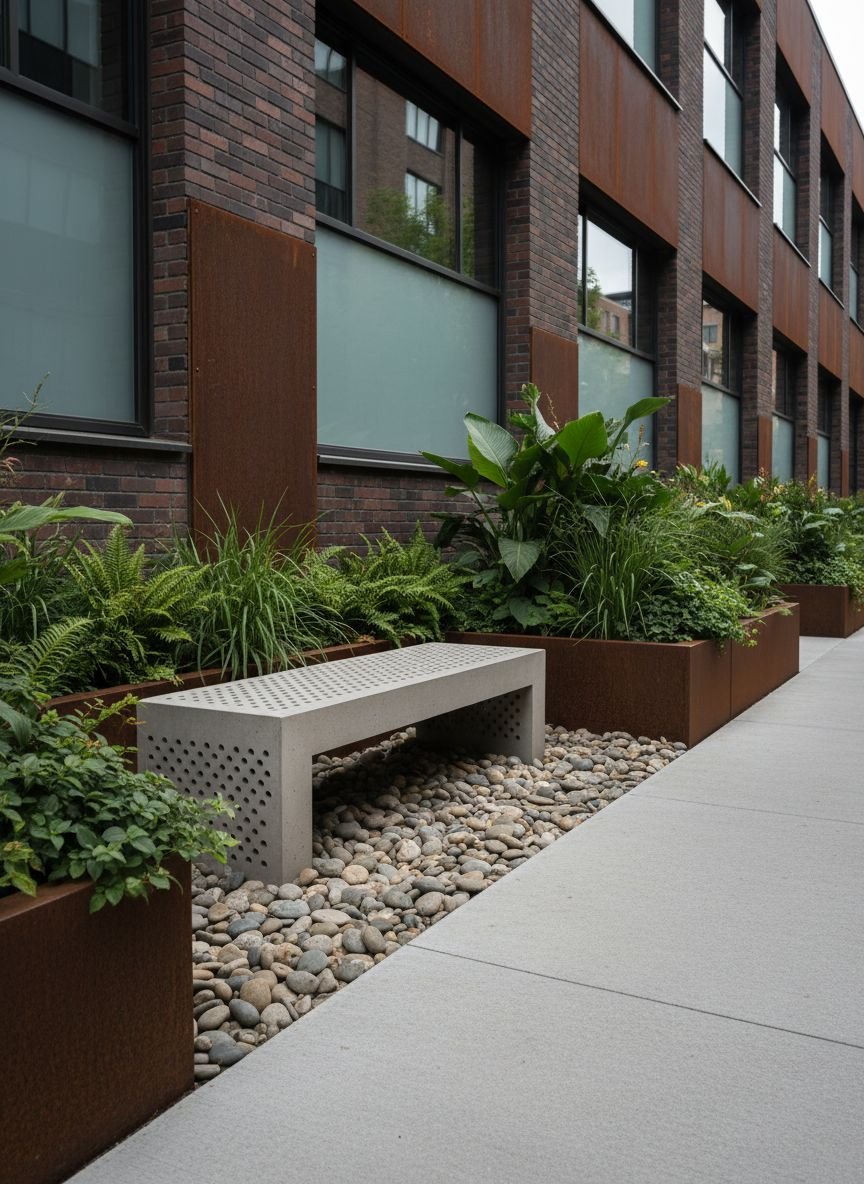
Textured concrete is moving away from the smooth, industrial look toward something more tactile and organic. Visually, these benches might have a pebble aggregate finish, a wood-grain stamp, or a rough, chiseled edge. The grey tones are neutral and sophisticated, providing a heavy, sculptural element that anchors the garden design. This style works well in both ultra-modern and traditional formal gardens.
The design principle is mass and solidity. A concrete bench provides a visual “stop” for the eye. It feels permanent and expensive. Implementation usually requires professional delivery or strong helpers, as these benches are incredibly heavy. Once placed, they become a permanent part of the hardscape. They are virtually indestructible and require zero maintenance beyond an occasional wash.
Pro Tip: Soften the look and improve comfort by adding a custom-sized outdoor cushion or a stack of colorful outdoor blankets, as concrete is unforgivingly hard.
Save this idea to your Pinterest.
Popular Asked Questions
What is the best material for a front yard bench?
The best material depends on your climate and maintenance willingness. Teak is the gold standard for wood because it naturally resists rot and insects. Powder-coated aluminum is excellent for wet climates as it will not rust. Concrete or stone offers the best longevity but is heavy and hard.
How do I secure my bench from theft?
To prevent theft, you can use L-brackets to screw the bench legs into a concrete or wooden surface. For grass or soil, use earth anchors (auger-style anchors) that screw deep into the ground and attach to the bench with a cable or chain.
How high should a garden bench be?
The standard comfortable seat height for a bench is between 16 and 18 inches off the ground. This height allows most adults to sit with their feet flat on the floor, which is ergonomic and comfortable for extended periods.
Do I need to treat a wooden outdoor bench?
Yes, most wood needs protection. Even rot-resistant woods like cedar will turn grey and can crack over time. Apply a water-sealing wood oil or a marine-grade varnish once a year to maintain the color and prevent moisture from penetrating the grain.
How can I style a front porch bench?
Style your bench by adding outdoor pillows for color and comfort. Place a potted plant or a lantern on the ground next to it to create a vignette. If the bench is on a porch, a throw blanket adds a cozy texture and makes the space feel like an outdoor living room.
Conclusion
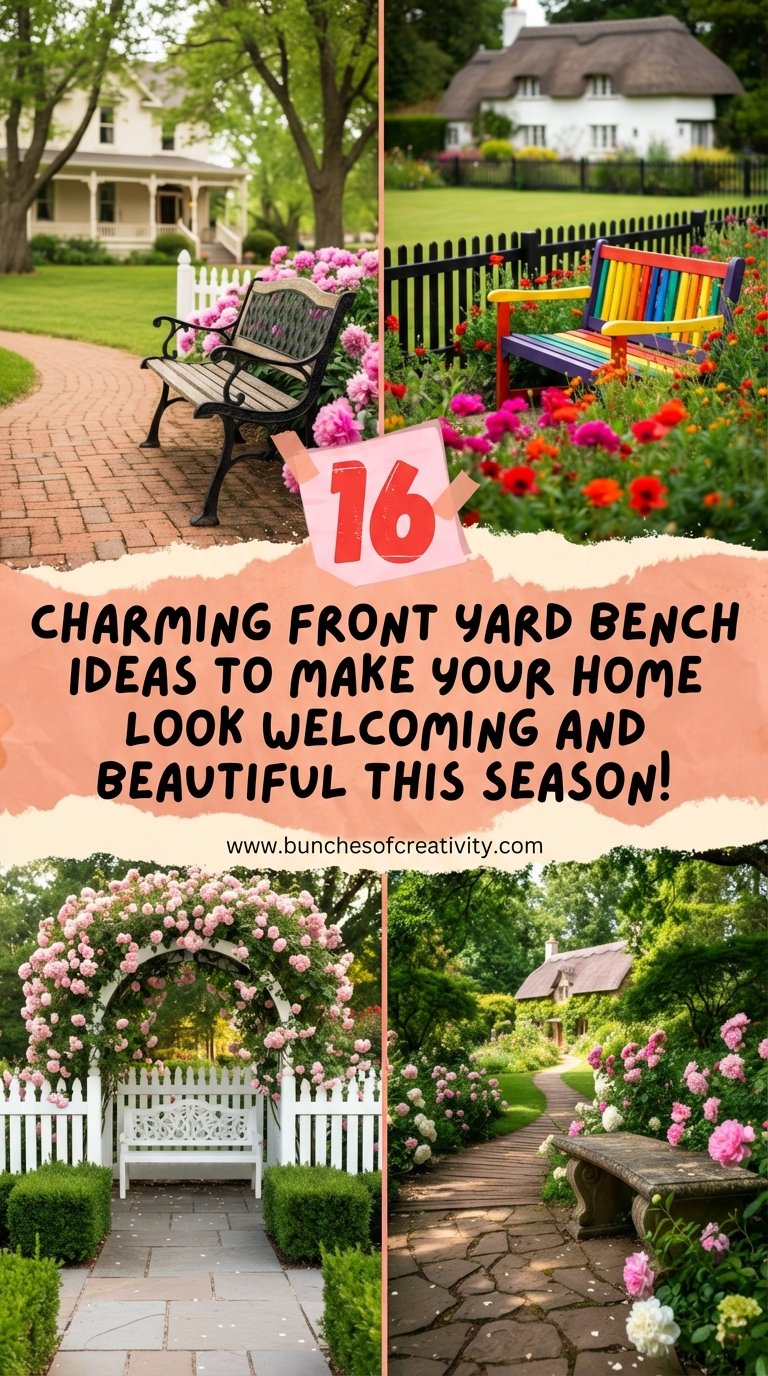
Adding a bench to your front yard is a small investment that yields high returns in both curb appeal and lifestyle. Whether you choose the rugged charm of a Rustic Log Bench, the sleek lines of Minimalist Modern design, or the dual-purpose Garden Storage Combo, you are creating a space that invites connection.
These 16 charming front yard bench ideas prove that you don’t need a massive renovation to enhance your space. You just need a place to sit, relax, and watch the world go by.





Leave a Comment