
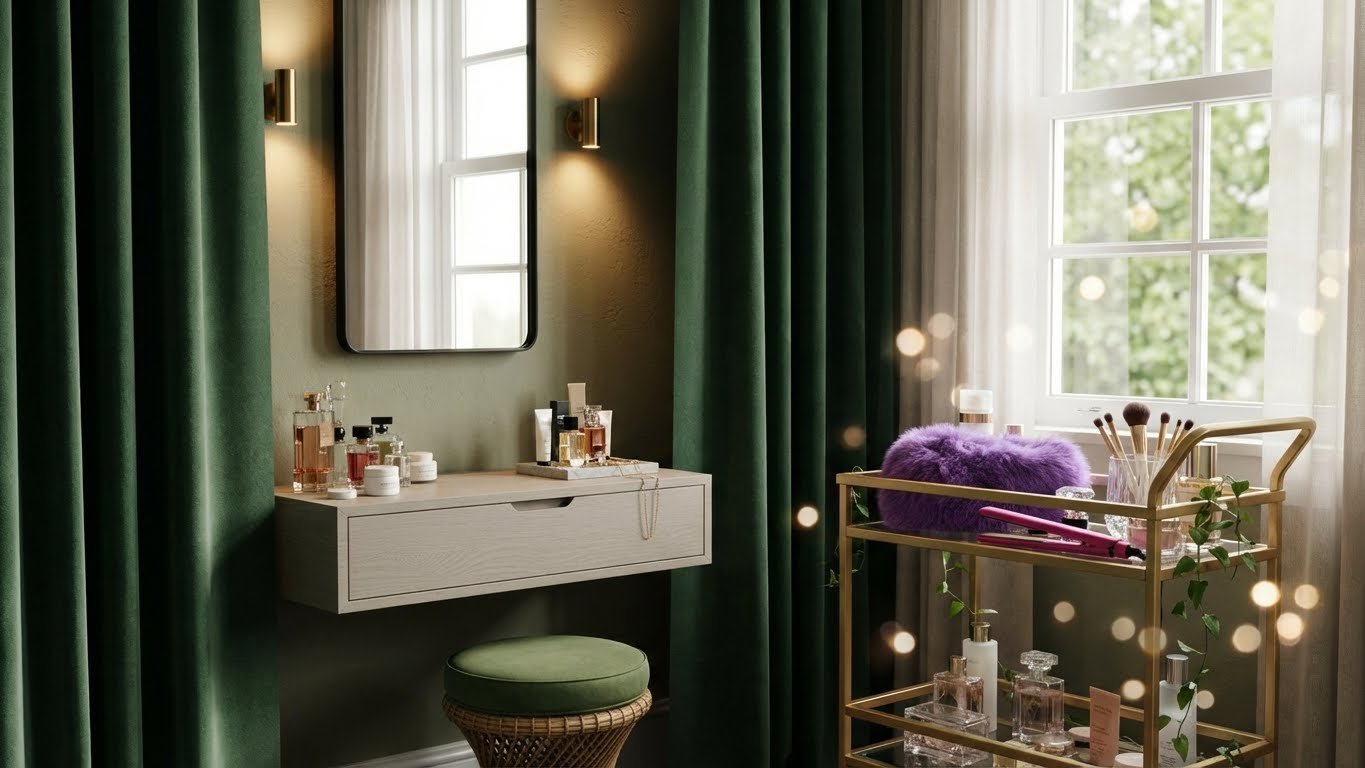
You deserve a dedicated space for self-care, even if your floor plan disagrees. A cramped room usually forces a heartbreaking trade-off: sacrificing a makeup station for a practical dresser or desk. We challenge that trade-off.
This guide reveals specific, architectural layouts to carve out a beauty station in the tightest corners. You will learn how to transform “dead space” into a daily luxury without making your bedroom feel claustrophobic. From floating architecture to hidden compartments, these solutions prove that square footage is just a number.
Key Takeaways
- Go Vertical, Not Horizontal: When floor space is premium, wall-mounted floating units and high shelving provide storage without the footprint.
- Light is Non-Negotiable: A small nook feels like a closet without proper illumination. Sconces and mirrors are structural necessities, not just decor.
- The “Double Duty” Rule: In a small bedroom, every piece of furniture must serve two purposes. Your nightstand, desk, or bookshelf must moonlight as your vanity.
Table of Contents
- The Corner Floating Shelf
- Nightstand Double Duty
- The Dresser Top Transformation
- Behind-the-Door Surprise
- Window Sill Wonder
- The Tiny Desk Hack
- Floating Nightstand Vanity Vibes
- The Rolling Cart Solution
- Closet Alcove Chic
- The Bench-Dresser Combo
- Skinny Console Table
- The Fold-Down Wall Desk
- Vintage Sewing Table Revival
- Popular Asked Questions
- Conclusion
The Corner Floating Shelf
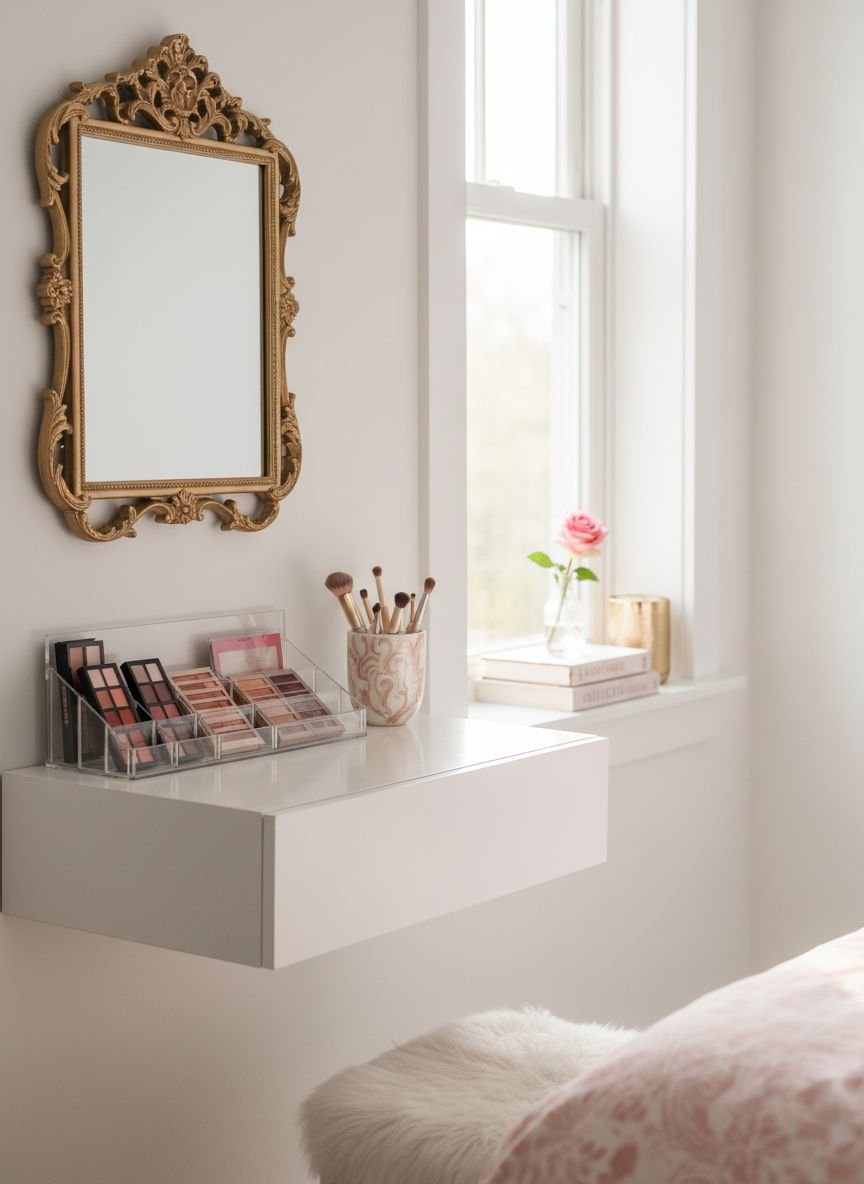
Corners are the most underutilized assets in interior design. By installing a triangular or L-shaped floating shelf, you claim space that usually gathers dust bunnies. This setup keeps the floor entirely visible, which tricks the eye into thinking the room is larger than it is. Opt for a shelf depth of at least 12 inches to accommodate a small mirror and essential brushes.
The visual weight is minimal here. Use a frameless round mirror mounted directly into the corner to soften the sharp angles of the walls. For lighting, avoid bulky table lamps; install a pendant light that hangs directly over the corner or use battery-operated under-shelf LEDs. This creates a “glow” effect that defines the zone without physical clutter.
Pro Tip: Use a clear acrylic ghost chair or a stool that tucks completely under the shelf to maintain the open-floor illusion.
Nightstand Double Duty
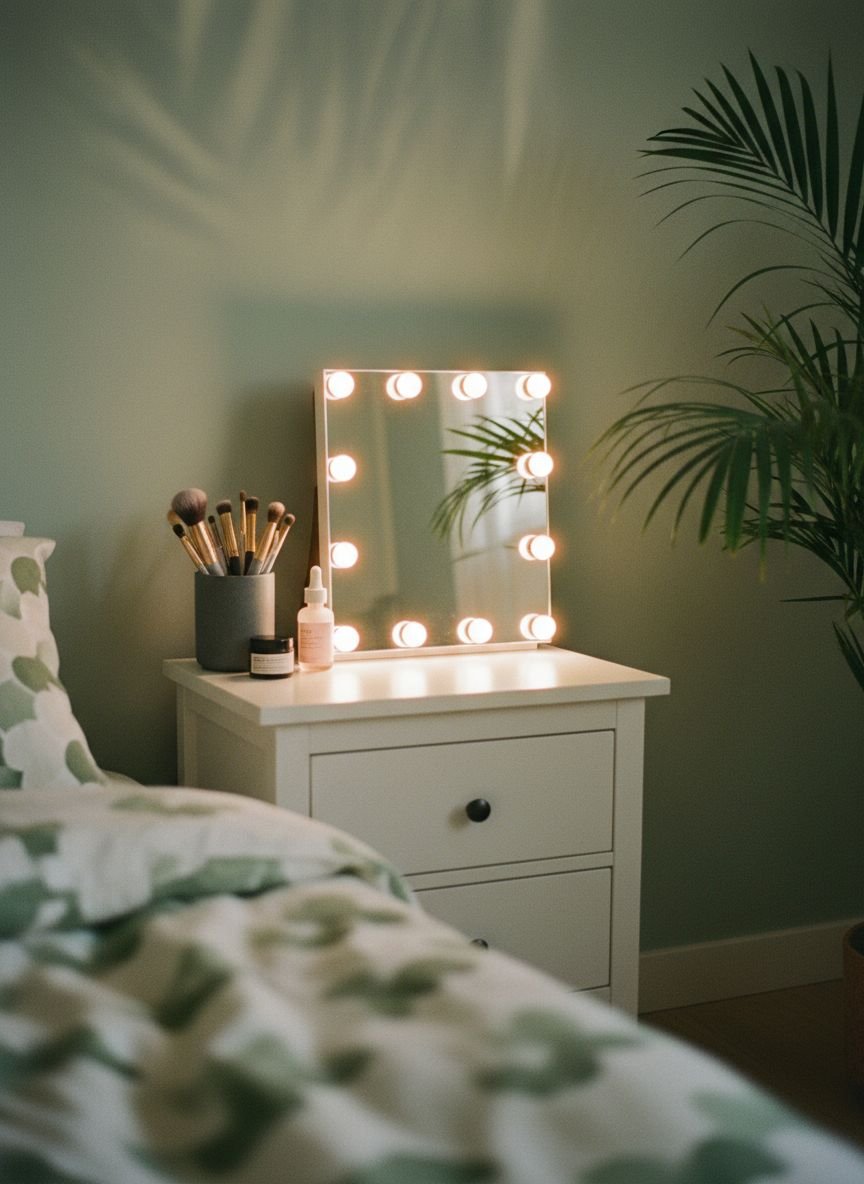
If your bed is flanked by chests of drawers, you already have the foundation for a vanity. The key is organizing the top surface to handle both a glass of water at night and a foundation bottle in the morning. This requires strict discipline with surface clutter.
Swap a traditional table lamp for a wall-mounted sconce to free up surface area. Place a decorative tray on the nightstand to corral your “daily reach” items like serums and jewelry. The visual separation provided by the tray signals that this is a deliberate station, not just a messy table.
Save this idea to your Pinterest.
The Dresser Top Transformation
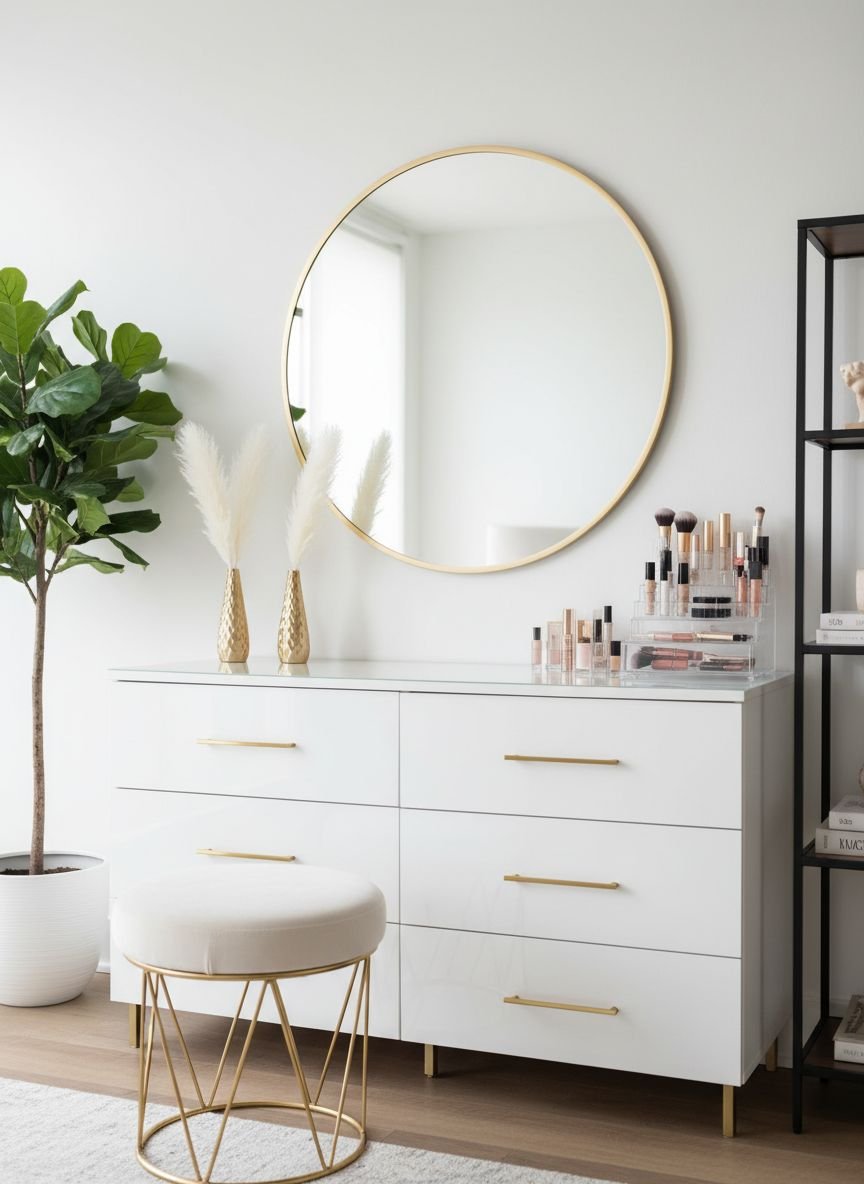
Your existing dresser can become a high-end vanity with one strategic addition: a large, leaning mirror. This approach works best with long, low dressers (often called “lowboys”). Center a statement mirror on the top surface, or mount it on the wall to save an extra few inches of depth.
Texture plays a huge role here. To prevent the dresser from looking like a storage unit, add a runner of velvet or linen under your makeup organizer. This softens the wood or laminate surface and defines the “beauty zone.” Keep your makeup in opaque drawers or beautiful canisters; visible clutter on a dresser top makes a small room feel chaotic.
Behind-the-Door Surprise
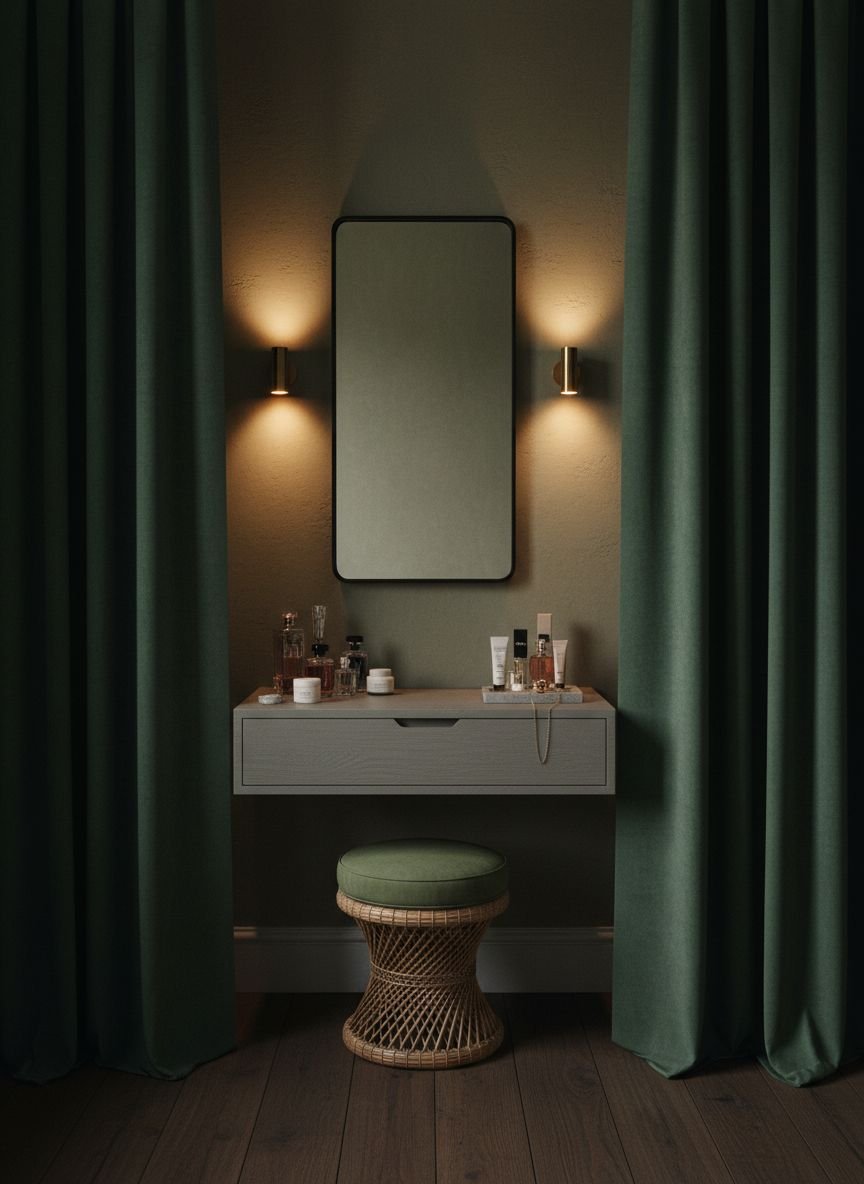
The space behind a bedroom door is often ignored because it feels transient. However, if you have at least 14 inches of clearance when the door is open, you have a vanity nook. A narrow console table or a floating shelf mounted at standing height works perfectly here.
Since a chair might block the door, design this as a “standing vanity” for quick touch-ups, or use a folding stool that hangs on a wall hook when not in use. A tall, skinny mirror maximizes the verticality of this narrow strip. This is the ultimate “hidden gem” layout for tiny apartments.
Pro Tip: Install a door stopper on the floor to prevent the door handle from smashing into your new vanity setup.
Window Sill Wonder
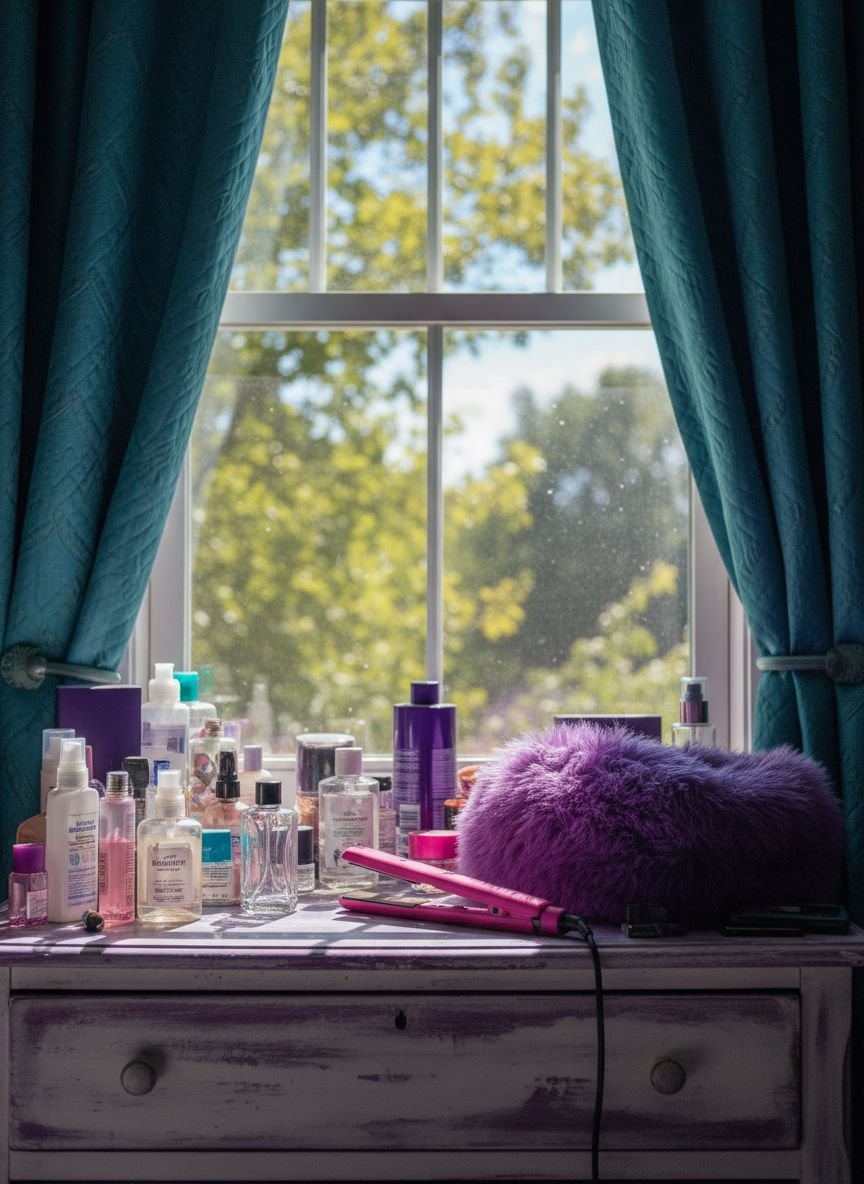
Natural light is the holy grail of makeup application. If you are lucky enough to have a deep window sill, you can extend it with a shelf bracket to create a usable surface. This seamlessly blends the architecture of the window with your furniture.
The light coming from the front is flattering and eliminates shadows. Keep the styling minimal—perhaps just a small magnifying mirror and a ceramic cup for brushes. Heavy curtains will interfere with this setup, so opt for roman shades or blinds that pull up completely to let the light flood your workspace.
Comparison: Vanity Bases for Small Spaces
| Vanity Type | Pros | Cons | Best For |
|---|---|---|---|
| Floating Shelf | Zero floor footprint, airy look. | Requires drilling; weight limits. | Tiny corners & rentals (if allowed). |
| Console Table | No installation; slender profile. | Limited drawer storage. | Narrow walkways or behind doors. |
| Rolling Cart | Mobile; high storage capacity. | No seating space; utilitarian look. | Studios & multi-use rooms. |
The Tiny Desk Hack
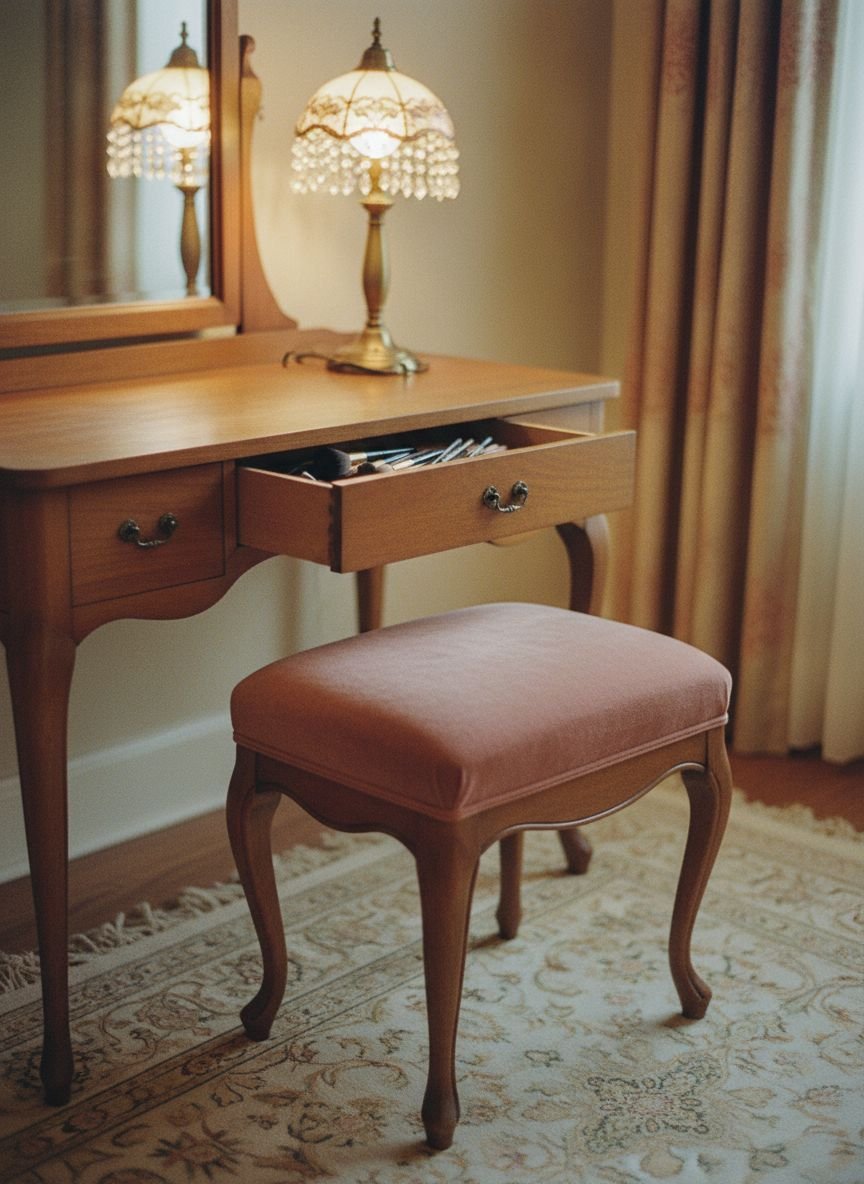
Many “student” desks are designed to be compact, often measuring just 30 to 36 inches wide. These are perfect candidates for a vanity conversion. Look for a desk with a single, shallow drawer to hide palettes and tools.
To elevate the look from “dorm room” to “chic boudoir,” replace the standard hardware knobs with brushed brass or crystal pulls. Pair the desk with a plush, velvet ottoman instead of a stiff office chair. The softness of the fabric contrasts with the rigid lines of the desk, adding a layer of comfort essential for a self-care space.
Floating Nightstand Vanity Vibes
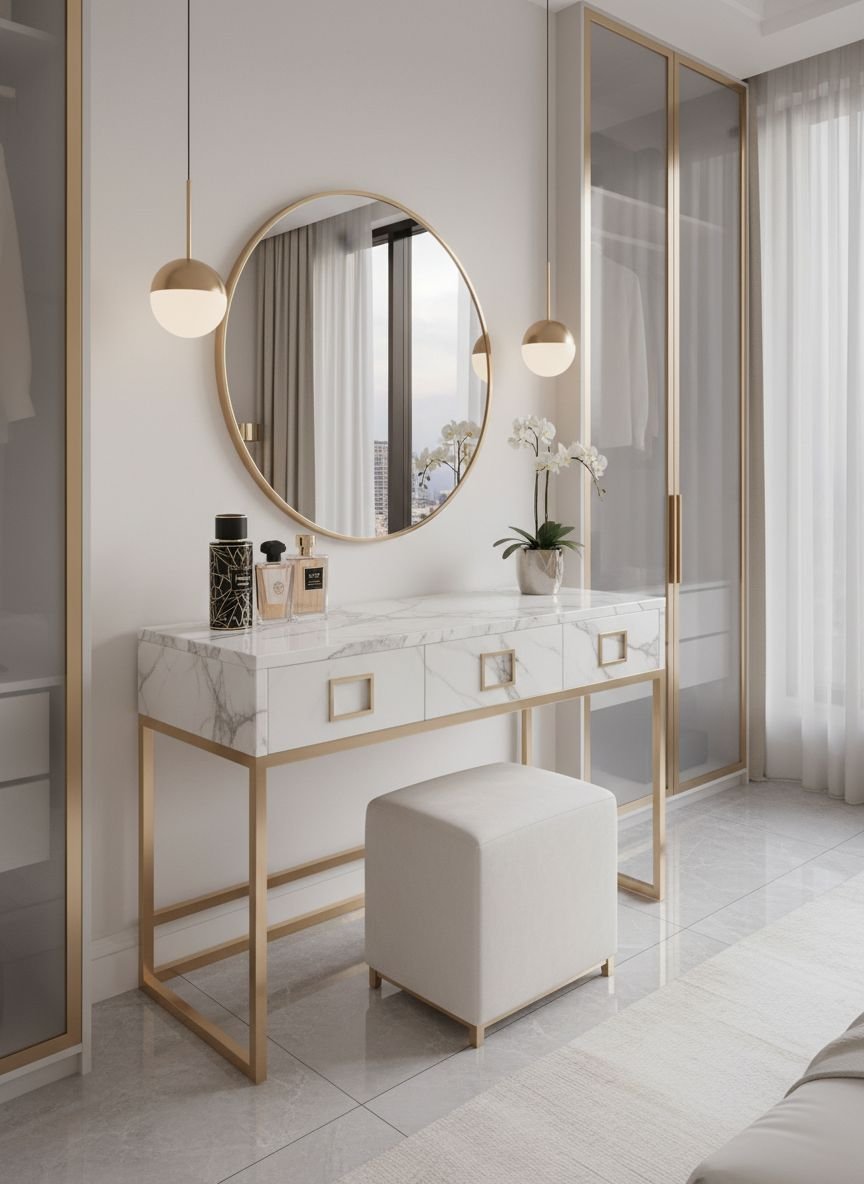
This differs from the corner shelf by utilizing a box-style floating drawer unit. It gives you the “hidden storage” benefit of a nightstand with the “floating” benefit of a shelf. Mounting this next to your bed creates a seamless line that draws the eye across the room.
Style the top with a lean-to mirror and a small vase of dried florals. The drawer is your powerhouse here—use drawer dividers to separate lipsticks from eye pencils. Because it floats, you can store a small pouf underneath, pulling it out only when you need to sit.
Save this idea to your Pinterest.
The Rolling Cart Solution
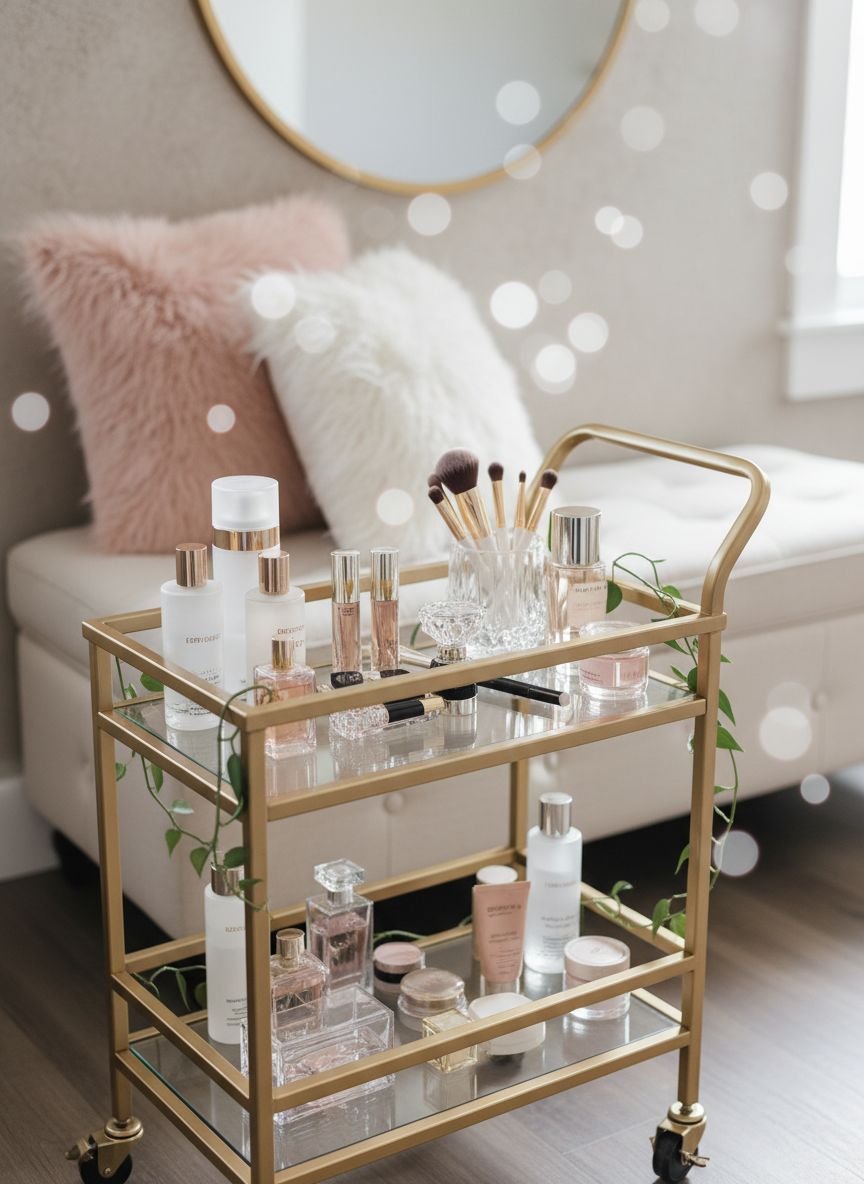
Sometimes, you simply have zero wall space. Enter the three-tier rolling cart. While it doesn’t offer a tabletop for spreading out, it holds an immense amount of product in a vertical footprint of less than 18 inches.
Organize the top tier with your daily essentials and a handheld mirror. The middle tier holds palettes, and the bottom handles hair tools and sprays. The beauty of the cart is mobility; you can roll it to the window for natural light or tuck it into a closet when guests arrive. Choose a cart in a matte gold or white finish to keep it looking intentional, not industrial.
Closet Alcove Chic
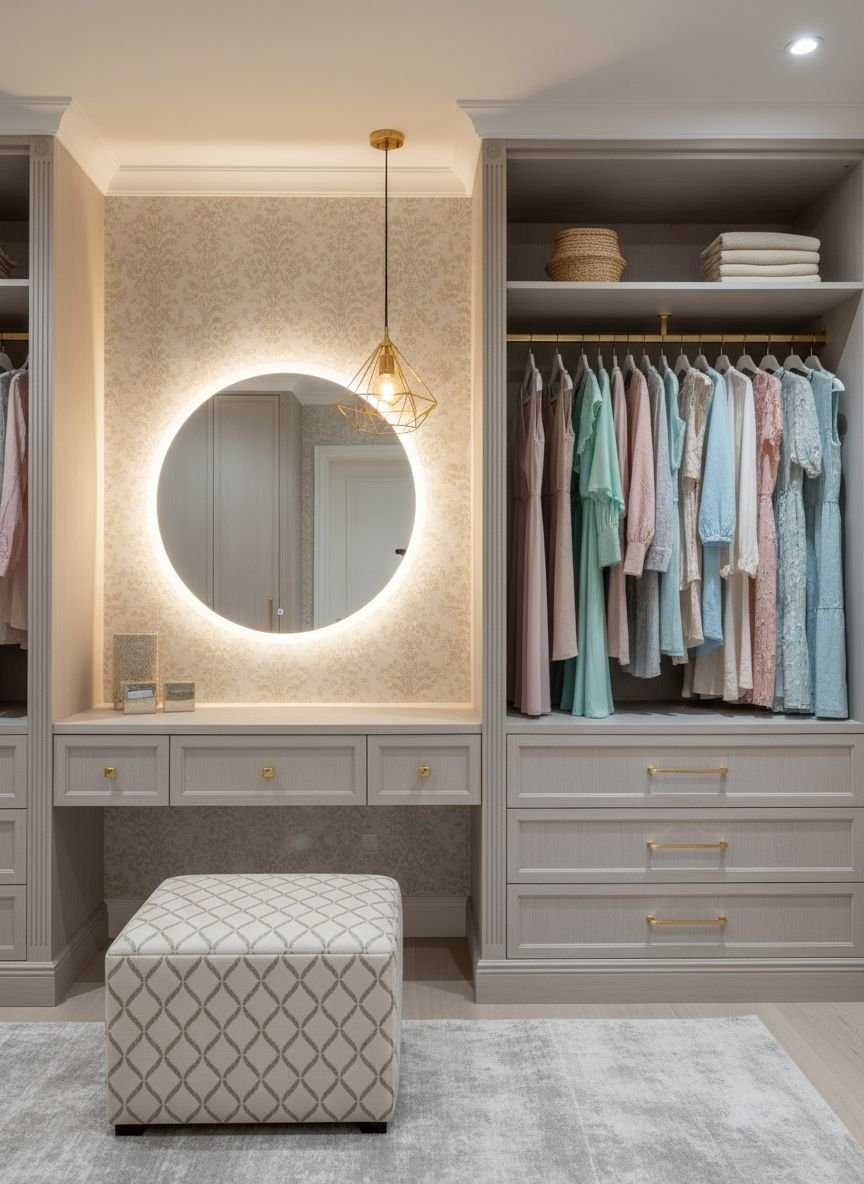
If you have a reach-in closet, consider sacrificing a section of hanging space for a built-in vanity. Remove the lower clothing rod and install a shelf at table height (approx. 30 inches).
This creates a “cloffice” (closet office) vibe but for beauty. You can wallpaper the back wall of the closet behind the vanity to create a stunning focal point that is revealed only when the closet doors are open. Install puck lights under the shelf above to ensure you aren’t doing your makeup in the dark.
The Bench-Dresser Combo
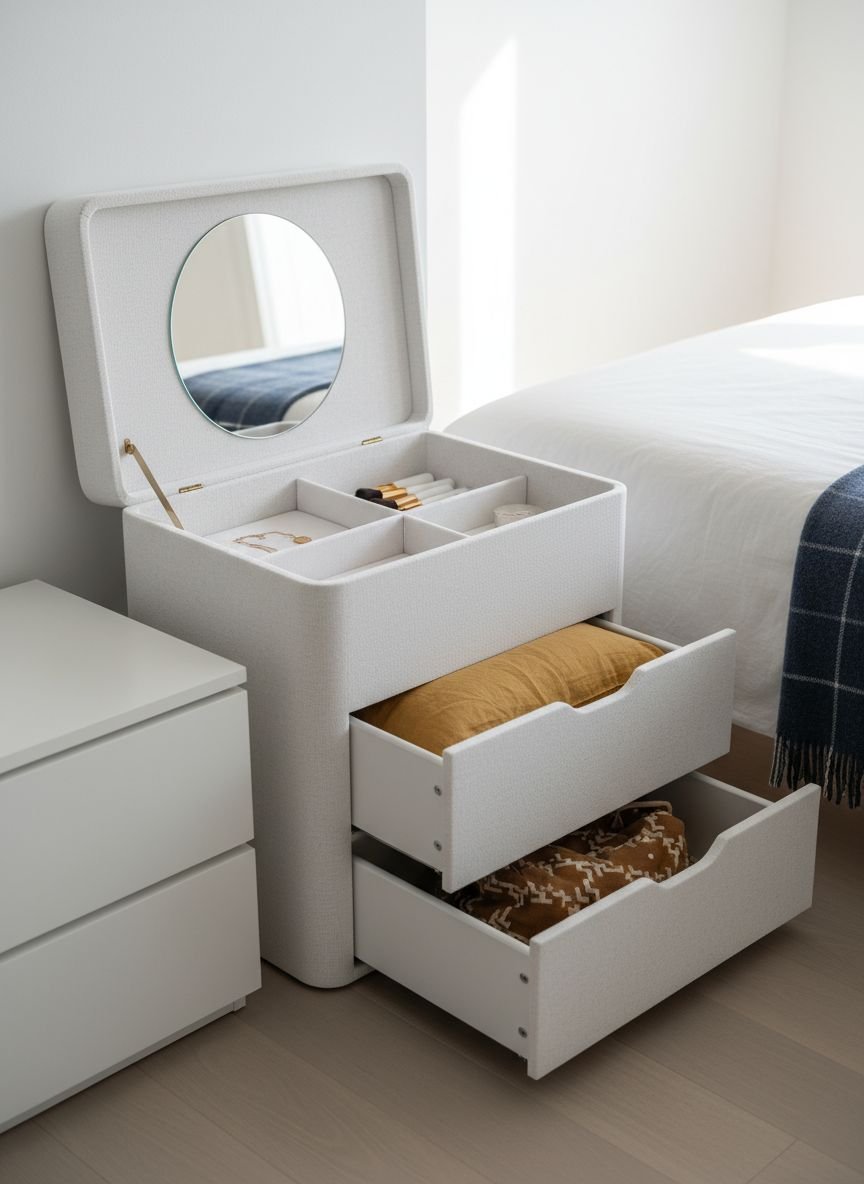
Low-profile storage benches can serve as a hybrid vanity surface. This works exceptionally well at the foot of the bed. Use a low bench with drawers for storage, and sit on a cushion on the floor (Japanese style) or use a very low stool.
This is a more bohemian, relaxed approach. It keeps the sightlines of the room completely open, making the ceiling feel higher. A large mirror leaning against the wall behind the bench anchors the space.
Get The Look: Lighting Essentials
Lighting makes or breaks a small vanity. Dark corners create bad makeup results.
- The Bulb: Look for LED bulbs with a CRI (Color Rendering Index) of 90+. This ensures colors look true to life.
- The Temperature: Aim for 4000K to 5000K. This mimics natural daylight. 2700K is too yellow and will make you over-apply bronzer.
- The Fixture: Wall sconces mounted at eye level are superior to overhead lights, which cast shadows under your eyes.
Skinny Console Table
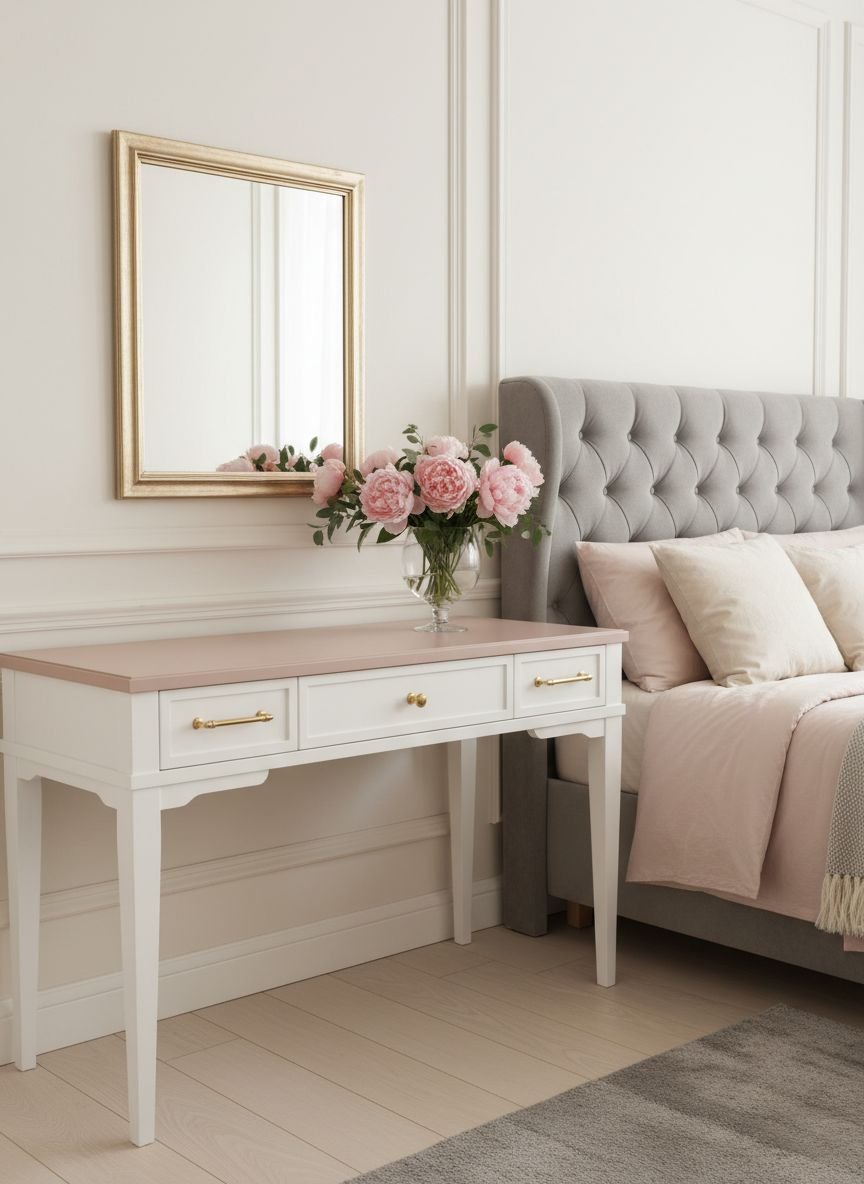
Console tables are typically designed for hallways, meaning they are long but very shallow (often 12-14 inches deep). This shallow depth is ideal for the foot of the bed or a narrow walkway in a small bedroom.
Because the surface is narrow, you cannot clutter it. Use wall-mounted storage organizers for your makeup brushes and tools to keep the table surface clear. A rectangular mirror hung horizontally above the console widens the visual feel of the wall.
The Fold-Down Wall Desk
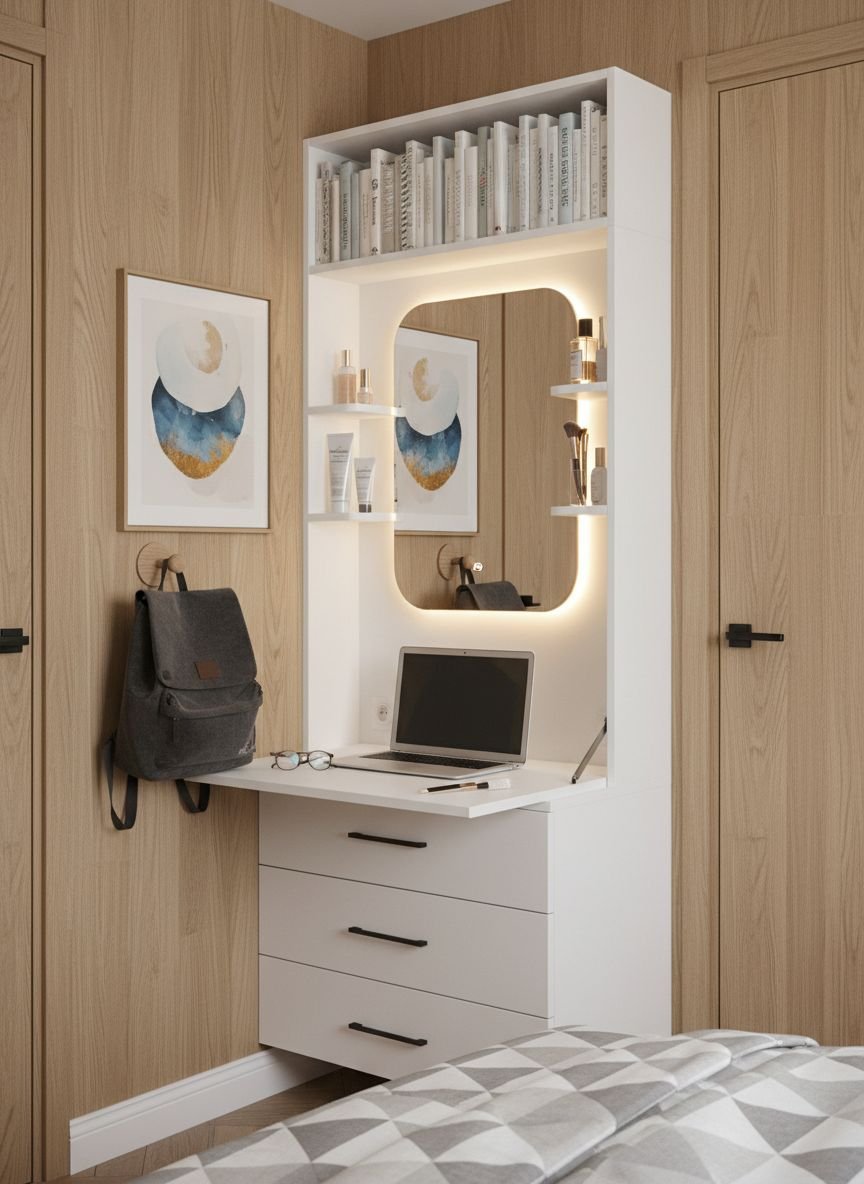
The Murphy bed has a little sister: the Murphy desk. These units mount to the wall and fold down only when needed. When closed, they look like a shallow cabinet or a piece of art.
Inside the cabinet, you can install small shelves for nail polish and perfumes. When you fold down the door, it becomes your tabletop. This is the ultimate zero-clutter solution because you literally cannot leave a mess on the table—you have to tidy up to close it.
Pro Tip: Line the back of the cabinet with peel-and-stick mirror tiles to make the interior feel spacious.
Vintage Sewing Table Revival

Vintage sewing tables were engineered for compact efficiency. Many feature a top that flips open to double the surface area, revealing compartments underneath that once held thread but now fit lipsticks perfectly.
Scour thrift stores for these gems. They usually have a small footprint and add a rich, historic character to a modern room. The wood grain brings warmth, and the mechanical functionality is a conversation starter.
Save this idea to your Pinterest.
Popular Asked Questions
How do you fit a vanity in a small room?
You fit a vanity in a small room by utilizing “dead zones.” The most common spots are the corner of the room (using a triangular shelf), the space inside a closet (removing one clothing rod), or the narrow gap between the bed and the wall (replacing a nightstand). Wall-mounted floating vanities are the best option because seeing the floor underneath makes the room look bigger.
What is the smallest depth for a makeup vanity?
The absolute minimum depth for a functional vanity is 12 inches (30 cm). This is enough space to rest a palette and a mirror stand. However, a depth of 14 to 16 inches is much more comfortable for your elbows. If you go shallower than 12 inches, you will struggle to keep items from falling off.
What is the best lighting for a small bedroom vanity?
The best lighting comes from two wall sconces placed on either side of your mirror at eye level. This prevents shadows from forming under your eyes (which happens with ceiling lights). Use LED bulbs labeled “Daylight” (4000K-5000K) so you can see the true color of your makeup.
Where should a vanity be placed in a bedroom?
Ideally, place your vanity perpendicular to a window or directly facing it. This gives you natural light on your face. Avoid placing the vanity with the window behind your back, as this will make your face a silhouette in the mirror. If you have no window access, the corner furthest from the door is usually the best spot to avoid blocking traffic flow.
Conclusion
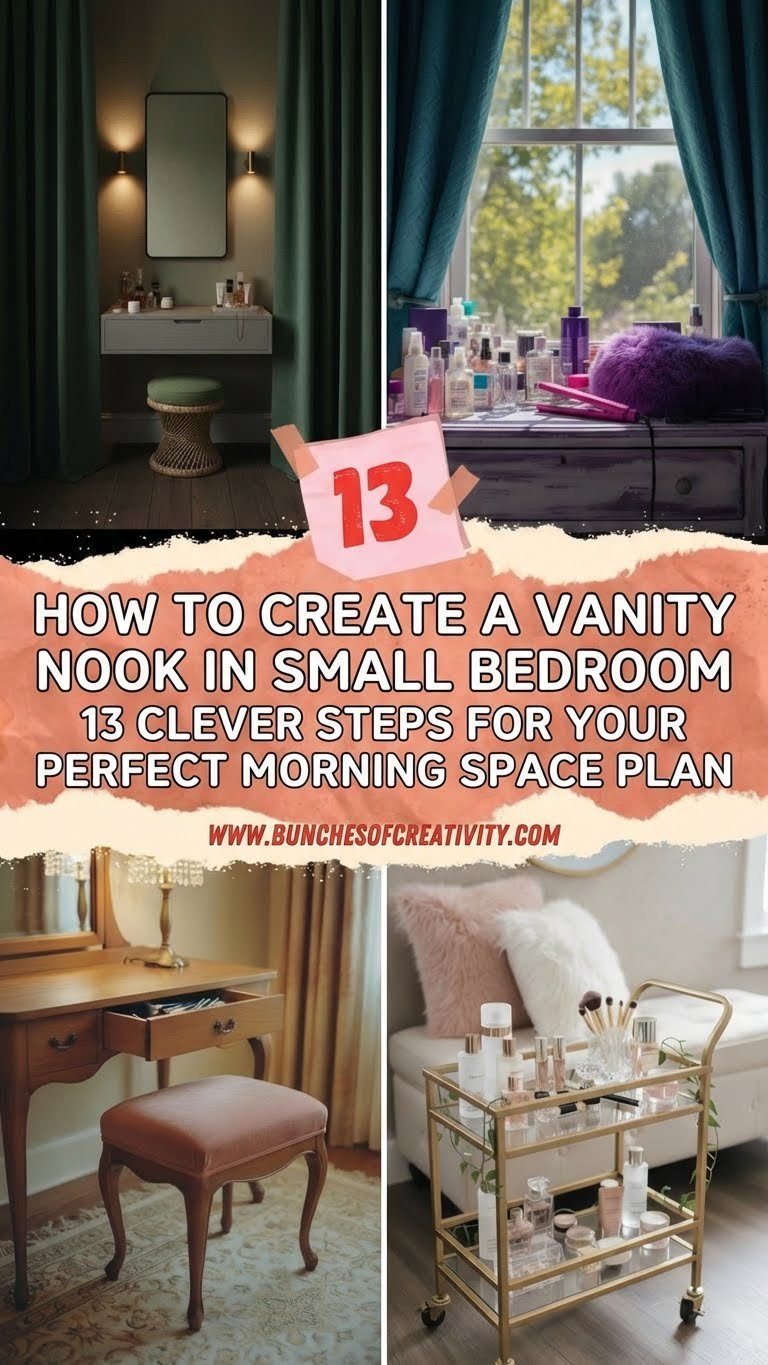
Creating a vanity nook in a small bedroom is about seeing potential in the gaps. Whether you choose a floating corner shelf, a repurposed nightstand, or a hidden closet alcove, the result is the same: a personal sanctuary. You do not need a walk-in dressing room to experience the luxury of a dedicated beauty routine.





Leave a Comment