
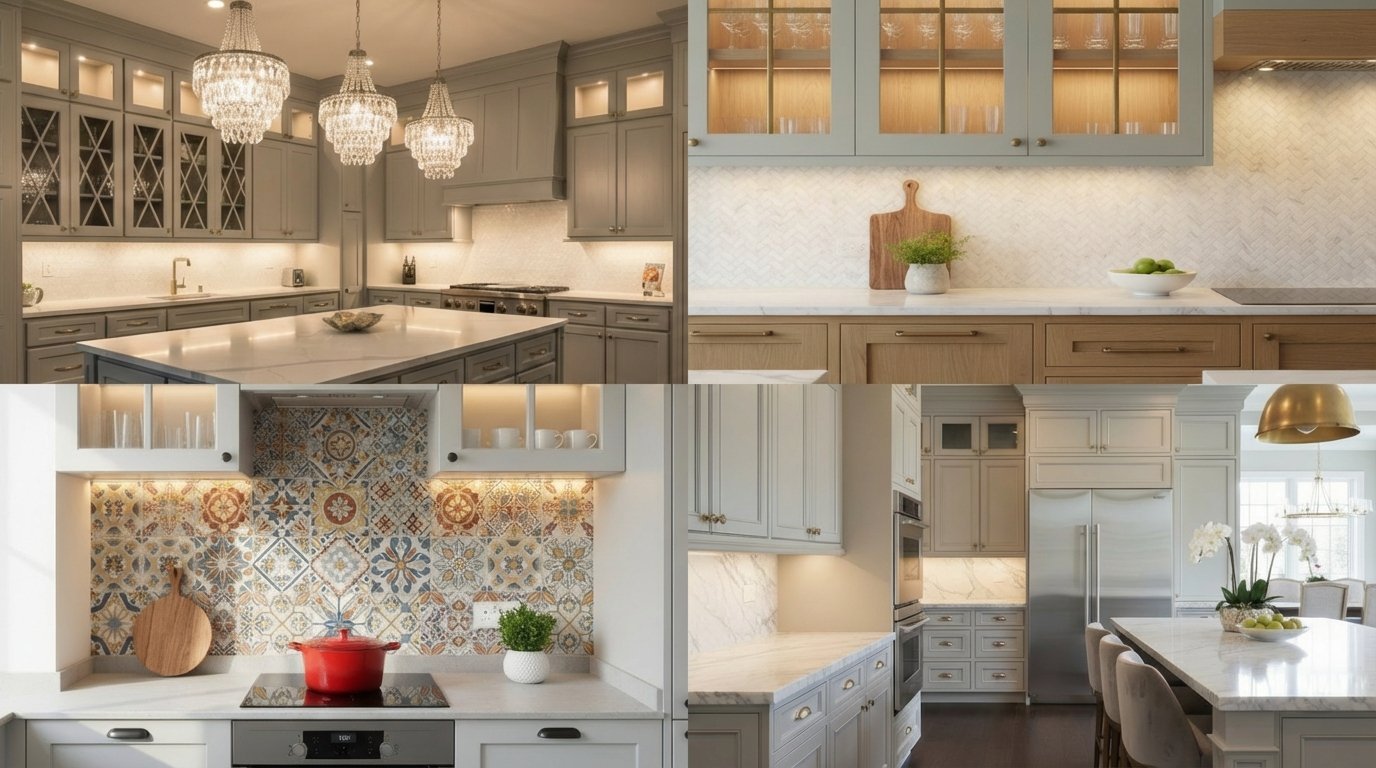
Light grey tones define modern kitchen sophistication. You likely feel your current cooking space lacks brightness or feels outdated with yellowing woods or dark, heavy colors. You want a refresh that feels spacious, clean, and timeless without the clinical coldness of a pure white laboratory look. Grey offers the perfect middle ground. It reflects light to expand small rooms while hiding daily wear better than white surfaces.
This guide details 16 specific design strategies to master this aesthetic. We move beyond simple paint swatches. You will learn how to layer textures, select hardware, and manipulate lighting to create a kitchen that looks professionally designed. These ideas work for sprawling open-plan homes and compact city apartments alike. By the end, you will have a clear blueprint to create a kitchen that commands attention and soothes the mind.
Key Takeaways
- Grey is a Canvas: Light grey cabinets allow you to change accent colors seasonally without clashing.
- Texture Matters: Mixing matte grey finishes with natural wood or metallic elements prevents the room from looking flat.
- Lighting is Critical: The temperature of your bulbs changes how “warm” or “cool” the grey paint appears.
- Contrast Creates Depth: Using darker floors or countertops anchors the light grey cabinetry.
Table of Contents
- Dare to Use Two-Tone Combinations
- Play with Patterned Backsplashes
- Combine Urban Elements
- Blend Various Textures for an Energetic Design
- Craft Contrast with Ebony Elements
- Introduce Nature-Inspired Accents
- Embrace a Simple Design with Streamlined Forms
- Infuse Individuality Through Decoration
- Incorporate a Time-Honored Elegance with Vintage Fittings
- Emphasize with Striking Light Fixtures
- Establish a Balanced Foundation
- Select See-Through Cabinet Fronts
- Create Impact with Divergent Countertops
- Experiment with Expansive and Open Concepts
- Maximize Space with Efficient Islands
- Elevate with Golden Fittings
- Popular Asked Questions
- Conclusion
Dare to Use Two-Tone Combinations
Visual weight plays a massive role in how spacious a kitchen feels. Painting upper cabinets the same color as the lower ones sometimes creates a boxy, closed-in sensation in smaller footprints. A two-tone approach solves this. Use a grounded, light grey for your base cabinets and a crisp white or cream for the upper shelving. This draws the eye upward and mimics the airy feeling of high ceilings. The grey anchors the room, hiding scuffs from foot traffic, while the lighter uppers blend into the ceiling.
You can also reverse this for a bolder look, though keeping the darker shade low usually works best for spatial perception. The transition between the two colors happens at the countertop level. Your backsplash becomes the bridge. A marble backsplash with grey veining connects the white uppers to the grey lowers seamlessly. This technique adds architectural interest to standard builder-grade cabinetry without requiring structural changes.
Pro Tip: Use a satin finish for the lower grey cabinets to resist fingerprints and a semi-gloss for the white uppers to reflect more light.
Play with Patterned Backsplashes
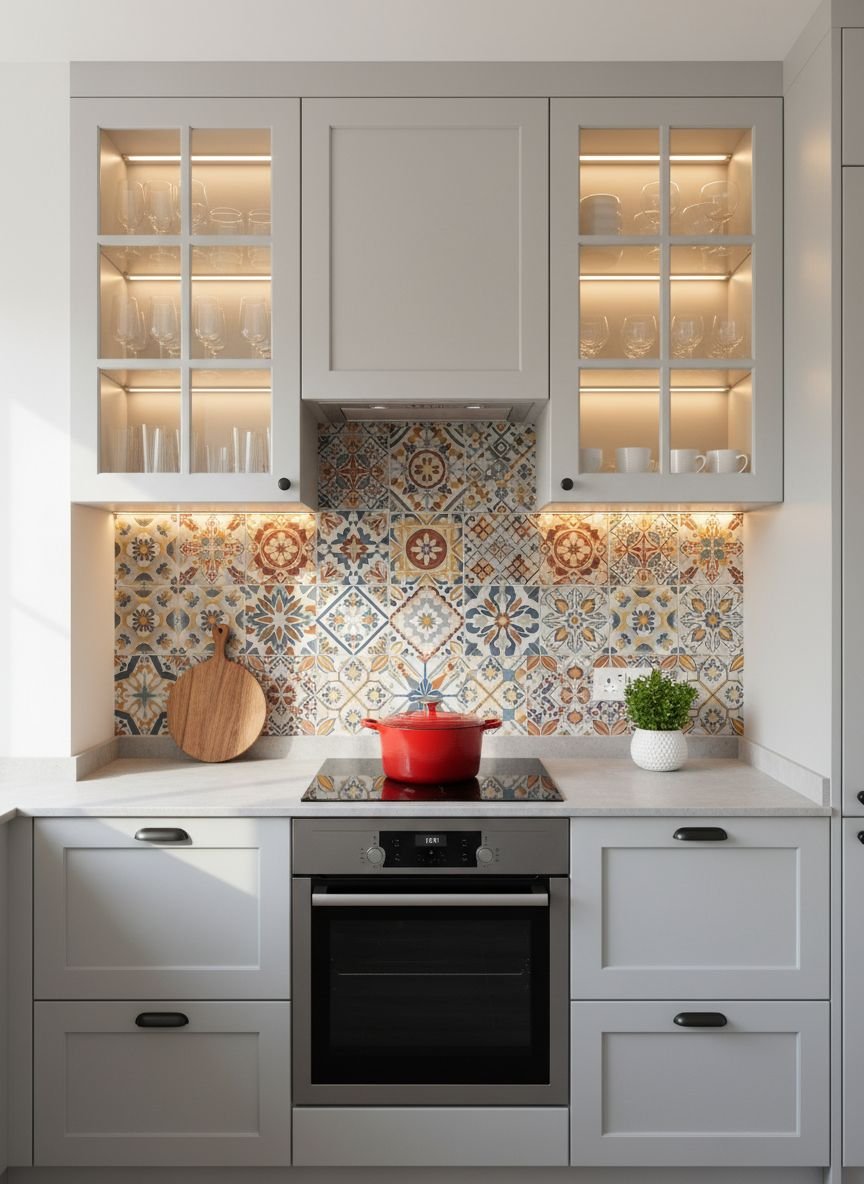
Light grey cabinetry provides a quiet backdrop that begs for a focal point. A patterned backsplash stops the room from looking monotonous. Geometric tiles in white and grey offer a subtle rhythm that guides the eye across the room. Encaustic cement tiles with intricate motifs bring a touch of old-world charm or bohemian flair, depending on the print. The key is color coordination. The grey in the tile should belong to the same tonal family as your cabinets to maintain harmony.
Subway tiles laid in a herringbone pattern offer a modern twist on a classic without adding chaotic colors. The grout color you choose defines the intensity. White grout makes the pattern disappear for a subtle texture. Dark grey grout makes the herringbone pop, adding a graphic, industrial edge to the space. This visual complexity distracts from countertop clutter and makes the kitchen feel styled rather than just functional.
Pro Tip: If you choose a busy tile pattern, keep your countertops solid quartz or plain stone to avoid visual competition.
Save this idea to your Pinterest.
Combine Urban Elements
Industrial design relies heavily on grey tones, making it a natural fit for this color palette. Exposed brick walls painted white or left natural create a raw, textural contrast against smooth, light grey joinery. Concrete elements work exceptionally well here. Consider concrete countertops or even a concrete overlay on a kitchen island. The imperfections and matte surface of concrete play off the clean lines of modern grey cabinets.
Metal shelving units instead of closed upper cabinets enhance this urban vibe. Black metal piping supports rough-hewn wood shelves, offering open storage for white dishware. This look creates a relaxed, loft-like atmosphere. It prioritizes function and durability. The grey acts as the neutral binder that holds the brick, metal, and wood together in a cohesive visual unit.
Pro Tip: Soften the harsh industrial edges with a washable vintage runner rug in muted red or blue tones.
Blend Various Textures for an Energetic Design
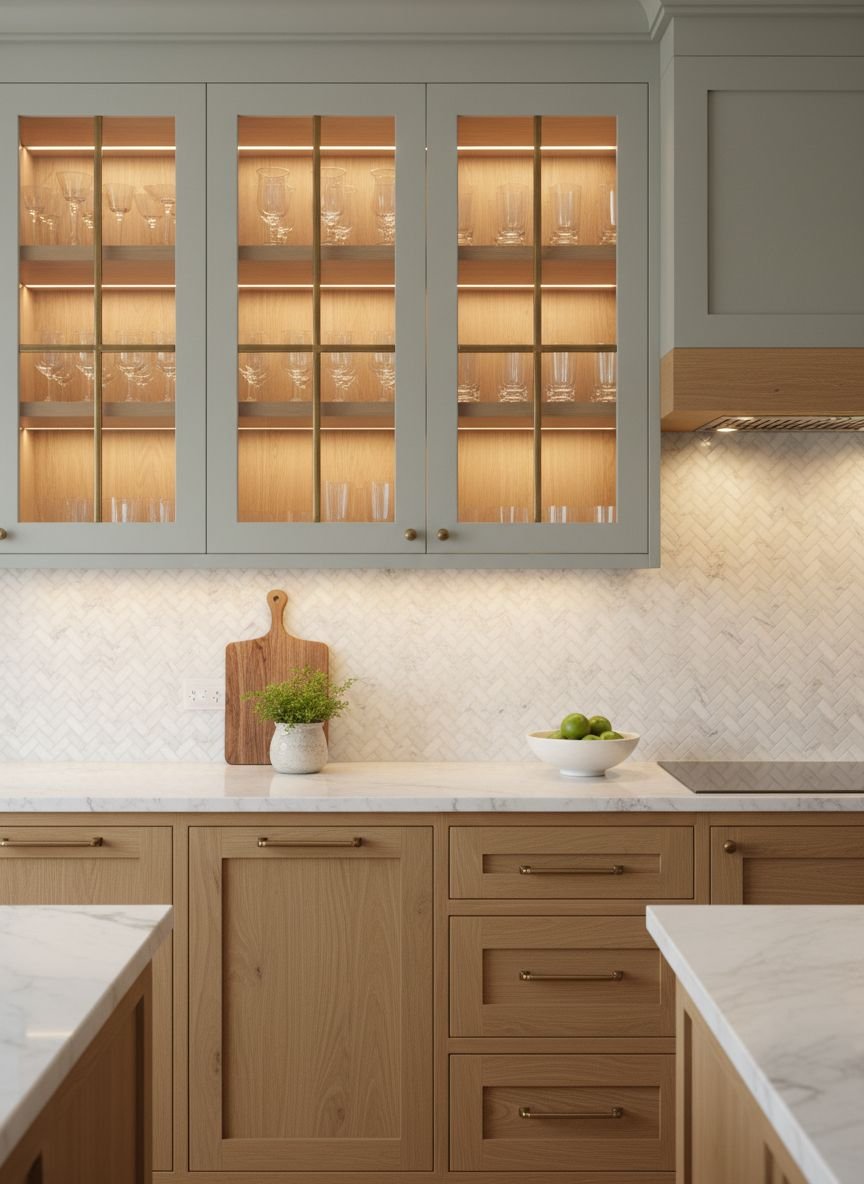
Monochrome kitchens fall flat when they lack textural variety. If your cabinets, walls, and counters all share a smooth, matte finish, the room looks one-dimensional. You must introduce variation to catch the light differently. Pair matte light grey cabinets with a glossy, rippled tile backsplash. The gloss reflects light, adding sparkle and movement.
Introduce organic textures to warm up the cool grey. A rough-sawn wood island or woven rattan bar stools break up the expanse of painted wood. Even the hardware contributes to the texture profile. Knurled brass or textured black handles invite touch and add a tactile layer to the experience of opening a drawer. These subtle differences in surface quality make the design feel rich and expensive.
Pro Tip: Use linen curtains or a bamboo roman shade on the window to add softness against the hard cabinet surfaces.
Craft Contrast with Ebony Elements
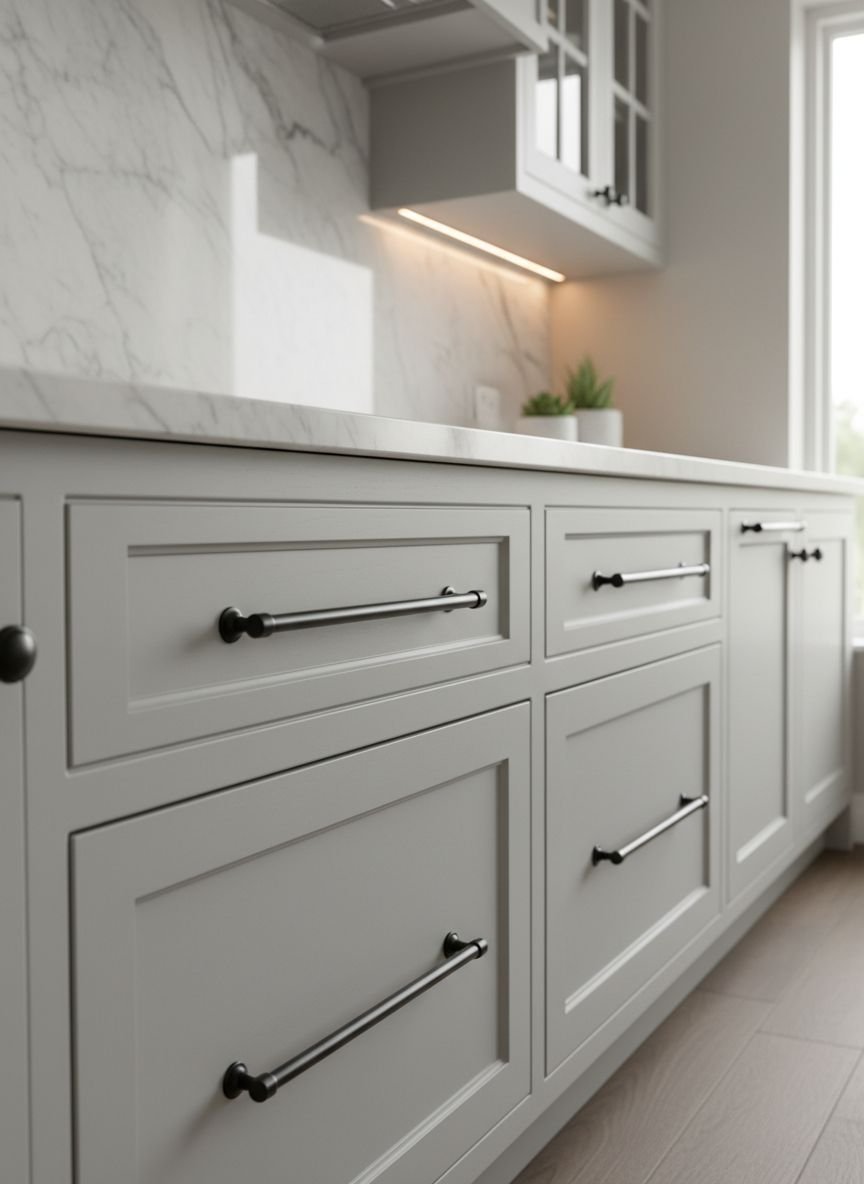
Light grey risks looking washed out if you do not provide an anchor. Black accents sharpen the room immediately. This does not mean painting walls black. Instead, focus on slim, high-contrast lines. Black window frames, black faucet fixtures, or slim black cabinet pulls create a graphic outline that defines the space. The high contrast between light grey and deep ebony feels modern and intentional.
Lighting fixtures with matte black shades hanging over an island ground the ceiling space. Even small appliances like a black kettle or toaster serve as deliberate design choices rather than clutter. This black-and-grey combination is classic. It borrows from the timeless tuxedo look but softens the white to a more livable grey.
Pro Tip: Swap out a standard white outlet cover for a matte black one if it sits on a grey island or backsplash for a custom detail.
Related posts :
- 13 Small Kitchen Layouts That Look Amazing and Instantly Double Your Storage
- 14 Stunning Wall Design Ideas That Instantly Elevate Your Home Aesthetic
- 15 Jaw-Dropping Living Room Dreams That Will Instantly Upgrade Your Home Sanctuary
Introduce Nature-Inspired Accents
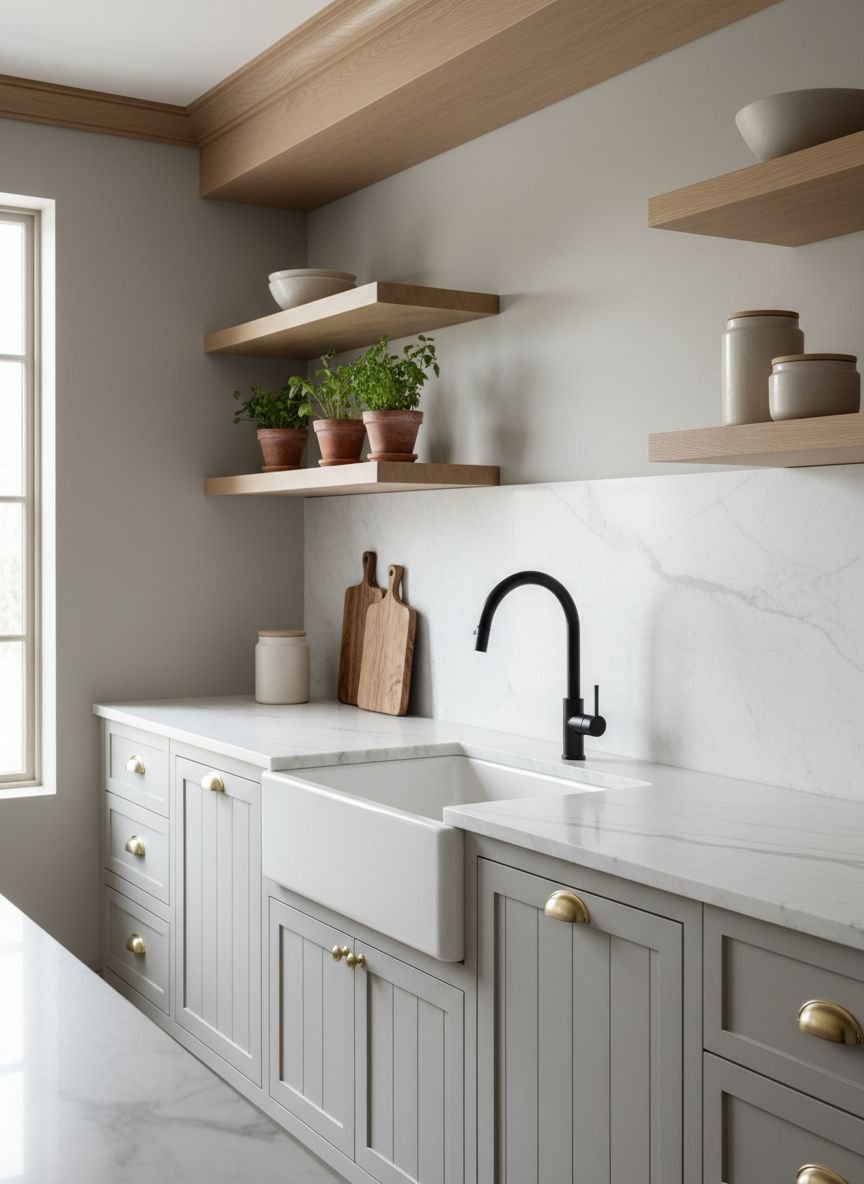
Grey is an earth tone. It pairs naturally with other elements found outdoors. Bringing greenery into a light grey kitchen breathes life into the cool palette. Potted herbs on the windowsill or a large fiddle leaf fig in the corner add a vibrant punch of green that vibrates against the grey backdrop. The organic shapes of leaves soften the rigid straight lines of cabinetry.
Wood tones are essential here. Light oak flooring or floating wood shelves warm up the grey, preventing it from feeling like a storm cloud. The yellow undertones in wood neutralize the blue undertones often found in grey paint. This balance creates a sanctuary vibe. Stone elements, such as a slate floor or a granite sink, further reinforce this connection to nature.
Pro Tip: Use terracotta pots for your plants. The rusty orange color is the perfect complementary color to blue-grey tones.
Embrace a Simple Design with Streamlined Forms
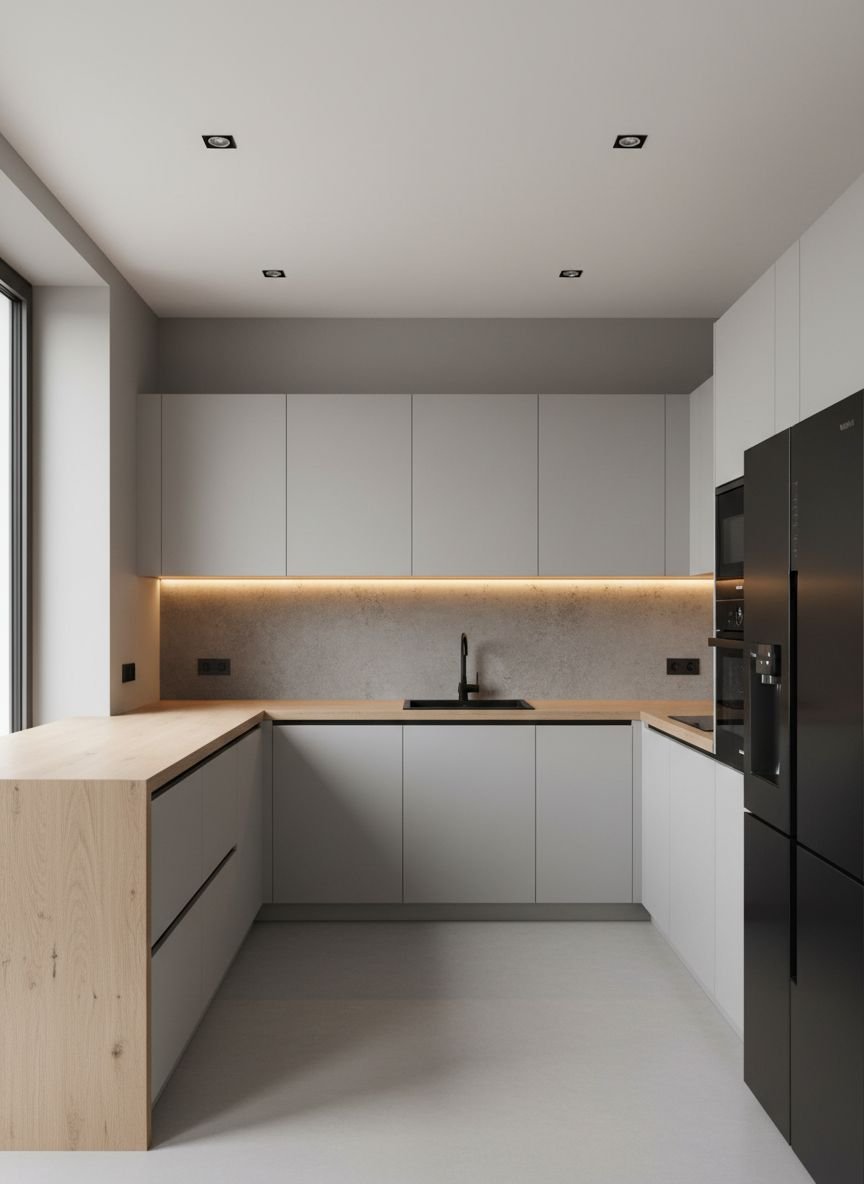
Minimalism demands zero clutter and clean lines. Light grey is the ultimate minimalist color because it recedes from vision. To achieve a streamlined look, choose slab-front cabinetry (flat doors with no recessed panels). Remove visual noise by opting for handleless push-to-open mechanisms or integrated finger pulls. This creates a wall of smooth grey that looks architectural and calm.
Keep countertops clear. Store appliances in “appliance garages” or deep drawers. The absence of hardware and clutter allows the light to wash over the grey surfaces uninterrupted. This style works particularly well in small apartments where visual clutter makes the room feel smaller. The grey unity makes the walls feel further away.
Pro Tip: Install under-cabinet LED strips to provide task lighting without adding visual bulk to the ceiling or walls.
Infuse Individuality Through Decoration
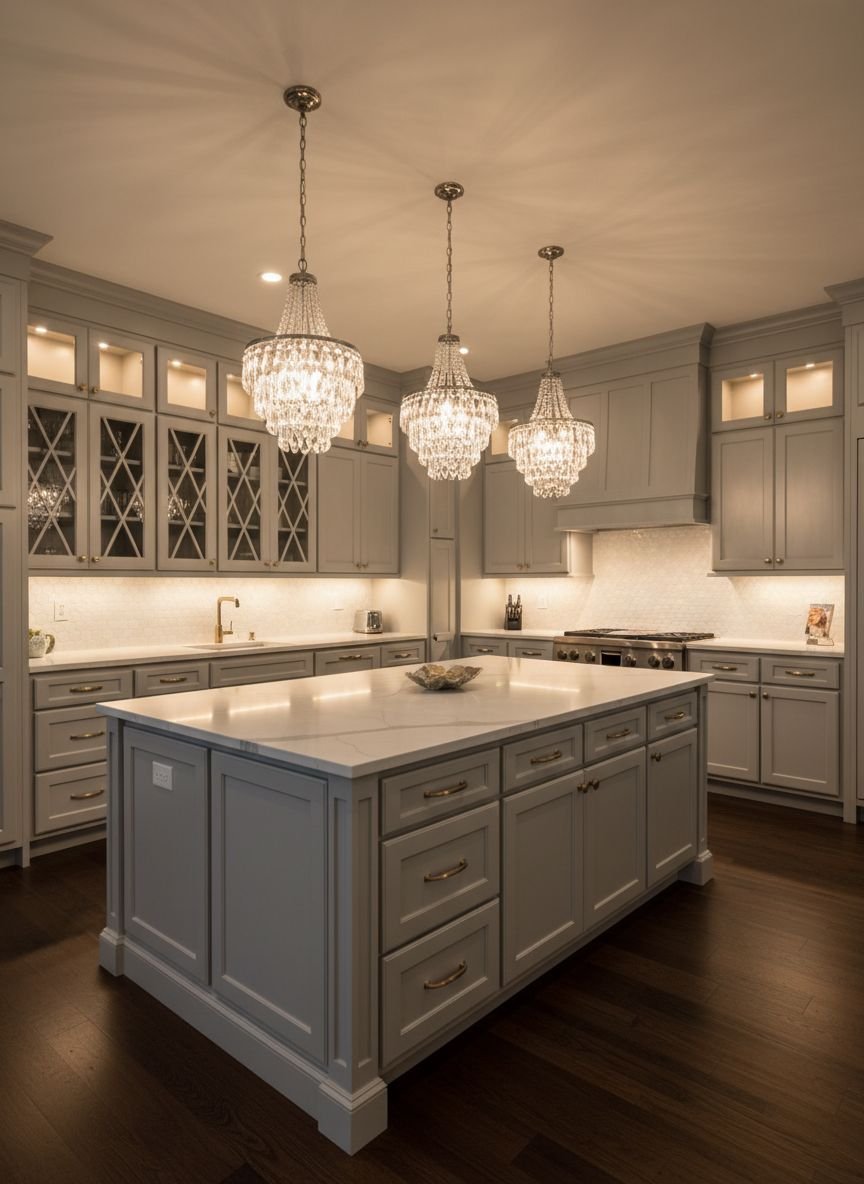
A kitchen is a workspace, but it is also a living area. Your personality should shine through the neutral grey base. Open shelving offers a gallery space for your favorite items. Display a collection of handmade ceramics, colorful vintage glassware, or cookbooks with beautiful spines. These items add pops of color that you can change whenever you want a new look.
Art belongs in the kitchen too. Lean a framed print against the backsplash or hang a small gallery wall near the breakfast nook. The light grey wall color acts as a gallery white, making the art pop. Rugs also add personality. A Persian runner or a geometric kilim rug introduces pattern and history to the floor, making the kitchen feel like a curated room rather than a sterile utility space.
Pro Tip: Group decorative items in odd numbers (threes or fives) for a more pleasing arrangement.
Save this idea to your Pinterest.
Incorporate a Time-Honored Elegance with Vintage Fittings
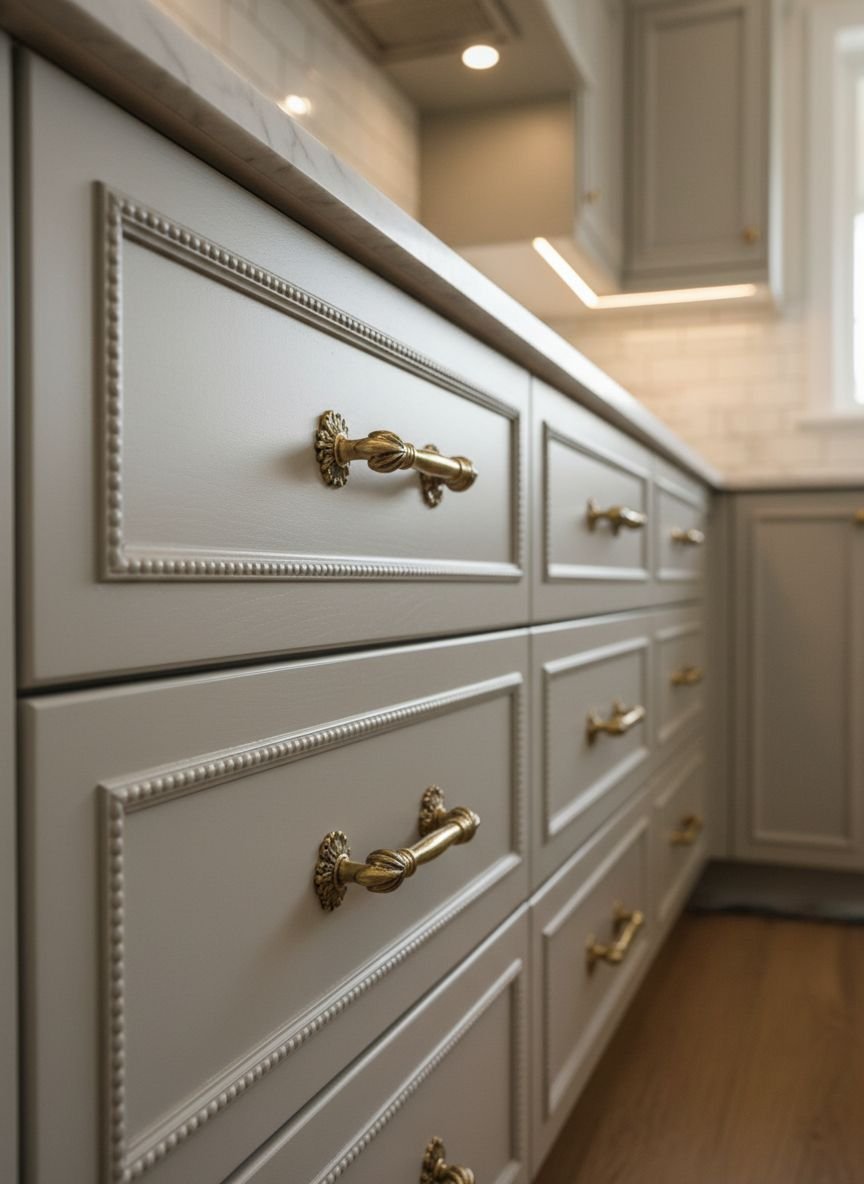
Light grey cabinetry serves as the perfect bridge between modern and traditional. To lean into the traditional side, install vintage-style fittings. A bridge faucet in polished nickel or unlacquered brass acts as jewelry for the sink. An apron-front farmhouse sink adds weight and nostalgia. These elements suggest a home with history.
Cup pulls on drawers and latch hardware on upper cabinets mimic turn-of-the-century cabinetry. Lighting choices like schoolhouse glass pendants or lantern-style fixtures reinforce this vintage narrative. The grey paint updates the look, ensuring it doesn’t feel like a museum, while the hardware provides the soul.
Pro Tip: Look for “living finishes” on brass hardware that will patina and darken over time for authentic character.
Emphasize with Striking Light Fixtures
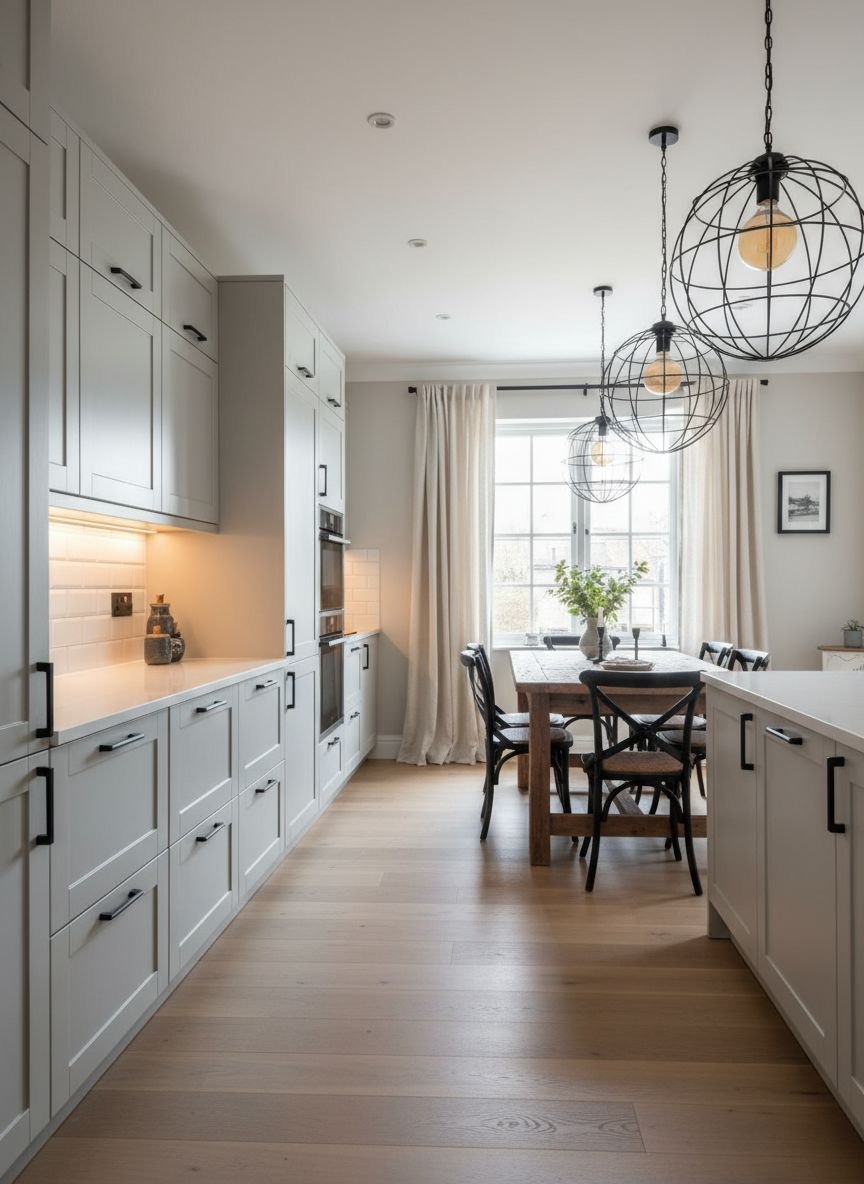
Lighting defines the mood of a grey kitchen. Since grey absorbs more light than white, you need robust lighting sources. Oversized pendant lights over the island serve two purposes: illumination and drama. Large woven basket lights add texture and scale. sleek glass globes offer a mid-century modern touch.
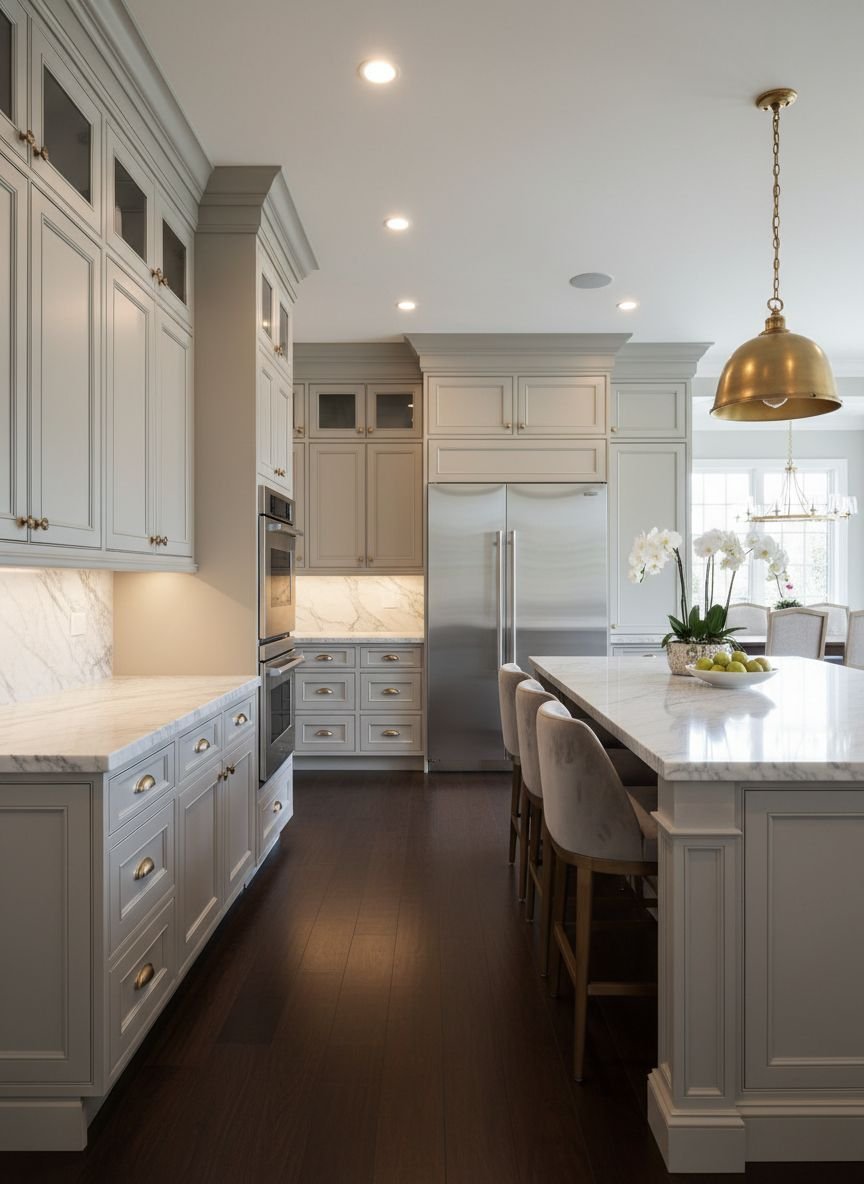
The finish of the light fixture matters. Copper or gold interiors on a pendant light cast a warm glow that makes the grey cabinets look inviting. Cool white bulbs can make grey look blue and cold, so opt for bulbs in the 2700K to 3000K range. This creates a cozy, welcoming atmosphere for evening entertaining.
Pro Tip: Install dimmer switches on all overhead lighting to transition the kitchen from a bright workspace to a moody dining area.
Establish a Balanced Foundation
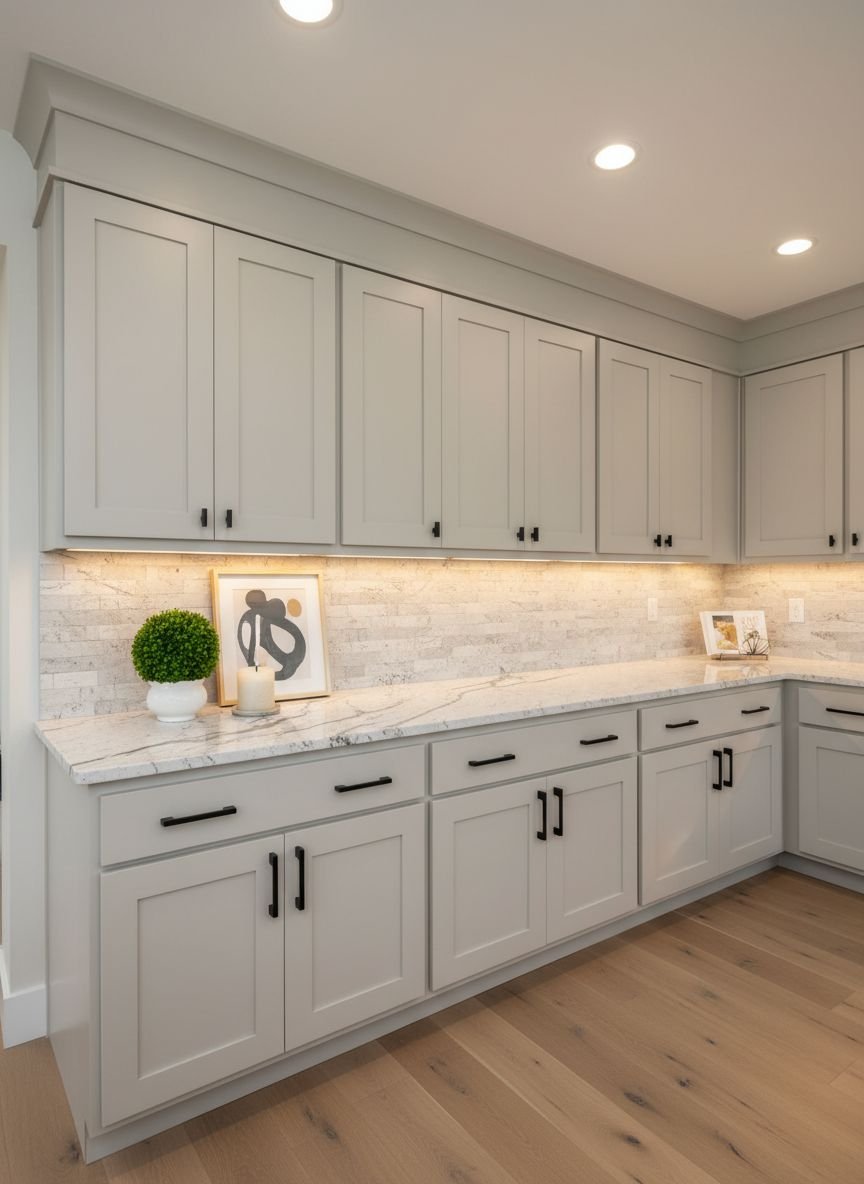
The floor is the foundation of your design palette. Light grey cabinets offer versatility here. Dark hardwood floors provide a stunning contrast, making the light grey cabinets pop. This is a classic, high-end look. Lighter, bleached wood floors create a seamless, Scandinavian “tone-on-tone” effect that feels airy and beachy.
Tile flooring offers another opportunity for design. Large format grey slate tiles create a durable, monolithic look. Patterned ceramic tiles adds a playful energy. If you choose a grey floor, ensure it is significantly lighter or darker than the cabinets. Matching the shades exactly usually results in a muddy, undefined look.
Pro Tip: If you have existing tile you dislike, cover it with a large, durable sisal or jute rug for an instant, budget-friendly update.
Select See-Through Cabinet Fronts
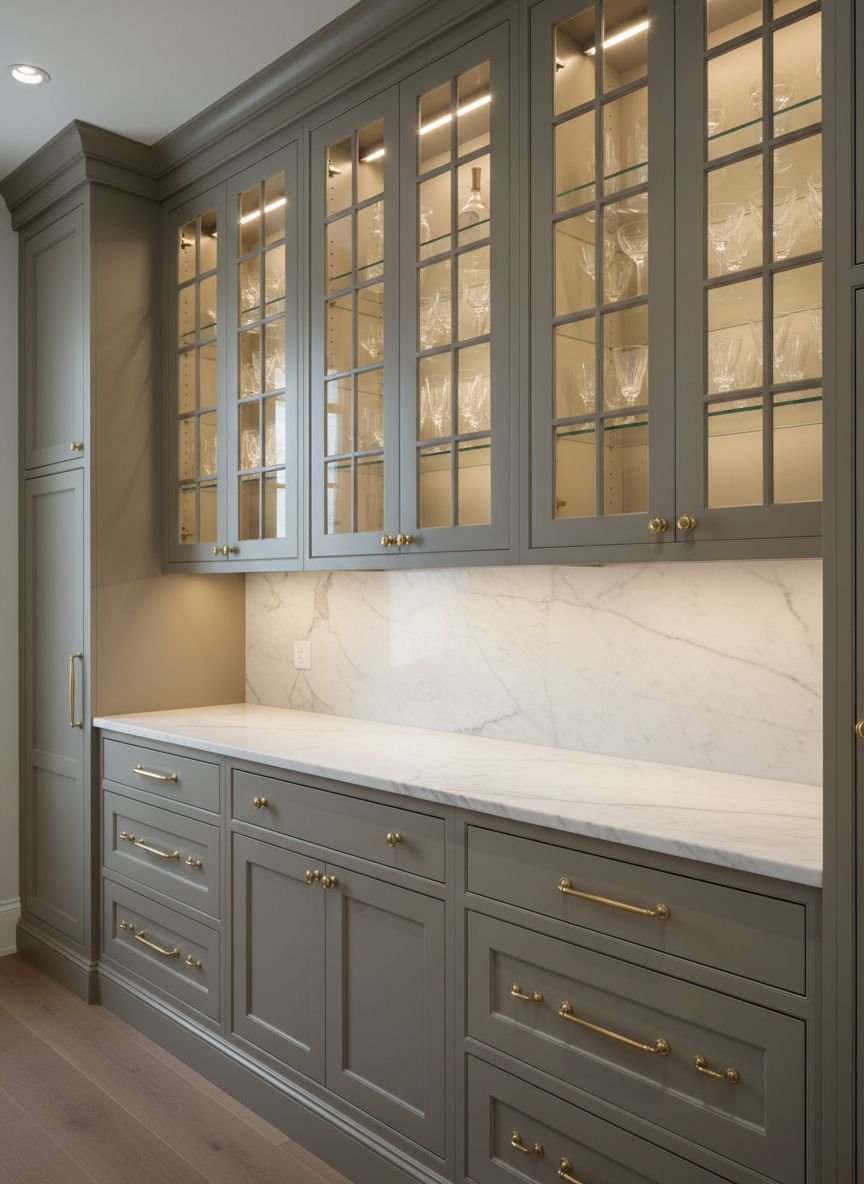
Solid walls of grey cabinetry sometimes feel heavy. Glass-front cabinets break up the mass and add depth. They allow the eye to travel to the back of the cabinet, making the room feel deeper. Use reeded or fluted glass for a modern, semi-obscured look that hides clutter while still reflecting light.
Clear glass requires tidy stacks of dishes, but it offers a beautiful display opportunity. Paint the interior of the cabinets a different shade—perhaps a crisp white or a dark charcoal—to create a shadow box effect. This adds a layer of sophistication and breaks up the grey facade.
Pro Tip: Add lighting inside the glass cabinets to create a soft, ambient glow at night.
Create Impact with Divergent Countertops
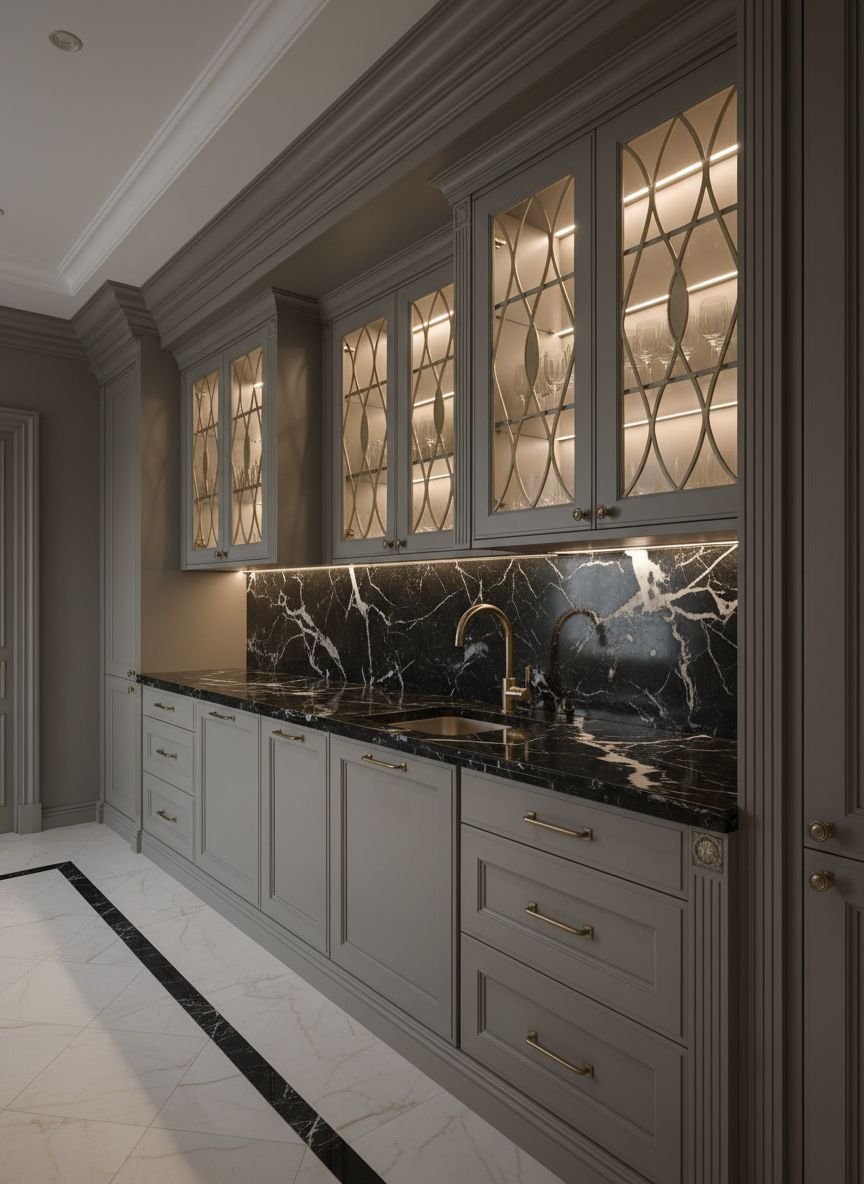
You do not need to use the same countertop material everywhere. Mixing materials designates zones. Use a durable white quartz for the perimeter counters where the heavy cooking happens. For the island, switch to a warm butcher block. The wood tones cut through the grey and invite people to lean and gather.
Alternatively, use a solid grey quartz on the perimeter and a dramatic, veined marble on the island. This turns the island into a centerpiece art object. The light grey cabinets support both choices without clashing. This mix-and-match approach makes the kitchen feel custom-designed rather than purchased as a package.
Pro Tip: Ensure the edge profiles match (e.g., all square edge or all bullnose) to maintain unity despite different materials.
Experiment with Expansive and Open Concepts
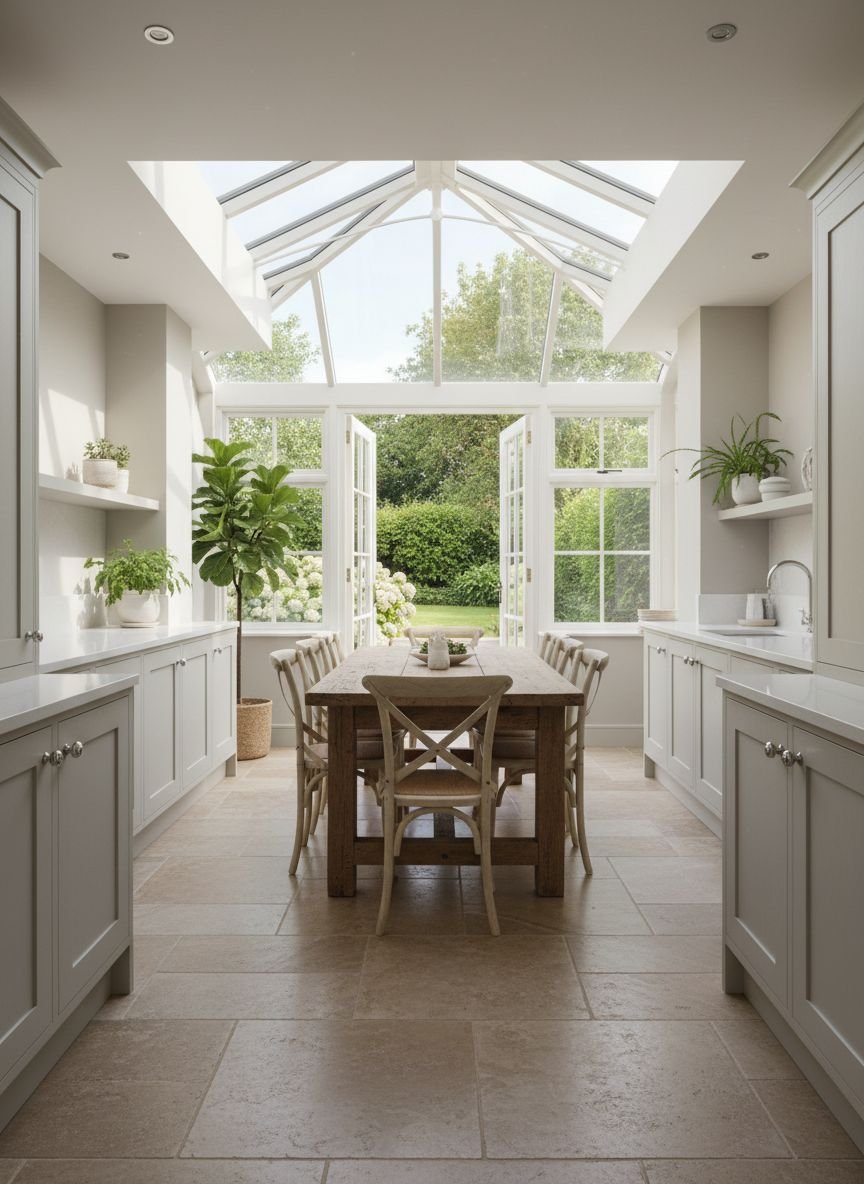
Light grey is the ideal color for open-concept living because it transitions smoothly into living and dining areas. It is neutral enough to coexist with a beige sofa or a blue dining rug. Carry the grey palette into the adjacent room through throw pillows or wall color to connect the spaces.
In an open layout, the kitchen is always on display. Light grey cabinetry looks like high-end furniture. Use panel-ready appliances to hide the fridge and dishwasher behind grey doors. This disguises the utilitarian nature of the kitchen, allowing it to blend quietly into the living space.
Pro Tip: Use the same flooring throughout the kitchen and living area to visually erase the boundary between rooms.
Maximize Space with Efficient Islands
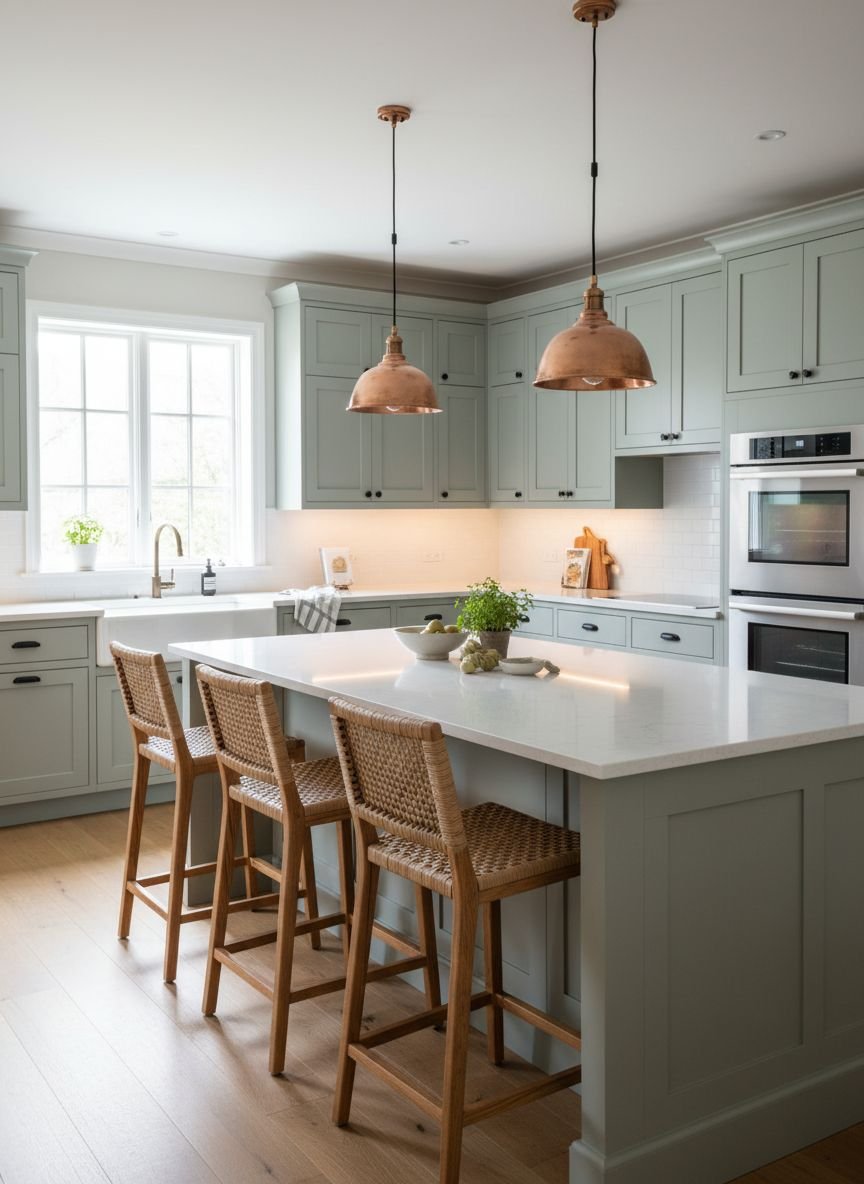
The kitchen island is the workhorse of the modern home. In a grey kitchen, paint the island a darker shade of grey than the perimeter cabinets. This “grounding” technique makes the island feel like a solid piece of furniture. It becomes the visual anchor of the room.
Functionality is key. Incorporate deep drawers for pots, a built-in microwave, or open shelving for cookbooks on the end cap. An overhang for bar stools turns the island into a social hub. The grey finish hides the scuff marks from shoes better than white, making it a practical choice for families with kids.
Pro Tip: Add electrical outlets to the side of the island for charging laptops or powering blenders.
Elevate with Golden Fittings
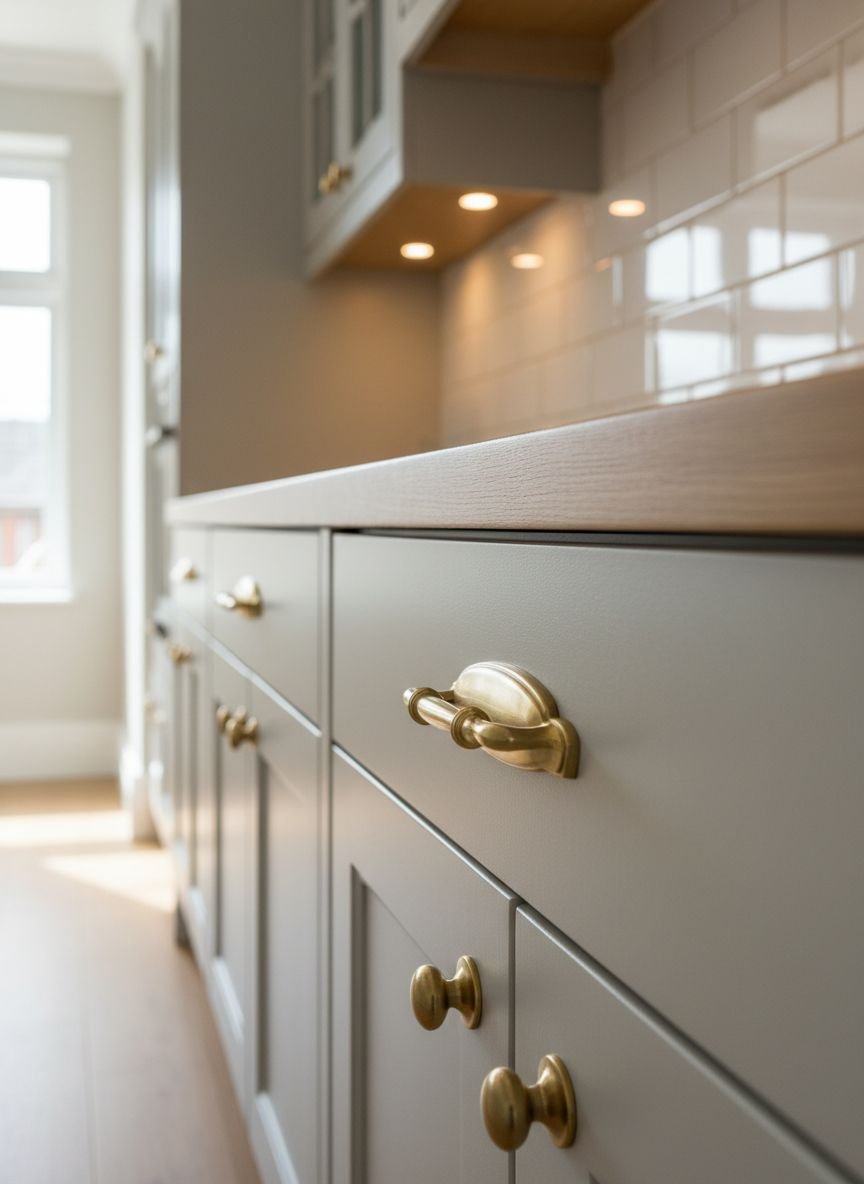
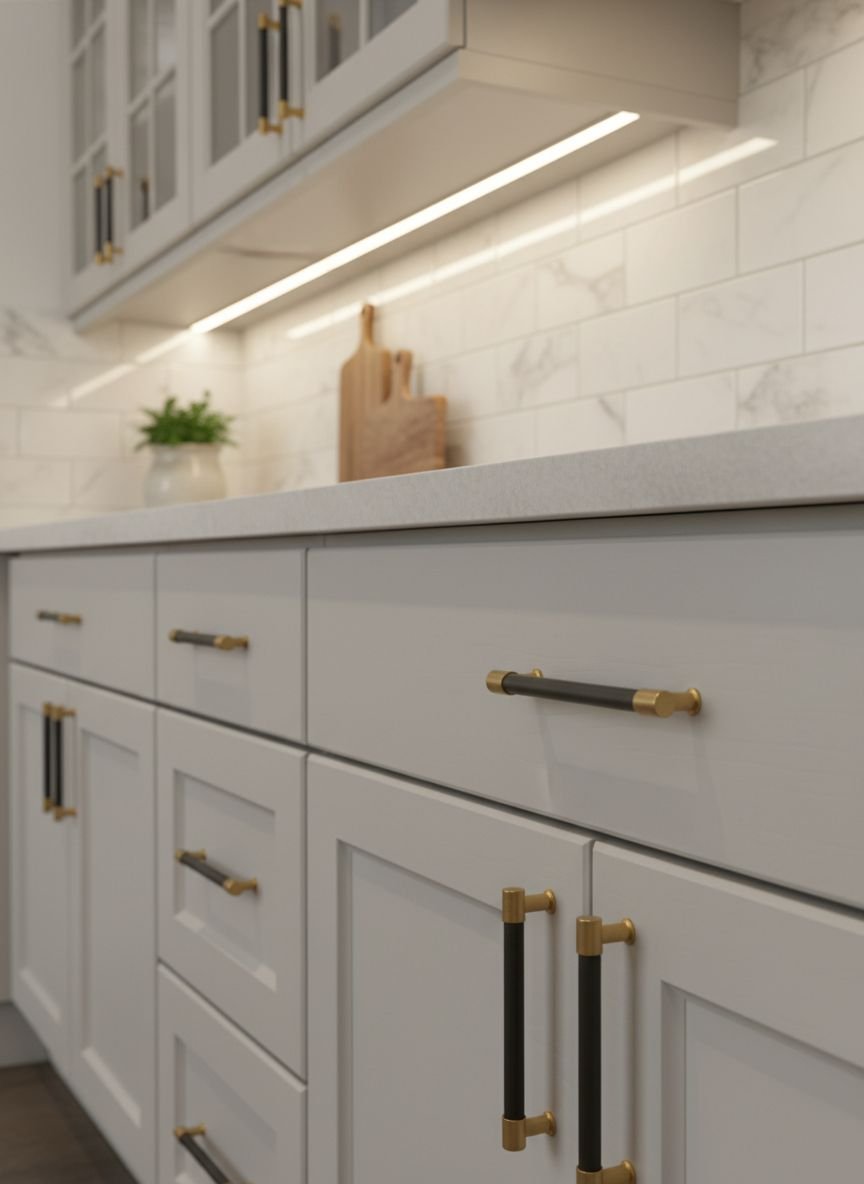
Grey and gold is a power couple in interior design. The cool undertones of grey enhance the warm, metallic shine of gold or brass hardware. It creates a sense of luxury and warmth. Replace standard chrome knobs with brushed gold pulls. Install a gold faucet as a statement piece.
You can extend this to other details. A gold frame around a piece of art, gold trim on lighting fixtures, or even brass inlays in a backsplash tile. This combination prevents the grey from feeling institutional. It adds a layer of glamour and refinement that feels curated and chic.
Pro Tip: Match the finish of your faucet to your cabinet hardware for a cohesive, professional look.
Popular Asked Questions
What wall color goes best with light grey kitchen cabinets?
Crisp white is the safest and most popular choice because it keeps the room bright and allows the grey cabinets to stand out. If you want more drama, a dark navy blue creates a stunning contrast. For a softer, organic look, try a very pale sage green.
Are grey kitchens still in style for 2026?
Yes, but the shade is shifting. Cool, blue-based greys are being replaced by “greige” (grey + beige) and warmer, earthier grey tones. The trend is moving toward mixing grey with natural wood and warm metals like unlacquered brass to create a cozy, lived-in feel rather than a sterile showroom look.
How do I warm up a grey kitchen?
Texture and lighting are your best tools. Add wood elements like a butcher block island, floating shelves, or a wooden fruit bowl. Use warm-temperature light bulbs (3000K). Introduce textiles like a vintage runner rug, fabric window shades, or upholstered bar stools to soften the hard surfaces.
Should kitchen island be lighter or darker than cabinets?
Designers usually recommend making the island darker than the perimeter cabinets. A darker island acts as a focal point and anchors the room. For example, light grey perimeter cabinets paired with a charcoal grey or navy blue island is a timeless, professional combination.
Conclusion
Light grey kitchens offer the perfect balance of elegance, practicality, and versatility. Whether you prefer the raw edge of industrial design or the soft comfort of a farmhouse aesthetic, this color adapts to your vision. It reflects light to open up small spaces and provides a sophisticated backdrop for your life.



Leave a Comment