The Utility Hook
You want to transform that awkward, empty corner in your child’s room into something magical, but you’re stuck on ideas that balance function with fun. We get it—kids come with a lot of stuff, and finding storage that doesn’t look cluttered is a challenge. The current trend is moving away from bulky furniture and toward vertical, interactive decor that doubles as play space. This guide provides 15 specific, high-impact corner shelf ideas that will maximize your square footage and create a whimsical focal point. From DIY cloud shelves to Montessori-inspired reading nooks, you will find a solution here that tidies up the mess and delights your little one.
Key Takeaways
- Vertical Play: Corner shelves aren’t just for storage; they can become interactive play zones for cars, dolls, or art.
- Safety First: Always anchor heavy units and choose rounded edges to prevent bumps in active spaces.
- Rotation is Key: Use open shelving to rotate toys and books bi-weekly, keeping the room feeling fresh and clutter-free.
- Theme Integration: Match the shelf shape (clouds, triangles, animals) to the room’s theme for a cohesive designer look.
Table of Contents
- Rainbow Floating Corner Shelves
- Animal-Shaped Wall Shelves
- Geometric Triangle Shelves
- Floating Cloud Shelves
- Alphabet Letter Shelves
- Nature-Inspired Wooden Shelves
- Floating Toy Car Track Shelves
- Balloon-Shaped Shelves
- Mini Library Corner
- Under-the-Sea Shelves
- Space Adventure Shelves
- Toy Display Shelves
- Art Gallery Corner
- Interactive Chalkboard Shelves
- Puzzle-Shaped Shelves
- Comparison: Wood vs. Acrylic Shelves
- Related posts :
- Popular Asked Questions
- Conclusion
Rainbow Floating Corner Shelves
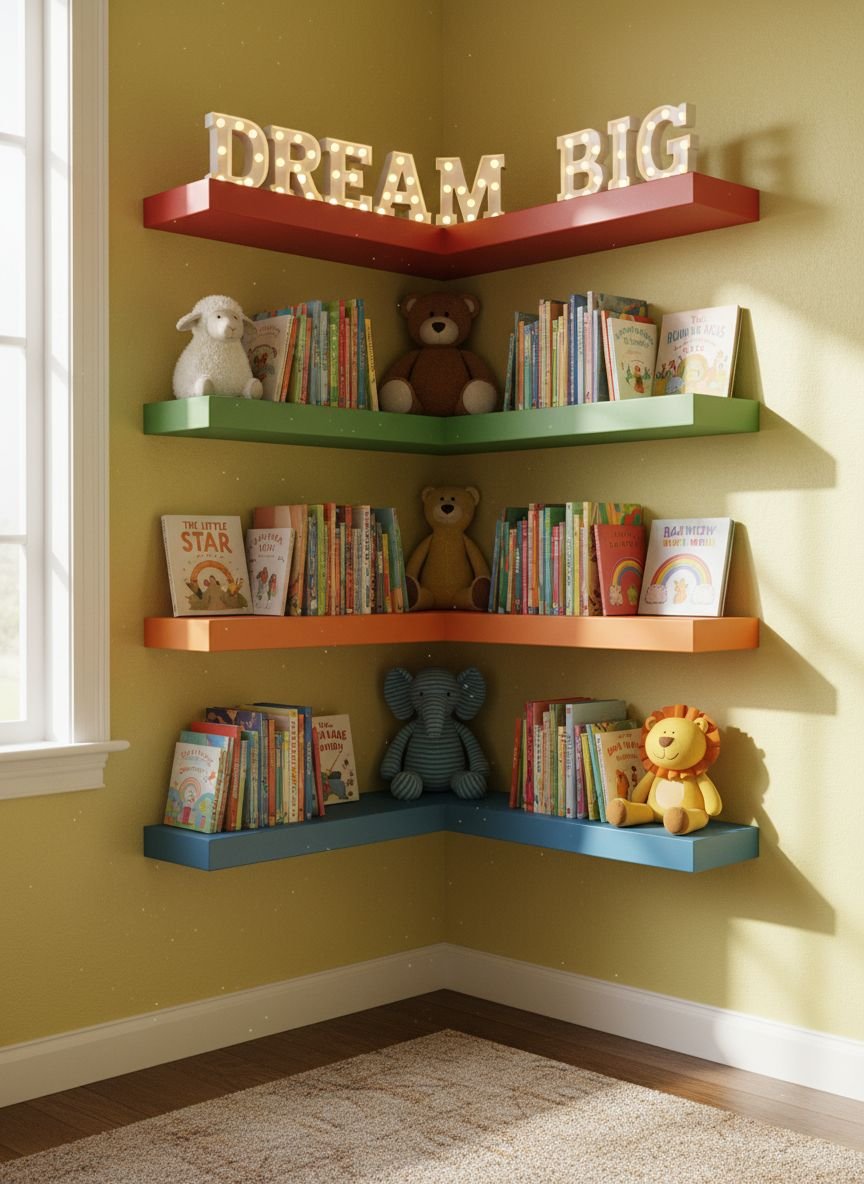
Color coordination stimulates a child’s visual development and teaches them organization skills early on. By installing simple floating shelves painted in a gradient of primary or pastel colors, you create an instant focal point that feels curated rather than chaotic. The key here is not just the paint on the wood, but how you style the items. Grouping books, toys, or plushies by color on the corresponding shelf creates a satisfying “rainbow” effect that looks professional but is easy for a toddler to maintain.
This approach works exceptionally well in neutral rooms where you want a pop of energy without painting the walls. Use a high-gloss finish for a modern, durable look that wipes clean easily. The vertical alignment draws the eye upward, making small rooms feel taller and more spacious. It’s a budget-friendly DIY project that requires only standard lumber and sample pots of paint.
Pro Tip: Use “L” brackets painted the same color as the wall to make the shelves appear to float seamlessly, enhancing the magical vibe.
Animal-Shaped Wall Shelves
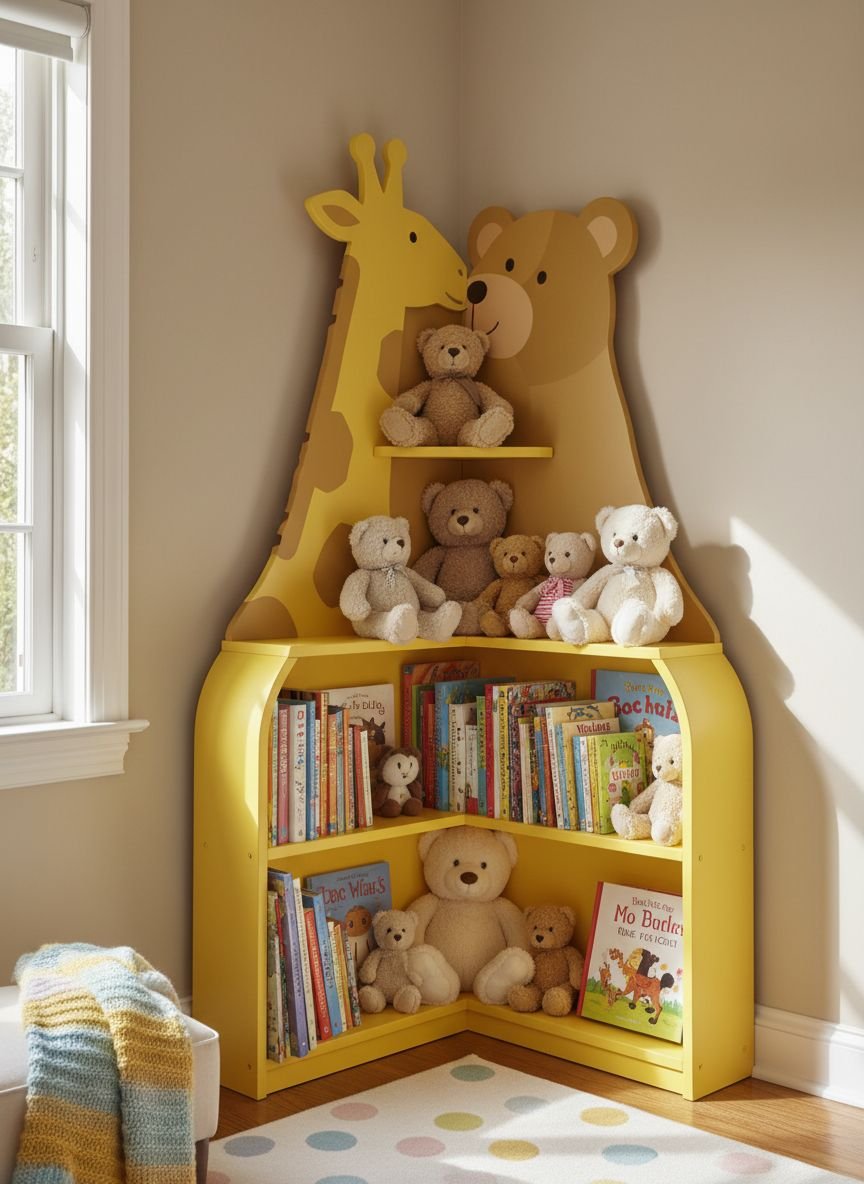
Character-driven decor brings a sense of companionship and comfort to a bedroom. Instead of standard flat planks, look for corner units cut into the silhouettes of bears, elephants, or dinosaurs. These pieces often feature a flat top for storage while the “body” of the animal acts as wall art. The texture of natural wood grain against a painted wall adds warmth, while the recognizable shapes spark storytelling during playtime.
When placing these, consider the child’s height. Lower shelves can house their favorite nightly reads or sleep-companions, giving them autonomy over their bedtime routine. Visually, these shelves break up the straight lines of a room, adding organic curves that soften the overall aesthetic. They work perfectly in “woodland” or “safari” themed nurseries where natural materials are dominant.
Pro Tip: If you can’t find pre-made animal shelves, buy simple wooden cutouts from a craft store and glue them to the front edge of a standard floating shelf for a custom look.
Save this idea to your Pinterest.
Geometric Triangle Shelves
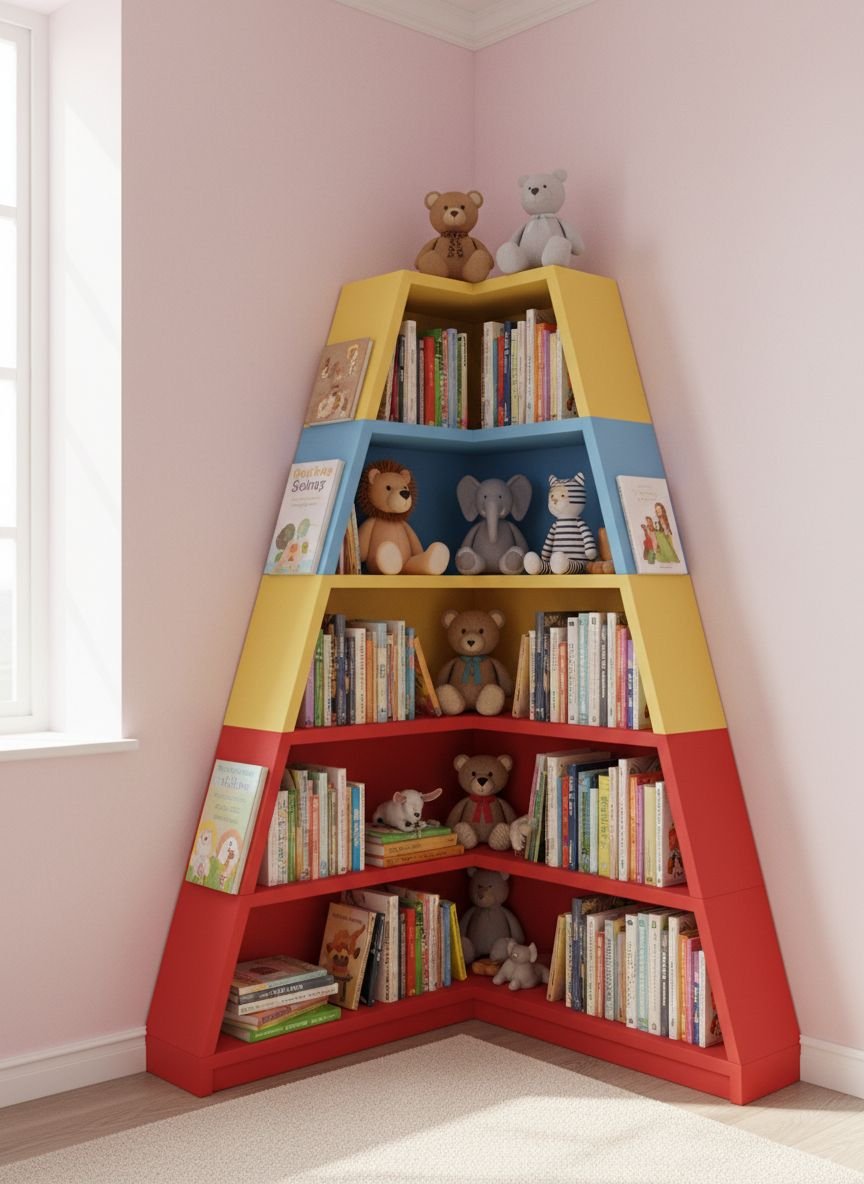
Triangle or “mountain” peak shelves are a staple in modern Scandi-style kids’ rooms. The triangular shape is naturally structural and fits perfectly into a 90-degree corner, maximizing stability. Visually, the sharp angles provide a nice contrast to soft bedding and plush toys. You can stack them tip-to-base to create a honeycomb pattern that climbs the wall, offering multiple small cubbies for tiny treasures like rocks, shells, or action figures.
This design is particularly effective for “curating” clutter. Because the internal space of a triangle shelf is limited, it forces you to display only a few special items, preventing the “dump zone” effect that happens on long, flat surfaces. Combining raw wood exteriors with painted interiors adds depth and allows you to tie the shelves into the room’s color palette without overwhelming the space.
Pro Tip: Add a small battery-operated LED strip inside the top peak of the triangle to create a soft, ambient nightlight that highlights the displayed toy.
Floating Cloud Shelves
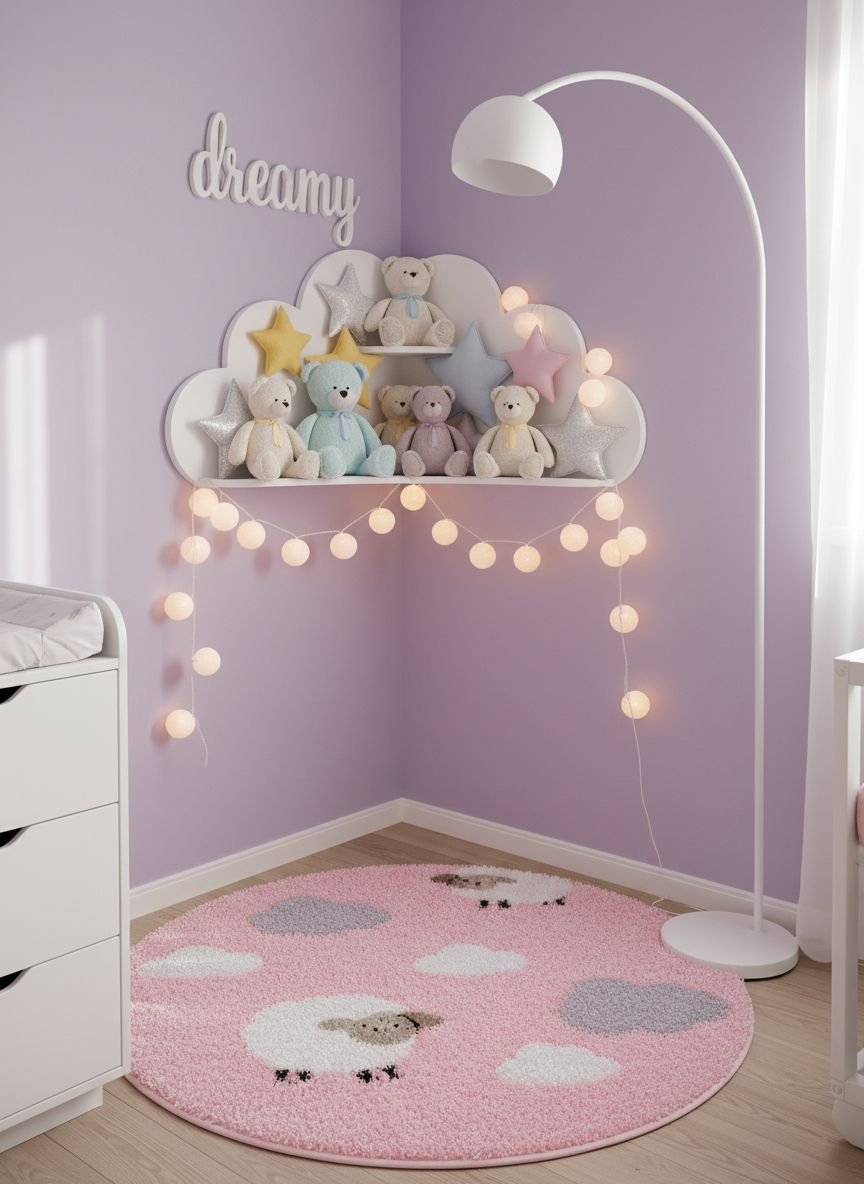
Soft, billowy shapes are ideal for nurseries and toddler rooms where you want to promote calm and sleep. Cloud shelves, typically white or soft grey, blend gently into the walls and provide a dreamy platform for lightweight decor. The “fluffy” edges eliminate sharp corners at head height, making them a safer option for active play zones. This style relies on the principle of “soft minimalism”—clean lines that aren’t rigid.
To style these effectively, keep the items light and airy. Think small succulents, framed sonograms, or delicate wooden figurines. Overloading a cloud shelf breaks the illusion of weightlessness. Positioning is crucial here; stagger them at different heights to mimic a drifting sky. This setup creates a sense of movement and whimsy that static, linear shelving lacks.
Pro Tip: Paint the wall behind the shelves a soft sky blue or apply star decals to complete the atmospheric look.
Alphabet Letter Shelves
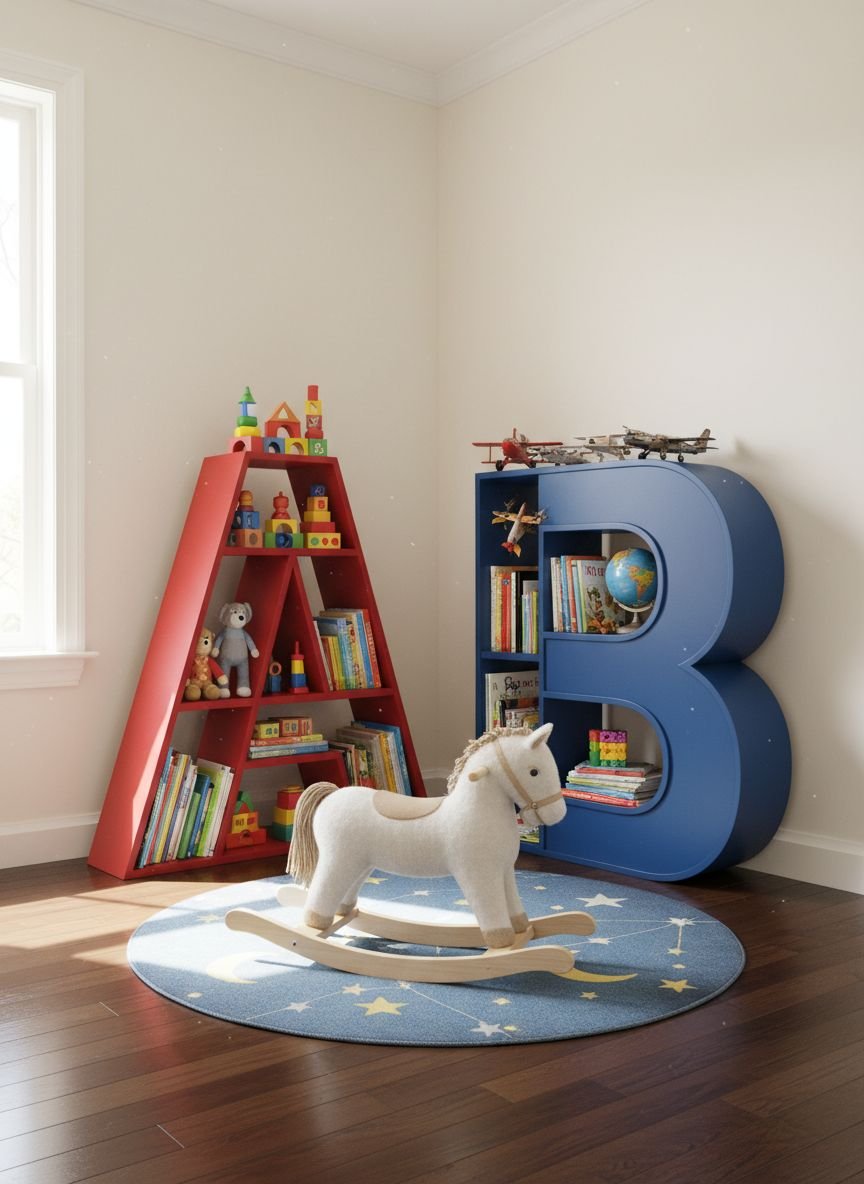
Personalization makes a child feel ownership over their space. Large, structural letters that spell out the child’s name or initials can double as shelving. These are often deep “shadow box” style letters where small items can sit inside the curves of a “C” or on the crossbar of an “H”. This is a fantastic way to merge educational decor with practical storage.
The visual impact is bold and graphic. It works best as a statement piece in a corner that needs filling but isn’t the main storage area. It’s more about display—showcasing a first pair of shoes, a special gift, or a favorite photo. The typography itself becomes the art, reducing the need for other wall hangings.
Pro Tip: Use the first letter of your child’s name as a large corner anchor piece, and flank it with smaller, standard shelves for balance.
Nature-Inspired Wooden Shelves
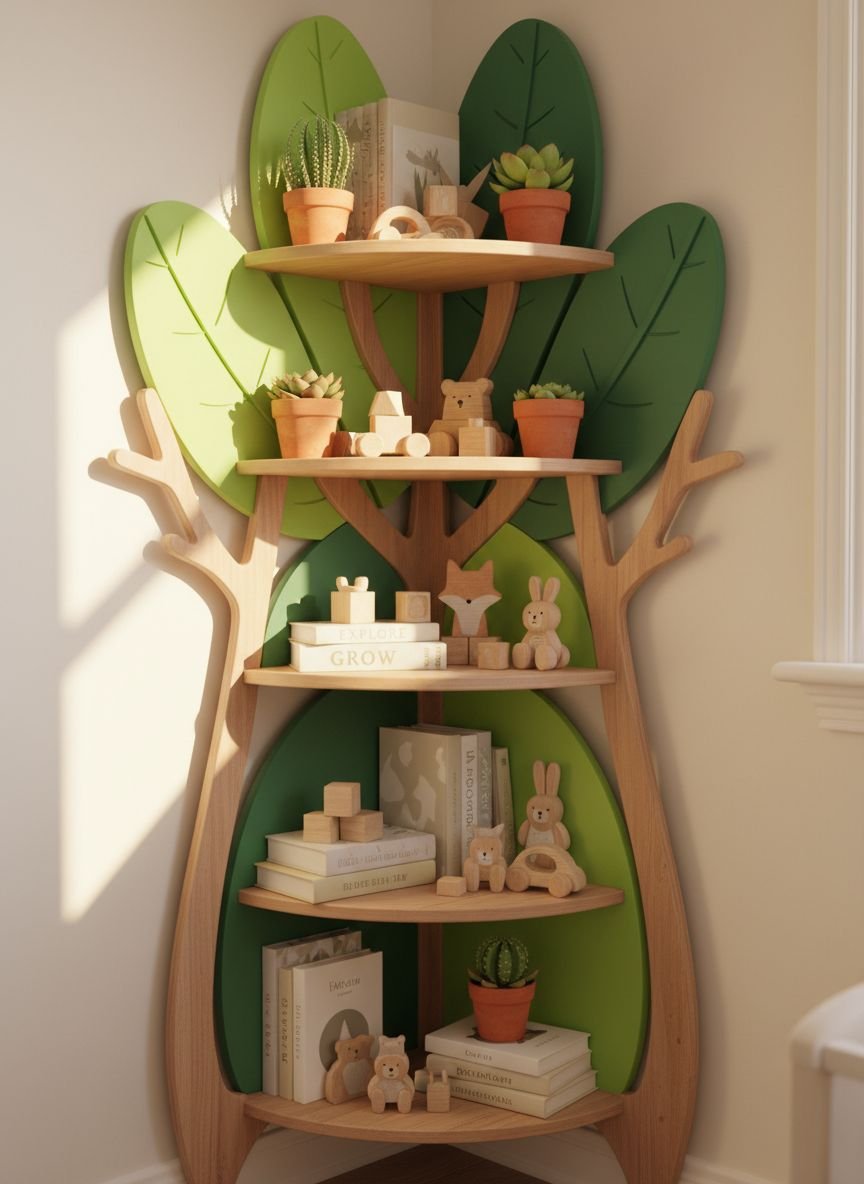
Bringing the outdoors in is a timeless design strategy that fosters a sense of groundedness. Corner shelves made from live-edge wood or reclaimed drift timber introduce unique textures and organic imperfections that plastic can’t replicate. In a bright, playful room, these natural elements act as a neutral base, allowing colorful toys to stand out without clashing.
This style fits the “Biophilic Design” trend, which suggests that natural elements reduce stress and improve cognitive function in children. Pair these rough-hewn shelves with trailing artificial ivy or potted spider plants (kept out of reach) to enhance the jungle vibe. The juxtaposition of rugged wood against smooth, bright walls creates a high-end, custom feel.
Pro Tip: Seal raw wood with a child-safe, non-toxic beeswax finish to protect it from stains and splinters while keeping the natural look.
Floating Toy Car Track Shelves
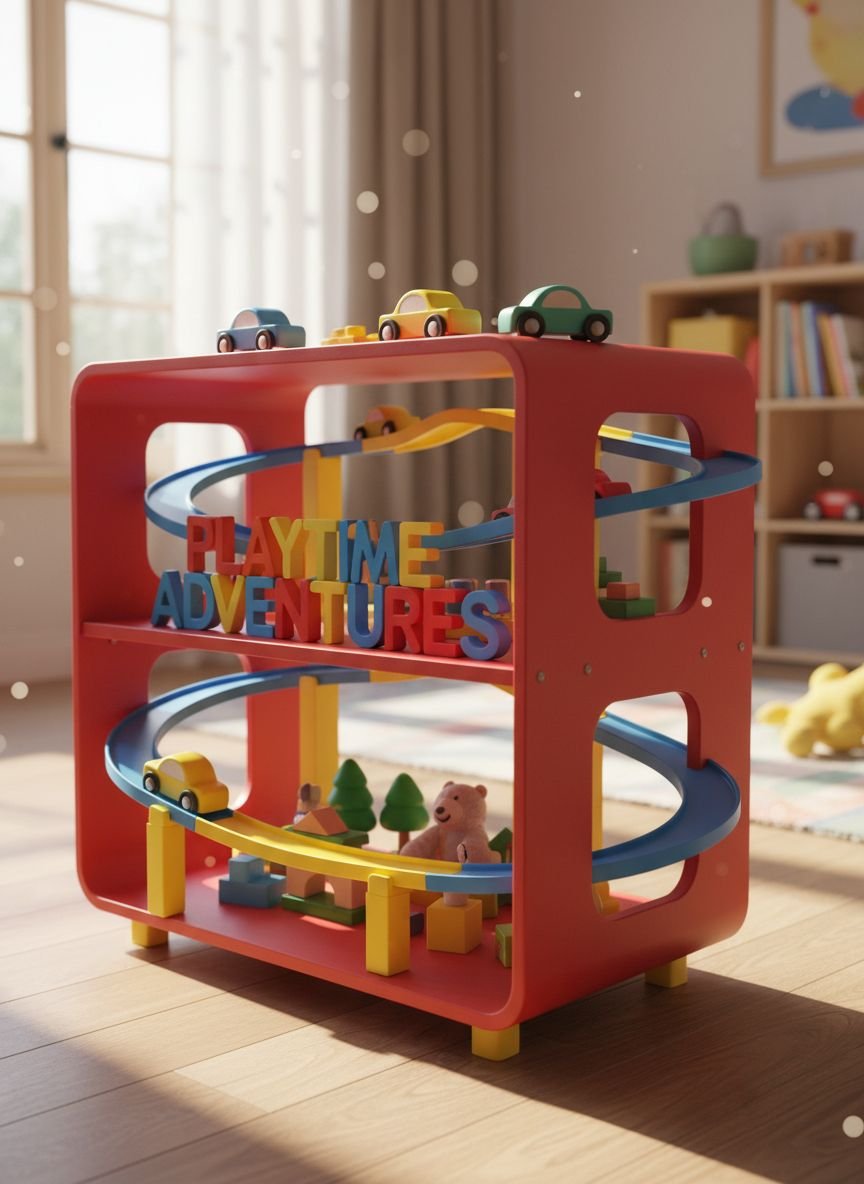
For the car enthusiast, storage can become part of the play. Imagine corner shelves that aren’t just flat planks, but have road markings painted on them, or even grooved tracks routed into the surface. You can connect shelves on adjacent walls with flexible track pieces, turning the corner into a multi-level garage. This encourages the child to “park” their cars at the end of the day, turning cleanup into a game.
This design utilizes the “gamification” of chores. Visually, the black and white of road stripes adds a graphic punch that looks great in monochrome or primary-colored rooms. It transforms a passive storage solution into an active toy. It’s a brilliant way to get hundreds of matchbox cars off the floor and onto the wall where they look like a collection rather than a mess.
Pro Tip: Use magnetic tape strips on the surface of the shelf to keep metal cars securely in place, even if the shelf is bumped.
Balloon-Shaped Shelves
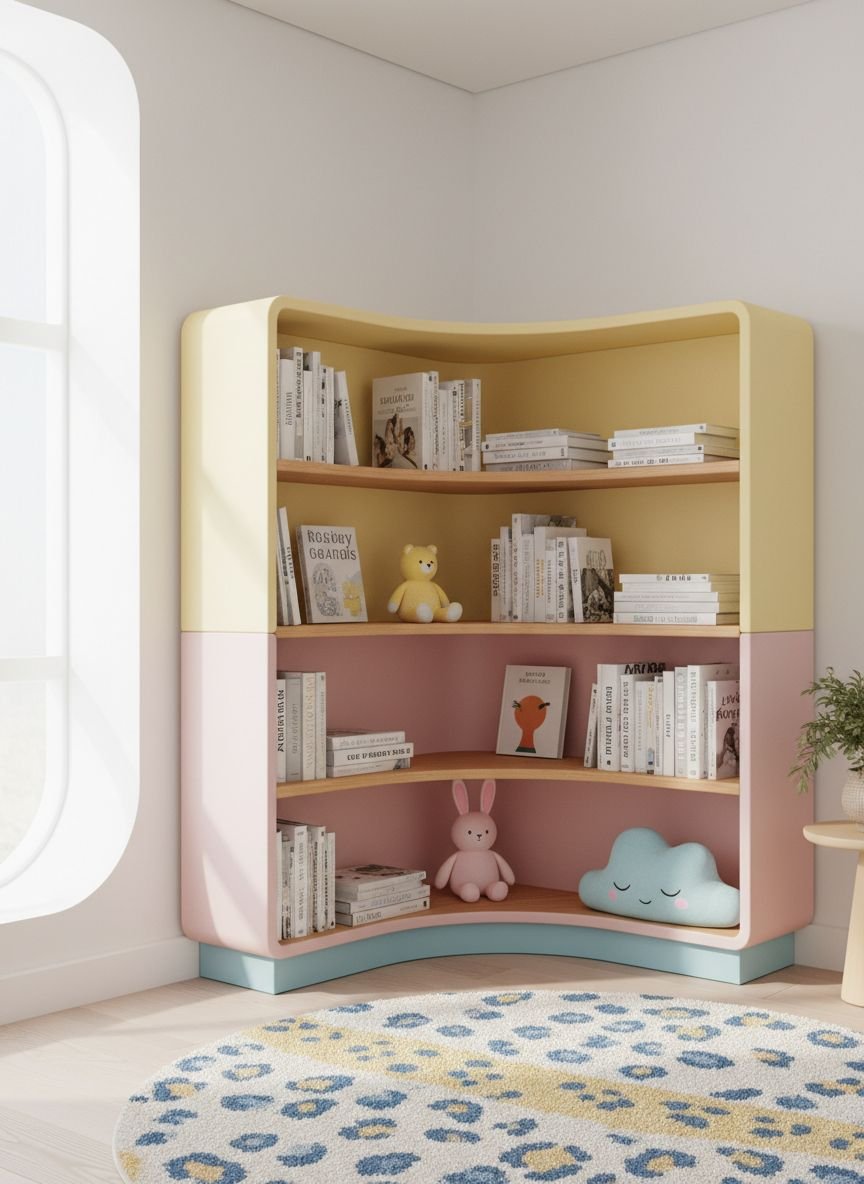
Capturing the joy of a party that never ends, balloon-shaped shelves add a sense of lift and celebration to a corner. These usually consist of a round shelf “balloon” with a string detail hanging down the wall. They are perfect for displaying single, precious items like a trophy or a special doll. The round shape softens the hard vertical line of the room corner.
These work best in groups of three, clustered at different heights to resemble a bouquet of balloons floating away. You can mix colors—one pink, one gold, one white—to match the room’s palette. It’s a purely decorative approach that prioritizes aesthetics, ideal for filling dead space above a changing table or a low dresser.
Pro Tip: Use real ribbon or rope for the “string” part of the design and secure it flat to the wall for a 3D mixed-media effect.
Comparison: Wood vs. Acrylic Shelves
| Feature | Wood Shelves | Acrylic Shelves |
|---|---|---|
| Durability | High; handles heavy books well. | Moderate; scratches easier but won’t shatter. |
| Visual Weight | Adds warmth and texture; feels grounded. | “Invisible” look; makes small rooms feel bigger. |
| Maintenance | Dusting needed; may need resealing. | Wipes clean easily; shows fingerprints. |
| Best For | Rustic, Boho, or Nature themes. | Modern, colorful, or minimalist rooms. |
| Cost | Varies (DIY is cheap, solid wood is pricey). | Generally affordable to mid-range. |
Mini Library Corner
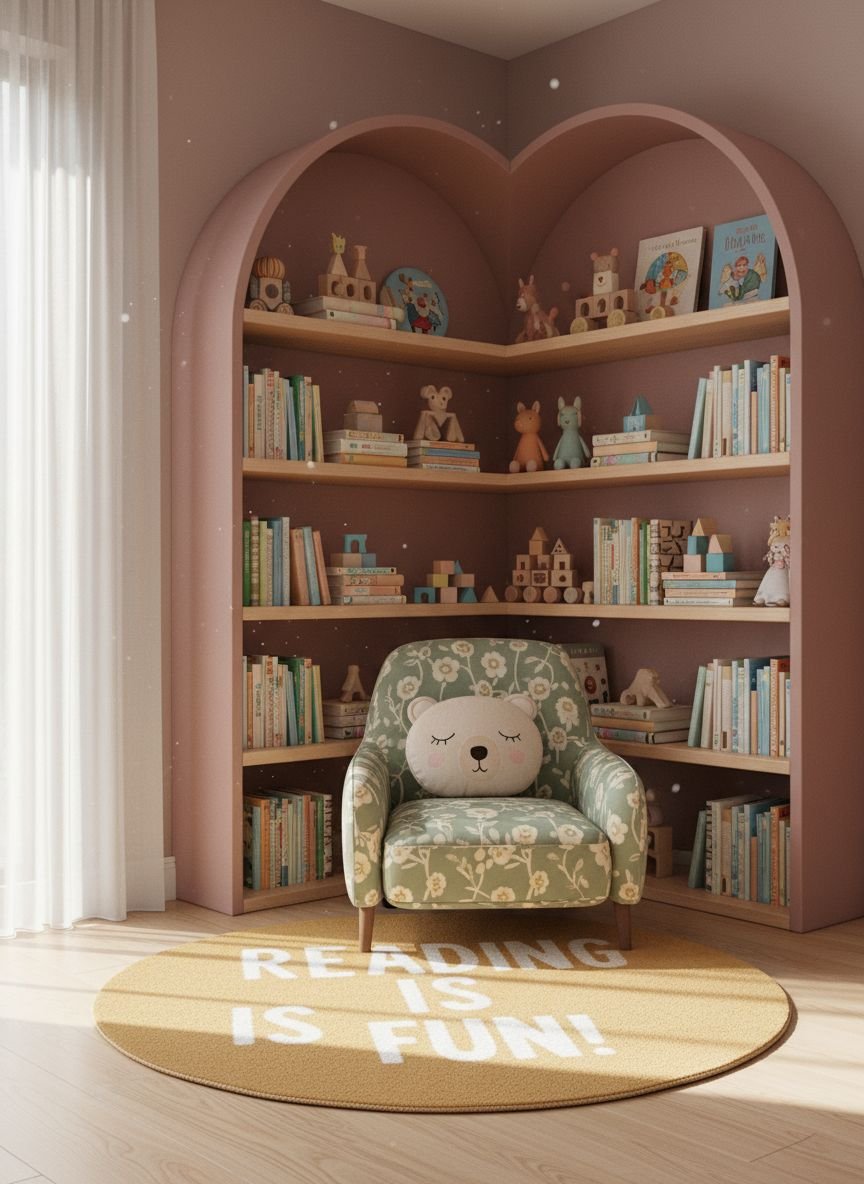
Forward-facing bookshelves (rain gutter style) installed in a corner create an inviting reading nook that entices children to pick up a book. Seeing the cover art rather than the spine makes books more accessible and exciting for young readers. By utilizing the corner, you can create a “wrap-around” library feel that surrounds the child with stories.
Place a beanbag or a pile of floor cushions directly underneath the shelves to define the zone. This creates a “room within a room,” a cozy retreat for quiet time. The horizontal lines of the book rails elongate the walls, while the colorful book covers act as ever-changing wall art. It’s a practical, educational, and visually stimulating use of space.
Pro Tip: Install the lowest shelf within crawling reach for babies, and higher shelves for books that require parental supervision.
Under-the-Sea Shelves
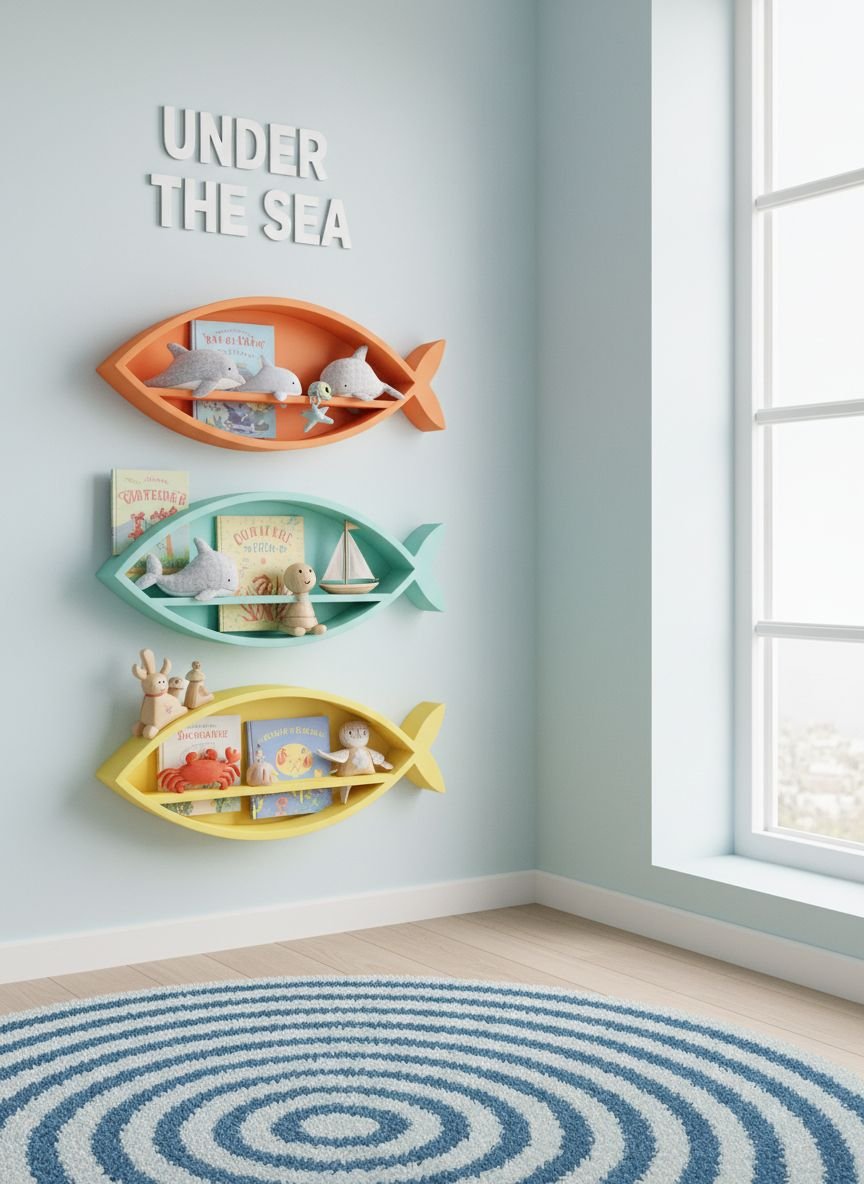
Themed rooms are huge for kids, and an ocean theme offers cool blues and greens that are calming yet bright. Look for corner shelves shaped like waves, whales, or coral reefs. A “wave” shelf with a scalloped front edge adds movement and mimics the ocean surface. Styling these with sea-glass tones, shell collections, or marine animal figurines creates a cohesive underwater world.
This concept relies on color psychology; blue promotes relaxation and concentration. Use shelves painted in varying shades of teal and aqua to create an ombre effect up the wall, simulating the depth of the ocean. It’s an immersive design choice that turns a plain white corner into a deep-sea adventure.
Pro Tip: Paint the corner wall a deep navy blue and use white or light wood shelves to create high contrast and make the decor pop.
Space Adventure Shelves
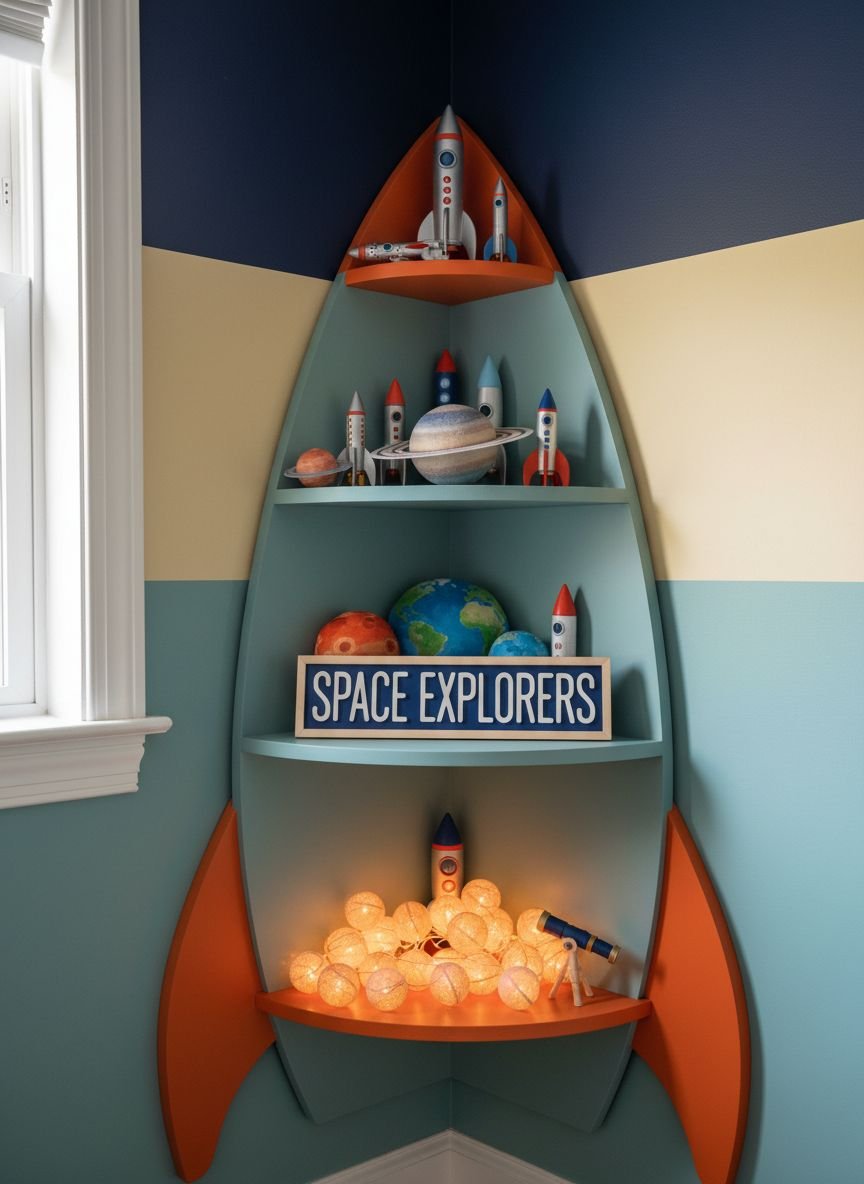
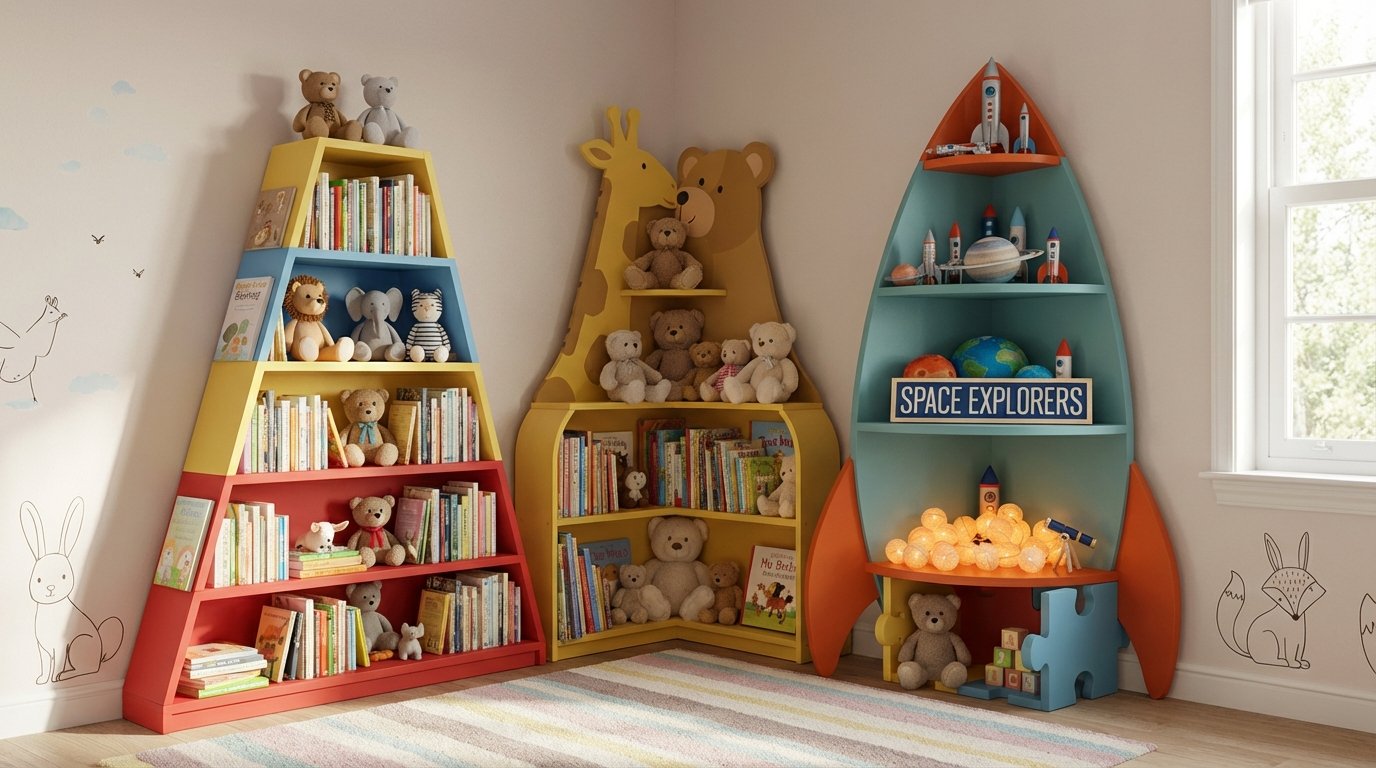
For the little astronaut, a dark corner can become deep space. Use black or dark blue shelves and decorate the surrounding wall with glow-in-the-dark stars. Rocket-shaped tall corner units are also popular, where the nose cone fits into the top corner and the shelves are the body of the ship. This encourages imaginative play and interest in science.
The contrast of dark shelves against a lighter wall (or vice versa) creates a dramatic, graphic look. Metallic accents—silver brackets or chrome painted edges—add a futuristic touch. This is a high-energy design perfect for playrooms or older kids’ bedrooms who want something “cool” rather than “cute.”
Pro Tip: Place a moon lamp on the top shelf to act as the “sun” or a distant planet, illuminating the rest of the space collection below.
Toy Display Shelves
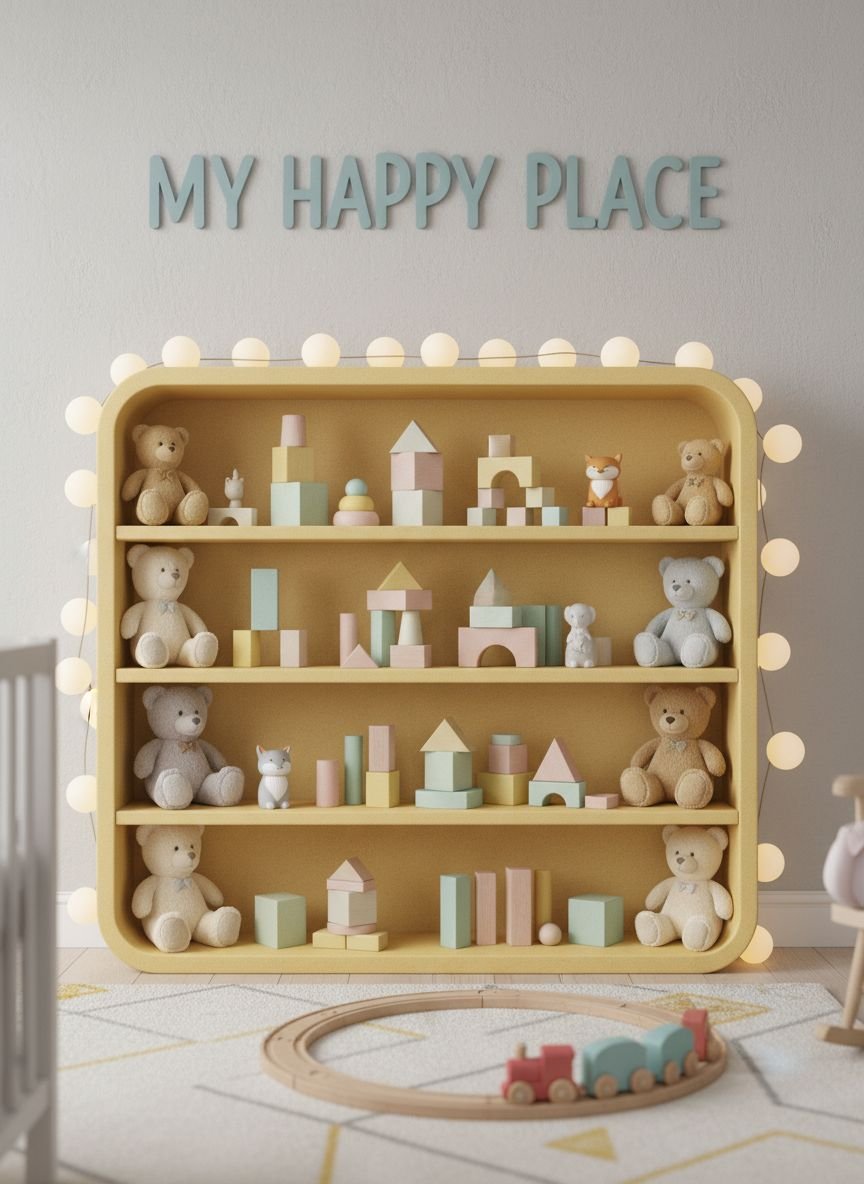
Sometimes, the goal is simply to organize a rotating collection of toys. Open corner shelving units with adjustable heights are perfect for this Montessori-style approach. The idea is to display a limited number of toys (e.g., 3-5 items) with plenty of negative space around them. This prevents overstimulation and encourages deep play with the chosen items.
Visually, this looks much cleaner than a toy box where everything is jumbled. It teaches the child to value their belongings and return them to their “home.” Use neutral-colored shelves (white, birch, or grey) so the focus remains on the colorful toys. The “L” shape of corner units maximizes depth, allowing for larger items like trucks or dollhouses to sit securely.
Pro Tip: Use small baskets on the bottom shelf for “loose parts” like Legos or blocks, keeping the visual clutter low to the ground.
Art Gallery Corner
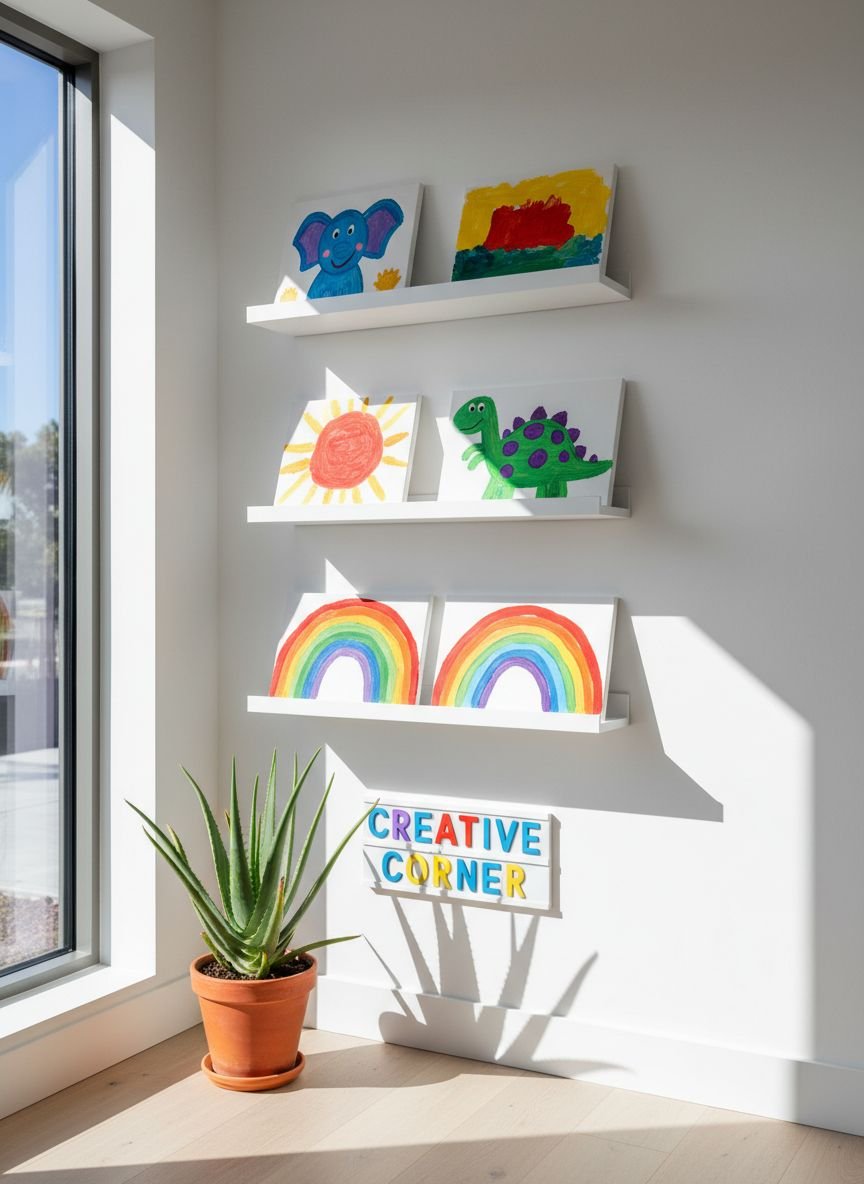
Kids create a mountain of artwork, and the fridge can only hold so much. Transform a corner into a dedicated gallery using shallow picture ledge shelves. These narrow shelves take up very little room but allow you to lean framed drawings, canvases, or 3D crafts against the wall. It’s a flexible display that can change daily as new masterpieces are created.
This honors the child’s creativity and boosts their confidence. From a design perspective, it adds a riot of color and personal expression to the room. Mixing uniform frames (e.g., all white or all light wood) creates a sense of order despite the varying colors of the art. It turns the corner into a dynamic, living scrapbook of their childhood.
Pro Tip: Include a few empty frames with clips so you can easily swap out fresh paper drawings without taking the frame off the shelf.
Interactive Chalkboard Shelves
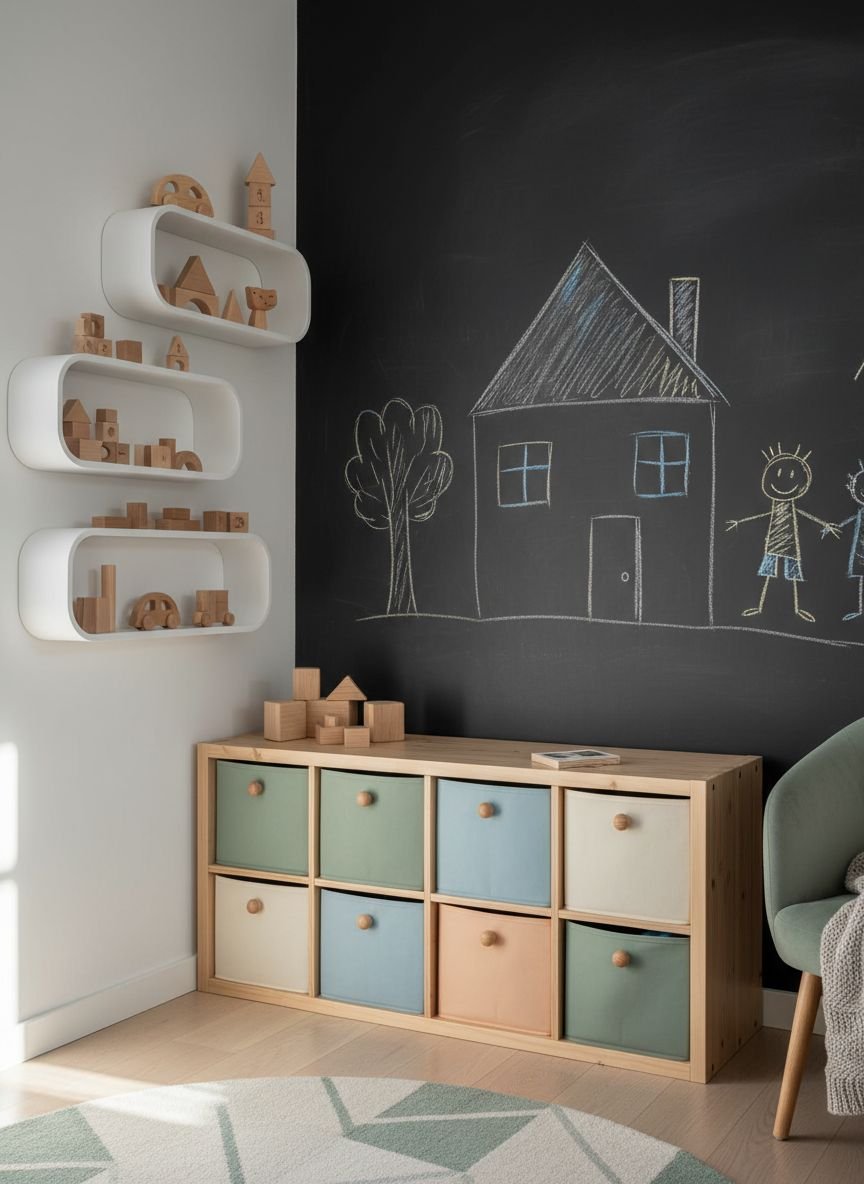
Combine storage with creativity by painting the edges or the underside of your corner shelves with chalkboard paint. Or, paint the wall corner itself with chalkboard paint and install floating wood shelves over it. This allows kids to label what goes where (e.g., “Cars,” “Dolls”) or draw scenery for their toys directly on the wall behind them.
This adds a layer of interactivity that static decor lacks. The matte black of the chalkboard paint provides a strong anchor in the room and makes bright toys pop. It’s a functional design that evolves; today it’s a drawing surface, tomorrow it’s a math practice zone. It keeps the decor age-appropriate for years.
Pro Tip: Use dust-free chalk markers instead of traditional chalk to keep the shelves and the floor underneath clean.
Puzzle-Shaped Shelves
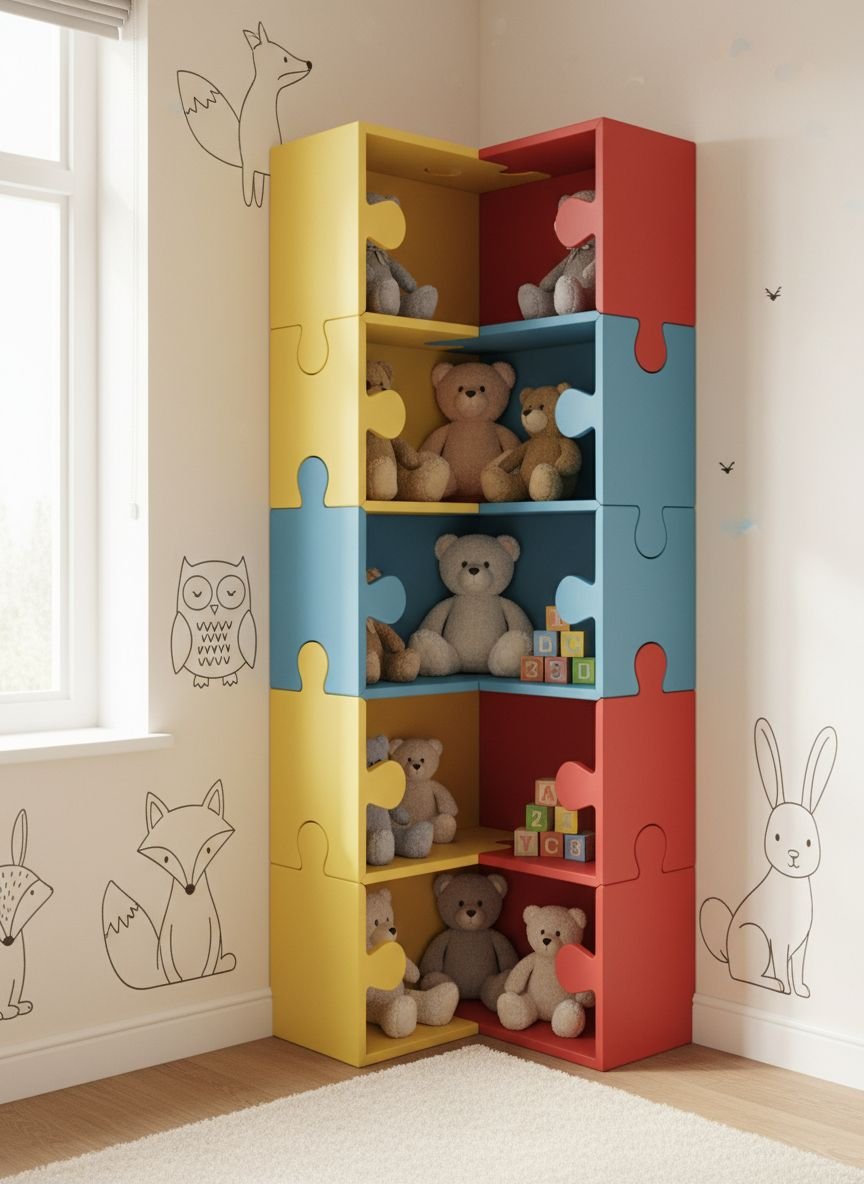
For a truly unique and playful look, opt for shelves cut into jigsaw puzzle shapes that interlock or look like they are about to. These can be painted in bright, contrasting colors like cyan, magenta, and lime green. The “knobs” and “holes” of the puzzle shapes can even serve as functional hooks for hanging bags or dress-up clothes.
This style screams “fun” and is perfect for a high-energy playroom. It breaks away from the seriousness of straight lines and right angles. The puzzle motif suggests problem-solving and connectivity. It’s a custom look that serves as a piece of wall art even when the shelves are empty.
Pro Tip: Keep the items on these shelves simple—solid colored bins or books—so they don’t compete visually with the complex shape of the shelves.
Related posts :
- 10 Cool Girl’s Bedroom Ideas That Instantly Transform Your Sanctuary
- 14 Stunning Wall Design Ideas That Instantly Elevate Your Home Aesthetic
- 15 Inspiring Bedroom Ideas for Your Next Makeover to Instantly Elevate Your Sanctuary
Popular Asked Questions
What do you put on a small corner shelf in a kid’s room?
For small corner shelves, less is more. Stick to one “statement” item per shelf to avoid a cluttered look. Great options include a small succulent (real or fake), a framed photo, a special piggy bank, or a stack of 2-3 favorite board books. If the shelf is high up, a trailing plant or a nightlight works beautifully.
How do you arrange floating shelves in a corner?
You have two main options: Symmetrical and Staggered. Symmetrical means the shelves on the left wall meet the shelves on the right wall at the exact same height, creating a continuous “L” shape. This looks clean and modern. Staggered means you place one shelf on the left, then one slightly higher on the right, and so on. This “ladder” effect is more playful and great for taller items.
How do you make corner shelves safe for a nursery?
Safety is the top priority. First, ensure the shelves are anchored into wall studs, not just drywall, so they can’t be pulled down. Second, choose shelves with rounded corners rather than sharp 90-degree edges to prevent injury if a child bumps into them. Finally, avoid placing heavy items on high shelves that could fall; stick to soft plushies or lightweight decor up high.
Can corner shelves hold heavy toys?
It depends on the installation. Floating shelves held up by internal brackets are usually weaker. For heavy toy bins or large book collections, look for corner shelves with visible external brackets or floor-standing corner units (tall bookcases) that are anchored to the wall. Always check the weight limit specified by the manufacturer before loading them up.
Conclusion
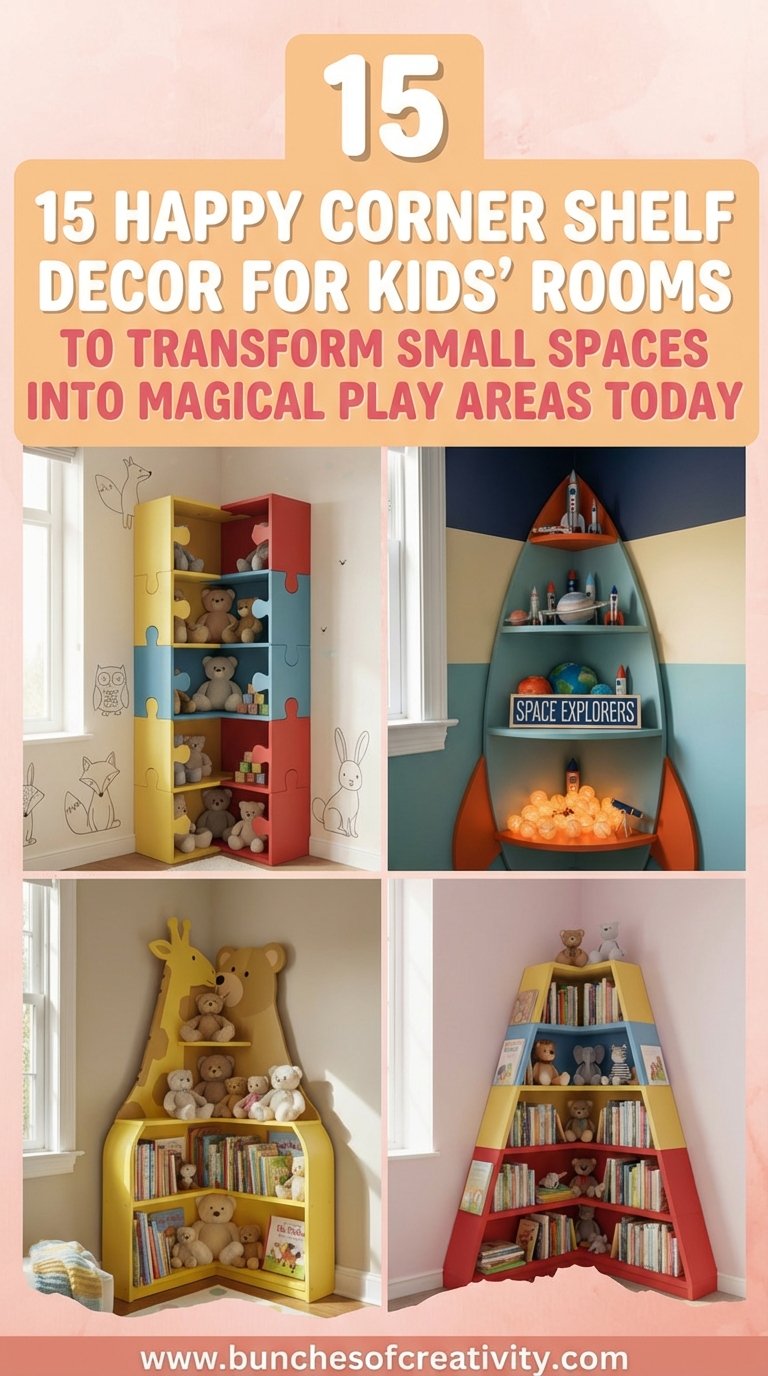
Transforming a corner in your child’s room is about more than just finding a place for their stuff; it’s about creating a pocket of joy. Whether you choose the educational Mini Library, the adventurous Space Theme, or the calming Cloud Shelves, the right decor can spark imagination and make cleanup time easier. These 15 playful and bright ideas prove that you don’t need a massive renovation to make a big impact—just a little creativity and the right use of vertical space.



Leave a Comment