
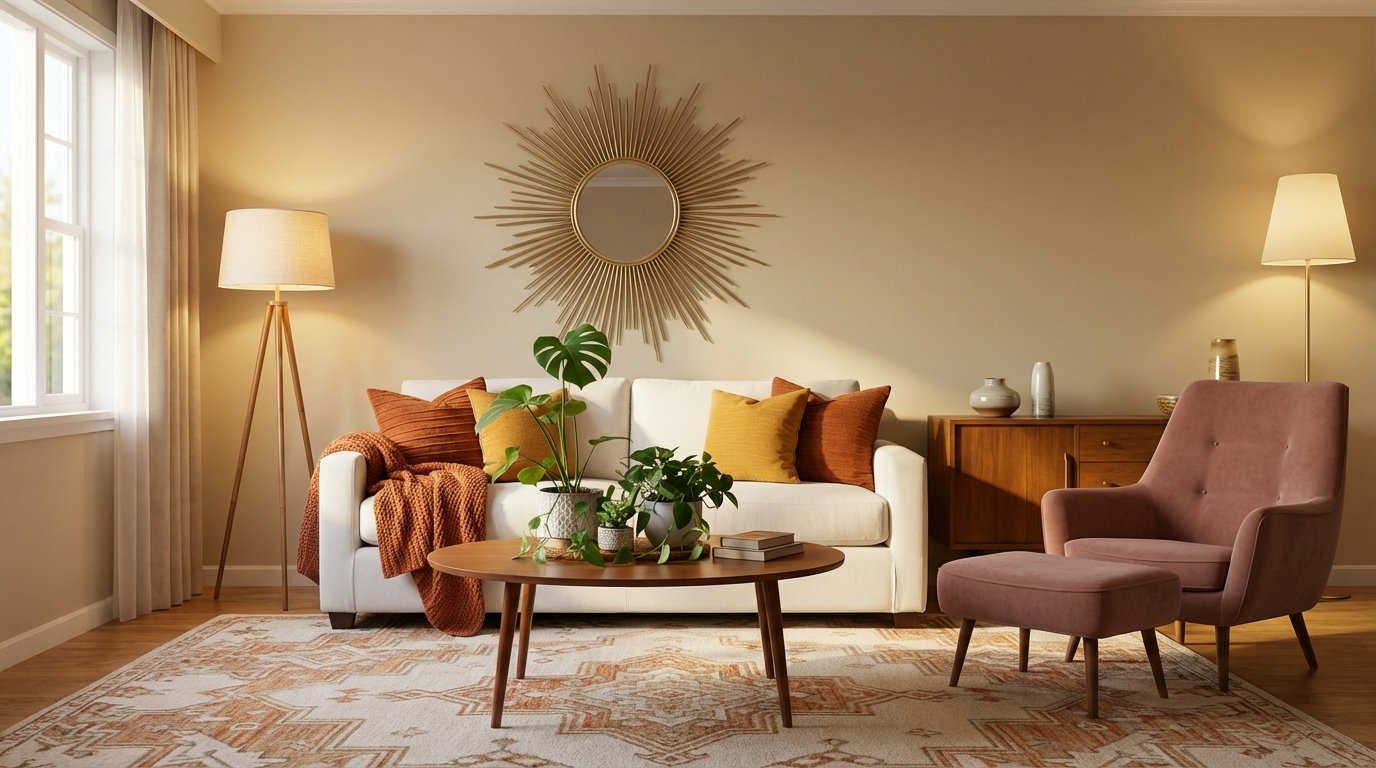
You walk into your living room after a long day, and instead of feeling cold or sterile, you feel like you are being wrapped in a giant, warm hug. That is the power of a well-executed warm color palette. For years, the design world was dominated by cool grays and stark whites, but the trend has officially shifted. We are now seeing a massive return to “lived-in” luxury, where comfort meets style through earthy tones, rich textures, and inviting layouts.
This guide is not just about painting your walls orange. It is about strategically using warm undertones—even in your neutrals—to create a space that feels restorative and grounded. Whether you are working with a small apartment or a spacious open floor plan, these 10 cozy living room ideas will show you exactly how to layer color, light, and texture to build a sanctuary you never want to leave.
Key Takeaways
- Undertones Matter: You can keep a neutral palette by choosing whites and grays with yellow or red undertones instead of blue.
- Texture is Key: Warmth is not just visual; it is tactile. Layering wool, velvet, and wood instantly raises the “cozy factor.”
- Lighting Sets the Tone: Always opt for bulbs with a color temperature between 2700K and 3000K to mimic the golden hour.
- Nature connects: Incorporating raw materials like terracotta, stone, and unpolished wood bridges the gap between indoors and outdoors.
- Contrast Creates Depth: Deep accent colors like rust, olive, or mustard prevent warm rooms from looking flat or muddy.
Table of Contents
- Warm Color Palettes with Neutrals
- Comfortable Seating Arrangements
- Nature-Inspired Decor Elements
- Warm Lighting to Set the Mood
- Inviting Accent Walls in Deep Hues
- Rich Jewel Tones for a Luxurious Feel
- Rustic Warmth with Earthy Tones
- Seasonal Accents for Year-Round Warmth
- Personal Touches with Warm Decor
- Layered Textures for Comfort
- Popular Asked Questions
- Conclusion
Warm Color Palettes with Neutrals
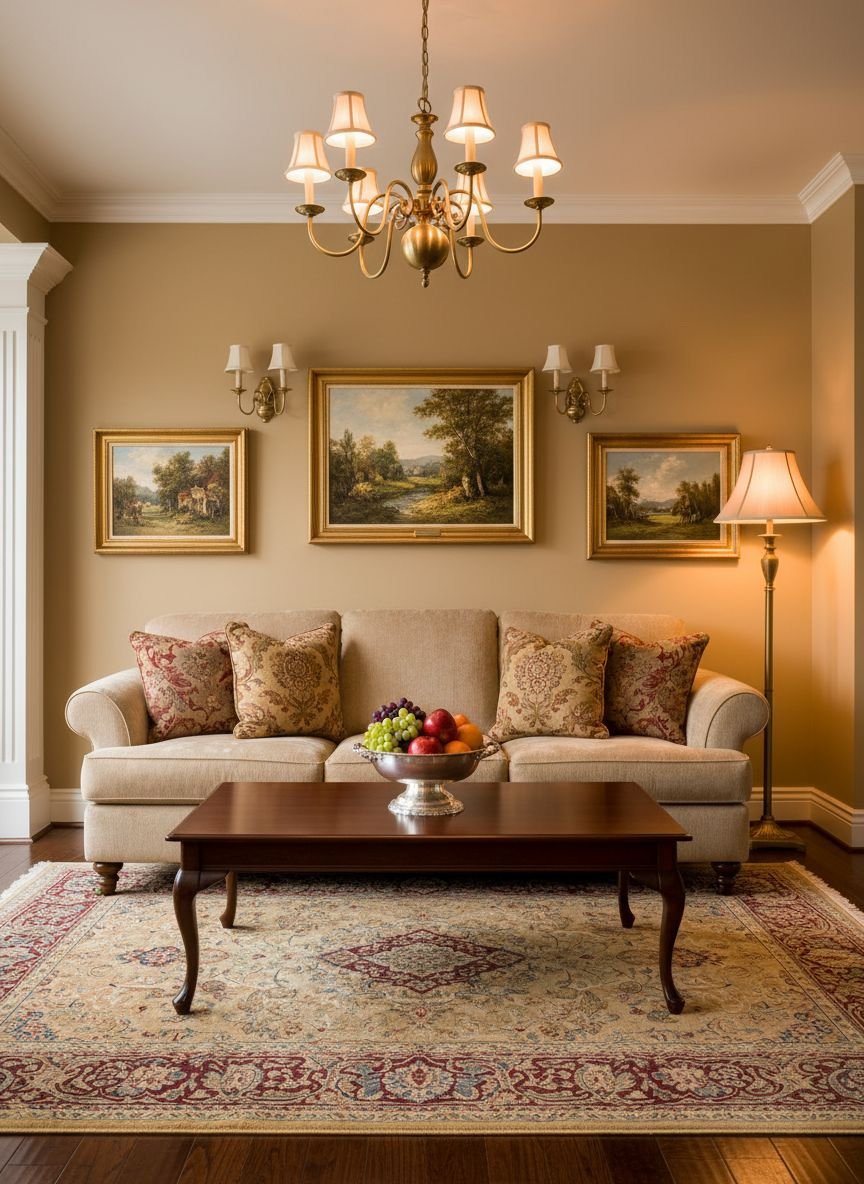
Many people mistakenly believe that “warm colors” mean painting everything red or yellow. However, the most sophisticated warm living rooms often start with a neutral base. The secret lies in the undertones. Instead of a stark, hospital white, opt for creamy off-whites like “Swiss Coffee” or “White Dove.” These shades reflect light in a way that feels sunny and soft rather than clinical.
When building your palette, think of “warm minimalism.” You want to layer different shades of beige, oatmeal, and sand. This monochromatic approach creates a serene backdrop that allows your furniture to stand out. To avoid the room looking flat, ensure you vary the saturation. Use a pale cream for the walls, a darker oat color for the sofa, and a rich tan for the rug. This gradation adds visual interest without screaming for attention.
Pro Tip:
Test your paint samples at different times of the day. A “warm white” can turn yellow in the morning sun or muddy in the evening shadow, so always swatch a large section before committing.
Save this idea to your Pinterest.
Comfortable Seating Arrangements
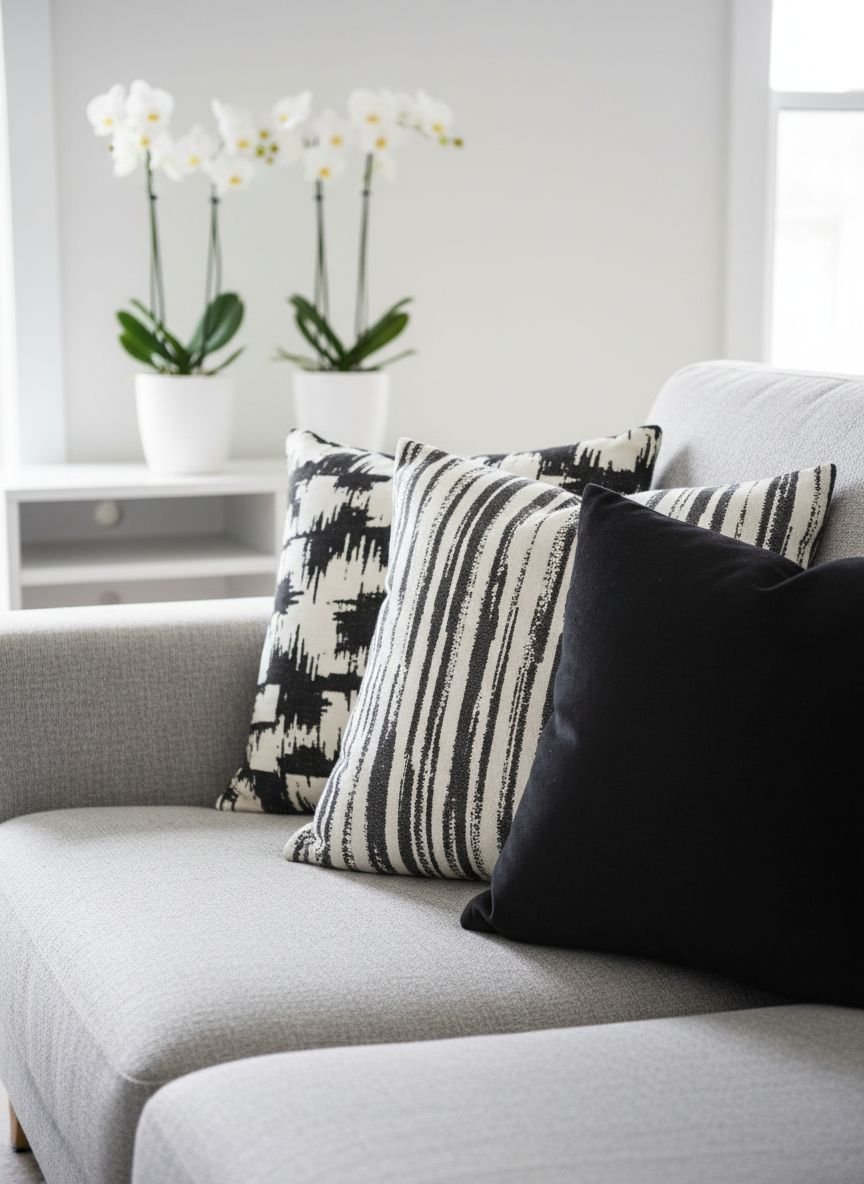
The layout of your furniture dictates how “cozy” the room feels just as much as the color does. A warm living room should invite conversation and relaxation. Push back against the urge to shove all furniture against the walls. Instead, float your sofa and armchairs in the center of the room to create an intimate “conversation pit.” This arrangement naturally draws people together and makes the room feel fuller and more embraced.
Focus on the furniture itself. Sharp, angular lines can feel cold and corporate. Look for sofas with rounded edges, deep seats, and rolled arms. Sectionals in warm fabrics like cognac leather or rust-colored velvet serve as a visual anchor. If you have a large open space, use two facing sofas to create a dedicated zone that feels enclosed and private, distinct from the dining or kitchen areas.
Pro Tip:
Place a console table behind a floating sofa. It grounds the piece and offers a surface for warm table lamps or books, preventing the back of the sofa from looking like a floating island in the middle of the room.
Nature-Inspired Decor Elements
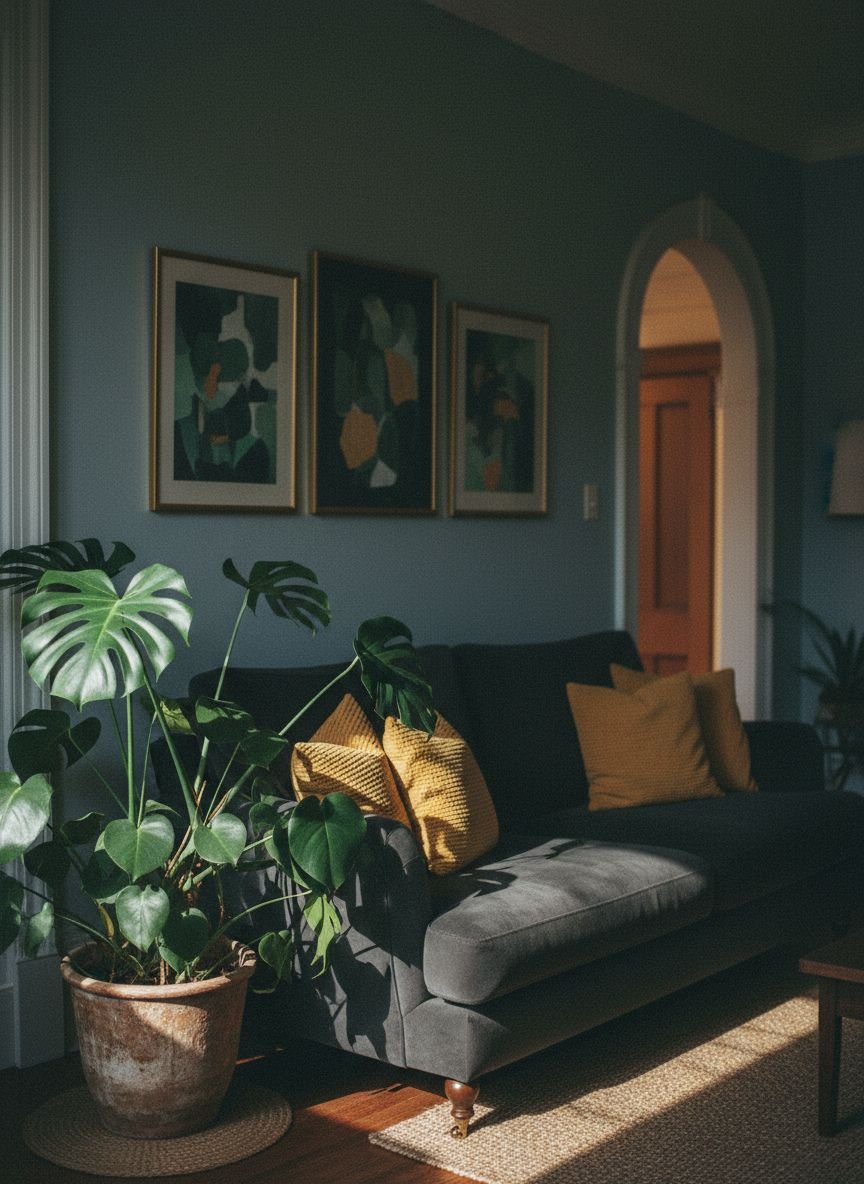
Biophilic design is a major trend that focuses on bringing the outdoors in, and it is essential for a warm aesthetic. Nature is rarely perfectly smooth or uniform, so introducing organic imperfections adds character. Wood is your best friend here. Incorporate a reclaimed wood coffee table, oak floating shelves, or a walnut media console. The grain patterns and natural variations in the wood tone add a layer of visual warmth that plastic or metal simply cannot achieve.
Beyond wood, consider other natural materials like stone, clay, and rattan. A large terracotta planter in the corner or a woven jute rug centers the room with earthy textures. These elements work particularly well with warm color palettes because they share the same brown and beige DNA. Greenery is also vital; the vibrant green of a fiddle leaf fig or a hanging pothos provides a refreshing contrast to warm tones, keeping the room from feeling stuffy.
Pro Tip:
Mix wood tones. You do not need to match your coffee table perfectly to your floors. Mixing dark walnut with lighter oak creates a collected, evolved look that feels more authentic and less like a showroom.
Save this idea to your Pinterest.
Warm Lighting to Set the Mood
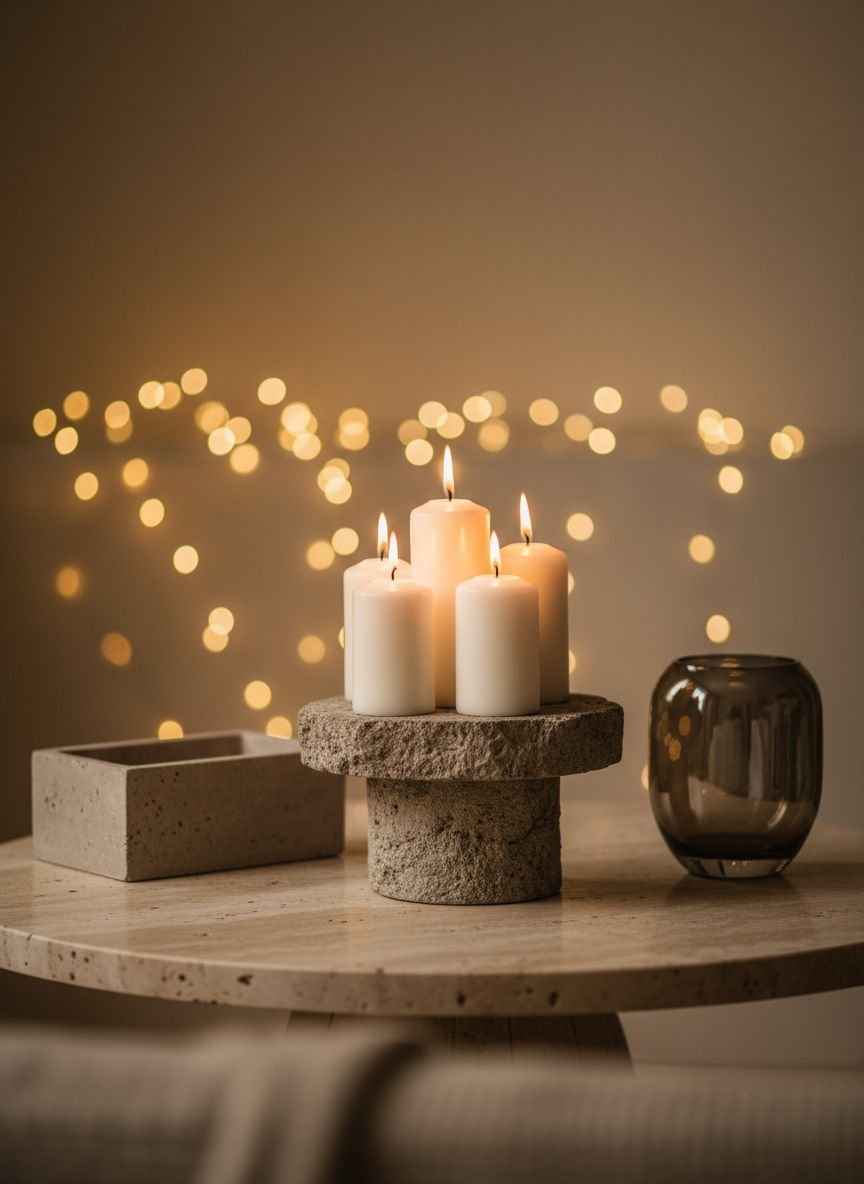
Lighting is the unsung hero of interior design. You could have the perfect furniture and paint, but cool, fluorescent lighting will instantly kill the vibe. To achieve that golden, cozy glow, you need to layer your lighting sources. Relying on a single overhead fixture often casts harsh shadows. Instead, aim for at least three sources of light at different heights: floor lamps, table lamps, and wall sconces.
Pay close attention to the color temperature of your bulbs. You want LEDs that are rated between 2700K (warm white) and 3000K (soft white). Anything higher than 3500K will start to look blue and clinical. Dimmers are also non-negotiable for a cozy living room. Being able to lower the lights creates an instant shift in atmosphere, signaling that the work day is over and it is time to relax.
Pro Tip:
Use lamp shades made of linen or parchment. These materials diffuse the light softly, adding a physical texture to the light source itself and casting a warmer glow than glass or metal shades.
Inviting Accent Walls in Deep Hues
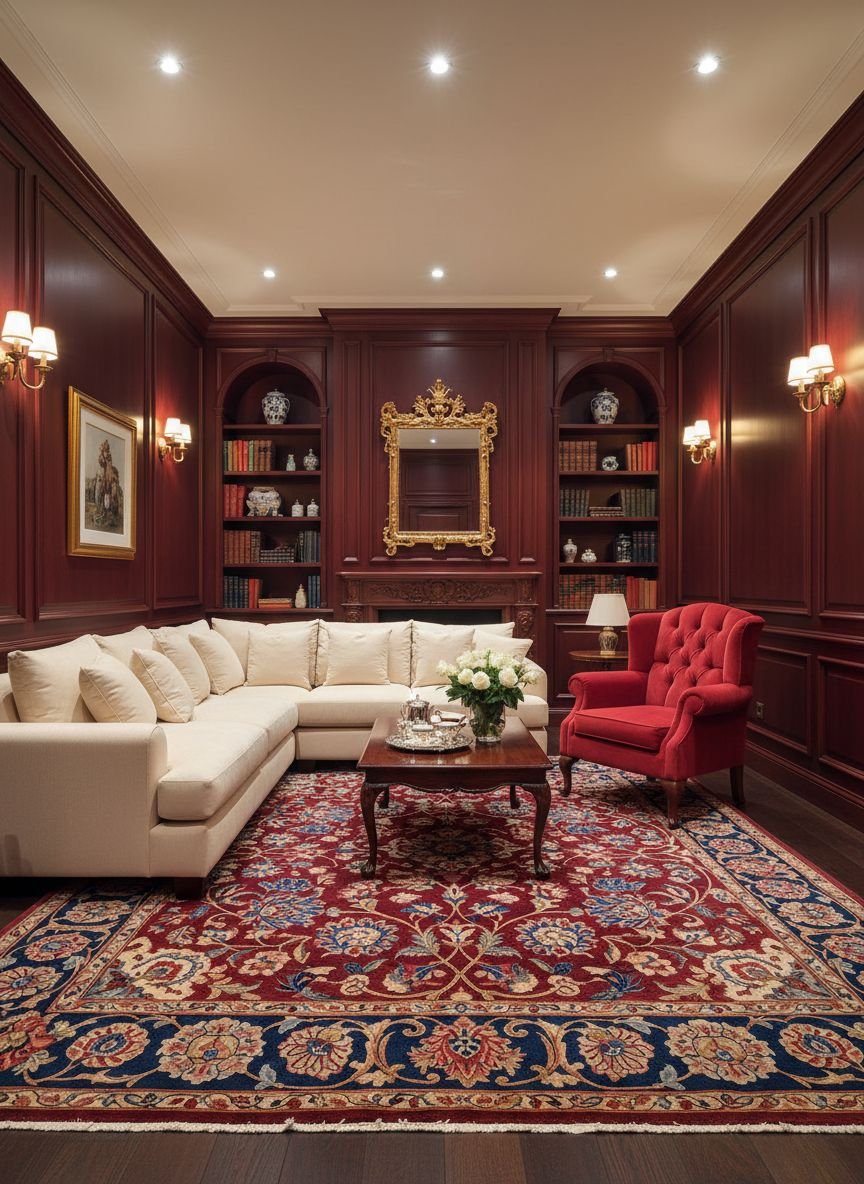
If you are ready to move beyond neutrals, an accent wall is a fantastic way to introduce a bold, warm color without overwhelming the space. Deep hues like burnt orange, terracotta, moody sage, or even a rich burgundy can make a large room feel more intimate. The key is to choose a wall that acts as a natural focal point, such as the wall behind the sofa or the fireplace.
When painting an accent wall in a dark, warm color, consider the finish. A matte or eggshell finish absorbs light, making the color feel velvety and deep. A high-gloss finish might reflect too much light and look garish. Pair this deep wall with lighter furniture to create a striking contrast. For example, a camel leather sofa pops beautifully against a dark olive or navy wall (yes, navy can be warm if it has red undertones!).
Pro Tip:
If painting a whole wall feels too permanent, try a gallery wall with warm-toned art or a large tapestry. This gives you the color impact with zero commitment and adds acoustic dampening to the room.
Save this idea to your Pinterest.
Comparison: Warm Paint Finishes
| Finish Type | Visual Effect | Best Used For | Durability |
|---|---|---|---|
| Flat/Matte | Velvety, absorbs light, hides imperfections. | Ceilings, low-traffic accent walls. | Low (hard to clean). |
| Eggshell | Soft glow, slight sheen, true color representation. | Living room walls, hallways. | Medium (wipable). |
| Satin | Pearly sheen, reflects warmth. | Trim, doors, high-traffic areas. | High (scrubbable). |
| Semi-Gloss | Shiny, highlights texture. | Window frames, mantels. | Very High. |
Rich Jewel Tones for a Luxurious Feel
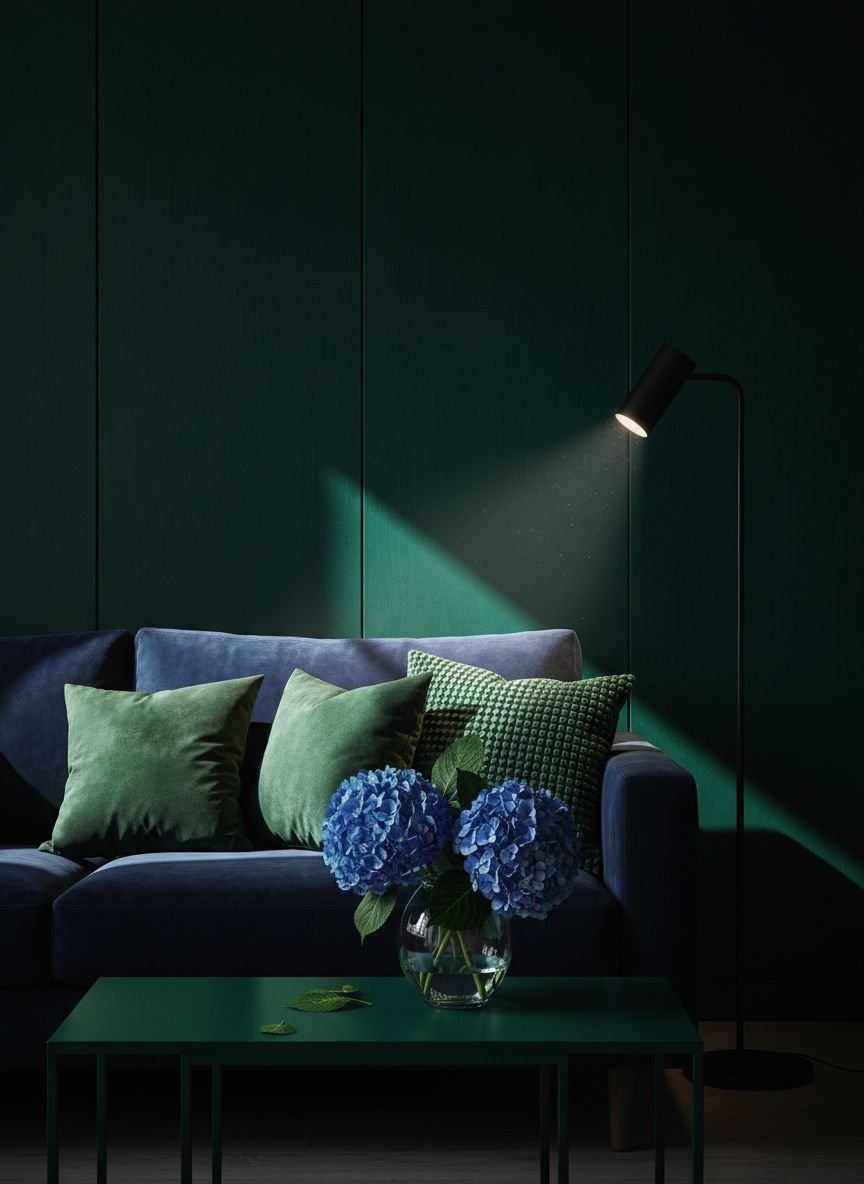
Jewel tones are the sophisticated cousins of primary colors. Think emerald green, sapphire blue, ruby red, and amethyst. These colors are inherently cozy because they are saturated and absorbing. They create a sense of depth and luxury that makes a living room feel like a boutique hotel lounge. While they are bold, they pair exceptionally well with warm neutrals and metallic accents like brass or gold.
You do not have to paint the walls ruby red to get this look. Introduce jewel tones through upholstery and accessories. A deep emerald velvet armchair can be the star of the show in a beige room. Throw pillows in sapphire and amethyst add pockets of richness to a neutral sofa. These colors work best in lush fabrics like velvet, silk, or chenille, which catch the light and enhance the color’s natural warmth.
Pro Tip:
Balance is crucial. If you use a large jewel-toned piece, keep the surrounding elements relatively neutral to let the color breathe. A ruby rug looks stunning against wood floors and cream walls.
Rustic Warmth with Earthy Tones
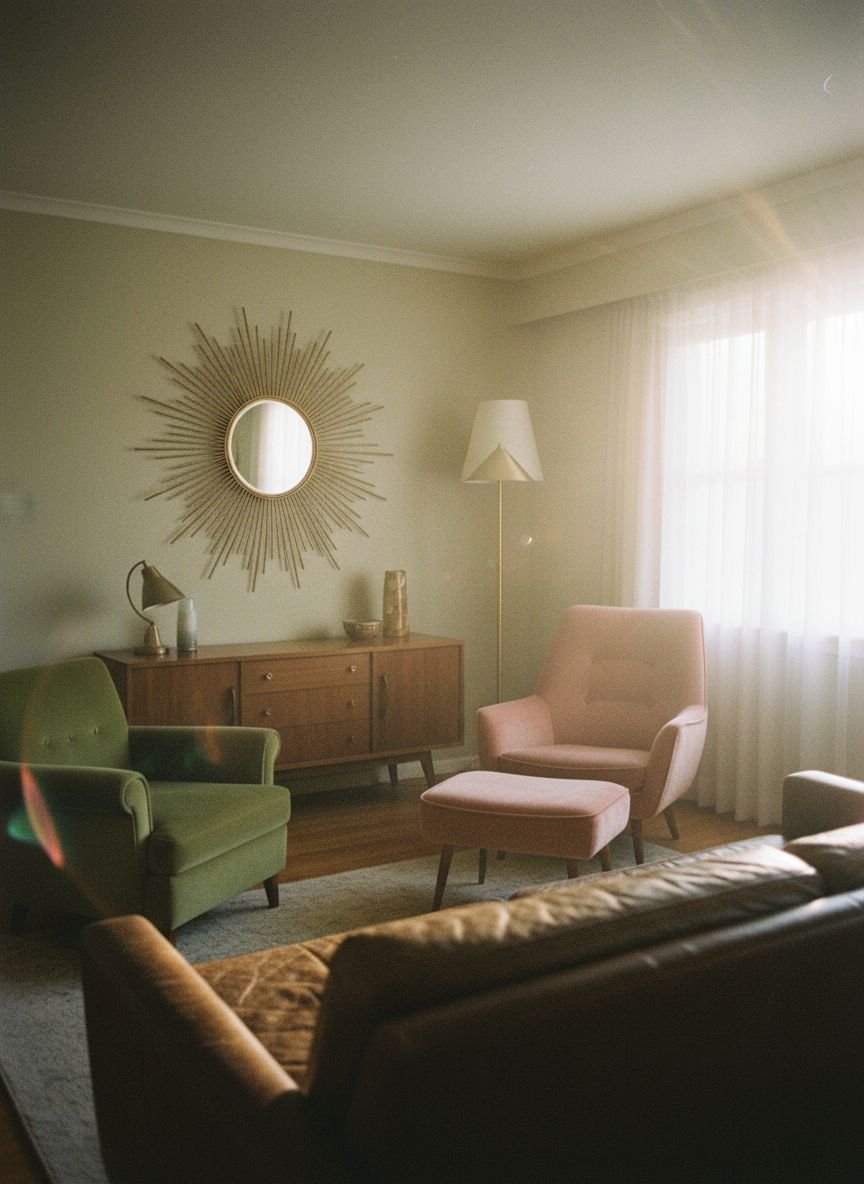
The “Modern Rustic” style is having a huge moment because it perfectly balances comfort with clean lines. This look relies heavily on an earthy color palette derived from clay, soil, and rocks. Colors like ochre, rust, sienna, and warm taupe are staples here. Unlike the crispness of modern design, rustic warmth embraces muddier, more complex colors that feel grounded and timeless.
To nail this look, combine these earthy paint colors with raw textures. A stone fireplace, a rough-hewn wooden mantel, or a leather ottoman all contribute to the vibe. The goal is to create a space that feels connected to the earth. This style is particularly effective in creating a cozy atmosphere because it mimics the natural environments where humans feel most sheltered and safe.
Pro Tip:
Incorporate pottery. Displaying a collection of handmade ceramic vases in varying shades of clay and earth tones is a beautiful, low-effort way to reinforce the rustic theme on your shelves.
Save this idea to your Pinterest.
Seasonal Accents for Year-Round Warmth
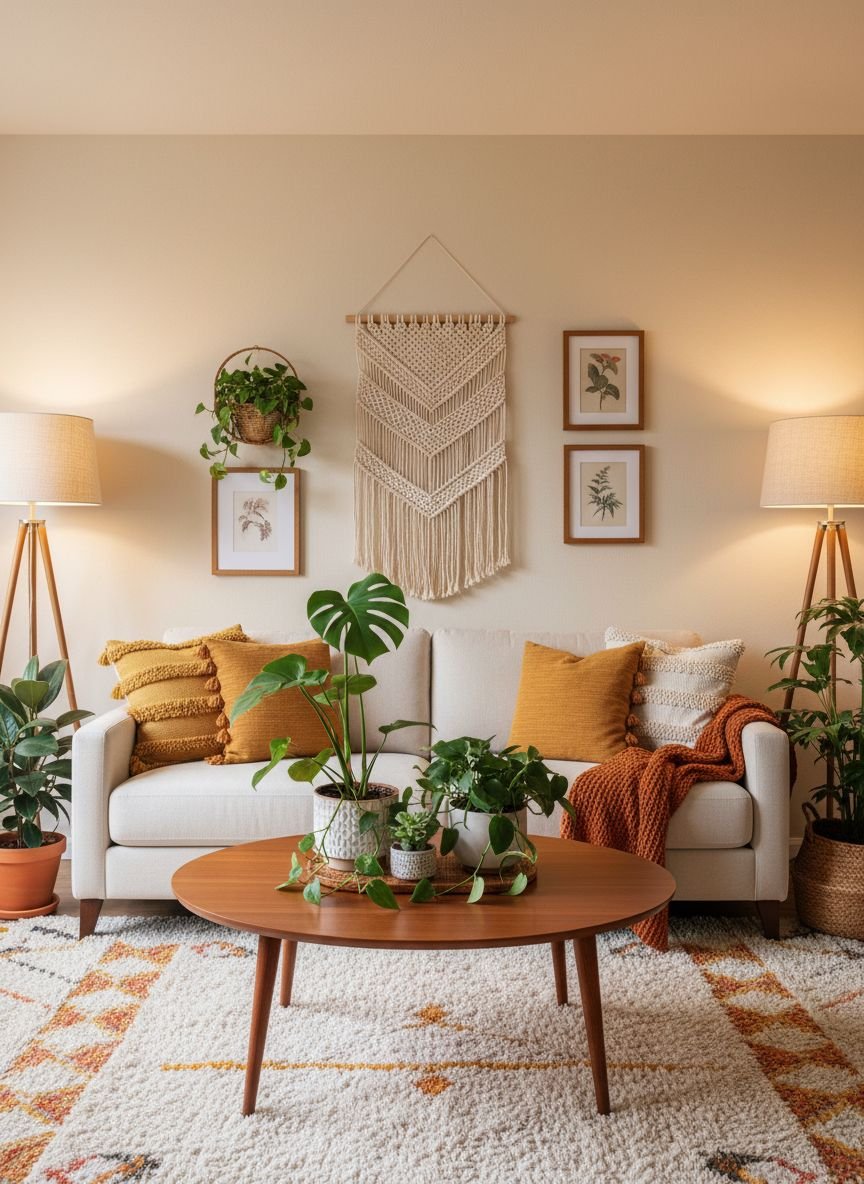
A truly cozy living room adapts to the seasons while maintaining its warm core. You do not need to redecorate every three months, but swapping out small textiles can make a huge difference. In the colder months, layer on heavy wool throws, faux fur pillows, and thick knit blankets. These physical layers add visual weight and suggest warmth immediately.
In the warmer months, you can keep the cozy vibe without overheating by switching to lighter warm textures. Swap the wool for linen or cotton in warm shades like oatmeal, blush, or pale terracotta. The color palette stays consistent, keeping the room inviting, but the fabrics breathe better. This rotation keeps your living room feeling fresh and curated throughout the year.
Pro Tip:
Keep a “seasonal basket” in a closet. Store your heavy winter throws there during summer and swap them for your lighter linen textiles. This keeps clutter down and makes the transition effortless.
Personal Touches with Warm Decor
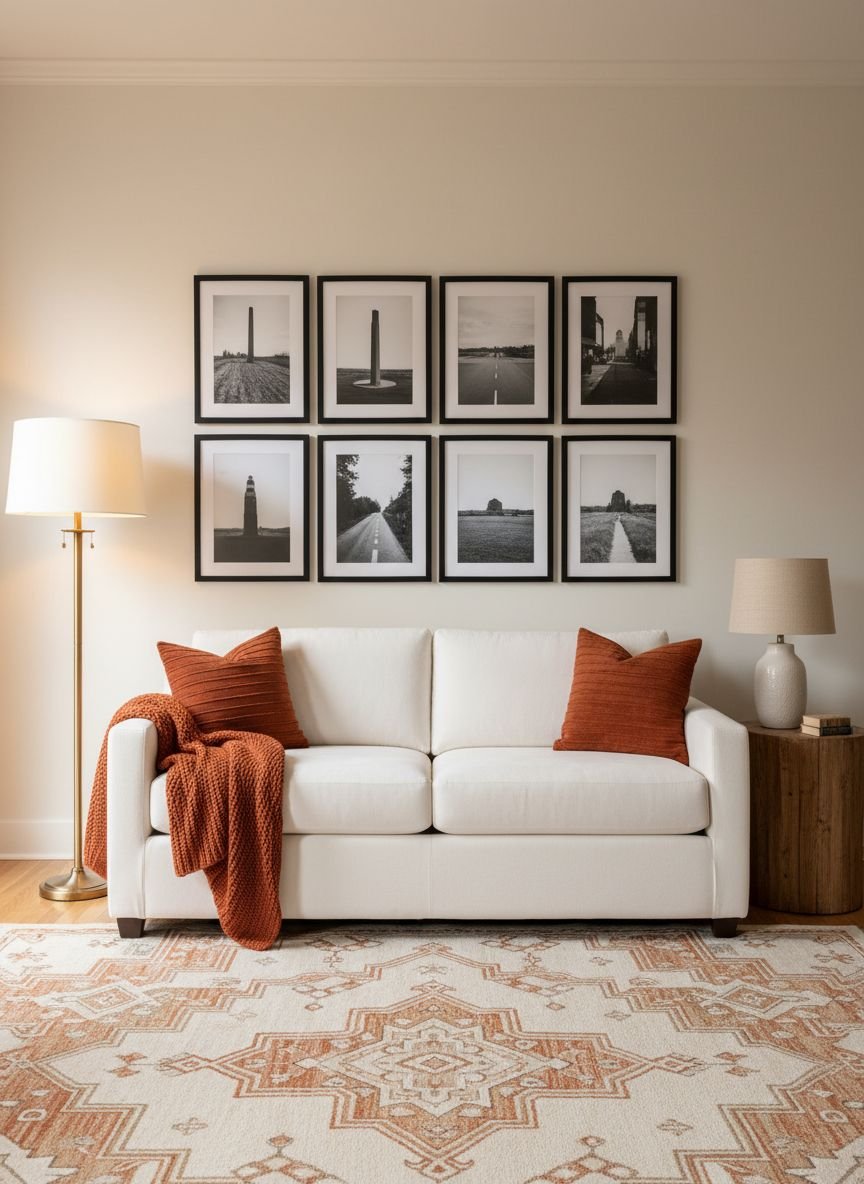
A showroom is never as cozy as a home because it lacks a personal narrative. The final layer of warmth comes from items that tell your story. This could be a gallery wall of family photos in warm wood frames, a stack of your favorite vintage books, or travel souvenirs displayed on a shelf. These items add an emotional warmth that paint and furniture cannot replicate.
When selecting decor, lean towards items with a history or a “handmade” feel. A hand-thrown bowl, a vintage rug with some wear, or a piece of art you bought at a local market adds soul to the room. Avoid mass-produced plastic decor that feels disposable. The imperfections and stories behind your objects make the space feel lived-in and welcoming to guests.
Pro Tip:
Group your collectibles. Instead of scattering small items all over the room, cluster them in groups of three on a coffee table or shelf. This creates a deliberate vignette rather than looking like clutter.
Save this idea to your Pinterest.
Layered Textures for Comfort
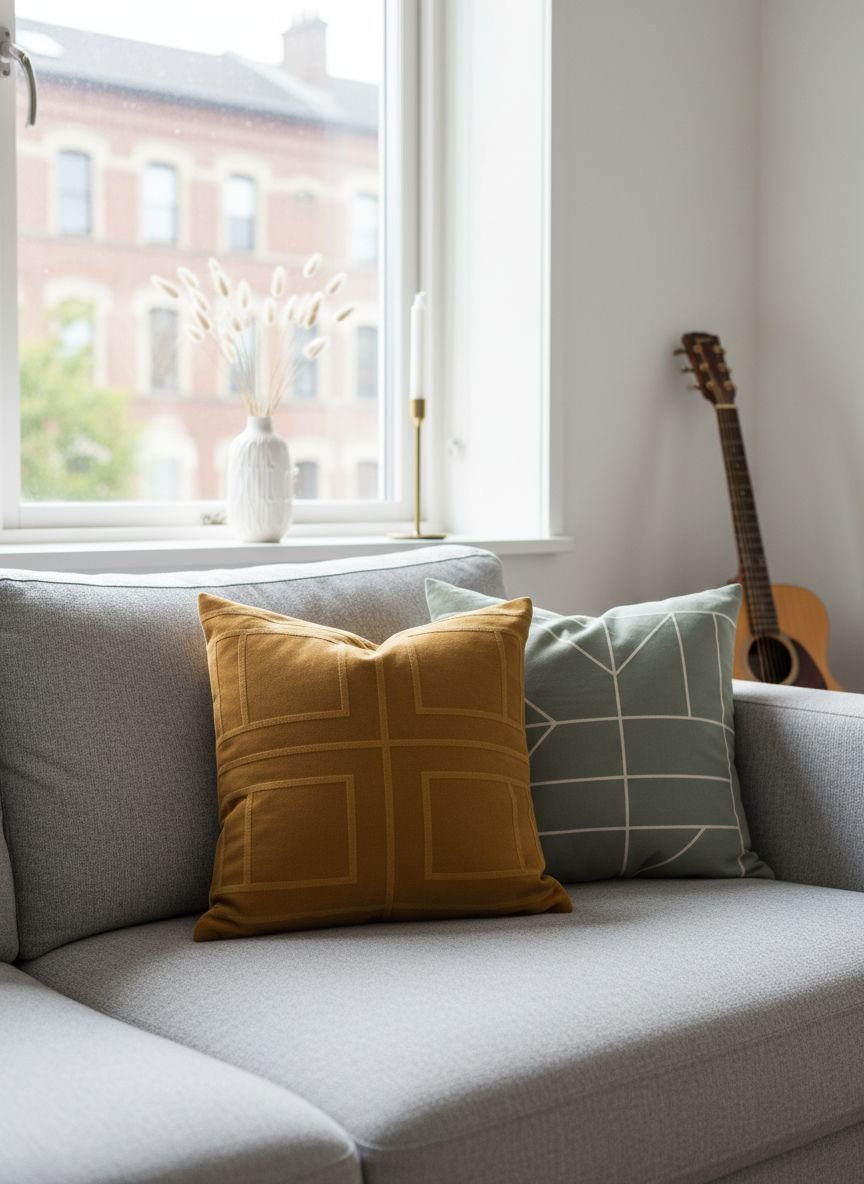
If you take nothing else away from this guide, remember this: Texture is the shortcut to coziness. A room with flat walls, a flat floor, and a flat leather sofa will feel cold, even if it is painted red. You must interrupt those flat surfaces with varying tactile experiences. This is called “layering.”
Start from the floor up. Place a plush area rug over your hardwood or carpet. Add a sofa with a woven fabric like boucle or tweed. Drape a cashmere throw over the arm. Mix pillow fabrics—pair a smooth velvet pillow with a rougher linen one and a chunky knit one. These contrasts give your eyes (and your skin) something to explore. The interplay of smooth, rough, soft, and hard creates a sensory richness that defines a cozy living room.
Pro Tip:
Don’t forget window treatments. Swap flimsy blinds for floor-to-ceiling curtains in a heavy fabric like velvet or a thick linen blend. They add softness to the vertical space and help insulate the room, keeping it physically warmer.
Get The Look: Cozy Essentials
- Base Layer: Jute or Wool Area Rug.
- Soft Layer: Boucle or Velvet Throw Pillows.
- Warm Glow: Brass Floor Lamp with Linen Shade.
- Organic Element: Reclaimed Wood Coffee Table.
- Scent: Soy Candle (Vanilla, Sandalwood, or Amber).
Related posts :
- 16 Stunning Beige Living Room Ideas That Instantly Create a Cozy and Stylish Space
- 12 Stunning Modern Living Room Ideas to Transform Your Space
- 10 Stunning Ways to Make Your Living Room Stand Out and Instantly Transform Your Space
Popular Asked Questions
What colors make a living room look warm and cozy?
Warm colors are typically those with red, orange, or yellow undertones. This includes obvious choices like terracotta, rust, and mustard, but also includes “warm neutrals” like creamy white, beige, taupe, and mushroom gray. Even greens and blues can be warm if they have a yellow undertone (like olive green or teal).
How do I make my living room cozy with color?
You can make a room cozy by “drenching” it in color or by layering. Color drenching involves painting the walls, trim, and even the ceiling in the same warm hue to create an enveloping feel. If that is too bold, use a warm neutral on the walls and layer in warmth through rugs, wood furniture, and amber-toned lighting.
What is the most welcoming color for a living room?
Warm neutrals are generally considered the most welcoming because they are versatile and calming. Shades like “Greige” (a mix of gray and beige), soft sand, and warm oatmeal are universally inviting. They provide a soft backdrop that allows guests to relax without being overstimulated by bright primary colors.
Can cool colors be cozy?
Yes, absolutely. Cool colors like blue and green can be very cozy if you choose deep, moody shades. A dark navy or forest green room can feel like a cozy cocoon, especially when lit with warm lamps and accented with brass or gold hardware. The key is to pair them with warm textures like wood and leather to balance the “coolness.”
Conclusion

Creating a cozy living room featuring warm colors is about more than just a can of paint. It is about curating a feeling. By combining a thoughtful color palette with layered lighting, rich textures, and personal touches, you can transform a sterile space into a sanctuary. Remember that your home should serve you—it should be the place where you feel most at ease.
Start small. Maybe swap out your cool white bulbs for warm ones, or add a rust-colored throw to your sofa. Watch how these small shifts change the energy of the room.






Leave a Comment