
The “Utility” Hook
You probably know the feeling of tracking mud into your pristine kitchen just to wash your hands after a gardening session. It is frustrating and completely avoidable. The trend of installing a DIY outdoor sink has exploded this year because it solves a critical hygiene problem while adding a stunning visual element to your backyard. Whether you need a dedicated garden potting bench with sink or a simple outdoor washing station for summer BBQs, you do not need a professional plumber to make it happen. This guide breaks down 14 achievable projects that range from rustic upcycled designs to sleek, modern stations. We focus on budget-friendly materials and clever drainage solutions that anyone can master in a weekend.
Key Takeaways
- Hygiene First: Keep soil, grease, and garden debris out of your indoor plumbing.
- Water Reuse: Many of these designs allow you to recycle greywater directly into your flower beds.
- Budget-Friendly: Most projects utilize upcycled materials like pallets, old barrels, or galvanized tubs.
- No Plumbing Required: Learn how to use garden hoses and simple gravity drainage systems.
Table of Contents
- Elegant Gray Sink Station with Storage
- DIY Wooden Log Outdoor Sink
- DIY Stone Sink Station
- DIY Wooden Cable Spool Outdoor Sink
- Cute Boho Sink Station
- DIY Outdoor Portable Sink
- DIY Old Oil Drum Sink Idea
- DIY Industrial Sink Station
- DIY Rustic Galvanized Garden Sink Idea
- DIY Old Wine Barrel Outdoor Sink
- DIY Stone and Wood Outdoor Sink Station
- A Garden Potting Bench with Sink Project idea
- DIY Milk Bucket Outdoor Sink Station
- DIY Stoneage Sink Station
- Popular Asked Questions
- Conclusion
Elegant Gray Sink Station with Storage
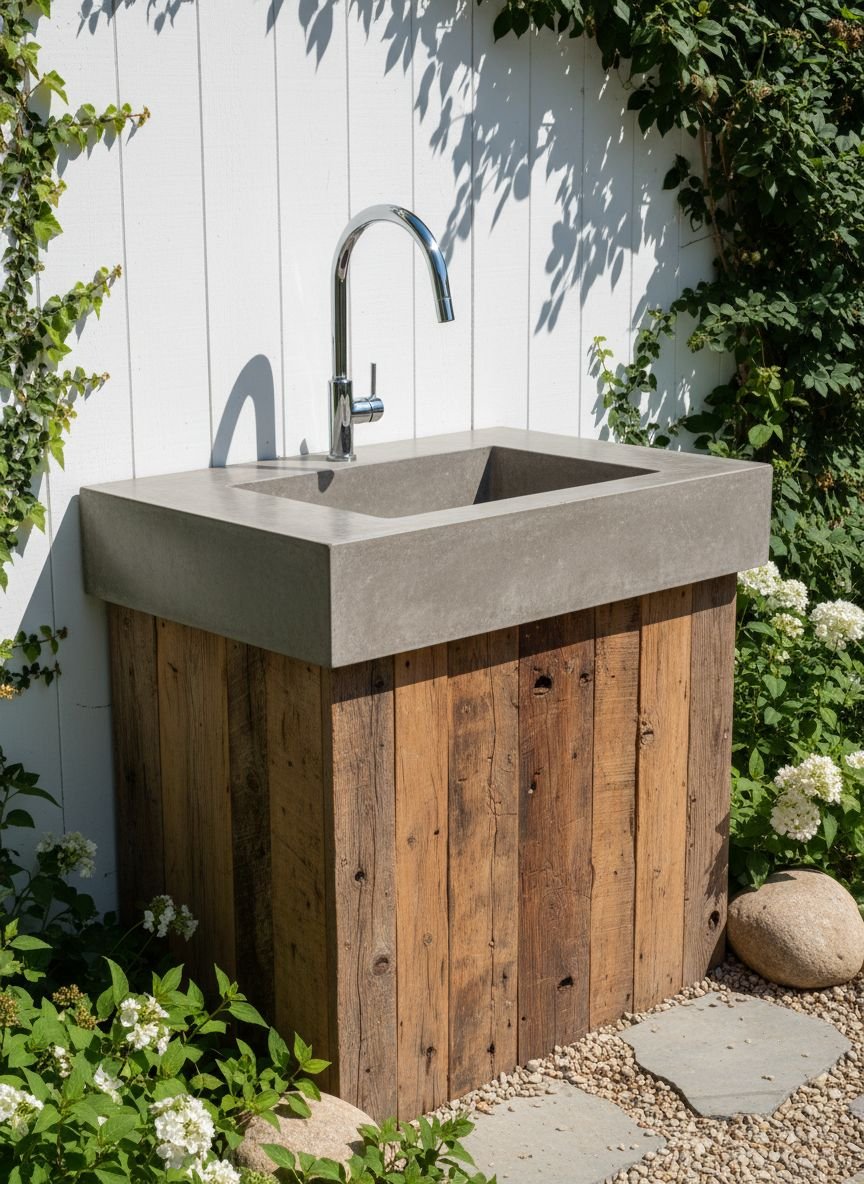
This design perfectly balances functionality with a sophisticated aesthetic, making it ideal for modern farmhouse gardens. The station features a deep basin set into a sturdy wooden cabinet painted in a calming, matte gray. The color choice is intentional. Gray acts as a neutral backdrop that allows the vibrant greens of your garden to pop, while also hiding minor dust and dirt splashes that are inevitable outdoors. The inclusion of lower cabinetry provides essential storage for unsightly items like fertilizers, scrub brushes, and extra hose attachments.
To recreate this look, you can repurpose an old kitchen cabinet. Sand it down thoroughly and apply a high-quality exterior paint designed to withstand UV rays and moisture. For the countertop, consider sealing butcher block with marine-grade varnish or using a remnant piece of quartz for a touch of luxury. The plumbing here can be as simple as a hookup to your garden hose, with drainage directed into a gravel pit beneath the unit.
Pro Tip: Install hooks on the side of the cabinet to hang hand towels or drying herbs, keeping the countertop clutter-free.
DIY Wooden Log Outdoor Sink
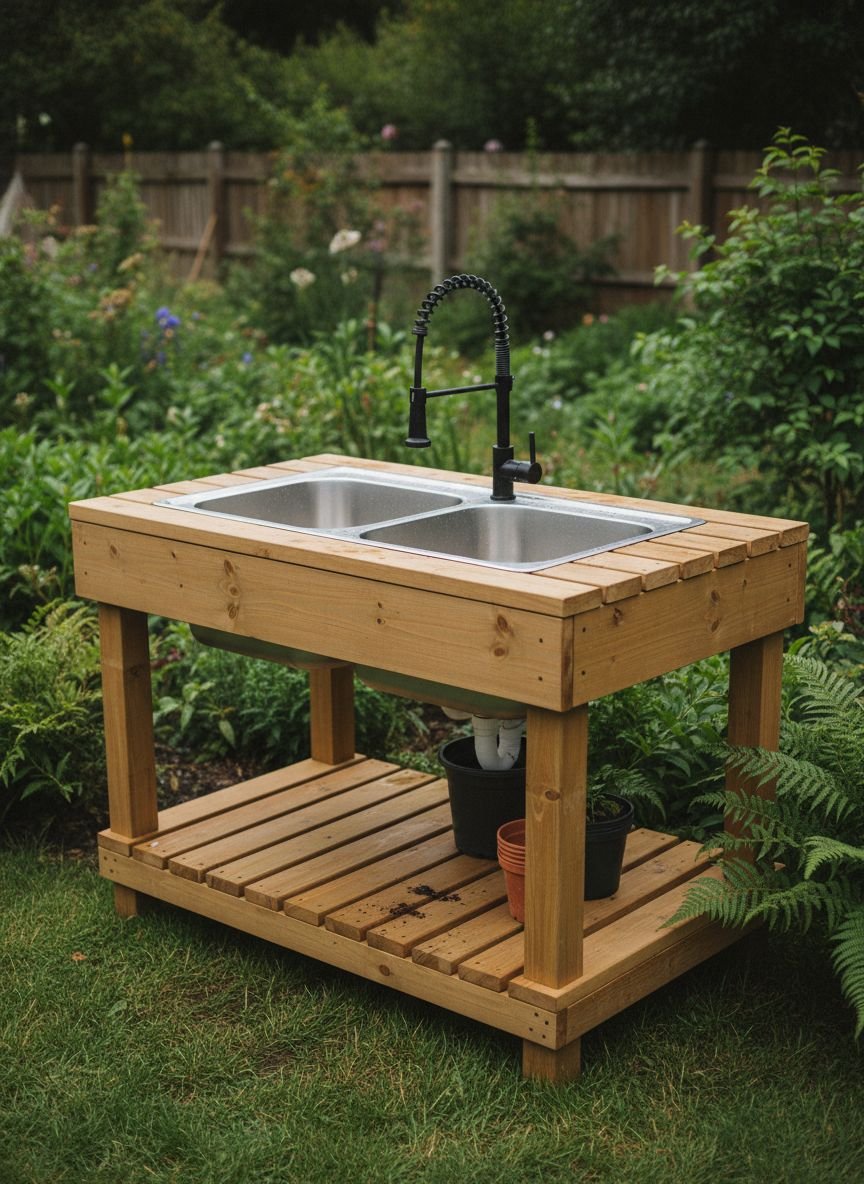
For those who want their garden decor to feel like an extension of nature, a wooden log sink is the ultimate rustic outdoor decor statement. This project typically involves hollowing out a large, reclaimed log or stump to house a drop-in basin, or in some advanced cases, treating the wood itself to act as the basin. The texture of the bark contrasts beautifully with the smooth surface of a copper or stone vessel sink. This design works exceptionally well in woodland gardens or cottage-style backyards where synthetic materials might look out of place.
The construction relies on stability. You must ensure the log is cut perfectly flat at the base to prevent tipping. If you are using a metal basin, a copper bowl ages gracefully outdoors, developing a verdigris patina that blends with the environment. Drainage is usually concealed within the hollowed-out center of the log, running a PVC pipe out the back toward a garden bed. This setup is less about storage and more about creating a sculptural water feature that serves a practical purpose.
Pro Tip: Coat the cut top surface of the log with epoxy resin to prevent water from seeping into the wood grain and causing rot over time.
DIY Stone Sink Station
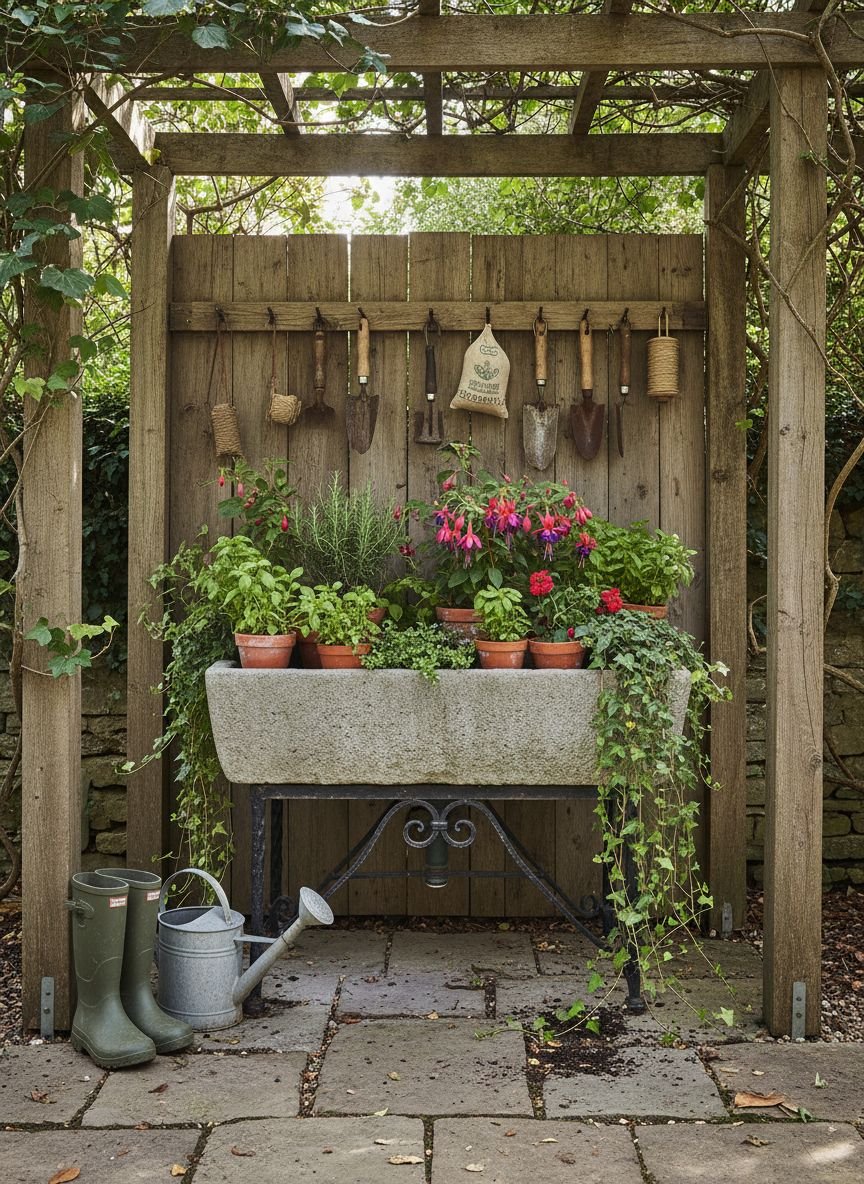
Stone is arguably the most durable material for any outdoor project, and a stone sink station offers a timeless, permanent feel. This idea often utilizes stacked flagstone or slate to build two pillars, supporting a heavy stone or concrete slab countertop. The visual weight of the stone anchors the space, creating a dedicated zone for washing vegetables or cleaning tools. It is a design that speaks to permanence and old-world charm, reminiscent of Italian courtyard gardens.
Building this requires a level foundation, preferably a concrete pad or compacted gravel, to handle the immense weight. You can use mortar to secure the stones for a permanent structure or dry-stack flat stones for a more casual look that can be moved later if necessary. A vessel sink made of river rock or carved granite completes the look. Because stone is impervious to weather, this station requires virtually no maintenance other than an occasional spray down.
Pro Tip: Integrate a flat, wide stone on one side of the sink to serve as a built-in cutting board for prepping garden-fresh veggies.
DIY Wooden Cable Spool Outdoor Sink
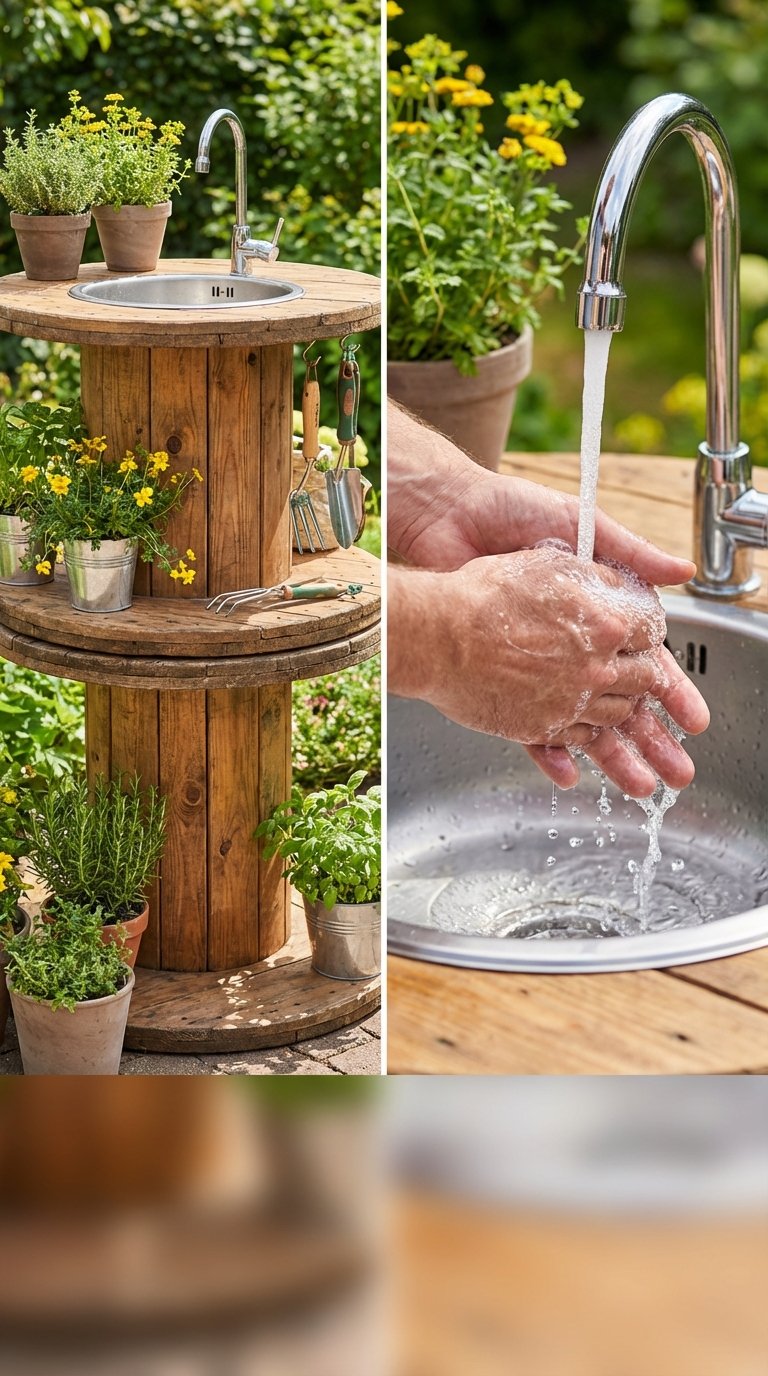
Upcycling industrial waste is a massive trend in sustainable gardening, and wooden cable spools are perfect candidates for a unique DIY garden sink. The circular shape of the spool offers 360-degree access, making it an excellent centerpiece for a social patio or a communal gardening area. The natural weathering of the industrial wood adds character that is hard to replicate with new lumber. This design is inherently playful and breaks away from the standard rectangular workbench silhouette.
To implement this, you will need to cut a hole in the center of the top spool tier to fit a round basin. A galvanized metal bucket works wonderfully here to maintain the industrial vibe. The space between the top and bottom wheels of the spool can be modified with dowels or wire mesh to hold pots or gardening gloves. Since cable spools are often made of untreated rough wood, extensive sanding and sealing with outdoor oil are crucial to prevent splinters and weather damage.
Pro Tip: Add heavy-duty caster wheels to the bottom of the spool so you can roll your sink station into the shade or storage during winter.
Cute Boho Sink Station
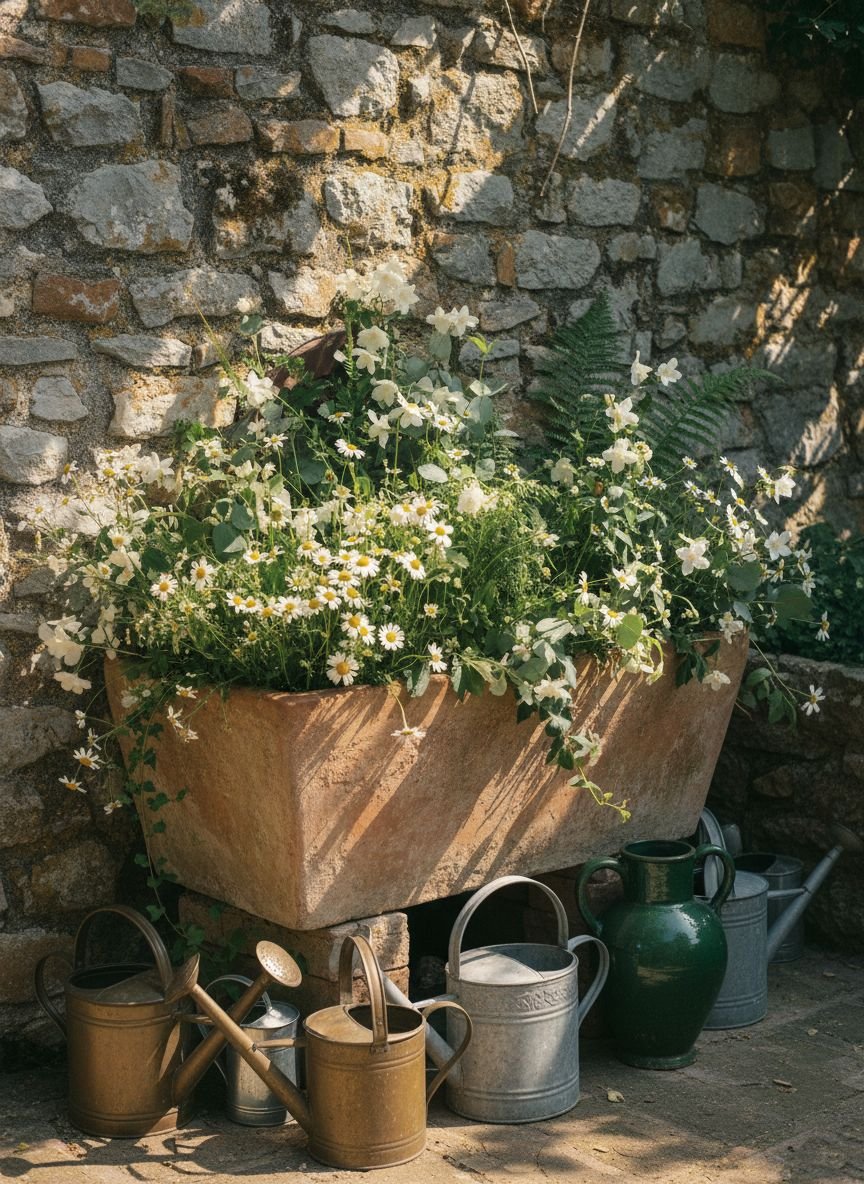
The Boho aesthetic is all about texture, warmth, and eclectic charm. A Boho sink station often features a vintage vanity or a distressed wooden table paired with a colorful, patterned ceramic basin. The key to this look is styling. Think macramé plant hangers suspended above the sink, brass fixtures, and perhaps a small woven rug in front of the station. It transforms a utilitarian task like washing hands into a delightful, sensory experience.
When building this, look for second-hand furniture with interesting legs or carved details. You do not need to aim for perfection; a bit of chipped paint adds to the bohemian allure. However, you must protect the piece from the elements. A clear matte polyurethane coat will seal the “shabby chic” look without making it look plastic. For the water source, a simple vintage-style faucet connected to a hidden hose keeps the plumbing invisible and maintains the magic of the design.
Pro Tip: Surround the base of your sink station with potted ferns and trailing ivy to soften the edges and integrate the furniture into the garden.
Comparison: Top Outdoor Sink Materials
| Material | Durability | Aesthetic | Maintenance Level | Best For |
|---|---|---|---|---|
| Stainless Steel | High | Modern/Industrial | Low | Heavy-duty cleaning, BBQ areas |
| Stone/Concrete | Very High | Rustic/Permanent | Very Low | Garden washing, permanent fixtures |
| Wood (Treated) | Medium | Natural/Warm | High (Needs sealing) | Potting benches, decorative sinks |
| Galvanized Metal | High | Farmhouse/Vintage | Low | Budget DIYs, rustic themes |
DIY Outdoor Portable Sink
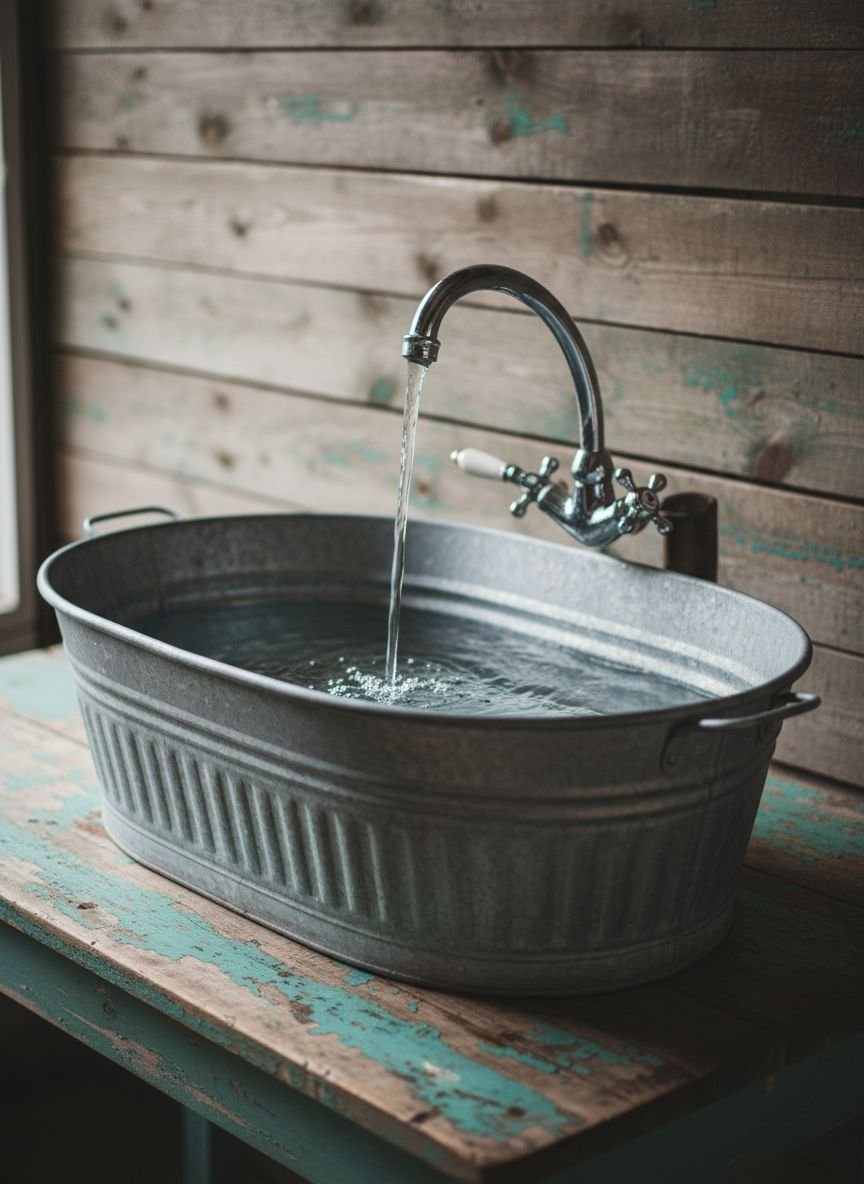
Sometimes you do not want a permanent structure taking up space. A portable outdoor sink is the ultimate solution for small patios, renters, or camping enthusiasts. These units are typically lightweight, built from PVC pipe frames or folding table legs, and utilize a simple two-bucket system: one for fresh water and one for greywater. The design focus here is on efficiency and mobility. It is a “problem-solving” design that brings convenience to any corner of your yard without digging or construction.
To build one, you can construct a frame using PVC pipes which are waterproof, cheap, and easy to cut. A plastic washbasin drops into the frame. A foot pump is often used to move water from the fresh tank to the faucet, providing a hands-free washing experience that saves water. This type of sink is incredibly practical for outdoor cooking events where you need a hygiene station near the grill but want to pack it away afterwards.
Pro Tip: Use quick-connect fittings for your water tanks so you can detach and refill them easily without moving the entire station.
DIY Old Oil Drum Sink Idea
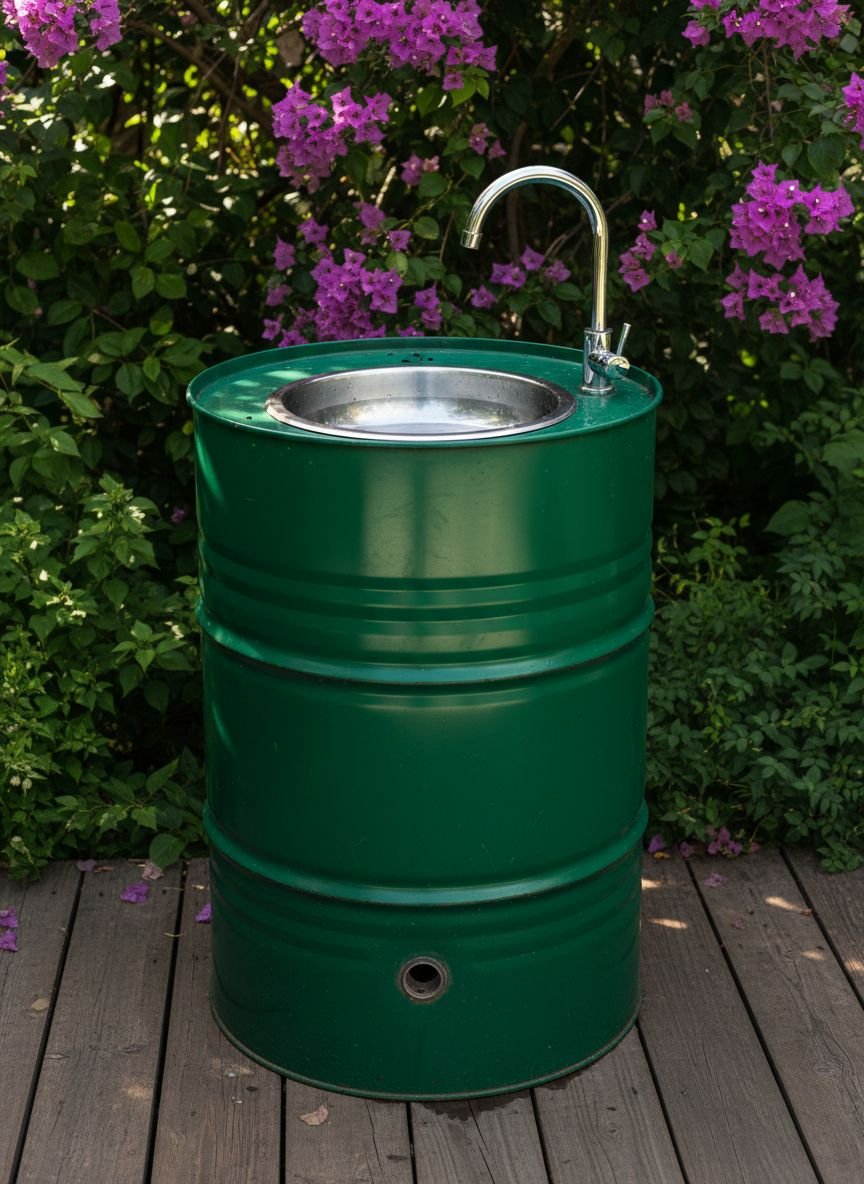
For a bold, industrial statement, repurposing an old 55-gallon oil drum into a sink is a fantastic project. The drum itself provides the structure, the enclosure for plumbing, and a pop of color if you choose to paint it. This design is robust and virtually indestructible, making it perfect for high-traffic areas or workshops. The cylindrical shape is modern and sleek, while the history of the object adds a layer of grit and authenticity.
Safety is the first step here; ensure the drum never held toxic chemicals before cutting into it. You will need an angle grinder to cut a hole in the top for the sink basin and a door in the side to access the plumbing connections. A bright coat of automotive spray paint can turn a rusty barrel into a vibrant garden feature. The large interior volume is perfect for hiding a 5-gallon bucket for drainage if you are not connecting to a drain line.
Pro Tip: Line the cut edges of the metal with rubber trim to prevent scrapes and give the project a finished, professional look.
DIY Industrial Sink Station
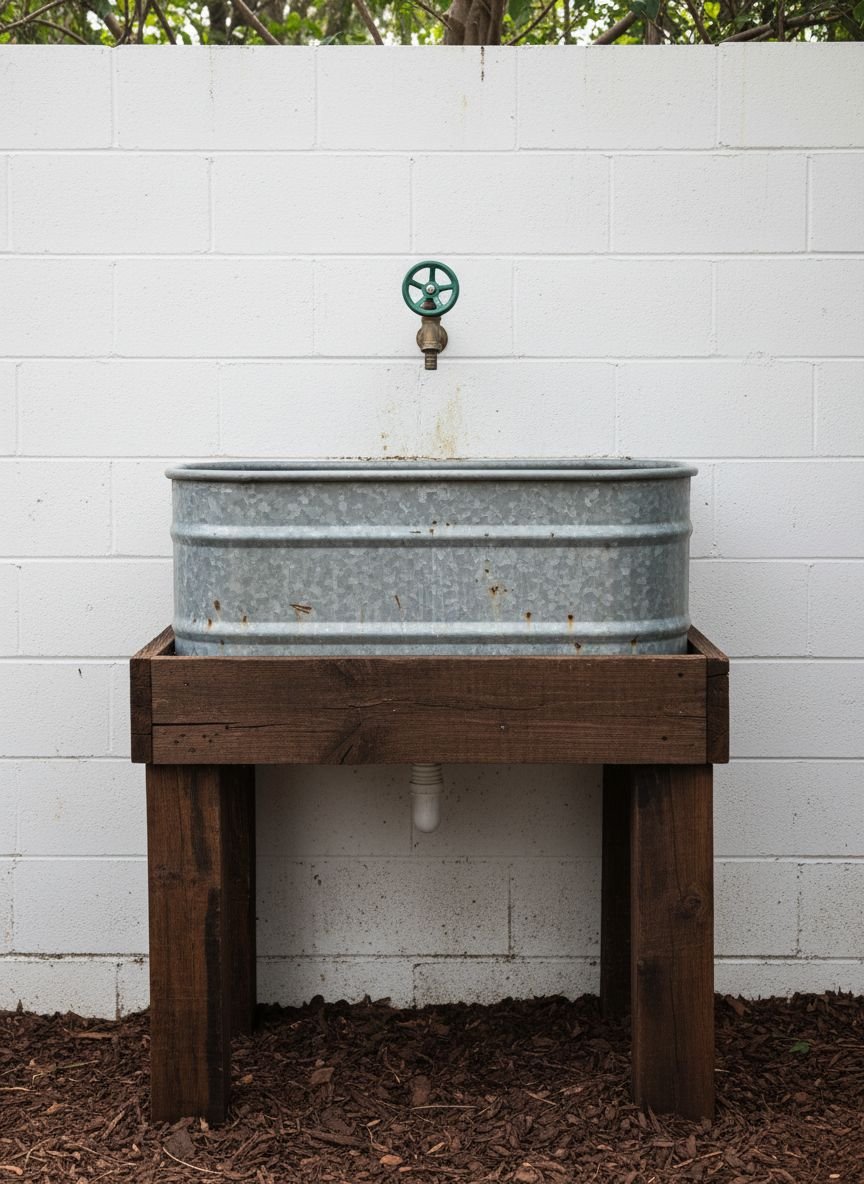
This style leans heavily on raw materials like black iron piping, concrete, and reclaimed wood. An industrial sink station looks like it belongs in a trendy loft, yet it functions perfectly in a garden setting. The framework is often constructed from threaded iron pipes, which are easy to assemble like a giant erector set. This open-frame design keeps the visual footprint light, making your garden feel spacious while providing a sturdy workspace.
To achieve this, buy pre-threaded black iron pipes and flanges from your local hardware store. You can create a custom size that fits your specific nook. Top it with a poured concrete countertop for a cool, tactile surface that withstands rain and sun. The juxtaposition of the dark metal legs and the light grey concrete is visually striking. A deep, square stainless steel sink completes the industrial utility vibe, perfect for scrubbing pots or washing garden tools.
Pro Tip: Spray the iron pipes with a clear matte lacquer to prevent them from rusting and staining your patio.
DIY Rustic Galvanized Garden Sink Idea
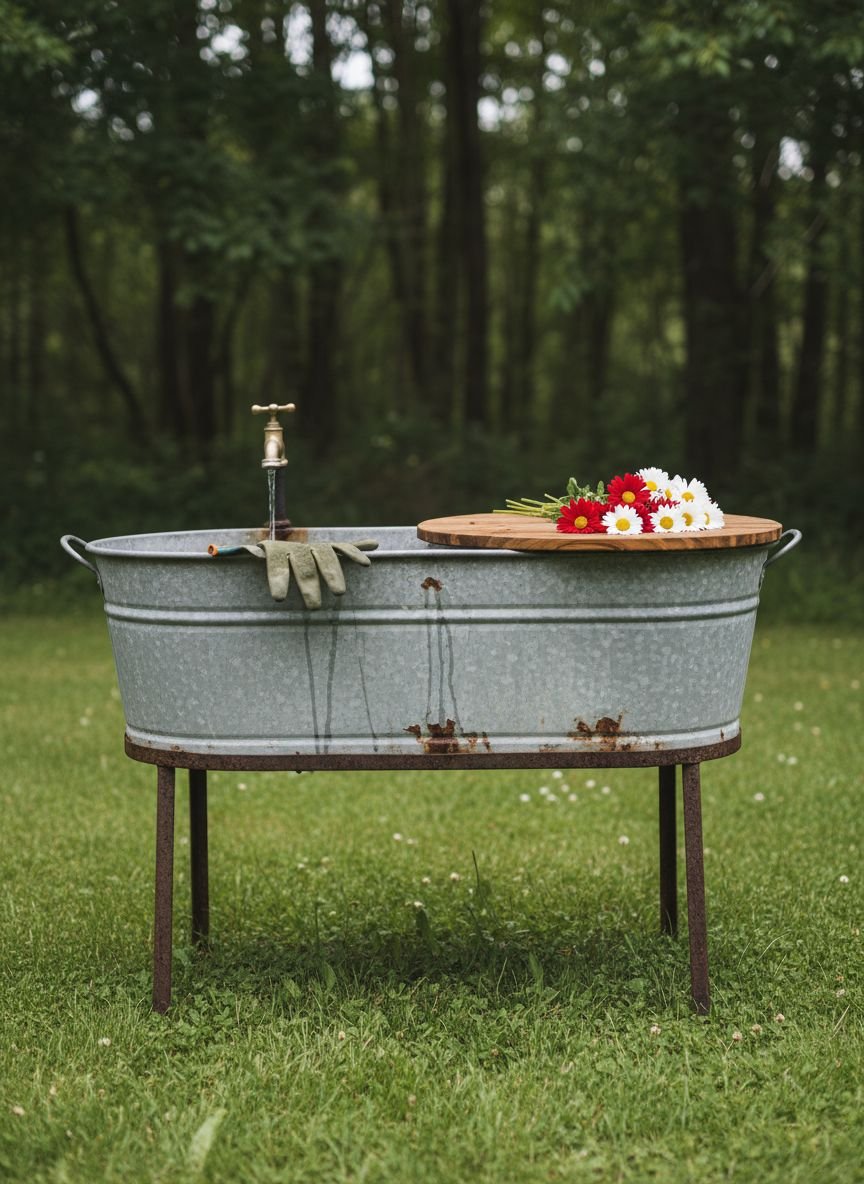
Nothing screams “farmhouse garden” quite like galvanized metal. This project usually involves a galvanized oval tub or a stock tank repurposed as a sink basin. It is paired with rough-sawn timber or pallet wood to create a station that feels humble yet charming. The silver tones of the metal reflect the sky and greenery, integrating the sink into the landscape. This is one of the most budget-friendly options on the list, as galvanized tubs are inexpensive and widely available at farm supply stores.
The installation is straightforward. You drill a hole in the bottom of the tub for a standard sink drain. The stand can be a simple trestle table or a wall-mounted shelf if you have a sturdy fence. Because the basin is large and deep, it is excellent for washing large harvests of leafy greens or even giving a small dog a bath. The aesthetic is casual and inviting, encouraging you to get your hands dirty because cleanup is so easy.
Pro Tip: Use a “water trough” style faucet or an old-fashioned hand pump faucet to enhance the vintage agricultural theme.
DIY Old Wine Barrel Outdoor Sink
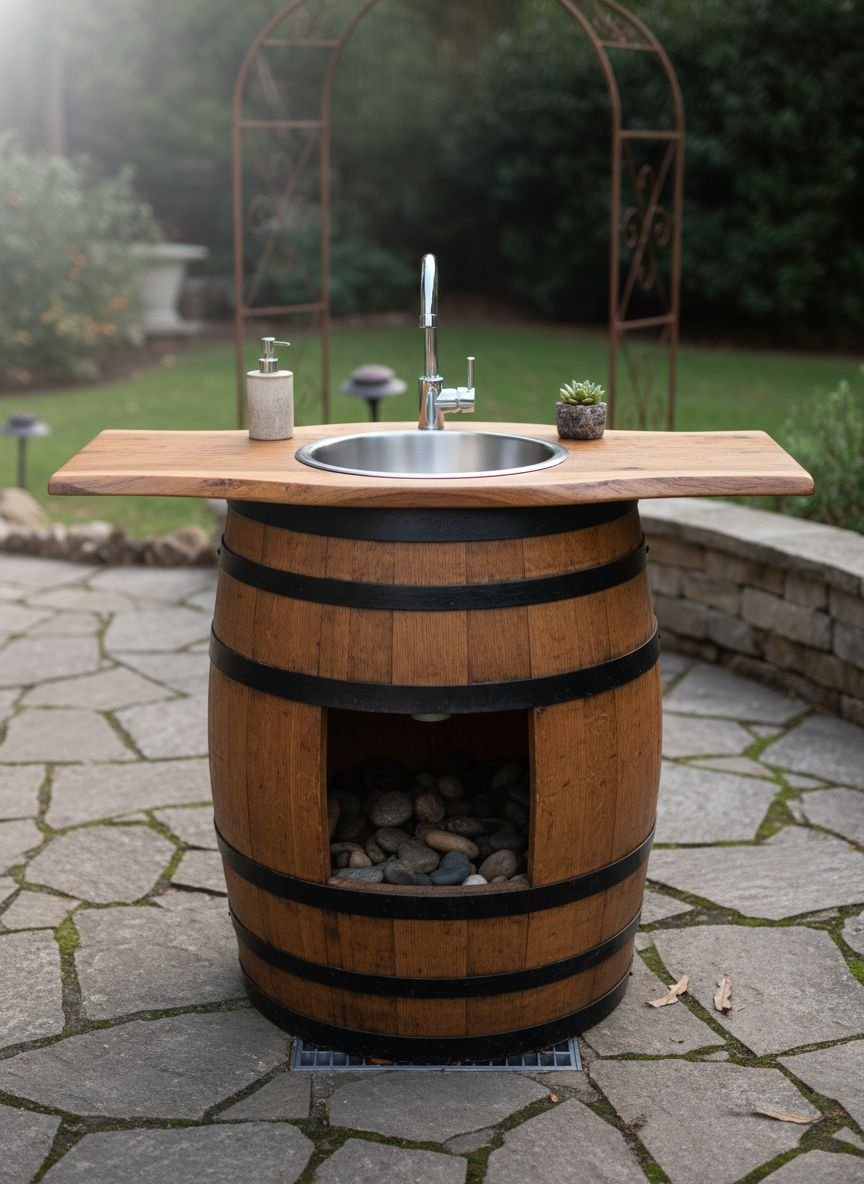
A wine barrel sink is a classic choice for vineyards and rustic backyards alike. The curvature of the barrel creates a soft, organic shape that contrasts with the straight lines of fences and decks. The oak wood of the barrel is naturally resistant to rot, especially if it was used for wine, and the metal bands add a nice detail. This unit serves as a self-contained vanity, hiding all the ugly plumbing inside the barrel.
You can often find retired barrels at wineries or garden centers. Cut a door into the belly of the barrel and hinge it to allow access to the interior. A round copper or hammered nickel sink looks stunning dropped into the top lid. Since the top of a barrel is often recessed, water can pool there, so ensure you seal the top heavily or install a glass or stone topper. This sink is a conversation starter and doubles as a perfect drink chilling station for parties.
Pro Tip: Drill a few ventilation holes in the back or bottom of the barrel to prevent moisture buildup and mold growth inside the enclosed space.
Get The Look: Essentials for Your Sink Station
- The Faucet: Look for “high-arc” faucets. They give you more room to fit buckets and watering cans underneath.
- The Basin: Deep basins (at least 8-10 inches) prevent splashing when you are scrubbing muddy tools.
- The Plumbing: A “Y-splitter” for your outdoor spigot is essential. It lets you keep your garden hose attached while running a separate line to your sink.
- The Drainage: A “French Drain” pit (a hole filled with gravel) is the eco-friendly way to disperse greywater into the soil.
Related posts :
- 17 Inspiring Courtyard Garden Designs That Instantly Elevate Your Space and Create a Private Oasis
- 22 Breathtaking Outdoor Ideas That Are Making Us Swoon & Will Instantly Upgrade Your Backyard
- 14 Creative Deck Wall Ideas for Stylish Outdoor Spaces That Instantly Upgrade Your Backyard
DIY Stone and Wood Outdoor Sink Station
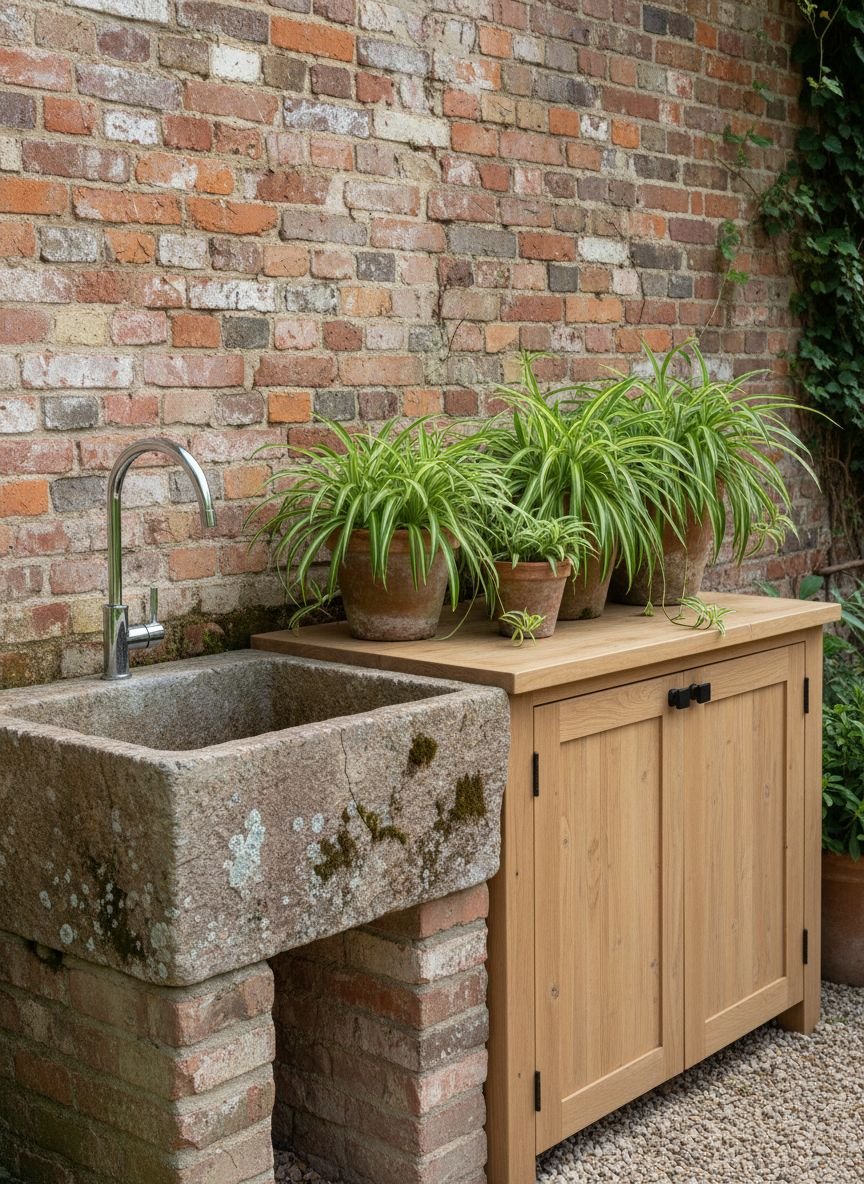
Combining stone and wood creates a harmonious balance between warmth and strength. This design typically features a wooden cabinet or open-shelf structure topped with a stone slab or surrounded by stone cladding. It fits perfectly in “mountain modern” or traditional landscape designs. The wood softens the look, while the stone provides a durable work surface that won’t scratch or warp under wet pots.
You can build the frame from pressure-treated lumber or cedar, then use stone veneer panels to clad the sides for a high-end look without the weight of solid rock. A slate or granite remnant makes for an indestructible countertop. This station is substantial enough to include built-in shelves for storing pots, soil bags, and watering cans. It feels like a permanent piece of outdoor furniture rather than a temporary DIY fix.
Pro Tip: Use cedar or redwood for the wooden components, as they have natural oils that resist rot and insects better than pine.
A Garden Potting Bench with Sink Project idea
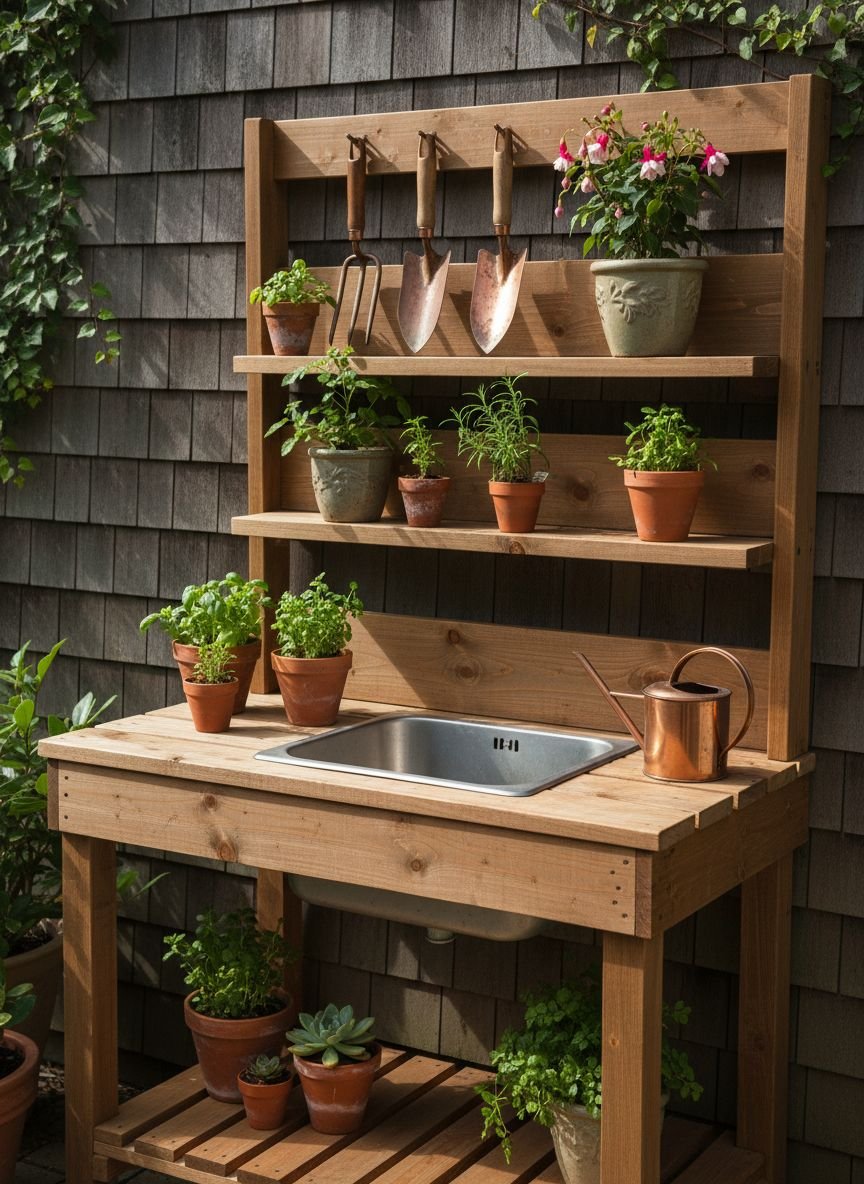
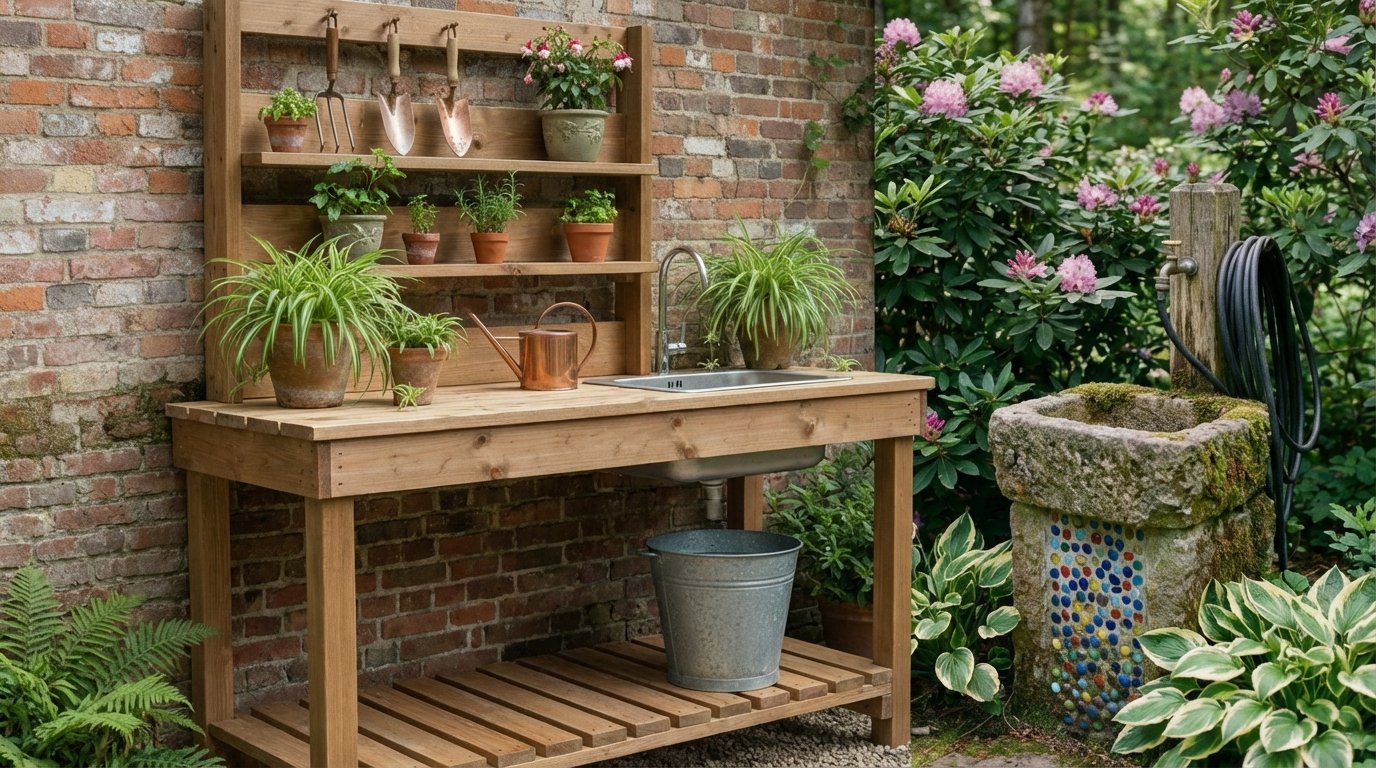
This is the holy grail for avid gardeners. A potting bench with an integrated sink streamlines the entire planting process. You can mix soil, pot your plants, water them, and wash up, all in one spot. These stations are usually wider than a standard sink, featuring a large flat work surface on one or both sides of the basin. The design often includes a lattice back for hanging tools and a lower shelf for heavy storage.
Functionality is key here. The sink creates a “wet zone” while the bench offers a “dry zone.” Many DIYers use a dry sink method here (a bin that catches soil) alongside a wet sink for water. However, plumbing it with a garden hose is best for washing roots. Use a slatted wood countertop to allow spilled soil to fall through to the ground, keeping your workspace tidy. This station becomes the command center for your garden maintenance.
Pro Tip: Install a wire mesh grid over a portion of the countertop. This allows you to fill pots with soil while the excess dirt falls into a bin below for reuse.
DIY Milk Bucket Outdoor Sink Station
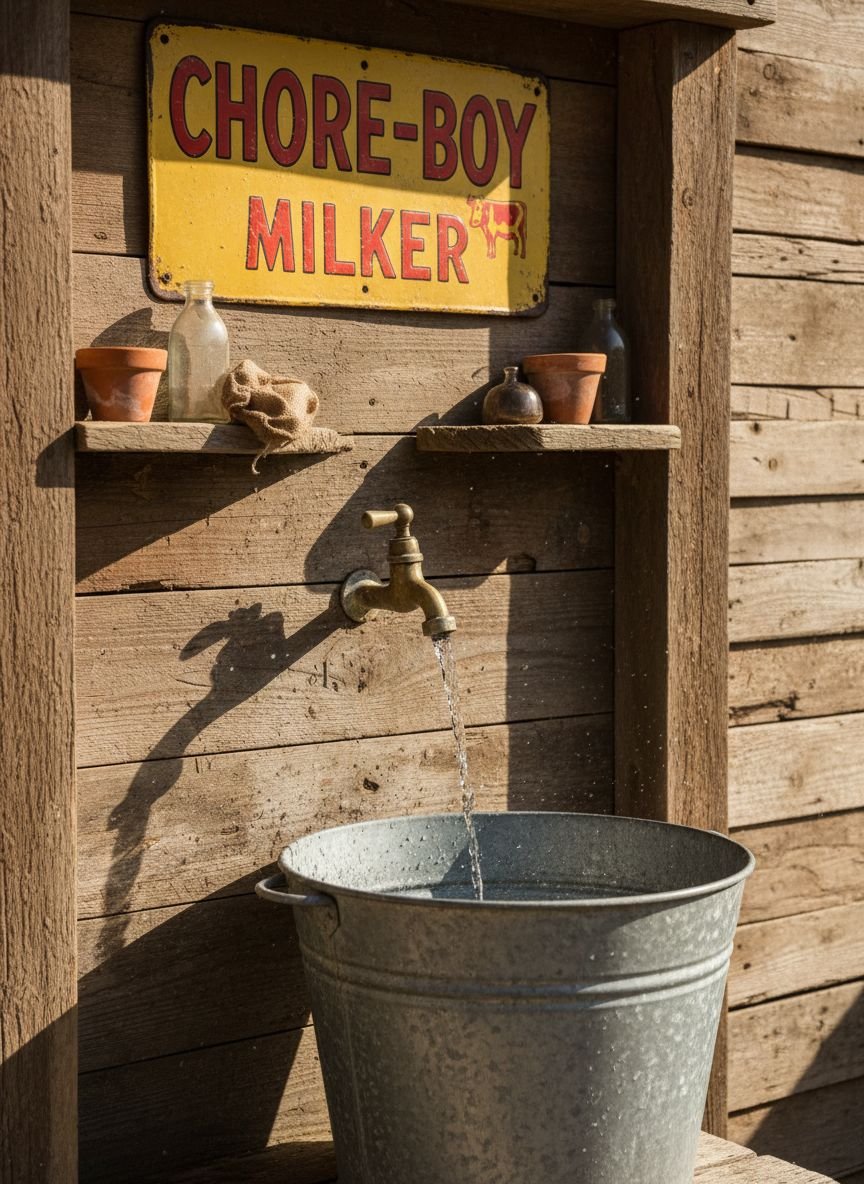
For a touch of nostalgia, the vintage milk bucket sink is a charming, small-space solution. This idea uses a tall, antique metal milk can as the pedestal base for a small basin, or sometimes repurposes the bucket itself as the water reservoir. It is a vertical design that takes up very little ground space, making it perfect for tiny balconies or narrow garden paths. The aesthetic is strictly vintage Americana.
To make this work, you often need to stabilize the bucket by weighing it down with sand or rocks in the bottom. A small, round basin is mounted on top, or a hole is cut into the side for plumbing access. Since the surface area is small, this is strictly a hand-washing or cup-rinsing station. It is a decorative accent that offers a quick refresh on a hot day. The metal can be painted or left to rust naturally for a weathered look.
Pro Tip: If the milk can is valuable or an antique, build a separate internal frame to hold the plumbing so you don’t have to drill into the vintage metal.
DIY Stoneage Sink Station
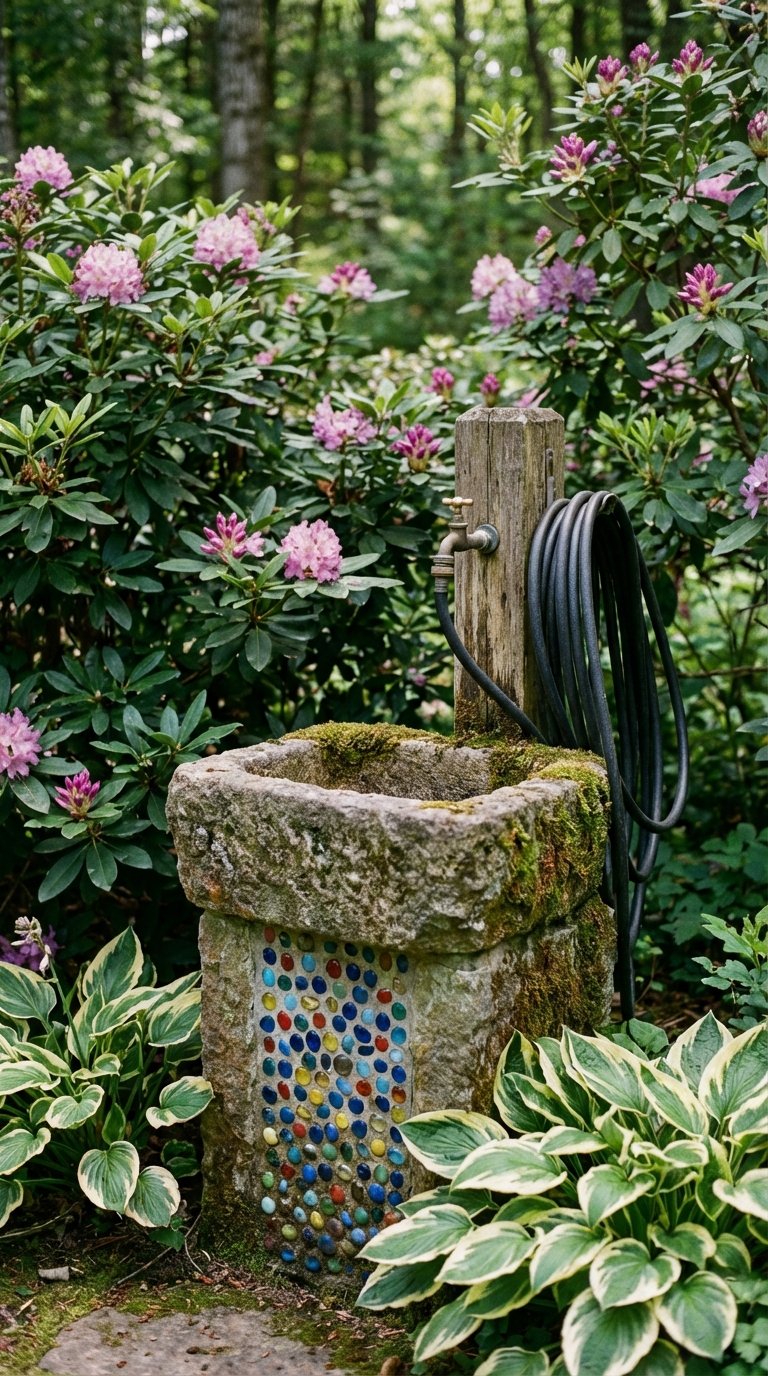
This idea embraces the raw, unrefined beauty of natural boulders. A “Stoneage” sink station is carved directly into a large rock or constructed from rough-hewn stone slabs to look like a natural formation. It blends seamlessly into rock gardens or xeriscapes. It is less about furniture and more about landscaping. The water seems to appear from the rock itself, creating a Zen-like atmosphere.
Creating this usually involves sourcing a large boulder and hiring a professional stone cutter to bore a basin, or finding a pre-drilled natural stone sink. The plumbing is hidden behind or under the stones. The faucet should be minimal, perhaps a simple copper pipe emerging from the rocks. This is a heavy, permanent installation that will last for decades. It is the ultimate expression of “bringing the outdoors in” by keeping the outdoors… outdoors.
Pro Tip: Plant moss or creeping thyme in the crevices around the stone base to integrate the sink into the living landscape.
Popular Asked Questions
How do you build a simple outdoor sink without plumbing?
You can build a “dry sink” or a gravity-fed sink. A common method is to connect a standard garden hose to your sink’s faucet using a simple adapter (3/4″ female hose thread to 1/2″ male pipe thread). For drainage, simply place a 5-gallon bucket under the sink drain to catch the water, or run a flexible pipe into a nearby flower bed. This requires no cutting of pipes or hiring a plumber.
What is the best material for an outdoor sink?
Stainless steel and natural stone are the top choices for durability. Stainless steel is resistant to rust, heat, and freezing, making it great for all climates. Natural stone (like granite or soapstone) is incredibly tough and weathers beautifully. Avoid indoor ceramic sinks if you live in an area with freezing winters, as they can crack.
Where does the water drain in an outdoor sink?
If you are not connected to a sewer line, you have three main options:
- Bucket catch: Collect water in a bucket and manually dump it.
- French Drain: Dig a hole filled with gravel and run the drain pipe into it; the water slowly seeps into the ground.
- Garden Bed: Run the drain hose directly into a thirsty garden bed (only if using biodegradable, plant-safe soaps).
Can you leave an outdoor sink out in winter?
It depends on the material and plumbing. You must drain all water from the pipes and faucet to prevent freezing and bursting. If you used a garden hose connection, disconnect and store the hose. Stone and metal sinks can usually stay out, but ceramic or plastic basins might crack in extreme cold, so covering them or moving them to a shed is recommended.
Conclusion
Adding a DIY outdoor sink to your garden is one of the most rewarding weekend projects you can undertake. It immediately elevates the functionality of your space, saving you from muddy floors and making garden chores a breeze. From the rustic charm of a wine barrel to the sleek utility of a potting bench station, there is a design here for every skill level and budget.





Leave a Comment