

Japandi style dominates interior design conversations right now because it solves a specific problem. We all crave a home that feels peaceful without sacrificing function. This hybrid aesthetic blends Scandinavian functionality with Japanese rustic minimalism to create spaces that feel clean yet warm. If your current cooking space feels chaotic or outdated then this design philosophy offers the perfect remedy. We curated fifteen specific design elements that balance raw textures with clean lines. You will find practical ways to introduce this serenity into your own home regardless of square footage.
Key Takeaways
- Balance is everything because Japandi relies on the mix of Scandinavian comfort (hygge) and Japanese imperfection (wabi-sabi).
- Texture beats color so focus on raw wood, stone, and linen rather than bright paint swatches.
- Function comes first meaning every object in your kitchen should have a purpose or bring you joy.
- Light defines the mood through the use of natural sunlight and warm, low-hanging fixtures.
- Contrast creates depth by pairing light oak or ash woods with matte black accents.
Table of Contents
- Minimalist Elegance: A Clean Slate
- Japandi Earthy Tones: Warmth in the Kitchen
- Smart Space Solutions for Small Japandi Kitchens
- L-Shaped Layout: Efficient Cooking Spaces
- Nature-Inspired Elements: Bringing the Outdoors In
- Bold Black Accents: Striking Contrast
- Serene White Spaces: Clean and Bright
- Statement Bar Stools: Functional Art
- Playful Color Accents: Adding Personality
- Smart Technology Integration
- Open Shelving for Display
- Mixing Materials for Visual Interest
- Inviting Breakfast Nooks
- Zen-Inspired Spaces for Relaxation
- Seasonal Decor Ideas for Freshness
- Popular Asked Questions
- Conclusion
Minimalist Elegance: A Clean Slate
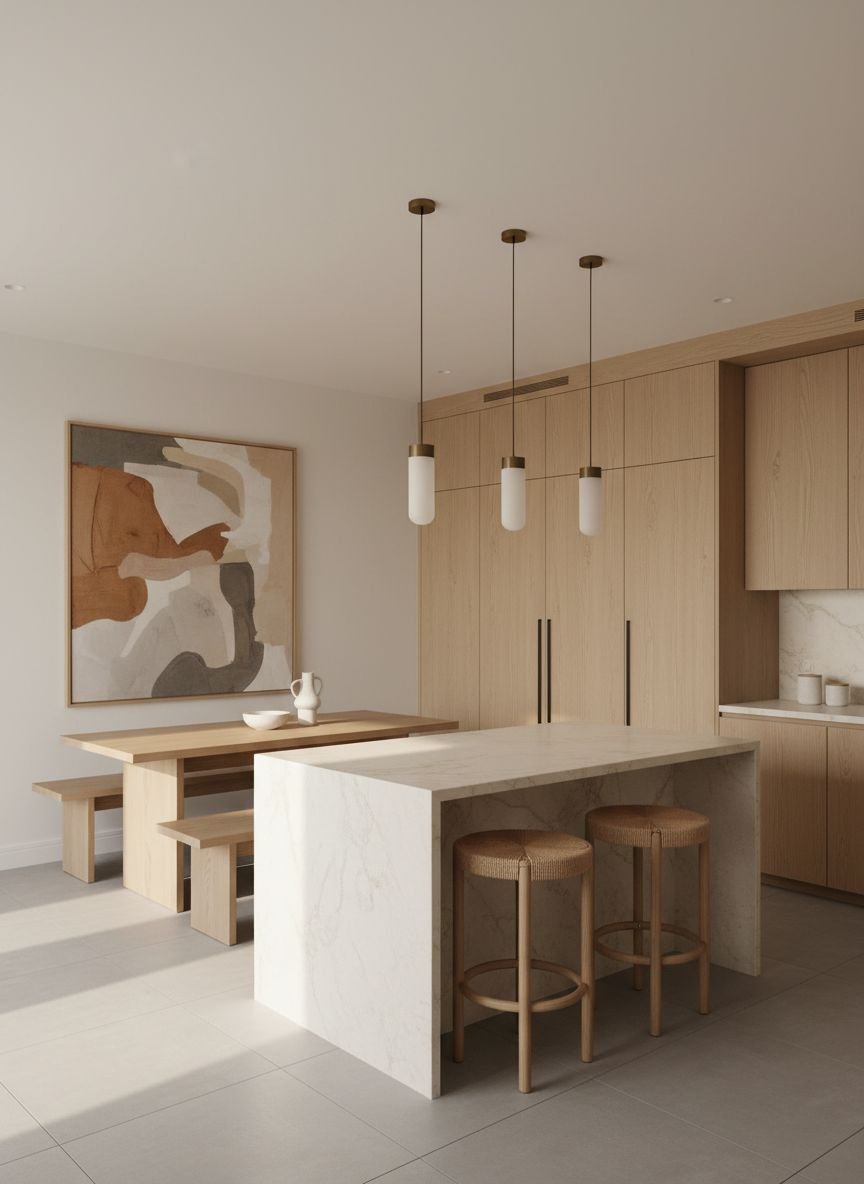
True minimalism in a kitchen does not mean the space feels empty or cold. The Japandi approach focuses on intentionality where every item owns its place. You start by clearing countertops of non-essential appliances to let the architecture speak for itself. Clean lines in your cabinetry and islands create a visual flow that calms the mind immediately upon entering the room. We see a move away from ornate handle hardware toward push-to-open cabinets or integrated finger pulls. This seamless look removes visual noise and allows your eye to rest on the materials rather than the clutter.
Achieving this look requires a strict editing process. Look at your current setup and ask if that blender needs to live on the counter. If the answer is no then find a home for it inside a cabinet. The beauty of this style lies in the hidden details. Use drawer organizers to keep the chaos contained so the exterior remains serene. Matte finishes on cupboards absorb light rather than reflecting it which adds to the soft and quiet atmosphere essential for this aesthetic.
Pro Tip: Install an appliance garage with a retractable door to hide your coffee maker and toaster while keeping them accessible.
Japandi Earthy Tones: Warmth in the Kitchen
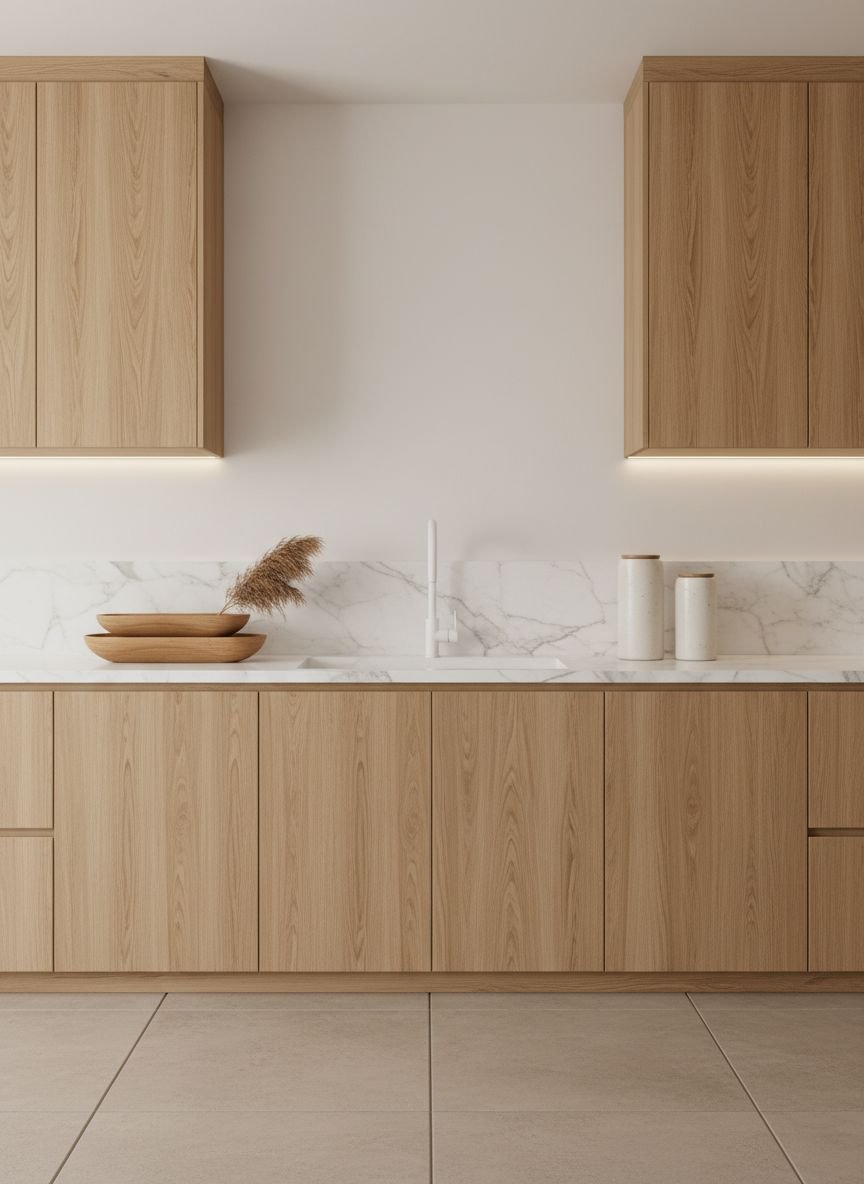
The color palette serves as the foundation of any Japandi remodel. You want to steer clear of sterile whites and instead embrace warm neutrals that mimic the natural world. Think of soft creams, sandy beiges, muted terracottas, and stone greys. These colors ground the space and make it feel inviting rather than like a showroom. The Japanese influence brings in deeper earth tones like brown and charcoal while the Scandi side contributes lighter airy hues. When these combine you get a sophisticated layered look that feels timeless.
Paint is not the only way to introduce these tones. Your choice of wood stain plays a massive role here. White oak, ash, and pine bring that light Scandi vibe. Walnut or stained teak introduces the darker Japanese element. Mixing these wood tones creates a rich visual experience. You might choose light wood flooring paired with darker lower cabinets to anchor the room. The goal is to create a warm envelope that feels cozy on a rainy morning yet fresh during a sunny afternoon.
Pro Tip: Test paint colors at different times of the day because natural light changes how warm or cool a beige tone appears.
Smart Space Solutions for Small Japandi Kitchens
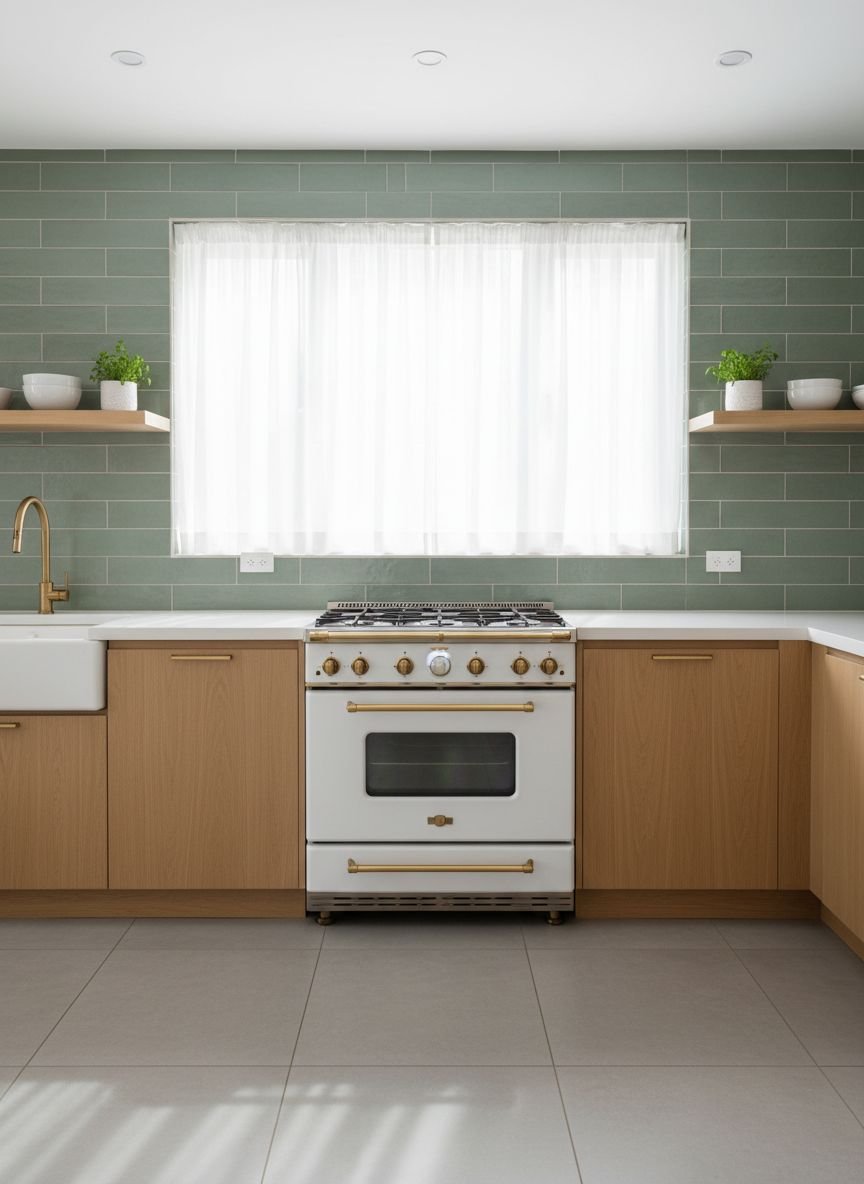
Small kitchens often benefit the most from Japandi design because the philosophy centers on efficiency. Limited square footage forces you to be creative with vertical space. Tall cabinets that reach the ceiling draw the eye upward and make the room feel larger while providing crucial storage for items you use less frequently. The lack of clutter inherent in this style makes a small room feel breathable and open. You do not need a massive footprint to achieve a high-end look when you focus on quality materials and smart layout choices.
Multi-functional furniture is a staple here. A kitchen island might serve as a prep station, a dining table, and a storage unit all in one. Look for pull-out pantry systems that maximize narrow gaps between appliances. The Japanese concept of “Ma” refers to the celebration of negative space. Even in a small kitchen you should leave some walls bare or shelves empty. This negative space allows the design to breathe and prevents the claustrophobic feeling common in cramped cooking areas.
Pro Tip: Use light-colored upper cabinets or open shelving to prevent a small kitchen from feeling top-heavy or closed in.
L-Shaped Layout: Efficient Cooking Spaces
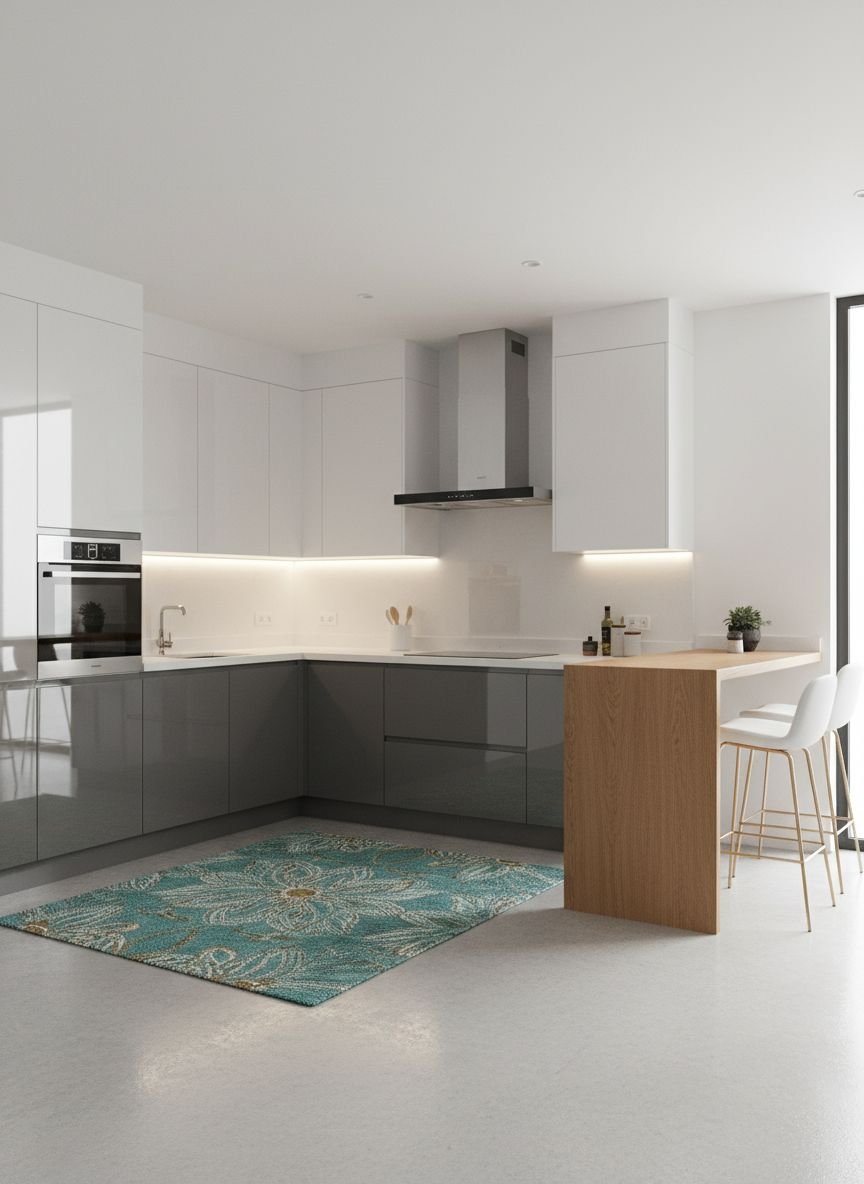
The L-shaped layout works exceptionally well with Japandi design principles because it naturally opens up the room. This configuration maximizes corner space and creates an efficient work triangle between the sink, stove, and refrigerator. By hugging two walls you leave the center of the room open for a dining table or a mobile island. This openness aligns perfectly with the desire for flow and movement within the space. You can cook without feeling cut off from guests or family members in the adjoining living areas.
Design the corner of the L-shape carefully. Traditional corner cabinets often become dark voids where tupperware goes to die. Modern solutions like swing-out shelves or “lazy susans” keep functionality high. Use the longer leg of the L-shape for your primary counter space and the shorter leg for tall storage or appliances. This division of labor keeps the workflow logical. The clean lines of the L-shape also provide a long visual horizon which helps emphasize the minimalist aesthetic.
Pro Tip: Place your sink under a window on one arm of the L-shape to bring in natural light while you wash dishes.
Nature-Inspired Elements: Bringing the Outdoors In
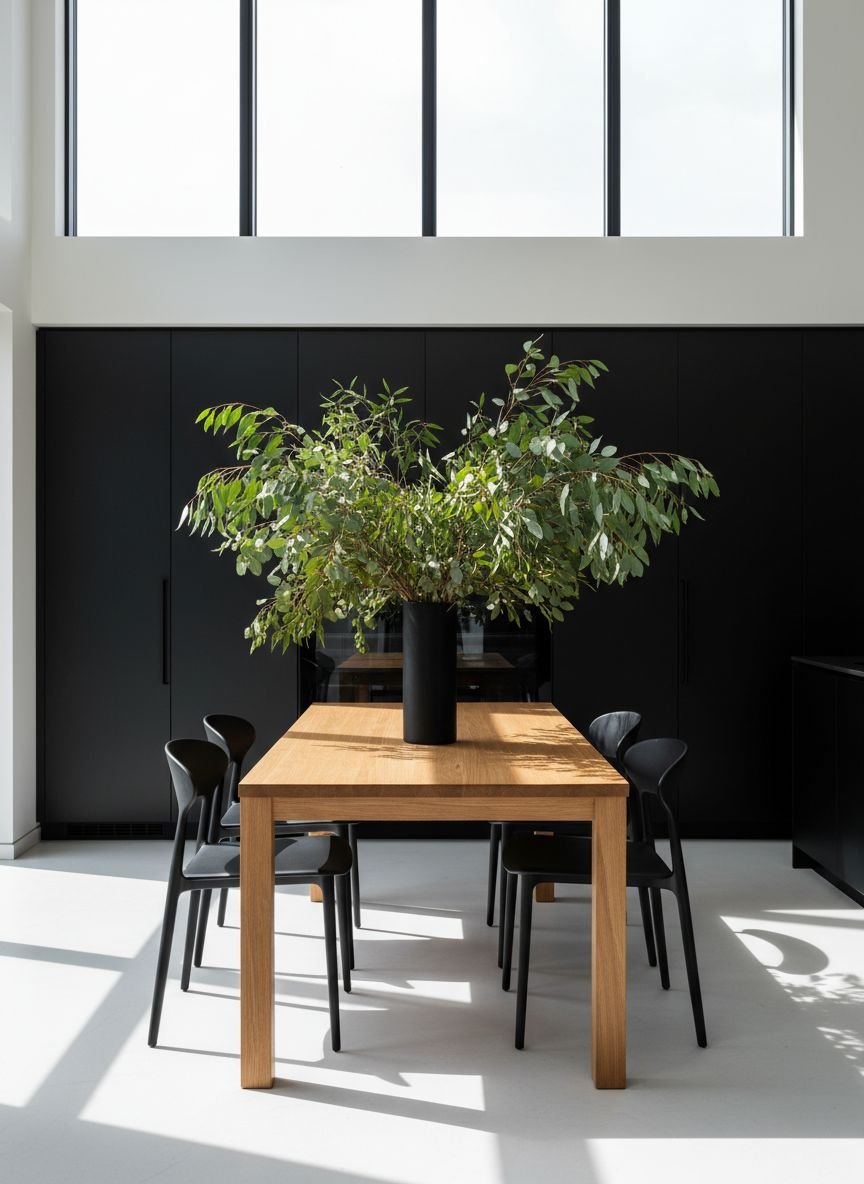
Connecting with nature acts as a core pillar of both Japanese and Scandinavian lifestyles. Your kitchen should not feel like a sealed box detached from the outside world. Bring the outdoors in through literal and textural elements. Large windows without heavy treatments allow sunlight to flood the space and offer views of greenery. If you lack a view you can create one indoors using potted plants. A simple bonsai tree on the island or fresh eucalyptus branches in a ceramic vase adds life and softness to the hard surfaces of a kitchen.
Materials should feel raw and organic. Stone countertops with visible veining, unpolished concrete floors, or a backsplash made from handmade clay tiles all contribute to this biophilic connection. The imperfections in natural materials add character and warmth. Wabi-sabi teaches us to appreciate the beauty in the imperfect and incomplete. A wooden bowl with a natural crack or a stone surface with a rough edge tells a story and grounds the space in reality.
Pro Tip: Start a small indoor herb garden on a windowsill to combine greenery with culinary function.
Comparison: Matte vs. Gloss Finishes in Japandi Design
| Feature | Matte Finish | Gloss Finish |
|---|---|---|
| Aesthetic | Soft, natural, absorbs light | Shiny, modern, reflects light |
| Maintenance | Hides fingerprints well | Shows smudges easily |
| Japandi Fit | High (Aligns with organic textures) | Low (Often feels too synthetic) |
| Durability | Can be harder to clean if textured | Easy to wipe down |
| Best For | Cabinetry, flooring, hardware | Backsplashes (sparingly) |
Bold Black Accents: Striking Contrast
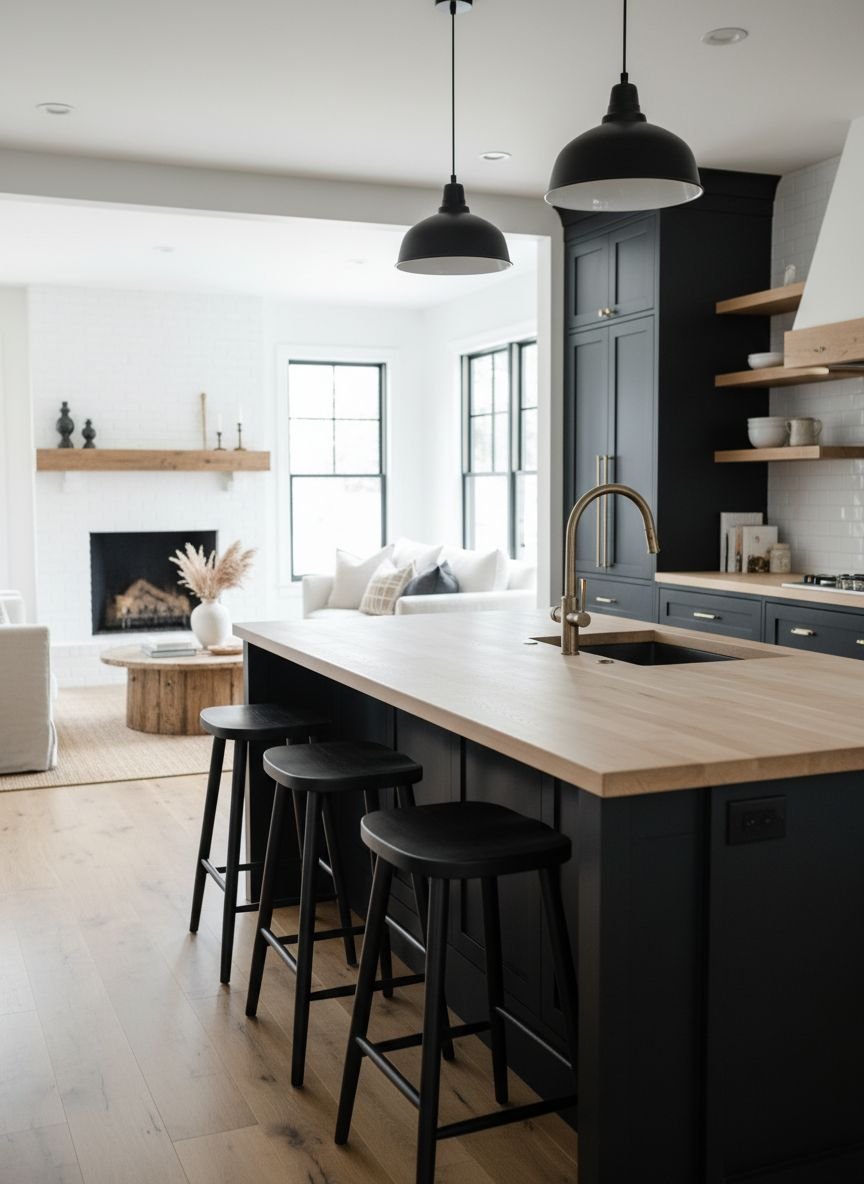
While light tones dominate this style, black accents provide the necessary anchor. Without contrast a neutral room can float away and feel undefined. Black introduces a modern edge that sharpens the soft wood tones and creams. You do not need to paint an entire wall black to get this effect. Subtle touches often work best. Think matte black faucets, thin black frames on light fixtures, or black metal legs on bar stools. These graphic lines draw the eye and create a sense of structure within the open space.
The key lies in the finish. Avoid shiny patent black surfaces which can look cheap or overly glam. Stick to matte, charcoal, or blackened wood finishes (shou sugi ban). This traditional Japanese technique of charring wood preserves it and creates a stunning textured black finish that fits perfectly in a kitchen. A blackened wood island base paired with a light stone top creates a dramatic focal point that feels sophisticated and grounded.
Pro Tip: Swap out silver or gold cabinet hardware for slim matte black pulls for an instant and affordable update.
Serene White Spaces: Clean and Bright
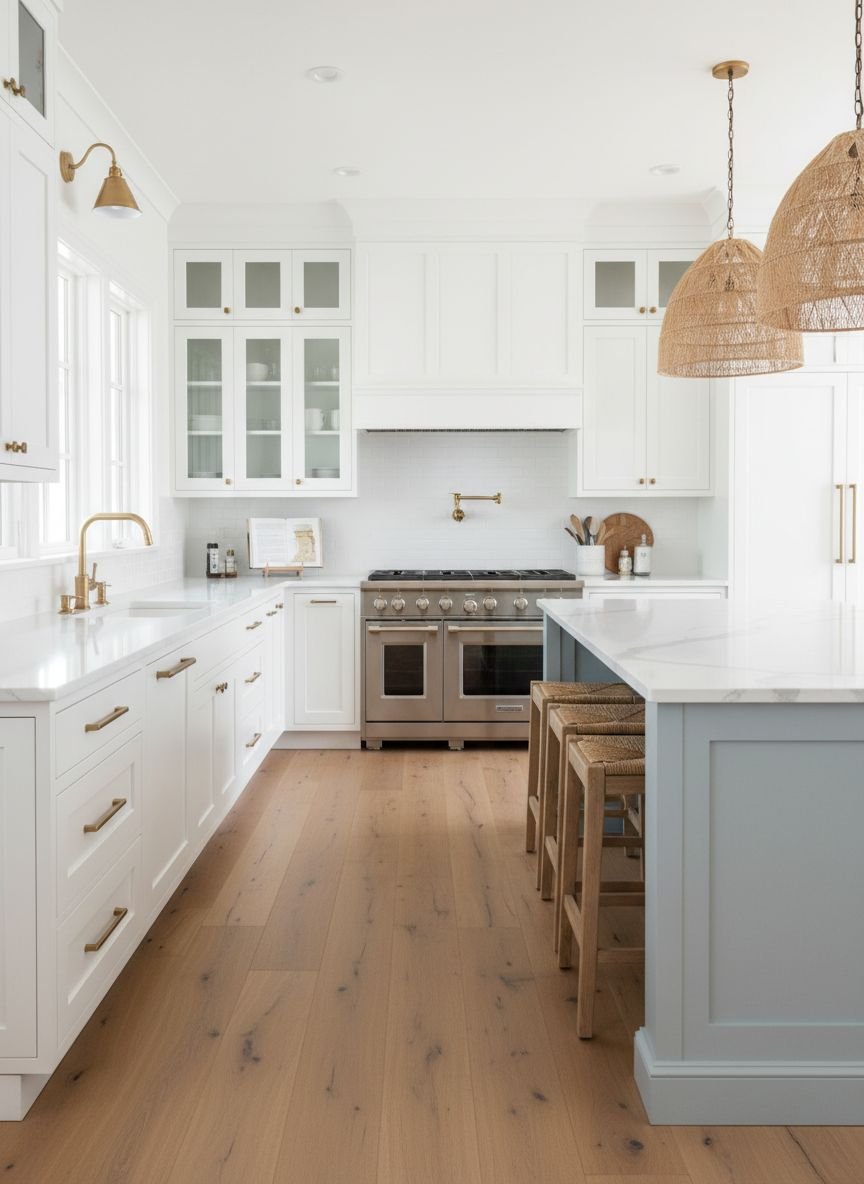
White kitchens risk feeling clinical but a Japandi white kitchen feels serene. The difference comes down to the shade of white and the textures paired with it. Avoid cool blue-based whites that feel like a hospital. Opt for warm whites with yellow or red undertones like alabaster or cream. These shades reflect light softly and make the room feel sunny even on grey days. White walls and cabinets act as a canvas for the shadows and light play that occur throughout the day.
Texture prevents the white from looking flat. Use vertical shiplap or beadboard to add dimension to white walls. Choose a backsplash with a handmade uneven surface rather than perfectly flat subway tiles. The subtle shadows created by these textures add visual interest without breaking the monochromatic color scheme. White stone countertops with soft grey veining also help break up the expanse of white while maintaining the clean look.
Pro Tip: Use warm LED bulbs (2700K-3000K) to ensure your white kitchen feels cozy at night rather than stark.
Statement Bar Stools: Functional Art
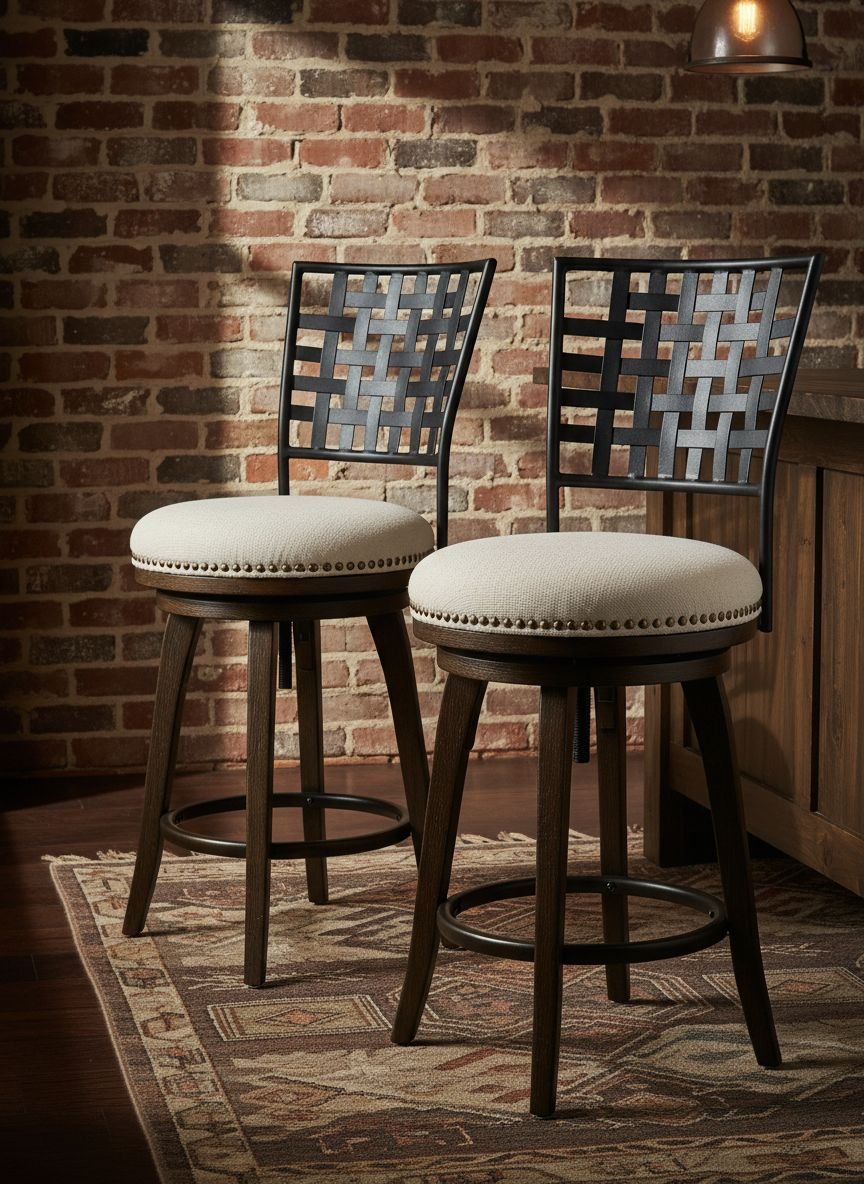
Seating in a Japandi kitchen serves as functional sculpture. Since furniture is sparse each piece must stand out for its design quality. The bar stool offers a prime opportunity to introduce shape and material contrast. The classic Wishbone chair is a favorite in this niche because its curved back and woven seat perfectly embody the blend of Scandi woodwork and Japanese craft. The silhouette is recognizable yet unobtrusive.
Look for stools that mix materials. A timber frame with a leather seat or a metal base with a rattan back adds complexity. Low-profile stools that tuck completely under the island help maintain the minimalist lines when not in use. However, if you choose a stool with a backrest ensure the profile is slender. Heavy upholstered chairs can disrupt the airy flow of the room. The goal is comfort without bulk.
Pro Tip: Measure your counter height carefully before buying. You need 10 to 12 inches of clearance between the seat and the counter for comfortable legroom.
Playful Color Accents: Adding Personality
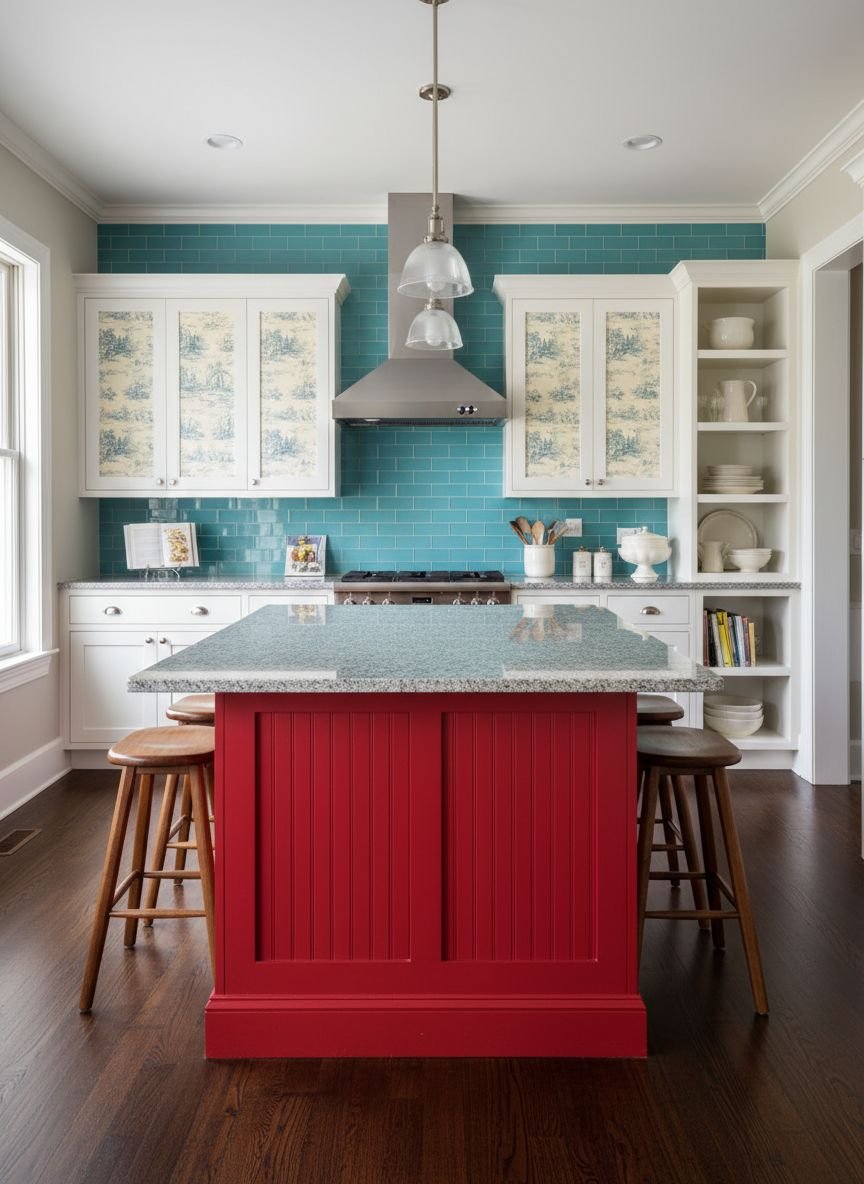
Japandi is not strictly limited to beige and brown. You can introduce color as long as it remains muted and derived from nature. Soft sage greens, dusty blues, and faded rusty pinks fit beautifully into this aesthetic. These colors should feel “muddy” or desaturated rather than vibrant and primary. They act as neutrals that add depth without overwhelming the senses. A kitchen island painted in a deep moss green anchors a room filled with light oak cabinetry.
Use color to highlight specific architectural features. Maybe the inside of an open shelf is painted a soft terracotta to make your white ceramics pop. Textiles are another low-risk way to add color. A runner rug with a faded indigo pattern or linen tea towels in mustard yellow can change the vibe of the room instantly. These elements are easy to swap out as seasons change or your tastes evolve.
Pro Tip: Stick to the “60-30-10” rule. 60% main neutral, 30% secondary neutral (wood/stone), and 10% accent color.
Smart Technology Integration
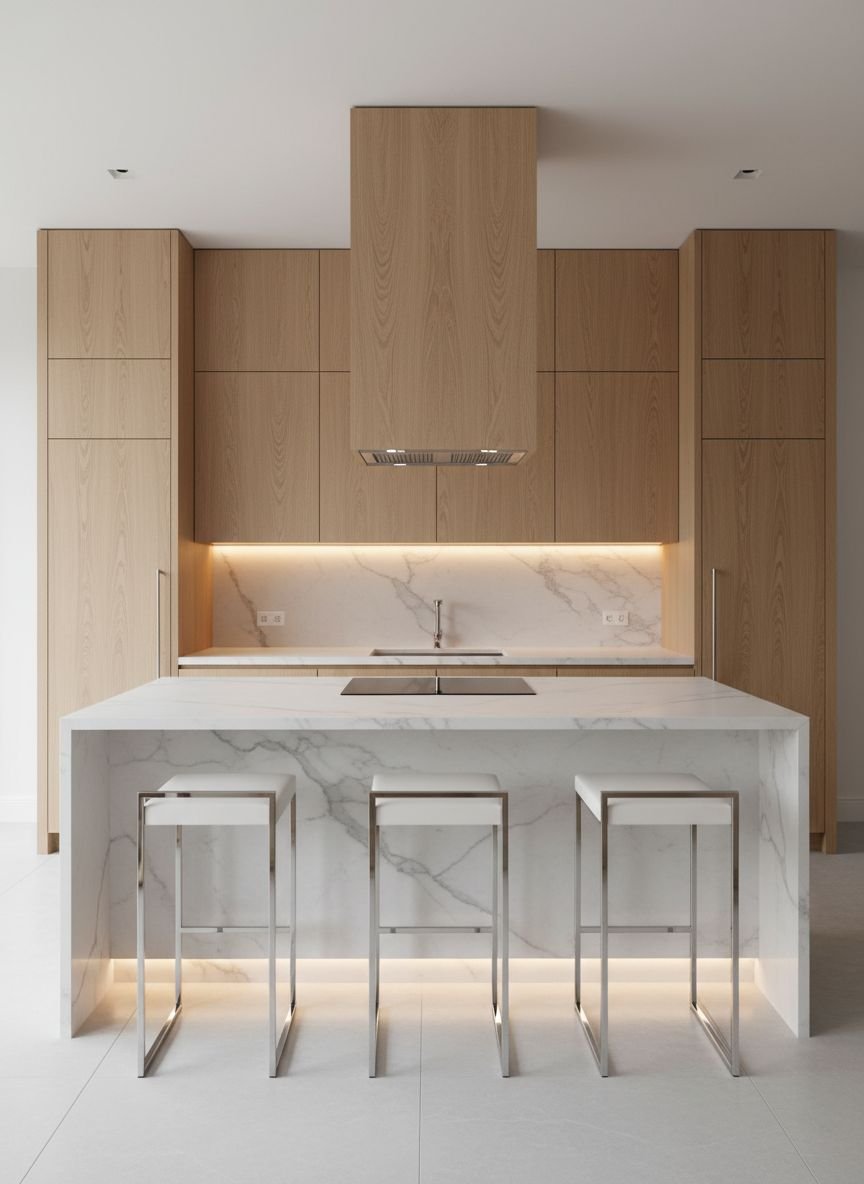
Modern design must accommodate modern life. Japandi embraces technology but demands that it remains unobtrusive. We want the convenience of smart appliances without the visual clutter of digital screens and blinking lights everywhere. Look for integrated appliances that accept cabinet panels. Your dishwasher and refrigerator can disappear entirely behind wood fronts that match your cabinetry. This seamless look is crucial for maintaining the zen atmosphere.
Smart lighting plays a huge role in setting the mood. Install dimmer switches and smart bulbs that can change color temperature. You want bright cool light for chopping vegetables and warm dim light for enjoying a glass of wine in the evening. Voice-activated faucets or touchless soap dispensers reduce mess and keep surfaces clean. The technology should serve the minimalist goal by reducing physical touchpoints and visual noise.
Pro Tip: Create a dedicated charging drawer inside a cabinet to keep phones and tablets off the countertop while they power up.
Related posts :
- 16 Chic Kitchen Designs Featuring Light Grey Tones That Instantly Modernize Your Home
- 15 Genius Kitchen Corner Cabinet & Decor Ideas That Instantly Double Your Storage
- 13 Small Kitchen Layouts That Look Amazing and Instantly Double Your Storage
Open Shelving for Display
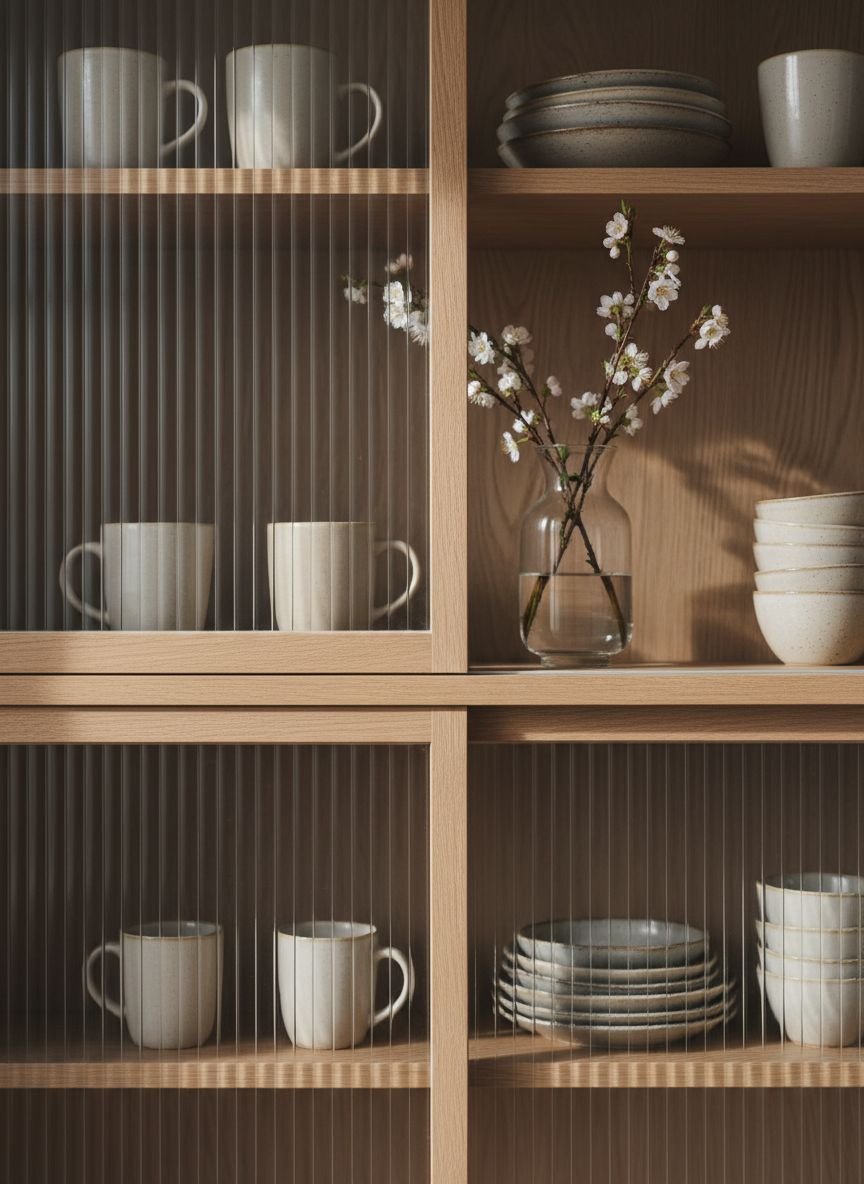
Open shelving is a controversial topic in kitchen design but it is a staple of the Japandi look. It forces you to curate your possessions. You cannot hide a stack of mismatched plastic cups on an open shelf. This design choice encourages you to invest in beautiful everyday objects like ceramic plates, wooden bowls, and glass jars. The items on the shelf become part of the decor.
Wood shelves floating against a stone or plaster wall create a beautiful textural contrast. Keep the styling minimal. Leave space between stacks of plates. Group items in odd numbers (threes or fives) for visual balance. The shelves should not look packed. They should look like a gallery of your favorite tools. This approach makes the kitchen feel personal and lived-in rather than sterile.
Pro Tip: Store only frequently used items on open shelves to prevent dust buildup. If you use those bowls every day they won’t get dusty.
Mixing Materials for Visual Interest
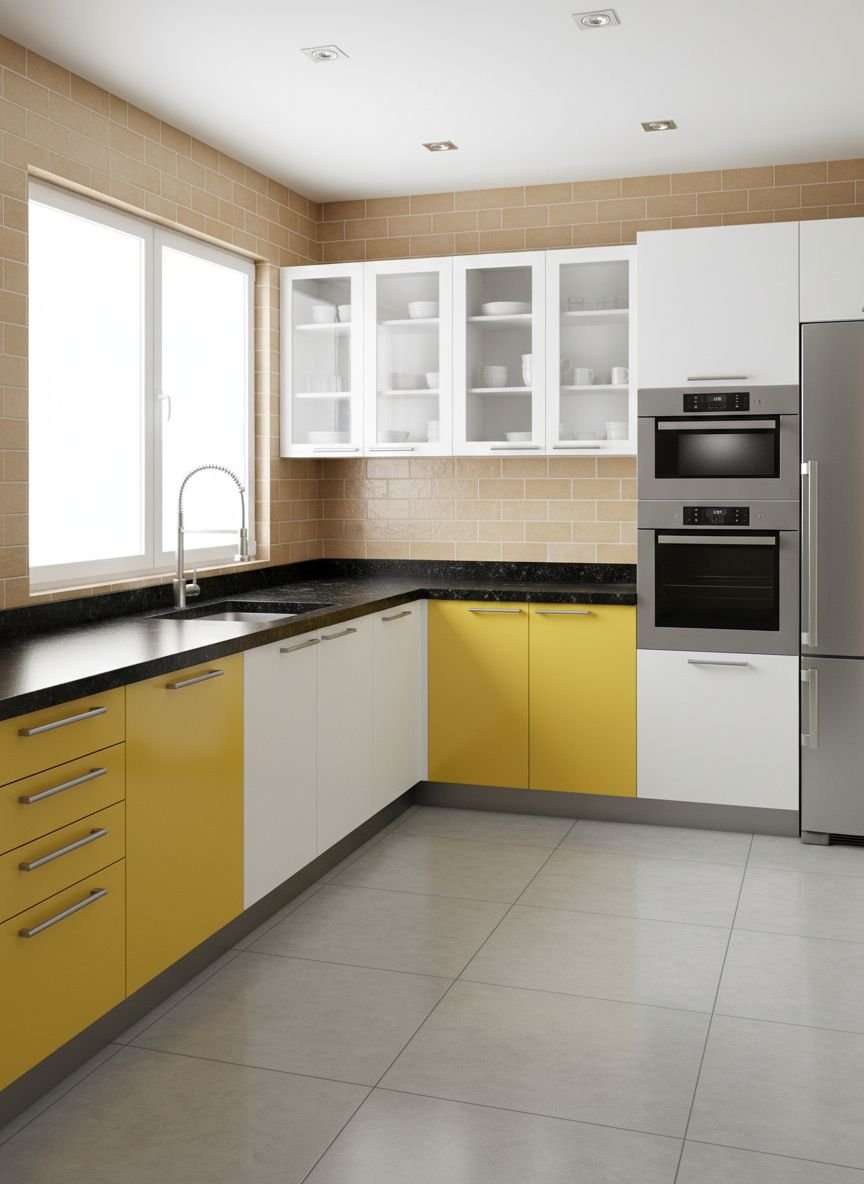
A monochromatic room falls flat without texture. Mixing materials is the secret weapon of interior designers to create luxury and comfort. In a Japandi kitchen you might pair smooth quartz countertops with rough-hewn wooden beams. You might have a polished concrete floor offset by a soft wool runner. The interplay between hard and soft, rough and smooth, keeps the eye moving and engaged.
Consider the backsplash as a prime area for material mixing. Instead of standard tile consider a slab of marble or a panel of textured glass. Mix metals carefully. You can have a stainless steel sink with a matte black faucet if the tones are balanced elsewhere in the room. The goal is a cohesive look where materials converse with each other rather than compete for attention.
Pro Tip: Use a mood board (physical or digital) to see how your samples of wood, stone, and metal look together before purchasing.
Inviting Breakfast Nooks
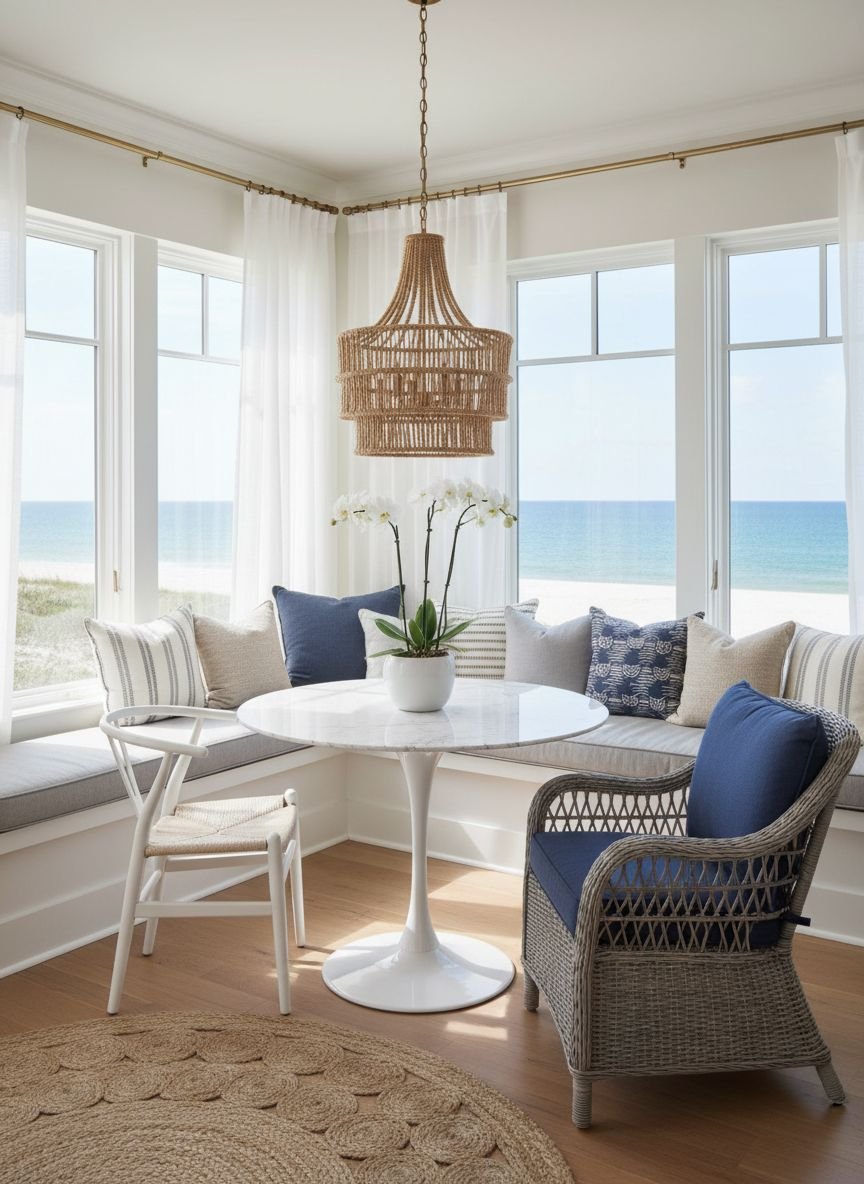
The kitchen often serves as the social hub of the home and a breakfast nook provides a cozy spot to gather. Japandi nooks favor built-in bench seating which saves space and offers clean architectural lines. Construct the bench from the same wood as your cabinets for a unified look. Top it with a simple seat cushion upholstered in durable linen or cotton canvas.
Keep the table simple. A round pedestal table works best in tight corners as it allows for easier movement around the seating. Lighting is crucial here. Hang a low pendant light over the table to define the space and create an intimate atmosphere. This spot becomes perfect for morning coffee or homework sessions while dinner cooks. It brings the concept of “hygge” (cozy contentment) directly into the kitchen.
Pro Tip: Add storage drawers under the bench seating to hide table linens or seasonal decor items.
Zen-Inspired Spaces for Relaxation

We rarely think of the kitchen as a place for relaxation but Japandi challenges this. By incorporating a “tea corner” or a dedicated coffee station you create a ritualistic space within the work zone. This area should be uncluttered and devoted solely to the preparation of your beverage of choice. A beautiful electric kettle, a few handmade mugs, and a jar of tea leaves displayed on a small tray can transform a corner of the counter into a sanctuary.
The visual noise here should be zero. Keep packaging hidden. Decant coffee beans and sugar into matching glass or ceramic containers. The act of making a drink becomes a meditative pause in your day. This aligns with the Japanese tea ceremony’s focus on mindfulness and presence. Even in a busy family kitchen this small zone signals a moment of calm.
Pro Tip: Place this station away from the main cooking triangle so someone can make a drink without getting in the chef’s way.
Seasonal Decor Ideas for Freshness
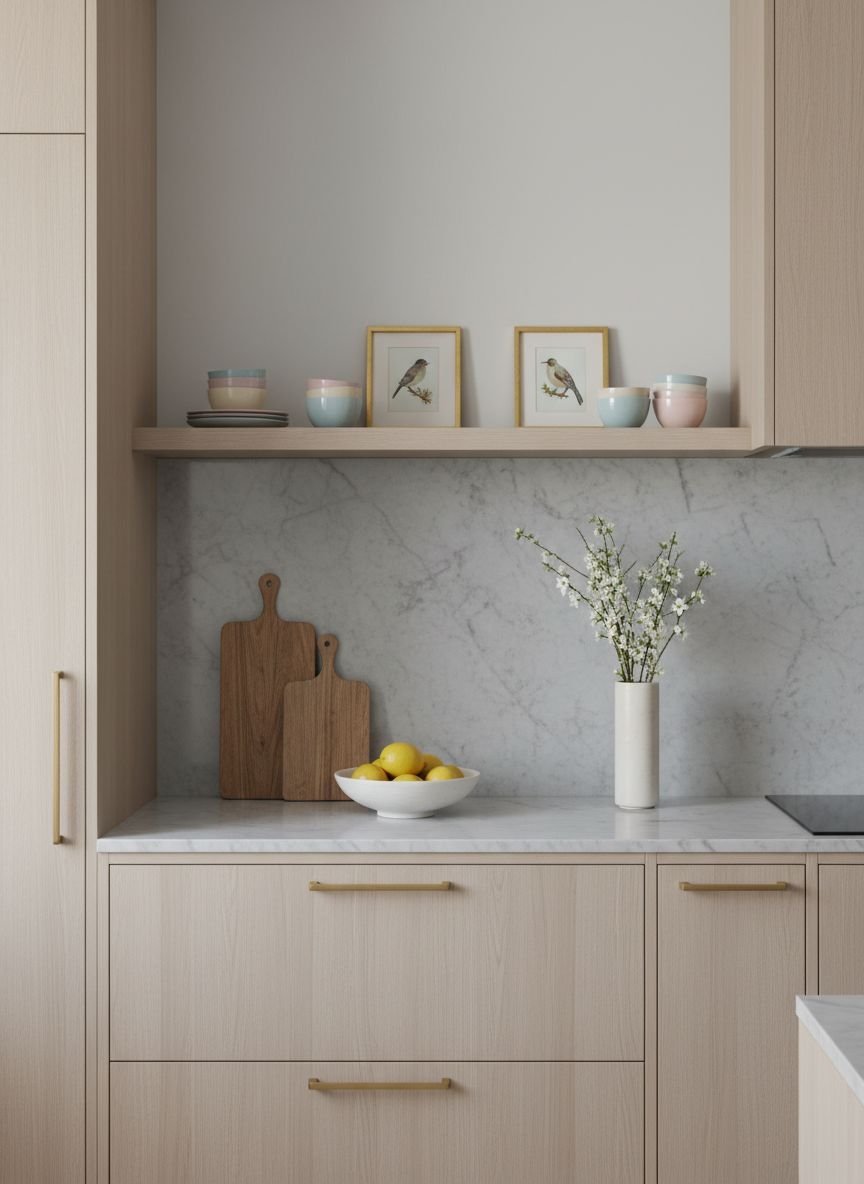
Japandi decor changes subtly with the seasons but never feels cluttered with holiday kitsch. The focus remains on nature. In spring you might bring in blossoming branches like cherry or magnolia. In summer a bowl of fresh citrus fruits adds a pop of color. Autumn calls for dried grasses or wheat in a heavy stoneware vase. Winter decor relies on bare branches, pinecones, and increased candlelight.
Avoid plastic decorations or loud colors. The seasonal shifts should feel organic. Swap out lightweight linen tea towels in summer for heavier waffle-weave cottons in winter. Change the scent of your hand soap to match the season—crisp lemon for warm months and woodsy cedar for cold months. These small sensory details update the home without requiring a storage bin full of decorations.
Pro Tip: Use a single large statement vase for seasonal branches rather than many small vases to maintain the minimalist impact.
Popular Asked Questions
What exactly is Japandi style?
Japandi is a design trend that mixes Scandinavian functionality with Japanese rustic minimalism. It combines the cozy “hygge” feeling of Nordic design with the “wabi-sabi” appreciation of imperfection found in Japanese aesthetics. The result is a clean, warm, and calming space.
Is a Japandi kitchen expensive to create?
It can be expensive but it does not have to be. While the style often uses high-quality natural materials like solid wood and stone, you can achieve the look on a budget. Focus on decluttering, using paint to create a warm neutral palette, and updating hardware to matte black. Less is more, so you buy fewer items.
Can I have a Japandi kitchen with kids?
Yes. Japandi is actually great for families because it emphasizes hidden storage. Toys and clutter can be tucked away in cupboards, leaving surfaces clear. Matte finishes and textured woods also hide fingerprints and scratches better than high-gloss modern kitchens.
What are the best colors for a Japandi kitchen?
Stick to warm neutrals. The best colors include warm white, cream, beige, oatmeal, soft grey, and terracotta. Use black or dark charcoal sparingly as an accent color to create contrast.
Conclusion
The Japandi kitchen trend offers more than just a beautiful visual style. It provides a lifestyle shift toward mindfulness, organization, and appreciation for natural beauty. By blending the best elements of Scandinavian and Japanese design you create a space that serves your cooking needs while soothing your soul. Whether you are doing a full remodel or just swapping out cabinet hardware, these principles can help you build a home that feels like a sanctuary.

Leave a Comment