
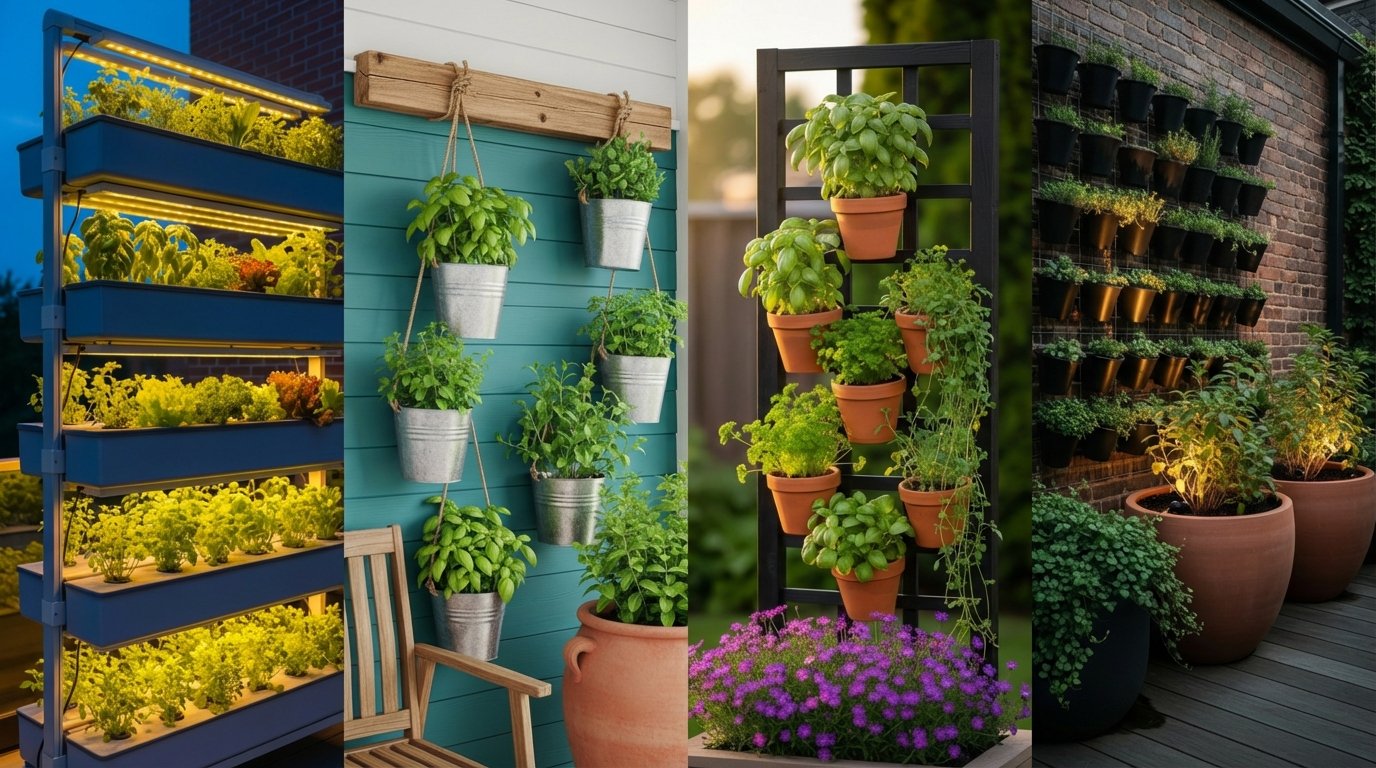
If you have ever stared at a blank wall or a tiny balcony and wished for fresh basil at your fingertips, you are not alone. The trend of growing upward is exploding, and for good reason. A vertical herb garden transforms unused vertical space into a lush, edible living wall that smells as good as it looks.
Whether you are renting a small apartment or upgrading a spacious patio, growing herbs vertically solves the problem of limited square footage while adding a stunning visual element to your home. This guide cuts through the noise to bring you 18 proven, aesthetic DIY ideas that actually work. Get ready to double your growing space and elevate your cooking with fresh, organic flavors.
Key Takeaways
- Maximize Small Spaces: Vertical gardening increases your planting area by 3x-4x without taking up floor space.
- Fresh Flavors Year-Round: Indoor vertical systems allow you to harvest basil, mint, and cilantro even in winter.
- Visual Impact: These designs act as “living art,” adding texture and greenery to boring walls or fences.
- Cost-Effective: Many of these ideas use recycled materials like pallets, mason jars, and tin cans.
Table of Contents
- Vertical Herb Garden with Wooden Frame
- Indoor Vertical Herb Garden with Mason Jars
- Outdoor Vertical Herb Garden on a Fence
- Vertical Herb Garden with Terra Cotta Pots
- Vertical Herb Garden on a Wall
- Vertical Garden with Hanging Baskets
- Compact Vertical Herb Garden for Small Spaces
- Vertical Herb Garden with Recycled Materials
- Indoor Vertical Herb Garden with LED Lights
- Rustic Vertical Herb Garden with Ladder Frame
- Vertical Garden with Colorful Planters
- Vertical Herb Garden with Metal Frame
- Vertical Herb Garden in a Kitchen
- Vertical Garden with Wooden Crates
- Vertical Herb Garden with Self-Watering System
- Vertical Garden with Rope and Buckets
- Vertical Herb Garden with Clay Pots and Trellis
- Vertical Herb Garden with Wire Mesh Frame
- Popular Asked Questions
- Conclusion
Vertical Herb Garden with Wooden Frame
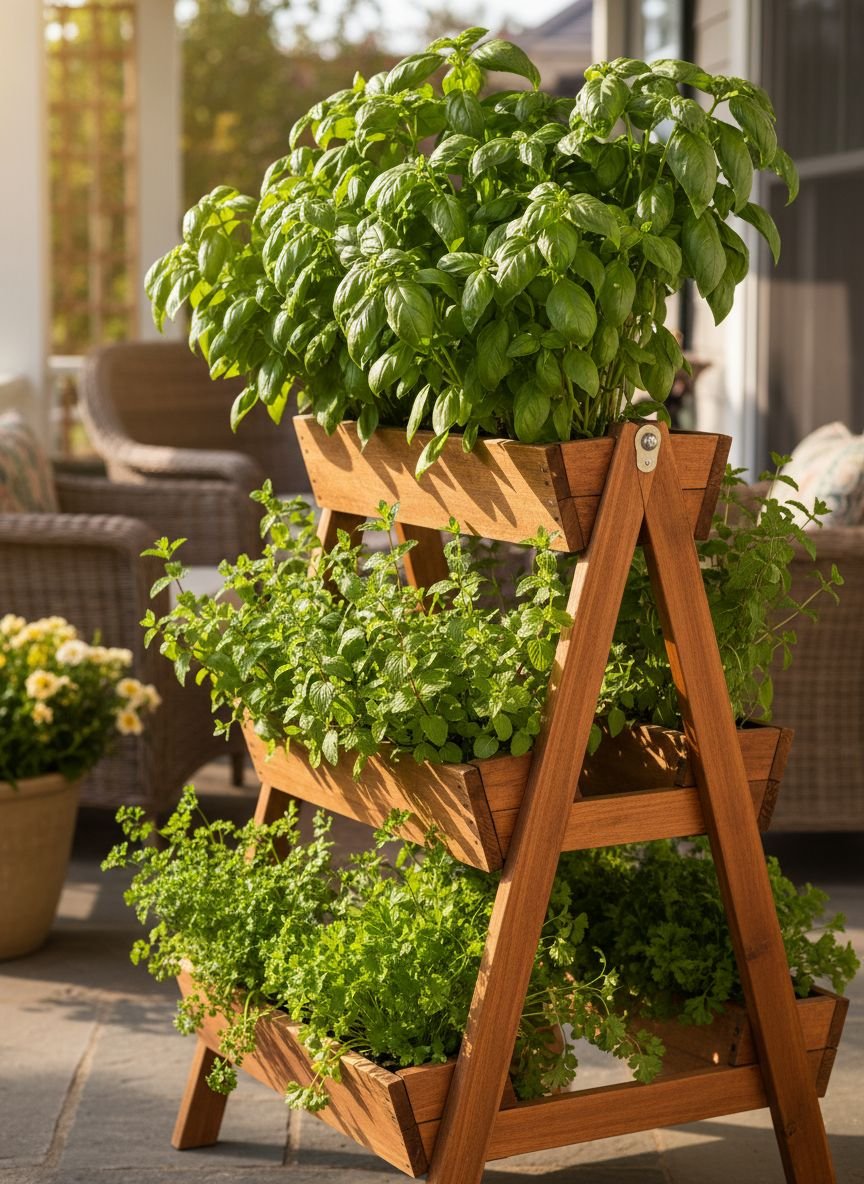
A custom wooden frame acts as a structured canvas for your greenery, creating a polished look that blends seamlessly with modern or farmhouse decor. The natural grain of cedar or redwood provides a warm contrast against the vibrant green leaves of parsley and thyme. By treating the wood with a weather-resistant sealant, you ensure the structure withstands outdoor elements without rotting.
To build this, construct a simple rectangular frame and attach horizontal slats. Secure small planter boxes or pots to these slats using metal hooks or screws. This design allows for excellent airflow between plants, which reduces the risk of fungal diseases. It is perfect for leaning against a patio wall or mounting directly onto a fence.
Pro Tip: Use a spirit level when attaching the horizontal slats to ensure your pots hang straight and water drains evenly.
Indoor Vertical Herb Garden with Mason Jars
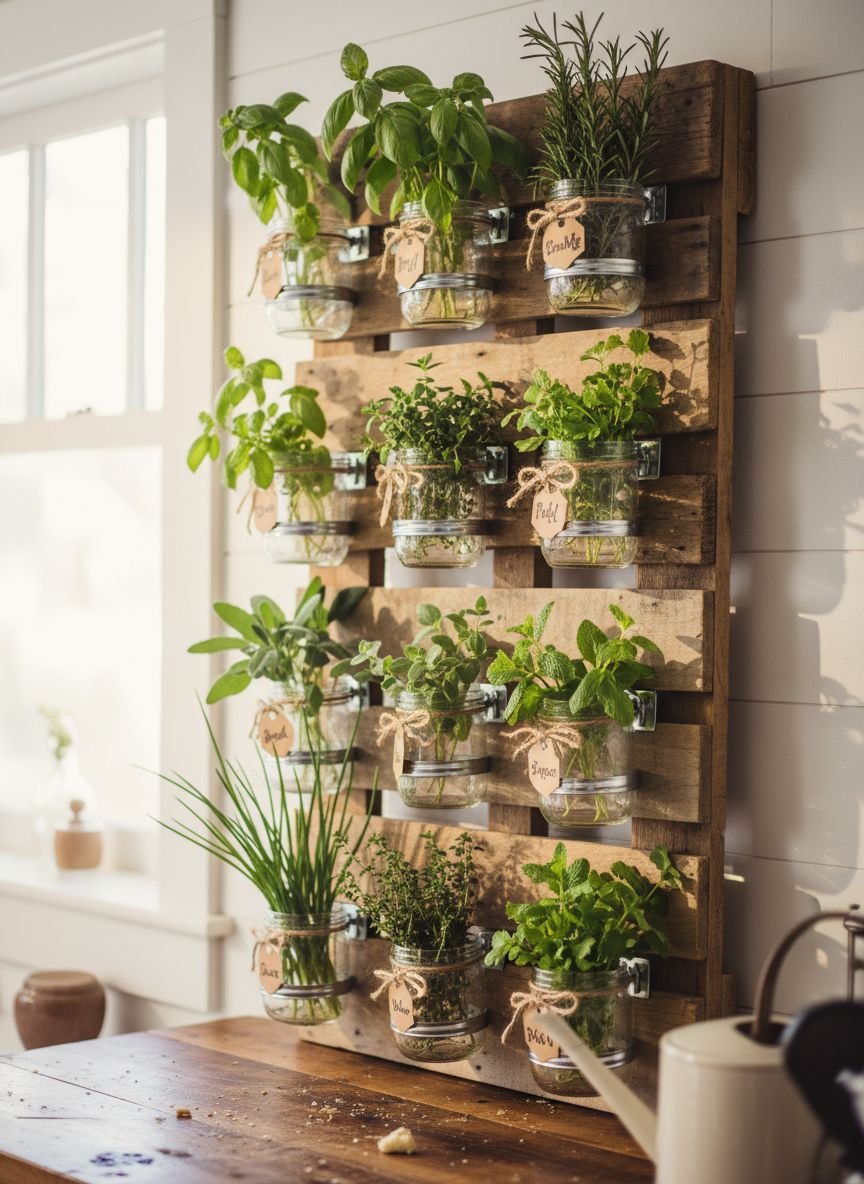
Bring the farmhouse charm inside with a mason jar herb garden. The clear glass allows you to see the soil layers and root systems, adding an educational and textural element to your kitchen decor. This method is particularly effective for herbs that do not require massive root space, such as chives or cilantro.
Mount the jars to a reclaimed wood board using hose clamps for a rustic industrial vibe. Since mason jars lack drainage holes, you must place a layer of gravel or activated charcoal at the bottom before adding potting soil. This prevents root rot by keeping standing water away from the roots. Place the board near a sunny window to ensure your herbs get at least six hours of light.
Pro Tip: Label each jar with a paint pen or a small chalkboard sticker so you never confuse your cilantro with your parsley.
Outdoor Vertical Herb Garden on a Fence
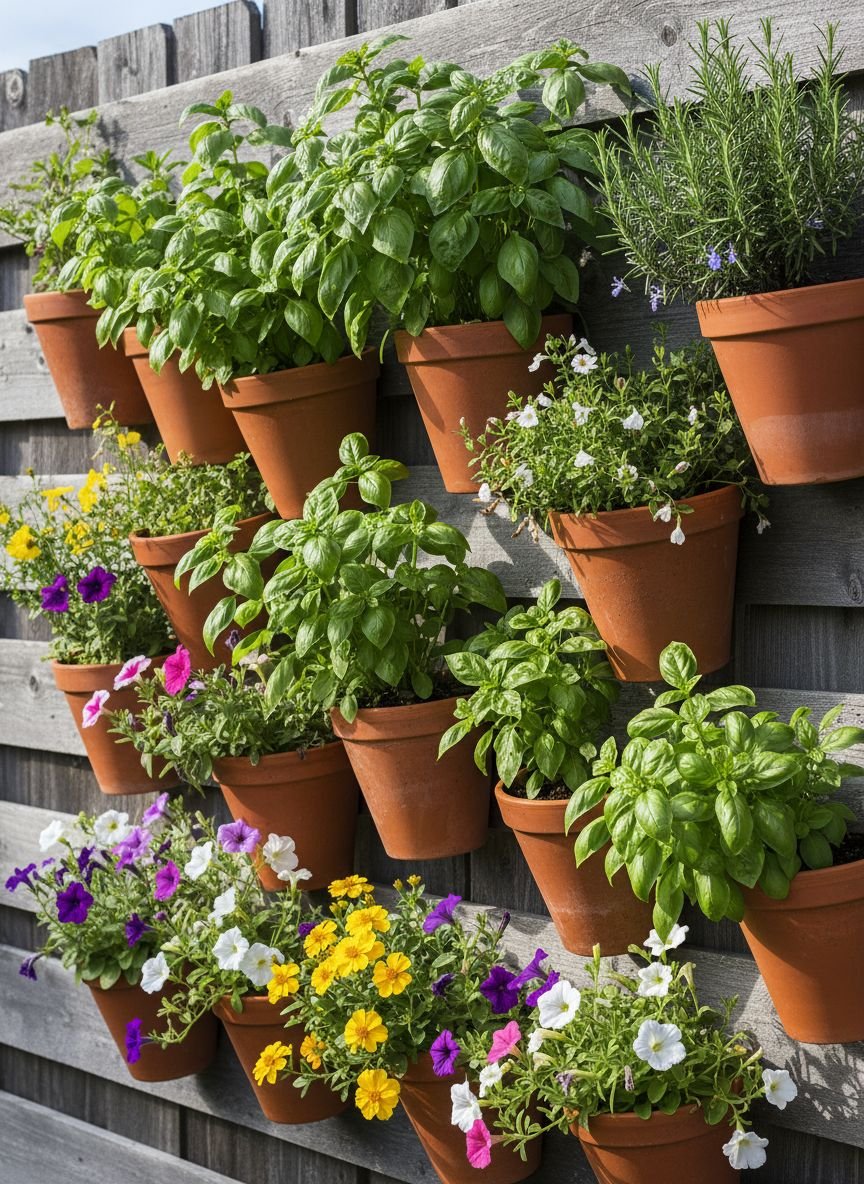
Transform a boring privacy fence into a lush, edible wall. This idea utilizes existing structures, making it one of the most budget-friendly DIY garden ideas. By hanging planters directly on the fence, you soften the hard lines of the wood or vinyl and create a cooling effect in your backyard.
You can use over-the-rail planters or screw brackets directly into the fence posts. Opt for lightweight plastic or resin pots to reduce the strain on the fence. Arrange the pots in a staggered pattern to ensure the plants on the bottom receive enough sunlight and are not shaded by the ones above. This setup is ideal for sun-loving Mediterranean herbs like rosemary and oregano.
Pro Tip: Drill extra drainage holes in your outdoor pots to prevent heavy rains from drowning your herbs.
Vertical Herb Garden with Terra Cotta Pots
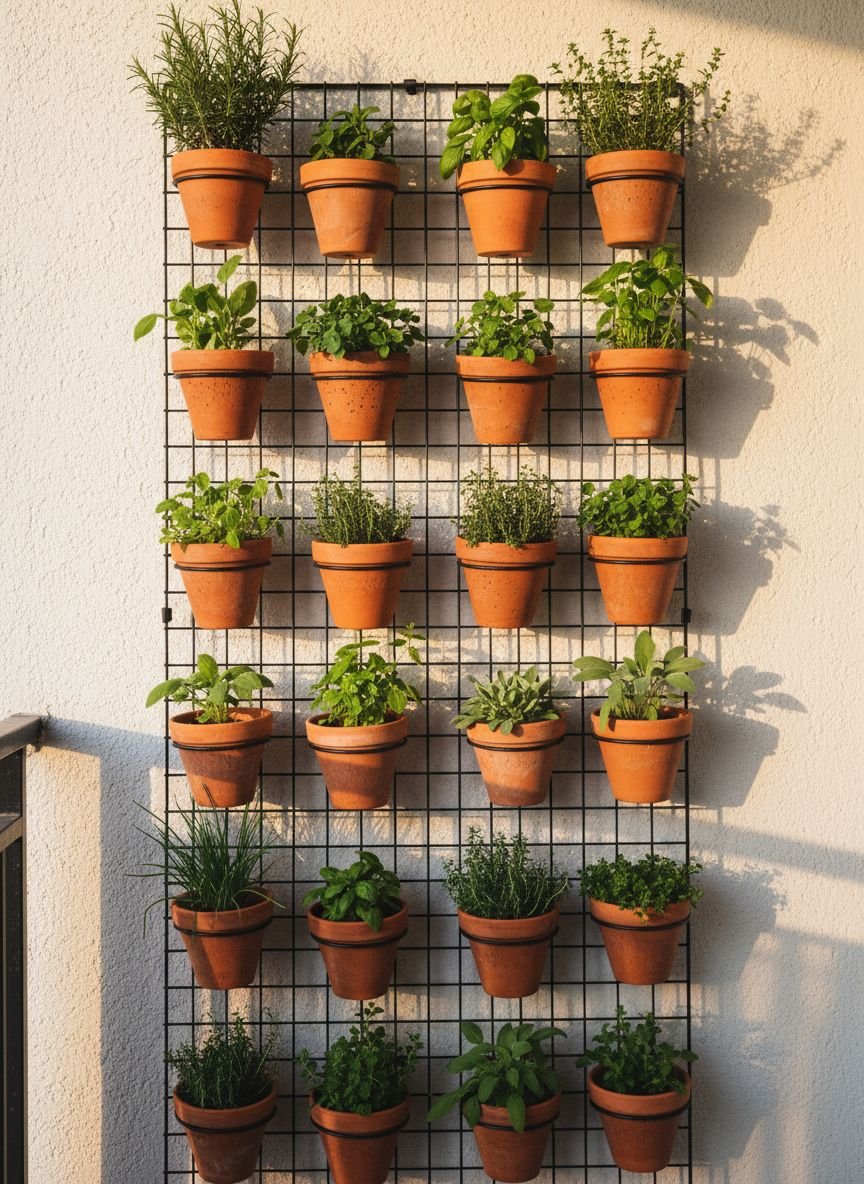
Nothing beats the classic look of terra cotta pots. Their porous nature allows air and water to move through the walls, preventing soil disease and root rot. When arranged vertically, the warm orange clay creates a striking geometric pattern that looks beautiful against a white wall or green foliage.
To create a vertical stack, use a central metal rod or sturdy rope threaded through the drainage holes of the pots. Stack them at opposing angles (tipping left, then right) to create pockets for planting. This “topsy-turvy” tower is stable and maximizes planting surface area in a footprint no larger than a single dinner plate.
Pro Tip: Soak your terra cotta pots in water for an hour before planting. This prevents the dry clay from wicking all the moisture out of the soil immediately.
Vertical Herb Garden on a Wall
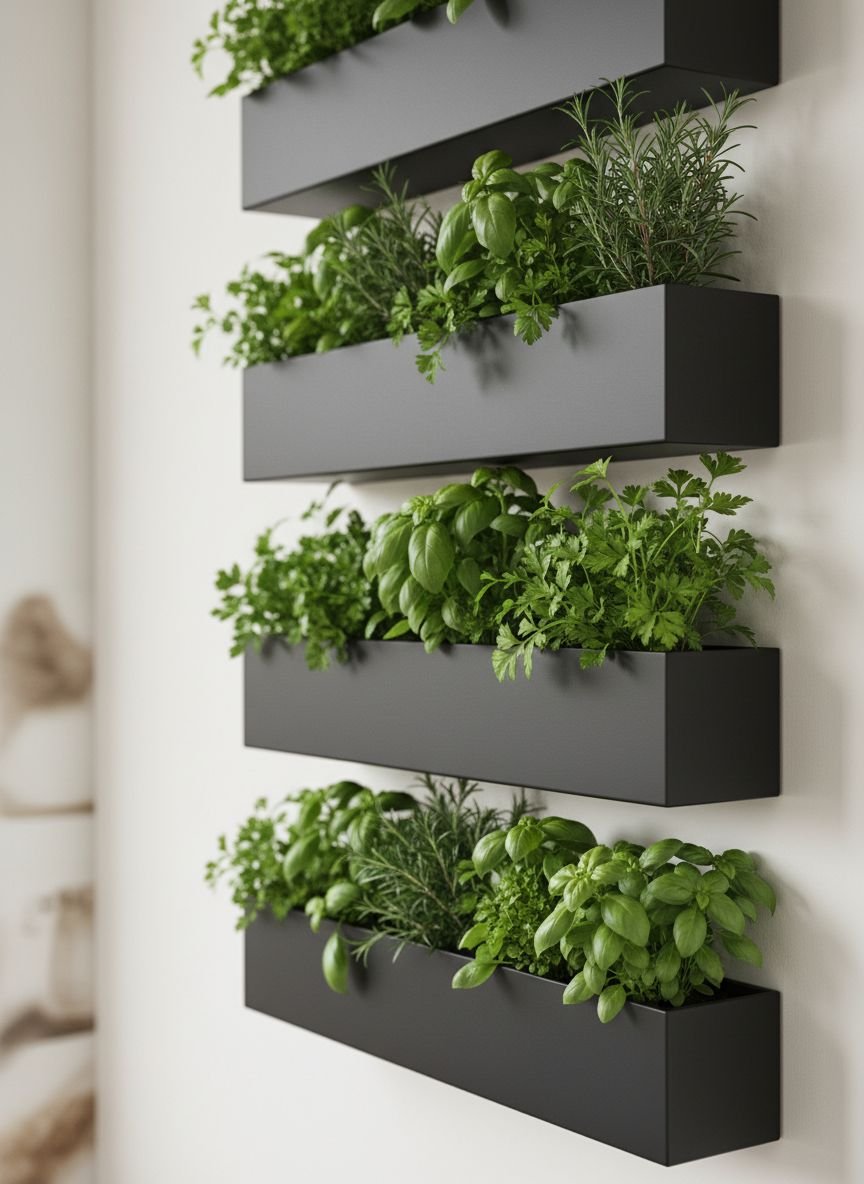
A living wall is the ultimate statement piece for urban gardeners. This design involves mounting a grid or pocket system directly to an exterior or interior wall, turning it into a lush carpet of greenery. Felt pocket planters are a popular choice here because they are lightweight, breathable, and easy to mount.
Visually, this creates a soft, textured backdrop that absorbs sound and improves air quality. When implementing this, ensure you have a waterproof barrier between the planter and the wall to prevent moisture damage. A simple sheet of plastic or a sealed wooden backing works wonders. Fill the pockets with a lightweight potting mix to keep the overall weight down.
Pro Tip: Plant trailing herbs like creeping thyme or mint at the top so they cascade down, covering the planter material for a seamless green look.
Save this idea to your Pinterest.
Comparison: Best Materials for Vertical Frames
| Material | Pros | Cons | Best For |
|---|---|---|---|
| Wood (Cedar/Redwood) | Natural look, durable, sturdy | Can rot if untreated, heavy | Outdoor patios, rustic themes |
| Metal (Steel/Iron) | Modern aesthetic, very strong | Can rust, heats up in sun | Industrial lofts, heavy pots |
| Felt/Fabric Pockets | Lightweight, breathable, cheap | Dries out fast, short lifespan | Living walls, renters |
| PVC/Plastic | Waterproof, lightweight, cheap | Can look “cheap”, becomes brittle | Hydroponic systems |
Vertical Garden with Hanging Baskets
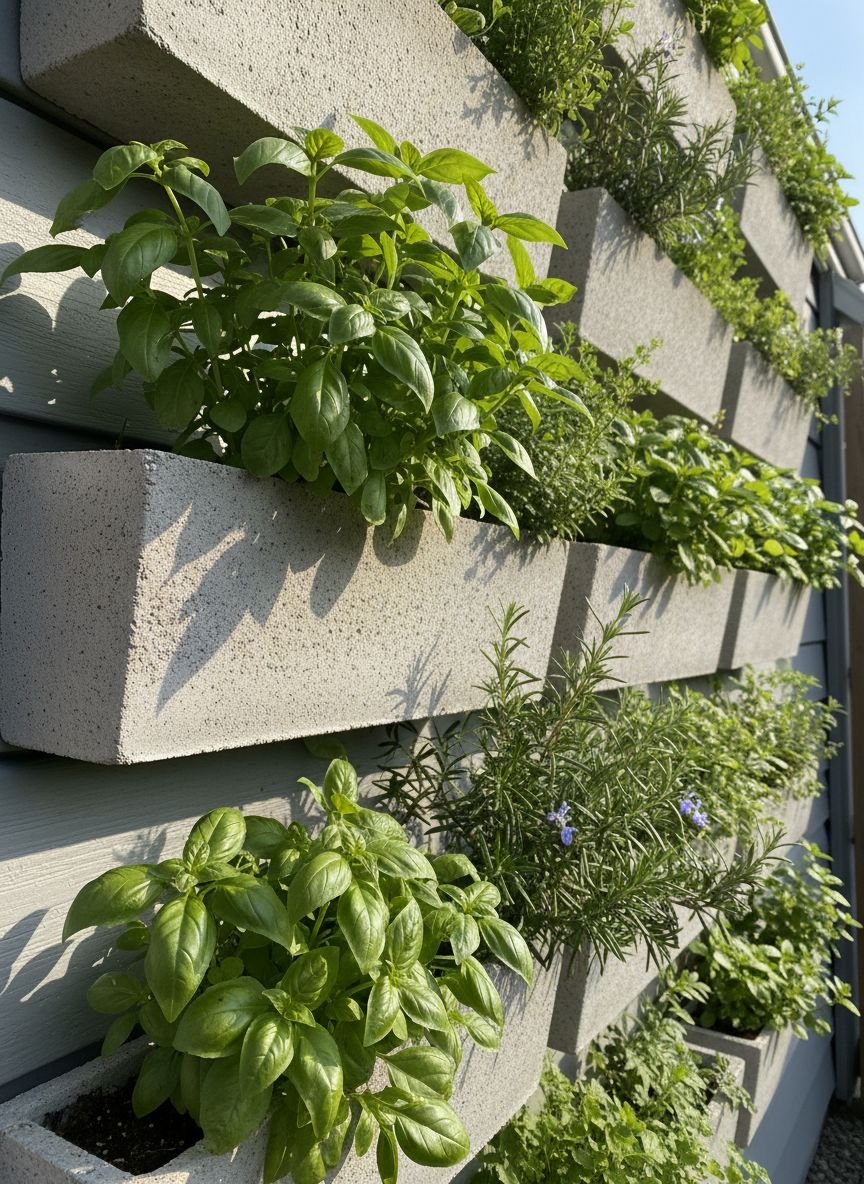
Hanging baskets are a timeless way to add verticality to your garden. By suspending them at different heights, you create a cascading waterfall of greenery that draws the eye upward. This style is perfect for porches, balconies, or even indoor curtain rods.
Woven wicker or coconut coir liners add a natural, organic texture that complements the green foliage. Use sturdy chains or macrame ropes to hang the baskets. This method is excellent for herbs that love to trail, such as mint or nasturtiums. It also keeps your precious herbs out of reach of garden pests like slugs and rabbits.
Pro Tip: Install a swivel hook at the top so you can easily rotate the basket for even sun exposure without taking it down.
Compact Vertical Herb Garden for Small Spaces
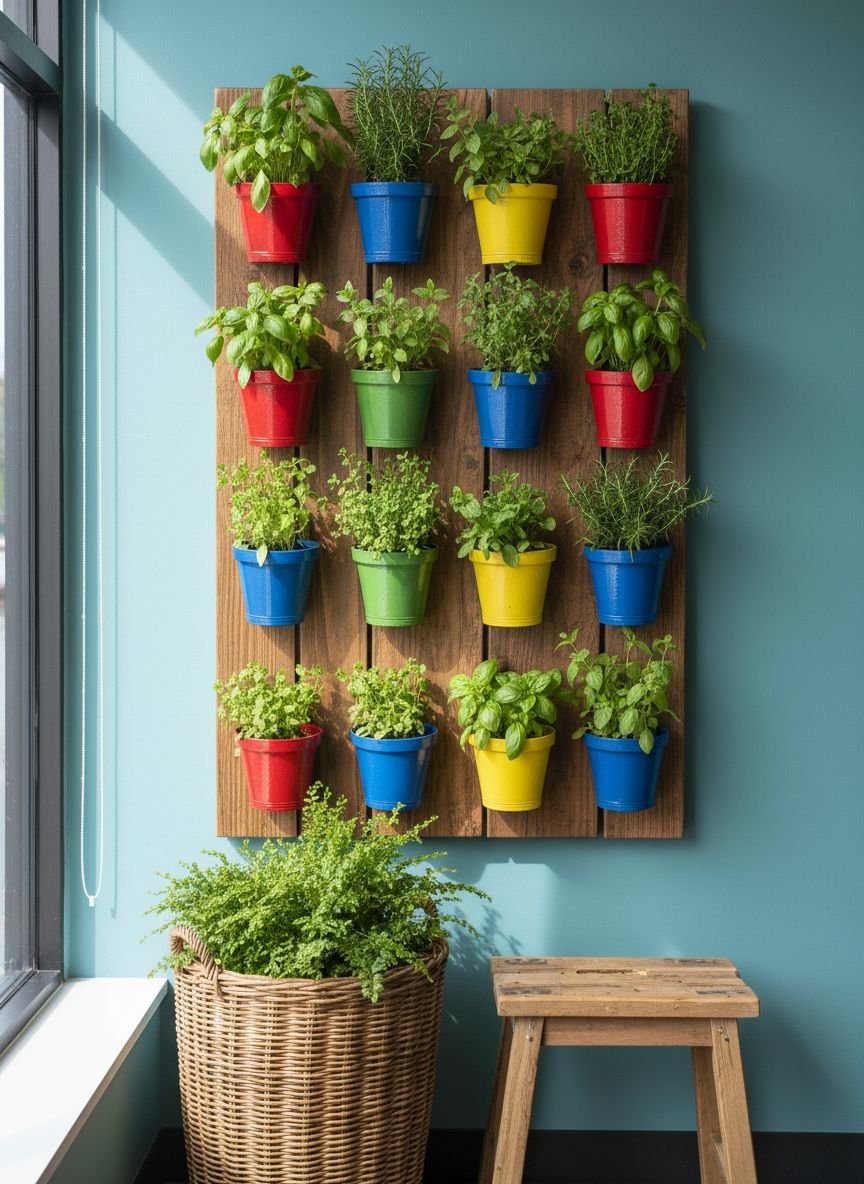
For those living in studio apartments or tiny homes, a compact vertical garden is a lifesaver. This often takes the form of a slim, tiered stand or a wall-mounted shelving unit that protrudes less than six inches into the room. The goal is to maximize yield per square inch.
Look for modular systems that stack vertically. White or light-colored containers help reflect light and make the unit appear less bulky in a small room. Place this setup near your brightest window or a glass balcony door. Even a space as narrow as a window frame can host three or four tiers of fresh herbs.
Pro Tip: Choose dwarf varieties of herbs, such as “Spicy Globe” basil or “Blue Boy” rosemary, which stay compact and bushy.
Vertical Herb Garden with Recycled Materials
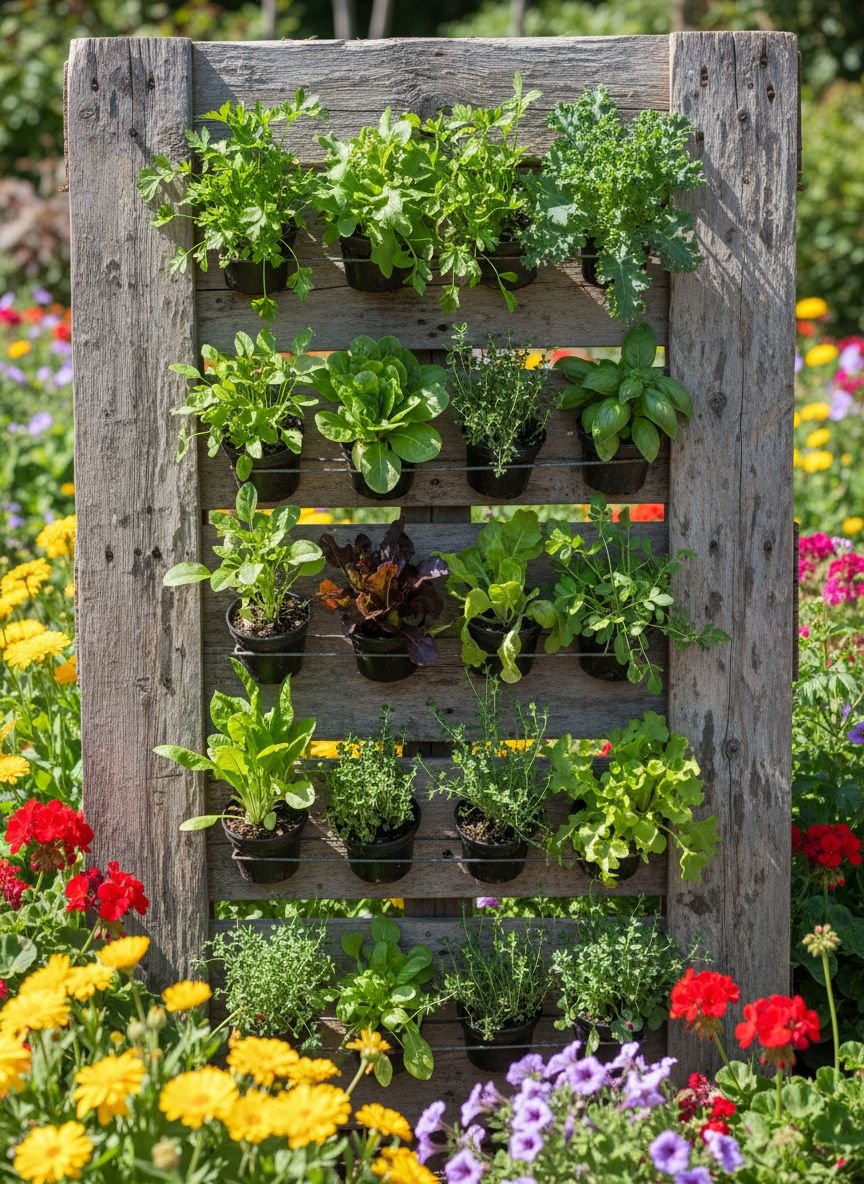
Sustainability meets style with this eco-friendly approach. Using recycled materials like plastic bottles, tin cans, or old shoe organizers reduces waste and adds a unique, eclectic character to your garden. A shoe organizer hanging on a door is an instant 24-pocket garden.
To use plastic bottles, cut a rectangular opening in the side and poke drainage holes in the bottom. String them together horizontally or vertically using twine. This DIY project is fantastic for kids and adds a playful, colorful element if you paint the containers. It proves that you do not need a big budget to grow high-quality food.
Pro Tip: If using metal tin cans, coat the inside with a non-toxic sealant to prevent rust from leaching into your soil.
Indoor Vertical Herb Garden with LED Lights
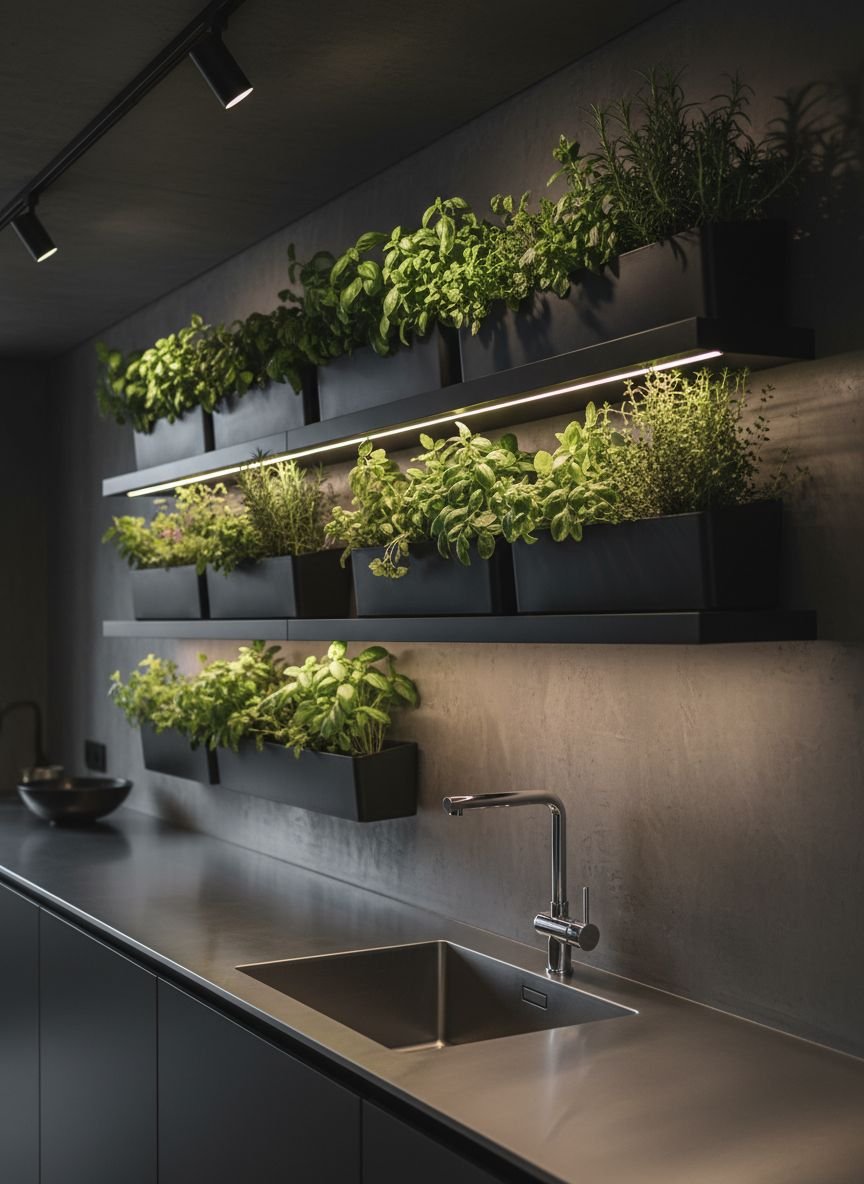
Lack of sunlight is the number one killer of indoor herbs. An LED grow light system solves this problem permanently. Modern grow lights come in sleek, full-spectrum white designs that look like high-end furniture rather than industrial equipment.
Integrate the lights directly into the shelves above the plants. This ensures your basil and dill get the intense light they need to produce flavorful oils. The contrast between the sleek, glowing lights and the organic leaves creates a futuristic, high-end look in modern kitchens. It allows you to grow herbs in a dark corner or a windowless pantry.
Pro Tip: Set your LED lights on an automatic timer to run for 12-14 hours a day. Consistency is key for rapid growth.
Rustic Vertical Herb Garden with Ladder Frame
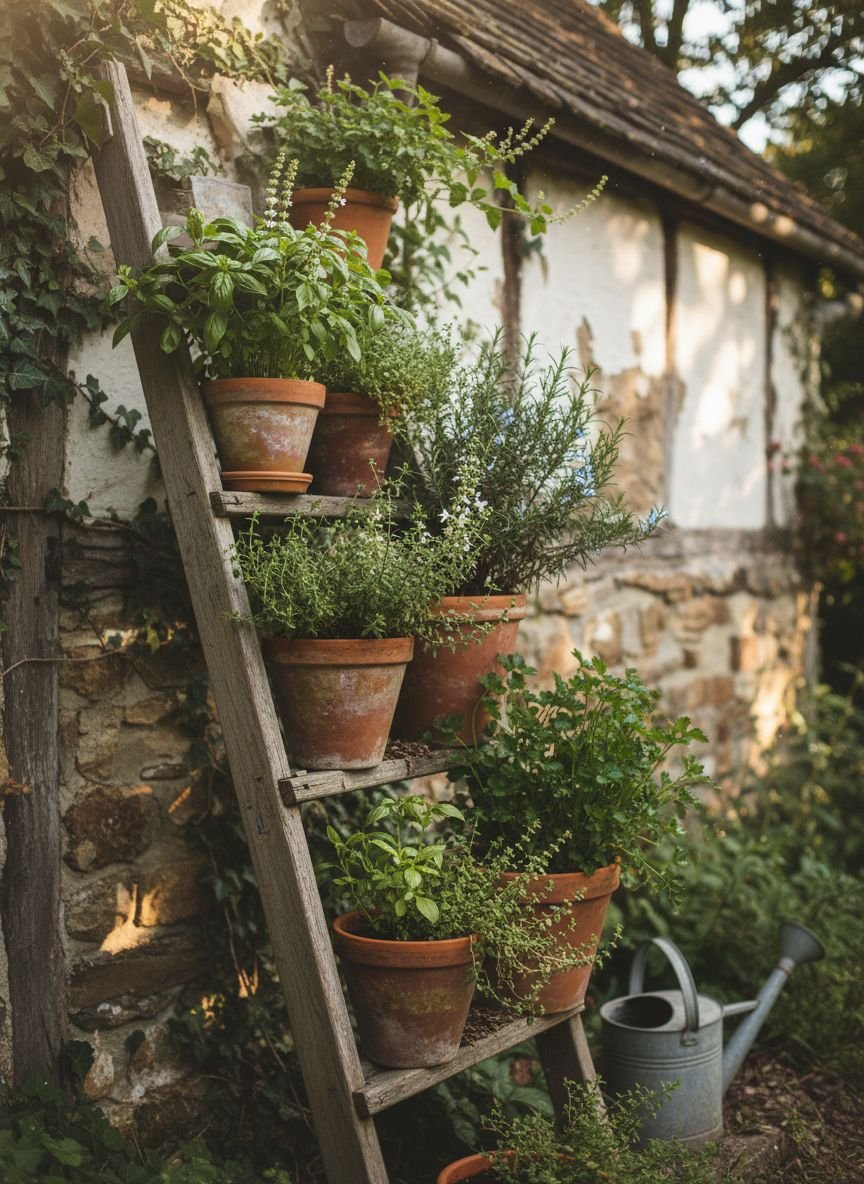
An old wooden ladder is the perfect skeleton for a rustic vertical garden. The rungs provide natural shelving for pots, while the A-frame structure is stable and self-supporting. This look screams “cottagecore” and adds instant charm to any patio or living room.
You can leave the ladder in its weathered state for a vintage feel or sand and paint it for a cleaner look. Place wider pots on the bottom rungs and smaller ones at the top to maintain visual balance. This setup is incredibly renter-friendly as it requires no drilling into walls.
Pro Tip: Secure the pots to the ladder steps with a dab of museum wax or velcro strips to prevent them from being knocked over by wind or pets.
Save this idea to your Pinterest.
Get The Look: Essential Tools for Vertical Gardening
- High-Quality Potting Mix: Look for “container mix” with perlite for drainage.
- Liquid Fertilizer: Vertical gardens drain nutrients fast; feed every 2 weeks.
- Vertical Planter Pockets: Breathable felt fabric works best.
- Drip Irrigation Kit: Saves time and ensures consistent moisture.
- Heavy Duty Wall Anchors: Essential for safety if mounting on drywall.
Vertical Garden with Colorful Planters
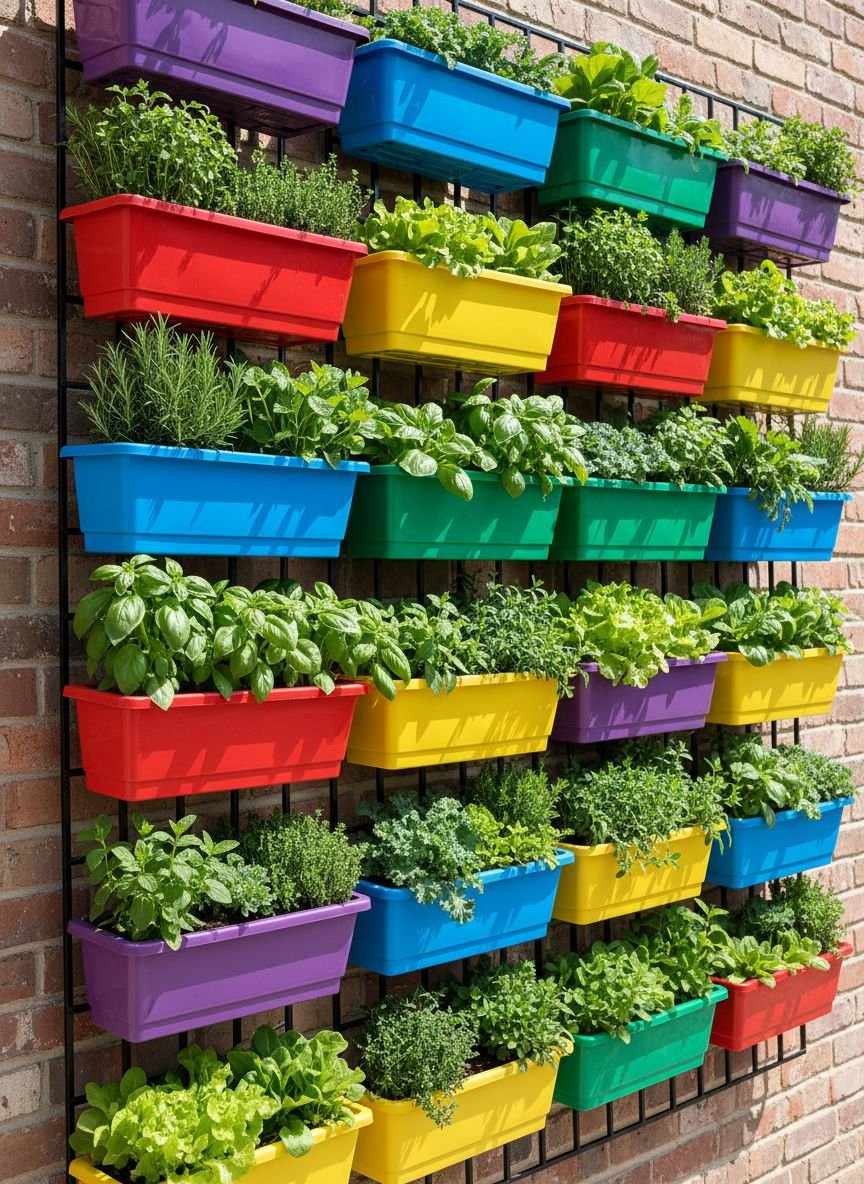
Inject a burst of joy into your space with colorful planters. While terra cotta and wood are classic, bright yellows, teals, and corals can turn your herb garden into a focal point of art. This is especially effective in winter when the rest of the garden might look drab.
Mix and match colors for a bohemian vibe, or stick to a monochrome palette (like shades of blue) for a sophisticated look. Painted metal buckets or glazed ceramic pots work well here. The color contrast against the green herbs makes the plants pop visually.
Pro Tip: Use spray paint labeled for plastic or metal to upcycle old, mismatched pots into a cohesive, colorful set.
Vertical Herb Garden with Metal Frame
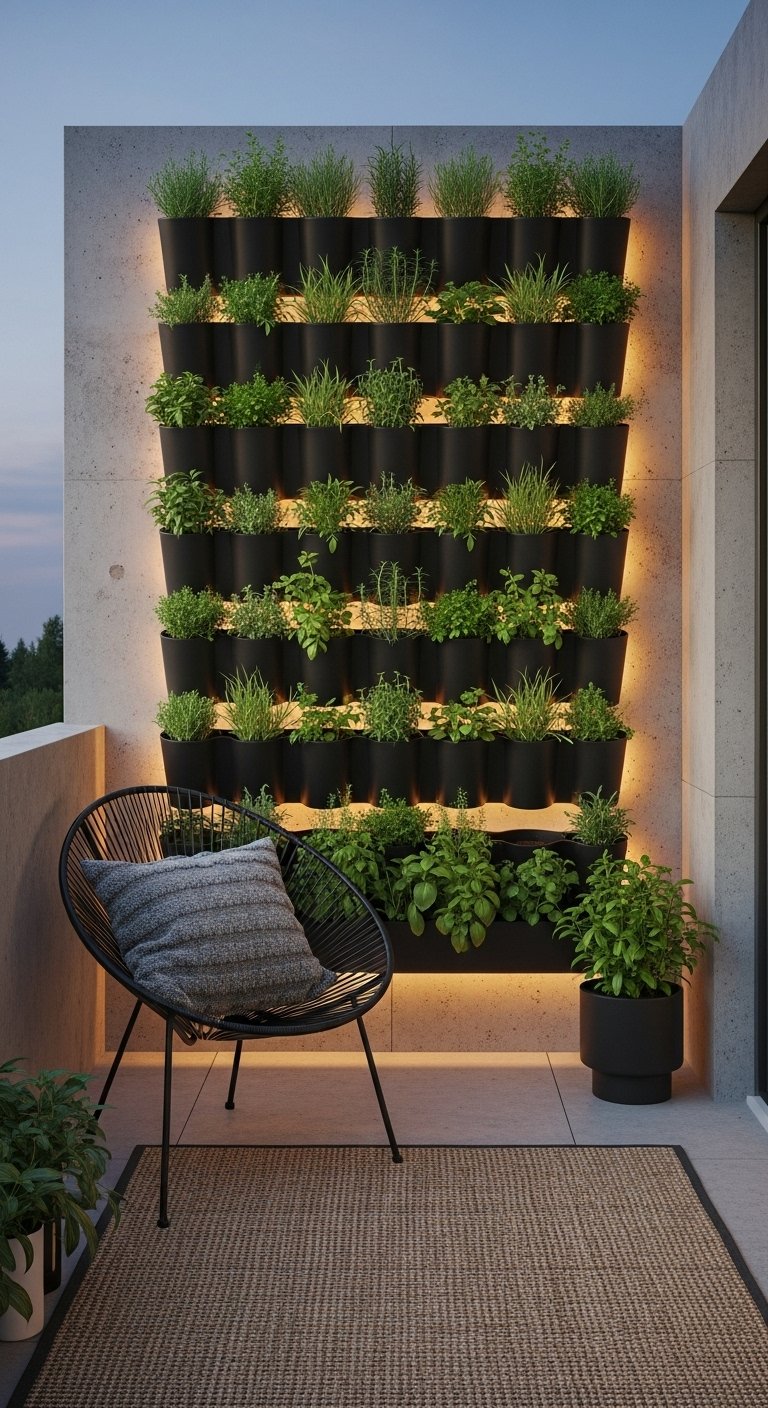
For an industrial or minimalist aesthetic, a metal frame is the way to go. Steel grids, rebar mesh, or copper piping can be fashioned into a sturdy trellis or rack. The thin lines of the metal allow the plants to take center stage, creating a “floating” effect.
Copper pipes are particularly trendy; they develop a beautiful patina over time. You can use S-hooks to hang buckets from a metal grid. This system is incredibly durable and can support heavier pots than fabric or plastic alternatives. It looks stunning against a brick wall or a dark-painted fence.
Pro Tip: If using iron or steel outdoors, apply a clear coat of rust-oleum to keep the metal looking pristine.
Vertical Herb Garden in a Kitchen
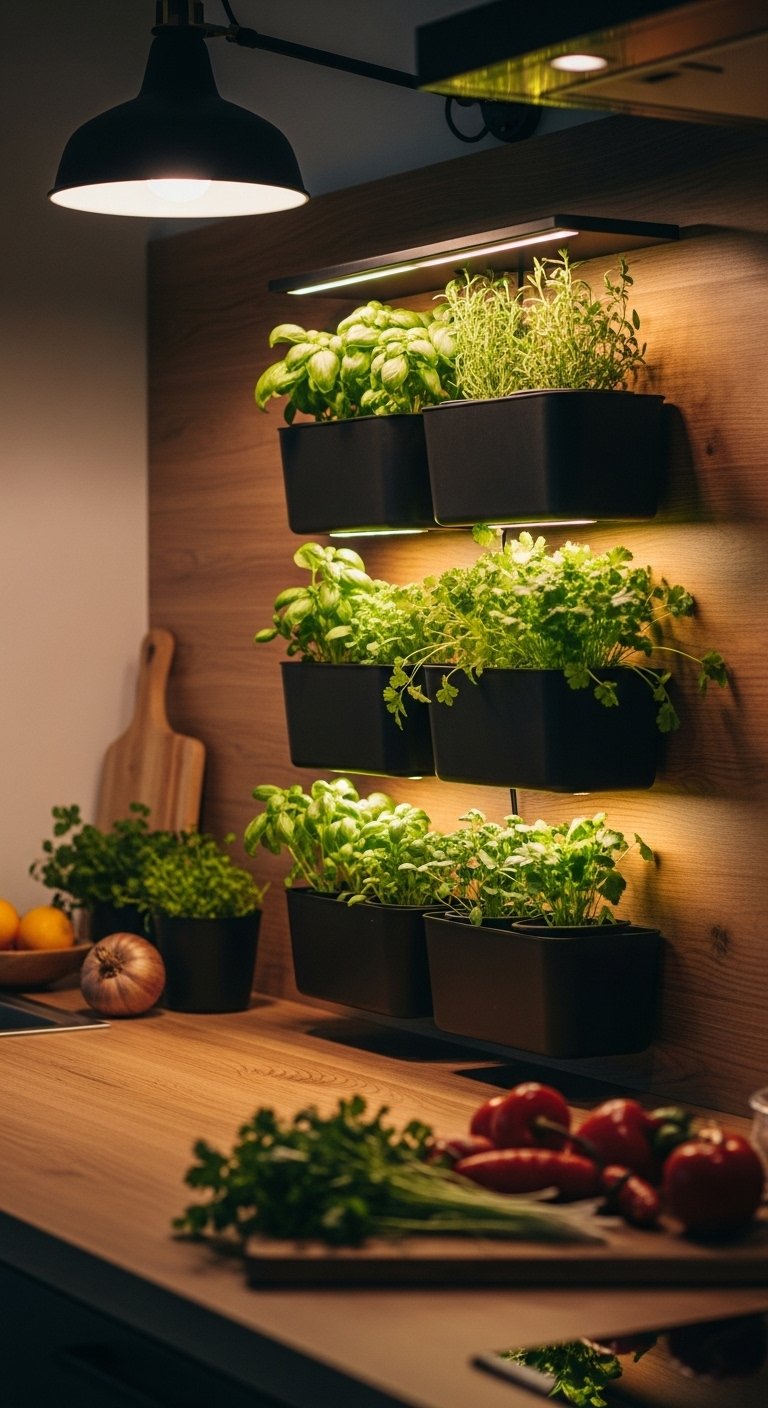
The ultimate convenience is having your herb garden directly in the kitchen. Wall-mounted rails (like those used for utensils) are perfect for hanging small pots above the counter. This keeps your herbs within arm’s reach while cooking, ensuring you actually use them.
Design-wise, this adds a layer of life and warmth to the kitchen, softening hard surfaces like granite and stainless steel. Choose pots that match your kitchen hardware (brass, matte black, or brushed nickel) for a cohesive look. Ensure the location is not too close to the stove, as excessive heat can wilt delicate herbs.
Pro Tip: Plant your “high frequency” herbs here—basil, parsley, and cilantro—and leave the less-used ones for the outdoor garden.
Vertical Garden with Wooden Crates
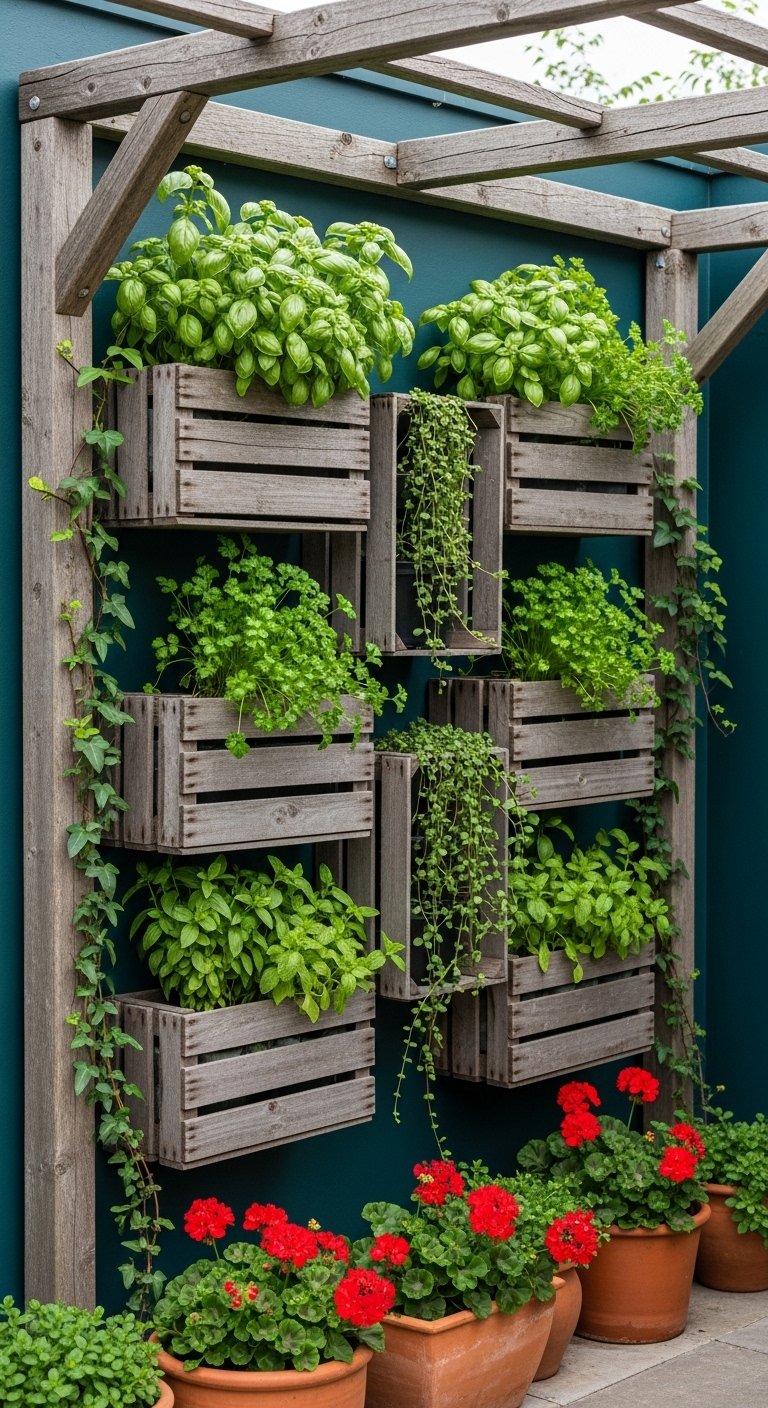
Stacking wooden crates creates a modular, bookshelf-style garden that is sturdy and spacious. This method provides deep soil volume, which is excellent for larger herbs like rosemary, sage, or even mixing in some edible flowers.
Arrange the crates in a pyramid shape or stack them sideways and secure them together. The rough wood texture pairs beautifully with lush greenery. You can line the crates with landscape fabric and plant directly into them, or simply use them as shelves for potted plants. This is a great way to create a privacy screen on a balcony.
Pro Tip: Elevate the bottom crate on bricks or feet to prevent moisture from trapping underneath and staining your deck.
Vertical Herb Garden with Self-Watering System
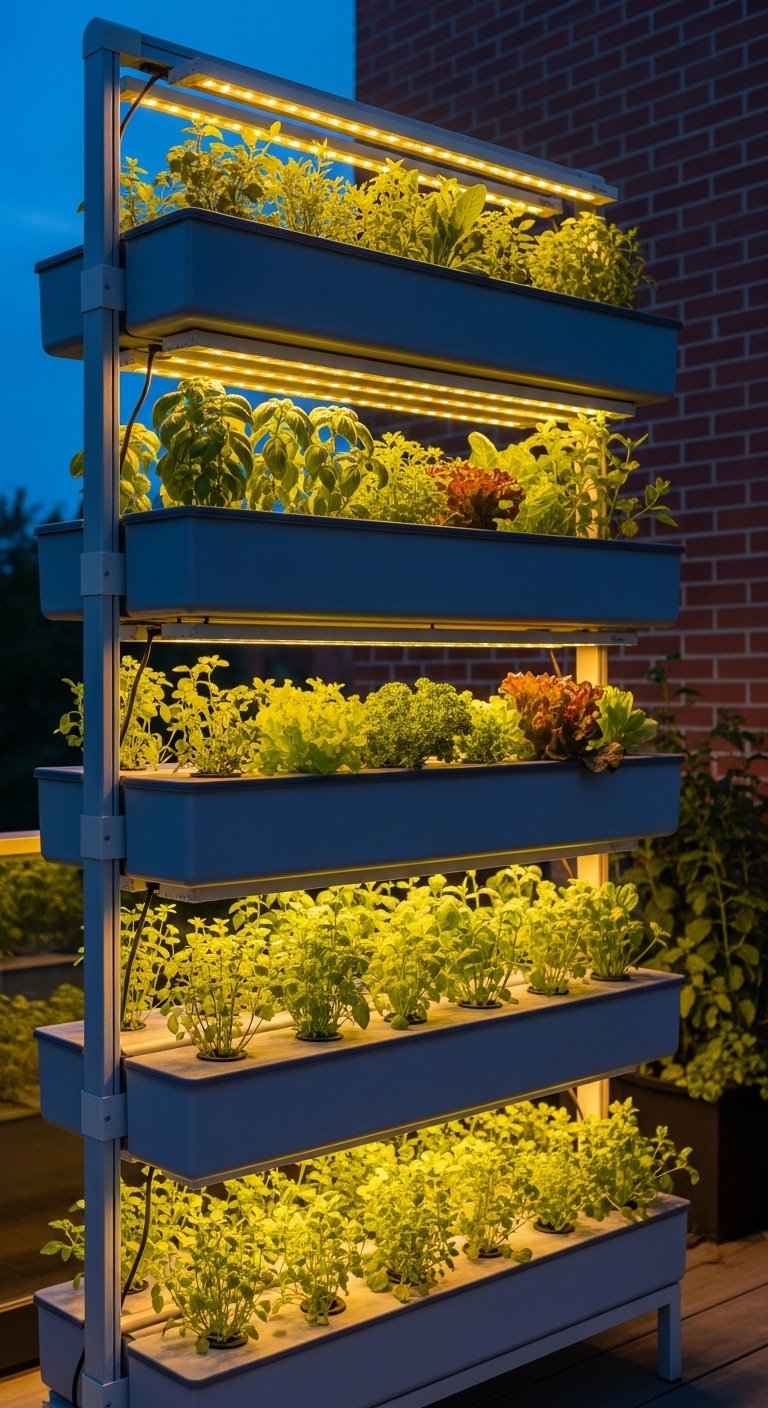
The biggest challenge with vertical gardening is watering. A self-watering system removes this stress. These systems usually consist of a top reservoir that drips water down to lower levels, or individual pots with water storage bases.
This is a game-changer for busy people or those who travel often. It ensures your plants get consistent moisture without the risk of overwatering. Visually, these systems often look very modern and sleek. They are perfect for indoor walls where you want to avoid water dripping onto the floor.
Pro Tip: Check the reservoirs weekly. Even self-watering systems need a refill, especially during the hottest summer months.
Vertical Garden with Rope and Buckets
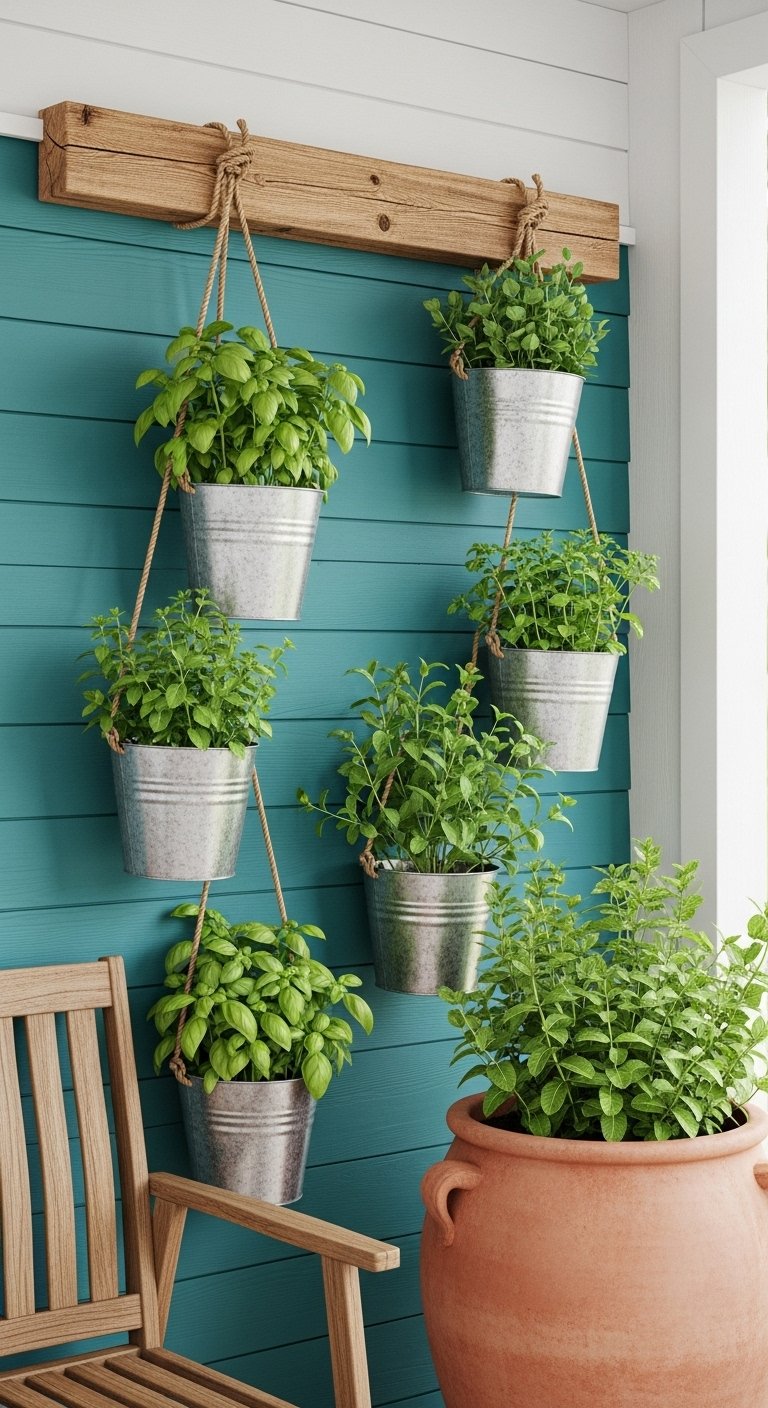
Create a nautical or rustic look by suspending buckets using thick rope. This “rope ladder” design is simple to execute: drill holes in the sides of buckets, knot the rope to hold them in place, and hang the whole assembly from a sturdy hook.
This design is dynamic; it sways gently in the breeze. White plastic buckets give a clean, modern look, while galvanized metal buckets offer a farmhouse aesthetic. It is an excellent way to utilize narrow vertical spaces, such as the corner of a porch.
Pro Tip: Use nylon or synthetic rope if hanging outdoors, as natural fibers like jute or cotton will rot and snap over time with exposure to rain.
Vertical Herb Garden with Clay Pots and Trellis
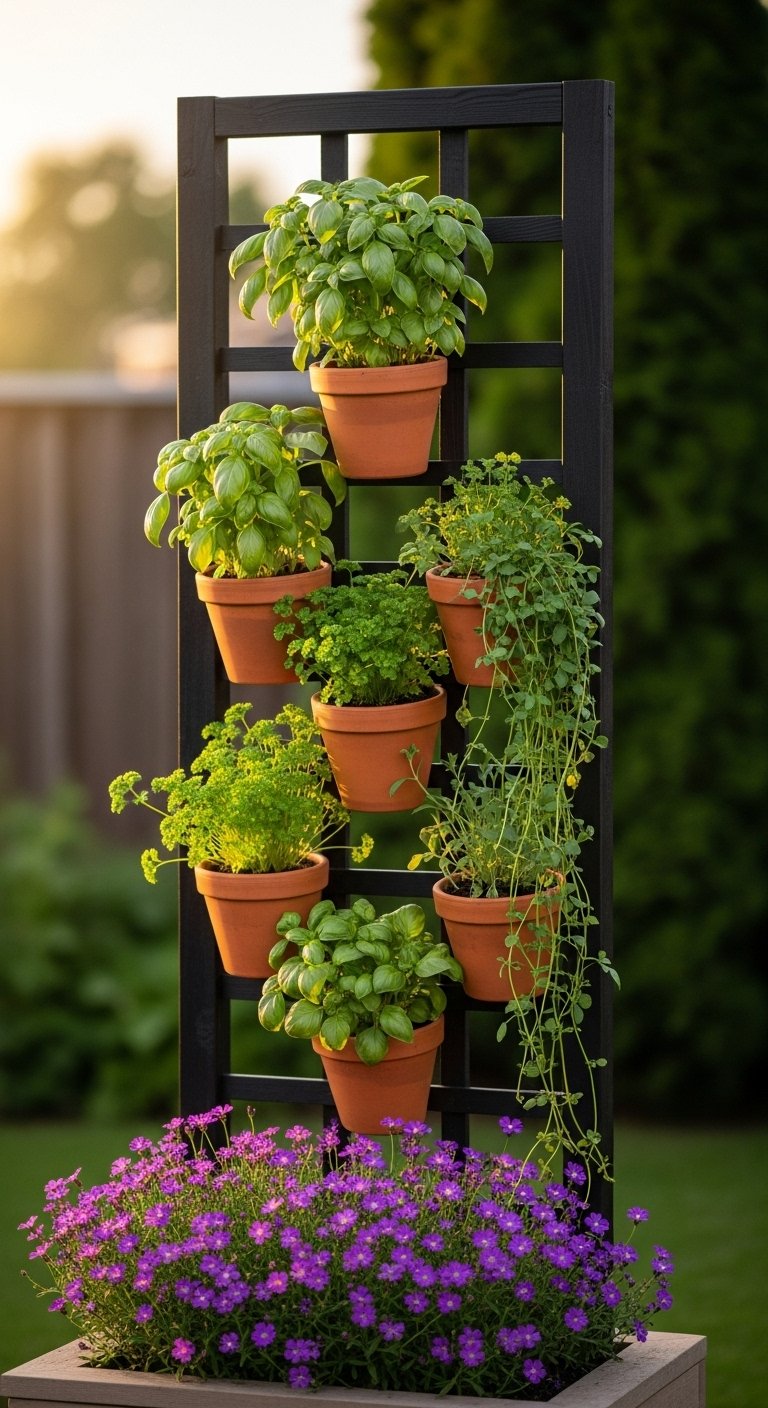
Combine the support of a trellis with the charm of clay pots. A trellis vertical garden allows you to hook pots onto the wooden lattice. This is fantastic because it is modular; you can move pots around to follow the sun or rearrange them as plants grow.
The trellis also provides a structure for climbing herbs or companion plants like peas or nasturtiums to grab onto. Paint the trellis a dark color (like charcoal or forest green) to make the terracotta pots and green leaves pop. This setup works beautifully as a space divider on a shared balcony.
Pro Tip: Use “pot clips” specifically designed to snap onto trellis slats for a secure hold that does not require drilling into the pots.
Vertical Herb Garden with Wire Mesh Frame
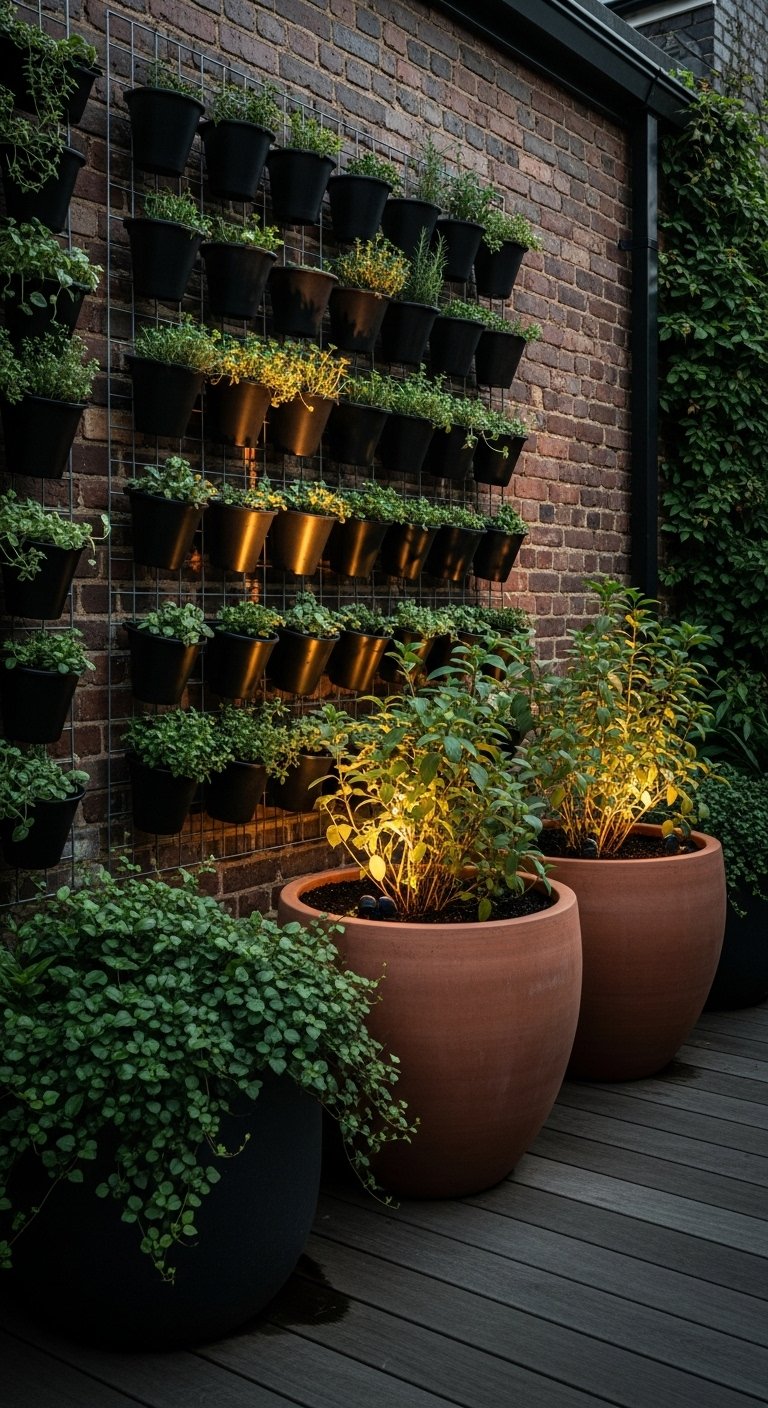
A wire mesh frame (often made from concrete reinforcing wire) is an inexpensive and industrial-chic way to cover a large area. You can mount this mesh to a wall or build a freestanding frame.
Pots are attached using S-hooks or wire ties. The open grid offers infinite adjustability. You can create dense clusters of herbs or space them out for a minimalist look. This material is incredibly strong and can support heavy ceramic pots if the frame itself is anchored securely.
Pro Tip: Look for “remesh” sheets at your local hardware store. They are cheap, large, and rust into a beautiful earthy color that looks great in a garden setting.
Popular Asked Questions
What herbs grow best in a vertical garden?
The best herbs for vertical gardens are those that stay relatively compact or trail downwards. Mint, thyme, oregano, parsley, and strawberries are top choices. Woody herbs like rosemary can work but need larger pots at the bottom of the structure. Avoid massive plants like dill or fennel unless you have deep containers.
How often do I need to water a vertical herb garden?
Vertical gardens dry out much faster than ground soil because they are exposed to more air and wind. You will likely need to water once a day in the summer, and potentially twice during heatwaves. The top plants will dry out faster than the bottom ones, so check them frequently.
Do vertical gardens need special soil?
Yes, regular garden soil is too heavy and compacts easily, which suffocates roots. You need a high-quality potting mix that is light and fluffy. Look for mixes containing vermiculite or perlite to ensure excellent drainage and aeration.
How do I stop my vertical garden from dripping water?
If you are gardening indoors, this is critical. Use pots with attached saucers, or use a “pot-in-pot” method where the planting pot sits inside a decorative, watertight outer pot. Alternatively, install a bottom tray or gutter to catch excess runoff from the entire system.
Conclusion
Creating a Vertical Herb Garden is one of the most rewarding DIY projects you can undertake. It maximizes your space, provides fresh ingredients for your kitchen, and adds a beautiful, living element to your home design. Whether you choose a rustic wooden ladder, a sleek modern metal frame, or a simple mason jar setup, the key is to start.






Leave a Comment