
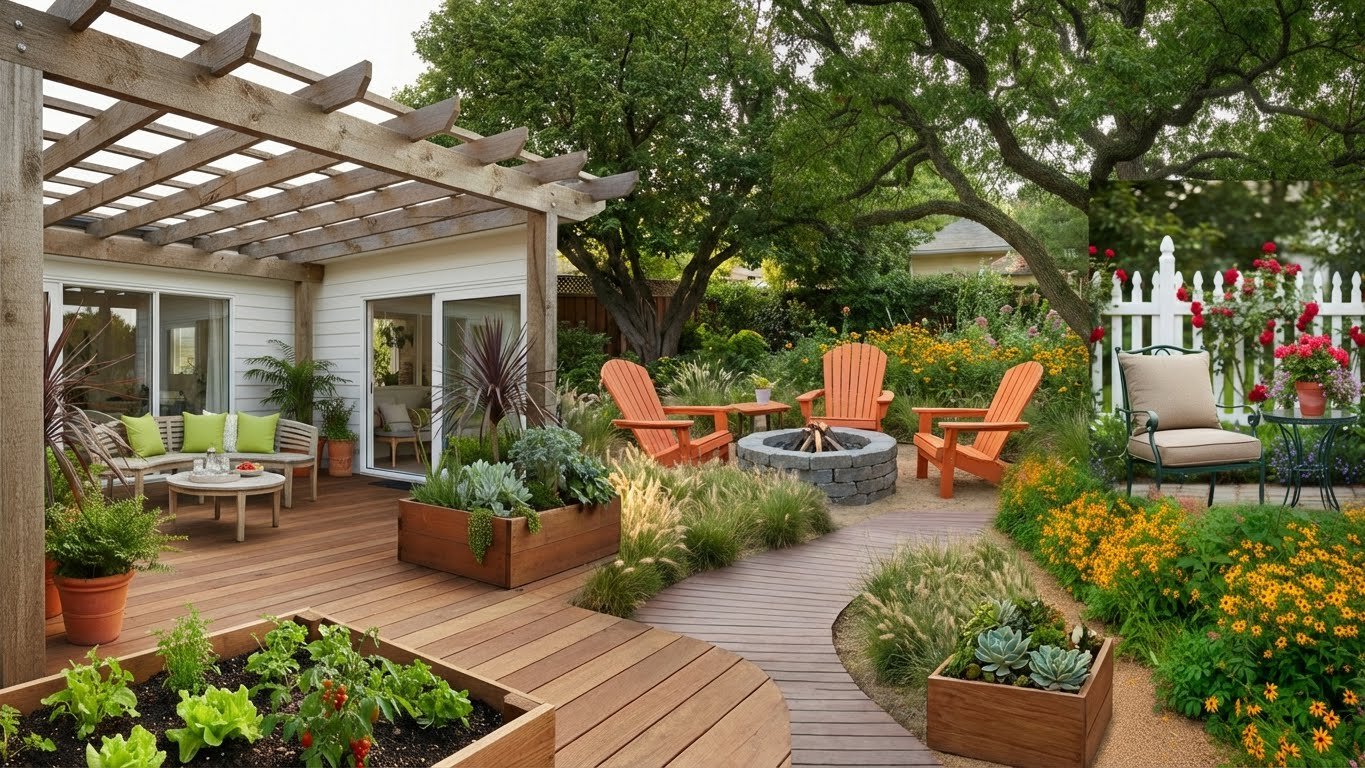
Small outdoor spaces often feel limiting. You might look at your compact plot and see only constraints rather than potential. Many homeowners believe a lush garden or a functional entertaining area requires acres of land. This is a misconception. A tiny footprint actually offers the chance to create a jewel-box effect where every detail counts and maintenance stays manageable.
You can transform a cramped backyard into a spacious-feeling sanctuary with the right optical illusions and zoning strategies. We will explore specific techniques to trick the eye, maximize vertical real estate, and select plants that thrive in tight quarters without taking over. These methods turn square footage limitations into design assets.
Key Takeaways
- Verticality is key to drawing the eye upward and saving floor space.
- Zoning distinct areas makes a small yard feel like multiple rooms.
- Focal points distract from boundaries and create a sense of depth.
- Cohesive flooring blurs the lines between indoor and outdoor living.
- Texture over clutter keeps the design interesting but not chaotic.
Table of Contents
- Create a View
- Create Small Backyard Zones
- Make It Cozy
- Add Color Effectively
- Use the Power of Perspective
- Boost the Intrigue
- Create Unique Small-Space Vertical Features
- Borrow Views for Your Small Backyard
- Make Your Small Backyard a Destination
- Take Advantage of Foliage and Texture
- Keep Plants Vertical
- Create a Small Backyard Focal Point
- Conquer Dead Landscape Spots
- Skip the Lawn
- Raise Planting Areas
- Streamline a Small Backyard
- Popular Asked Questions
- Conclusion
Create a View
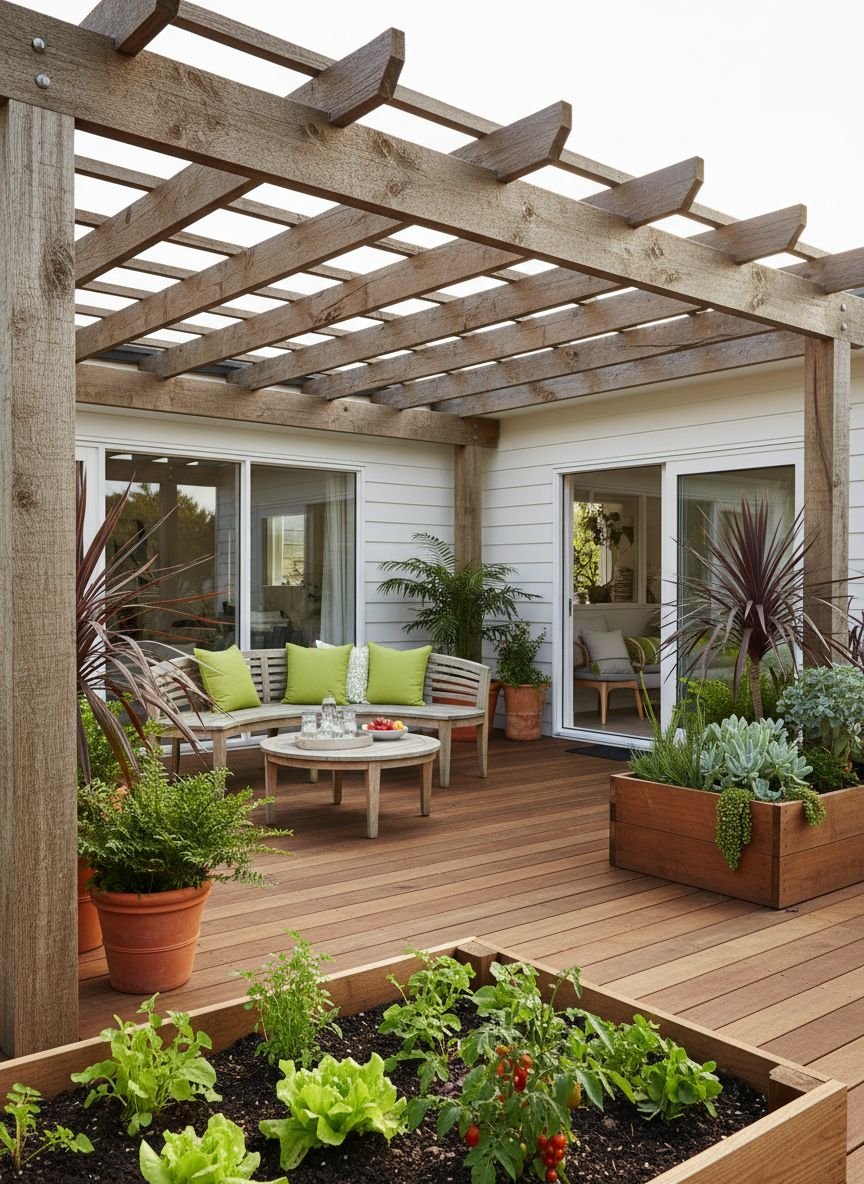
A small yard often faces a fence or a neighbor’s wall. You must manufacture a vista where none exists. Framing a specific area with an arbor or tall plantings directs the gaze to a beautiful internal element rather than the property line. This technique stops the eye from scanning the perimeter and feeling the size constraints. You can position a decorative gate or a window mirror on a rear fence to suggest the garden continues beyond its actual borders.
The materials you choose for this focal frame matter immensely. Darker wood stains or matte black paint on fences can make the boundary recede visually. Place lighter-colored plants or a bright statue in front of this dark backdrop. The contrast pulls the object forward and pushes the wall back. This simple depth perception trick instantly adds perceived yardage to your plot.
Pro Tip: Install an outdoor mirror on a fence behind a climbing vine to reflect light and double the visual depth of greenery.
Create Small Backyard Zones
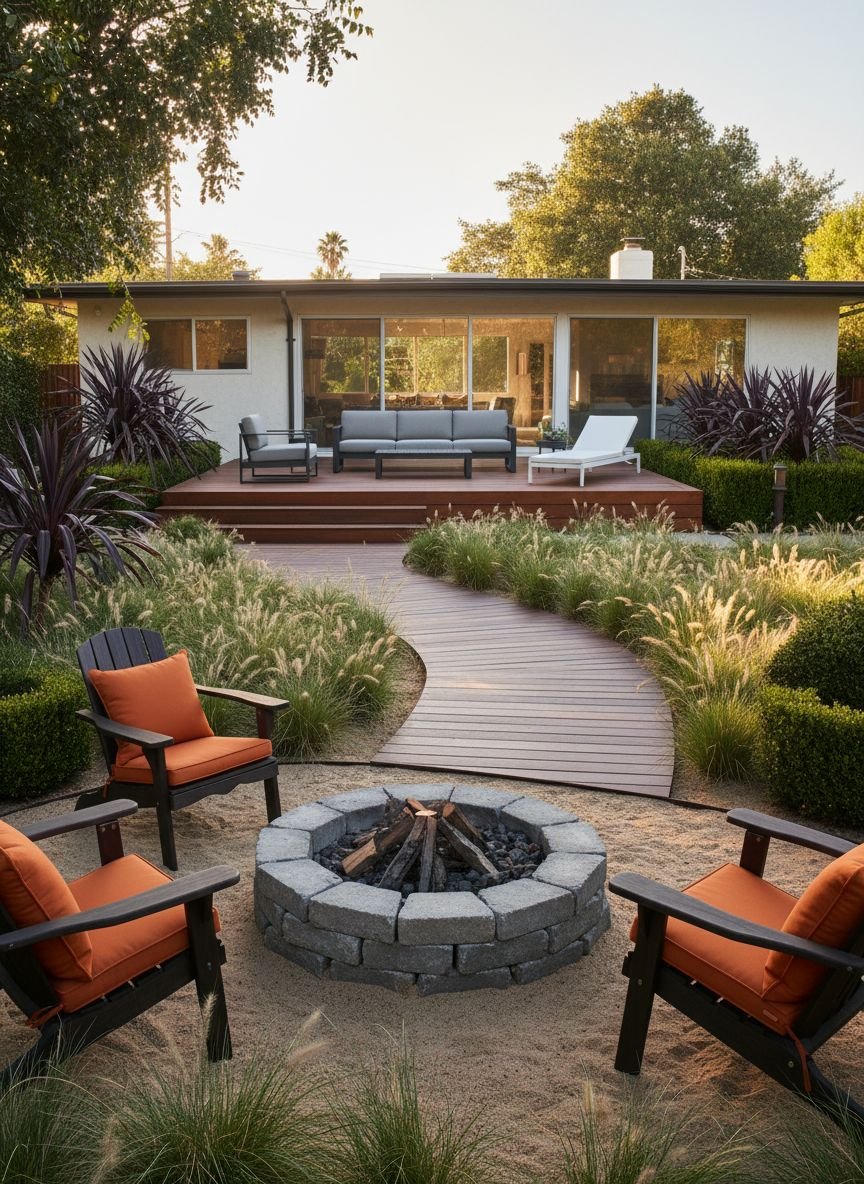
Breaking a small square footage into distinct areas might seem counterintuitive. Open space usually feels bigger. Yet a small yard without definition looks like a cage. Defining a dining spot, a lounging nook, and a planting area creates a journey. You move from one “room” to another. This movement tricks the brain into perceiving the space as larger because it serves multiple functions.
Use different flooring materials to signify these transitions. You might use timber decking for the dining area and pea gravel for a fire pit zone. Rugs also work well to ground furniture arrangements. Keep the transitions flush to avoid tripping hazards but ensure the visual distinction is clear. This layout prevents the furniture from looking like it was just dumped in the center of the lawn.
Save this idea to your Pinterest.
Make It Cozy
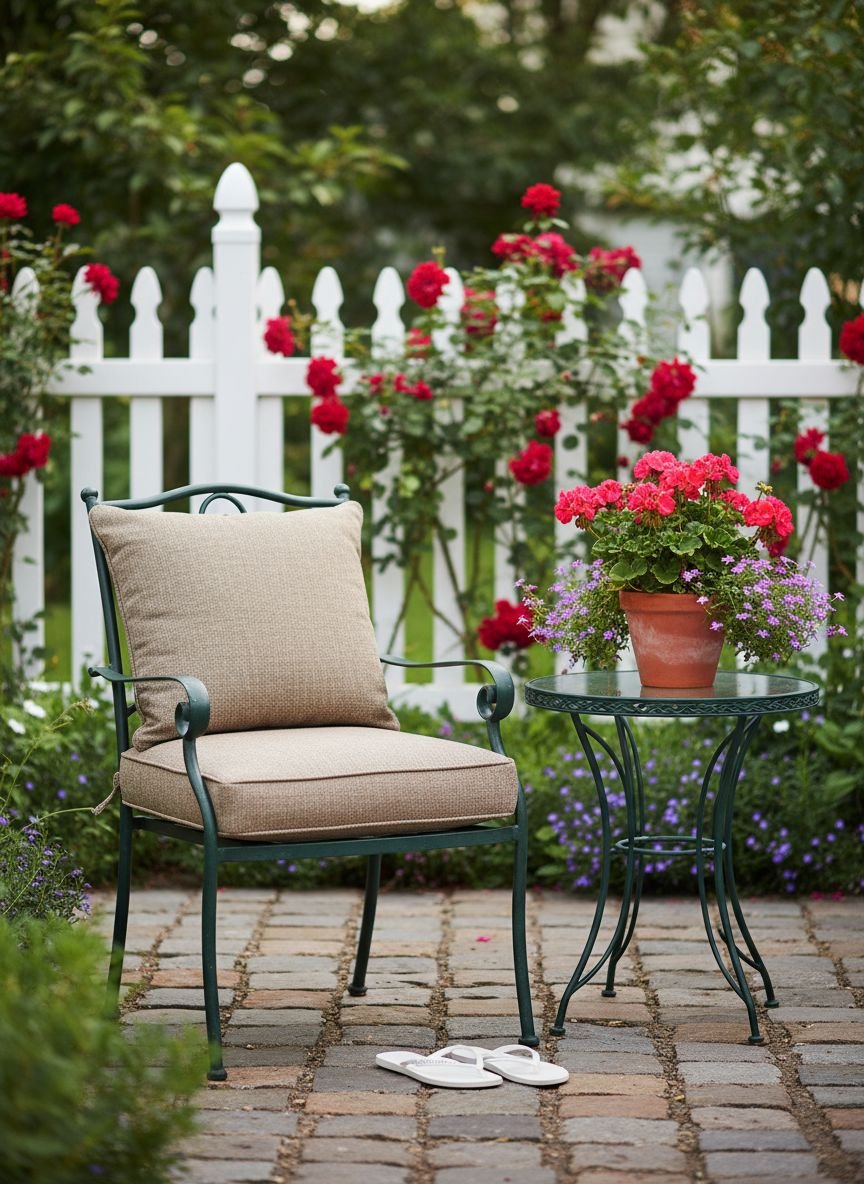
Intimacy is the superpower of a small garden. Large estates often struggle to feel welcoming. Your compact plot naturally wraps around you. Lean into this by using enclosure to your advantage. High-backed benches, overhead sails, or pergola structures create a sense of protection. This “hug” effect turns a small patio into a sanctuary where you want to linger for hours.
Soft furnishings play a massive role here. Outdoor curtains soften hard edges of fences and walls. They add movement when the breeze blows which breaks up the static feeling of a small box. Layer plenty of weather-resistant throw pillows and blankets in tactile fabrics. The goal is to make the outdoors feel exactly like a living room that happens to be open to the sky.
Add Color Effectively
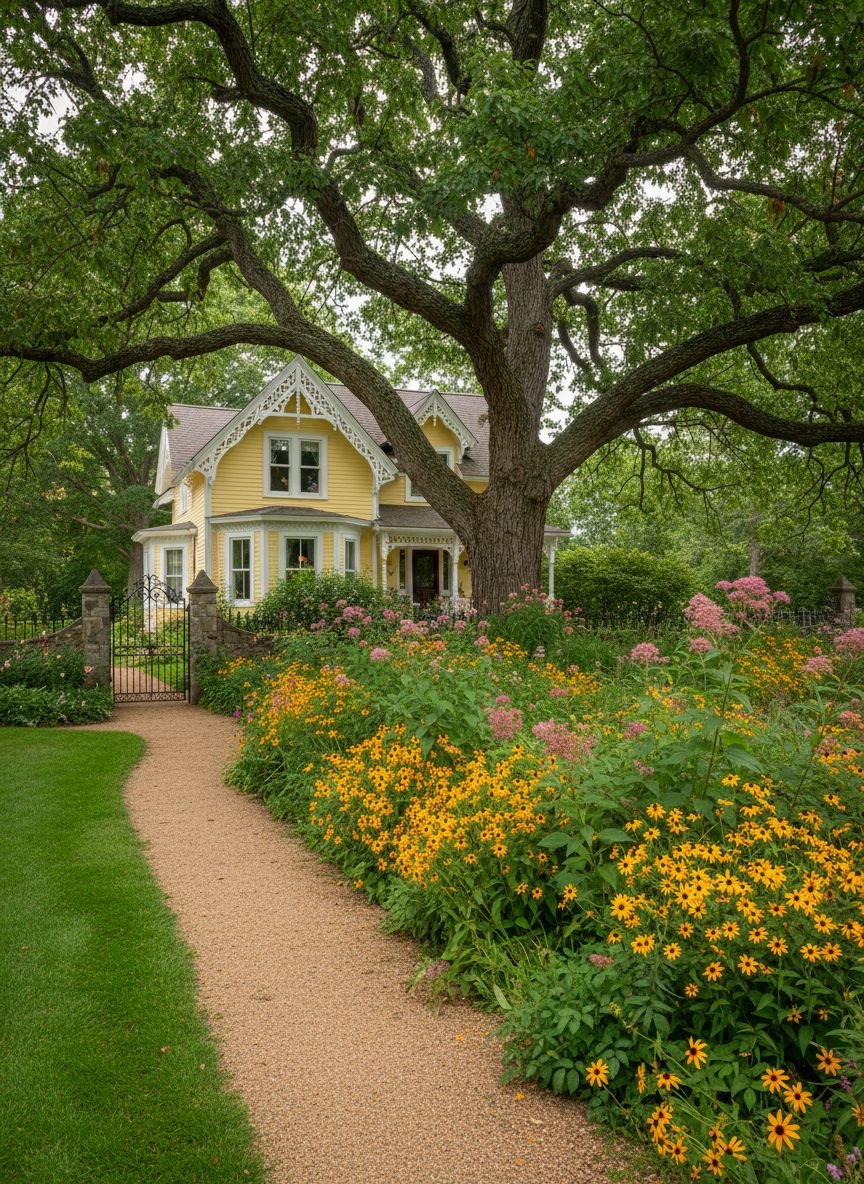
Color influences spatial perception. Cool colors like blues, purples, and soft greens tend to recede. Painting a rear wall a deep slate blue or planting blue hydrangeas at the back of the border can make the fence feel further away. Hot colors like reds, oranges, and yellows advance visually. Use these closer to the house or seating areas to create intimacy where you want it.
Restraint is vital in a limited area. A riot of fifty different colors creates visual clutter that shrinks the space. Stick to a palette of two or three main hues. You might choose white and green for a crisp and modern look that reflects light. Or you could go for purple and silver for a moody and sophisticated vibe. Repeating these colors throughout the garden creates a rhythm that guides the eye smoothly across the plot.
Use the Power of Perspective
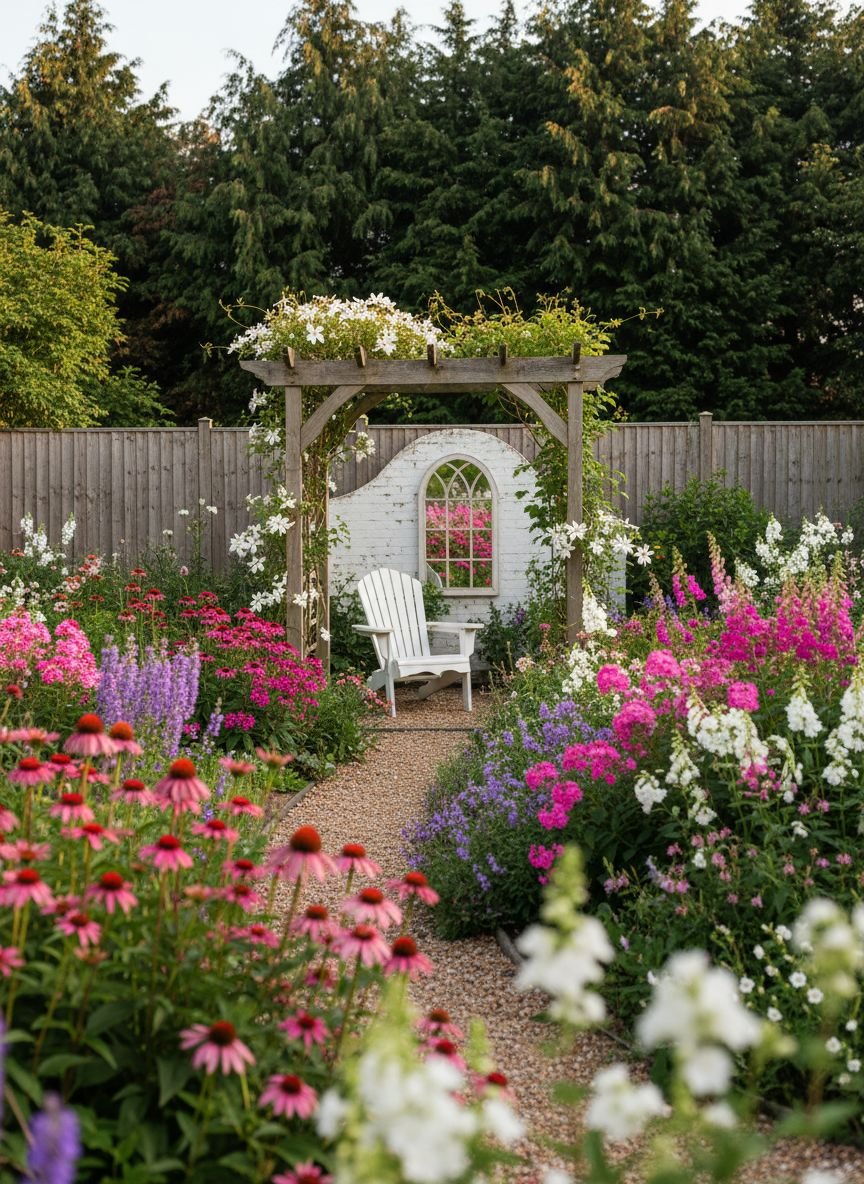
Linear perspective is a classic art technique you can apply to landscaping. Long straight lines draw the eye to a vanishing point. You can lay paving stones lengthwise leading away from the house to elongate the view. If you have a path, narrow it slightly as it gets further away. This forced perspective makes the path look much longer than it truly is.
Plant height also manipulates perspective. Place taller plants near the entrance of the garden and shorter ones at the back. This reverses the natural expectation and tricks the brain into thinking the rear boundary is distant. Large-leafed plants in the foreground and fine-textured plants in the background achieve a similar result.
Boost the Intrigue
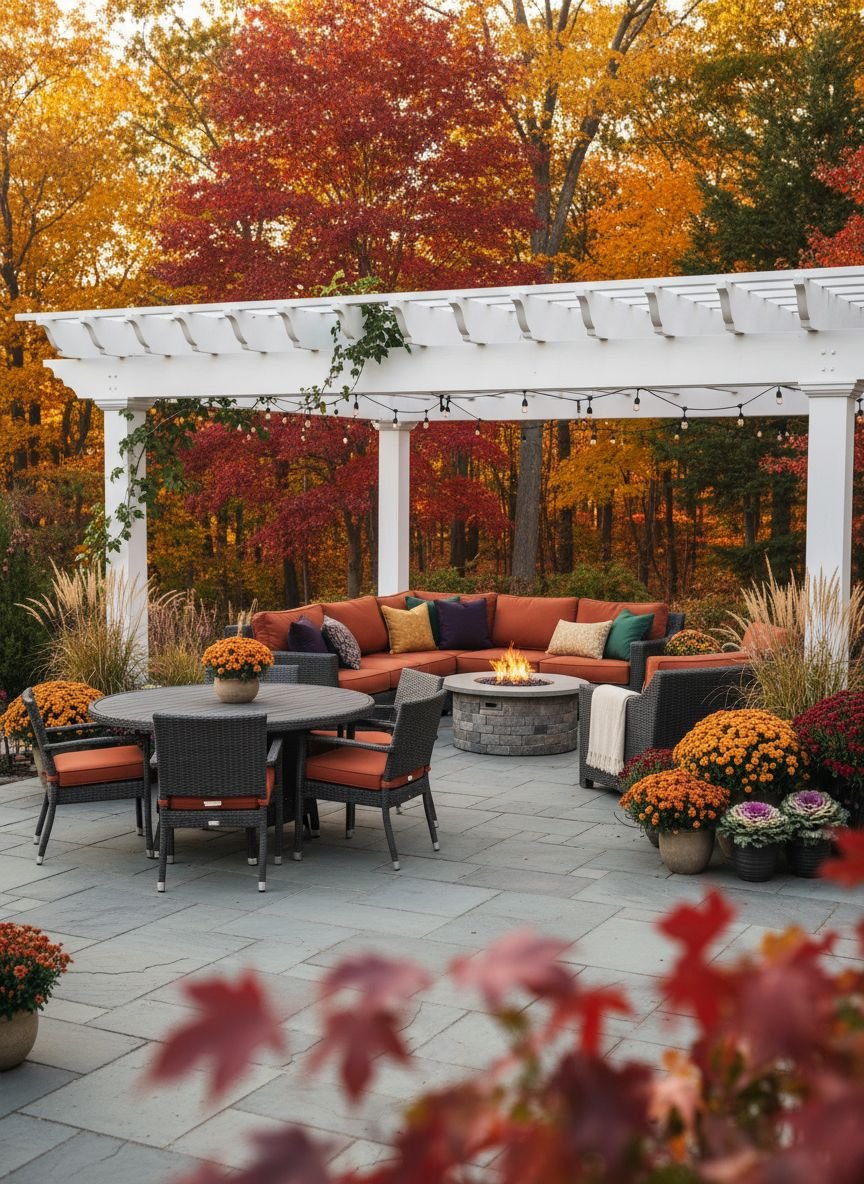
A small garden reveals itself all at once if you are not careful. You want to create mystery. Obscure parts of the garden from the main viewing point. A strategically placed tall grass clump or a trellis screen can hide a reading chair or a potting bench. Not seeing everything instantly compels you to walk out and explore.
Curved pathways are excellent for this. A winding path disappears behind a shrub and suggests there is more to see. Even if the path only goes ten feet, the curve implies distance. Use lighting to enhance this at night. Uplight a tree in the back corner but leave the middle ground slightly dimmer to create layers of depth and shadow.
Pro Tip: Use “steppers” or separated paving stones with ground cover growing between them to slow down the pace of walking, making the garden feel larger.
| Feature | Pros | Cons |
|---|---|---|
| Gravel Paths | Affordable, permeable, audible crunch adds texture. | Can migrate, needs weeding, hard to shovel snow. |
| Paver Stones | Clean lines, stable surface, modern look. | More expensive, requires professional leveling. |
| Mulch Paths | Natural look, improves soil, very cheap. | Decomposes quickly, needs annual replenishing. |
Create Unique Small-Space Vertical Features
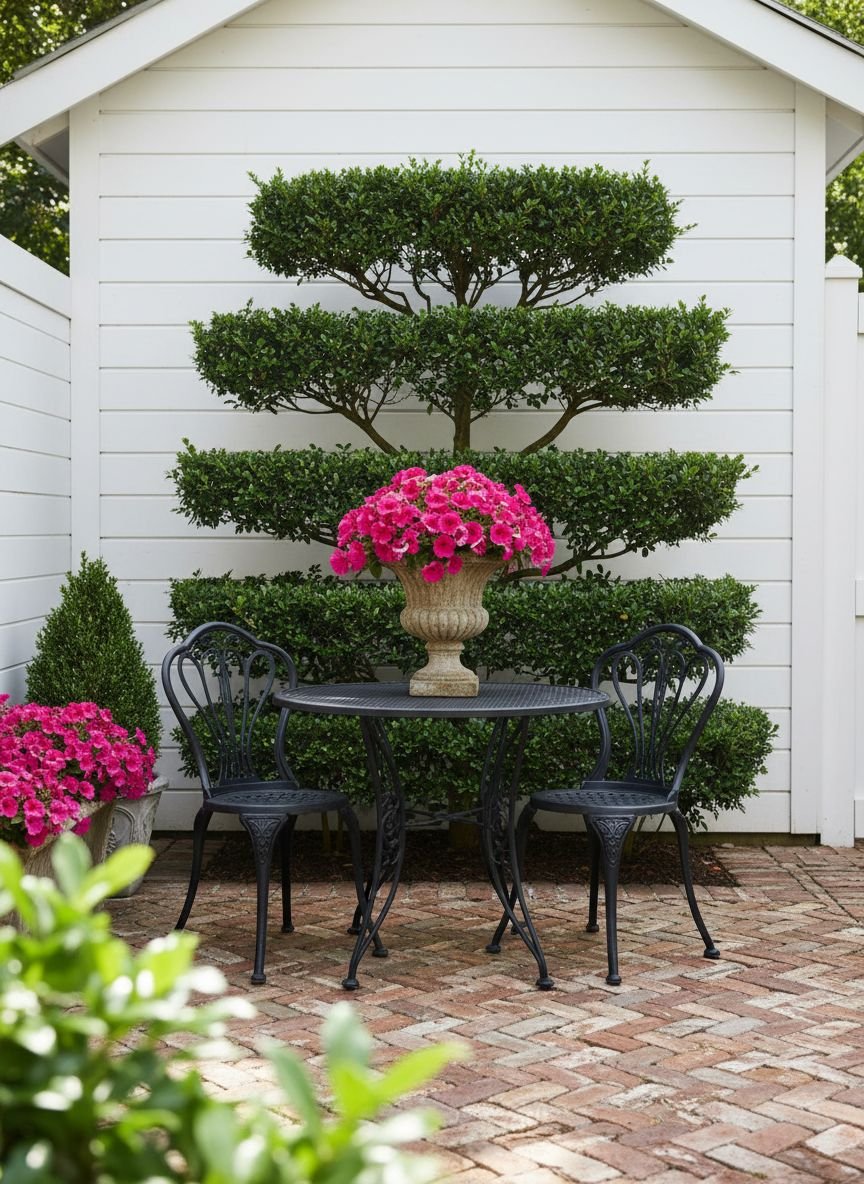
Floor space is finite but air space is free. Vertical gardening is the most efficient way to add lushness without sacrificing square footage. Living walls are popular but can be complex. simpler solutions work just as well. Wall-mounted planters, hanging baskets, and shelving units allow you to stack plants. This draws the eye up to the sky and makes the footprint feel less confined.
Think beyond plants for vertical interest. A tall water feature or a piece of vertical sculpture adds a focal point that occupies very little ground. Trellises attached to fences can support jasmine or clematis. These vines provide greenery and scent without the width of a shrub. You get the garden feel with zero loss of usable patio space.
Borrow Views for Your Small Backyard
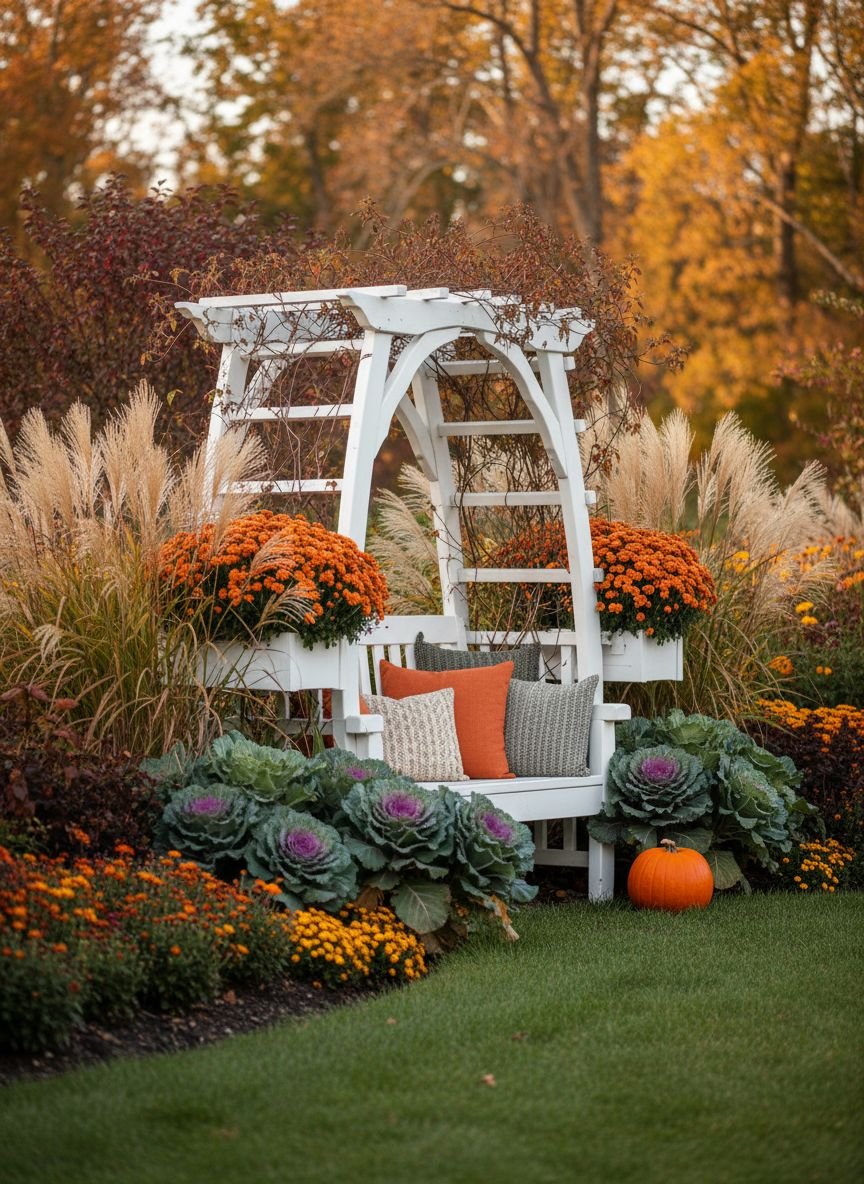
Your property lines are legal boundaries but not visual ones. Look around your neighborhood. Is there a large tree in a neighbor’s yard? A distant church steeple? A patch of open sky? Design your landscape to frame these distant elements. Prune your own hedges to reveal a nice view or plant taller shrubs to block an ugly one.
This concept connects your tiny plot to the wider world. It makes your garden feel like part of a larger landscape. If your neighbor has a beautiful brick wall, do not cover it with a fence. Use it as a textured backdrop for your own plants. Collaborating visually with the surrounding environment creates a sense of expansiveness that you cannot build on your own.
Make Your Small Backyard a Destination
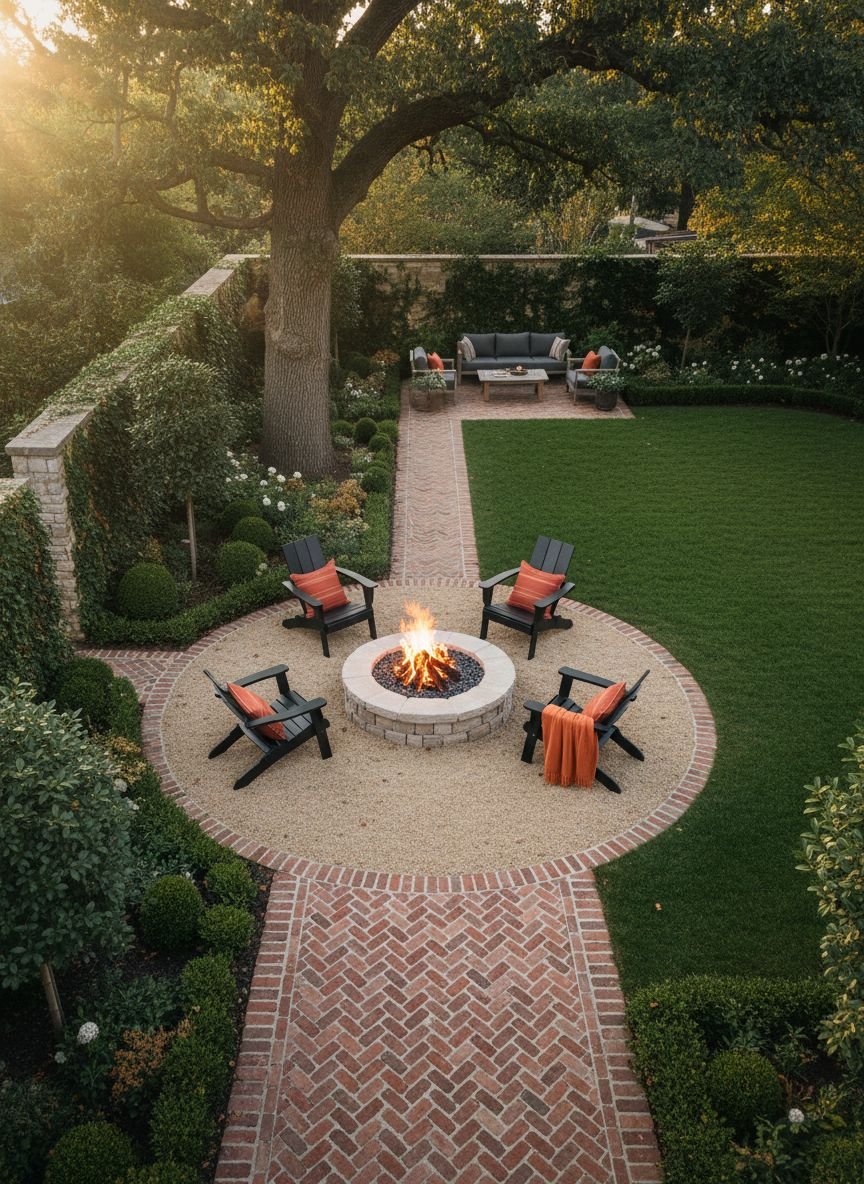
A small yard needs a reason to exist. If it is just a patch of grass, you will never use it. Give it a specific purpose. Turn it into an outdoor kitchen, a yoga studio, or a reading sanctuary. When a space has a clear function, the size becomes irrelevant. You focus on the activity rather than the square footage.
Furniture selection defines this destination. A bistro set implies morning coffee. A hammock implies reading and naps. A fire pit implies evening gatherings. Choose furniture that fits the scale. Bulky sofas can overwhelm a small deck. Look for pieces with open frames that let light pass through. This keeps the visual weight low while maintaining functionality.
Save this idea to your Pinterest.
Take Advantage of Foliage and Texture
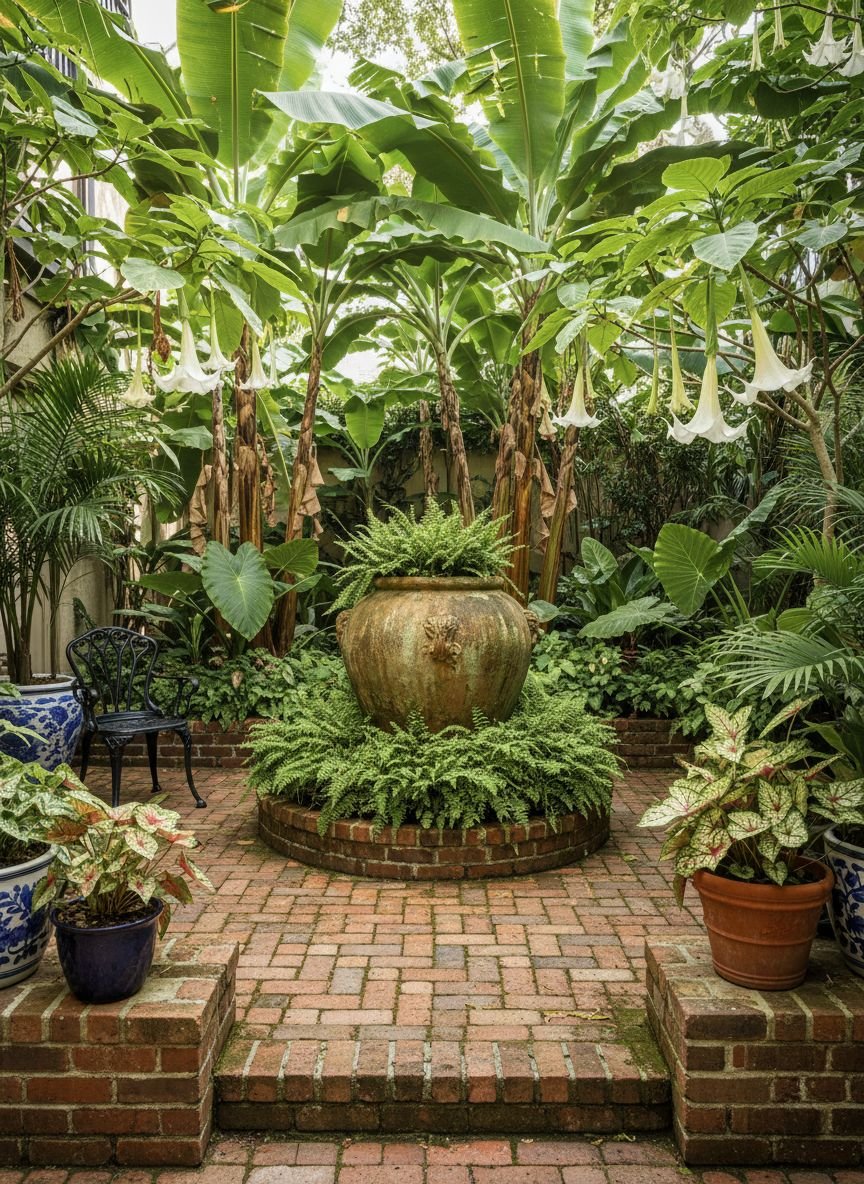
Flowers are fleeting but foliage is constant. In a small space, you see plants up close. The texture of the leaves becomes a major design element. Mix glossy leaves with matte ones. Pair feathery ferns with broad hostas. The contrast between rough and smooth or fine and coarse keeps the eye interested.
Variegated foliage is a secret weapon for small shady gardens. Leaves with white or yellow stripes act like little lights in dark corners. They brighten up deep shade where flowers might struggle. Silver foliage plants like Lamb’s Ear or Dusty Miller also reflect moonlight and make the garden glow at night. Relying on foliage ensures your garden looks good even when nothing is in bloom.
Get The Look:
- Lighting: Solar stake lights for pathways.
- Planters: Tall, tapered composite pots in slate grey.
- Textiles: Outdoor rugs with geometric patterns to define zones.
Keep Plants Vertical
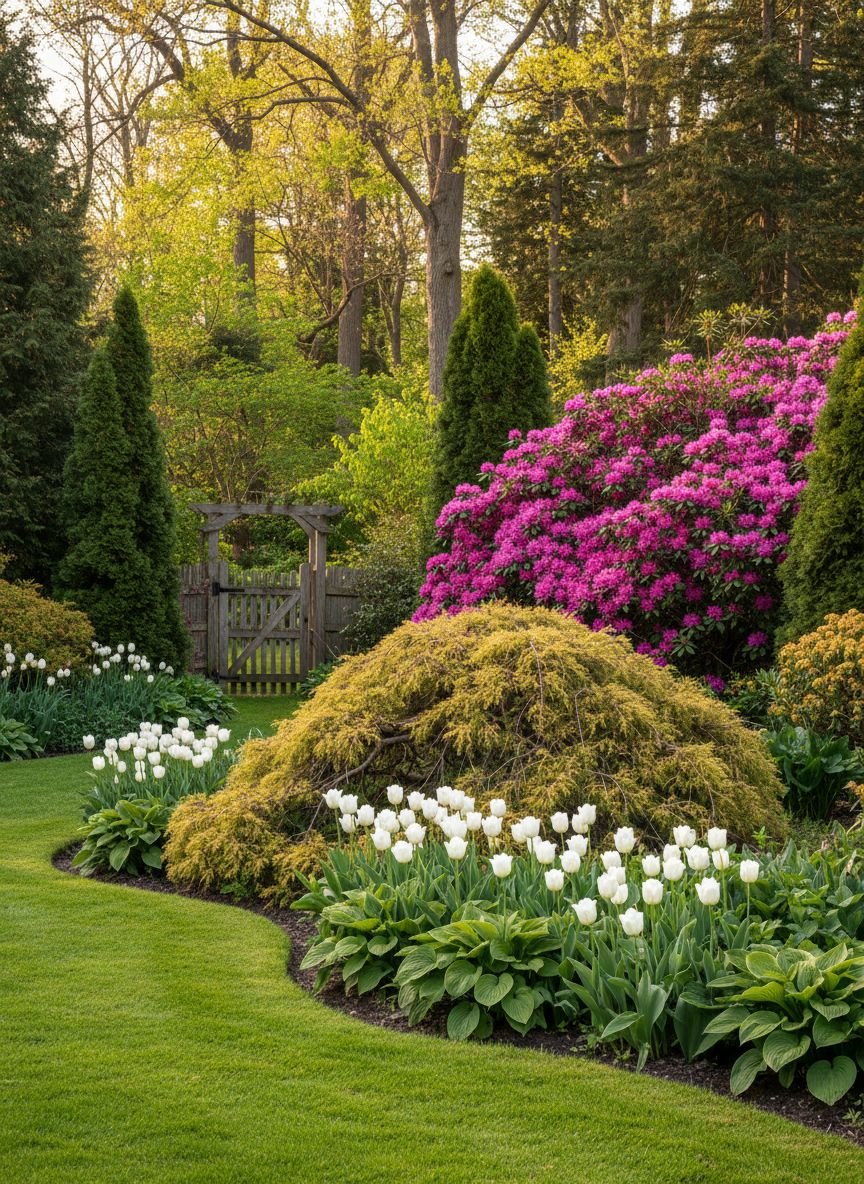
We touched on vertical features, but plant selection itself should favor the upright. Columnar trees are bred specifically for tight spaces. They grow tall and narrow without spreading wide branches that block pathways. Sky Pencil Holly or columnar apple trees provide height and screening with a tiny footprint.
Train shrubs to grow flat against a wall using espalier techniques. You can grow fruit trees or camellias this way. It requires some pruning but the result is a living wall that takes up only inches of depth. This leaves maximum room for furniture and movement while still providing the lush green look of a mature garden.
Related posts :
- 10 Creative Small Vegetable Garden Design Ideas That Instantly Double Your Harvest
- 15 Inspirational Modern Patio Ideas for Your Backyard Retreat That Instantly Upgrade Your Home
- 23 Stunning Side of House Landscaping Ideas That Instantly Elevate Your Exterior
Create a Small Backyard Focal Point
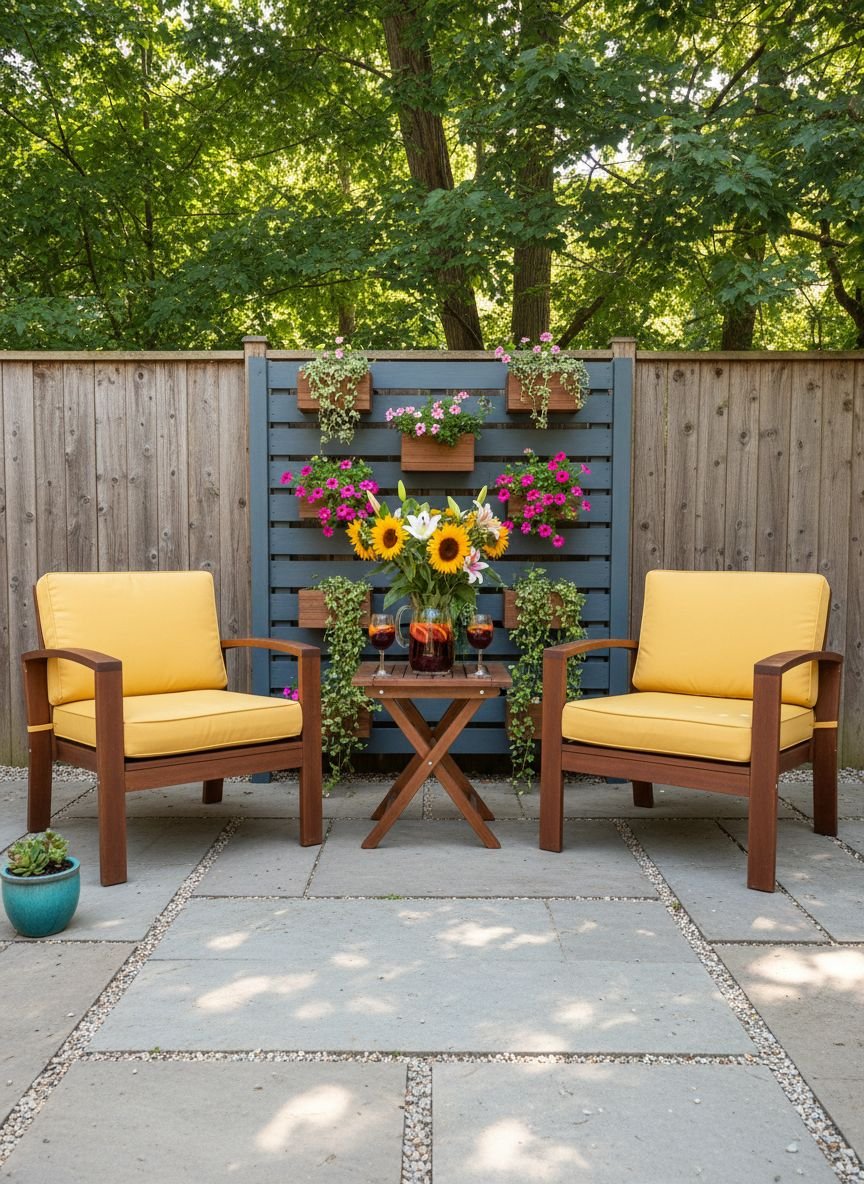
A small yard without a focal point feels unsettled. The eye wanders aimlessly and notices the boundaries. A strong focal point grabs attention immediately. It could be a sculpture, a bubbling urn water feature, or a stunning specimen tree like a Japanese Maple. Place this feature at the furthest point from the entrance or at the end of a sightline.
The rule of thirds applies here. Do not plunk the focal point dead center. Offset it slightly to create dynamic tension. This makes the space feel more designed and less static. Ensure the scale is right. A tiny statue in a corner gets lost. A massive fountain blocks flow. Choose an object that commands presence but allows breathing room around it.
Conquer Dead Landscape Spots
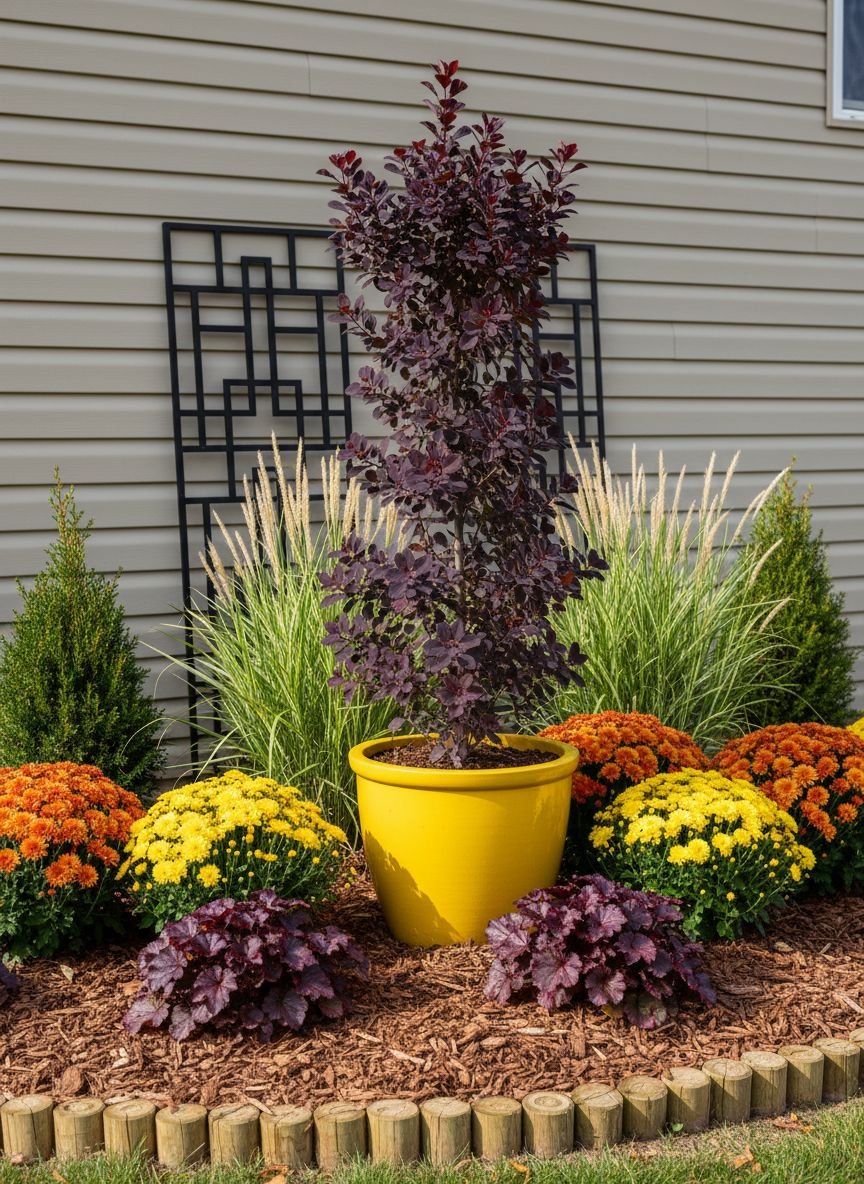
Every yard has awkward corners. The side yard where the trash cans go. The dark patch under the eaves. In a small plot, you cannot afford to waste this space. Turn the side yard into a fern walk with shade-loving plants and stepping stones. Use the space under the eaves for a potting bench or storage hutch.
Corners are opportunities to soften the boxy shape of a yard. Plant a large shrub or place a corner seating unit there. This rounds off the sharp angles and makes the space feel more organic. If nothing grows in a specific spot due to deep shade or tree roots, use gravel and place a sculptural element or a bench there instead.
Skip the Lawn
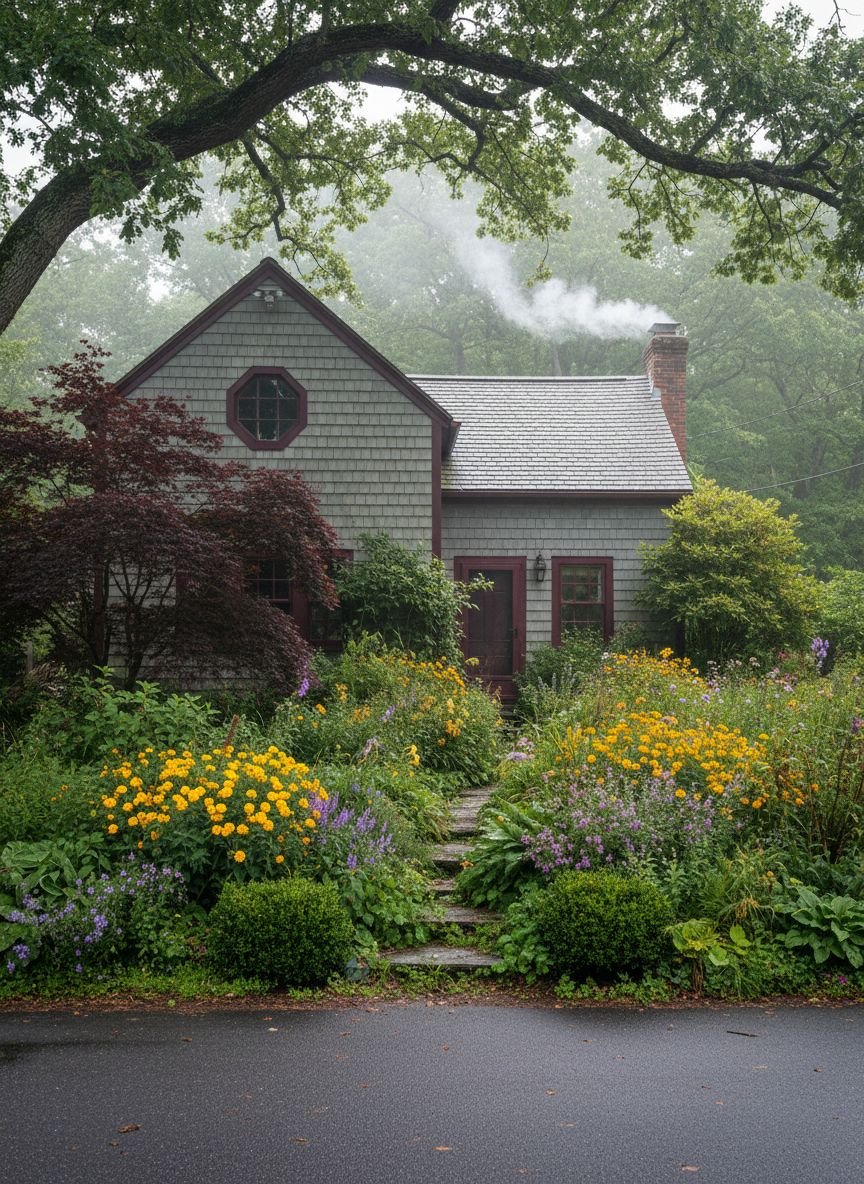
Grass is high maintenance and often impractical in tiny spaces. A mower takes up storage space you do not have. A lawn that is too small to play on is just a green carpet that needs watering. Replace the turf with hardscaping or gravel. This expands your usable living area significantly. You can put furniture anywhere on a patio, unlike on damp grass.
Soften the hardscape with creeping ground covers. Thyme or sedum planted between pavers breaks up the stone and adds greenery. If you must have the look of grass, consider high-quality artificial turf. It stays green all year, requires no mowing, and drains well. This gives you the visual softness of a lawn without the headache of maintenance in a tight space.
Raise Planting Areas
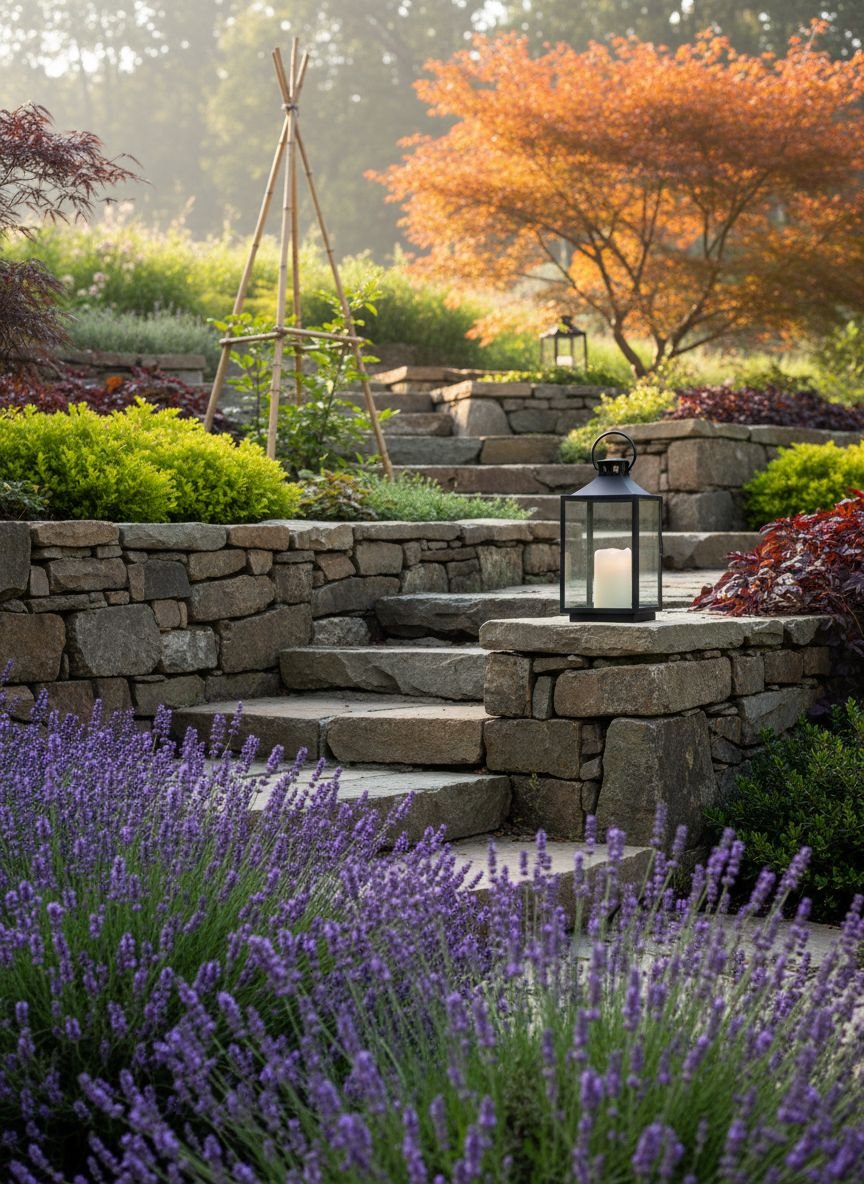
Raised beds offer multiple benefits for small landscapes. They define the edges of the room clearly. They bring plants closer to eye level so you can enjoy the details. The wide rims of raised beds can double as extra seating when you have guests. This eliminates the need for folding chairs that clutter the space.
Construct beds from materials that match your house for a built-in look. Corten steel offers a modern, thin profile that saves space. Wood sleepers provide a rustic, warm feel. Vary the heights of the beds to add architectural interest. A higher bed in the back and a lower one in front creates a tiered effect that displays all your plants beautifully.
Streamline a Small Backyard
Minimalism is a small yard’s best friend. Too many pots, tools, and ornaments make the space feel shrinking and chaotic. Edit your design ruthlessly. Keep the lines clean and simple. Choose one style of planter and stick to it. Use one type of paving material. Uniformity creates a sense of calm and spaciousness.
Storage is crucial for streamlining. Built-in benches with storage underneath hide cushions and tools. A vertical cabinet painted to match the fence disappears visually. Keep the floor clear of small objects. When the ground plane is open, the brain perceives more space. A clutter-free yard is a larger-looking yard.
Pro Tip: Choose furniture with slender legs rather than solid bases. Seeing the ground continue underneath the chair tricks the eye into thinking the floor area is larger.
Popular Asked Questions
How do I make my small yard look expensive on a budget?
Focus on lighting and edges. Clean, defined edges where plants meet the path make any garden look professional. String lights overhead or solar uplighting on trees adds a luxury feel at night for very little cost. Using gravel instead of pavers is cheaper but still looks chic if you use a high-quality edging material to keep it neat.
What is the best layout for a small backyard?
The best layout usually involves a “diagonal axis.” Instead of laying a patio square with the house, turn it 45 degrees. The longest line in a square is the diagonal. Orienting your paving or view this way forces the eye to travel the longest distance possible, making the yard feel significantly bigger.
Can I have trees in a small garden?
Yes, absolutely. You just need the right trees. Look for “fastigiate” or columnar varieties that grow up rather than out. Japanese Maples are also excellent because they grow slowly and have a sculptural shape that looks beautiful even when bare. Avoid trees with aggressive root systems that will lift your paving.
How do I maintain privacy in a small overlooked garden?
Use layers. A pergola with a roof creates privacy from windows above. Pleached trees (trees trained to have a square frame of branches on a clear trunk) act like a hedge on stilts, blocking the view from neighbors while leaving space at ground level. Bamboo in containers is also a fast-growing screen solution.
Conclusion
Transforming a small plot requires a shift in perspective. You are not fighting against a lack of space. You are curating a concentrated experience. By using vertical elements, smart zoning, and optical illusions, you can turn a compact backyard into a functional extension of your home. The limited square footage actually works in your favor, allowing you to invest in higher quality materials and plants because you need less of them.


Leave a Comment